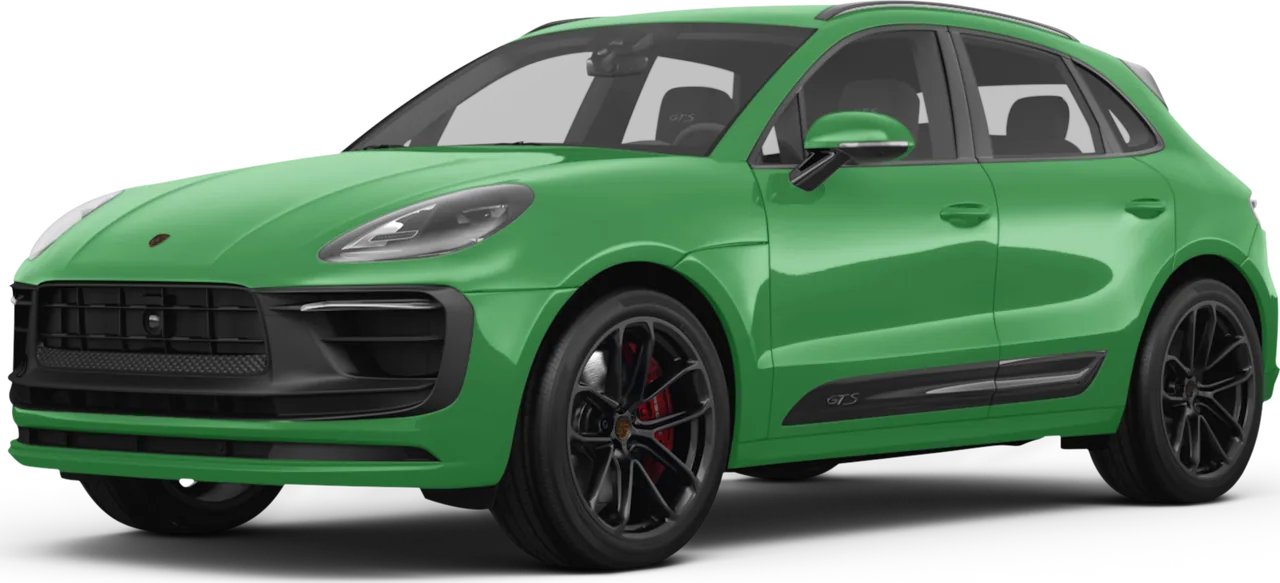
2026 Porsche Macan Electric
Luxury Electric SUV · RWD
Based on battery health, build quality, owner data, EPA range, and market pricing
Above average for 2026 EV Compact SUVs (class avg 68 · top 19%)
Personalize this scoreIs a low score bad?
Last scanned 22 days ago
The 2026 Porsche Macan Electric packs 309 miles of EPA range, 270 kW fast charging and a 95 kWh battery, and a worth-pursuing score, but only after a hard inspection and a fair price.
Score read
A 72/100 makes this worth inspecting. The useful split is build quality score at 98/100 versus owner feedback score at 48/100. On Reddit, owners keep flagging the same two issues: range and build quality. A good score still needs a battery report, service history, and a normal test drive.
Price context
This trim started from $80,300 new. Used examples have come down since launch, but pricing varies by miles, condition, and how the model is moving right now; pull a current KBB Fair Purchase, an Edmunds True Market Value, or an active dealer listing for this exact trim, and anchor your offer there. Walk if the seller will not move off new-car-style pricing.
Who this is for
✓ Good for
- ⏱ Daily commuter ≤50 mi/day, predictable charging
- ↦ Road tripper Long trips, needs DC fast network
- ★ Weekend driver Performance, fun, low mileage
✗ Avoid if you are a
- $ Bargain hunter Best TCO, reliability + low depreciation
Gotchas
- Verify Owner feedback is the part to read carefully (48/100).
Mitigation Read the complaint themes and ask whether this VIN has already had those issues repaired.
- Verify Current market pricing is not confirmed well enough for this trim.
Mitigation Compare KBB, J.D. Power, and live listings for the same trim before treating price as a buying signal.
Pre-purchase inspection
- 1 Compare the dashboard range estimate with the EPA 309-mile rating after a full charge.
- 2 Confirm how much of the 8-year/100,000-mile battery warranty remains and whether it transfers.
- 3 If road trips matter, run a short DC fast-charge session and watch whether speed tapers normally.
- 4 Read the complaint themes, not just the count, and ask the seller whether those issues have shown up on this VIN.
- 5 Review title, service history, tire condition, and charging-equipment records before final price.
No recall records in this scan That helps the shortlist, but it does not replace a VIN lookup, battery report, and service-history check.
Complaint context This scan found 0 NHTSA complaint records (0 per 10K VINs, low for any vehicle class). Read the themes below before treating the raw count as the verdict.
Price needs outside confirmation Current market pricing is incomplete, so MSRP should not be used as the deal signal. Compare KBB, J.D. Power, and live listings for this exact trim.
Pricing & Market Value
Score Breakdown
What matters most to you?
Drag the sliders to prioritize what you care about. Your TrimIndex Score recalculates instantly.
Vehicle Specifications
The federal $4,000 used-EV credit ended Sept 30, 2025.
But 10 states still run their own used-EV rebate programs — some up to $5,000. Pick your state to see what's available for this trim.
Source & disclaimer
Dealers make ~$3,575 on the average car loan.
After the price is set, the finance manager runs four plays to rebuild margin. Every buyer without a pre-approval is a target. Here's exactly what they run — and what stops each one.
78% of dealer loans carry a hidden +1.13% markup above what the lender actually charges. You never see it — it's buried in the contract. · CFPB
Dealer must match or beat your lender — they can't add margin invisibly. The markup play is dead on arrival.
Once you answer, they stretch the term to hit your number. Median result: $4K less off the price, 12 more months on the loan. · Industry avg
Financing is done. Only the sale price is on the table — and the dealer knows it.
Back-office F&I profit averages $1,975/vehicle, up 8.5% YoY. These products exist — but dealer markup is 4–10x what you'd pay elsewhere. · Dealership Guy
Dealer GAP runs $500–1K. Your insurer sells the same coverage for $100–250 over 5 years. Now you know.
"Your loan fell through — come re-sign." This pulls your APR up +5% on average. It's legal. It works because you've already driven the car home. · Ctr for Responsible Lending
A lender commitment letter means the deal is final. "Pending dealer approval" doesn't apply. You can't be yo-yo'd.
Margin handed to the dealer's finance department — for nothing.
Takes 2 minutes. No obligation to use it — but you'll walk in with all the leverage.
Pre-approval is a soft credit inquiry — no score impact. FICO treats all auto-loan hard pulls within 14 days as one, so you can still shop rates at the dealer.
NHTSA Recalls (0)
NHTSA Complaints (0 total · 0 per 10K US vehicles · low for any vehicle class)
No complaints filed with NHTSA for this vehicle.
What Owners Are Saying
"#1· Jan 6, 2025 I had the opportunity to test drive the Porsche Macan 4 Electric for a few days and took the opportunity to take it up north in Sweden to see how it would perform. Sharing the main takeaways written below: \- Average consumption at 80 km/h: 24,8 kWh/100 km (2.51 miles/kWh), estimated range at full battery: ~380 km (236 miles). Temperature: -5 degrees Celsius (23 degrees Fahrenheit) \- Average consumption at 120 km/h: 30,6 kWh/100 km (2.03 miles/kWh), estimated range at full battery: ~310 km (193 miles). Temperature: 0 degrees Celsius (32 degrees Fahrenheit) \- Average consumption on our trip from Stockholm to a ski resort in the north of Sweden (c. 700 km return): 23.7 kWh/100 km (2.62 miles/kWh). Extremely wide temperature range from +3 degrees Celsius to -11 degrees Celsius, so that this data point with a pinch of salt"
"**Overall impression**. A really nice car, I personally like the exterior and interior design. Interior looks modern (good improvement from previous generation of Macan), has good tech and build quality is as you expect from a Porsche (very good, with a few minor exceptions). Backseat a bit cramped if you are taller than 190 cm. Impressive boot capacity of 540 liters for a mid-sized coupe SUV. **Driving experience and handling**. Great on both snow/ice and tarmac, extremely stable and predictable. Does not have a one pedal drive or adjustable regen (I do not have an EV as my daily driver, so for me the driving experience was “familiar”). Actually feels and handles like a proper sporty SUV. Would have been great with a bit better range. The price of c. 85 000 EUR (in Sweden) for the Macan 4 feels a bit steep. If anyone would be interested to see the full range test, sharing a link to the full video below Provkörning: Porsche Macan Electric - vintertest av elbil från Stockholm till Dalarna (ENG SUB) - YouTube Provkörning: Porsche Macan Electric - vintertest av elbil från Stockholm till Dalarna (ENG SUB) CarExplorers"
"Hot take: most EV owners/reviewers still don’t understand regen I’m going to say it: a lot of EV reviewers clearly do **not** understand regen as well as they think they do. Way too many reviews reduce the whole topic to: * “Does it have one-pedal driving?” * “How hard does it slow when you lift?” That is a shallow way to judge regenerative braking. **Lift-off regen is not “regen.”** It is just **one regen strategy**. And the most efficient driving is usually **not**: **accelerate -> lift -> regen -> accelerate again** It is: **keep momentum -> coast -> only slow when needed -> use regen when needed -> use friction brakes only for the rest** That is the part so many people miss. Regen is useful, but it is still recovering only part of energy you already spent. Coasting is often better. Good planning is often better. So no, stronger lift-off regen does **not** automatically mean a better or more advanced system. This is how I see the main types: **1. Lift-off regen** The car slows when you release the accelerator. Example: **VW MEB cars in B mode**, like **ID.4** and **ID. Buzz**. Useful, simple, but not especially sophisticated. **2. One-pedal driving (lift-off regen with full stop)** This is stronger lift-off regen, where the car can stop fully. Example: **Tesla Model 3 / Model Y**. And honestly, this is where a lot of people get fooled. Tesla made one-pedal driving mainstream, but that does **not** mean Tesla defined the peak of regen engineering. Tesla is a great example of **basic lift-off regen done well and made popular**. But “lift = strong slowdown” is still a fairly blunt strategy compared with systems that also prioritize coasting, brake blending, and driver choice. So yes, Tesla-style regen is effective. No, I would not call it the most advanced. **3. Brake-pedal regen / blended braking** This is where a lot of reviewers expose themselves. A proper **brake-by-wire blended braking** system is actually **more advanced** than simple lift-off regen. Why? Because the car can let you coast naturally when that is best, then decide in real time how much braking should come from regen and how much should come from the friction brakes when you actually press the brake pedal. Examples: **Audi e-tron**, **Porsche Macan Electric**. That is far more intelligent than just programming strong drag every time you lift. **4. More advanced latest-gen systems** Examples: **Audi Q6 e-tron**, **BMW iX3**. These are the kinds of EVs I’d recommend people drive if they think all regen systems are basically the same. Once you try a system that combines: * coasting * refined brake blending * better stop behavior * more consistent braking * and more driver choice you realize how crude some of the simpler systems actually feel. And yes, I include **Tesla-style one-pedal driving** in that category. Not bad. Just massively overpraised. Another thing that matters is **consistency**. Some EVs feel great on one-pedal driving"
"First NameGrahamJoinedDec 29, 2025Threads2Messages9Reaction score3LocationWorthingVehicles On the official website is says “Electrical consumption combined (model range): 3.5 – 3.0 mi/kWh, Range combined (model range): 328 – 379 miles” I am getting typically 230 miles to a full charge, granted it’s winter, but it’s a way off the expected range. I know the “expected” consumption is never the real consumption, but it’s quite a lot less. JoinedSep 3, 2024Threads26Messages1,277Reaction score784LocationPennsylvaniaVehicles"
"#### TomekGnomek First NameTomekJoinedSep 28, 2024Threads34Messages397Reaction score432LocationPolandVehicles First EV? In heavy winter assume it's half what's advertised. First NameSteenJoinedNov 5, 2025Threads2Messages20Reaction score31LocationDenmarkVehicles"
"About to buy my first Porsche: Question about Build quality (interior, rattles, etc) Hey everyone... Thought it's about time to join :) I have bought AMG's for the last couple years, and don't get me wrong I still love them, but don't like where they are going now. I kept 2 of my Favs (AMG GTR, old C63s). Now, I have ALWAYS wanted to try Porsche, so I have been getting into the Macan GTS a lot, and seems like a great car to test the waters in the Porsche family :) By big question. Build quality. My pet peeve.... Even with Mercedes like the 2022 CLA45, 2022 CLS53, etc... you get issues with interior creaks and rattles. It drives me absolutely crazy lol. For example, I had a 2022 CLS53... AWESOME car, but the driver side mirror rattles whenever I go over a bump, and the seat plastics creek. Unfortunate for a $100k car... The CLA45... Pretty much every thing rattled lol. The door panels rattled like a old BMW, and the rear trunk rattled whenever the car was warming up... You can't even turn the base up because it sounds like the interior is gonna fall apart (it was a new, 2022 lol) Sooooo... my question is: Will I be disappointed in a 2023 Porsche Macan GTS, in terms of build quality such as dashboards rattling or door panels creaking and rattling? I always hear about Porsche and their amazing build quality... Does that extend to the interior? As in, nothing is gonna rattle? Has anyone bought a new Macan GTS and noticed certain things rattling etc? I hope that makes sense ha. Appreciate any input 📷 Thanks!"
Showing 6 of 9 owner excerpts (sorted by sentiment strength)