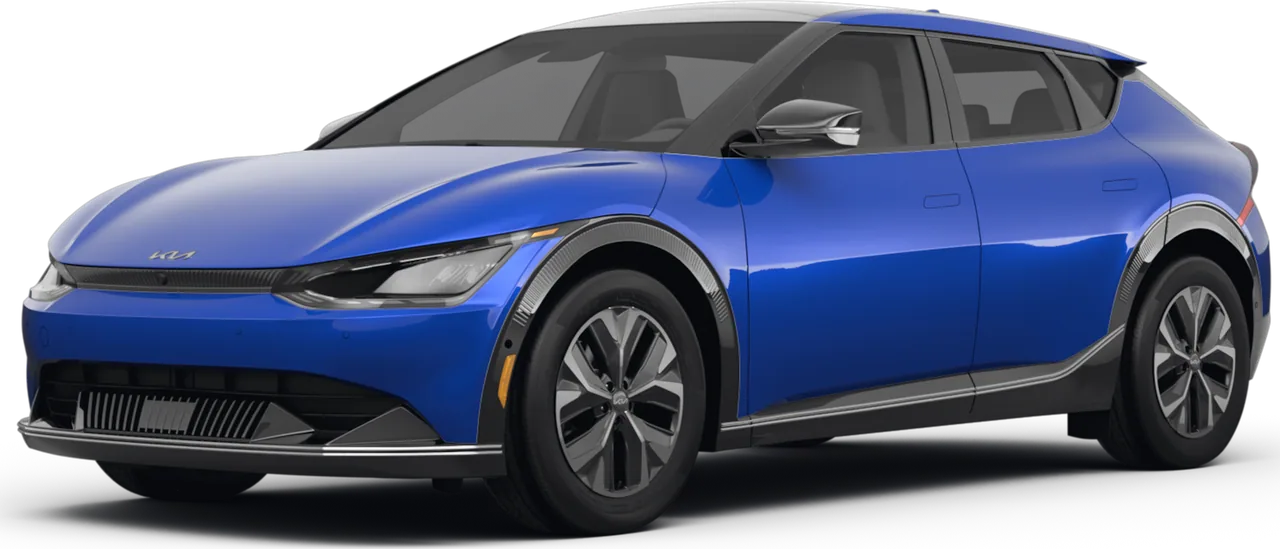
2023 Kia EV6 Long Range RWD
Electric SUV · RWD
Based on battery health, build quality, owner data, EPA range, and market pricing
Above average for 2023 EV SUVs (class avg 66 · top 11%)
Personalize this scoreIs a low score bad?
Last scanned 12 days ago
The 2023 Kia EV6 Long Range RWD is rated at 225 hp, 310 miles of EPA range and a 74 kWh battery, and a mid-pack composite means the records-and-test-drive call matters more than the headline.
Score read
A 73/100 makes this worth pursuing if the price is sane. The useful split is software and driver-assist score at 79/100 versus owner feedback score at 63/100. Reddit threads cluster around software tech and owner satisfaction — verify both against the service records. If the seller cannot show recall completion, price that risk or move on.
Price context
The original sticker was $48,700. Used pricing varies by miles, condition, and how this model is moving in the market; pull a current KBB Fair Purchase or Edmunds True Market Value for this exact trim and anchor your offer there, not the sticker.
Who this is for
✓ Good for
- ⏱ Daily commuter ≤50 mi/day, predictable charging
- ↦ Road tripper Long trips, needs DC fast network
✗ Avoid if you are a
- $ Bargain hunter Best TCO, reliability + low depreciation
Gotchas
- Serviceable Recall paperwork has to match the exact VIN.
Mitigation Use NHTSA and the automaker lookup, then require repair records instead of a verbal promise.
- Verify Owner feedback is the part to read carefully (63/100).
Mitigation Read the complaint themes and ask whether this VIN has already had those issues repaired.
- Verify Current market pricing is not confirmed well enough for this trim.
Mitigation Compare KBB, J.D. Power, and live listings for the same trim before treating price as a buying signal.
Pre-purchase inspection
- 1 Run the exact VIN through NHTSA and the automaker recall lookup before discussing price.
- 2 Compare the dashboard range estimate with the EPA 310-mile rating after a full charge.
- 3 Confirm how much of the 10-year/100,000-mile battery warranty remains and whether it transfers.
- 4 If road trips matter, run a short DC fast-charge session and watch whether speed tapers normally.
- 5 Read the complaint themes, not just the count, and ask the seller whether those issues have shown up on this VIN.
VIN status first This model has 3 NHTSA recall records. The exact VIN lookup decides whether the car in front of you is clear.
Complaint context This scan found 126 NHTSA complaint records (22.9 per 10K VINs, elevated — verify before purchase). Read the themes below before treating the raw count as the verdict.
Price anchor Current market range is $21,400-$25,448. Use that range to compare listings for the same trim, mileage, and condition.
Pricing & Market Value
A73-rated trim trading 52% below MSRP. Higher discounts on higher-quality vehicles score better — this signal is orthogonal to the TrimIndex composite, not part of it.
Score Breakdown
What matters most to you?
Drag the sliders to prioritize what you care about. Your TrimIndex Score recalculates instantly.
Vehicle Specifications
EVs at your price point that match or beat this trim
Price-gated peer set: vehicles within $18.7K–$28.1K market value (±20% of $23.4K). 0 outscore · 5 score within ±2. Mixed across makes — no "spend more, score better" comps.
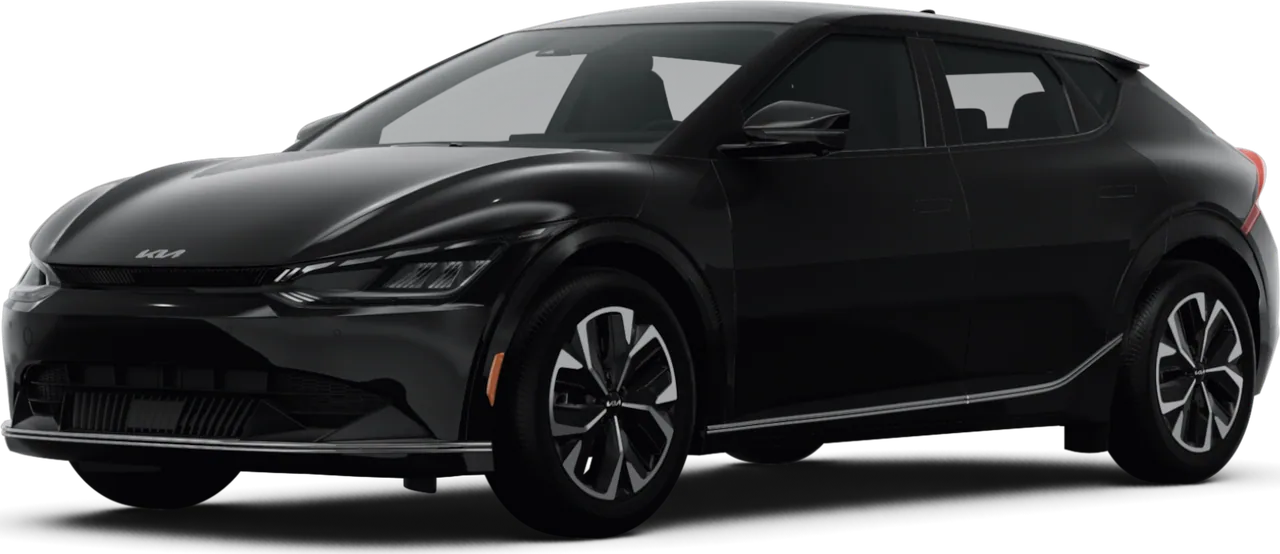
EV6
- ✓ Better bang-for-buck
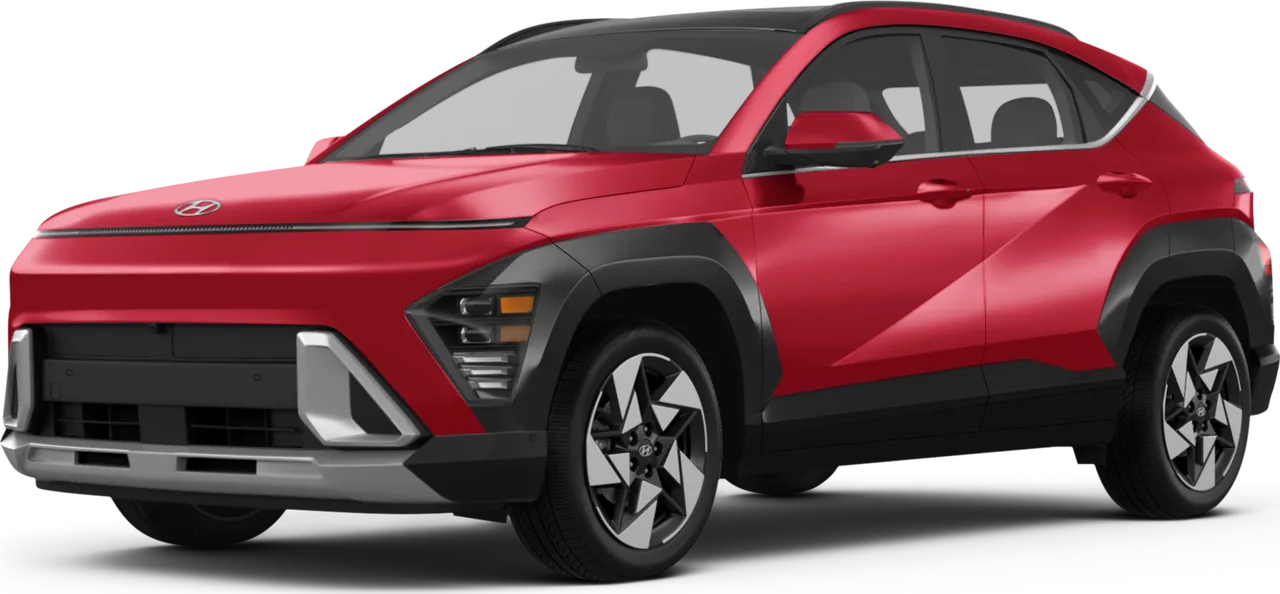
Kona
- ✓ Notably better build quality
- ✓ Better infotainment UX
Kona
- ✓ Better infotainment UX
- ✓ Notably better build quality
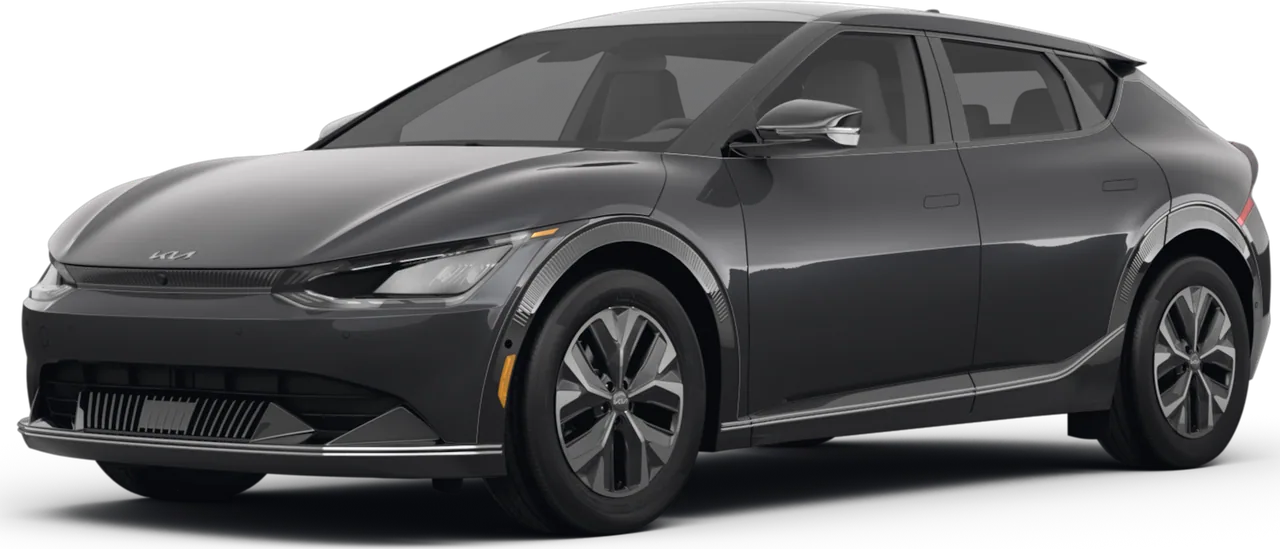
EV6
- ✓ Different trade-offs at the same price
Kona
- ✓ Better infotainment UX
- ✓ Notably better build quality
The federal $4,000 used-EV credit ended Sept 30, 2025.
But 10 states still run their own used-EV rebate programs — some up to $5,000. Pick your state to see what's available for this trim.
Source & disclaimer
Dealers make ~$7,840 on the average car loan.
After the price is set, the finance manager runs four plays to rebuild margin. Every buyer without a pre-approval is a target. Here's exactly what they run — and what stops each one.
78% of dealer loans carry a hidden +1.13% markup above what the lender actually charges. You never see it — it's buried in the contract. · CFPB
Dealer must match or beat your lender — they can't add margin invisibly. The markup play is dead on arrival.
Once you answer, they stretch the term to hit your number. Median result: $4K less off the price, 12 more months on the loan. · Industry avg
Financing is done. Only the sale price is on the table — and the dealer knows it.
Back-office F&I profit averages $1,975/vehicle, up 8.5% YoY. These products exist — but dealer markup is 4–10x what you'd pay elsewhere. · Dealership Guy
Dealer GAP runs $500–1K. Your insurer sells the same coverage for $100–250 over 5 years. Now you know.
"Your loan fell through — come re-sign." This pulls your APR up +5% on average. It's legal. It works because you've already driven the car home. · Ctr for Responsible Lending
A lender commitment letter means the deal is final. "Pending dealer approval" doesn't apply. You can't be yo-yo'd.
That's 23 months of your car payment — handed to the dealer's finance department for nothing.
Takes 2 minutes. No obligation to use it — but you'll walk in with all the leverage.
Pre-approval is a soft credit inquiry — no score impact. FICO treats all auto-loan hard pulls within 14 days as one, so you can still shop rates at the dealer.
NHTSA Recalls (3)
Kia America, Inc. (Kia) is recalling certain 2022-2024 EV6 vehicles. The Integrated Charging Control Unit (ICCU) may become damaged and stop charging the 12-volt battery, which can result in a loss of drive power.
A loss of drive power increases the risk of a crash.
Check VIN status at NHTSA.govKia America, Inc. (Kia) is recalling certain 2022-2024 EV6 vehicles. The Integrated Charging Control Unit (ICCU) may become damaged and stop charging the 12-Volt battery, which can result in a loss of drive power.
A loss of drive power increases the risk of a crash.
Check VIN status at NHTSA.govKia America, Inc. (Kia) is recalling certain 2023-2024 Niro EV and 2023 EV6 vehicles. One of the drive shafts may have been improperly heat-treated, allowing it to break under load and resulting in a loss of drive power.
A loss of drive power increases the risk of a crash.
Check VIN status at NHTSA.govNHTSA Complaints (126 total · 22.9 per 10K US vehicles · elevated — verify before purchase)
*ICCU assembly and ICCU fuse fault (a kia recall SC327( NHTSA ID: 24V867000) for ICCU was performed months early but does't help AND iccu crash) *yes - cars stop workind in the midle of nower at 317 mile away from home with 5 persons in) *yes ( kia already performed recall SC327 for our car but doest help and the ICCU crash) *yes *yes-vehicle broke down while driving.Had to be towed to closest Kia dealer(the incidend hapened 317 miles away from our home Dacula GA 30019)
*ICCU assembly and ICCU fuse fault (a kia recall SC327( NHTSA ID: 24V867000) for ICCU was performed months early but does't help AND iccu crash) *yes - cars stop workind in the midle of nower at 317 mile away from home with 5 persons in) *yes ( kia already performed recall SC327 for our car but doest help and the ICCU crash) *yes *yes-vehicle broke down while driving.Had to be towed to closest Kia dealer(the incidend hapened 317 miles away from our home Dacula GA 30019)
Dash board showed limited power couldnt accelerate above 10-12 mph pulled into residental area dash then showed warning sign 12v battery then car died in middle of street. Could not put car in neutral called dealership said car cannot be put in neutral without special tools. I had taken it in for recall in 2023 or 2024 cant remember. Luckily i was not on highway as i could not even turn on hazard lights and car shut off abruptly.
Dash board showed limited power couldnt accelerate above 10-12 mph pulled into residental area dash then showed warning sign 12v battery then car died in middle of street. Could not put car in neutral called dealership said car cannot be put in neutral without special tools. I had taken it in for recall in 2023 or 2024 cant remember. Luckily i was not on highway as i could not even turn on hazard lights and car shut off abruptly.
ICCU failure. Was confirmed by shop car was towed to over phone. But no mention of it on invoice as of yet. I was at traffic light when I heard a pop and when I tried to go, got the warning message to pullover and the turtle icon. I made it to a towable spot. Super fortunate all in all. Can’t imagine if on highway in weather. No hints of failure before. Car was recently purchased month prior. I took it in for recall within first week, was told all good, software was updated. I kept between 20%-80% at all times, charged lvl2 at work daily and lvl1 at home sometimes. Had cheap voltage meter in car and was reading fine. Hope to get my car back soon.
ICCU failure. Was confirmed by shop car was towed to over phone. But no mention of it on invoice as of yet. I was at traffic light when I heard a pop and when I tried to go, got the warning message to pullover and the turtle icon. I made it to a towable spot. Super fortunate all in all. Can’t imagine if on highway in weather. No hints of failure before. Car was recently purchased month prior. I took it in for recall within first week, was told all good, software was updated. I kept between 20%-80% at all times, charged lvl2 at work daily and lvl1 at home sometimes. Had cheap voltage meter in car and was reading fine. Hope to get my car back soon.
I was driving on a residential street at fairly slow speeds, like 25 mph. There was a stop sign so I engaged the brakes and the car did not smoothly slow down but instead it felt like the back tires locked up and a skid started and I actually went into the intersection before coming to a stop. There was no ice, no sand, just the road surface and the skid in the rear of the vehicle.
I was driving on a residential street at fairly slow speeds, like 25 mph. There was a stop sign so I engaged the brakes and the car did not smoothly slow down but instead it felt like the back tires locked up and a skid started and I actually went into the intersection before coming to a stop. There was no ice, no sand, just the road surface and the skid in the rear of the vehicle.
My 2023 Kia EV6 experienced a sudden ICCU and 12-volt system failure while traveling approximately 50 mph. Without warning, the vehicle instantly lost propulsion and all electrical power. This included loss of steering assist, braking assist, hazard lights, shift capability (unable to shift into Park), and even the ability to lock the doors. The failure effectively “bricked” the vehicle in motion. I was only able to get the vehicle off the roadway because the road happened to slope downward into a nearby lot. Steering required significant physical effort, the brake pedal went completely hard (“dead”), and the vehicle offered no functional parking brake or Park engagement once stopped. Because I was on a hill, we had to allow the car to roll to the bottom until it met a curb to prevent movement. After power loss, the doors could not be locked at all. This type of unrecoverable electrical failure creates an extreme safety hazard for the driver, passengers, and surrounding traffic. There is no pre-warning and no diagnostic indicator. The ICCU fuse appears to fail spontaneously and renders the vehicle uncontrollable in several critical respects. This is not an isolated issue. ICCU failures have been occurring across the Kia EV6 and Hyundai Ioniq 5/6 platforms for more than three years, including on brand-new 2025 models. The persistence of this defect across multiple model years indicates that the underlying design or component defect has not been resolved by the manufacturer. Given the suddenness of the failure, the total loss of vehicle control systems, and the long history of similar incidents reported by other owners, I am now hesitant to drive the vehicle due to the unpredictable and dangerous nature of the defect.
My 2023 Kia EV6 experienced a sudden ICCU and 12-volt system failure while traveling approximately 50 mph. Without warning, the vehicle instantly lost propulsion and all electrical power. This included loss of steering assist, braking assist, hazard lights, shift capability (unable to shift into Park), and even the ability to lock the doors. The failure effectively “bricked” the vehicle in motion. I was only able to get the vehicle off the roadway because the road happened to slope downward into a nearby lot. Steering required significant physical effort, the brake pedal went completely hard (“dead”), and the vehicle offered no functional parking brake or Park engagement once stopped. Because I was on a hill, we had to allow the car to roll to the bottom until it met a curb to prevent movement. After power loss, the doors could not be locked at all. This type of unrecoverable electrical failure creates an extreme safety hazard for the driver, passengers, and surrounding traffic. There is no pre-warning and no diagnostic indicator. The ICCU fuse appears to fail spontaneously and renders the vehicle uncontrollable in several critical respects. This is not an isolated issue. ICCU failures have been occurring across the Kia EV6 and Hyundai Ioniq 5/6 platforms for more than three years, including on brand-new 2025 models. The persistence of this defect across multiple model years indicates that the underlying design or component defect has not been resolved by the manufacturer. Given the suddenness of the failure, the total loss of vehicle control systems, and the long history of similar incidents reported by other owners, I am now hesitant to drive the vehicle due to the unpredictable and dangerous nature of the defect.
I purchased my 2023 Kia EV6 in December 28, 2024. On January 8, 2025, I took my EV6 in for the SC327 recall service. Despite completion of the recall service, my ICCU still failed and my car lost power while driving on February 6, 2025. I was driving 45 mph down a state road and was about to get into a highway onramp when my speed quickly dropped to 13 mph and my car displayed a "check electrical system" warning. The car would not go above 13 mph. I was fortunate that no one was following close behind me and that I was not on the highway. Had I been in front of a truck or other vehicle that couldn't stop quickly, the sudden deceleration could have been very dangerous. I was fortunate that I was near a parking lot that I could pull into to wait for a tow truck. By the time I got into the parking lot my car completely died and I was stuck without heat in 19 degree F weather. There were no symptoms prior to the failure, and the first warning about the electrical system ("Stop vehicle and check power supply") appeared after I lost acceleration. This warning was followed by "12 volt battery low. Stop safely." before it died completely. The vehicle is currently at the Kia Dealership pending repair.
I purchased my 2023 Kia EV6 in December 28, 2024. On January 8, 2025, I took my EV6 in for the SC327 recall service. Despite completion of the recall service, my ICCU still failed and my car lost power while driving on February 6, 2025. I was driving 45 mph down a state road and was about to get into a highway onramp when my speed quickly dropped to 13 mph and my car displayed a "check electrical system" warning. The car would not go above 13 mph. I was fortunate that no one was following close behind me and that I was not on the highway. Had I been in front of a truck or other vehicle that couldn't stop quickly, the sudden deceleration could have been very dangerous. I was fortunate that I was near a parking lot that I could pull into to wait for a tow truck. By the time I got into the parking lot my car completely died and I was stuck without heat in 19 degree F weather. There were no symptoms prior to the failure, and the first warning about the electrical system ("Stop vehicle and check power supply") appeared after I lost acceleration. This warning was followed by "12 volt battery low. Stop safely." before it died completely. The vehicle is currently at the Kia Dealership pending repair.
While driving with the power liftgate partially open, I experienced an inability to accelerate after coming to a stop. I pressed the accelerator and the car rolled gently forward into an intersection at a speed less than 2MPH. A warning displayed on the dash that I needed to close the liftgate before the vehicle would operate correctly, which was impossible because I was in the middle of an intersection with a large chair blocking the liftgate from closing. I was able to restore functionality by turning the car off and turning it back on. Prior to this, there were audible and visual alarms about the open liftgate after each stop. These alarms are described in the manual, which instructs the driver to close the liftgate when the alarms sound. However, driving with a liftgate open is a common use for an small SUV when hauling large or long objects, and contravenes no laws when done properly and safely. The manual does not state, so I did not anticipate, that the vehicle would enter a "limp mode" if I continued to ignore the alarms. Being unexpectedly unable to accelerate is a dangerous behavior, especially if you are in the position to make a left turn across traffic and the car goes into limp mode with cars oncoming. I consider this a safety concern because 1) driving with the liftgate open is not an inherently unsafe activity that warrants disabling the vehicle, and 2) the manual fails to state that the driver might experience sudden loss of ability to accelerate with the liftgate open.
While driving with the power liftgate partially open, I experienced an inability to accelerate after coming to a stop. I pressed the accelerator and the car rolled gently forward into an intersection at a speed less than 2MPH. A warning displayed on the dash that I needed to close the liftgate before the vehicle would operate correctly, which was impossible because I was in the middle of an intersection with a large chair blocking the liftgate from closing. I was able to restore functionality by turning the car off and turning it back on. Prior to this, there were audible and visual alarms about the open liftgate after each stop. These alarms are described in the manual, which instructs the driver to close the liftgate when the alarms sound. However, driving with a liftgate open is a common use for an small SUV when hauling large or long objects, and contravenes no laws when done properly and safely. The manual does not state, so I did not anticipate, that the vehicle would enter a "limp mode" if I continued to ignore the alarms. Being unexpectedly unable to accelerate is a dangerous behavior, especially if you are in the position to make a left turn across traffic and the car goes into limp mode with cars oncoming. I consider this a safety concern because 1) driving with the liftgate open is not an inherently unsafe activity that warrants disabling the vehicle, and 2) the manual fails to state that the driver might experience sudden loss of ability to accelerate with the liftgate open.
Vehicle does not charge at the full 11 kW it's rated for on a level 2 EVSE. It gets charge interrupted. I've had the SC311 installed which causes the car to lower the charging rate automatically instead of just dropping charge. But I still can't get the full charge rate. This occurs on my home level 2 EVSE, on each of the 12 level 2 EVSE ports I use at work, and out in town. The charging port gets extremely hot when charging and is not designed to pass the full 50 amps it's rated for. It struggles at anything over 25 amps. The extreme temperatures of the charging port can cause a fire or burns to people. The car needs to be recalled and the J1772 charging port and sensors needs to be replaced. This complaint is very common in the various EV6 owner's forums.
Vehicle does not charge at the full 11 kW it's rated for on a level 2 EVSE. It gets charge interrupted. I've had the SC311 installed which causes the car to lower the charging rate automatically instead of just dropping charge. But I still can't get the full charge rate. This occurs on my home level 2 EVSE, on each of the 12 level 2 EVSE ports I use at work, and out in town. The charging port gets extremely hot when charging and is not designed to pass the full 50 amps it's rated for. It struggles at anything over 25 amps. The extreme temperatures of the charging port can cause a fire or burns to people. The car needs to be recalled and the J1772 charging port and sensors needs to be replaced. This complaint is very common in the various EV6 owner's forums.
A couple of months ago the breaks started making a strange grinding noise and it starts vibrating for a few brief seconds, but violently. There are no warning lights or any indication of malfunction. I took it to the dealership and they allegedly fixed it. Nevertheless, less than a month later, the noise came back, and not just a noise, but the vehicle attempts to stop abruptly without me engaging the breaks. It happens intermittently, and it is quite scary when it happens while driving high speed on a freeway. It creates safety issues. This is not my first EV. I am very familiar with EVs, regenerative breaking, and so on. This is not a regenerative breaking issue. I don't even know how to properly describe it. it is very unusual.
A couple of months ago the breaks started making a strange grinding noise and it starts vibrating for a few brief seconds, but violently. There are no warning lights or any indication of malfunction. I took it to the dealership and they allegedly fixed it. Nevertheless, less than a month later, the noise came back, and not just a noise, but the vehicle attempts to stop abruptly without me engaging the breaks. It happens intermittently, and it is quite scary when it happens while driving high speed on a freeway. It creates safety issues. This is not my first EV. I am very familiar with EVs, regenerative breaking, and so on. This is not a regenerative breaking issue. I don't even know how to properly describe it. it is very unusual.
Component/System Failure: The i-Pedal feature in the Kia EV6, designed for one-pedal driving through regenerative braking, consistently fails to stay engaged. This component is available for inspection upon request. Safety Risk:The erratic behavior of the i-Pedal function poses a significant safety risk. When the i-Pedal mode disengages unexpectedly, drivers must abruptly switch to using traditional brakes. This sudden transition increases the likelihood of delayed reactions and potential accidents, especially in heavy traffic or complex driving situations. Problem Reproduction/Confirmation: The problem has been widely reported by multiple users on forums and confirmed through personal experience. It has been noted that the i-Pedal mode disengages when the vehicle is stationary or when the battery is fully charged. Inspection by Authorities: The vehicle has been inspected by a dealer, but the issue persists due to a lack of awareness or understanding of the i-Pedal system among service personnel. No inspections by the manufacturer, police, or insurance representatives have occurred yet. Warning Lamps/Messages: There are no warning lamps or error messages indicating the malfunction of the i-Pedal feature. The issue is typically observed when the vehicle unexpectedly exits i-Pedal mode, requiring the driver to manually re-engage it using the steering wheel paddles. Assessment of the Incident:The inconsistency in the i-Pedal system's engagement appears to result from potential software bugs, sensor malfunctions, or design flaws in the regenerative braking system. This unreliability significantly impacts daily driving safety and efficiency. Recommendation 1. Software Update: Kia should release a firmware update to make sure the i-Pedal mode remains stable and reliable under all driving conditions and even after vehicle is turned off and back on.
Component/System Failure: The i-Pedal feature in the Kia EV6, designed for one-pedal driving through regenerative braking, consistently fails to stay engaged. This component is available for inspection upon request. Safety Risk:The erratic behavior of the i-Pedal function poses a significant safety risk. When the i-Pedal mode disengages unexpectedly, drivers must abruptly switch to using traditional brakes. This sudden transition increases the likelihood of delayed reactions and potential accidents, especially in heavy traffic or complex driving situations. Problem Reproduction/Confirmation: The problem has been widely reported by multiple users on forums and confirmed through personal experience. It has been noted that the i-Pedal mode disengages when the vehicle is stationary or when the battery is fully charged. Inspection by Authorities: The vehicle has been inspected by a dealer, but the issue persists due to a lack of awareness or understanding of the i-Pedal system among service personnel. No inspections by the manufacturer, police, or insurance representatives have occurred yet. Warning Lamps/Messages: There are no warning lamps or error messages indicating the malfunction of the i-Pedal feature. The issue is typically observed when the vehicle unexpectedly exits i-Pedal mode, requiring the driver to manually re-engage it using the steering wheel paddles. Assessment of the Incident:The inconsistency in the i-Pedal system's engagement appears to result from potential software bugs, sensor malfunctions, or design flaws in the regenerative braking system. This unreliability significantly impacts daily driving safety and efficiency. Recommendation 1. Software Update: Kia should release a firmware update to make sure the i-Pedal mode remains stable and reliable under all driving conditions and even after vehicle is turned off and back on.
On four separate occasions while driving on the highway between July thru November 2023; vehicle has had a loss of motive power (reduced speed) increasing risk of crash. Due to loss of motive power unable to accelerate to get out of way for merging traffic, also when approaching hills on interstate car would slow to speeds of less than 40 mph; unable to accelerate or move out of the way when fast approaching vehicles from the rear. I had taken the vehicle to a dealership on three occasions to seek resolution to only be told all diagnostic testing did not reveal any issues. Dealership has performed updates to the systems as well as recall update for ICCU upgrade, nothing to date has resolved this issue. I’m fearful to drive vehicle on highway that someone will slam into my car potentially causing harm or death.
On four separate occasions while driving on the highway between July thru November 2023; vehicle has had a loss of motive power (reduced speed) increasing risk of crash. Due to loss of motive power unable to accelerate to get out of way for merging traffic, also when approaching hills on interstate car would slow to speeds of less than 40 mph; unable to accelerate or move out of the way when fast approaching vehicles from the rear. I had taken the vehicle to a dealership on three occasions to seek resolution to only be told all diagnostic testing did not reveal any issues. Dealership has performed updates to the systems as well as recall update for ICCU upgrade, nothing to date has resolved this issue. I’m fearful to drive vehicle on highway that someone will slam into my car potentially causing harm or death.
When using 1 pedal driving, it isn't necessary to use the brake pedal to stop the EV. The EV6 will only illuminate the brake lights when the accelerator pedal is completely released, or when the brake pedal is depressed. Since using 1 pedal driving does not require depressing the brake pedal to stop, the following vehicle has no indication or warning that the EV6 is stopping. I have experienced several instances of near rear-end collisions because of this dangerous issue with the Kia EV6. I emailed Kia asking if they were going to offer an OTA fix and this is their reply, " Dear [XXX], Hello, This email is to let you know that as of now we are not aware of any updates coming out for this feature. Your complaint will remain on file here within Kia for review. Sincerely, Kia America. Curiously Kia's parent company Hyundai, whose Ionic 5 has the same problem, is receiving a fix which will illuminate the brake lights while using the same 1 pedal driving programming as the Kia EV6. Because the lack of 1 pedal driving brake light warning to following vehicles, I have turned this feature off until the issue has been resolved. I hope NHTSA takes this dangerous situation seriously and provides legislation to force auto manufacturers to adjust the conditions when brake lights must illuminate. INFORMATION Redacted PURSUANT TO THE FREEDOM OF INFORMATION ACT (FOIA), 5 U.S.C. 552(B)(6).
When using 1 pedal driving, it isn't necessary to use the brake pedal to stop the EV. The EV6 will only illuminate the brake lights when the accelerator pedal is completely released, or when the brake pedal is depressed. Since using 1 pedal driving does not require depressing the brake pedal to stop, the following vehicle has no indication or warning that the EV6 is stopping. I have experienced several instances of near rear-end collisions because of this dangerous issue with the Kia EV6. I emailed Kia asking if they were going to offer an OTA fix and this is their reply, " Dear [XXX], Hello, This email is to let you know that as of now we are not aware of any updates coming out for this feature. Your complaint will remain on file here within Kia for review. Sincerely, Kia America. Curiously Kia's parent company Hyundai, whose Ionic 5 has the same problem, is receiving a fix which will illuminate the brake lights while using the same 1 pedal driving programming as the Kia EV6. Because the lack of 1 pedal driving brake light warning to following vehicles, I have turned this feature off until the issue has been resolved. I hope NHTSA takes this dangerous situation seriously and provides legislation to force auto manufacturers to adjust the conditions when brake lights must illuminate. INFORMATION Redacted PURSUANT TO THE FREEDOM OF INFORMATION ACT (FOIA), 5 U.S.C. 552(B)(6).
While using I-Pedal mode the brake lights do not engage unless fully off of the accelerator. Even a large deceleration force does not engage any of the brake lights when coming to a full stop quickly. This is very dangerous as drivers behind cannot tell you are decelerating quickly.
While using I-Pedal mode the brake lights do not engage unless fully off of the accelerator. Even a large deceleration force does not engage any of the brake lights when coming to a full stop quickly. This is very dangerous as drivers behind cannot tell you are decelerating quickly.
ICCU failed despite all prior recall updates being performed. Incident began when home circuit breaker tripped; vehicle subsequently refused Level 1 charging with "Check Electrical System" warning. Per dealer suggestion, tested public chargers. Level 3 (DC) worked, but upon connecting to Level 2 (AC/J1772), a loud "pop" occurred, and the public charging station immediately suffered a mechanical failure/shutdown. Vehicle then displayed "Stop vehicle and check power supply," and was unable to drive above 40mph (with a turtle icon visible on the dash) once I pulled away from the charging station. This created a significant safety hazard while navigating traffic. Within two hours, the 12V battery was completely depleted; vehicle was unresponsive and required a jump-start for towing. Dealer confirmed ICCU failure requiring replacement. The fact that the vehicle's internal failure caused the immediate malfunction of public infrastructure is deeply concerning, as was the loss of motive power on the road.
ICCU failed despite all prior recall updates being performed. Incident began when home circuit breaker tripped; vehicle subsequently refused Level 1 charging with "Check Electrical System" warning. Per dealer suggestion, tested public chargers. Level 3 (DC) worked, but upon connecting to Level 2 (AC/J1772), a loud "pop" occurred, and the public charging station immediately suffered a mechanical failure/shutdown. Vehicle then displayed "Stop vehicle and check power supply," and was unable to drive above 40mph (with a turtle icon visible on the dash) once I pulled away from the charging station. This created a significant safety hazard while navigating traffic. Within two hours, the 12V battery was completely depleted; vehicle was unresponsive and required a jump-start for towing. Dealer confirmed ICCU failure requiring replacement. The fact that the vehicle's internal failure caused the immediate malfunction of public infrastructure is deeply concerning, as was the loss of motive power on the road.
My vehicle has been in the possession of Koons Kia of Owings Mills since March 15, 2026, for diagnosis and repair of this issue, with service beginning March 16, 2026. During this time, the dealership has replaced the 12-volt battery and performed a software update; however, the defect has not been corrected. On April 10, 2026, I was notified that the vehicle was ready for pickup. When I arrived on April 11, I found that the battery was completely discharged and the issue had not been resolved. Because the vehicle was not operational at the time of attempted pickup, it was not returned to me and remained in the dealership’s possession. I was contacted again on April 13, 2026, and informed that the vehicle had been repaired. When I returned to the dealership on April 14 to retrieve the vehicle, I again found that the battery was discharged and the defect persisted. As a result, the vehicle was not returned to me and has remained continuously in the dealership’s possession since March 15, 2026. As of today, the vehicle has been out of service for more than 30 consecutive days due to this defect, and multiple repair efforts have failed to resolve the issue. This ongoing condition substantially impairs the use, value, and reliability of the vehicle.
My vehicle has been in the possession of Koons Kia of Owings Mills since March 15, 2026, for diagnosis and repair of this issue, with service beginning March 16, 2026. During this time, the dealership has replaced the 12-volt battery and performed a software update; however, the defect has not been corrected. On April 10, 2026, I was notified that the vehicle was ready for pickup. When I arrived on April 11, I found that the battery was completely discharged and the issue had not been resolved. Because the vehicle was not operational at the time of attempted pickup, it was not returned to me and remained in the dealership’s possession. I was contacted again on April 13, 2026, and informed that the vehicle had been repaired. When I returned to the dealership on April 14 to retrieve the vehicle, I again found that the battery was discharged and the defect persisted. As a result, the vehicle was not returned to me and has remained continuously in the dealership’s possession since March 15, 2026. As of today, the vehicle has been out of service for more than 30 consecutive days due to this defect, and multiple repair efforts have failed to resolve the issue. This ongoing condition substantially impairs the use, value, and reliability of the vehicle.
Got in my car to leave a store and heard a loud pop and noticed a smell like an electric motor burning. Backed out of my space to drive home and the car displayed several error messages- Check electric vehicle system, turtle mode, power reduced. I was stranded and had to order a tow truck to be towed to the dealer and get a ride home.
Got in my car to leave a store and heard a loud pop and noticed a smell like an electric motor burning. Backed out of my space to drive home and the car displayed several error messages- Check electric vehicle system, turtle mode, power reduced. I was stranded and had to order a tow truck to be towed to the dealer and get a ride home.
ICCU on my Kia EV6, this is a known issue, shouldn’t be bound by miles, as it’s not a mileage issue or concern! The warning was Stop Vehicle Check Power Supply!
ICCU on my Kia EV6, this is a known issue, shouldn’t be bound by miles, as it’s not a mileage issue or concern! The warning was Stop Vehicle Check Power Supply!
Repeated failed attempts to repair ICCU culminating in ICCU failure. May 15, 2024 – Initial repair attempt (ICCU-related recall/service). September 5, 2024 – VCMS logic recall performed. December 19, 2024 –second repair attempt for ICCU-related issue. October 16, 2025 – Limp-home logic recall performed. March 11, 2026- Vehicle experienced a complete loss of power and was rendered undrivable. Repeated attempts to avoid ICCU failure still resulted in said ICCU failure and a loss of propulsion event while vehicle was on the road.
Repeated failed attempts to repair ICCU culminating in ICCU failure. May 15, 2024 – Initial repair attempt (ICCU-related recall/service). September 5, 2024 – VCMS logic recall performed. December 19, 2024 –second repair attempt for ICCU-related issue. October 16, 2025 – Limp-home logic recall performed. March 11, 2026- Vehicle experienced a complete loss of power and was rendered undrivable. Repeated attempts to avoid ICCU failure still resulted in said ICCU failure and a loss of propulsion event while vehicle was on the road.
Vehicle charging. When charging at home or public charging stations. It sometimes automatically shuts off before it gets to limit set.
Vehicle charging. When charging at home or public charging stations. It sometimes automatically shuts off before it gets to limit set.
I was driving 40mph and received a yellow error message along the lines of "electrical system issue, please check" and my speed was limited to 25mph. After trying to get the car to a safe location (as I was on a narrow two-lane road), the error changed to a blinking red error and my speed was further limited to 12mph. I was unable to get the car one mile to the dealer for service, so I stopped the car in a parking lot and had it towed to the dealer. The dealer diagnosed the problem and replaced the ICCU (2nd time on this car) and the 12 volt battery.
I was driving 40mph and received a yellow error message along the lines of "electrical system issue, please check" and my speed was limited to 25mph. After trying to get the car to a safe location (as I was on a narrow two-lane road), the error changed to a blinking red error and my speed was further limited to 12mph. I was unable to get the car one mile to the dealer for service, so I stopped the car in a parking lot and had it towed to the dealer. The dealer diagnosed the problem and replaced the ICCU (2nd time on this car) and the 12 volt battery.
My (EV6) failed to charge on both Level 1 and Level 2 charging. A “Check Electrical Vehicle System” message appeared on my dashboard. I took my vehicle to my nearest dealership, where the technician confirmed a faulty ICCU. Fortunately, my vehicle was drivable, and this failure occurred at home rather than on the highway, which could have been a significantly more serious issue. A part has been ordered, and the vehicle has been in the shop going on two weeks.
My (EV6) failed to charge on both Level 1 and Level 2 charging. A “Check Electrical Vehicle System” message appeared on my dashboard. I took my vehicle to my nearest dealership, where the technician confirmed a faulty ICCU. Fortunately, my vehicle was drivable, and this failure occurred at home rather than on the highway, which could have been a significantly more serious issue. A part has been ordered, and the vehicle has been in the shop going on two weeks.
ICCU failure
ICCU failure
ICCU Failure. It's been replaced by Kia under warranty. Initially Level 2 charging failed multiple times. Luckily mine didn't die on the road, but it very well could've like others reported.
ICCU Failure. It's been replaced by Kia under warranty. Initially Level 2 charging failed multiple times. Luckily mine didn't die on the road, but it very well could've like others reported.
In November 2025, after charging car overnight, backed out of driveway and began to drive. Within 100 feet, received red error message and tone: “Stop vehicle and check power supply”. Stopped the vehicle and got it towed to Kia dealer, who confirmed that the ICCU had failed, despite the car having received the software patch purporting to fix the problem. The ICCU was replaced under warranty within a week. We were fortunate that this occured very close to home, without safety consequences. Ten minutes later, the car would have been travelling at 65 on a highway with no shoulder for long stretches, which would have been very dangerous. This was a certified preowned EV6 with less than 9000 miles on it. The 12 volt battery was brand new, having been replaced 3 months earlier with an AGM battery as a possible preventative measure for this issue.
In November 2025, after charging car overnight, backed out of driveway and began to drive. Within 100 feet, received red error message and tone: “Stop vehicle and check power supply”. Stopped the vehicle and got it towed to Kia dealer, who confirmed that the ICCU had failed, despite the car having received the software patch purporting to fix the problem. The ICCU was replaced under warranty within a week. We were fortunate that this occured very close to home, without safety consequences. Ten minutes later, the car would have been travelling at 65 on a highway with no shoulder for long stretches, which would have been very dangerous. This was a certified preowned EV6 with less than 9000 miles on it. The 12 volt battery was brand new, having been replaced 3 months earlier with an AGM battery as a possible preventative measure for this issue.
ICCU failed. Towed to dealer and awaiting a replacement.
ICCU failed. Towed to dealer and awaiting a replacement.
ICCU failed (first of two incidents).
ICCU failed (first of two incidents).
The ICCU fuse blew. As I was driving, the car began to lose power. Fortunately I was able to pull into a parking lot before I lost all power. It's the same issue as the recall SC327Y1 from NHTSA, which occurred although the software update had already been performed previously. The dealer is replacing the ICCU and ICCU fuse under SC327Y1 after inspecting it. I did receive a warning as I was driving that the car was low on power.
The ICCU fuse blew. As I was driving, the car began to lose power. Fortunately I was able to pull into a parking lot before I lost all power. It's the same issue as the recall SC327Y1 from NHTSA, which occurred although the software update had already been performed previously. The dealer is replacing the ICCU and ICCU fuse under SC327Y1 after inspecting it. I did receive a warning as I was driving that the car was low on power.
ICCU failure and IVCU fuse failure
ICCU failure and IVCU fuse failure
The ICCU failed. The vehicle suddenly stopped on the road, would not go into any gear and could not be moved whatsoever, was stuck on the side of the road in a dangerous position. Called roadside assistance, after a few hours the vehicle was towed to the nearest dealership. After a week the vehicle had the ICCU replaced under warranty.
The ICCU failed. The vehicle suddenly stopped on the road, would not go into any gear and could not be moved whatsoever, was stuck on the side of the road in a dangerous position. Called roadside assistance, after a few hours the vehicle was towed to the nearest dealership. After a week the vehicle had the ICCU replaced under warranty.
The component that is seeming to fail in most KIA EV6's is the ICCU assembly. This is the component that failed in my KIA EV6 GT. Part# 364-1XFA0AQQK Also the ICCU Fuse, Part#375F2-GI040QQK FUSE-HIGH VOLTAGE. My safety and everyone around me was put at risk when the vehicle loss power due to this ICCU failure. As I entered the highway the vehicle starts loosing power. The vehicle gradually lost power more and more over time. I was able to make it to an exit driving at approximately 20-30 mph, and was able to drive it back to my house where it was then towed to a dealership. The problem has been confirmed by the dealer. I have the invoice to prove the repair of the ICCU. Yes there were warning messages on the screen when the ICCU failed. First, there was an audible "POP" which was the fuse blowing first. Once the fuse blows, it slowly kills the 12v battery and the car then looses power and you're no longer able to drive the vehicle. At that point, the ICCU is blown. The error message showing on the screen was: "CHECK ELECTRIC VEHICLE SYSTEM". Then the display starts blinking red and displays "STOP VEHICLE AND CHECK POWER SUPPLY". I have all the screenshots of the error messages the vehicle displays. The text message that is attached to this complaint is the service tech informing me that the 12v battery that they charged me $366.66 for, DID NOT FIX THE ISSUE. Yet they still charged me for the battery. This dealerships service department had my car from January 21, 2026 to March 4, 2026. A total of 42 days. At the time of the text message, it had already been past one month. I would like to be reimbursed for this cost.
The component that is seeming to fail in most KIA EV6's is the ICCU assembly. This is the component that failed in my KIA EV6 GT. Part# 364-1XFA0AQQK Also the ICCU Fuse, Part#375F2-GI040QQK FUSE-HIGH VOLTAGE. My safety and everyone around me was put at risk when the vehicle loss power due to this ICCU failure. As I entered the highway the vehicle starts loosing power. The vehicle gradually lost power more and more over time. I was able to make it to an exit driving at approximately 20-30 mph, and was able to drive it back to my house where it was then towed to a dealership. The problem has been confirmed by the dealer. I have the invoice to prove the repair of the ICCU. Yes there were warning messages on the screen when the ICCU failed. First, there was an audible "POP" which was the fuse blowing first. Once the fuse blows, it slowly kills the 12v battery and the car then looses power and you're no longer able to drive the vehicle. At that point, the ICCU is blown. The error message showing on the screen was: "CHECK ELECTRIC VEHICLE SYSTEM". Then the display starts blinking red and displays "STOP VEHICLE AND CHECK POWER SUPPLY". I have all the screenshots of the error messages the vehicle displays. The text message that is attached to this complaint is the service tech informing me that the 12v battery that they charged me $366.66 for, DID NOT FIX THE ISSUE. Yet they still charged me for the battery. This dealerships service department had my car from January 21, 2026 to March 4, 2026. A total of 42 days. At the time of the text message, it had already been past one month. I would like to be reimbursed for this cost.
On April 24, 2025, I plugged my Kia EV6 into my 48-amp hardwired ChargePoint HomeFlex at 7:26 PM. Around 10:30 PM I heard a noise outside but did not investigate. At 12:25 AM I noticed I had not received a “charging complete” notification. The Kia Connect app showed the vehicle at 74% and no longer charging. The ChargePoint app was unresponsive.\n\nThe next morning I found the charger’s 60-amp breaker had tripped. After resetting the breaker and rebooting the charger, the EV6 would not start charging and displayed no “Charging started” or “Charging unsuccessful” message.\n\nI then attempted to charge using a portable Tesla Level 1 charger on a 120V GFCI outlet. The EV6 briefly announced “Charging started,” but the dash showed no charging data. The outlet’s GFCI breaker tripped. After resetting, the breaker immediately tripped again when reconnecting the vehicle.\n\nI attempted to drive to a nearby DC fast charger. Upon shifting into drive, the vehicle displayed “Check electric vehicle system” and entered power-limited mode (would not exceed 20 MPH). I returned home. While backing into my driveway, the vehicle triggered a red alert with “Stop vehicle and check power supply.”\n\nThe vehicle was towed to a Kia dealership. They diagnosed a failed ICCU (Integrated Charging Control Unit) and high-voltage fuse. The ICCU recall issue is known for this model. Repairs took over two weeks due to parts delays. The ICCU and high-voltage fuse were replaced.\n\nThe ICCU failure also damaged my home ChargePoint charger, which required replacement under warranty
On April 24, 2025, I plugged my Kia EV6 into my 48-amp hardwired ChargePoint HomeFlex at 7:26 PM. Around 10:30 PM I heard a noise outside but did not investigate. At 12:25 AM I noticed I had not received a “charging complete” notification. The Kia Connect app showed the vehicle at 74% and no longer charging. The ChargePoint app was unresponsive.\n\nThe next morning I found the charger’s 60-amp breaker had tripped. After resetting the breaker and rebooting the charger, the EV6 would not start charging and displayed no “Charging started” or “Charging unsuccessful” message.\n\nI then attempted to charge using a portable Tesla Level 1 charger on a 120V GFCI outlet. The EV6 briefly announced “Charging started,” but the dash showed no charging data. The outlet’s GFCI breaker tripped. After resetting, the breaker immediately tripped again when reconnecting the vehicle.\n\nI attempted to drive to a nearby DC fast charger. Upon shifting into drive, the vehicle displayed “Check electric vehicle system” and entered power-limited mode (would not exceed 20 MPH). I returned home. While backing into my driveway, the vehicle triggered a red alert with “Stop vehicle and check power supply.”\n\nThe vehicle was towed to a Kia dealership. They diagnosed a failed ICCU (Integrated Charging Control Unit) and high-voltage fuse. The ICCU recall issue is known for this model. Repairs took over two weeks due to parts delays. The ICCU and high-voltage fuse were replaced.\n\nThe ICCU failure also damaged my home ChargePoint charger, which required replacement under warranty
1st instance: Battery Coolant errors that occurred on and off. 2nd instance: The ICCU unit failed and car was not able to charge via level 2 and only fast charge. Car was still operable. Dealer replaced ICCU 3rd instance: The ICCU failed and car was rendered inoperable. Dealer Replaced ICCU. We are now on our third ICCU since we purchased the car in 11/26/2022. This would be considered a lemon law
1st instance: Battery Coolant errors that occurred on and off. 2nd instance: The ICCU unit failed and car was not able to charge via level 2 and only fast charge. Car was still operable. Dealer replaced ICCU 3rd instance: The ICCU failed and car was rendered inoperable. Dealer Replaced ICCU. We are now on our third ICCU since we purchased the car in 11/26/2022. This would be considered a lemon law
While charging my vehicle at a level 2 charging station, my vehicle ceased charging. I received no other warnings or symptoms prior to my vehicle ceasing to charge. Upon being alerted by the Kia Access app that the charging stopped, I went to check my vehicle and none of my doors would unlock in response to the buttons on my keys. I had to manually unlock my driver side door in order to enter my vehicle. I attempted to start my vehicle and unplug/re-plug in the charger, but my vehicle would not start or charge. Using a portable jump starter, I was able to jump start my vehicle and begin charging again. However, after approximately 5 minutes of charging, my vehicle stopped charging and once again would not start. At that point, I called for my vehicle to be towed to a Kia Service Center. The Kia Service Center was able to reproduce the problem of my vehicle not starting or charging and informed me that there was an internal short circuit caused by a bad Integrated Charging Control Unit (ICCU). The bad ICCU shorted my ICCU fuse, resulting in the draining of my 12-volt battery. The ICCU and fuse were replaced at no cost to me. Although my vehicle is available for inspection upon request, the parts that malfunctioned have been replaced with new, functioning parts. My safety or the safety of others were not at risk in this situation, but I was fortunate that my 12-volt battery died while parked and charging, not while I was driving, which could have caused an accident.
While charging my vehicle at a level 2 charging station, my vehicle ceased charging. I received no other warnings or symptoms prior to my vehicle ceasing to charge. Upon being alerted by the Kia Access app that the charging stopped, I went to check my vehicle and none of my doors would unlock in response to the buttons on my keys. I had to manually unlock my driver side door in order to enter my vehicle. I attempted to start my vehicle and unplug/re-plug in the charger, but my vehicle would not start or charge. Using a portable jump starter, I was able to jump start my vehicle and begin charging again. However, after approximately 5 minutes of charging, my vehicle stopped charging and once again would not start. At that point, I called for my vehicle to be towed to a Kia Service Center. The Kia Service Center was able to reproduce the problem of my vehicle not starting or charging and informed me that there was an internal short circuit caused by a bad Integrated Charging Control Unit (ICCU). The bad ICCU shorted my ICCU fuse, resulting in the draining of my 12-volt battery. The ICCU and fuse were replaced at no cost to me. Although my vehicle is available for inspection upon request, the parts that malfunctioned have been replaced with new, functioning parts. My safety or the safety of others were not at risk in this situation, but I was fortunate that my 12-volt battery died while parked and charging, not while I was driving, which could have caused an accident.
While the vehicle was on the charger, the ICCU failed which then caused then fried my JuiceBox EV40 charger and flipped the dedicated circuit breaker. The car has since been repaired. I am concerned that this is a dangerous failure. If it happened on the road it potentially left me without propulsion. I'm also concerned that but for the circuit breaker functioning as designed it could have caused an electrical fire. My understanding is that this has been an ongoing problem with Kia and Hyundai EVs. I do not believe that Kia/Hyundai are taking responsibility for fixing the problem that have not plagued other manufacturers.
While the vehicle was on the charger, the ICCU failed which then caused then fried my JuiceBox EV40 charger and flipped the dedicated circuit breaker. The car has since been repaired. I am concerned that this is a dangerous failure. If it happened on the road it potentially left me without propulsion. I'm also concerned that but for the circuit breaker functioning as designed it could have caused an electrical fire. My understanding is that this has been an ongoing problem with Kia and Hyundai EVs. I do not believe that Kia/Hyundai are taking responsibility for fixing the problem that have not plagued other manufacturers.
On April 24, 2025, I plugged my Kia EV6 into my 48-amp hardwired ChargePoint HomeFlex at 7:26 PM. Around 10:30 PM I heard a noise outside but did not investigate. At 12:25 AM I noticed I had not received a “charging complete” notification. The Kia Connect app showed the vehicle at 74% and no longer charging. The ChargePoint app was unresponsive. The next morning I found the charger’s 60-amp breaker had tripped. After resetting the breaker and rebooting the charger, the EV6 would not start charging and displayed no “Charging started” or “Charging unsuccessful” message. I then attempted to charge using a portable Tesla Level 1 charger on a 120V GFCI outlet. The EV6 briefly announced “Charging started,” but the dash showed no charging data. The outlet’s GFCI breaker tripped. After resetting, the breaker immediately tripped again when reconnecting the vehicle. I attempted to drive to a nearby DC fast charger. Upon shifting into drive, the vehicle displayed “Check electric vehicle system” and entered power-limited mode (would not exceed 20 MPH). I returned home. While backing into my driveway, the vehicle triggered a red alert with “Stop vehicle and check power supply.” The vehicle was towed to a Kia dealership. They diagnosed a failed ICCU (Integrated Charging Control Unit) and high-voltage fuse. The ICCU recall issue is known for this model. Repairs took over two weeks due to parts delays. The ICCU and high-voltage fuse were replaced. The ICCU failure also damaged my home ChargePoint charger, which required replacement under warranty.
On April 24, 2025, I plugged my Kia EV6 into my 48-amp hardwired ChargePoint HomeFlex at 7:26 PM. Around 10:30 PM I heard a noise outside but did not investigate. At 12:25 AM I noticed I had not received a “charging complete” notification. The Kia Connect app showed the vehicle at 74% and no longer charging. The ChargePoint app was unresponsive. The next morning I found the charger’s 60-amp breaker had tripped. After resetting the breaker and rebooting the charger, the EV6 would not start charging and displayed no “Charging started” or “Charging unsuccessful” message. I then attempted to charge using a portable Tesla Level 1 charger on a 120V GFCI outlet. The EV6 briefly announced “Charging started,” but the dash showed no charging data. The outlet’s GFCI breaker tripped. After resetting, the breaker immediately tripped again when reconnecting the vehicle. I attempted to drive to a nearby DC fast charger. Upon shifting into drive, the vehicle displayed “Check electric vehicle system” and entered power-limited mode (would not exceed 20 MPH). I returned home. While backing into my driveway, the vehicle triggered a red alert with “Stop vehicle and check power supply.” The vehicle was towed to a Kia dealership. They diagnosed a failed ICCU (Integrated Charging Control Unit) and high-voltage fuse. The ICCU recall issue is known for this model. Repairs took over two weeks due to parts delays. The ICCU and high-voltage fuse were replaced. The ICCU failure also damaged my home ChargePoint charger, which required replacement under warranty.
While driving the car we heard a loud pop in the cabin. That was followed by electrical warning lights on the dash. WE were only about a mile from home and did make it back safely at greatly reduced speed. The ICCU was confirmed to have failed by the dealership. The part was replaced. If we had been traveling on the highway it might have been difficult to find a safe place to exit the roadway.
While driving the car we heard a loud pop in the cabin. That was followed by electrical warning lights on the dash. WE were only about a mile from home and did make it back safely at greatly reduced speed. The ICCU was confirmed to have failed by the dealership. The part was replaced. If we had been traveling on the highway it might have been difficult to find a safe place to exit the roadway.
Pulling out of garage, car warned of limited speed and then within about 30 seconds completely shut down-- could not move, operate locks, etc. Car could not be started again and had to be towed away. 12v battery had been drained down to 4v due to failure of ICCU unit. Dealership replaced entire ICCU unit and fuse.
Pulling out of garage, car warned of limited speed and then within about 30 seconds completely shut down-- could not move, operate locks, etc. Car could not be started again and had to be towed away. 12v battery had been drained down to 4v due to failure of ICCU unit. Dealership replaced entire ICCU unit and fuse.
The ICCU went out on the vehicle.
The ICCU went out on the vehicle.
ICCU failure
ICCU failure
While driving in the evening with an estimated 180 miles range remaining a "pop" noise was heard. About a minute later a vague warning message the car had not displayed before appeared. We tried to make it home but concerning (and still vague) messages kept appearing quite rapidly. The car slowed down and came to a halt and died in an intersection. This all happened within five minutes of hearing the "pop" noise. Once the vehicle died the head and taillights went off and the car would not allow the emergency flasher lights to be turned on. It would not allow it to be put into neutral to allow it to be moved out of the intersection. It also would not allow any of its doors to be locked (manually or otherwise) except for the driver's door until the vehicle was repaired one week later. We found out following that the 12 volt battery had not charged due to a DC/DC converter input voltage sensor fault related to ICCU failure. The popping noise had been a fuse. As the applicable ICCU parts were replaced by the dealership I doubt they will be available for inspection. The safety of my family was put at risk by: - the car's warnings not clearly explaining what the issue was. - the car not giving clear indication of how quickly it would die. - the car dying in a busy intersection. - the car being unable to be shifted to neutral. - the car's warning flashers not being operational when it died in the middle of the intersection at night. - us being left without warmth in outside temperatures around 6 degrees Fahrenheit. The ICCU problem was confirmed by the dealership we purchased the vehicle from. The vehicle was only inspected by the dealership acting on behalf of Kia.
While driving in the evening with an estimated 180 miles range remaining a "pop" noise was heard. About a minute later a vague warning message the car had not displayed before appeared. We tried to make it home but concerning (and still vague) messages kept appearing quite rapidly. The car slowed down and came to a halt and died in an intersection. This all happened within five minutes of hearing the "pop" noise. Once the vehicle died the head and taillights went off and the car would not allow the emergency flasher lights to be turned on. It would not allow it to be put into neutral to allow it to be moved out of the intersection. It also would not allow any of its doors to be locked (manually or otherwise) except for the driver's door until the vehicle was repaired one week later. We found out following that the 12 volt battery had not charged due to a DC/DC converter input voltage sensor fault related to ICCU failure. The popping noise had been a fuse. As the applicable ICCU parts were replaced by the dealership I doubt they will be available for inspection. The safety of my family was put at risk by: - the car's warnings not clearly explaining what the issue was. - the car not giving clear indication of how quickly it would die. - the car dying in a busy intersection. - the car being unable to be shifted to neutral. - the car's warning flashers not being operational when it died in the middle of the intersection at night. - us being left without warmth in outside temperatures around 6 degrees Fahrenheit. The ICCU problem was confirmed by the dealership we purchased the vehicle from. The vehicle was only inspected by the dealership acting on behalf of Kia.
With no warning except a pop, the vehicle iccu will fail and leave you stranded, very dangerous if you are driving on the parkway
With no warning except a pop, the vehicle iccu will fail and leave you stranded, very dangerous if you are driving on the parkway
ICCU blew along with the fuse
ICCU blew along with the fuse
The ICCU has failed twice in my EV6. It is a fairly common issue for this vehicle. I had the ICCU replaced after the first failure, but it has failed again. There was no indication something was wrong with the car until I heard a pop and then the dash indicated "Check Electrical System"
The ICCU has failed twice in my EV6. It is a fairly common issue for this vehicle. I had the ICCU replaced after the first failure, but it has failed again. There was no indication something was wrong with the car until I heard a pop and then the dash indicated "Check Electrical System"
10:00 am January 28th AFTER A DRIVE OF APPROXIMATELY 20 MILES TO THE GROCERY STORE, we parked the 2023 Kia EV6 Wind,in the parking area, then entered the store to shop. On returning, we placed the groceries in the trunk and proceeded to leave for home. The push button "START" provoked a notice on the dash that the 12 volt battery was "LOW". The drive circuits would not enable. Prior to going in the store the dash information reported the main battery was at 62%, all else is normal. We are now stuck 20 miles from home. We called KIA roadside assistance, via a cell phone. The Kia site told us it did not recognize the VIN number we had entered three separate times.. It would not proceed down the logic tree for us to be assisted by their service. We called:AAA"they sent a service truck with a jumper battery which allow us to get a small charge on the 12 volt system, enough to get us home. Immediately upon arriving I opened the hood, retrieved my "Fluke DVM" to measure battery voltage. 6.2 volts was the reading. The 12 volt battery was not charged by the voltage regulation system in our car. Fortunately, we were dressed well, being the temperature outdoors was 14*F at the time and we had access to the grocery store for safety. Yet still a major inconvenience due to breakdown. Later, I disconnected the negative battery terminal, then connected the 12 volt AGM battery charger I have purchased for home use. The battery was charged to full overnight to 13.2 volts. I removed the charger cables, then left the battery set for 12 hours disconnected from the vehicle. The voltage dropped to 12.6 volts dc, indicating a healthy battery. This morning January 29th, I called the Kia dealership to explain our problem, the scheduler has acknowledged a possible bad charge control unit, but told me if it was not a control unit problem, I would pay a fee of $135 dollars for the troubleshooting, even though the vehicle has approximately 33,000 miles. Schedule Feb 4th
10:00 am January 28th AFTER A DRIVE OF APPROXIMATELY 20 MILES TO THE GROCERY STORE, we parked the 2023 Kia EV6 Wind,in the parking area, then entered the store to shop. On returning, we placed the groceries in the trunk and proceeded to leave for home. The push button "START" provoked a notice on the dash that the 12 volt battery was "LOW". The drive circuits would not enable. Prior to going in the store the dash information reported the main battery was at 62%, all else is normal. We are now stuck 20 miles from home. We called KIA roadside assistance, via a cell phone. The Kia site told us it did not recognize the VIN number we had entered three separate times.. It would not proceed down the logic tree for us to be assisted by their service. We called:AAA"they sent a service truck with a jumper battery which allow us to get a small charge on the 12 volt system, enough to get us home. Immediately upon arriving I opened the hood, retrieved my "Fluke DVM" to measure battery voltage. 6.2 volts was the reading. The 12 volt battery was not charged by the voltage regulation system in our car. Fortunately, we were dressed well, being the temperature outdoors was 14*F at the time and we had access to the grocery store for safety. Yet still a major inconvenience due to breakdown. Later, I disconnected the negative battery terminal, then connected the 12 volt AGM battery charger I have purchased for home use. The battery was charged to full overnight to 13.2 volts. I removed the charger cables, then left the battery set for 12 hours disconnected from the vehicle. The voltage dropped to 12.6 volts dc, indicating a healthy battery. This morning January 29th, I called the Kia dealership to explain our problem, the scheduler has acknowledged a possible bad charge control unit, but told me if it was not a control unit problem, I would pay a fee of $135 dollars for the troubleshooting, even though the vehicle has approximately 33,000 miles. Schedule Feb 4th
While changing lanes on a freeway, the car passed through a narrow strip of slush from recent snowfall. The car immediately disabled the motors, preventing acceleration and regenerative braking for nearly 50 seconds. There were no warning lights, sounds, or messages displayed on the car's gauge cluster display, either for the initial loss of propulsion or for the restoration of propulsion. This caused a loss of traction when the car eventually passed through a patch of packed snow and ice.
While changing lanes on a freeway, the car passed through a narrow strip of slush from recent snowfall. The car immediately disabled the motors, preventing acceleration and regenerative braking for nearly 50 seconds. There were no warning lights, sounds, or messages displayed on the car's gauge cluster display, either for the initial loss of propulsion or for the restoration of propulsion. This caused a loss of traction when the car eventually passed through a patch of packed snow and ice.
While driving my Kia EV6 in the middle of a snowstorm, the vehicle experienced a sudden and severe power failure. I heard a loud popping sound from the rear of the cabin, after which the vehicle immediately entered reduced-power (limp) mode. Within approximately one minute, the vehicle shut down entirely and lost all propulsion and mobility. I was able to move the vehicle to a safe location only because I was not in traffic or on the highway at the time of the failure. Had this occurred at highway speeds or in active traffic, it would likely have resulted in a dangerous situation with a high risk of collision, especially given the severe winter weather, low visibility, and slippery road conditions. The vehicle has approximately 21,000 miles. This is the second failure of the Integrated Charging Control Unit (ICCU) in this vehicle. The vehicle was inspected by an authorized Kia dealer, who has officially diagnosed the failure as a failed ICCU and associated fuse. There were no warning lights or messages prior to the failure. The first indication of a problem was the popping sound, immediately followed by limp mode and then a complete shutdown without further warning. The vehicle is available for inspection upon request. The repeat nature of this failure, lack of advance warning, and sudden loss of propulsion represent a serious safety defect.
While driving my Kia EV6 in the middle of a snowstorm, the vehicle experienced a sudden and severe power failure. I heard a loud popping sound from the rear of the cabin, after which the vehicle immediately entered reduced-power (limp) mode. Within approximately one minute, the vehicle shut down entirely and lost all propulsion and mobility. I was able to move the vehicle to a safe location only because I was not in traffic or on the highway at the time of the failure. Had this occurred at highway speeds or in active traffic, it would likely have resulted in a dangerous situation with a high risk of collision, especially given the severe winter weather, low visibility, and slippery road conditions. The vehicle has approximately 21,000 miles. This is the second failure of the Integrated Charging Control Unit (ICCU) in this vehicle. The vehicle was inspected by an authorized Kia dealer, who has officially diagnosed the failure as a failed ICCU and associated fuse. There were no warning lights or messages prior to the failure. The first indication of a problem was the popping sound, immediately followed by limp mode and then a complete shutdown without further warning. The vehicle is available for inspection upon request. The repeat nature of this failure, lack of advance warning, and sudden loss of propulsion represent a serious safety defect.
It seems as if the ICCU on my car failed. It will not charge and went into limp mode in order for me to drive it home a few blocks.
It seems as if the ICCU on my car failed. It will not charge and went into limp mode in order for me to drive it home a few blocks.
The vehicle ICCU failed on 18 January 2026. It previously had the ICCU inspected and updated as part of #24V-867. Warnings on screen told me to stop driving and pull over. Had vehicle towed to Dealer where they confirmed ICCU failure and initially were going to charge nearly $4000 to repair. KIA Customer care spoke to dealership and ICCU repair is now being covered. It seems apparent that the earlier fix did not resolve the issue, and raises concerns over whether KIA truly understands the underlying cause. Will the replacement fail after 30k miles? Will I be stranded?
The vehicle ICCU failed on 18 January 2026. It previously had the ICCU inspected and updated as part of #24V-867. Warnings on screen told me to stop driving and pull over. Had vehicle towed to Dealer where they confirmed ICCU failure and initially were going to charge nearly $4000 to repair. KIA Customer care spoke to dealership and ICCU repair is now being covered. It seems apparent that the earlier fix did not resolve the issue, and raises concerns over whether KIA truly understands the underlying cause. Will the replacement fail after 30k miles? Will I be stranded?
Vehicle was normal and during the drive a warning light for "Check Electric Vehicle System" was shown, then a second warning light "Stop Vehicle and Check Power Supply" was shown, within 2 minutes the vehicle went into "turtle" or reduced speed mode and then finally the vehicle shut down completely. I was on city streets at the time and was able to park safely, but if this had happened on and interstate highway it would have been dangerous. This is a known issue with this vehicle as it ended up being an ICCU Assembly failure. There is also a safety recall for this, but Kia is not replacing the part and just doing a software update that is not fixing the root cause of the problem.
Vehicle was normal and during the drive a warning light for "Check Electric Vehicle System" was shown, then a second warning light "Stop Vehicle and Check Power Supply" was shown, within 2 minutes the vehicle went into "turtle" or reduced speed mode and then finally the vehicle shut down completely. I was on city streets at the time and was able to park safely, but if this had happened on and interstate highway it would have been dangerous. This is a known issue with this vehicle as it ended up being an ICCU Assembly failure. There is also a safety recall for this, but Kia is not replacing the part and just doing a software update that is not fixing the root cause of the problem.
While driving at normal speed, my Kia EV6 experienced a sudden and complete failure of the ICCU system with zero warning. The vehicle instantly lost all propulsion power and all 12V electrical power, rendering the car uncontrollable and unsafe. I was unable to accelerate, unable to place the vehicle in gear, and unable to activate hazard lights. This occurred despite the vehicle being at approximately 99% battery charge. This failure created an immediate and severe safety hazard, as the vehicle effectively became a dead object in traffic without warning to surrounding drivers. There was no prior alert, no dashboard warning, and no indication of impending failure. This defect is well-documented and pervasive across the Hyundai–Kia–Genesis E-GMP electric vehicle platform and has persisted despite multiple recalls spanning several model years. Kia has acknowledged the issue through recalls but does not have a reliable or permanent fix. Even newer model year vehicles that are claimed to address the issue have experienced the same failure. If this defect occurred in an internal combustion engine vehicle — for example, a random, complete engine shutdown or fuel system failure while driving — it is highly unlikely that regulators would permit the issue to persist across multiple model years without resolution. The fact that this is occurring in an electric vehicle should not lower the safety standard. A sudden total loss of propulsion and electrical power is equally dangerous regardless of drivetrain. Critically, there is no assurance that this failure will not recur, even after replacement of the ICCU or related components. Owners are effectively being returned vehicles that can lose all power again at any time, without warning. It is deeply concerning that this issue remains unresolved after multiple recalls and multiple model years. Continued operation of these vehicles without a verified, permanent fix places the public at ongoing risk.
While driving at normal speed, my Kia EV6 experienced a sudden and complete failure of the ICCU system with zero warning. The vehicle instantly lost all propulsion power and all 12V electrical power, rendering the car uncontrollable and unsafe. I was unable to accelerate, unable to place the vehicle in gear, and unable to activate hazard lights. This occurred despite the vehicle being at approximately 99% battery charge. This failure created an immediate and severe safety hazard, as the vehicle effectively became a dead object in traffic without warning to surrounding drivers. There was no prior alert, no dashboard warning, and no indication of impending failure. This defect is well-documented and pervasive across the Hyundai–Kia–Genesis E-GMP electric vehicle platform and has persisted despite multiple recalls spanning several model years. Kia has acknowledged the issue through recalls but does not have a reliable or permanent fix. Even newer model year vehicles that are claimed to address the issue have experienced the same failure. If this defect occurred in an internal combustion engine vehicle — for example, a random, complete engine shutdown or fuel system failure while driving — it is highly unlikely that regulators would permit the issue to persist across multiple model years without resolution. The fact that this is occurring in an electric vehicle should not lower the safety standard. A sudden total loss of propulsion and electrical power is equally dangerous regardless of drivetrain. Critically, there is no assurance that this failure will not recur, even after replacement of the ICCU or related components. Owners are effectively being returned vehicles that can lose all power again at any time, without warning. It is deeply concerning that this issue remains unresolved after multiple recalls and multiple model years. Continued operation of these vehicles without a verified, permanent fix places the public at ongoing risk.
Showing top 50 of 126 complaints (sorted by severity, most recent first). Full records available via NHTSA ODI search.
What Owners Are Saying
"1\. This is even more fun to drive than expected - just terrific. I'm not talking torque, but overall road feel and sense of high quality build. 173KSdrmiami replied Apr 23, 2022 Kia EV6 Forum Ken7 Feb 27, 2022 Ride quality vs other EVs? I have a BMW i4 on order (ordered 7 months ago, getting really tired of the wait) and have a Lucid Air Pure reserved as a backup. I'm very interested in the EV6 too after seeing it a local dealer and taking a very brief test drive. I've watched countless YouTube videos as well as having read... 36.4Kvoxel replied Feb 28, 2022 Kia EV General Discussion Forum"
"New EV6 owner in Maine Hey all, just signed papers today on my new black GT-Line! I'm coming from a Mach-e which I love, but I love the EV6 more. Yes, I traded in a 1 year old vehicle... and got $3k more in trade than I had in it. Can't say no to that! Crazy times, these. 132.7K5796 replied Apr 22, 2022 Kia EV6 Forum Daddio Mar 14, 2022 Where purchase high quality 120v charging cord for the EV 6"
"EV6 Thoughts: 3 months and over 5,000 miles later I figured I'd share some thoughts now that I've had my Kia EV6 RWD Wind for 3 months and have put 5,600+ miles on the car. Overall, I love the car. I have been very happy with performance, range, build quality and overall usability of the car for me and my family. With gas prices up over $5.25 here in Vegas, we take the EV6 for every possible excursion. (Other car is a Jeep Grand Cherokee that we are waiting on a Rivian R1S to replace) When I had solar panels installed on our home a year ago, I had an EV charger installed as part of that process. I charge up to 80% state of charge basically every night and the guess-o-meter says we have roughly 220-250 miles of range every time. I and my wife tend to keep the car in Eco mode all the time. We aren't speed demons and even in Eco mode, the power output by the car is more than enough for us. **Road trip** We have taken the EV6 on one rad trip to San Diego for 4 days. This required one EA charging stop in Barstow on the way down, and then 2 charging stops on the way back, one in Ontario, CA and one in Baker. Overall, the experience with Electrify America was good, but not amazing. The stop in Barstow on the way down only had one other car (another EV6) and I was able to grab a 350kw charger and the EV6 performed as I expected. I ripped from 38% to 81% in exactly 15 minutes, maxing out at 255kw. On the return trip at Ontario, I was blocked out of the 350kw stations and had to settle for 150kw. I let the car charge to 90% at this session after rolling into the charger at 4%. Total session was 40 minutes (wife got sidetracked at the mall, so my original plan to charge to 80% turned into 90%) I still managed to pull 170kw when I first plugged into the EA charger. The final stop was in Baker. While this charger has a nice covering, only 4 of the chargers are 150kw, the rest are 50kw. The first cable I tried with a charger capped the charging speed to 40kw. I moved to another charger and was able to get the full 150kw. At this stop is where I discovered a disappointing quirk of the EV6. As this stop is in the middle of the high desert, it was quite hot out. I tried to pre-cool the car while it was charging using the Kia app. (I did this while in a small convenience store away from the car) As soon as the car received this command, the charging session terminated and then the climate control kicked on. So, I ended up only charging to about 63% at this session. That was starting at 34%. More than enough to make it home. In and around San Diego/Carlsbad, there were a surprising number of free or at least available Level 2 charging options. I charged for free at Legoland, paid to charge in the parking garage for a Padres Game, free Level 2 at a shopping mall, and then ChargePoint at the hotel I was staying at. Although the hotel had an annoying policy of charging $10 per-hour after 3 hours of charging, so I couldn't leave it plugged in to charge overn"
"Real Winter Range 2022 Kia EV6. Snapshot of real winter range in the Midwest with snow tires and snow-mode on. Frankly still the best for in city driving and short commutes upto 50 miles one way without a problem."
"My Kia EV6 (2021-2024) was stolen via “GameBoy” gadget — what can owners do? Hi everyone, I’m posting here because my EV6 (year 2022) was stolen recently, and the circumstances look like the more to GAMEBOY theft method that’s being reported widely for Kia/Hyundai group EVs. I’ve already contacted Kia Europe, my local dealer, and a well-known EV YouTuber, but I haven’t seen a meaningful response yet from Kia about any broad recall/patch or clear guidance. I wanted to raise awareness and see if any owners here know more about what Kia is doing (or plans to do) — and what we, as a community, are doing to protect ourselves. **Questions I’d like fellow owners to help answer:** 1. Has anyone here (EV6 owner) knows if Kia plans some *software or hardware security update/recall/notice* specifically for this vulnerability? 2. Do you know if the newer model(s) (EV3, EV4 or EV6 refresh) have improved security / different keyless entry protocol / better immobiliser / or have Kia explicitly said so? 3. What additional protection measures are you using and how effective do you feel they are? 4. Have you raised this with the dealer or Kia and did they respond with anything concrete?"
"Consumer Reports drops its recommendation for Kia EV6 (2025) The new reports cites Predicted Reliability with the charging/electrical systems. >The EV6 is Kia’s first EV-only design. In our highway range test of our dual-motor EV6, we were able to travel 277 miles on a full charge. The Kia is taut and agile, and the ride is steady and comfortable. It glides silently down the road and accelerates briskly. Visibility to the sides and rear is restricted, and the car is saddled with annoying split-use climate and audio controls. >EV6 owners reported problems with the EV charging system, electrical accessories, paint/trim, climate system, and body hardware. >When asked for comment, a Kia spokesperson said, “Kia America is proud of our well-earned reputation for producing high-quality vehicles. >“While disappointed to learn of the loss of Consumer Reports’ recommendation of the EV6, Kia is committed to building reliable vehicles and has taken action to address the reported issues: >• Kia America issued Safety Recall Campaigns to inspect, and if necessary, replace the Integrated Charging Control Unit (ICCU) in affected 2022-2024 EV6/EV6 GT vehicles. • Safety Recall Campaigns related to the ICCU will be repaired at no cost to our customers. • Kia America supports our customers through our industry-leading 10-year/100,000-mile powertrain limited warranty. >“Kia customers are encouraged to contact Kia Consumer Affairs at 800-333-4542 with any questions or concerns related to these or any other Kia vehicle matters.” Photos & Video: 2025 Kia EV6 Photos & Video - Consumer Reports"
"I have to agree with your frustration. These vehicle companies that want to be software providers to make money of subscriptions but they develop stuff in isolation instead of asking the users (us) what would provide value or what we want. Especially when you buy an electric vehicle you identify as an early adopter and I am sure some of us would be willing to help and support in creating something any customer would be glad to use and ultimately would work. But as was said here several times, these car companies are just terrible with creating software, apps and backends that just don't do what they are designed for as they are not properly tested or calibrated to their purpose. 🤬 now that I got this rant off my chest, I spoke with Kias hotline just this morning. I have issues with the OTA updates here in Canada. They confirmed to me that their "October" update was not only pushed to November, they told me actually the update would only be released in December 2025. They must have really screwed up the dev work... #3· Nov 8, 2025 Mine shows EA stations, but as I stated in another thread, EVGO chargers at the same location are listed individually in the list. So a 6 charger location shows up 6 time"
"#9· Nov 12, 2025 I got a new OTA update last night, but I already had an OTA update in October. Is this a revision? #10· Nov 12, 2025 i got one yesterday too after having already gotten the October one, and was wondering what this new one had. #11· Nov 12, 2025 Interesting. Seems after the update my VESS is not working. It also no longer says Charging Started. Fuse is good. Maybe a coincidence and the speaker or something went out."
Showing 8 of 58 owner excerpts (sorted by sentiment strength)