All Vehicles
2026 Tesla Model X Trims Compared: Range, Price & Problems
Updated
2026 Tesla Model X: 2 trims compared. 335–352 mi EPA range, 8 NHTSA complaints, top problem: Crashes with self-driving engaged (38% of complaints).
Data:NHTSA through
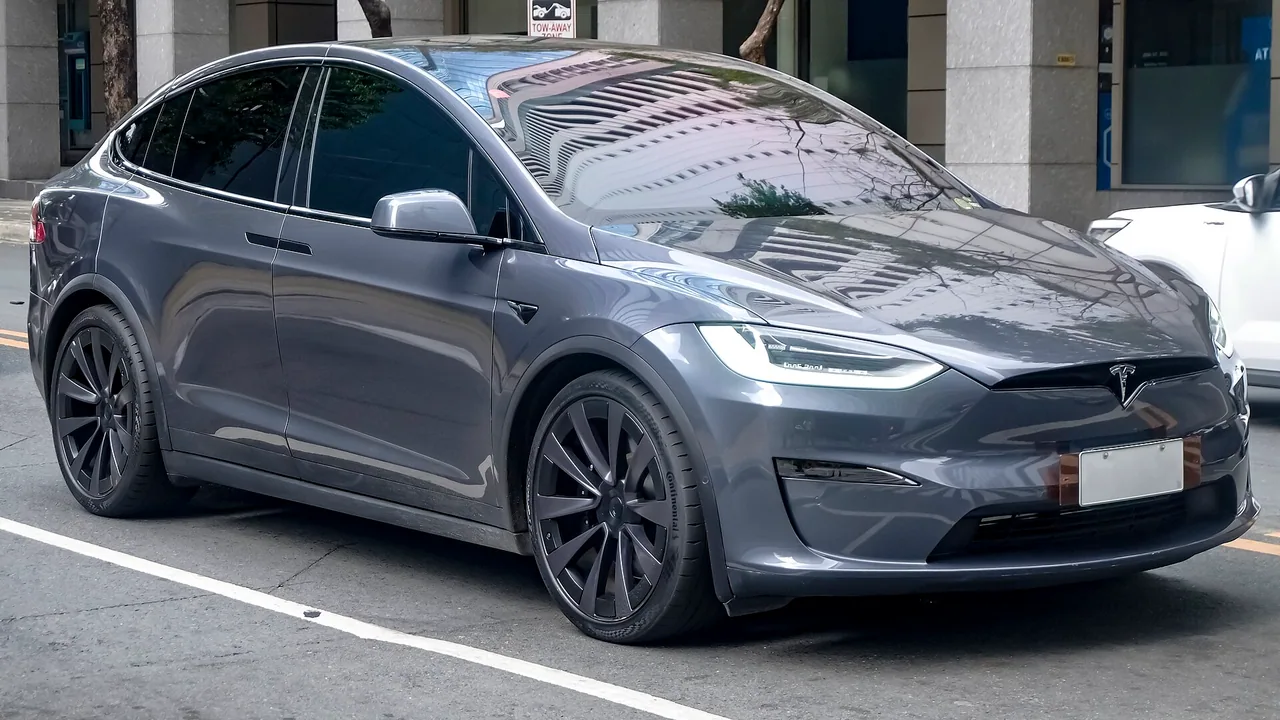

Compare the 2026 Tesla Model X trims
| Trim | TrimIndex score | Price new | Drive | EPA range | EPA energy use | Horsepower | 0–60 mph | DC fast-charge peak | Towing |
|---|---|---|---|---|---|---|---|---|---|
| Model X | 79 | from $89,990starting price | AWD | 352 mi | 32.2 kWh/100 mi | 670 hp | 3.8 s | 250 kW | 5,000 lb |
| Plaid | 78 | from $104,990starting price | AWD | 335 mi | 33.7 kWh/100 mi | not stated | 2.5 s | 250 kW | 5,000 lb |
Price new, horsepower, 0–60 mph, dc fast-charge peak and towing: Tesla, Inc., via the Internet Archive.
EPA range and EPA energy use: U.S. EPA and DOE, fueleconomy.gov.
TrimIndex score: out of 100.
Blank cells. Horsepower (1 row): no manufacturer document backs a rated figure.
What differs between the 2026 Tesla Model X trims
Compared with the 2026 Model X, the Plaid has a 0–60 mph claim 1.3 s quicker, with 17 fewer miles of EPA range and a starting price $15,000 higher.
Which 2026 Tesla Model X trim for what
- Longest EPA range: the 2026 Model X, 352 miles; next, the Plaid has 335 miles.
- Quickest 0–60 mph (manufacturer claims): the 2026 Model X Plaid, 2.5 seconds; next, the Model X has 3.8 seconds.
NHTSA Recalls (0)
NHTSA lists no recalls for this model year as of Nov 22, 2026.
NHTSA Investigations (1 open)
NHTSA has 1 open investigation covering the 2026 Tesla Model X (NHTSA investigations file of Nov 19, 2026).
What a engineering analysis is
- OpenEngineering analysis EA26002, opened Mar 18, 2026
FSD Collisions in Reduced Roadway Visibility Conditions
What NHTSA says it is examining: The Office of Defects Investigation (ODI) is opening this Engineering Analysis to evaluate Tesla’s Full Self Driving Beta and Full Self Driving (Supervised) (collectively, FSD) degradation detection system.
Model years NHTSA lists for this model in the action: 2016-2026.
Source: NHTSA Office of Defects Investigation, investigations file, records through Nov 19, 2026; an open investigation is not a finding of a defect in the 2026 Tesla Model X.
NHTSA Complaints (8 total)
NHTSA lists no recall campaign for the 2026 Tesla Model X in records through Nov 22, 2026. Owners have filed 8 complaints with NHTSA. Of all 8, 2 report a crash and 1 an injury.
What owners report most
TrimIndex grouped the 8 complaints owners filed with NHTSA on the 2026 Tesla Model X (every trim; NHTSA files complaints by model year, not trim) into problem themes on Nov 16, 2026: 3 of them fall in the theme below. How themes are made and checked
-
Crashes with self-driving engaged
3 of 8 complaints (38%): With auto-park or supervised self-driving in control, the car strikes posts, curbs, walls or buildings, leaving little or no time for the driver to step in.
Owners reported a crash in 2 and an injury in 1 of the 3 complaints.
“My wife was using it to park the car in a public garage and it hit a post”
NHTSA complaint 11722384 “my parents Tesla in self driving mode drove them straight through a building”
NHTSA complaint 11745992
8 complaints filed with NHTSA for the 2026 Tesla Model X, between Mar 2026 and Oct 2026.
Parts named most often
| Part | Complaints |
|---|---|
| Forward collision avoidance including automatic emergency braking (3) | 5 |
Counted out of all 8 complaints; one complaint can name more than one part.
Owners reported a crash in 2 and an injury in 1 of the 8 complaints. How these fields are filled
Source: NHTSA owner complaints filed on every 2026 Tesla Model X (NHTSA files them by model year, not trim), data through Nov 22, 2026.
All 8, most severe first, then newest
- Severity 5 of 5.Forward collision avoidance Injury · Crash
In January my parents Tesla in self driving mode drove them straight through a building. The breaks didn't deploy, the airbags didn't deploy and the steering wheel was shaking and unresponsive.
Show the rest
Thankfully no one was seriously injured. That said, there was a lot of physical damage to the restaurant/building and the car was completely totaled. We are certain that there were catastrophic failures with the car that caused the accident however the mechanic has informed us that due to her NDA she cannot provide any details about her findings after examining the car. She sent her findings to Tesla who was supposed to issue a report to us and the insurance company, but several months later we still have not received anything. They are well past the 30 days time limit. We cannot get anyone from Tesla to respond to us. There was a police report and the cops, firemen, and mechanics where all absolutely floored that the airbags didn't deploy given the damage to the vehicle. Self driving failed. Breaks failed. Steering failed. Airbags failed. and Tesla has failed to respond.
NHTSA ODI #11745992 - Severity 4 of 5.Air bags · Steering
In July 2026, Tesla sold me a yoke steering wheel for my 2026 Model X Long Range and Tesla's service team installed it.
Show the rest
On September 3, 2026, Tesla informed me the yoke is incompatible with my vehicle configuration and that the vehicle will not receive over-the-air software updates until the original round steering wheel is reinstalled. The vehicle has received zero software updates since July 2026. I am concerned the airbag in the Tesla-installed yoke may not deploy properly in a crash. I drive approximately 600 miles per week and do not feel safe in the vehicle. Tesla has not resolved this in 69 days despite weekly requests.
NHTSA ODI #11767929 - Severity 4 of 5.Speed control · Forward collision avoidance
For over the past 18 months, Tesla FSD software deliberately removed the driver’s ability to control following distance, instead replacing it with fuzzy descriptions of “mad max,
Show the rest
hurry, standard, chill, and sloth.” As a result the car cannot maintain a safe highway following distance as determined by the driver. When in Hurry and or Standard mode, the car will routinely reach speeds of 75 to 80 mph and decrease following distance to about 3 car lengths, with no car for more than 20 car lengths behind. When a sudden slowdown occurs, the tesla reacts slowly, often decreasing the following distance to 1 car length, as the car behind closes and misjudges the deceleration of the Tesla, resulting in a potential 3 car collision. Adjusting from hurry to standard, or even down to chill or sloth mode does not bring the following distance back to the driver’s education rule of thumb - 1 car length per 10 mph. About 3-10 seconds after the mode change, the software forces an unexpected lane change into a slower lane. The only solution is to disable all driver assistance measures, coast to the necessary following distance and then re-engage. The cycle then repeats. Sometimes when there are nearby cars blocking lane changes, the car remains at 1 car length following distance (for up to 7 seconds after changing from hurry to sloth mode), with the car behind at 3 car lengths while remaining at 70 to 75 mph. Software versions include the latest: 2026.21.6, with the HW4 autopilot computer. This is completely a vendor chosen software defect which could easily be addressed by new defaults, or with simple software changes. The elegant solution is to use the autopilot control scroll wheel. Presently, it takes 2 “detents” to change between modes, if turning one detent downwards would allow driver to increase following distance, that would be sufficient. Alternatively within the Byzantine onscreen menus, an option could be added, but that would be unsafe to adjust while driving.
NHTSA ODI #11760307 - Severity 4 of 5.Brakes · Electrical system (other) · Forward collision avoidance
In April 13th, 2026 while driving from the house through community, I suddenly stopped at the cross roads due to unexpected conditions.
Show the rest
During this event, a coffee mug placed in the cup holder tipped over and spilled liquid onto the center console area—near the phone charging pad and critical control panel used for gear selection and essential driving functions. In about 15 minutes after the spill, when I reached the highway at about 70 mph, the vehicle experienced a rapid and severe system-wide failure. The dashboard displayed multiple warnings and errors, including: * “Steering assist reduced – Steering may require increased effort” * “Center console buttons to select gears unavailable – Use touchscreen to select gears – Schedule service” * Repeated alerts indicating braking and system limitations * Conflicting and inaccurate readings, including the speedometer displaying “0 mph” while the vehicle was still moving at highway speed At the same time: * Braking response was severely compromised despite full pedal application * Hazard lights and turn signals were non-functional * Gear selection controls became unavailable or unreliable * Driver assistance and safety systems were disabled * The system issued instructions to “press and hold brake” while braking performance was inconsistent This resulted in a complete loss of situational awareness and control while I was in the car with my older parents and my child. l. I was unable to signal to surrounding vehicles while attempting to maneuver into a narrow emergency lane at highway speed. My family and I had fear for our lives. Critically, the vehicle instructed to exit immediately while we were still in a dangerous roadside position without functioning hazard lights. We were exposed to active highway traffic without any ability to alert others. was eventually able to maneuver the vehicle into the emergency lane under extremely dangerous conditions. The vehicle was towed, and the issue was reported immediately.
NHTSA ODI #11734065 - Severity 4 of 5.Forward collision avoidance Crash
Tesla has auto-park in the supervised FSD. My wife was using it to park the car in a public garage and it hit a post. The car was damaged. It was too quick for my wife to intervene.
Show the rest
I know it is supervised, but there is no time to intervene when it comes to parking where the spot to park is close to other cars or posts anyway.
NHTSA ODI #11722384 - Severity 3 of 5.Backup camera and rear sensors · Forward collision avoidance
Driving with FSD the car stopped right in front of dive way it was far away from the garage door moving little bit back and forth.
Show the rest
Slight press of the gas paddle caused the car to accelerate going through the garage door with no sign of stopping and ended with my car crashing through our house wall. All four air bag deployed.
NHTSA ODI #11774335 - Severity 2 of 5.Suspension · Wheels
Incident Description: I was driving on the highway using Tesla Full Self-Driving (FSD) / FSD Supervised at approximately 65+ mph.
Show the rest
Traffic conditions were moderate, and weather and visibility conditions were clear. While FSD was actively engaged, my phone began ringing. As I briefly attempted to silence the ringing phone, the FSD system unexpectedly disengaged/canceled during highway driving. I did not receive sufficient audible warning, advance notification, or adequate transition time to safely assume full manual control of the vehicle. There was no meaningful cushion time for driver response before vehicle behavior changed. The disengagement occurred abruptly and created an immediate dangerous situation at highway speed. The sudden transfer of control, without sufficient warning or response time, significantly reduced my ability to react safely. At the time of the incident: - My attention had been on the roadway prior to the phone ringing - I was monitoring the vehicle as required under FSD Supervised - My hands were near the steering wheel - There was no construction, lane merge, or unusual road condition nearby Immediately following the disengagement, the vehicle suddenly drifted and braked, resulting in a collision with the curb/barrier area near the highway bridge. Fortunately, no other vehicles were involved and no secondary collision occurred. I am requesting that Tesla investigate: - FSD disengagement behavior - Warning timing and driver alert mechanisms - System logs and telemetry data - Whether the vehicle generated internal safety/event reports at the time of the incident - Whether the disengagement and transition-to-driver behavior complied with Tesla’s intended safety protocols Relevant evidence preserved: - Tesla dashcam footage - Photos of vehicle damage and scene - Time and location information - Vehicle data request pending
NHTSA ODI #11739929 - Severity 2 of 5.Seats
On April 1st 2026, our brand-new 2026 Tesla Model X, 6-seat configuration, experienced a dangerous third-row seat incident.
Show the rest
Our dog slipped into a blind spot beneath/behind the third-row seat while the seat was folded down. After the dog became trapped, the powered third-row seat would not respond, and there was no usable manual release or mechanical way for us to raise the seat and free him. The dog was trapped under the seat and in immediate danger. We drove directly to Tesla Service for an emergency rescue. Tesla personnel informed us that the only way to free the trapped animal was to dismantle and destroy/remove the rear seat assembly. That is what they did. The dog was then taken for emergency veterinary treatment and remains traumatized, with possible physical injury. This vehicle had been delivered only 4 days earlier. In my view, this presents a serious safety/design issue involving the third-row power seat system and the lack of an accessible emergency release when a living occupant or animal is trapped under the seat. The fact that destructive disassembly was allegedly the only way to free the trapped animal raises a serious safety concern. I am requesting that NHTSA review this incident as a potential safety defect involving the third-row seat mechanism, emergency release/access, and occupant/animal entrapment risk. I have photos, veterinary records, and related documentation.
NHTSA ODI #11728687
NHTSA 5-Star Crash-Test Ratings
NHTSA gave the all-wheel-drive 2026 Tesla Model X SUV (every trim) no overall rating; its sub-ratings are rollover 5 stars.
What changed from 2025
From 2025 to 2026, for the same configurations: the Model X: EPA range 329 to 352 mi, starting price $79,990 to $89,990; the Plaid, listed for 2025 as Plaid (20in wheels): EPA range 314 to 335 mi.
NHTSA lists no recall campaign for the 2026 Tesla Model X and 3 for the 2025.
2026 Tesla Model X frequently asked questions
What trims does the 2026 Tesla Model X come in?
TrimIndex lists 2 configurations of the 2026 Tesla Model X, as EPA names them: Model X and Plaid.
What is the difference between the 2026 Tesla Model X Model X and Plaid?
Compared with the 2026 Model X, the Plaid has a 0–60 mph claim 1.3 s quicker, with 17 fewer miles of EPA range and a starting price $15,000 higher.
What is the range of the 2026 Tesla Model X?
EPA rates the 2026 Tesla Model X at 335 to 352 miles, depending on the configuration: 352 for the Model X and 335 for the Plaid.
Are there recalls on the 2026 Tesla Model X?
No. NHTSA lists no recall campaign for the 2026 Tesla Model X in records through Nov 22, 2026.
What problems do owners report on the 2026 Tesla Model X?
Of the 8 complaints owners filed with NHTSA about the 2026 Tesla Model X in records through Nov 22, 2026, the largest problem theme is: Crashes with self-driving engaged (3). 3 of them fall in the one theme TrimIndex grouped from their narratives on Nov 16, 2026.