All Vehicles
2026 Toyota bZ Trims Compared: Range, Price & Problems
Updated
2026 Toyota bZ: 7 trims compared. 236–314 mi EPA range, 1 recall, 23 NHTSA complaints, top problem: Battery drains and car goes dead (35% of complaints).
Data:NHTSA through
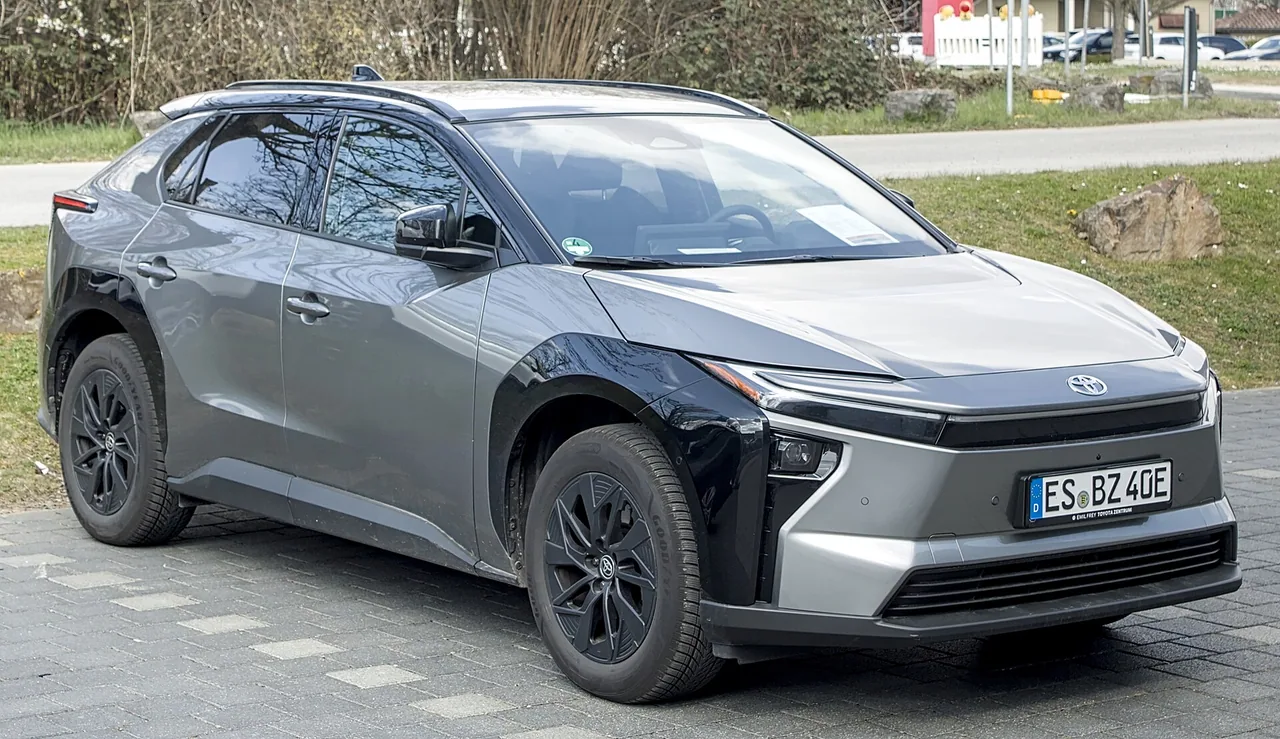

Compare the 2026 Toyota bZ trims
| Trim | TrimIndex score | Price new | Used price | Drive | EPA range | EPA energy use | 0–60 mph |
|---|---|---|---|---|---|---|---|
| (energy capacity 191 Ah) | 79 | from $37,900starting price | $31,476–$37,799Dealer asking (13 listings, Nov 2026) | FWD | 314 mi | 25.5 kWh/100 mi | 8.0 s |
| Limited (energy capacity 191 Ah) | 77 | from $43,300starting price | $30,972–$33,987Dealer asking (29 listings, Nov 2026) | FWD | 299 mi | 26.9 kWh/100 mi | 8.0 s |
| Limited (energy capacity 200 Ah) | 77 | from $43,300starting price | $30,972–$33,987Dealer asking (29 listings, Nov 2026) | FWD | 296 mi | 27.5 kWh/100 mi | 8.0 s |
| AWD | 76 | $39,900original MSRP | $31,566–$37,221§Dealer asking (all trims, 54 listings, Nov 2026) | AWD | 288 mi | 28.0 kWh/100 mi | 4.9 s |
| AWD Limited | 75 | $45,300original MSRP | $35,189–$38,050Dealer asking (12 listings, Nov 2026) | AWD | 278 mi | 28.9 kWh/100 mi | 4.9 s |
| Woodland AWD 235/60R18 | 75 | $45,300original MSRP | not stated | AWD | 281 mi | 29.0 kWh/100 mi | 4.4 s |
| Woodland AWD 235/65R18 | 73 | from $45,300starting price | not stated | AWD | 260 mi | 30.6 kWh/100 mi | 4.4 s |
| (energy capacity 200 Ah) | 72 | from $34,900starting price | $31,476–$37,799Dealer asking (13 listings, Nov 2026) | FWD | 236 mi | 25.8 kWh/100 mi | 8.0 s |
Toyota Motor North America lists one figure for the 2026 bZ: DC fast charging peaking at 150 kW. Toyota Motor North America lists one figure for the 2026 bZ: seating for 5.
Price new: pressroom.toyota.com and Toyota Motor North America.
EPA range and EPA energy use: U.S. EPA and DOE, fueleconomy.gov.
0–60 mph: Toyota Motor North America.
Used price: the figure each trim page shows, with its source and the month collected.
§ Active US dealer asking prices across all trims of the model year, not this trim's price alone.
TrimIndex score: out of 100.
Blank cells. Used price (2 rows): no used guide price or active dealer asking prices on file yet.
What differs between the 2026 Toyota bZ trims
Compared with the 2026 bZ (energy capacity 200 Ah), the Limited (energy capacity 200 Ah) has 60 more miles of EPA range, with a starting price $8,400 higher.
Compared with the 2026 bZ Limited (energy capacity 191 Ah), the bZ (energy capacity 191 Ah) has 15 more miles of EPA range and a starting price $5,400 lower.
Compared with the 2026 bZ (energy capacity 191 Ah), the AWD Limited has all-wheel drive and a 0–60 mph claim 3.1 s quicker, with 36 fewer miles of EPA range and EPA energy use 3.4 kWh/100 mi higher.
Compared with the 2026 bZ AWD Limited, the Woodland AWD 235/60R18 has a 0–60 mph claim 0.5 s quicker.
Compared with the 2026 bZ Woodland AWD 235/60R18, the AWD has an original MSRP $5,400 lower, with a 0–60 mph claim 0.5 s slower.
Which 2026 Toyota bZ trim for what
- Longest EPA range: the 2026 bZ (energy capacity 191 Ah), 314 miles; next, the Limited (energy capacity 191 Ah) has 299 miles.
- Quickest 0–60 mph (manufacturer claims): the 2026 bZ Woodland AWD 235/60R18, 4.4 seconds; next, the AWD and the AWD Limited have 4.9 seconds.
NHTSA Recalls (1)
- NHTSA lists 1 recall campaign for the 2026 Toyota bZ, filed Jun 2026.
Source: NHTSA recall filings for the 2026 Toyota bZ, data through Nov 22, 2026. Why the VIN decides
- Filed Jun 2026
The electronic control unit (ECU) that controls the high voltage battery may experience a fault, resulting in a loss of drive power.
Campaign #26V393000 · Part (NHTSA): electrical system › propulsion system- What happens:
- An unexpected loss of drive power increases the risk of a crash.
- The fix
- Free fix: software update at a dealer Dealers will update the battery ECU software, free of charge.
- Covers:
- certain 2026 Toyota BZ, Lexus RZ, and Subaru Solterra battery electric vehicles.
NHTSA lists 20,991 vehicles in this campaign (all models it covers).
Check VIN status at NHTSA.gov
NHTSA Complaints (23 total)
NHTSA lists 1 recall campaign for the 2026 Toyota bZ. Owners have filed 23 complaints with NHTSA; the largest part group is Electrical system (other) (14). Of all 23, 1 reports a crash and 1 an injury.
What owners report most
TrimIndex grouped the 23 complaints owners filed with NHTSA on the 2026 Toyota bZ (every trim; NHTSA files complaints by model year, not trim) into problem themes on Nov 16, 2026: 14 of them fall in the 3 themes below. How themes are made and checked
-
Battery drains and car goes dead
8 of 23 complaints (35%): The low-voltage battery drains while the car is parked, leaving it dead and unable to start or drive, with no prior warning.
“The 12V battery in my 2026 Toyota bZ unexpectedly went dead, leaving the vehicle completely unresponsive.”
NHTSA complaint 11750428 “New car, only 800 miles, 12V battery drained and is dead.”
NHTSA complaint 11741687 -
Loss of drive power while driving
3 of 23 complaints (13%): The vehicle loses propulsion or power output while driving, with battery or system warnings appearing during or after the event.
Owners reported an injury in 1 of the 3 complaints.
“The vehicle shut down while driving, causing an unexpected loss of power and propulsion”
NHTSA complaint 11712951 “the battery started overheating and the vehicle experienced a slight loss of automotive power”
NHTSA complaint 11772535 -
Phone connection drops out
3 of 23 complaints (13%): Apple CarPlay or Bluetooth disconnects and reconnects while driving, cutting off music and calls, and the infotainment screen can freeze.
“I have experienced consistent Bluetooth disconnections, audio drops during calls, map freezing”
NHTSA complaint 11718231 “The carplay when i play a music or talk someone after may be 10 to 15 mins it will cut the music or call.”
NHTSA complaint 11712481
23 complaints filed with NHTSA for the 2026 Toyota bZ, between Jan 2026 and Oct 2026.
Parts named most often
| Part | Complaints | Share |
|---|---|---|
| Electrical system (other) | 14 | 61% |
| Forward collision avoidance including automatic emergency braking (3) | 4 | 17% |
| Drive unit | 4 | 17% |
Share of all 23 complaints; one complaint can name more than one part, so shares add up to more than 100%. 2 complaints name no specific part.
Owners reported a crash in 1 and an injury in 1 of the 23 complaints. How these fields are filled
Source: NHTSA owner complaints filed on every 2026 Toyota bZ (NHTSA files them by model year, not trim), data through Nov 22, 2026.
All 23, most severe first, then newest
- Severity 5 of 5.Electrical system (other) · Drive unit · Brakes Injury
When I was driving the car when forward and suddleny heard a pop and I got a shocked and my car went a complete broke down I think EV broke down it almost caused me to get in accident and almost get killed
NHTSA ODI #11771952 - Severity 4 of 5.Brakes · Air bags · Forward collision avoidance Crash
I was involved in an Accident on 9-19-26 as my car hit the car in front of me. I applied brakes however my car did not stop and the collision warning did not activate and the
Show the rest
emergency braking system failed. Now my car is totaled and I’m left paying Toyota the difference! CAR IS DEFECTIVE Approximately 3000 miles
NHTSA ODI #11770569 - Severity 4 of 5.Speed control · Drive unit · Forward collision avoidance
Instrument cluster failed to turn on once car is turned on. Speedometer does not display and the electric charge does not display.
NHTSA ODI #11746097 - Severity 4 of 5.Electrical system (other)
What component or system failed or malfunctioned, and is it available for inspection upon request?
Show the rest
The vehicle experienced a failure of the high-voltage battery control system (Battery ECU / main battery control module), resulting in loss of propulsion. The vehicle is currently at an authorized Toyota dealership and is available for inspection upon request. How was your safety or the safety of others put at risk? The vehicle shut down while driving, causing an unexpected loss of power and propulsion. This created a dangerous situation due to the inability to safely maintain speed or maneuver in traffic, increasing the risk of a collision or death. Has the problem been reproduced or confirmed by a dealer or independent service center? Yes. An authorized Toyota dealership diagnosed the issue and confirmed that the Battery ECU / main battery control module required replacement. Has the vehicle or component been inspected by the manufacturer, police, insurance representatives or others? The vehicle has been inspected by an authorized Toyota dealership. The repair and replacement of the Battery ECU was authorized through Toyota’s service process. Were there any warning lamps, messages or other symptoms of the problem prior to the failure, and when did they first appear? There were no warning signs prior to the failure. The shutdown occurred suddenly while driving. Warning messages and service alerts appeared after following the failure.
NHTSA ODI #11712951 - Severity 3 of 5.Drive unit · Battery and propulsion system · Electrical system (other)
The 2026 Toyota BZ XLE PLUS generated some vibration and noise during the driving and it caused the eardrum pressure and discomfort for a short trip of drive like 15-minutes drive.
Show the rest
It caused sharp ear pain after a long trip of drive like one-hour drive. The pain would last few hours after the long-trip drive. The same driver drove a different EV car but had no issue at all. Tried to use the earbuds with noise cancellation but it couldn’t stop the ear from hurting during a long trip of drive with 2026 Toyota BZ. Complaint to Toyota dealer about the vibration and noise after purchase the car, some of the sales stated that two of his customers experienced the ear pressure of driving Toyota BZ. They usually have to open the window slightly to release the ear pressure. But not enough details to know how did they feel during a long trip of drive.
NHTSA ODI #11774812 - Severity 3 of 5.Forward collision avoidance at 12,000 miles
The contact owns a 2026 Toyota BZ. The contact stated that while driving approximately 75 MPH and attempting to overtake a tractor trailer logging truck, the Forward Collision
Show the rest
Avoidance Automatic Emergency Braking activated causing the vehicle abruptly decelerate. The failure was immediately self-corrected and the vehicle operated normally. During the failure the emergency braking warning light was illuminated. The cause of the failure was not yet determined. The manufacturer and local dealer were notified of the failure. The failure mileage was 12,000.
NHTSA ODI #11769643 - Severity 3 of 5.Electrical system (other)
The CarPlay disconnects every 2-3 minutes and connects and the infotainment has problems or need software update.
NHTSA ODI #11721071 - Severity 3 of 5.Electrical system (other) · Drive unit · Battery and propulsion system
I am writing to formally advise Toyota Customer Relations of significant, unresolved performance and safety issues regarding my 2026 Toyota bZ, purchased new on February 14, 2026.
Show the rest
Despite having only 976 miles on the odometer, this vehicle is currently demonstrating a battery state of health (SOH) of 82.7% and a maximum range of only 140 miles at 100% charge—even in moderate 40-degree temperatures. Description of Technical Failures: Battery & Range: The vehicle provides a maximum range of 140 miles at full charge. On an 80-mile roundtrip commute, I am forced to drive without cabin heat to make sure I can return home without a mid-trip recharge. Internal diagnostics currently show an 82.7% battery health, which is unacceptable for a vehicle less than a month old. Regenerative Braking: The regeneration system is not functioning properly, failing to recoup energy as designed. Infotainment & Safety: I have experienced consistent Bluetooth disconnections, audio drops during calls, map freezing, and—most concerning—the screen blacking out and resetting while the vehicle is in motion. Social Media Documentation & Peer Reports: Due to the persistent nature of these issues, I have documented my experience on the official "Toyota bZ (2026)" Facebook owner groups. My post has received numerous responses from other owners experiencing similar defects, suggesting a systemic issue rather than an isolated incident.
NHTSA ODI #11718231 - Severity 3 of 5.Forward collision avoidance
Backing into the center of my 2-car garage, half-way into the door, the car slammed on the brakes, displayed a large BRAKE warning and, on the 360 degree image, I saw a red "bar"
Show the rest
to the immediate left of the driver's door. I thought I'd hit something, although I was still 20 feet from the back wall and there was at least 6 feet completely open on each side of the car. I pulled forward and it immediately slammed on the brakes again. I backed up and it slammed on the brakes again. I pulled forward and it slammed on the brakes again. Finally, I was able to nurse the car back, inches at a time. The car had never done that before, even when I parked closer to the shelves, before I cleared out the garage to be able to park in the center. The only thing I could think of was the 1/2 inch thick dried mud track from the left tires when I parked closer to the side. I scraped and swept out the mud and since then I've backed in twice without incident, with yellow bars on the 360 degree display where wire shelving is against both side walls of the garage, as I previously mentioned, about 6 feet away on each side of the car. The collision avoidance system is dangerously too sensitive in this vehicle and what Toyota calls Safety Sense 3.0 is the most UNSAFE system I've ever had the unfortunate opportunity to experience. I'm not alone. I've read numerous same or similar complaints online in Tundra and Corolla Cross discussion boards. I discussed this with the dealer's service manager and he blamed it on cold weather. In my opinion, Toyota should recall ALL vehicles with TSS 3.0 until they can either remove that feature or allow it to be disabled permanently and not require it to be disabled every time the car is started. I dread the thought of this happening while driving with a vehicle following closely behind!!!
NHTSA ODI #11714314 - Severity 3 of 5.Electrical system (other)
I purchased a new 2026 Toyota bZ4X on December 30, 2025. The dealer represented that the vehicle could charge in approximately 30 minutes at public fast-charging stations.
Show the rest
In real-world use, the vehicle cannot be charged as represented and is only usable at one local charging station with a special adapter that was not disclosed or provided at the time of sale. As a result, the vehicle cannot be reasonably used for daily transportation and creates a risk of being stranded or unable to travel when needed. I believe this is a significant vehicle usability concern affecting safe and reliable operation.
NHTSA ODI #11713240
Show 13 more complaints
- Severity 2 of 5.12-volt battery at 5,000 miles
The contact owns a 2026 Toyota BZ. The contact stated that while driving, the battery started overheating and the vehicle experienced a slight loss of automotive power.
Show the rest
The messages "EV System Overheated - Output Power Reduced" and "Plug in Charging System Malfunction - Visit your Dealer” were displayed. The vehicle was taken to a dealer where it was diagnosed, and the contact was informed that the failure was not duplicated. The manufacturer was notified of the failure. The failure mileage was 5,000.
NHTSA ODI #11772535 - Severity 2 of 5.Visibility (wipers, glass, defroster) at 1,000 miles
The contact owns a 2026 Toyota BZ. The contact stated that the air conditioning system was inoperable while starting the vehicle.
Show the rest
The contact stated that while the air conditioning system was activated, the vents failed to blow air immediately. The failure was a recurring failure. The contact was affected by the loss of cool air in humid temperatures and was suffocating from the heat. The dealer was contacted and made aware of the failure. The failure mileage was approximately 1,000.
NHTSA ODI #11768615 - Severity 2 of 5.Electrical system (other)
SUPPLEMENT TO ODI COMPLAINT 11758090 (filed 8/19/2026). Two corrections, an identified component, and a verified manufacturer remedy. Full narrative attached. CORRECTIONS.
Show the rest
(1) The prior 12V battery was replaced 5/29/2026, not June 2026; invoice 569207 is correct. (2) The complaint attributed the drain to an armed charging schedule. That was a proxy, not the cause. The trigger is ANY vehicle wake -- key-fob approach at ~8 ft, end of drive, or converter pulse -- which arms a timer of exactly 180 minutes, after which a 0.87-0.9 A sawtooth discharge runs 4.6-9 hours, consuming up to 12 Ah. Verified 8 of 8 events 8/8-8/23/2026 by amp-hour shunt and independent voltage logger, one pre-registered in advance and correct to the minute. The defect is not avoidable by any owner setting. REMEDY. 8/24/2026, Cavender Toyota, repair order 604263, under Toyota Technical Assistance System case TA262360433: ignition off; vehicle removed from owner's Toyota app garage; ignition on 1 min (pending telematics upload completes); off 1 min; on; vehicle re-added to app garage. No parts, no charge, ~10 minutes. The procedure operates only on the DCM/connected-services registration state, which identifies the component. VERIFICATION. Two deliberate fob wakes 8/24 (19:25, 23:10 CDT): no discharge at 180 minutes or overnight. Twelve days of normal use through 9/5/2026: zero events. TOYOTA'S OWN RECORDS CORROBORATE. The TAS advisory tells the technician to "set up for 3 hours to monitor," matching the measured 180-minute latency. Invoice 593644 records the 12V battery needing 2.5 hours of external charging. The TAS case records "Dealer Visit: 4," escalation reason "Multiple Repair." The dealer's 8-day monitoring (7/28-8/5) found nothing because a vehicle parked in a service lot is never woken: 1 mile accrued in 8 days. No recall or TSB communicates this remedy; case TA262360433 remains open, "Vehicle Repaired" blank. Full instrumented record available to ODI on request.
NHTSA ODI #11762359 - Severity 2 of 5.Electrical system (other)
The 12-volt auxiliary battery system repeatedly discharges itself and has twice left the vehicle completely inoperative: 7/24/2026 (5.58 V at the battery, parked unplugged ~46
Show the rest
hours after the last drive) and 7/28/2026 (5.95 V, failure during an attempt to enter READY to drive). The 12V system controls the contactors connecting the high-voltage traction battery to the drive system; when it collapses the vehicle cannot be started or driven even though the traction pack holds charge. The dealer replaced the 12V battery under warranty in June 2026; failures continued, so the battery was not the cause. I instrumented the 12V system with two independent cross-validated meters (precision current/amp-hour shunt; voltage logger sampling every 2 minutes) and measured the mechanism over 12 continuous days (Aug 8-19, 2026). Findings: (1) A drain event begins exactly 3 hours (180 min, within one 2-minute sample, in all six measured events) after the most recent vehicle wake - a READY cycle or the key fob merely coming within detection range of the parked car. Each new wake restarts the 3-hour countdown. (2) The event draws ~0.87 A; four completed events ran 4.6-4.7 hours (~4 Ah each), one ran 9.2 hours (~8 Ah). (3) Events occur with all charging schedules verified off in both vehicle and phone app, the app closed, and the vehicle unplugged. (4) The vehicle never replenishes the 12V from the traction pack while parked, and undercharges it when driven (13.9 V ceiling, single 30-minute window). Ordinary daily use - driving, parking unplugged, or walking near the car with the fob - drains the battery to collapse within days. No owner setting prevents it. A 6-day dealer observation did not reproduce it because the vehicle sat undisturbed: no wake, no drain. No warning lamps preceded either failure. Instrumented logs attached; vehicle and data available for inspection on request.
NHTSA ODI #11758090 - Severity 2 of 5.Electrical system (other)
The 12 volt battery exhibits a consistent parasitic drain. This is intermittent, but results in the vehicle failing to start.
Show the rest
The failure to start is an issue because it is happening frequently and could endanger individuals who live in rural areas or areas with cold or hot climate. This issue has happened to us multiple times and Toyota has not recalled or provided guidance to its dealer service network. Many effected owners have a diagnostic data backed theory that links the drain on the 12 volt battery to Toyota digital communication module. That diagnostic can be found here. Toyota should be forced to investigate and fix this as it is a big safety concern for those who are in rural harsh climates! It is impacting a lot of new BZ & CHR owners, but has been a known issue with previous models and even covered by some media outlets. Because this is a parasitic drain there often isnt a low battery warning before the car won't start. Another reason this deserves attention.
NHTSA ODI #11756337 - Severity 2 of 5.
There is a foul smell emanating from the window areas of the vehicle after rain. The more rain, the more pronounced the odor. It smells similar to cat urine.
Show the rest
I have been able to reproduce it many times, after it rains. I was reading online that the smell is caused by mold/mildew which is a huge safety concern. I had also read that this is somewhat of a common issue caused by the type of weatherstripping in use on the vehicle. When I called the dealership they were unaware of any issues concerning an odor around the windows after rain. I will continue to work with the dealership, but this should at least be a Technical Service Bulletin.
NHTSA ODI #11755648 - Severity 2 of 5.Electrical system (other)
The vehicle suffers from an overnight parasitic 12V battery drain caused by a continuous cloud activation/software communication loop involving the Data Communication Module (DCM)
Show the rest
and telematics system. The vehicle has gone completely dead and required jumping on three separate occasions. The issue was inspected and documented on a service invoice by an authorized dealership, which confirmed the battery itself tested good and recommended disconnecting the mobile application link due to the DCM cloud activation causing battery depletion. The recurring dead 12V battery creates a safety hazard by leaving the vehicle completely inoperable and stranded without warning.
NHTSA ODI #11755120 - Severity 2 of 5.Electrical system (other) · Windshield wipers
Vehicle experienced a catastrophic, terminal 12V auxiliary battery parasitic drain that flatlines the system to 0% while parked, creating a severe safety risk by stripping hazard
Show the rest
lights and motive power. This is the 3rd identical electrical collapse within 4 weeks; a late June 12V battery replacement failed. The vehicle was in active daily use, not stored.Held out of service at Kings Toyota since July 6, 2026 (26+ days down). Technicians dismantled the cabin and placed the dashboard in the trunk to trace loops. Management confirmed hardware nonconformities in the Data Communication Module (DCM) and Body Control Module (BCM), which fail to enter sleep mode. Observable proof includes continuous, erroneous telemetry alerts stating windows are down/doors unlocked while fully locked and disassembled in the bay.Modules are on indefinite global backorder due to an inherent manufacturing defect. Parts are restricted likely to feed production and the mass rollout for NHTSA Campaign 26V393.DIAGNOSTIC DETAILS:Local tech efforts are directly guided by Toyota Corporate factory engineers who designed the vehicle, as local techs have never encountered this severe issue.Multiple other identical units are grounded on the dealer lot with identical 12V flatline failures.My vehicle (#XXX) is being used instructively by Toyota Corporate to advance understanding and map out repairs for the other units.To capture evading data, I complied with a request to delete the Toyota app from my iPhone so lead tech [XXX] could intercept these failing module notifications to aid factory engineers.Management confirmed that by design, if the 12V drops below 11V, the high-voltage motive battery is supposed to automatically recharge it. Here, the vehicle fails to initiate the loop, or the motive batteries enter a defensive "protective lockout mode," cutting power transfer and flatlining the car. This could contribute to motive battery failure /lockout if the defect continues to draw 12V battery down. INFORMATION REDACTED PURSUANT TO THE FREEDOM OF INF
NHTSA ODI #11752772 - Severity 2 of 5.Electrical system (other)
Vehicle purchased late March. Since then, the 12V gets completely drained to 0% over the weekend. This is a biweekly problem. Vehicle taken to dealership, they were not able to replicate problem.
Show the rest
Dealership claims battery and vehicle perfectly fine. 12V battery continues to get discharged. This issue puts the customer at risk of being stranded on trips. No warning lamps or symptoms before battery dies making vehicle completely inoperable. Research online and owner forums clearly show a large number of owners having the same issue with this defect with this vehicle. Contacted toyota and they denied vehicle glitch or resolution. Toyota instructed me to take car back to dealership for them to address.
NHTSA ODI #11751814 - Severity 2 of 5.Exterior lights
I am writing to formally report an unsafe design feature regarding the automatic headlight cleaner/washer system on the 2026 Toyota bZ.The vehicle is programmed to automatically
Show the rest
spray windshield washer fluid onto the headlights when the headlights are active and the windshield washer lever is pulled. As a night-shift worker, I frequently operate this vehicle in complete darkness. When the high-pressure fluid sprays over the active headlight lenses, it immediately diffuses the light beam. This causes the forward headlights to dim drastically, rendering them almost completely unusable for several seconds until the water clears.This sudden, unprompted loss of forward visibility at highway speeds creates an immediate and severe driving hazard.Proposed Remedy Request:There is currently no setting available to the driver to turn off or modify this linked behavior. I request that Toyota issue a software update allowing owners an menu option to disable the automatic, windshield-linked headlight washing function so drivers can maintain constant headlight visibility at night.
NHTSA ODI #11751216 - Severity 2 of 5.Electrical system (other)
The 12V battery in my 2026 Toyota bZ unexpectedly went dead, leaving the vehicle completely unresponsive. The vehicle could not be powered on or driven. There was no prior warning.
Show the rest
Upon google search, there are several posts on websites like reddit and toyota owner forums with reports of the same exact issue.
NHTSA ODI #11750428 - Severity 2 of 5.Electrical system (other)
New car, only 800 miles, 12V battery drained and is dead. Needed to be replaced. Internal process draining battery. Multiple similar complaints online
NHTSA ODI #11741687 - Severity 2 of 5.
The carplay when i play a music or talk someone after may be 10 to 15 mins it will cut the music or call. This incident happen since i get the car on a dealership ithink its normal but not the car is lessthan 1month
NHTSA ODI #11712481
NHTSA 5-Star Crash-Test Ratings
NHTSA crash-tested the front-wheel-drive 2026 Toyota Bz SUV (the bZ (energy capacity 191 Ah), Limited (energy capacity 191 Ah), Limited (energy capacity 200 Ah) and bZ (energy capacity 200 Ah)): 5 stars overall, with frontal 4, side 5, rollover 4. NHTSA crash-tested the all-wheel-drive 2026 Toyota Bz SUV (the AWD and AWD Limited): 5 stars overall, with frontal 4, side 5, rollover 4. NHTSA crash-tested the all-wheel-drive 2026 Toyota Bz Woodland SUV (the Woodland AWD 235/60R18): 5 stars overall, with frontal 4, side 5, rollover 4.
Forum posts that mention this car
2 forum posts are on file for this model year. The 2 posts shown were retrieved May 2026.
"Savings with EV so far? So, I got a 2026 Toyota Bz a month ago. The main trigger for the buy was the 0% percent interest and $3.5K incentive, but also I’ve realized that we have a truly free weekend plan, which is basically is free electricity from 8pm Friday to 12am Monday and a Free EV Charging Station at our workplace. So, so far I haven’t spent anything at all when it comes to charging my EV. Curious to know specially from long term EV owners what is your greatest savings with your EV."
"Good to know! Here in canada our xle awd with the 77kwh battery is rated for 468km but so far since we got warmer temps in the last few days im on my way for an above 480km average on a full charge. Their 23.3khw/100miles is also close to my 14-15 kwh/100km. Toyota are always conservatives on their estimates. With time and mouth to mouth a lot of peoples will realise the new bz platform is performing better than annonced. Tesla bros will be in shambles."
2026 Toyota bZ frequently asked questions
What trims does the 2026 Toyota bZ come in?
TrimIndex lists 7 configurations of the 2026 Toyota bZ, as EPA names them: bZ (energy capacity 191 Ah), Limited (energy capacity 191 Ah), Limited (energy capacity 200 Ah), AWD, AWD Limited, Woodland AWD 235/60R18 and bZ (energy capacity 200 Ah). 1 wheel, tire or charger option is listed under its trim.
What is the difference between the 2026 Toyota bZ (energy capacity 200 Ah) and AWD?
Compared with the 2026 bZ (energy capacity 200 Ah), the AWD has all-wheel drive, 52 more miles of EPA range and a 0–60 mph claim 3.1 s quicker, with EPA energy use 2.2 kWh/100 mi higher.
What is the range of the 2026 Toyota bZ?
EPA rates the 2026 Toyota bZ at 236 to 314 miles, depending on the configuration: 314 for the bZ (energy capacity 191 Ah), 299 for the Limited (energy capacity 191 Ah), 296 for the Limited (energy capacity 200 Ah), 288 for the AWD, 281 for the Woodland AWD 235/60R18, 278 for the AWD Limited and 236 for the bZ (energy capacity 200 Ah).
Are there recalls on the 2026 Toyota bZ?
Yes. NHTSA lists 1 recall campaign for the 2026 Toyota bZ in records through Nov 22, 2026: 26V393000 (electric drive system).
What problems do owners report on the 2026 Toyota bZ?
Of the 23 complaints owners filed with NHTSA about the 2026 Toyota bZ in records through Nov 22, 2026, the three largest problem themes are: Battery drains and car goes dead (8); Loss of drive power while driving (3); and Phone connection drops out (3). 14 of them fall in the 3 themes TrimIndex grouped from their narratives on Nov 16, 2026.