unintended acceleration
12 complaints across 3 model years (2022: 3 of 9 (33%); 2023: 7 of 30 (23%); 2025: 2 of 10 (20%)).
“my car suddenly accelerated on its own into a cement wall. My foot had remained on the brake the entire time.”
Updated
The Bottom Line
Safety advisories separate these two models per NHTSA records through Nov 12, 2026: the Hyundai Ioniq 5 has 2 NHTSA recall campaigns that carried a Do-Not-Drive or Park-Outside advisory (verify VIN remedy), while the Audi Q4 e-tron has none across 2022–2026. The Ioniq 5 stands out for longer EPA range (up to 318 mi).
On EPA range, the Ioniq 5 reaches 318 mi vs 288 mi for the Q4 e-tron; published used guides place the Q4 e-tron at $22,700–$30,400 (KBB, Nov 2026) and the Ioniq 5 at $16,800–$22,400 (KBB, Nov 2026).
Data:NHTSA through
SUV · 16 canonical trims · AWD / RWD
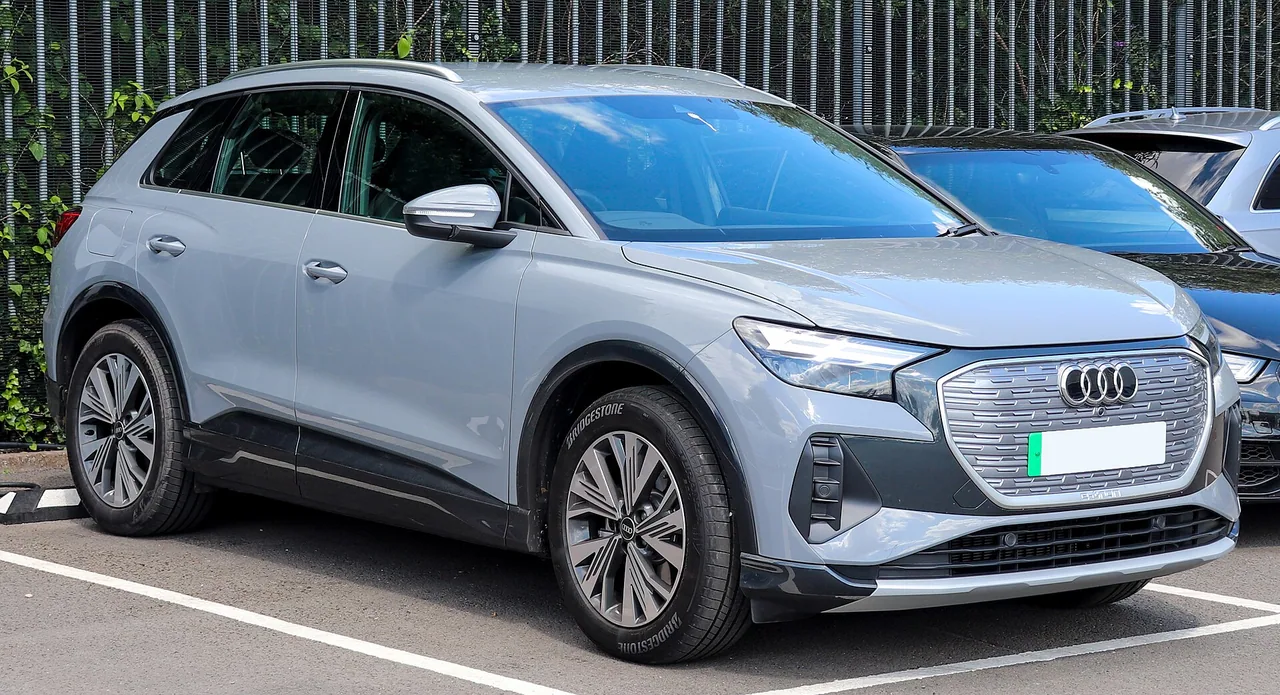
EPA Range
236–288 mi
Latest Port
CCS1
KBB Used
$22,700–$30,400
SUV · 19 canonical trims · AWD / RWD
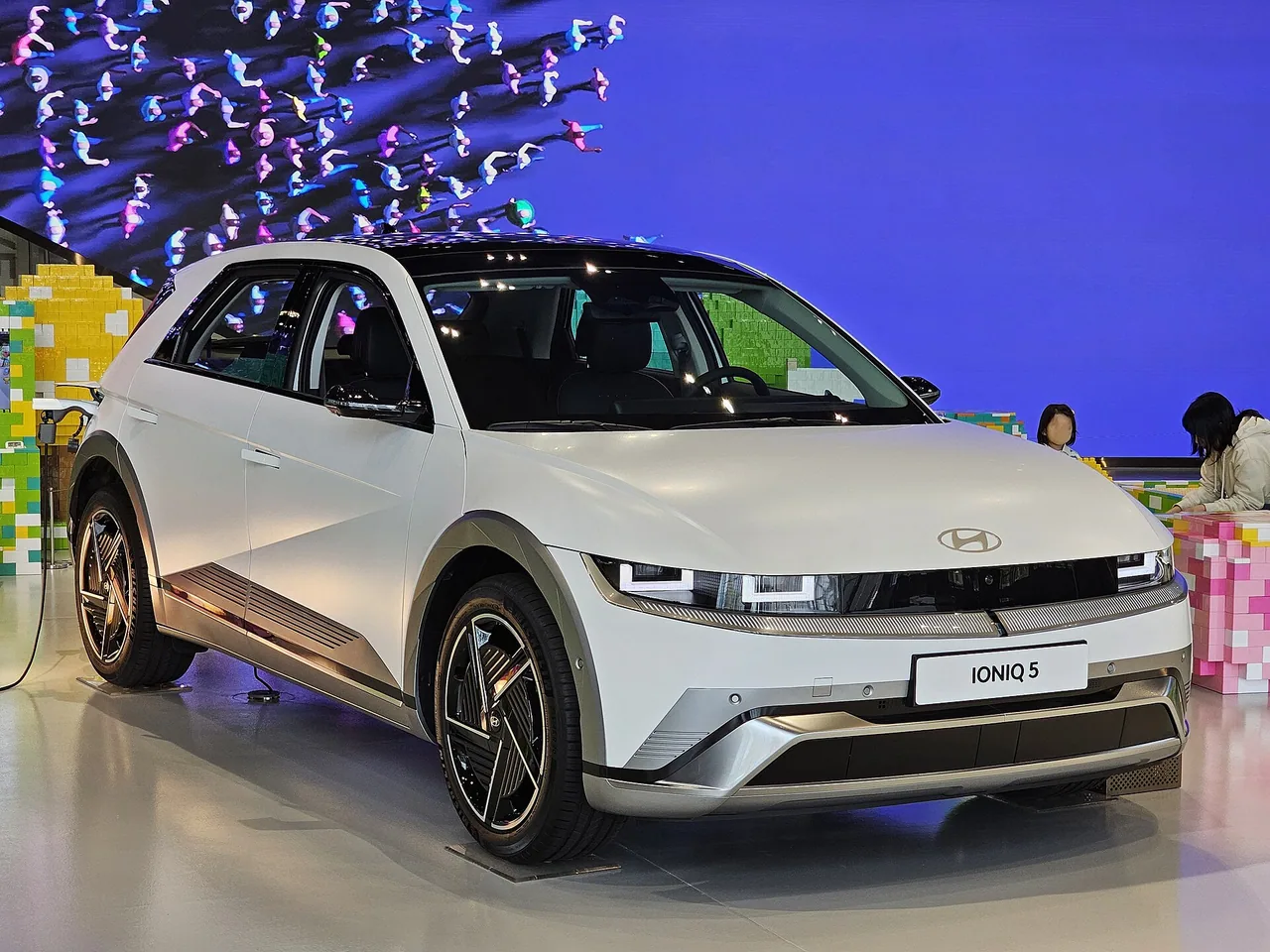
EPA Range
168–318 mi
Latest Port
NACS
KBB Used
$16,800–$22,400
Pick the Audi Q4 e-tron if…
Pick the Hyundai Ioniq 5 if…
2024 Audi Q4 e-tron vs 2024 Hyundai Ioniq 5
Pick a shared model year to compare matching EPA range, NHTSA filings, charging port and published pricing.
2024 Model Year · 5 trims
Efficiency: 32.7–36.4 kWh/100 mi · Up to 175 kW DC
2024 Model Year · 3 trims
Efficiency: 30.0–34.0 kWh/100 mi · Up to 235 kW DC
Aligned year by year from NHTSA complaint, recall and defect-investigation files through Nov 12, 2026 (investigations through Nov 13, 2026). Complaint counts are raw totals on file, never fleet-normalized failure rates.
Documented Pattern · Hyundai Ioniq 5
Covers model years 2022, 2023, 2024, 2025, 2026.
Read the ICCU failure analysis →| Year | Audi Q4 e-tron | Hyundai Ioniq 5 | ||||
|---|---|---|---|---|---|---|
| Yr | Standing / Port | NHTSA Record | Range & Price | Standing / Port | NHTSA Record | Range & Price |
| 2026 | Too new CCS1 | 0 cmpl 1 rec | 251–288 mi Sold new | Too new NACS | 29 cmpl 2 rec | 221–318 mi $29,896–$40,882 (Asking · Nov 2026) |
| 2025 | Too new CCS1 | 10 cmpl 2 rec | 258–288 mi $31,544–$38,990 (Asking · Nov 2026) | Too new NACS | 321 cmpl 9 rec (1 adv) | 221–318 mi $24,799–$34,680 (Asking · Nov 2026) |
| 2024 | Judged CCS1 | 27 cmpl 4 rec | 236–265 mi $26,900–$30,400 (KBB) | Judged CCS1 | 226 cmpl 3 rec (1 adv) | 220–303 mi $19,494–$39,919 (J.D. Power) |
| 2023 | Judged CCS1 | 30 cmpl 4 rec | 236–265 mi $25,800–$28,500 (KBB) | Judged CCS1 | 389 cmpl 4 rec (1 adv) | Range N/A $25,856–$29,294 (Asking · Nov 2026) |
| 2022 | Judged CCS1 | 9 cmpl 5 rec | 241 mi $22,700–$23,200 (KBB) | Judged CCS1 | 407 cmpl 3 rec | 220–303 mi $16,790–$24,901 (J.D. Power) |
Click any year row to open that model year’s trim comparison, full recall campaign list and complaint themes. Years sold fewer than 30 months are marked Too new.
Rows marked Asking show aggregated active US used dealer listings where no KBB or J.D. Power guide price is on file yet (asking prices, not final sale prices; excluded from Value-to-Score).
unintended acceleration
12 complaints across 3 model years (2022: 3 of 9 (33%); 2023: 7 of 30 (23%); 2025: 2 of 10 (20%)).
“my car suddenly accelerated on its own into a cement wall. My foot had remained on the brake the entire time.”
charging failures
6 complaints across 2 model years (2023: 3 of 30 (10%); 2024: 3 of 27 (11%)).
“the vehicle indicates it is charging via a green indicator light but fails to draw power overnight.”
loss of drive power
488 complaints across 3 model years (2022: 171 of 407 (42%); 2024: 127 of 226 (56%); 2025: 190 of 303 (63%)).
“my vehicle experienced a sudden electrical/battery system failure. Warning messages appeared and the vehicle abruptly reduced power and speed”
charging failures
102 complaints across 3 model years (2022: 91 of 407 (22%); 2024: 7 of 226 (3%); 2026: 4 of 29 (14%)).
“The ICCU failed to charge the car via level 1 (120VAC or 240VAC), but does charge using public DC chargers.”
the 12-volt battery dying
72 complaints across 3 model years (2022: 39 of 407 (10%); 2024: 23 of 226 (10%); 2025: 10 of 303 (3%)).
“The car randomly drains the 12v battery. Twice it wouldn’t turn on when I had appointments to go to.”
Battery capacity readings come strictly from verified individual owner or per-car reports on file — never modeled projections. Charging port and Supercharger access come from automaker and Tesla documents.
Measured Battery-Health Readings on File
6 verified individual-car readings spanning 88%–97% capacity (23,952–61,000 mi).
Measured Battery-Health Readings on File
9 verified individual-car readings spanning 92%–100% capacity (7,581–88,000 mi).
Several EVs transitioned from CCS1 to built-in NACS between 2024 and 2026. Check the exact model year before assuming adapter needs.
Tesla Superchargers: No
Source: Audi of America (undated page, archived copy captured Jul 11, 2026); Audi of America (undated page, archived copy captured Jul 11, 2026)
Tesla Superchargers: With an adapter, since Mar 25, 2025
Adapter note: Announced Mar 25, 2025
Source: Hyundai Motor America (published Mar 25, 2025; archived copy captured Sep 9, 2025); Hyundai Motor America (published Mar 25, 2025; archived copy captured Sep 9, 2025)
Tesla Superchargers: Yes, with its built-in NACS port
Source: Hyundai Motor America (published Mar 25, 2025; archived copy captured Sep 9, 2025); Tesla, Inc. (undated page, archived copy captured Apr 1, 2025)
Every published used-market figure stays attributed to a single source (Kelley Blue Book or J.D. Power) with its collection window — never blended across sources.
KBB Used Range · Nov 2026
$22,700–$30,400
Covers model years 2022, 2023, 2024 · trim-level guide pricing
Original MSRP Span
$49,800–$59,495
Value-to-Score Ratio
6–8/10
KBB Used Range · Nov 2026
$16,800–$22,400
Covers model years 2022, 2024 · trim-level guide pricing
J.D. Power Used Range · Nov 2026
$16,790–$39,919
Covers model years 2022, 2024 · model-year guide pricing
Original MSRP Span
$35,000–$66,100
Value-to-Score Ratio
7–8/10
Georgia Tax-Assessed Value (Separate State Tax Schedule)
These figures come from the Georgia Department of Revenue Motor Vehicle Assessment Manual for Title Ad Valorem Tax (TAVT) under O.C.G.A. § 48-5C-1(a)(1). They are state tax-assessment values, not market prices, guide estimates or dealer offers, and are never blended into Value-to-Score calculations.
Audi Q4 e-tron
Hyundai Ioniq 5
The federal §25E used-EV tax credit expired in September 2025. State and utility incentives vary by residency, income and price caps — check each trim page’s State Incentive Finder for current state rules.
| Specification | Audi Q4 e-tron | Hyundai Ioniq 5 |
|---|---|---|
| EPA range (all trims) EPA Fuel Economy Guide | 236–288 mi | 168–318 mi |
| Energy consumption (lower is better) EPA Fuel Economy Guide | 29.4–36.4 kWh/100 mi | 29.0–47.5 kWh/100 mi |
| Combined MPGe EPA Fuel Economy Guide | 93–115 MPGe | 71–115 MPGe |
| Usable battery capacity | 77.0 kWh | 58.0–84.0 kWh |
| Peak DC fast charging | 125–175 kW | 235 kW |
| Rated horsepower Manufacturer rated output | 282–335 hp | 168–641 hp |
| Drivetrains offered | AWD, RWD | AWD, RWD |
| Seating capacity | 5 seats | Not on file |
| NHTSA 5-Star overall rating NHTSA NCAP crash tests | 5 of 5 stars | 5 of 5 stars |
| Body style | SUV | SUV |
Filtered to posts written by owners of each model year under TrimIndex’s owner-relevance rule. Topic counts reflect what owners discuss most often.
“I have a 2024 Q4 50 and while I knew going in that 236 EPA range in the U.S. was pretty low, it generally performs better than that outside of the winter months. In the winter, I usually net about 2.5mi/kWh (~25 kWh/100km) in the winter…”
“I've owned a Q4 e-tron sportback 50 for a little over a year and strongly agree with this review. There are quirks and cons (charging timers being the chief one in my book) but overall an outstanding car and absolute joy to drive. I hope I…”
“Hyundai Ioniq 5 Ultra Tech. 2022 model DC Charging very slow I have a 2022 UK Hyundai IONIQ 5 and I’m trying to confirm a known issue around battery preconditioning. There is no “Battery Conditioning Mode” or “Winter Mode” anywhere in my…”
“Passing a new Corvette in my Ioniq 5 led to an interesting conversation with AI The fastest recorded lap time of a C5 Corvette around the Nürburgring Nordschleife was approximately 7 minutes and 56 seconds. This lap time was achieved by a…”
Pair-specific checks built from active recall advisories, open NHTSA investigations, top complaint patterns and charging hardware.
This is the most recurring complaint pattern across Audi Q4 e-tron model years on file (2022, 2023, 2025). Ask for full service history before purchase.
Run the 17-character VIN on NHTSA.gov and get dealer proof of remedy before signing on any Hyundai Ioniq 5 covered by 25V482000, 26V432000.
Check VIN on NHTSA.gov →This is the most recurring complaint pattern across Hyundai Ioniq 5 model years on file (2022, 2024, 2025). Ask for full service history before purchase.
For the Audi Q4 e-tron (2022–2026), no single model year is flagged to avoid (76 NHTSA complaints on file). For the Hyundai Ioniq 5 (2022–2026), no single model year is flagged to avoid (1,372 NHTSA complaints on file). Every comparison uses age-matched NHTSA filings (NHTSA data through Nov 12, 2026).
Across active trims on file from the EPA Fuel Economy Guide, the Audi Q4 e-tron spans 236–288 mi and the Hyundai Ioniq 5 spans 168–318 mi. Efficiency: Q4 e-tron rates 29–36 kWh/100 mi; Ioniq 5 rates 29–48 kWh/100 mi. Fast charging on file: Q4 e-tron peaks at 175 kW DC; Ioniq 5 peaks at 235 kW DC.
Audi Q4 e-tron (CCS1 (Combined Charging System)): no. Hyundai Ioniq 5: 2022–2024 uses CCS1 (Combined Charging System) (with an adapter, since mar 25, 2025); 2025 uses NACS (SAE J3400) (yes, with its built-in nacs port); 2026 uses NACS. Status reflects automaker and Tesla documentation on file at TrimIndex.
Published KBB used-market figures (Nov 2026) place Audi Q4 e-tron trims at $22,700–$30,400. Published KBB used-market figures (Nov 2026) place Hyundai Ioniq 5 trims at $16,800–$22,400. Each range reflects a single pricing source rather than blended estimates; inspect individual model-year and trim pages for trim-specific pricing.
On the Audi Q4 e-tron, the largest multi-year complaint pattern is unintended acceleration (12 complaints across 3 model years). On the Hyundai Ioniq 5, the largest multi-year complaint pattern is loss of drive power (488 complaints across 3 model years). These reflect shares of NHTSA owner complaints on file, not fleet-wide failure rates.
Audi Q4 e-tron: NMC cells, 77.0 kWh usable, 8 years or 100,000 miles battery warranty, 6 verified owner capacity readings (88%–97%). Hyundai Ioniq 5: NMC cells, 58.0–84.0 kWh usable, 10 years or 100,000 miles battery warranty, 9 verified owner capacity readings (92%–100%). Capacity readings reflect individual verified owner reports on file rather than modeled estimates.
What this comparison is built on
NHTSA Filings
Through Nov 12, 2026
EPA & NCAP
35 canonical trims
Owner Forum Posts
51 verified owner posts
Methodology
Model Hub · 2022–2026
Explore Audi Q4 e-tron years & trims
Model Hub · 2022–2026
Explore Hyundai Ioniq 5 years & trims
Audi Q4 e-tron vs Mercedes-Benz EQB
2022–2026 vs 2022–2025
Cadillac OPTIQ vs Hyundai Ioniq 5
2025–2026 vs 2022–2026
Audi Q4 e-tron vs Tesla Model Y
2022–2026 vs 2020–2026
Chevrolet Blazer EV vs Hyundai Ioniq 5
2024–2026 vs 2022–2026
Audi Q4 e-tron vs Volkswagen ID.4
2022–2026 vs 2021–2026
Chevrolet Equinox EV vs Hyundai Ioniq 5
2024–2026 vs 2022–2026

