All Vehicles
2026 Hyundai Ioniq 5 Trims Compared: Range, Price & Problems
Updated
2026 Hyundai Ioniq 5: 5 trims compared. 221–318 mi EPA range, 2 recalls, 30 NHTSA complaints.
Data:NHTSA through
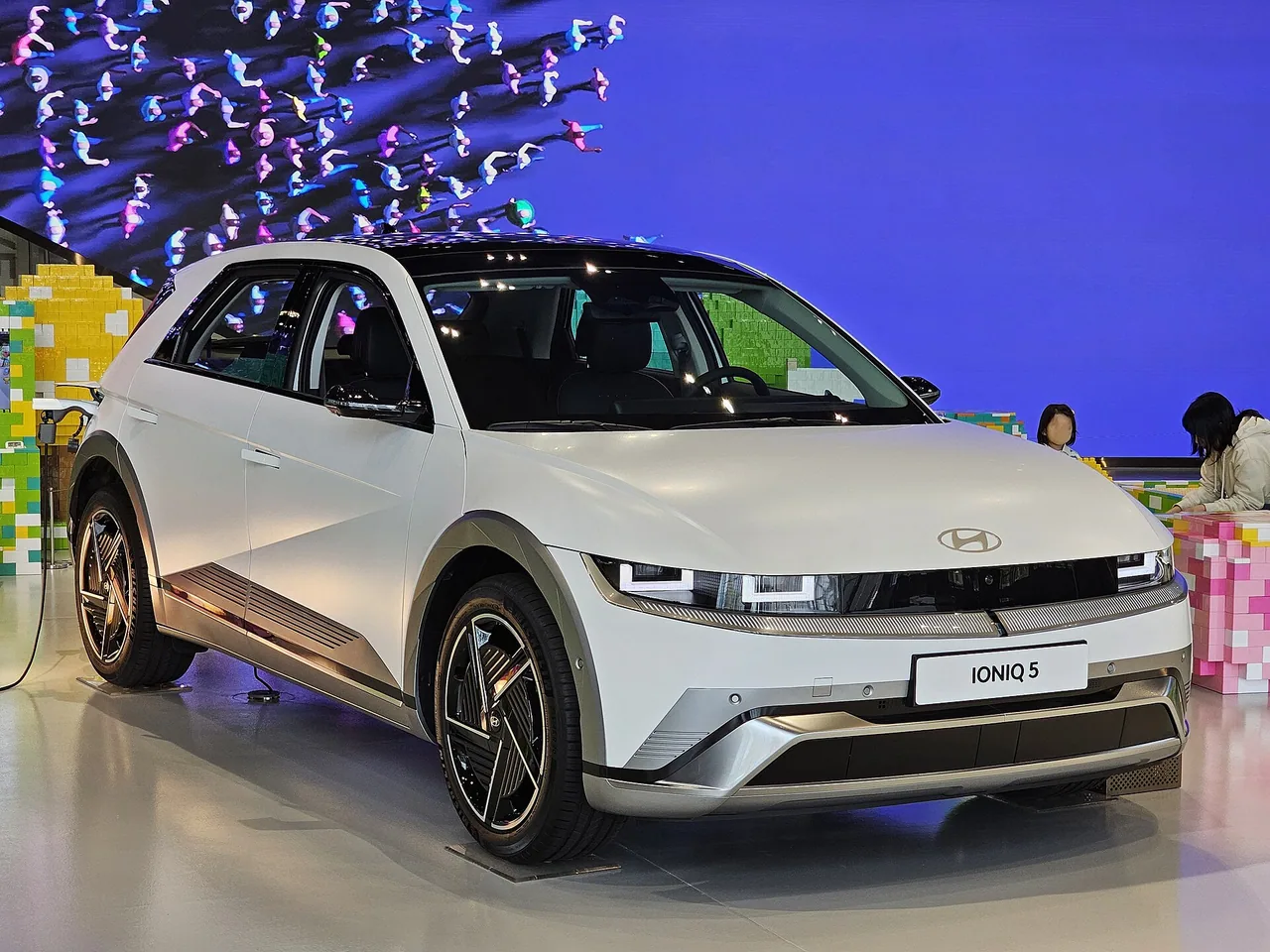

Compare the 2026 Hyundai Ioniq 5 trims
| Trim | Trim names | TrimIndex score | Price new | Used price | Drive | EPA range | EPA energy use | Horsepower |
|---|---|---|---|---|---|---|---|---|
| RWD | SE, SEL, Limited | 76 | from $37,500starting price | $34,901–$38,215Dealer asking (33 listings, Nov 2026) | RWD | 318 mi | 30.0 kWh/100 mi | 225 hp |
| AWD (19inch Wheels) | SE, SEL | 71 | from $41,000starting price | $36,963–$39,699Dealer asking (12 listings, Nov 2026) | AWD | 290 mi | 31.7 kWh/100 mi | 320 hp |
| AWD (20inch Wheels) | Limited | 68 | $48,975original MSRP | $44,441–$47,801Dealer asking (4 listings, Nov 2026) | AWD | 269 mi | 34.5 kWh/100 mi | 320 hp |
| Standard range | SE | 69 | $35,000original MSRP | $29,896–$32,981Dealer asking (4 listings, Nov 2026) | RWD | 245 mi | 29.0 kWh/100 mi | not stated |
| AWD XRT | XRT | 66 | $46,275original MSRP | not stated | AWD | 259 mi | 35.8 kWh/100 mi | 320 hp |
| N | N | 60 | not stated | not stated | AWD | 221 mi | 43.0 kWh/100 mi | 641 hp |
| Robo taxi | not stated | 60 | not stated | not stated | RWD | 168 mi | 47.5 kWh/100 mi | not stated |
Used dealer asking prices for the 2026 trims without trim-specific dealer asking prices: $35,393–$40,882 (median $38,006 across 78 active US used listings, Nov 2026) — covers all trims of the model year, not a single trim's sale price.
Price new and horsepower: Hyundai Motor America.
EPA range and EPA energy use: U.S. EPA and DOE, fueleconomy.gov.
Trim names: the manufacturer documents in TrimIndex's trim-name map, each tied to the drivetrain, battery or EPA label it names.
Used price: the figure each trim page shows, with its source and the month collected.
TrimIndex score: out of 100.
The Robo taxi is listed but left out of every comparison on this page: Motional robotaxi fleet configuration certified by EPA. It is not sold at retail, so a used-EV buyer cannot buy it; its complaints and owner sentiment are borrowed from the consumer Ioniq 5.
Blank cells. Trim names (1 row): no manufacturer document TrimIndex holds ties a trim name to that configuration; Price new (2 rows): no manufacturer price for that trim on file; Used price (3 rows): no used guide price or active dealer asking prices on file yet; Horsepower (2 rows): no manufacturer document backs a rated figure.
What differs between the 2026 Hyundai Ioniq 5 trims
Compared with the 2026 Ioniq 5 Standard range, the RWD has 73 more miles of EPA range.
Compared with the 2026 Ioniq 5 RWD, the N has all-wheel drive and 416 more hp, with 97 fewer miles of EPA range and EPA energy use 13.0 kWh/100 mi higher.
Compared with the 2026 Ioniq 5 N, the AWD XRT has 38 more miles of EPA range and EPA energy use 7.2 kWh/100 mi lower, with 321 fewer hp.
Compared with the 2026 Ioniq 5 AWD XRT, the AWD (19inch Wheels) has 31 more miles of EPA range and EPA energy use 4.1 kWh/100 mi lower.
Which 2026 Hyundai Ioniq 5 trim for what
- Longest EPA range: the 2026 Ioniq 5 RWD, 318 miles; next, the AWD (19inch Wheels) has 290 miles.
- Highest TrimIndex score: the 2026 Ioniq 5 RWD, 76 out of 100; next, the AWD (19inch Wheels) has 71 out of 100.
- Most horsepower (rated) (of the 4 trims with a figure on file): the 2026 Ioniq 5 N, 641 hp; next, the AWD (19inch Wheels) and the AWD XRT have 320 hp.
NHTSA Recalls, Investigations & Complaints by Body Style / Registration
2026 Hyundai Ioniq 5
NHTSA Recalls (2)
- NHTSA lists 2 recall campaigns for the 2026 Hyundai Ioniq 5, filed between Jan 2026 and Feb 2026.
- How they are fixed, per the filings: 1 by a software update (it can install over the air) and 1 by work on the car.
Source: NHTSA recall filings for the 2026 Hyundai Ioniq 5, data through Nov 22, 2026. Why the VIN decides
- Filed Feb 2026
The high voltage battery system may contain an improperly tightened bus bar, which can cause a short-circuit.
Campaign #26V068000 · Part (NHTSA): electrical system › propulsion system › traction battery- What happens:
- An electrical short in the high voltage battery system increases the risk of a fire.
- The fix
- Free fix: work on the car at a dealer Dealers will inspect and tighten the bus bar retention bolts and replace the battery system assembly, as necessary, free of charge.
- Covers:
- certain 2025-2026 IONIQ 5 and 2026 IONIQ 9 vehicles.
NHTSA lists 27 vehicles in this campaign (all models it covers).
Check VIN status at NHTSA.gov - Filed Jan 2026
Due to a software error, the instrument panel display may fail.
Campaign #26V047000 · Part (NHTSA): electrical system › instrument cluster/panel- What happens:
- An instrument panel display that fails to show critical safety information, such as the speedometer or warning lights, increases the risk of a crash.
- The fix
- Free fix: software update over the air or at a dealer The instrument panel display software will be updated over-the-air (OTA) or by a dealer, free of charge.
- Federal standard not met:
- 101 (Controls and Displays).
NHTSA lists 41,651 vehicles in this campaign (all models it covers).
Check VIN status at NHTSA.gov
NHTSA Complaints (30 total)
What owners report most
TrimIndex grouped the 30 complaints owners filed with NHTSA on the 2026 Hyundai Ioniq 5 (every trim; NHTSA files complaints by model year, not trim) into problem themes on Nov 16, 2026: 11 of them fall in the 4 themes below, 2 of them in two. 1 complaint was filed after that grouping and is not in a theme yet. How themes are made and checked
-
Charging unit failure, will not charge
4 of 30 complaints (13%): The car stops accepting a charge on home or public chargers, sometimes with dark screens or misbehaving door locks, and the charging control unit is replaced.
“the dealer informed the contact that the Integrated Charging Control Unit (ICCU) had failed and needed to be replaced.”
NHTSA complaint 11722093 “My car would no longer charge after testing various chargers at home and different public charging stations.”
NHTSA complaint 11734126 -
Car accelerates on its own
3 of 30 complaints (10%): The car accelerates or keeps moving without driver input, including during automated parking, and the driver has to brake to stop it.
“During the maneuver, the collision sensors activated, but the vehicle continued accelerating toward the parked car. I had to press the brake”
NHTSA complaint 11730691 “our car has briefly accelerated on its own and then either (a) braked hard on its own”
NHTSA complaint 11767203 -
False driver attention warnings
3 of 30 complaints (10%): The driver monitoring system issues inattention or take-a-break alerts while the driver is watching the road, and can switch off driving aids or trigger braking.
“Despite maintaining constant visual attention on the road ahead, the system issued repeated, erroneous audio warnings claiming driver inattention.”
NHTSA complaint 11714869 “When the eye tracker fails to recognize my eyes are looking at road it disables driver assist features such as lane centering”
NHTSA complaint 11737531 -
Sudden unexpected braking
3 of 30 complaints (10%): The car brakes hard on its own in traffic or while reversing, with no real obstacle in its path, leaving it exposed to following or crossing traffic.
“our car has briefly accelerated on its own and then either (a) braked hard on its own, too”
NHTSA complaint 11767203 “the vehicle initiated an unwarranted "fail-safe" maneuver and suddenly applied the brakes while traveling in the flow of traffic.”
NHTSA complaint 11714869
30 complaints filed with NHTSA for the 2026 Hyundai Ioniq 5, between Dec 2025 and Nov 2026.
Parts named most often
| Part | Complaints | Share |
|---|---|---|
| Electrical system (other) | 12 | 40% |
| Lane keeping and blind-spot systems including assist (3) and warning (3) | 6 | 20% |
| Forward collision avoidance | 4 | 13% |
| Backup camera and rear sensors including warnings (3) | 3 | 10% |
| Seats | 3 | 10% |
Share of all 30 complaints; one complaint can name more than one part, so shares add up to more than 100%. 2 complaints name no specific part.
None of the 30 complaints reports a crash, fire, injury or death. How these fields are filled
Complaints by year filed
| Year filed | Complaints |
|---|---|
| 2025 | 1 |
| 2026 (to Nov 22) | 29 |
Source: NHTSA owner complaints filed on every 2026 Hyundai Ioniq 5 (NHTSA files them by model year, not trim), data through Nov 22, 2026.
The 25 most severe, then newest, of 30
- Severity 4 of 5.Electrical system (other) at 850 miles
The contact owns a 2026 Hyundai Ioniq 5. The contact stated that while driving at 65 MPH, the vehicle lost motive power, and a battery warning light and a "Vehicle Will Come to a
Show the rest
Stop" warning message illuminated. The vehicle failed to restart and was towed to the contact's residence. The vehicle was towed to the dealer, where it was diagnosed with DTC P0A1F8C. The contact was informed that the Vehicle Control Management System (VCMS) experienced an internal failure and required replacement. The vehicle was repaired. The manufacturer was notified of the failure by telephone, and a case was filed. The failure mileage was approximately 850.
NHTSA ODI #11772230 - Severity 4 of 5.Brakes · Speed control
Several times now (over 5), we have experienced issues where our car has briefly accelerated on its own and then either (a) braked hard on its own, too, or (b) the accelerator
Show the rest
pedal stop working until we pull over, come to a complete stop, and either park or restart the car. We have experienced this multiple times on both surface streets and on highways. When this has happened on the highway, we've had to literally merge across multiple highway lanes so we can pull over or exit — all without being able to accelerate. This has happened to both of us as drivers, both alone and together, and both with the adaptive cruise control feature enabled and without it enabled. We have taken it to our local Hyundai dealer (Stevens Creek Hyundai) for inspection twice. Both times, they drove the car 100 miles and could not reproduce the issue, so told us there's nothing more they can do. We have insisted that this does not reproduce on demand; it is intermittent and has happened to us only once a month or so on average. They still said that unless they can reproduce it, they cannot fix it. They also asked us to record a video the next time it happens, but this is infeasible, since we'd have to be recording a video *constantly* while driving, since this issue is intermittent and happens randomly. We have multiple videos we've recorded immediately *after* an incident happens, after we've pulled over. No "check engine" light is on or anything else out of the ordinary. This has obviously been extremely scary and disturbing every time, especially as we also have a child. It feels extremely dangerous to keep driving this car.
NHTSA ODI #11767203 - Severity 4 of 5.Brakes · Speed control
I am reporting a suspected safety defect involving inconsistent deceleration behavior in my 2026 Hyundai IONIQ 5. I regularly use Hyundai’s i-PEDAL one-pedal-driving mode.
Show the rest
In this mode, releasing the accelerator produces strong regenerative deceleration and can bring the vehicle to a stop. However, the vehicle does not retain this selected driving behavior after it is turned off and restarted. It reverts to a mode requiring substantially more use of the brake pedal. The behavior also changes in connection with shifting into reverse. In a Costco parking lot in [XXX], I stopped near the customer pickup area while using i-PEDAL. I briefly turned off the vehicle while a passenger loaded groceries. When I restarted and began moving, I expected the strong accelerator-release deceleration the vehicle had provided immediately before shutdown. Instead, the vehicle continued moving because i-PEDAL had been reset. A crosswalk ahead contained pedestrians, and I had to apply the brake pedal to avoid striking them. No collision or injury occurred, but this was a serious near-miss. The concern is not simply that the vehicle offers different regenerative-braking settings. The safety concern is that a driver-selected setting that materially affects accelerator-release deceleration changes automatically after a brief shutdown or simply backing up. A driver who has adapted to i-PEDAL may reasonably expect the vehicle to decelerate as it did moments earlier. The regeneration level should be set and remain as the driver prefers, not reset on each start or backup of the vehicle. I request that NHTSA evaluate whether this inconsistent default behavior creates an unreasonable risk of unintended vehicle movement or pedestrian collisions and whether the vehicle should retain the selected mode or provide a prominent warning requiring driver acknowledgment whenever the deceleration behavior changes. INFORMATION REDACTED PURSUANT TO THE FREEDOM OF INFORMATION ACT (FOIA), 5 U.S.C. 552(B)(6)
NHTSA ODI #11760015 - Severity 4 of 5.Steering · Lane keeping and blind-spot systems
While driving on the freeway with adaptive cruise control and lane keeping assistance on heading east into the morning sun my car suddenly attempted to veer strongly to the left as
Show the rest
I exited the shadow of an overpass. I was able to stop the lane assist because I had a firm two handed grip on the steering wheel. Even with the firm grip and attentive driving I nearly left my lane as the wheels suddenly and strongly jerked to the left.
NHTSA ODI #11759157 - Severity 4 of 5.
- unintended acceleration problem (VCU malfunction?); happened 8/16/26 - safety at risk - yes; drove a little ways with brakes on; brakes started to smell like they were burning;
Show the rest
then vehicle screen said to stop (with loud warning noises), which i did - tow truck took it to dealer; haven't heard yet from service staff - hopefully will be seen today at San Bruno Hyundai - no warning or problems earlier in the day yesterday; see above
NHTSA ODI #11757411 - Severity 4 of 5.
The vision panel, located between the windshield and the moonroof, exploded and shattered into a ton of pieces.
Show the rest
There are a multitude of fractures throughout the panel and the edges of the panel are falling apart, exposing the wiring underneath.
NHTSA ODI #11746191 - Severity 4 of 5.Air bags · Electrical system (other) · Seats
The wiring for the air bag system under the driver's seat is exposed and unprotected which has led to disconnection and or damage to the wiring harness which then results in a disabled air bag system.
Show the rest
This is a manufacturer design flaw and a serious safety issue. Other owners who have experienced damage to their wiring harness here have had disabled air bag systems for prolonged periods and costly repairs that Hyundai had refused to cover under warranty despite the fact that it is an obvious design flaw and a serious safety issue. See attached photos for evidence of how exposed this wiring harness is and suscebtible to damage as well as an example of damage which can occur which other owners have reported. Damage to this unit due to poor design results in compromised driver and passenger safety and extremely costly repairs ($10,000) which it appears Hyundai is refusing to cover under warranty. We request that this be recalled in order replace the design so this wiring harness is protected properly.
NHTSA ODI #11727218 - Severity 4 of 5.Speed control · Lane keeping and blind-spot systems · Forward collision avoidance
While driving at highway speeds (approximately 70 MPH) with the vehicle's Assistive Driving functions engaged, the Driver Monitoring System (DMS) malfunctioned.
Show the rest
Despite maintaining constant visual attention on the road ahead, the system issued repeated, erroneous audio warnings claiming driver inattention. I attempted to adjust my head and eye position to satisfy the sensors, but the system failed to register my compliance and continued to cycle through warnings. Consequently, the vehicle initiated an unwarranted "fail-safe" maneuver and suddenly applied the brakes while traveling in the flow of traffic. This uncommanded, rapid deceleration created an immediate and severe risk of a high-speed rear-end collision with following vehicles. The failure appears to be a false-positive defect in the eye-tracking software logic and its integration with the braking system. The vehicle is available for inspection to analyze the system data logs.
NHTSA ODI #11714869 - Severity 3 of 5.Lane keeping and blind-spot systems · Backup camera and rear sensors
Upon receipt of the vehicle, I tuned the cross traffic collision warning (front, rear, moving and parking) to be disabled.
Show the rest
When I was backing out of a parking spot in a public school after dropping off my kid, I was reversing when a car waiting for me. I was being attentive to make sure no childen were at risk. The car then beeps loudly and unexpectedly because it assumed the car to my side had moved, this diverted my attention from the road around me because this was unexected. I did not know what was happening and I almost hit a pedetrian in the lot because my attention was taken from an unknown alert (at the time). Only after realizing what the error was, was I able to continue being an attentive driver (the alert did not notice the pedestrian) and safely back out. The issue was the alert turned itself back on after restarting the vehicle. This is unexpected and distracting. I need to be able to set the alerts to a level that meets my needs. When purchasing the vehicle I was informed I would be able to keep them off (there were many other lies told to us when we purchased the vehicle). In other situations, such as backing out of a lot that is busy, the alert goes off non stop because there are always cars, even if they are waiting for me. This creates alert fatigue and prevents me from using the tools to best be alert on what is around me. It also raises my frustration and anxiety as the alert is just going off non stop. This is intended behavior to notify me of something I can clearly see and am already aware of, in case I am not aware. I am OK with these saftey features, but I should be able to turn them off and keep them off so that I can best manage the alerts to my needs as a driver. It is important as a driver to know how the vehicle performs and to be able to tame alert fatigue through the settings. These cannot be temporary. At this point any beep the car may give me is meaningless as it is constantly beeping for something not always clear.
NHTSA ODI #11778333 - Severity 3 of 5.Driver-assist system
There was a moving traffic violation of Texas Transportation Codes § 545.101 (Improper Turn) and § 545.060 (Failure to Maintain a Single Lane).
Show the rest
I was going southbound on [XXX] and got in the [XXX] to turn right onto [XXX]. The robotaxi was in the innermost right turn lane. At this intersection, there is a very clear marking of what lanes you are allowed to turn into; the innermost turn lane is only allowed to turn into the right lane of [XXX]. However, the robotaxi turned into the middle lane, breaking Texas driving law. This was at 7:34am on Tuesday, XXX INFORMATION REDACTED PURSUANT TO THE FREEDOM OF INFORMATION ACT (FOIA), 5 U.S.C. 552(B)(6)
NHTSA ODI #11775844
Show 15 more complaints
- Severity 3 of 5.Electrical system (other)
I turned the car on and a red battery shaped light appeared on the dash while I was in Park. I quickly looked up what the light meant as this was not the first time I've had a warning light show up.
Show the rest
According to Ontario Hyundai website, it's a serious electrical issue that requires immediate attention. I attempted to move my car into a safe place and tried to shift the car into drive and it would only go into neutral. Then I noticed that the AC was blowing hot air even though it was at 65 degrees. I attempted to turn the car off and it would not; the dash flickered a bunch of lights but would not turn off. I continued to try to get the car into drive or reverse for 20 minutes and it would not change. After about 20 minutes, I was able to shut the car off. When I restarted it, I was able to shift into drive and get to a main road. I ultimately had to call a tow truck because it was not safe to drive. **sources Ontario Hyundai and Norman Hyundai; owners manual**
NHTSA ODI #11771660 - Severity 3 of 5.Electrical system (other)
The vehicle will not turn off. I returned it to the Dealer, Oakland Hyundai, and their service department has had the vehicle since 7/27/26.
Show the rest
When I brought the vehicle in to service it had 2,519 miles. Service rep has advised that technicians are trying to find the faulty part and have been unsuccessful to date. A technician from another location is scheduled to see the vehicle during the week of 8/31/26. I have filed a case with Hyundai America and will send a demand for restitution on 8/28/26. I view this situation as a clear safety issue - the car will not turn off.
NHTSA ODI #11759443 - Severity 3 of 5.Electrical system (other)
Control box on main battery (iccu)
NHTSA ODI #11750575 - Severity 3 of 5.Driver-assist system
An AVRIDE vehicle made a right-hand turn from a middle lane. It did not use the appropriate lane for right-hand turns.
NHTSA ODI #11744301 - Severity 3 of 5.Backup camera and rear sensors · Forward collision avoidance
Vehicle: 2026 Hyundai Ioniq 5 Description of Safety Defect:The Reverse Parking Collision-Avoidance Assist (PCA-R) system exhibits a severe software logic flaw that creates an immediate traffic hazard.
Show the rest
When a standard, hitch-mounted bike rack is installed, the vehicle’s rear sensors detect the rack as an imminent collision obstacle while in reverse. The system responds by executing an abrupt, violent emergency brake application, bringing the vehicle to an unexpected dead stop. The primary safety failure is a lack of non-volatile memory retention for driver settings. In the infotainment system under "Parking Safety," a driver can manually deselect or disable the "Rear Safety" automatic braking feature to accommodate hitch accessories. However, this setting completely resets to "Enabled" by default every single time the vehicle is restarted. Safety Risk & Real-World Consequences:This defect has caused multiple documented near-miss incidents. Specifically, when attempting to reverse off a main roadway into a driveway with cross-traffic present, the vehicle suddenly slams on the brakes due to the bike rack. This leaves the vehicle unexpectedly stranded and protruding into active lanes of traffic, nearly causing severe rear-end and T-bone collisions with passing vehicles. Requested Corrective Action: Hyundai must issue a software update changing the ADAS memory logic. The Reverse Parking Collision-Avoidance Assist state should persist in the exact state it was in when the vehicle was last turned off (Last-Mode Memory). If a driver explicitly disables the feature to safely operate a bike rack or hitch accessory, it must remain disabled until the driver intentionally re-enables it.
NHTSA ODI #11740966 - Severity 3 of 5.Forward collision avoidance · Lane keeping and blind-spot systems
I am a tall driver (6'4") and I need to wear sunglasses when driving most of the time. The eye tracking device seems generally incompatible with both of these conditions.
Show the rest
When the eye tracker fails to recognize my eyes are looking at road it disables driver assist features such as lane centering which can occur unexpectedly and has almost caused me to wreck once. I have tried without sunglasses and squinting at the glare also causes the system to fail. I often have to lift my glasses and stare at the sensor to make the warning go away (in effect forcing me to take my eyes off the road. If sunlight hits it, it also fails. So in summary, this device does not work in the daytime. I have contacted the dealer, and they basically read the Hyundai response I've found online verbatim: summarized, you can't wear sunglasses, prescription glasses, be over 6 foot tall and several other conditions and expect the system to work. There is no way to disable the tracker. There is an option the dealer pointed to, but it is ignored when you turn on any of the assist features. Since this system is currently so unreliable, at best, this is an expensive feature I am unable to use. At worst, the distractions it is causing is going to cause an accident. This is an ongoing issue, date indicates first time issue was noticed.
NHTSA ODI #11737531 - Severity 3 of 5.Electrical system (other)
My car would no longer charge after testing various chargers at home and different public charging stations. If this had happened away from home, and without cell service, I might have been stranded.
Show the rest
I took I into the Hyundai service center, and they said the ICCU had failed. They replaced if after waiting a week for the part.
NHTSA ODI #11734126 - Severity 3 of 5.Electrical system (other)
ICCU and fuse broken
NHTSA ODI #11733677 - Severity 3 of 5.Backup camera and rear sensors
On April 12, 2026, I was using the parallel parking assist feature on my 2026 Hyundai Ioniq 5 Limited AWD.
Show the rest
I was parking on perfectly level ground with a parked vehicle behind the empty space I was attempting to enter. During the maneuver, the collision sensors activated, but the vehicle continued accelerating toward the parked car. I had to press the brake to stop the vehicle and avoid a collision. This created a safety concern because the system appeared to continue the maneuver despite the active collision warnings.
NHTSA ODI #11730691 - Severity 3 of 5.Battery and propulsion system
While driving at most speeds vehicle feels like it is pulsing in power. It’s an EV and I can best describe the feeling to be like when a gas powered vehicle has a severe skip in the engine
NHTSA ODI #11729532 - Severity 3 of 5.Lane keeping and blind-spot systems
I am writing to report a serious safety concern regarding the “Consider Taking a Break” driver alert system in my new 2026 Hyundai Ioniq 5 Limited, which currently has 515 miles.
Show the rest
This notification is presenting itself in a way that I believe creates a distraction and potential hazard while driving. The alert appears frequently and without clear justification, even when I am fully alert and in control of the vehicle. Rather than enhancing safety, it draws unnecessary attention away from the road and contributes to driver frustration. From a safety standpoint, any system that interrupts driver focus—especially without accurate or consistent triggering criteria—can increase risk rather than reduce it. This is particularly concerning in real-world driving conditions where attention needs to remain uninterrupted. Due to this issue, I am seriously considering returning the vehicle, as I do not feel confident in a system that behaves unpredictably and may compromise safety. I strongly urge Hyundai to: - Investigate this behavior immediately - Issue a recall or software update to correct it - Provide owners with the ability to disable or customize this alert I have also included NHTSA on this email, as I believe this warrants broader review as a potential safety defect. Please advise on next steps and whether a fix is currently in development. Thank you for your prompt attention to this matter. Sincerely, [XXX] [XXX] [XXX] INFORMATION REDACTED PURSUANT TO THE FREEDOM OF INFORMATION ACT (FOIA), 5 U.S.C. 552(B)(6)
NHTSA ODI #11727726 - Severity 3 of 5.Electrical system (other) · Forward collision avoidance · Lane keeping and blind-spot systems
Every 7 minutes of driving electrical failure, happens, which results in Check driver assistance system warning. Once vehicle is turned off, driving 7 minutes error pops again.
Show the rest
Due to this all systems: Adaptive Cruise Control, Automatic Emergency Braking, Blind Spot Warning, Forward Collision Warning, Lane Departure Warning, Lane Keeping Assistance, Parking Collision Warning, Rear Cross Traffic Warning gets disabled. This creates a huge risk driving.
NHTSA ODI #11725393 - Severity 3 of 5.Electrical system (other) at 160 miles
The contact owns a 2026 Hyundai Ioniq 5. The contact stated that while charging the vehicle at the workplace, the vehicle started flashing a message "Charging was Unsuccessful".
Show the rest
The contact was able to drive the vehicle to the residence; however, the door locks were making clicking sounds. The contact stated that the vehicle was parked in the driveway and the key fob failed to unlock or lock the doors. The contact called the local dealer, who advised her not to drive the vehicle. The vehicle was towed by the dealer to be diagnosed, and the dealer informed the contact that the Integrated Charging Control Unit (ICCU) had failed and needed to be replaced. The vehicle was not yet repaired. The manufacturer was not informed of the failure. The failure mileage was approximately 160.
NHTSA ODI #11722093 - Severity 3 of 5.Drive unit
The vehicle cannot initiate a level 2 charging session due to a ground fault error. Multiple charging stations were attempted with different charging connectors and adapters.
Show the rest
Only DC fast charging works on the vehicle now. This vehicle has been leased for less than 60 days.
NHTSA ODI #11718841 - Severity 2 of 5.Seats
The headrest (in it's farthest back position) pushes my head so far forward that I have to hunch my body or have no support from just above my lower back up to the mid back of my head.
Show the rest
I think this is very unsafe should I get in an accident. In many online forums people are taking them off entirely or removing them and turning them around. This is unbelievable. I didn't realize how bad it was until I recently drove a friends BMW Mini Countryman where my back and neck were properly supported. The headrest should be recalled and redesigned immediately.
NHTSA ODI #11772440
2026 Hyundai Ioniq 5 N
NHTSA Recalls (2)
- NHTSA lists 2 recall campaigns for the 2026 Hyundai Ioniq 5, filed between Jan 2026 and Feb 2026.
- How they are fixed, per the filings: 1 by a software update (it can install over the air) and 1 by work on the car.
Source: NHTSA recall filings for the 2026 Hyundai Ioniq 5, data through Nov 22, 2026. Why the VIN decides
- Filed Feb 2026
The high voltage battery system may contain an improperly tightened bus bar, which can cause a short-circuit.
Campaign #26V068000 · Part (NHTSA): electrical system › propulsion system › traction battery- What happens:
- An electrical short in the high voltage battery system increases the risk of a fire.
- The fix
- Free fix: work on the car at a dealer Dealers will inspect and tighten the bus bar retention bolts and replace the battery system assembly, as necessary, free of charge.
- Covers:
- certain 2025-2026 IONIQ 5 and 2026 IONIQ 9 vehicles.
NHTSA lists 27 vehicles in this campaign (all models it covers).
Check VIN status at NHTSA.gov - Filed Jan 2026
Due to a software error, the instrument panel display may fail.
Campaign #26V047000 · Part (NHTSA): electrical system › instrument cluster/panel- What happens:
- An instrument panel display that fails to show critical safety information, such as the speedometer or warning lights, increases the risk of a crash.
- The fix
- Free fix: software update over the air or at a dealer The instrument panel display software will be updated over-the-air (OTA) or by a dealer, free of charge.
- Federal standard not met:
- 101 (Controls and Displays).
NHTSA lists 41,651 vehicles in this campaign (all models it covers).
Check VIN status at NHTSA.gov
NHTSA Complaints (0 total)
NHTSA lists no complaints for this model year as of Nov 22, 2026.
NHTSA 5-Star Crash-Test Ratings
NHTSA crash-tested the rear-wheel-drive 2026 Hyundai Ioniq 5 SUV (the RWD and Standard range): 5 stars overall, with frontal 4, side 5, rollover 5. NHTSA crash-tested the all-wheel-drive 2026 Hyundai Ioniq 5 SUV (the AWD (19inch Wheels) and AWD XRT): 5 stars overall, with frontal 4, side 5, rollover 5. NHTSA lists the all-wheel-drive 2026 Hyundai Ioniq 5 N SUV (the N) without a star rating.
Forum posts that mention this car
2 forum posts are on file for this model year. The 2 posts shown were retrieved May 2026.
"I just bought a 2026 Ioniq 5. I went through the same thing you are, and honestly still am. Here's where I landed: I don't like any other car as much as the Ioniq 5 (within my price range). It is a crazy nice car, especially for ~$40K OTD. The ICCU issue, while quite prevalent, is still relatively rare. I'm choosing to believe it's gotten better in the '25-'26 refresh, but I don't have any data to back that up. That said, the highest number I've seen is 10%, which feels insane and unlikely. Look at this sub and you'll see lots of failures, but then someone will post asking people who haven't…"
"I have slept in my Ioniq 5 and it's pretty good for sleeping. The rear seats don't fold totally flat but I put a board with a small riser at the bottom to make it level. ICCU is still an issue in 26. It's covered under warranty, so not a real financial risk, but definitely inconvenient if you're one of the unlucky."
What changed from 2025
NHTSA lists 2 recall campaigns for the 2026 Hyundai Ioniq 5 and 9 for the 2025; 1 covers both.
2026 Hyundai Ioniq 5 frequently asked questions
What trims does the 2026 Hyundai Ioniq 5 come in?
TrimIndex lists 5 configurations of the 2026 Hyundai Ioniq 5, as EPA names them: RWD, AWD (19inch Wheels), Standard range, AWD XRT and N. 2 wheel, tire or charger options are listed under their trim. Manufacturer documents name the SE, the SEL and the Limited for the 2026 Ioniq 5 RWD; the SE and the SEL for the AWD (19inch Wheels); the SE for the Standard range; the XRT for the AWD XRT; and the N for the N.
What is the difference between the 2026 Hyundai Ioniq 5 Standard range and AWD XRT?
Compared with the 2026 Ioniq 5 Standard range, the AWD XRT has all-wheel drive and 14 more miles of EPA range, with EPA energy use 6.8 kWh/100 mi higher and an original MSRP $11,275 higher.
What is the range of the 2026 Hyundai Ioniq 5?
EPA rates the 2026 Hyundai Ioniq 5 at 221 to 318 miles, depending on the configuration: 318 for the RWD, 290 for the AWD (19inch Wheels), 259 for the AWD XRT, 245 for the Standard range and 221 for the N.
Are there recalls on the 2026 Hyundai Ioniq 5?
Yes. NHTSA lists 2 recall campaigns for the 2026 Hyundai Ioniq 5 in records through Nov 22, 2026: 26V047000 (instrument display) and 26V068000 (high-voltage battery).