sudden braking with nothing ahead
38 complaints across 2 model years (2024: 24 of 78 (31%); 2025: 14 of 21 (67%)).
“The vehicle will automatically extremely hard brake while moving for no apparent reason, with no obstructions present.”
Updated
The Bottom Line
Across judged model years per NHTSA records through Nov 12, 2026, the Blazer EV has no single standout avoid year, while the Mustang Mach-E flags 2021 to avoid with 2024 as its cleanest year. Choose the Blazer EV for faster 190 kW DC fast charging; choose the Mustang Mach-E for a verified Best Year (2024).
Peak EPA range sits within 14 miles (334 mi vs 320 mi); published used guides place the Blazer EV at $25,000 (KBB, Nov 2026) and the Mustang Mach-E at $22,800–$34,000 (KBB, Nov 2026).
Data:NHTSA through
SUV · 9 canonical trims · AWD / FWD / RWD
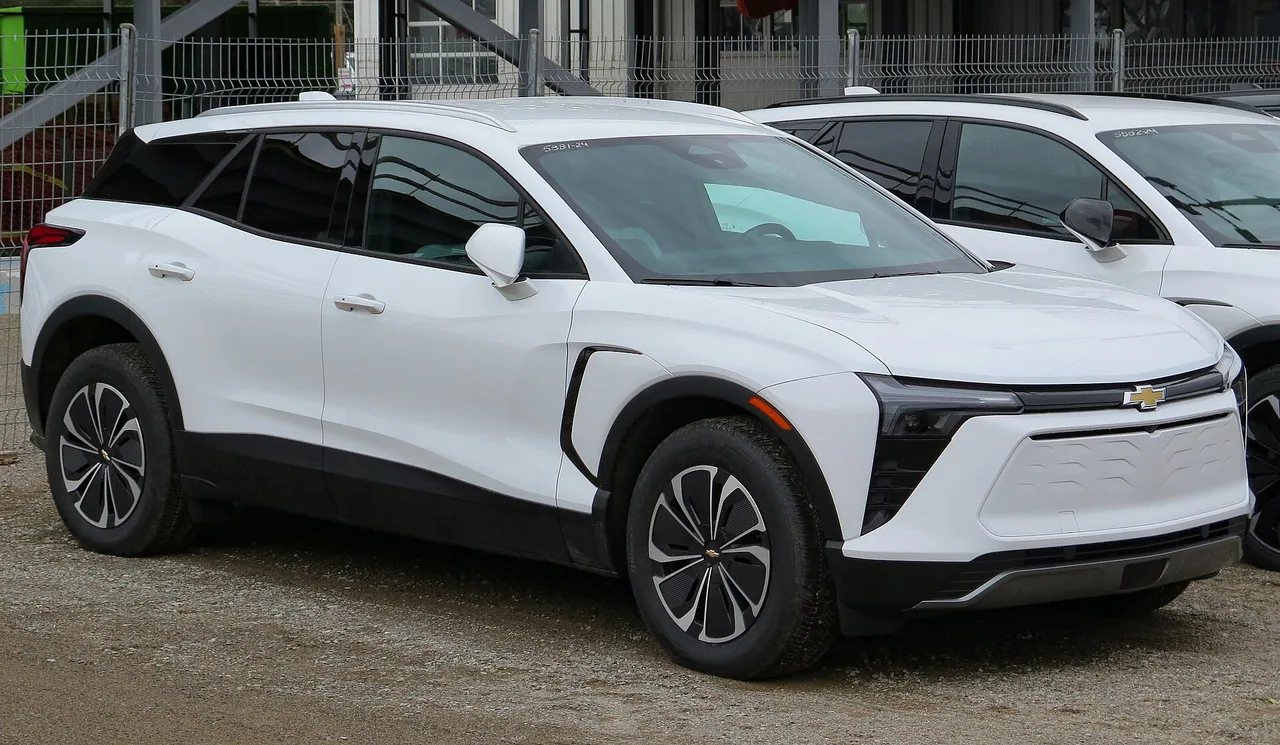
EPA Range
279–334 mi
Latest Port
CCS1
KBB Used
$25,000
SUV · 41 canonical trims · AWD / RWD
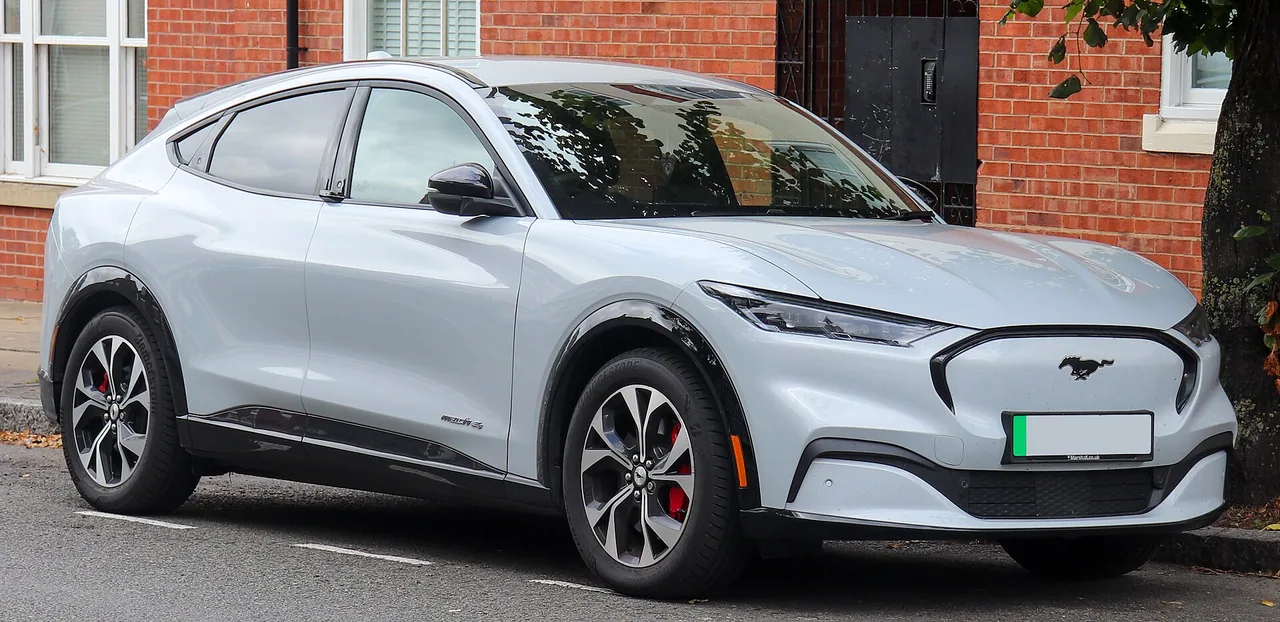
EPA Range
211–320 mi
Latest Port
CCS1
KBB Used
$22,800–$34,000
Pick the Chevrolet Blazer EV if…
Pick the Ford Mustang Mach-E if…
2024 Chevrolet Blazer EV vs 2024 Ford Mustang Mach-E
Pick a shared model year to compare matching EPA range, NHTSA filings, charging port and published pricing.
2024 Model Year · 2 trims
Efficiency: 35.2–36.6 kWh/100 mi · Up to 190 kW DC
2024 Model Year · 6 trims
Efficiency: 31.8–39.4 kWh/100 mi · Up to 150 kW DC
Aligned year by year from NHTSA complaint, recall and defect-investigation files through Nov 12, 2026 (investigations through Nov 13, 2026). Complaint counts are raw totals on file, never fleet-normalized failure rates.
Documented Pattern · Ford Mustang Mach-E
NHTSA campaigns on file: 22V412000, 23V687000, 25V130000, 25V441000, 26V582000.
| Year | Chevrolet Blazer EV | Ford Mustang Mach-E | ||||
|---|---|---|---|---|---|---|
| Yr | Standing / Port | NHTSA Record | Range & Price | Standing / Port | NHTSA Record | Range & Price |
| 2026 | Too new CCS1 | 0 cmpl 2 rec · 1 open | 283–312 mi $38,053–$49,417 (Asking · Nov 2026) | Too new CCS1 | 2 cmpl 2 rec | 240–320 mi $34,021–$49,849 (Asking · Nov 2026) |
| 2025 | Too new CCS1 | 21 cmpl 4 rec · 1 open | 283–334 mi $24,396–$32,764 (Asking · Nov 2026) | Too new CCS1 | 14 cmpl 7 rec | 240–320 mi $28,990–$45,169 (Asking · Nov 2026) |
| 2024 | Judged CCS1 | 78 cmpl 6 rec · 1 open | 279–324 mi $21,407–$31,227 (J.D. Power) | Best year CCS1 | 49 cmpl 5 rec · 1 open | 230–320 mi $24,644–$42,364 (J.D. Power) |
| 2023 | Not sold in 2023 | Judged CCS1 | 129 cmpl 6 rec · 1 open | 224–312 mi $20,069–$37,897 (J.D. Power) | ||
| 2022 | Not sold in 2022 | Judged CCS1 | 142 cmpl 9 rec · 1 open | 224–314 mi $18,060–$32,081 (J.D. Power) | ||
| 2021 | Not sold in 2021 | Avoid CCS1 | 353 cmpl 13 rec · 1 open | 211–305 mi $17,155–$28,095 (J.D. Power) | ||
Click any year row to open that model year’s trim comparison, full recall campaign list and complaint themes. Years sold fewer than 30 months are marked Too new.
Rows marked Asking show aggregated active US used dealer listings where no KBB or J.D. Power guide price is on file yet (asking prices, not final sale prices; excluded from Value-to-Score).
sudden braking with nothing ahead
38 complaints across 2 model years (2024: 24 of 78 (31%); 2025: 14 of 21 (67%)).
“The vehicle will automatically extremely hard brake while moving for no apparent reason, with no obstructions present.”
loss of drive power
146 complaints across 5 model years (2021: 71 of 353 (20%); 2022: 42 of 142 (30%); 2023: 22 of 129 (17%); 2024: 8 of 49 (16%); 2025: 3 of 14 (21%)).
“Vehicle experienced immediate loss of motive power while in motion at 45 mph after "Stop Safely Now" alert.”
waits for recall repairs
55 complaints across 5 model years (2021: 29 of 353 (8%); 2022: 7 of 142 (5%); 2023: 5 of 129 (4%); 2024: 11 of 49 (22%); 2025: 3 of 14 (21%)).
“the dealer refused to replace the windshield and perform the recall repair on the vehicle.”
driver-assist and self-driving features
125 complaints across 4 model years (2021: 93 of 353 (26%); 2022: 17 of 142 (12%); 2023: 12 of 129 (9%); 2024: 3 of 49 (6%)).
“Front Camera Fault Service Required message - Pre-collision Assist inoperative - Adaptive cruise control inoperative”
Battery capacity readings come strictly from verified individual owner or per-car reports on file — never modeled projections. Charging port and Supercharger access come from automaker and Tesla documents.
Measured Battery-Health Readings on File
No verified individual owner battery-health readings are on file for this pack yet.
Measured Battery-Health Readings on File
7 verified individual-car readings spanning 91%–100% capacity (13,182–42,000 mi).
Several EVs transitioned from CCS1 to built-in NACS between 2024 and 2026. Check the exact model year before assuming adapter needs.
Tesla Superchargers: With an adapter, since Sep 18, 2024
Adapter note: $225
Source: General Motors (published Aug 28, 2025; archived copy captured Nov 9, 2026); General Motors (published Sep 18, 2024; archived copy captured Apr 12, 2026)
Tesla Superchargers: With an adapter
Adapter note: $225
Source: General Motors (undated page, archived copy captured May 18, 2026)
Tesla Superchargers: With an adapter
Adapter note: Sold by the maker, price not stated
Source: Ford Motor Company (undated page, archived copy captured Oct 13, 2026); Ford Motor Company (published May 25, 2023; archived copy captured May 14, 2025); Ford Motor Company (published Feb 29, 2024; archived copy captured Mar 12, 2024)
Every published used-market figure stays attributed to a single source (Kelley Blue Book or J.D. Power) with its collection window — never blended across sources.
KBB Used Range · Nov 2026
$25,000
Covers model year 2024 · trim-level guide pricing
J.D. Power Used Range · Nov 2026
$21,407–$31,227
Covers model year 2024 · model-year guide pricing
Original MSRP Span
$60,600–$60,700
Value-to-Score Ratio
Trim-level KBB required
KBB Used Range · Nov 2026
$22,800–$34,000
Covers model years 2021, 2023, 2024 · trim-level guide pricing
J.D. Power Used Range · Nov 2026
$17,155–$42,364
Covers model years 2021, 2022, 2023, 2024 · model-year guide pricing
Original MSRP Span
$43,895–$67,995
Value-to-Score Ratio
6–8/10
Georgia Tax-Assessed Value (Separate State Tax Schedule)
These figures come from the Georgia Department of Revenue Motor Vehicle Assessment Manual for Title Ad Valorem Tax (TAVT) under O.C.G.A. § 48-5C-1(a)(1). They are state tax-assessment values, not market prices, guide estimates or dealer offers, and are never blended into Value-to-Score calculations.
Chevrolet Blazer EV
Ford Mustang Mach-E
The federal §25E used-EV tax credit expired in September 2025. State and utility incentives vary by residency, income and price caps — check each trim page’s State Incentive Finder for current state rules.
| Specification | Chevrolet Blazer EV | Ford Mustang Mach-E |
|---|---|---|
| EPA range (all trims) EPA Fuel Economy Guide | 279–334 mi | 211–320 mi |
| Energy consumption (lower is better) EPA Fuel Economy Guide | 32.3–39.7 kWh/100 mi | 30.7–41.2 kWh/100 mi |
| Combined MPGe EPA Fuel Economy Guide | 85–104 MPGe | 82–110 MPGe |
| Usable battery capacity | 85.0–102.0 kWh | 68.0–91.0 kWh |
| Peak DC fast charging | 150–190 kW | 150 kW |
| Rated horsepower Manufacturer rated output | 220–615 hp | 264–480 hp |
| Drivetrains offered | AWD, FWD, RWD | AWD, RWD |
| NHTSA 5-Star overall rating NHTSA NCAP crash tests | 5 of 5 stars | 5 of 5 stars |
| Body style | SUV | SUV |
Filtered to posts written by owners of each model year under TrimIndex’s owner-relevance rule. Topic counts reflect what owners discuss most often.
“2025 Chevrolet Blazer EV SS From 2024 AWD Review - 1 Week In, and Already Hooked Hey everyone! So I’ve officially had my 2025 Chevy Blazer EV SS for a week now (550 miles), after upgrading from the 2024 RS AWD. Figured I’d share some first…”
“PSA: Avoid the Chevrolet Blazer EV I’m writing this after getting stranded in my 2024 Chevrolet Blazer EV for the third time in less than three months. For context, I bought the Blazer EV on May 11, 2024. The software is fully updated. It…”
“Adaptive Cruise Control Increases Speed Randomly My 2022 Mach E GT while on adaptive cruise control suddenly and erratically speeds up without my touching the controls or accelerator. For example, I could be driving on ACC set at 65 and it…”
“Thoughts from 6.5k mile road trip from Houston to Banff through Utah, Colorado, Wyoming, Idaho, Montana, South Dakota Nebraska, Kansas and Oklahoma As summer approaches, I'm sure some of us will be embarking on a long road trips. I'm…”
Pair-specific checks built from active recall advisories, open NHTSA investigations, top complaint patterns and charging hardware.
NHTSA has an open defect investigation on Blazer EV (EA26006). Check service records for related repairs or pending software updates.
This is the most recurring complaint pattern across Chevrolet Blazer EV model years on file (2024, 2025). Ask for full service history before purchase.
NHTSA has an open defect investigation on Mustang Mach-E (EA25001). Check service records for related repairs or pending software updates.
This is the most recurring complaint pattern across Ford Mustang Mach-E model years on file (2021, 2022, 2023, 2024, 2025). Ask for full service history before purchase.
For the Chevrolet Blazer EV (2024–2026), no single model year is flagged to avoid (99 NHTSA complaints on file). For the Ford Mustang Mach-E, TrimIndex flags 2021 to avoid and names 2024 its cleanest judged year (689 NHTSA complaints on file). Every comparison uses age-matched NHTSA filings (NHTSA data through Nov 12, 2026).
Across active trims on file from the EPA Fuel Economy Guide, the Chevrolet Blazer EV spans 279–334 mi and the Ford Mustang Mach-E spans 211–320 mi. Efficiency: Blazer EV rates 32–40 kWh/100 mi; Mustang Mach-E rates 31–41 kWh/100 mi. Fast charging on file: Blazer EV peaks at 190 kW DC; Mustang Mach-E peaks at 150 kW DC.
Chevrolet Blazer EV: 2024–2025 uses CCS1 (Combined Charging System) (with an adapter, since sep 18, 2024); 2026 uses CCS1 (Combined Charging System) (with an adapter). Ford Mustang Mach-E (CCS1 (Combined Charging System)): with an adapter. Status reflects automaker and Tesla documentation on file at TrimIndex.
Published KBB used-market figures (Nov 2026) place Chevrolet Blazer EV trims at $25,000. Published KBB used-market figures (Nov 2026) place Ford Mustang Mach-E trims at $22,800–$34,000. Each range reflects a single pricing source rather than blended estimates; inspect individual model-year and trim pages for trim-specific pricing.
On the Chevrolet Blazer EV, the largest multi-year complaint pattern is sudden braking with nothing ahead (38 complaints across 2 model years). On the Ford Mustang Mach-E, the largest multi-year complaint pattern is loss of drive power (146 complaints across 5 model years). These reflect shares of NHTSA owner complaints on file, not fleet-wide failure rates.
Chevrolet Blazer EV: NMC cells, 85.0–102.0 kWh usable, 8 years or 100,000 miles battery warranty. Ford Mustang Mach-E: LFP/NMC cells, 68.0–91.0 kWh usable, 8 years or 100,000 miles battery warranty, 7 verified owner capacity readings (91%–100%). Capacity readings reflect individual verified owner reports on file rather than modeled estimates.
What this comparison is built on
NHTSA Filings
Through Nov 12, 2026
EPA & NCAP
50 canonical trims
Owner Forum Posts
59 verified owner posts
Methodology
Model Hub · 2024–2026
Explore Chevrolet Blazer EV years & trims
Model Hub · 2021–2026
Explore Ford Mustang Mach-E years & trims
Chevrolet Blazer EV vs Honda Prologue
2024–2026 vs 2024–2026
Chevrolet Equinox EV vs Ford Mustang Mach-E
2024–2026 vs 2021–2026
Chevrolet Blazer EV vs Hyundai Ioniq 5
2024–2026 vs 2022–2026
Fisker Ocean vs Ford Mustang Mach-E
2023–2024 vs 2021–2026
Chevrolet Blazer EV vs Kia EV6
2024–2026 vs 2022–2026
Ford Mustang Mach-E vs Genesis GV60
2021–2026 vs 2023–2026

