Loading EV catalog…

Tip: type Model Y vs Mach-E to compare any two EVs instantly Open full Compare Workbench →
Luxury & Performance Sedans · Head-to-Head

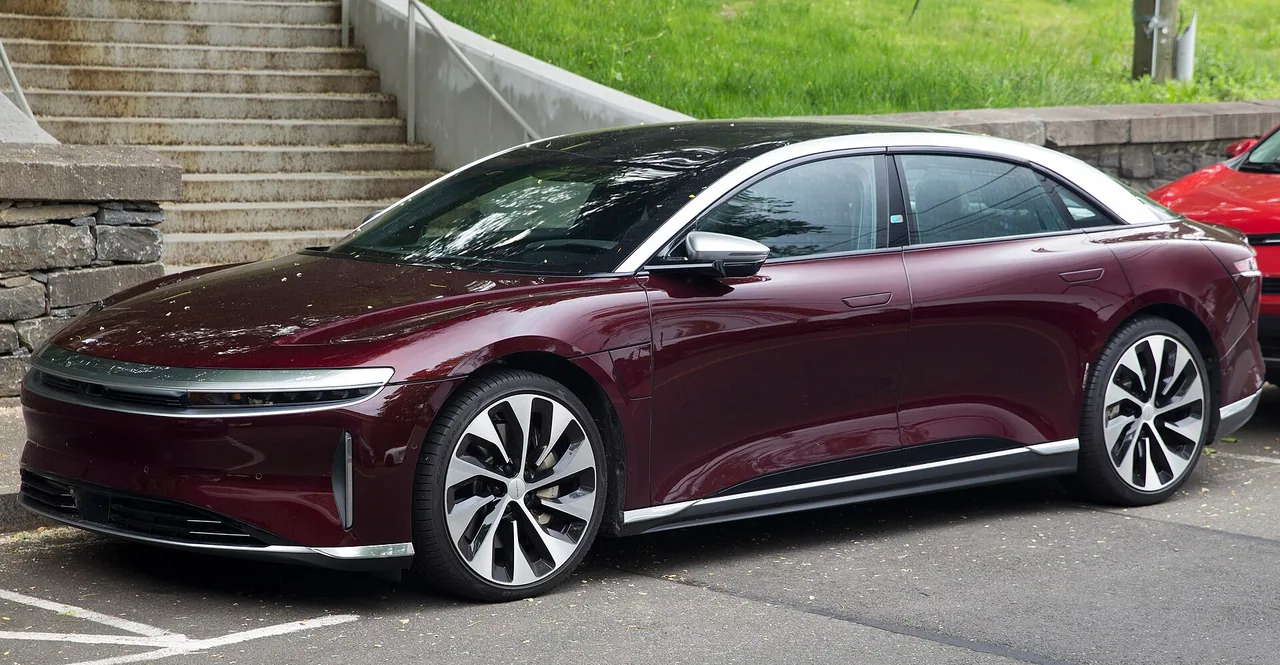
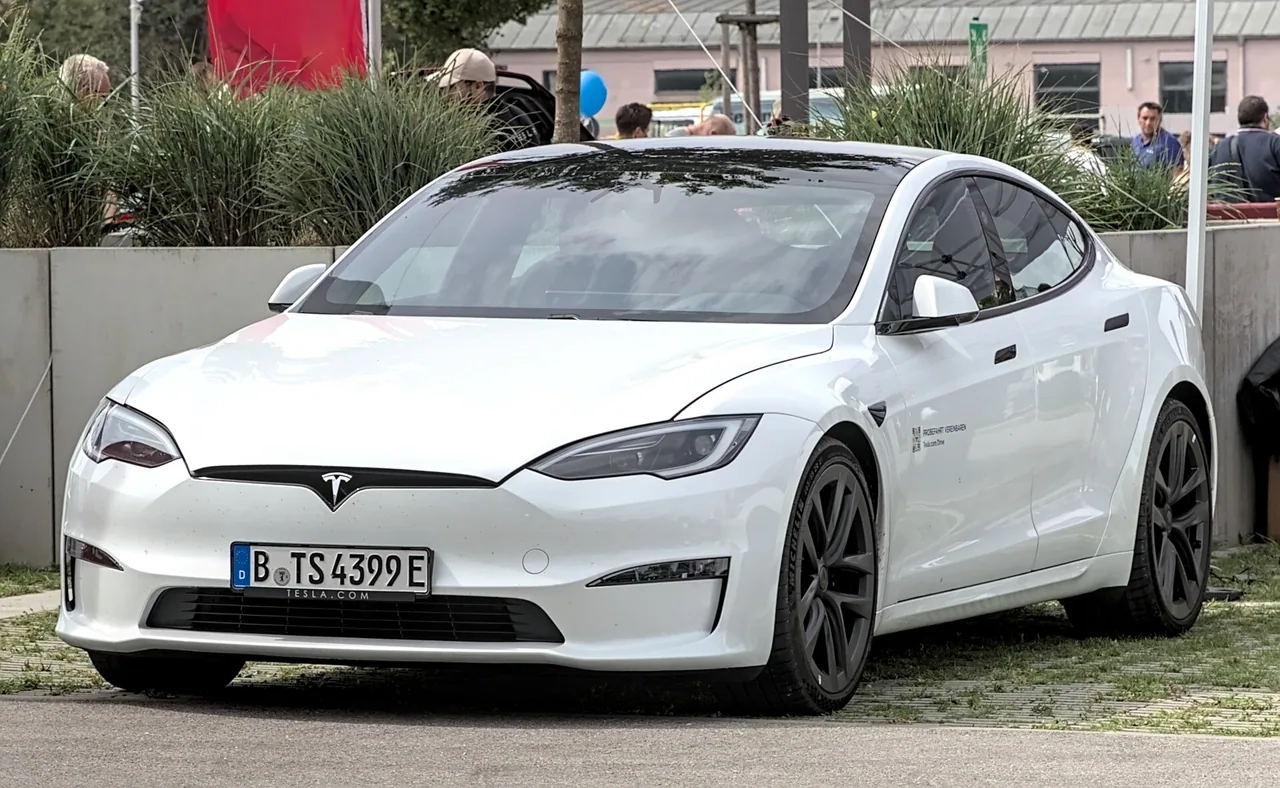
Lucid Air vs Tesla Model S

Updated

Swap either EV:vs

The Bottom Line

Lucid Air has 1 recall with a Do-Not-Drive or Park-Outside advisory; Tesla Model S has none

Safety advisories separate these two models per NHTSA records through Nov 12, 2026: the Lucid Air has 1 NHTSA recall campaign that carried a Do-Not-Drive or Park-Outside advisory (verify VIN remedy), while the Tesla Model S has none across 2020–2026. Choose the Air for longer EPA range (up to 520 mi); choose the Model S for built-in NACS Supercharger access.

On EPA range, the Air reaches 520 mi vs 410 mi for the Model S; published used guides place the Air at $32,100–$56,400 (KBB, Nov 2026) and the Model S at $31,600–$86,000 (KBB, Nov 2026).

Data:NHTSA through

Lucid Air

2022–2026

Sedan · 19 canonical trims · AWD / RWD

Lucid Air (2022-)
No standout bad year on file

EPA Range

406–520 mi

Latest Port

CCS1

KBB Used

$32,100–$56,400

Tesla Model S

2020–2026

Sedan · 16 canonical trims · AWD

Tesla Model S (2021 refresh)
No standout bad year on file

EPA Range

287–410 mi

Latest Port

NACS

KBB Used

$31,600–$86,000

Pick the Lucid Air if…

  • Maximum EPA range matters most — the Air reaches 520 mi vs 410 mi on the Model S.
  • Lower energy use per mile — best Air trims rate 23.1 kWh/100 mi vs 27.1 kWh/100 mi on the Model S.
  • Lower original sticker price — Air trims started at $70,900 original MSRP vs $76,190 on the Model S.
  • Faster DC fast-charging hardware — peaks at 300 kW on file vs 250 kW for the Model S.

Pick the Tesla Model S if…

  • Built-in Tesla Supercharger access without an adapter — Model S ships with native NACS, whereas Air uses CCS1 (Combined Charging System).
  • No Do-Not-Drive or Park-Outside recalls on file for the Model S, unlike the Air.
01 · Year-Matched Diff

Compare matching model years side by side

2024 Lucid Air vs 2024 Tesla Model S

Pick a shared model year to compare matching EPA range, NHTSA filings, charging port and published pricing.

2024 Model Year · 4 trims

2024 Lucid Air

Judged
EPA Range
+114 mi max411–516 mi

Efficiency: 24.6–32.1 kWh/100 mi · Up to 300 kW DC

NHTSA complaints
10
NHTSA recalls
9(1 advisory)
Open investigations
0
Fast-charge port
CCS1 (Combined Charging System)
Supercharger access
With an adapter
NHTSA crash rating
5/5 stars
PricingJ.D. Power · all trims · Nov 2026
$35,235–$56,920
Top owner complaint theme
Loss of drive power while driving — 5 of 10 complaints (50%)

2024 Model Year · 2 trims

2024 Tesla Model S

Judged
EPA Range
359–402 mi

Efficiency: 27.7–31.5 kWh/100 mi · Up to 250 kW DC

NHTSA complaints
38
NHTSA recalls
6
Open investigations
4
Fast-charge port
NACS (SAE J3400)
Supercharger access
Yes, with its built-in NACS port
NHTSA crash rating
Not rated
PricingKBB · Nov 2026
$69,000–$86,000
Top owner complaint theme
Lane departure alarms jerk steering — 17 of 38 complaints (45%)
02 · Reliability & Safety Record

Years to avoid, recalls & recurring problems

Aligned year by year from NHTSA complaint, recall and defect-investigation files through Nov 12, 2026 (investigations through Nov 13, 2026). Complaint counts are raw totals on file, never fleet-normalized failure rates.

Year Lucid Air Tesla Model S
Yr Standing / Port NHTSA Record Range & Price Standing / Port NHTSA Record Range & Price
2026 Too new CCS1 6 cmpl 4 rec (1 adv) 420–512 mi $45,049–$54,872 (Asking · Nov 2026) Too new NACS 8 cmpl 0 rec · 1 open 368–410 mi Sold new
2025 Too new CCS1 18 cmpl 7 rec (1 adv) 406–512 mi $37,229–$67,941 (Asking · Nov 2026) Too new NACS 6 cmpl 2 rec · 3 open 348–410 mi $74,999–$119,800 (Asking · Nov 2026)
2024 Judged CCS1 10 cmpl 9 rec (1 adv) 411–516 mi $35,235–$56,920 (J.D. Power) Judged NACS 38 cmpl 6 rec · 4 open 359–402 mi $69,000–$86,000 (KBB)
2023 Judged CCS1 30 cmpl 12 rec (1 adv) · 1 open 410–516 mi $32,977–$64,826 (J.D. Power) Judged NACS 115 cmpl 13 rec · 4 open 405 mi $53,000 (KBB)
2022 Judged CCS1 24 cmpl 15 rec (1 adv) · 1 open 471–520 mi $40,300–$56,400 (KBB) Judged NACS 141 cmpl 20 rec · 4 open 396–405 mi $44,500–$54,300 (KBB)
2021 Not sold in 2021 Judged NACS 179 cmpl 24 rec · 4 open 348–405 mi $38,900–$51,600 (KBB)
2020 Not sold in 2020 Judged NACS 80 cmpl 11 rec · 4 open 287–402 mi $26,833–$34,575 (J.D. Power)

Click any year row to open that model year’s trim comparison, full recall campaign list and complaint themes. Years sold fewer than 30 months are marked Too new.

Rows marked Asking show aggregated active US used dealer listings where no KBB or J.D. Power guide price is on file yet (asking prices, not final sale prices; excluded from Value-to-Score).

Most repeated owner complaint patterns (NHTSA)

Lucid Air

Full list →

unintended acceleration

17 complaints across 4 model years (2022: 4 of 24 (17%); 2023: 6 of 30 (20%); 2024: 2 of 10 (20%); 2025: 5 of 18 (28%)).

“the vehicle unexpectedly accelerated at a high speed, resulting in a collision with the pavement and a post”

loss of drive power

17 complaints across 3 model years (2022: 7 of 24 (29%); 2023: 5 of 30 (17%); 2024: 5 of 10 (50%)).

“The dash showed a RED "Drive System Fault" and the car would no longer accelerate.”

Tesla Model S

Full list →

driver-assist and self-driving features

47 complaints across 5 model years (2021: 11 of 179 (6%); 2022: 4 of 141 (3%); 2023: 6 of 115 (5%); 2024: 21 of 38 (55%); 2026: 5 of 8 (63%)).

“The vehicle also jerked the steering wheel towards the wall. I have all lane departure warnings, and assistance settings turned off.”

sudden braking with nothing ahead

94 complaints across 4 model years (2020: 22 of 80 (28%); 2021: 34 of 179 (19%); 2022: 30 of 141 (21%); 2023: 8 of 115 (7%)).

“When using adaptive cruise control vehicle randomly applies brakes while driving at highway speeds, for no reason.”

tires, wheels and alignment

44 complaints across 4 model years (2020: 3 of 80 (4%); 2021: 17 of 179 (9%); 2022: 18 of 141 (13%); 2023: 6 of 115 (5%)).

“Rear tires have alarming wear on the inside, where the inside sidewall meets the tread.”

03 · Battery & Fast Charging

Pack hardware, measured SoH & Tesla Supercharger access

Battery capacity readings come strictly from verified individual owner or per-car reports on file — never modeled projections. Charging port and Supercharger access come from automaker and Tesla documents.

Lucid Air Battery

NMC
Usable pack capacity
88.0–112.0 kWh
Thermal management
liquid active
Battery warranty
8 years or 100,000 miles

Measured Battery-Health Readings on File

No verified individual owner battery-health readings are on file for this pack yet.

Tesla Model S Battery

NCA
Usable pack capacity
Not on file
Thermal management
liquid active
Battery warranty
8 years or 150,000 miles

Measured Battery-Health Readings on File

4 verified individual-car readings spanning 85%–97% capacity (11,186–137,944 mi).

Fast-charging ports & Tesla Supercharger access by model year

Several EVs transitioned from CCS1 to built-in NACS between 2024 and 2026. Check the exact model year before assuming adapter needs.

Lucid Air

Up to 300 kW DC
Model years 2022–2026 CCS1 (Combined Charging System)

Tesla Superchargers: With an adapter

Adapter note: $220

Source: Lucid Group (undated page, read Nov 16, 2026); Lucid Group (undated page, read Nov 16, 2026)

Tesla Model S

Up to 250 kW DC
Model years 2020–2026 NACS (SAE J3400)

Tesla Superchargers: Yes, with its built-in NACS port

Source: Tesla, Inc. (published Nov 11, 2022; archived copy captured Apr 6, 2025); Tesla, Inc. (undated page, archived copy captured Apr 1, 2025)

04 · Used Pricing & Value

Published market guides & original MSRP

Every published used-market figure stays attributed to a single source (Kelley Blue Book or J.D. Power) with its collection window — never blended across sources.

Lucid Air

2022–2026

KBB Used Range · Nov 2026

$32,100–$56,400

Covers model years 2022, 2023, 2024 · trim-level guide pricing

J.D. Power Used Range · Nov 2026

$32,977–$64,826

Covers model years 2023, 2024 · model-year guide pricing

Original MSRP Span

$70,900–$114,900

Value-to-Score Ratio

Trim-level KBB required

Tesla Model S

2020–2026

KBB Used Range · Nov 2026

$31,600–$86,000

Covers model years 2020, 2021, 2022, 2023, 2024 · trim-level guide pricing

J.D. Power Used Range · Nov 2026

$26,833–$34,575

Covers model year 2020 · model-year guide pricing

Original MSRP Span

$76,190–$137,190

Value-to-Score Ratio

1–9/10

Georgia Tax-Assessed Value (Separate State Tax Schedule)

Georgia Department of Revenue Assessment Manual (2026 edition)

These figures come from the Georgia Department of Revenue Motor Vehicle Assessment Manual for Title Ad Valorem Tax (TAVT) under O.C.G.A. § 48-5C-1(a)(1). They are state tax-assessment values, not market prices, guide estimates or dealer offers, and are never blended into Value-to-Score calculations.

Lucid Air

No matched trim rows in the latest Georgia DOR manual on file.

Tesla Model S

  • 2025 model year $56,700–$68,825
  • 2024 model year $48,400–$61,150
  • 2023 model year $40,600–$52,025
  • 2022 model year $33,350–$45,325
  • 2021 model year $29,650–$29,950
  • 2020 model year $21,625–$25,225

The federal §25E used-EV tax credit expired in September 2025. State and utility incentives vary by residency, income and price caps — check each trim page’s State Incentive Finder for current state rules.

05 · Specifications & Crash Ratings

Specs & NHTSA 5-Star safety compared

Specification Lucid Air Tesla Model S
EPA range (all trims) EPA Fuel Economy Guide 406–520 mi 287–410 mi
Energy consumption (lower is better) EPA Fuel Economy Guide 23.1–32.1 kWh/100 mi 27.1–33.4 kWh/100 mi
Combined MPGe EPA Fuel Economy Guide 105–146 MPGe 101–124 MPGe
Usable battery capacity 88.0–112.0 kWh Not on file
Peak DC fast charging 200–300 kW 200–250 kW
Rated horsepower Manufacturer rated output 819–1,234 hp 670 hp
Drivetrains offered AWD, RWD AWD
Seating capacity 5 seats Not on file
NHTSA 5-Star overall rating NHTSA NCAP crash tests 5 of 5 stars Not rated by NHTSA
Body style Sedan Sedan
Owner Forum Posts

What owners write about on EV forums & Reddit

Filtered to posts written by owners of each model year under TrimIndex’s owner-relevance rule. Topic counts reflect what owners discuss most often.

Lucid Air

6 owner posts on file
Overall satisfaction: 5

“Great Service Experience (King of Prussia, PA) *Executive Summary* Fantastic service experience for an unexpected issue, everything was smooth and free with outstanding customer service all the way. Soooo happy to get back to the Air after…”

“1800 miles in 1.5 weeks - Lucid Gravity GT Just spent the last week or so doing a *ton* of driving in the Lucid Gravity GT (full options + medium tires) - a good mix of city/long distance driving. This will include details from a roadtrip…”

Tesla Model S

42 owner posts on file
Overall satisfaction: 12 Software and tech: 12 Build quality: 10 Range: 6

“I own a 2020 Model S extended range and have continued issues with my side mirrors not auto-folding (based on location) as they should because that setting is set. What happens is that sometimes (~20%) the mirrors will randomly auto-fold…”

“Sitting at the supercharger for 20-30 minutes isn't the worst thing in the world, playing games, playing on phone, etc., but it's still not as good as sitting at home on the couch or recliner while your car charges nicely overnight back up…”

06 · Before You Sign

Pre-purchase inspection checklist for this pair

Pair-specific checks built from active recall advisories, open NHTSA investigations, top complaint patterns and charging hardware.

1
Advisory Air

Confirm Do-Not-Drive / Park-Outside recall completion (26V540000)

Run the 17-character VIN on NHTSA.gov and get dealer proof of remedy before signing on any Lucid Air covered by 26V540000.

Check VIN on NHTSA.gov →
2
Inspect Air

Review open NHTSA investigation AQ24004 (2022 and 2023)

NHTSA has an open defect investigation on Air (AQ24004). Check service records for related repairs or pending software updates.

3
Inspect Air

Test and inspect for unintended acceleration (17 complaints across 4 years)

This is the most recurring complaint pattern across Lucid Air model years on file (2022, 2023, 2024, 2025). Ask for full service history before purchase.

4
Inspect Model S

Review open NHTSA investigation EA26002 (2020, 2021, 2022, 2023, 2024, 2025 and 2026)

NHTSA has an open defect investigation on Model S (EA26002). Check service records for related repairs or pending software updates.

5
Inspect Model S

Test and inspect for driver-assist and self-driving features (47 complaints across 5 years)

This is the most recurring complaint pattern across Tesla Model S model years on file (2021, 2022, 2023, 2024, 2026). Ask for full service history before purchase.

Lucid Air vs Tesla Model S frequently asked questions

What model years should you avoid on the Lucid Air vs Tesla Model S?

For the Lucid Air (2022–2026), no single model year is flagged to avoid (88 NHTSA complaints on file). For the Tesla Model S (2020–2026), no single model year is flagged to avoid (567 NHTSA complaints on file). Every comparison uses age-matched NHTSA filings (NHTSA data through Nov 12, 2026).

Which has better range and faster charging: Lucid Air or Tesla Model S?

Across active trims on file from the EPA Fuel Economy Guide, the Lucid Air spans 406–520 mi and the Tesla Model S spans 287–410 mi. Efficiency: Air rates 23–32 kWh/100 mi; Model S rates 27–33 kWh/100 mi. Fast charging on file: Air peaks at 300 kW DC; Model S peaks at 250 kW DC.

Can the Lucid Air and Tesla Model S use Tesla Superchargers?

Lucid Air (CCS1 (Combined Charging System)): with an adapter. Tesla Model S (NACS (SAE J3400)): yes, with its built-in nacs port. Status reflects automaker and Tesla documentation on file at TrimIndex.

Which costs less used: the Lucid Air or the Tesla Model S?

Published KBB used-market figures (Nov 2026) place Lucid Air trims at $32,100–$56,400. Published KBB used-market figures (Nov 2026) place Tesla Model S trims at $31,600–$86,000. Each range reflects a single pricing source rather than blended estimates; inspect individual model-year and trim pages for trim-specific pricing.

What are the most common problems reported on the Lucid Air vs Tesla Model S?

On the Lucid Air, the largest multi-year complaint pattern is unintended acceleration (17 complaints across 4 model years). On the Tesla Model S, the largest multi-year complaint pattern is driver-assist and self-driving features (47 complaints across 5 model years). These reflect shares of NHTSA owner complaints on file, not fleet-wide failure rates.

How do the Lucid Air and Tesla Model S batteries and warranties compare?

Lucid Air: NMC cells, 88.0–112.0 kWh usable, 8 years or 100,000 miles battery warranty. Tesla Model S: NCA cells, 8 years or 150,000 miles battery warranty, 4 verified owner capacity readings (85%–97%). Capacity readings reflect individual verified owner reports on file rather than modeled estimates.

What this comparison is built on

NHTSA Filings

Through Nov 12, 2026

EPA & NCAP

35 canonical trims

Owner Forum Posts

48 verified owner posts

Related EV comparisons

Browse all 300 comparisons →

Photo credits