All Vehicles
2026 Tesla Model S Trims Compared: Range, Price & Problems
Updated
2026 Tesla Model S: 2 trims compared. 368–410 mi EPA range, 8 NHTSA complaints, top problem: Driver assist picks wrong speed (38% of complaints).
Data:NHTSA through
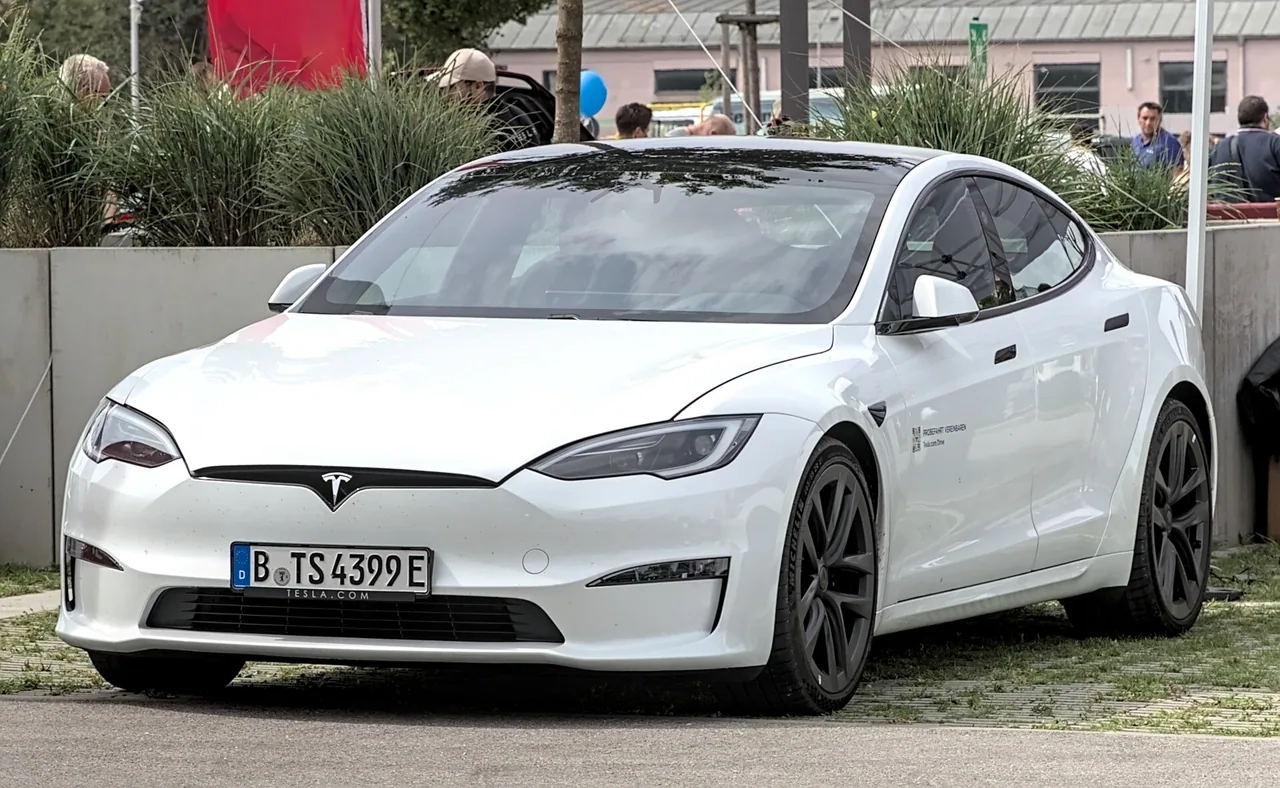

Compare the 2026 Tesla Model S trims
| Trim | TrimIndex score | Price new | Drive | EPA range | EPA energy use | Horsepower | 0–60 mph | DC fast-charge peak |
|---|---|---|---|---|---|---|---|---|
| Model S | 78 | from $84,990starting price | AWD | 410 mi | 27.1 kWh/100 mi | 670 hp | 3.1 s | 250 kW |
| Plaid | 76 | not stated | AWD | 368 mi | 30.6 kWh/100 mi | not stated | 1.99 s | 250 kW |
| Plaid (21in wheels) | 72 | not stated | AWD | 309 mi | 36.2 kWh/100 mi | not stated | 1.99 s | 250 kW |
Tesla, Inc. lists one figure for the 2026 Model S: 25 cu ft of cargo space.
Price new, horsepower, 0–60 mph and dc fast-charge peak: Tesla, Inc., via the Internet Archive.
EPA range and EPA energy use: U.S. EPA and DOE, fueleconomy.gov.
TrimIndex score: out of 100.
Blank cells. Price new (2 rows): no manufacturer price for that trim on file; Horsepower (2 rows): no manufacturer document backs a rated figure.
What differs between the 2026 Tesla Model S trims
Compared with the 2026 Model S Plaid, the Model S has 42 more miles of EPA range and EPA energy use 3.5 kWh/100 mi lower, with a 0–60 mph claim 1.1 s slower.
Which 2026 Tesla Model S trim for what
- Longest EPA range: the 2026 Model S, 410 miles; next, the Plaid has 368 miles.
- Quickest 0–60 mph (manufacturer claims): the 2026 Model S Plaid, 1.99 seconds; next, the Model S has 3.1 seconds.
- Lowest EPA energy use: the 2026 Model S, 27.1 kWh/100 mi; next, the Plaid has 30.6 kWh/100 mi.
NHTSA Recalls (0)
NHTSA lists no recalls for this model year as of Nov 22, 2026.
NHTSA Investigations (1 open)
NHTSA has 1 open investigation covering the 2026 Tesla Model S (NHTSA investigations file of Nov 19, 2026).
What a engineering analysis is
- OpenEngineering analysis EA26002, opened Mar 18, 2026
FSD Collisions in Reduced Roadway Visibility Conditions
What NHTSA says it is examining: The Office of Defects Investigation (ODI) is opening this Engineering Analysis to evaluate Tesla’s Full Self Driving Beta and Full Self Driving (Supervised) (collectively, FSD) degradation detection system.
Model years NHTSA lists for this model in the action: 2016-2026.
Source: NHTSA Office of Defects Investigation, investigations file, records through Nov 19, 2026; an open investigation is not a finding of a defect in the 2026 Tesla Model S.
NHTSA Complaints (8 total)
NHTSA lists no recall campaign for the 2026 Tesla Model S in records through Nov 22, 2026. Owners have filed 8 complaints with NHTSA. Of all 8, 1 reports a crash, 1 a fire and 1 an injury.
What owners report most
TrimIndex grouped the 8 complaints owners filed with NHTSA on the 2026 Tesla Model S (every trim; NHTSA files complaints by model year, not trim) into problem themes on Nov 16, 2026: 5 of them fall in the 2 themes below. How themes are made and checked
-
Driver assist picks wrong speed
3 of 8 complaints (38%): With cruise control or supervised self-driving engaged, the car sets speeds that do not match posted limits and slows or speeds up unexpectedly.
“Speed profiles don't adhere to actual speed limits. Speed can be higher or lower than posted.”
NHTSA complaint 11767931 “Cruise control will just randomly change speeds.”
NHTSA complaint 11696712 -
Self-driving makes wrong maneuvers
2 of 8 complaints (25%): With supervised self-driving engaged, the car steers into the wrong lane or proceeds through red lights, and the driver has to take over.
Owners reported a crash in 1, a fire in 1 and an injury in 1 of the 2 complaints.
“My Tesla car drove through red light twice with its Full Self Drive (FSD) engaged”
NHTSA complaint 11770719 “We were turning left and the car took us into an oncoming turn lane. I had to take over”
NHTSA complaint 11693133
8 complaints filed with NHTSA for the 2026 Tesla Model S, between Oct 2025 and Oct 2026.
Owners reported a crash in 1, a fire in 1 and an injury in 1 of the 8 complaints. How these fields are filled
Complaints by year filed
| Year filed | Complaints |
|---|---|
| 2025 | 2 |
| 2026 (to Nov 22) | 6 |
Source: NHTSA owner complaints filed on every 2026 Tesla Model S (NHTSA files them by model year, not trim), data through Nov 22, 2026.
All 8, most severe first, then newest
- Severity 5 of 5.Injury · Fire · Crash
I purchase my Tesla Model S in February 2026. Shortly after the purchase, My Tesla car drove through red light twice with its Full Self Drive (FSD) engaged.
Show the rest
Recently my car crashed into a planter wall with its FSD system engaged while I was trying to take over. The car immediately caught fire following the collision. There are significant concerns that I would like to raise here: 1. After the crash, fire started immediately followed by two explosions, the exterior door handles did not deploy, creating a potential emergency rescue hazard. If I had not been able to use the manual release, I could have lost my life in the fire/explosions. I am a physician. After this accident, I tried to educate all my patients, coworkers and friends. I found out that more than half of the Tesla drivers in my patient population, coworkers and friends did not know where the manual releases were. 2. Tesla heavily promotes FSD, creating consumer expectations about its capabilities and safety. I believe that I was misled about how safe the system was. The sales representatives did not adequately inform me about potential risks that I now believe were important to my purchasing decision. My experience raises concerns about whether consumers are receiving clear, prominent, accurate, and understandable information about FSD's actual capabilities, operational limitations, and safety risks before purchasing or relying on the system. Consumers could be led to overestimate the system's capabilities and rely on it in ways that increase the risk of a crash.
NHTSA ODI #11770719 - Severity 4 of 5.Speed control
Speed profiles don't adhere to actual speed limits. Speed can be higher or lower than posted. I can be driving in a 55mph speed zone and it will drop to 35 then accelerate to 65.
Show the rest
On roads that have no speed limit posted car tends to want to go 55 rather than a more sensible speed of under 30, especially at night on a dirt road with wildlife about. Car will also see access road speed signs and slow down in the middle of traffic. To me i don't feel safe and have to disengage the system which adds stress to the drive. Being able to set my own speed is the solution, not having the car set it.
NHTSA ODI #11767931 - Severity 4 of 5.Speed control · Forward collision avoidance · Lane keeping and blind-spot systems
Supervised FSD does not have a remedy if it assigns an incorrect speed limit to the current roadway. The only action available is to disengage FSD.
Show the rest
This incorrect speed limit happens quite often, especially in construction zones with temporary speed limit changes. Tesla used to have a ‘max speed’ setting that the driver could use to override an incorrect speed limit, but they removed that capability.
NHTSA ODI #11744863 - Severity 4 of 5.Brakes · Forward collision avoidance
Car will just brake on the highway with out warning. Cruise control will just randomly change speeds. I was traveling on an overpass and speed dropped to 35 then jumped to 60mph.
NHTSA ODI #11696712 - Severity 4 of 5.
I was using Full Self-Driving (FSD) Supervised capability. We were turning left and the car took us into an oncoming turn lane. I had to take over to get us out of the lane.
NHTSA ODI #11693133 - Severity 3 of 5.Drive unit
Please see attachment
NHTSA ODI #11774454 - Severity 2 of 5.Windshield wipers
COMPONENT: The rear window glass has optical distortion in the zone viewed through the interior rearview mirror.
Show the rest
Vehicles behind me visibly warp and change apparent size as they move across the affected area of the glass. The vehicle and component are available for inspection upon request. SAFETY RISK: The distortion impairs my ability to accurately judge the position, size, distance, and closing speed of following vehicles. A smaller vehicle, such as a motorcycle, could be misjudged or lost in the distorted zone during a lane change, creating a collision risk. The condition is present at all times while driving. REPRODUCED/CONFIRMED: Yes. Tesla Service (365 Caldwell Dr, Springfield, MA) confirmed during my service visit that the same distortion exists on multiple other newer Model S vehicles, characterizing it as a normal aesthetic of the rear glass. Tesla stated in writing on [XXX] that "mild distortion is still to be expected with curved glass." Tesla replaced the rear glass; the replacement exhibits the same distortion, slightly worse. At vehicle pickup on [XXX], the Tesla Service Manager verbally acknowledged the issue was not resolved and stated all such glasses are similar. Tesla later closed the case stating in writing that technicians confirmed no distortion exists, contradicting its prior statements. INSPECTED BY: The manufacturer (Tesla Service) inspected the vehicle twice, including a stated inspection and test drive after the glass replacement. No police or insurance involvement. I have date-stamped photo and video documentation of both the original and replacement glass. WARNING SIGNS: No warning lamps or messages; this is an optical defect in the glass itself. First observed shortly after delivery on [XXX]. Because Tesla states the distortion is consistent across newer Model S production, I believe this is a fleet-wide defect affecting rear visibility, not an isolated unit. No crash or injury has occurred. INFORMATION REDACTED PURSUANT TO THE FREEDOM OF INFORMATION ACT (FOIA), 5 U.S.C. 552(B)(
NHTSA ODI #11769091 - Severity 2 of 5.Suspension · Wheels
Subject: Safety Concern—Model S Plaid Rear Tire Wear I am submitting a formal complaint regarding severe premature wear on the inside edges of both rear tires on my Model S Plaid\.
Show the rest
I have owned the vehicle since XXX, and it has only 11,980 miles\. Both tires appear to have exposed cords along the inside edges, while tread remains elsewhere\. I have attached a photo\. Approximately 99% of my driving is with FSD engaged\. This uneven wear raises serious safety concerns and may indicate an alignment or suspension issue\. I was advised not to use Low suspension mode or “Mad Max” mode\. Please clarify which settings this refers to, explain the technical basis, and identify where this restriction appears in Tesla’s operating instructions\. I expect to use the vehicle’s factory features as instructed without severe tire damage or increased risk of failure\. I was also told that some owners have installed aftermarket adjustable camber arms to address similar wear\. The attached photo shows N2itive SX\-P2 arms advertised at $995, excluding installation and alignment\. I am concerned about having to purchase aftermarket parts to correct this condition\. Please: - Inspect both rear tires, alignment, suspension components, and ride\-height calibration\. - Provide alignment measurements and confirm whether they meet factory specifications\. - Identify the cause and a Tesla\-approved solution to prevent recurrence\. - Explain whether this wear is considered normal at 11,980 miles\. - Evaluate warranty coverage or goodwill assistance for replacement tires and necessary repairs\. My goal is to correct the underlying cause, not simply replace the tires\. Please advise on safe transport or mobile tire service given their condition\. Thank you for your prompt written response\. [XXX] INFORMATION REDACTED PURSUANT TO THE FREEDOM OF INFORMATION ACT (FOIA), 5 U.S.C. 552(B)(6)
NHTSA ODI #11768631
NHTSA 5-Star Crash-Test Ratings
NHTSA gave the all-wheel-drive 2026 Tesla Model S hatchback (every trim) no overall rating; its sub-ratings are rollover 5 stars.
What changed from 2025
From 2025 to 2026, for the same configurations: the Model S: starting price $74,990 to $84,990; the Plaid, listed for 2025 as Plaid (19in wheels): EPA range 348 to 368 mi.
NHTSA lists no recall campaign for the 2026 Tesla Model S and 2 for the 2025.
2026 Tesla Model S frequently asked questions
What trims does the 2026 Tesla Model S come in?
TrimIndex lists 2 configurations of the 2026 Tesla Model S, as EPA names them: Model S and Plaid. 1 wheel, tire or charger option is listed under its trim.
What is the difference between the 2026 Tesla Model S Plaid and Model S?
Compared with the 2026 Model S Plaid, the Model S has 42 more miles of EPA range and EPA energy use 3.5 kWh/100 mi lower, with a 0–60 mph claim 1.1 s slower.
What is the range of the 2026 Tesla Model S?
EPA rates the 2026 Tesla Model S at 368 to 410 miles, depending on the configuration: 410 for the Model S and 368 for the Plaid.
Are there recalls on the 2026 Tesla Model S?
No. NHTSA lists no recall campaign for the 2026 Tesla Model S in records through Nov 22, 2026.
What problems do owners report on the 2026 Tesla Model S?
Of the 8 complaints owners filed with NHTSA about the 2026 Tesla Model S in records through Nov 22, 2026, the two largest problem themes are: Driver assist picks wrong speed (3); and Self-driving makes wrong maneuvers (2). 5 of them fall in the 2 themes TrimIndex grouped from their narratives on Nov 16, 2026.