Hyundai Ioniq 5 Depreciation by Model Year: 37%–58% Off MSRP, NACS Port & ICCU Check
Updated
Bottom Line (Data Summary)
Used Hyundai Ioniq 5 trims trade 37.0% to 57.9% off original MSRP—from $16,800 KBB (-57.9%) on a 2022 Standard Range RWD and $22,400 KBB (-46.4%) on a 2024 Standard Range to $26,776 median asking (-37.0%, 10,878 median miles) on a refreshed 2025 with a native NACS Supercharger port. Every buyer must verify E-GMP ICCU recall 24V-868 completion, because loss of drive power accounts for 42%–63% of NHTSA complaints across 2022–2025.
Data:NHTSA through
Trim-Matched Hyundai Ioniq 5 Used Deals by Model Year
Filter all deals in the Depreciation Index →Active Hyundai Ioniq 5 trims with single-source Tier 1 KBB Fair Purchase or Tier 2 active US dealer asking medians compared against original MSRP.
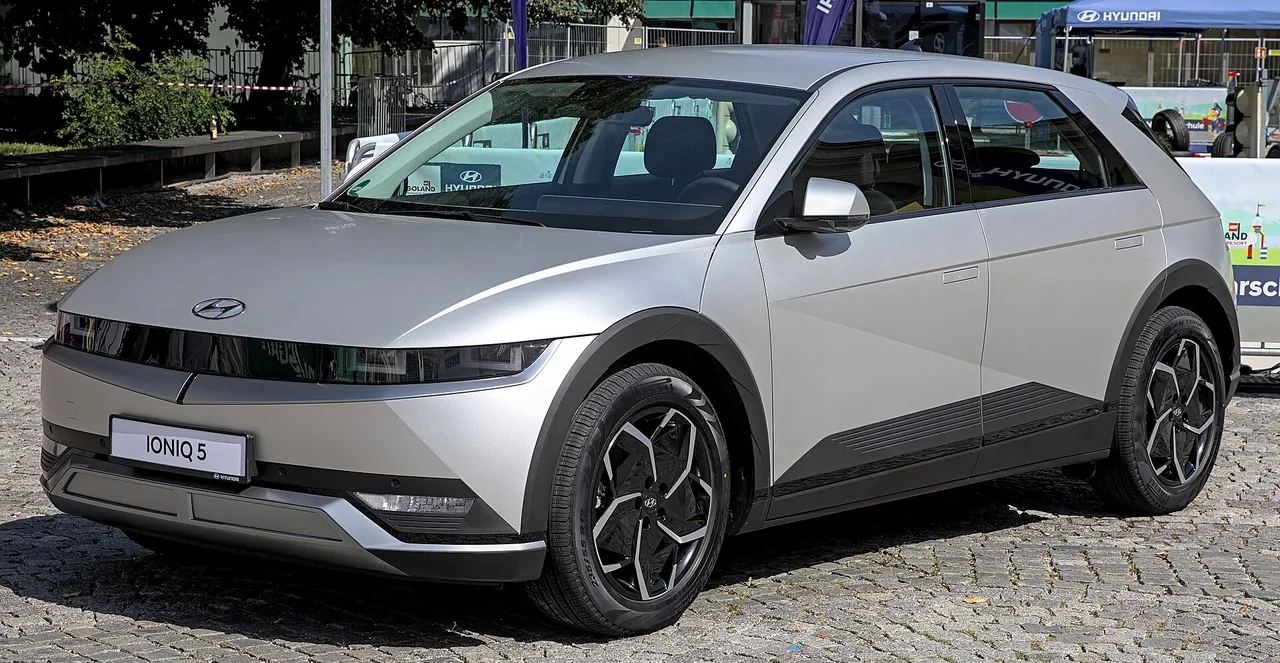
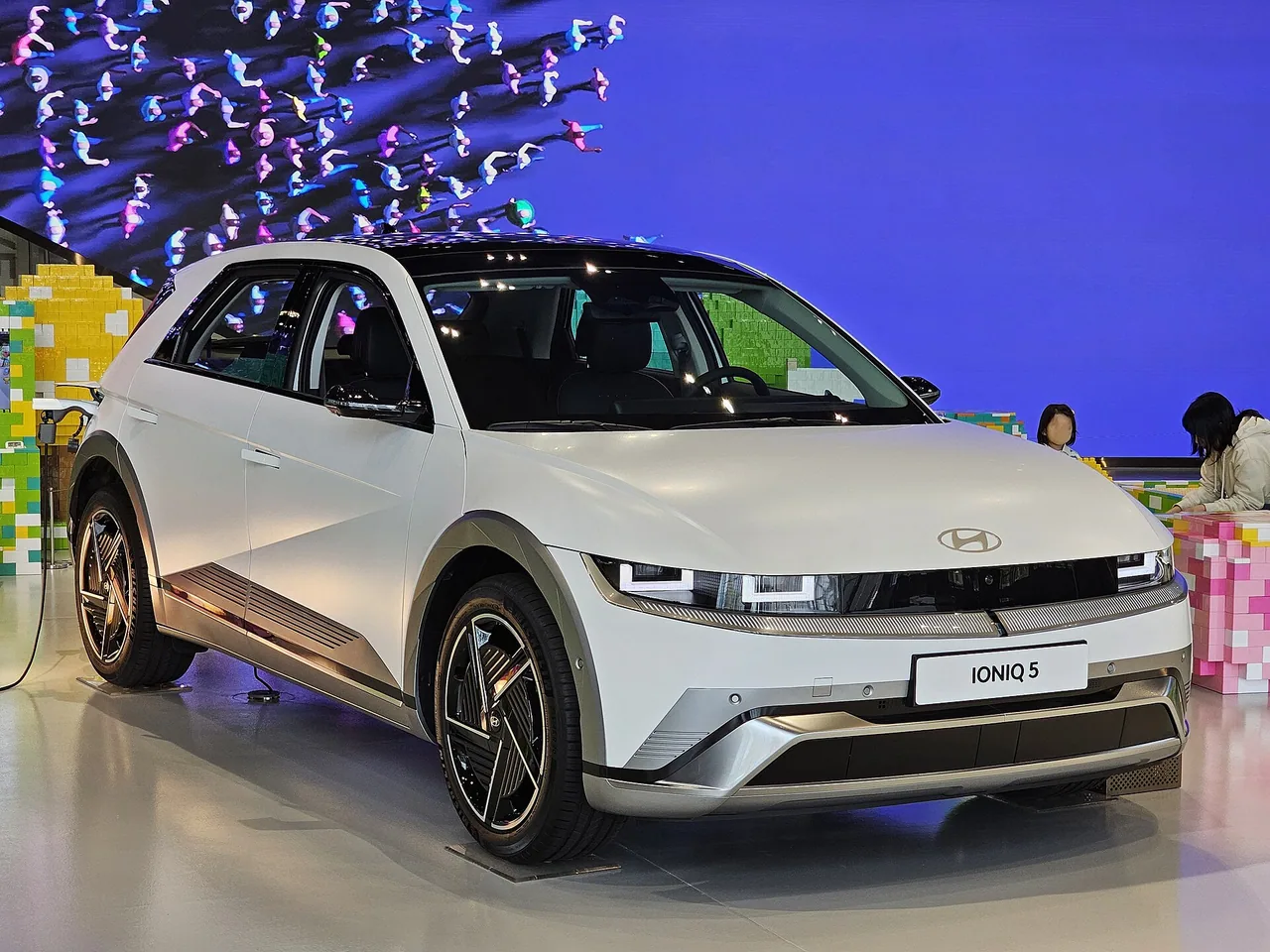
| Used EV Trim | TrimIndex Score | Used Price | Off MSRP | Orig. MSRP | Range & Miles | NHTSA Standing |
|---|---|---|---|---|---|---|
| 2022 Hyundai Ioniq 5 RWD (Standard Range) | 62/100 · Average 8/10 Value-to-Score | $16,800 KBB Fair Purchase · Nov 2026 |
-57.9%
Save $23,150 | $39,950 | 220 mi 235 kW DC · Guide | Checked |
| 2024 Hyundai Ioniq 5 Standard range RWD | 63/100 · Average 7/10 Value-to-Score | $22,400 KBB Fair Purchase · Nov 2026 |
-46.4%
Save $19,400 | $41,800 | 220 mi 235 kW DC · Guide | Checked Park-Outside |
| 2025 Hyundai Ioniq 5 Standard range | $26,776 Dealer Asking · Nov 2026 |
-37.0%
Save $15,724 | $42,500 | 245 mi ~10,878 mi median | Checked Park-Outside | |
| 2026 Hyundai Ioniq 5 Standard range | $31,450 Dealer Asking · Nov 2026 |
-10.1%
Save $3,550 | $35,000 | 245 mi ~5,045 mi median | Checked |
Pricing note: rows labeled Dealer Asking reflect active US used dealer asking prices, not final sale prices; excluded from Value-to-Score. Guide rows show Kelley Blue Book Fair Purchase or J.D. Power figures without blending sources.
Hyundai Ioniq 5 Year-by-Year Depreciation, Range & NHTSA Record (2022–2026)
Full Hyundai Ioniq 5 model hub →Hydrated directly from TrimIndex's Hyundai Ioniq 5 model hub: original MSRP spans, single-source used prices, NACS vs CCS1 charging access, and NHTSA recall/complaint counts.
| Model Year | Used Price Span | Est. Drop vs. MSRP | Orig. MSRP Span | Peak EPA Range | NHTSA Recalls | Standing |
|---|---|---|---|---|---|---|
| 2026 Hyundai Ioniq 5 | $29,896–$40,882 Dealer Asking · Nov 2026 |
-13.7%
~$5,553 off | $35,000–$46,275 | 318 mi | 2 recalls · 30 complaints | Too new |
| 2025 Hyundai Ioniq 5 | $24,799–$34,680 Dealer Asking · Nov 2026 |
-46.8%
~$25,425 off | $42,500–$66,100 | 318 mi | 9 recalls · 322 complaints | Too new |
| 2024 Hyundai Ioniq 5 | $19,494–$39,919 J.D. Power · Nov 2026 |
-34.8%
~$15,868 off | $41,800–$49,350 | 303 mi | 3 recalls · 227 complaints | Standard |
| 2023 Hyundai Ioniq 5 | $25,856–$29,294 Dealer Asking · Nov 2026 | Pending used data | Not on file | Not on file | 4 recalls · 390 complaints | Standard |
| 2022 Hyundai Ioniq 5 | $16,790–$24,901 J.D. Power · Nov 2026 |
-52.3%
~$22,879 off | $39,950–$47,500 | 303 mi | 3 recalls · 408 complaints | Standard |
Pricing note: years marked Dealer Asking reflect active US used dealer asking prices, not final sale prices; excluded from Value-to-Score.
Hyundai Ioniq 5 depreciation from 2022 through 2026
Heavy 24-month lease promotions pushed the Hyundai Ioniq 5 into one of the steepest value curves among 800-volt electric crossovers. On TrimIndex's trim-matched pricing, a 2022 Ioniq 5 Standard Range RWD ($39,950 MSRP) sits at $16,800 KBB Fair Purchase (-57.9%, saving $23,150), while the broader 2022 model year spans $16,790–$24,901 on J.D. Power.
Newer years show equally sharp first-owner savings: a 2024 Standard Range RWD ($41,800 MSRP) carries a $22,400 KBB Fair Purchase value (-46.4%, saving $19,400; full 2024 J.D. Power span $19,494–$39,919). Even a lightly used 2025 Ioniq 5 Standard Range ($42,500 MSRP, upgraded to 245 miles EPA and a built-in NACS Supercharger port) asks a median of $26,776 across 35 active US dealer listings (-37.0%, 10,878 median miles; asking, not final sale).
The one reliability check every Ioniq 5 buyer must pass: ICCU recall 24V-868
Across TrimIndex's NHTSA dataset through November 22, 2026, the Ioniq 5's battery pack itself tests remarkably well—9 strictly verified owner SoH scans hold 92% to 100% capacity, and peak DC fast charging hits 235 kW. The recurring mechanical weak spot is the Integrated Charging Control Unit (ICCU), which manages both AC Level 2 charging and 12-volt battery DC-to-DC conversion.
Loss of drive power is the #1 NHTSA complaint theme across every mature Ioniq 5 year: 171 of 408 complaints on 2022 (42%), 127 of 227 on 2024 (56%), and 190 of 304 grouped complaints on 2025 (63%, alongside 9 total recalls). Hyundai superseded its earlier 24V-204 software campaign with recall 24V-868 (Hyundai campaign 272) to inspect for fault code P1A9096, update ICCU software, and replace damaged ICCUs and fuses. Verify 24V-868 closure—not just older 24V-204—on the exact VIN before buying.
See exact NHTSA recall numbers, 12-volt drain symptoms, dealer Warranty Vehicle History checks, and cross-model E-GMP ICCU counts before touring a used Ioniq 5.
Open the Hyundai Ioniq 5 ICCU Failure Guide →Which used Hyundai Ioniq 5 year and trim hits the buyer sweet spot?
First, decide between Standard Range (220 mi EPA on 2022–2024; 245 mi on 2025–2026) and Long Range (up to 303 mi EPA on 2022–2024 RWD; up to 318 mi on 2025–2026). Because dealers frequently price used Long Range SEL and Limited trims only $2,000–$4,000 above Standard Range cars, Long Range trims usually deliver far better highway usability and resale resilience.
Between model years, two clear sweet spots emerge: a 2024 Long Range (lower total complaints at 227 vs 408 on 2022, Supercharger access via adapter since March 2025, J.D. Power span $19,494–$39,919) for budget-focused shoppers, or a lightly used 2025 Ioniq 5 ($26,776–$30,974 dealer asking medians) if you want the rear windshield wiper, larger updated battery pack, wireless CarPlay/Android Auto, and built-in NACS Supercharger port.
- Best feature-to-price sweet spot: 2025 Ioniq 5 Long Range — built-in NACS port, rear wiper, up to 318 mi EPA, 235 kW charging, dealer asking medians from $26,776 (SR) to $30,974.
- Best value under $25K: 2024 Ioniq 5 — 46.4% off on Standard Range KBB ($22,400), lower complaint total (227) than 2022 (408) or 2023 (390), Supercharger adapter eligible.
- Budget commuter option: 2022 Ioniq 5 Standard Range RWD — $16,800 KBB (-57.9% off $39,950 MSRP), 220 mi EPA, 235 kW DC fast charging.
- Second-owner warranty rule: federal 8-year/100,000-mile EV battery coverage transfers to subsequent owners; Hyundai's 10-year/100,000-mile non-EV powertrain warranty is original-owner only (unless Hyundai CPO).
Actionable Buyer Checklist
Before you sign on a discounted used EV
- 1 Run the 17-character VIN at nhtsa.gov/recalls and ask a Hyundai dealer for a Warranty Vehicle History printout confirming recall 24V-868 (campaign 272) is closed—not just earlier 24V-204.
- 2 Check whether the dealer service log shows fault code P1A9096 or a physical revised ICCU + fuse replacement.
- 3 Test both AC Level 2 charging and DC fast charging on the test drive: early ICCU faults frequently trip AC Level 2 sessions before cutting 12V charging.
- 4 Verify whether the listing is Standard Range (220–245 mi EPA) or Long Range (260–318 mi EPA) using the window sticker or VIN build sheet.
- 5 Check the 12-volt auxiliary battery health and replacement date (many owners upgrade the OEM flooded 12V battery to an AGM unit).
- 6 Confirm charging port type: 2022–2024 use CCS1 (requires a NACS adapter for Tesla Superchargers), while 2025–2026 include a built-in NACS port.
Frequently asked questions
What is the best year to buy a used Hyundai Ioniq 5?
For buyers under $25,000, a 2024 Ioniq 5 hits a strong balance with lower NHTSA complaint volume (227 vs 408 on 2022 and 390 on 2023) and steep KBB discounts (up to 46.4% off on Standard Range). For buyers around $27,000–$32,000, a lightly used 2025 adds a built-in NACS Supercharger port, rear wiper, and larger battery (up to 318 mi EPA)—just verify ICCU recall completion on every year.
How much does a Hyundai Ioniq 5 depreciate in 1 to 3 years?
TrimIndex's trim-matched pricing shows 2025 Standard Range models already carrying median US dealer asking prices 37.0% off MSRP ($26,776 vs $42,500) at 10,878 median miles, 2024 Standard Range models at 46.4% off ($22,400 KBB), and 2022 Standard Range trims at 57.9% off ($16,800 KBB).
Should the ICCU recall stop me from buying a used Hyundai Ioniq 5?
Not automatically, but it should be your #1 pre-purchase gate. Because loss of drive power accounts for 42%–63% of NHTSA filings across 2022–2025, only buy an Ioniq 5 after confirming recall 24V-868 completion by VIN, checking dealer ICCU/12V service history, and testing Level 2 AC charging.
Does Hyundai's 10-year battery warranty transfer to a second owner on a used Ioniq 5?
In the US, Hyundai's standard 10-year/100,000-mile powertrain warranty applies to original owners (or Hyundai Certified Pre-Owned buyers), while subsequent non-CPO owners retain the federally mandated transferable EV battery coverage (at least 8 years/100,000 miles—verify exact state and model-year transfer terms in Hyundai's warranty booklet).
Which Hyundai Ioniq 5 model years have a built-in Tesla NACS port?
2025 and 2026 Hyundai Ioniq 5 models come with a factory-installed NACS port for native Tesla Supercharger access. 2022–2024 Ioniq 5 models use a CCS1 port and gained Tesla Supercharger access via an approved NACS-to-CCS adapter in March 2025.
Keep Reading
All 18 buyer guides →Kia EV6 Depreciation by Model Year: 40%–54% Off MSRP, Sweet-Spot Trims & ICCU Recall Check
Off-Lease 2023–2024 Used EVs With the Steepest Verified MSRP Discounts
7 Public-Record & Lot Checks Before Buying a Used EV at 40%–50% Off MSRP
Related TrimIndex Data & Tools