Audi RS e-tron GT vs. Porsche Taycan: Flagship 637 hp J1 Hardware at Steep Used Discounts
Updated
Platform Twin Verdict
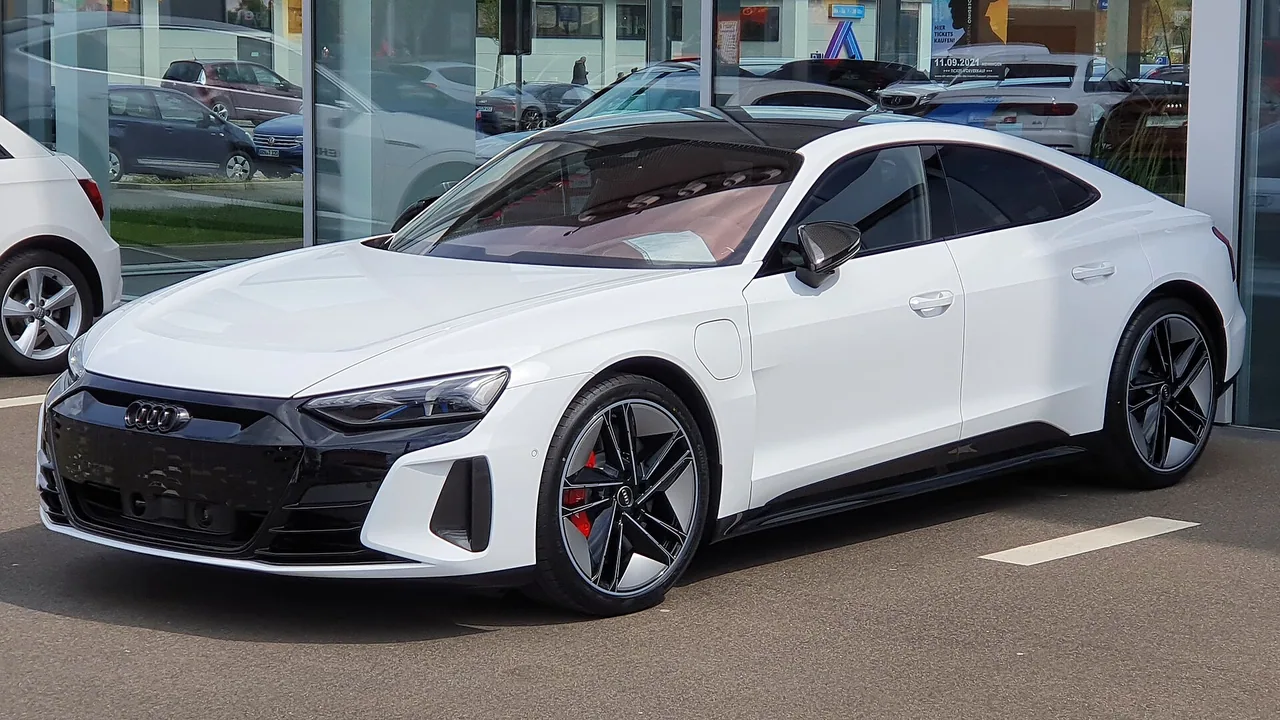
Packing 590 hp continuous and 637 hp overboost on the shared 800-volt J1 chassis, the 2022–2024 Audi RS e-tron GT slots squarely between the Porsche Taycan Turbo and Turbo S while bundling rear-axle steering, an electronic rear diff lock, and tungsten-carbide brakes standard. Because Audi's flagship badge sheds value faster than Zuffenhausen's Turbo trims, used buyers capture near-supercar J1 hardware for substantially less—provided every shared J1 battery recall is closed.
Audi RS e-tron GT
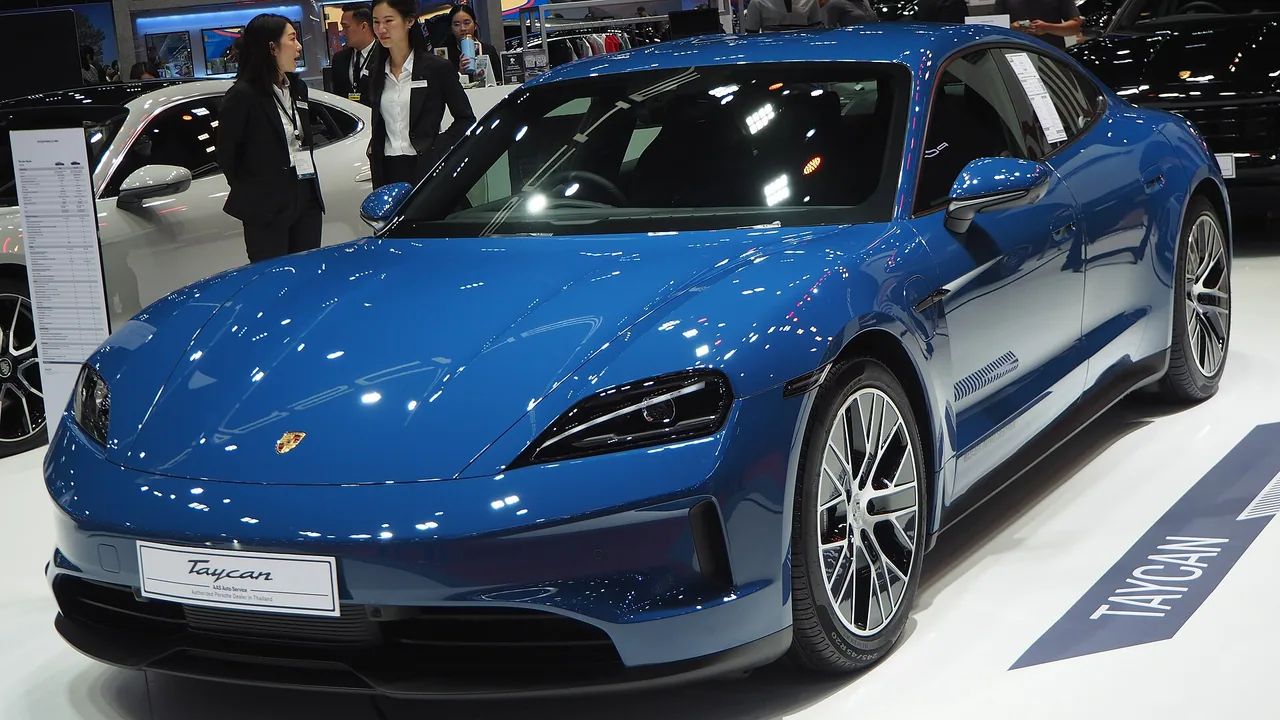
Porsche Taycan
Latest Data Refresh Check · Nov 25, 2026
Re-checked against TrimIndex's latest reviewed data snapshot (2026-11-25): no material recall, complaint, or pricing shift recorded on either twin in the most recent cycle.
Live Market & Badge-Tax Readout
What you pay for the badge: new MSRP vs. used market
Price gap stays clear on the used market: RS e-tron GT ($21,900 less on KBB used midpoint).
RS e-tron GT ($21,900 lower avg MSRP)
TrimIndex never blends KBB, J.D. Power, and dealer asking figures into one range.
Where dealer asking prices are shown above or in the timeline below, figures summarize active US used dealer listings (asking prices, not final sale prices; excluded from Value-to-Score).
Day-to-Day Ownership Split
Where RS e-tron GT and Taycan actually diverge
Sharing a platform does not mean identical ownership. Here are the concrete calibration, cabin, software, charging, and dealer differences buyers feel every day.
Standard Flagship Hardware vs. Porsche Options
RS e-tron GT eliminates option-hunting anxiety while matching roughly 95% of a pre-refresh Taycan Turbo's dynamic kit.
Peak Launch Output & Top-End Pull
Only drag-strip obsessives or buyers stepping up to 2025+ J1.2 Turbo models feel a meaningful straight-line deficit in the RS.
Brake Replacement & Maintenance Economics
Inspect rotor faces carefully on both flagship EVs—regenerative braking preserves pads for years, so damaged or lipped rotors signal track abuse or neglect.
Secondary-Market Scarcity vs. Selection
RS shoppers must be patient for the right spec; Taycan Turbo shoppers enjoy broader CPO supply and wagon utility.
Refreshed EPA, charging & safety specs side by side
Pulled directly from TrimIndex’s EPA Fuel Economy, NHTSA NCAP, and charging-access database (NHTSA records through Nov 22, 2026).
| Specification | Audi RS e-tron GT | Porsche Taycan |
|---|---|---|
| EPA range (all trims) EPA Fuel Economy Guide | 232–249 mi | 192–318 mi |
| Efficiency (lower is better) EPA Fuel Economy Guide | 39.7–41.8 kWh/100 mi | 36.6–49.9 kWh/100 mi |
| Usable battery capacity | 93.4 kWh | 79.2–97.0 kWh |
| Peak DC fast charging | 270 kW | 225–320 kW |
| Rated horsepower | 590–637 hp | 402–750 hp |
| Drivetrains offered | AWD | AWD, RWD |
| Seating capacity | Not on file | 2 seats |
| Fast-charging port & Supercharger | CCS1 (Combined Charging System) | CCS1 (Combined Charging System) · With an adapter |
Why the 2022–2024 RS e-tron GT undercuts Taycan Turbo and Turbo S on the used lot
Top-tier electric grand tourers suffer brutal early depreciation, and the Audi RS e-tron GT absorbs an even sharper initial percentage drop than its Zuffenhausen twin because Audi's RS badge lacks the collector gravity of Porsche's Turbo and Turbo S scripts. Check the refreshed single-source pricing cards above: an RS e-tron GT that launched near $140K frequently sits well below comparable-year Taycan Turbo and Turbo S valuations while delivering the identical 114.2-inch J1 tub, two-speed rear gearbox, and three-chamber air springs.
There is a hidden equipment bonus in that gap. Almost every US RS e-tron GT packs the Year One or Carbon Performance package—adding rear-axle steering, carbon-fiber roof and trim, and either tungsten-carbide or carbon-ceramic brakes. Finding a pre-refresh Taycan 4S or Turbo with matching rear steering, carbon roof, and 150 kW / 400V DC boosting often costs noticeably more and takes weeks of VIN build-sheet decoding.
See how 2022–2024 RS e-tron GT and Taycan Turbo discounts stack up against flagship electric sedans from Mercedes-AMG, BMW, and Lucid.
Read $100K Luxury EVs at Half Price Guide →Don't mistake seven RS complaints for J1 immunity—and budget for CPO coverage
Looking strictly at raw counts, the 2022–2024 Audi RS e-tron GT's seven NHTSA complaints (four in 2022, two in 2023, one in 2024) look microscopic beside the Taycan's 280 complaints across 2020–2026. Do not misread low sales volume as mechanical immunity. Those 20 RS e-tron GT recalls tell the true story: Audi's flagship shares the exact same J1 high-voltage battery short-circuit campaigns, front brake-hose replacement notices, 240V mobile charger recall, and HV cabin heater hardware as the Taycan.
Because factory four-year bumper-to-bumper coverage is now expiring on 2022 builds, warranty planning separates smart flagship ownership from five-figure repair shock. A single failed 22 kW onboard charger, three-chamber air strut, or high-voltage cabin heater costs thousands at either Audi or Porsche labor rates. Porsche Approved CPO (two additional years with unlimited miles) gives Taycan Turbo shoppers a clean safety net; RS e-tron GT buyers should negotiate Audi Certified Pre-Owned or an exclusionary warranty covering high-voltage auxiliaries.
- Inspect optional carbon-ceramic or tungsten-carbide rotors under bright light for hairline cracks or edge chips—replacements exceed five figures.
- Confirm 20-inch vs. 21-inch wheel setup: 2024 RS e-tron GT reaches 249 mi EPA vs. 232 mi on 2022–2023 builds.
- Remember Audi's 2025–2026 RS e-tron GT Performance (912 hp, J1.2, 320 kW) is a separate generation leap that pulled pre-2025 RS resale values down further.
Model-year timeline: RS e-tron GT vs. Taycan
Refreshed automatically from TrimIndex’s database on each reviewed run so you can spot overlapping model years, Avoid flags, and pricing shifts.
| Year | RS e-tron GT Score & Standing | RS e-tron GT Price | Taycan Score & Standing | Taycan Price |
|---|---|---|---|---|
| 2026 | Not sold | Not produced No US model year | $109,221–$171,603 Dealer asking · Nov 2026 | |
| 2025 | Not sold | Not produced No US model year | $84,793–$122,508 Dealer asking · Nov 2026 | |
| 2024 | $70,800 KBB · Nov 2026 | $62,322–$145,252 J.D. Power · Nov 2026 | ||
| 2023 | $61,900 KBB · Nov 2026 | $56,998–$135,642 J.D. Power · Nov 2026 | ||
| 2022 | $54,100 KBB · Nov 2026 | $40,185–$88,746 J.D. Power · Nov 2026 | ||
| 2021 | Not sold | Not produced No US model year | $38,125–$78,651 J.D. Power · Nov 2026 | |
| 2020 | Not sold | Not produced No US model year | $44,700–$72,900 KBB · Nov 2026 |
Which platform twin should you buy?
Choose the Audi RS e-tron GT if…
- You want 637 hp super-sedan acceleration, rear-axle steering, and carbon-roof drama at a sharper discount than Taycan Turbo listings.
- You prefer physical HVAC controls, standard 150 kW / 400V DC boosting, and Audi's understated wide-hipped coupe styling.
- You find a clean, recall-closed 2023–2024 RS with documented Audi CPO or exclusionary auxiliary-EV coverage.
Choose the Porsche Taycan if…
- You want maximum 670–750 hp (or 2025+ J1.2) acceleration, sharper steering feedback, or a Turbo / Turbo S Cross Turismo wagon.
- You want the peace of mind of Porsche Approved two-year unlimited-mileage CPO protection on a high-dollar flagship EV.
- Broader nationwide used selection lets you hunt an exact exterior color and PCCB brake combination.
Used-Market Sweet Spot
The sharpest supercar-pace bargain on the J1 chassis is a recall-cleared 2023–2024 Audi RS e-tron GT—capturing standard rear-axle steering, electronic rear diff lock, and 249-mile EPA range (2024) at a hefty discount beneath equivalent Taycan Turbo trims. If you insist on the Porsche crest, target a CPO 2023 Taycan Turbo or GTS Cross Turismo after the steep early-year complaint wave subsided.
RS e-tron GT & Taycan platform questions
Is the 2022–2024 Audi RS e-tron GT as fast as a Porsche Taycan Turbo?
In everyday street launches they are practically neck and neck. The 2022–2024 RS e-tron GT produces 590 hp continuous and 637 hp on Launch Control via the same J1 two-speed rear gearbox, sitting right behind the pre-refresh Taycan Turbo (670 hp boost) and Turbo S (750 hp boost) while bundling rear-axle steering and an electronic rear diff lock.
Why does the Audi RS e-tron GT have only 7 NHTSA complaints compared to 280 on the Taycan?
Small US production volume—not different reliability hardware—explains the raw count gap. The RS e-tron GT still carries 20 NHTSA recalls across 2022–2024 covering the exact same J1 battery monitoring, brake-hose, and portable charger campaigns seen across Porsche's much larger 78-trim Taycan fleet.
What brake checks matter most on a used RS e-tron GT or Taycan Turbo?
Confirm the front flexible brake-hose recall is completed, then visually inspect the tungsten-carbide (PSCB) or optional carbon-ceramic (PCCB) rotors for chipping, hairline crazing, or uneven wear. Because EV regenerative braking handles routine stops, premature rotor damage can cost five figures to replace.
Should I buy a discounted 2022–2024 RS e-tron GT or step up to a 2025 J1.2 model?
Buy a 2022–2024 RS e-tron GT if value-per-horsepower drives your decision—depreciation has already cut deeply into its ~$140K sticker while preserving 270 kW 800V charging and 637 hp pace. Step up to 2025+ J1.2 Taycan or Audi S/RS builds only if 278–318-mile EPA range and 320 kW charging justify far higher purchase costs.