Audi S e-tron GT vs. Porsche Taycan: Inside the 320 kW, 300-Mile J1.2 Platform Overhaul
Updated
Platform Twin Verdict
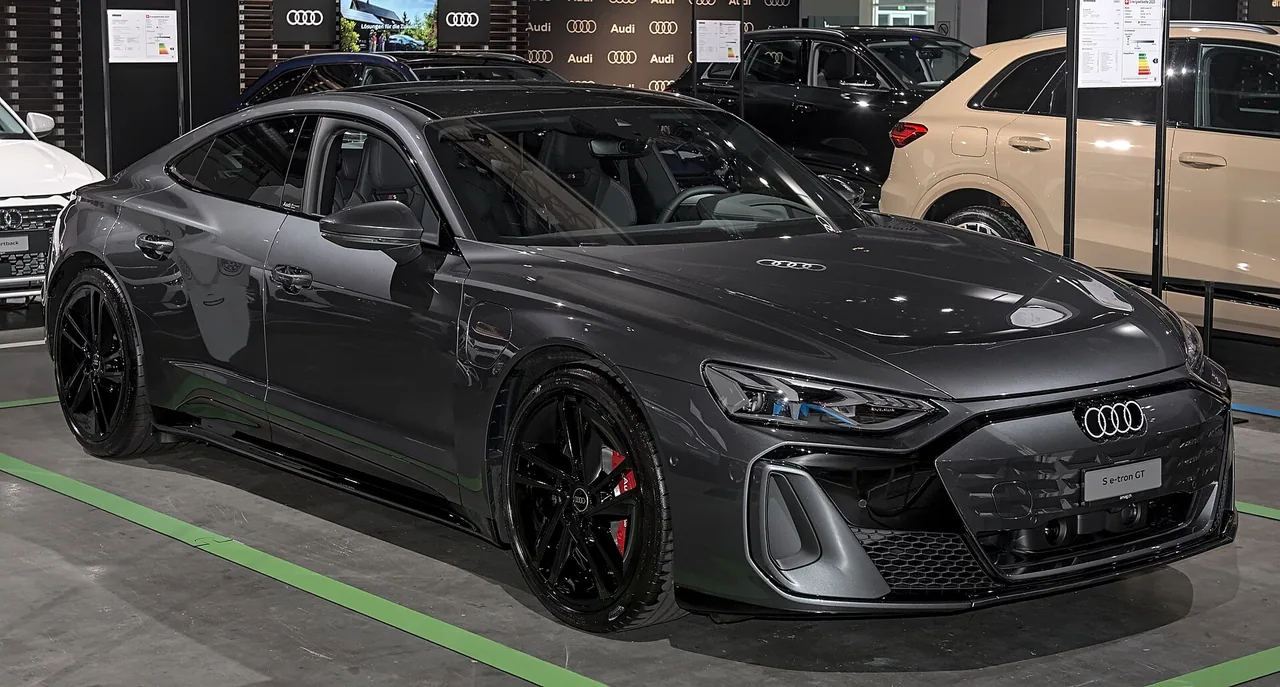
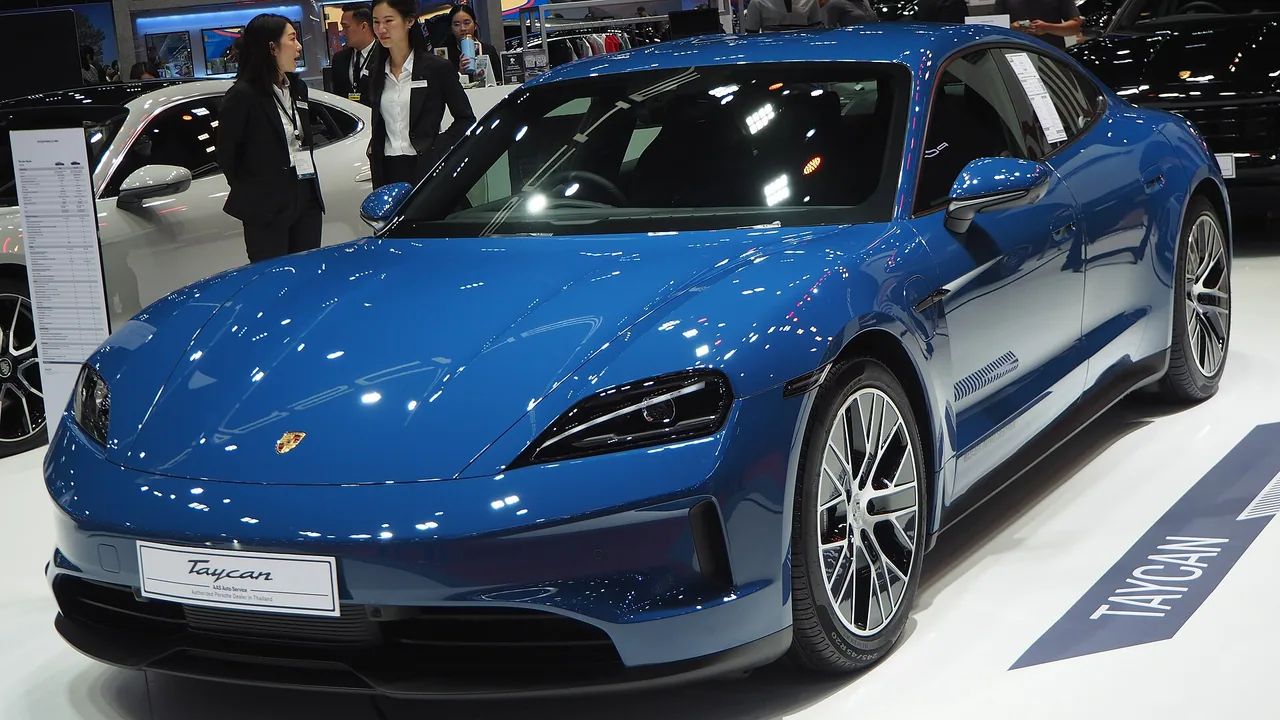
The 2025–2026 Audi S e-tron GT debuts VW Group's heavily reworked J1.2 architecture, jumping straight to a 97 kWh usable pack, 320 kW peak charging, and a 300-mile EPA rating with 670 hp launch power. Alongside the refreshed 2025–2026 Porsche Taycan—which pushes up to 318 miles EPA—J1.2 erases pre-2025 charging bottlenecks while introducing hydraulic active suspension, leaving buyers to weigh fresh-tech stickers against steep pre-refresh Taycan discounts.
Audi S e-tron GT
Porsche Taycan
Latest Data Refresh Check · Nov 25, 2026
Re-checked against TrimIndex's latest reviewed data snapshot (2026-11-25): no material recall, complaint, or pricing shift recorded on either twin in the most recent cycle.
Hardware Refresh & Evolution Spotlight
J1.2 jumps to 97 kWh usable, 320 kW DCFC & 300–318 mi EPA—transforming both badges.
Live Market & Badge-Tax Readout
What you pay for the badge: new MSRP vs. used market
Current market snapshot: S e-tron GT: $76,969–$79,172 (Used dealer asking prices) vs. Taycan: $44,700–$124,000 (KBB).
S e-tron GT ($35,200 lower avg MSRP)
TrimIndex never blends KBB, J.D. Power, and dealer asking figures into one range.
Where dealer asking prices are shown above or in the timeline below, figures summarize active US used dealer listings (asking prices, not final sale prices; excluded from Value-to-Score).
Day-to-Day Ownership Split
Where S e-tron GT and Taycan actually diverge
Sharing a platform does not mean identical ownership. Here are the concrete calibration, cabin, software, charging, and dealer differences buyers feel every day.
Clean J1.2 Generation Split vs. Mixed Catalog
Buying an S e-tron GT guarantees you get the 320 kW J1.2 overhaul; shopping a Taycan requires confirming a 2025+ model year to get those upgrades.
Active Suspension Tuning & Comfort Entry
Both systems outclass conventional air springs completely; Audi leans toward serene highway isolation while Porsche prioritizes apex agility.
Standard Power & Push-to-Pass Packaging
The 2025–2026 S e-tron GT delivers pre-refresh RS-beating speed at an entry-tier grand-tourer price point beneath upper J1.2 Taycan trims.
Debut Reliability vs. Multi-Year Proof
Early J1.2 telemetry is remarkably quiet on both badges, though multi-year longevity of the new 97 kWh chemistry remains unproven compared with legacy packs.
Refreshed EPA, charging & safety specs side by side
Pulled directly from TrimIndex’s EPA Fuel Economy, NHTSA NCAP, and charging-access database (NHTSA records through Nov 22, 2026).
| Specification | Audi S e-tron GT | Porsche Taycan |
|---|---|---|
| EPA range (all trims) EPA Fuel Economy Guide | 300 mi | 192–318 mi |
| Efficiency (lower is better) EPA Fuel Economy Guide | 37.6 kWh/100 mi | 36.6–49.9 kWh/100 mi |
| Usable battery capacity | 97.0 kWh | 79.2–97.0 kWh |
| Peak DC fast charging | 320 kW | 225–320 kW |
| Rated horsepower | Not on file | 402–750 hp |
| Drivetrains offered | AWD | AWD, RWD |
| Seating capacity | Not on file | 2 seats |
| Fast-charging port & Supercharger | CCS1 (Combined Charging System) · Announced, start not confirmed | CCS1 (Combined Charging System) · With an adapter |
Why the 2025 J1.2 overhaul transforms real-world road trips over 2020–2024 J1 cars
Most mid-cycle refreshes tweak bumpers and screen icons. J1.2 completely rewired the electric powertrain underneath both the Audi S e-tron GT and 2025–2026 Porsche Taycan. Replacing legacy cells with revised lower-resistance 105 kWh gross (97 kWh usable) chemistry—and upgrading thermal conditioning and the rear motor—simultaneously boosted efficiency and transformed charging behavior in winter cold.
Where a 2022–2024 J1 twin needed warm battery temperatures just to touch 270 kW briefly before tapering, a J1.2 S e-tron GT or 2025+ Taycan holds above 300 kW across a wide state-of-charge plateau and finishes a 10%–80% session in roughly 18 minutes even at cool ambient temperatures. EPA ratings tell the story clearly: the S e-tron GT leaps from the old e-tron GT's 238–249 miles straight to a flat 300 miles at 37.6 kWh/100 mi, while the 2025 Taycan stretches up to 318 miles.
The three-way buyer dilemma: new S e-tron GT vs. J1.2 Taycan vs. depreciated 2023–2024 Taycan
Shoppers landing on this comparison actually face a three-way fork in the road. First, pitting a 2025–2026 Audi S e-tron GT directly against a 2025–2026 J1.2 Porsche Taycan 4S reveals familiar corporate badge arbitrage: the S e-tron GT brings 670 hp launch power, standard AWD, physical climate switches, and a 300-mile rating while sidestepping Porsche's notorious option bloat.
Second, compare the refreshed S e-tron GT against a heavily depreciated pre-refresh 2023–2024 Porsche Taycan 4S or GTS sitting inside the same Porsche timeline below. Those earlier J1 cars give up roughly 55–65 miles of EPA range and 50 kW of peak charging speed, yet cost dramatically less upfront after absorbing three years of luxury EV depreciation. Use the refreshed pricing table below to decide whether J1.2's 18-minute charging and active suspension justify paying double a pre-refresh J1 sedan.
- J1.2 battery leap: 97 kWh usable (105 kWh gross) vs. 93.4 kWh gross (~83.7 kWh usable) on 2020–2024 J1 twins.
- J1.2 regen boost: up to 400 kW regenerative deceleration recovers far more highway downhill and braking energy.
- Active suspension watch: optional hydraulic active suspension on either J1.2 car is an engineering showcase—verify whether the VIN build sheet includes it.
Want to see how deeply pre-refresh 2022–2024 e-tron GT and Taycan models have dropped off MSRP? Read our first-generation J1 twin breakdown.
Read 2022–2024 e-tron GT vs. Taycan Teardown →Model-year timeline: S e-tron GT vs. Taycan
Refreshed automatically from TrimIndex’s database on each reviewed run so you can spot overlapping model years, Avoid flags, and pricing shifts.
| Year | S e-tron GT Score & Standing | S e-tron GT Price | Taycan Score & Standing | Taycan Price |
|---|---|---|---|---|
| 2026 | $127,700 Orig. MSRP (sold new) | $109,221–$171,603 Dealer asking · Nov 2026 | ||
| 2025 | $76,969–$79,172 Dealer asking · Nov 2026 | $84,793–$122,508 Dealer asking · Nov 2026 | ||
| 2024 | Not sold | Not produced No US model year | $62,322–$145,252 J.D. Power · Nov 2026 | |
| 2023 | Not sold | Not produced No US model year | $56,998–$135,642 J.D. Power · Nov 2026 | |
| 2022 | Not sold | Not produced No US model year | $40,185–$88,746 J.D. Power · Nov 2026 | |
| 2021 | Not sold | Not produced No US model year | $38,125–$78,651 J.D. Power · Nov 2026 | |
| 2020 | Not sold | Not produced No US model year | $44,700–$72,900 KBB · Nov 2026 |
Which platform twin should you buy?
Choose the Audi S e-tron GT if…
- You want guaranteed J1.2 300-mile range, 320 kW charging, and 670 hp launch performance without navigating Porsche's sprawling trim and option ladder.
- You want Audi's physical cabin HVAC buttons, standard AWD, and softer early secondary-market asking prices than 2025–2026 Taycan 4S/GTS units.
- You prioritize relaxed high-speed grand touring over Porsche's firmer track-calibrated steering rack.
Choose the Porsche Taycan if…
- You want up to 318 miles of J1.2 EPA range, a Cross Turismo wagon body, or Porsche Active Ride's sharper dynamic corner-tilting calibration.
- You want the flexibility to step down to a heavily depreciated pre-refresh 2023–2024 CPO Taycan while staying inside the same model lineup.
- Porsche Approved CPO coverage and stronger luxury collector equity carry weight in your ownership plan.
Used-Market Sweet Spot
If you specifically demand J1.2's 300+ mile range and 18-minute 320 kW fast charging, a lightly driven 2025 Audi S e-tron GT delivers tremendous value against 2025–2026 Taycan 4S and GTS dealer asking spreads while beating the old RS e-tron GT on straight-line thrust. Buyers who can live with ~235–246 miles of range save dramatically by stepping back to a recall-cleared 2023–2024 J1 sedan.
S e-tron GT & Taycan platform questions
What changed in the 2025 J1.2 update for the S e-tron GT and Porsche Taycan?
J1.2 upgraded both cars to a revised 105 kWh gross (97 kWh usable) battery pack, 320 kW peak DC fast charging (10%–80% in ~18 minutes), up to 400 kW regenerative braking, a lighter higher-output rear motor, optional full-active hydraulic suspension, and 300–318 miles of EPA range.
Does the 2025–2026 Audi S e-tron GT share the 2020–2024 Taycan battery recall?
No. NHTSA battery short-circuit campaigns 24V731000 and 24V732000 targeted the earlier 2020–2024 J1 93.4 kWh pouch pack. The 2025–2026 S e-tron GT and refreshed 2025–2026 Taycan use the redesigned 97 kWh usable J1.2 pack—though buyers should still run the 17-character VIN for all active 2025–2026 recalls.
Is the new 2025 Audi S e-tron GT faster than the 2022–2024 RS e-tron GT?
Yes. With 670 hp in Launch Control mode, the entry 2025–2026 Audi S e-tron GT actually eclipses the outgoing 2022–2024 RS e-tron GT's 637 hp overboost rating while adding 50+ extra miles of EPA range (300 mi vs. 232–249 mi) and faster 320 kW charging.
Is Audi Active Suspension the same hardware as Porsche Active Ride?
They share the core J1.2 single-valve electro-hydraulic active actuator architecture capable of keeping the body flat under acceleration, braking, and cornering. Each automaker calibrates its own control software—Audi leaning toward serene road isolation and Porsche prioritizing crisper turn-in dynamics.