Polestar 3 vs. Volvo EX90: Same South Carolina Factory, Same AC Charger Failures
Updated
Platform Twin Verdict
The Polestar 3 and Volvo EX90 share the Ridgeville, South Carolina plant, a 117.5-inch wheelbase, a 107 kWh usable CATL battery, 250 kW DC charging, and NVIDIA core-compute hardware. Both 2025 flagships also suffered the same onboard AC charger failure wave in NHTSA filings. Buy the Polestar 3 for sharper two-row handling and steeper early resale drops; pick the EX90 for three-row seating, five-star NHTSA ratings, and Volvo dealer convenience.
Polestar 3
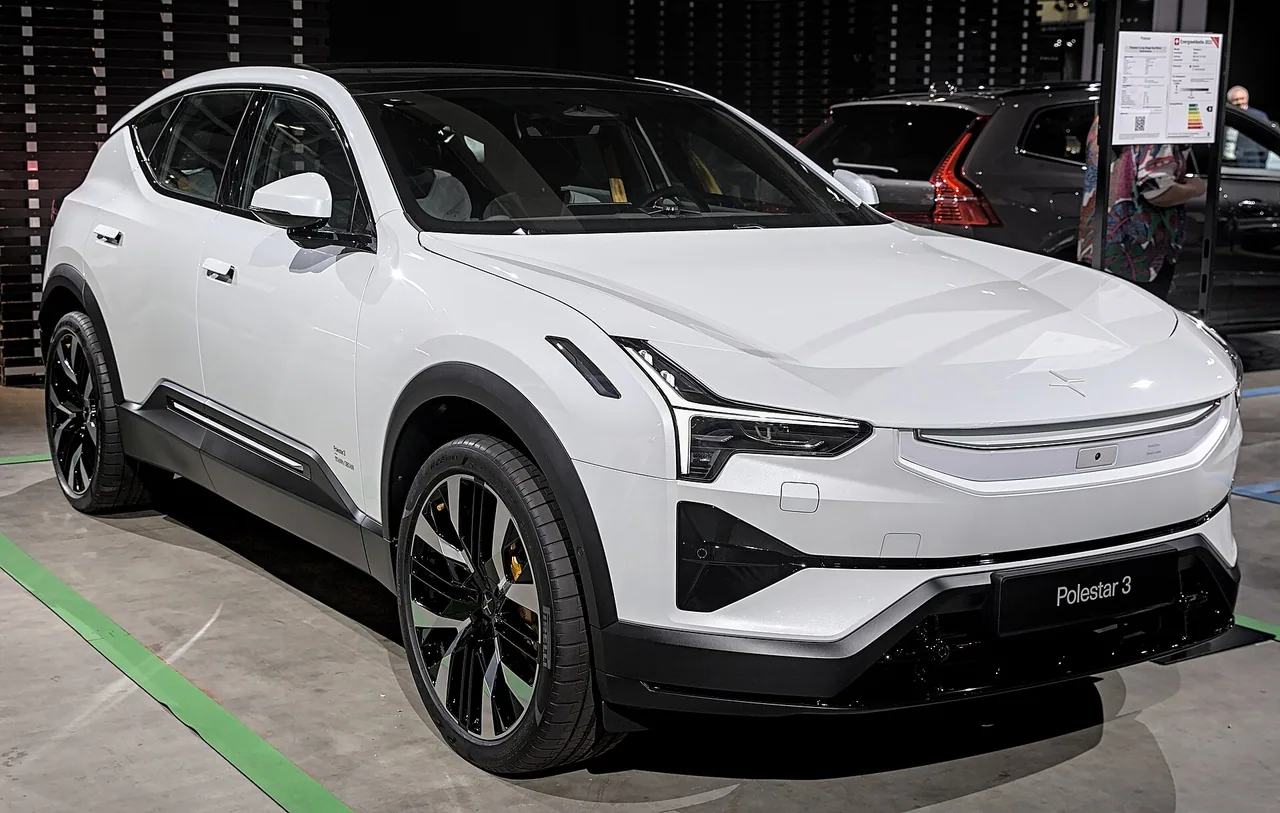
Volvo EX90
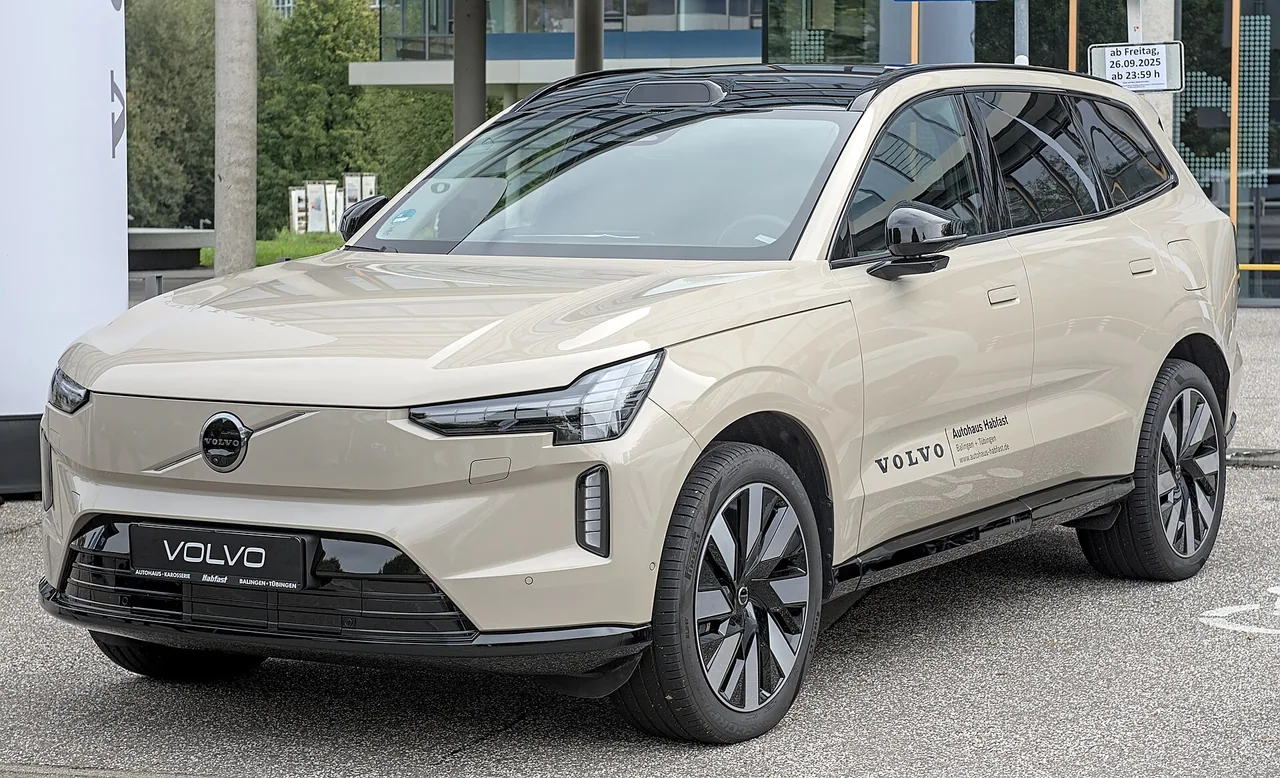
Latest Data Refresh Check · Nov 25, 2026
Reviewed data refresh (2026-11-25) updated records for 3 (2025) and EX90 (2026, 2025: new NHTSA complaints); tables and dates below reflect the refreshed snapshot.
Reliability Divergence Alert · NHTSA Record Split
Shared 2025 SPA2 Onboard AC Charger Failures Lead NHTSA Complaints on Both Models (3: 6 recalls / 79 complaints vs. EX90: 3 recalls / 84 complaints).
Live Market & Badge-Tax Readout
What you pay for the badge: new MSRP vs. used market
Current market snapshot: 3 ($25,281 less on Used dealer asking midpoint).
TrimIndex never blends KBB, J.D. Power, and dealer asking figures into one range.
Where dealer asking prices are shown above or in the timeline below, figures summarize active US used dealer listings (asking prices, not final sale prices; excluded from Value-to-Score).
Day-to-Day Ownership Split
Where 3 and EX90 actually diverge
Sharing a platform does not mean identical ownership. Here are the concrete calibration, cabin, software, charging, and dealer differences buyers feel every day.
Seating Rows & Family Packaging
Pick EX90 whenever a third row or boxy cargo height matters; Polestar 3 trades seats for low-slung proportions.
Chassis Tuning & Torque Vectoring
Polestar 3 drives like a tall grand tourer; EX90 behaves like a serene three-row luxury cruiser.
Sensor Suite & Exterior Hardware
EX90 delivers documented 5-star NHTSA crash credentials; Polestar 3 keeps cleaner exterior lines.
Range Spread & Efficiency
Lower aero drag gives Polestar 3 a meaningful highway-range advantage on single-motor builds.
Retail Network & Used Resale Curve
Used bargain hunters gain leverage on Polestar 3; risk-averse buyers get easier local warranty service with Volvo.
Refreshed EPA, charging & safety specs side by side
Pulled directly from TrimIndex’s EPA Fuel Economy, NHTSA NCAP, and charging-access database (NHTSA records through Nov 22, 2026).
| Specification | Polestar 3 | Volvo EX90 |
|---|---|---|
| EPA range (all trims) EPA Fuel Economy Guide | 279–350 mi | 276–310 mi |
| Efficiency (lower is better) EPA Fuel Economy Guide | 34.7–43.7 kWh/100 mi | 36.8–40.0 kWh/100 mi |
| Usable battery capacity | 107.0 kWh | 107.0 kWh |
| Peak DC fast charging | 250 kW | 250 kW |
| Rated horsepower | 299–517 hp | 329 hp |
| Drivetrains offered | AWD, RWD | AWD, RWD |
| Seating capacity | 5 seats | 7 seats |
| Fast-charging port & Supercharger | CCS1 (Combined Charging System) · With an adapter | CCS1 (Combined Charging System) · With an adapter |
| NHTSA 5-Star overall rating NHTSA NCAP crash tests | Not rated | 5 of 5 stars |
Why Both Ridgeville Twins Failed on Home AC Charging in 2025
Normally, cross-shopping platform twins exposes minor trim or software quirks. On the 2025 Polestar 3 and 2025 Volvo EX90, NHTSA records point directly at a shared power-electronics Achilles' heel: the SPA2 onboard AC charger unit, widely referred to by technicians as the GHCA (Grid-to-Vehicle High-Voltage Charger Assembly). Because both flagships bolt the same charging module onto the same 107 kWh CATL battery system inside Ridgeville, South Carolina, owners of both badges experienced nearly identical breakdowns.
In NHTSA filings, the pattern is unmistakable. Home AC charging stops working accounts for 36 of 79 complaints (46%) on the 2025 Polestar 3, while Car will not charge on AC leads the 2025 Volvo EX90 at 20 of 76 complaints (26%). Owners on both models describe plugging into a standard Level 2 home wallbox, hearing a click or sharp pop, seeing a charging fault or tripped breaker, and discovering the vehicle can only replenish at public DC fast chargers—which bypass the onboard AC rectifier entirely. Multiple Polestar 3 filings also note repeat module failures even after an initial replacement.
- DC fast charging (up to 250 kW) usually continues working when the onboard AC charger fails, masking the defect on dealer lots that only DC-top inventory.
- 2025 Polestar 3 accumulated 6 NHTSA recalls across 79 complaints, whereas 2025 EX90 logged 3 recalls across 76 complaints plus 8 early complaints on 2026 units.
- Secondary 2025 EX90 complaints cluster heavily around software and electrical stability—sudden drive-power loss (13), blank driver displays (10), and unresponsive door locks (6)—while Polestar 3 shows repeat rear-camera switching bugs (6) and false automatic braking alerts (5).
Never judge a used 2025 Polestar 3 or EX90 solely by a full battery gauge on the lot. Plug the car into a standard 240V J1772 wallbox during your inspection and confirm active kilowatt intake for at least ten minutes, plus pull full dealer warranty records for GHCA replacement history.
Use TrimIndex's used EV inspection guide →Two-Row Torque-Vectoring Sport SUV vs. Three-Row Family Flagship
Step past the shared SPA2 floorpan and the two engineering teams pursued genuinely opposite vehicle missions. Polestar treated the 117.5-inch wheelbase as a low-center-of-gravity grand-touring canvas. Its dual-motor AWD trims pair a mechanical dual-clutch torque-vectoring unit across the rear axle with aggressive aero sculpting—including a hood-integrated front wing and rear blade—keeping frontal drag down enough for RWD trims to hit 350 miles EPA. Even on large wheels, steering feel and body control feel distinctly firmer and more planted than conventional midsize luxury crossovers.
Volvo kept the exact same axle spacing but raised the roofline and extended rear bodywork to carve out usable three-row seating for seven occupants. That added greenhouse space makes the EX90 far more practical for carpools, airport runs, and dog crates, and pairs naturally with Volvo's softer suspension tuning and hush-focused acoustic glass. The EX90 also holds an official 5-star overall NHTSA NCAP crash rating, giving family shoppers published federal crash-test numbers that Polestar 3 does not yet carry in NHTSA's database.
Depreciation Arbitrage, Supercharger Adapters & Service Realities
Both SUVs launched near the top of the luxury EV price bracket, yet early used-market behavior already splits along brand-recognition lines. As shown in the refreshed market tables above, one-year-old 2025 Polestar 3 dealer asking prices have fallen sharply relative to original sticker—dropping roughly 40% on the steepest tracked trims—while 2025 EX90 listings command a noticeably firmer premium on Volvo dealer lots. For buyers who do not need a third row, that spread turns a gently used Polestar 3 into a substantial hardware bargain offering identical battery capacity and 250 kW charging speed.
That discount comes with practical ownership homework. Polestar relies on a far smaller US network of Spaces and Polestar Service Points (often co-located inside select Volvo stores), so rural or suburban buyers should confirm the nearest authorized high-voltage bay before chasing a lower price. Supercharger access works on both models via CCS1-to-NACS adapter, though Volvo Car USA included the adapter as standard equipment with 2025 EX90 deliveries while Polestar lists its adapter as an accessory sold through Service Points.
Early software bugs, lease-credit distortions, and high original stickers compress luxury EV values dramatically in year one—putting flagship 107 kWh hardware within reach of midsize budgets.
Read our one-year-old EV depreciation analysis →Model-year timeline: 3 vs. EX90
Refreshed automatically from TrimIndex’s database on each reviewed run so you can spot overlapping model years, Avoid flags, and pricing shifts.
| Year | 3 Score & Standing | 3 Price | EX90 Score & Standing | EX90 Price |
|---|---|---|---|---|
| 2026 | $69,000–$81,000 Orig. MSRP (sold new) | $65,549–$85,020 Dealer asking · Nov 2026 | ||
| 2025 | $32,477–$54,750 Dealer asking · Nov 2026 | $47,698–$58,174 Dealer asking · Nov 2026 |
Which platform twin should you buy?
Choose the Polestar 3 if…
- You only need two rows of seating and prefer low-slung styling with sharper rear torque-vectoring handling.
- You want up to 350 miles of EPA range on single-motor RWD trims with the same 107 kWh pack and 250 kW charging speed.
- You want to capture steeper first-year used asking-price discounts compared to equivalent EX90 listings.
- You live within an easy drive of an authorized Polestar Service Point for software and warranty care.
Choose the Volvo EX90 if…
- You need three rows of seating for six or seven passengers plus taller rear cargo clearance.
- Published 5-star NHTSA overall crash ratings and Volvo's roof-mounted LiDAR safety suite rank high on your checklist.
- You value a wider US franchised Volvo dealership footprint for loaner cars and warranty repairs.
- You prefer calmer ride isolation and want a 2025 vehicle originally delivered with Volvo's standard NACS adapter.
Used-Market Sweet Spot
For both SPA2 siblings, wait for clear service documentation before buying an early 2025 build: prioritize units with confirmed updated onboard AC charger hardware and current core-compute software, or look closely at 2026 production once early-build fixes take hold. Shoppers without third-row needs get the strongest hardware-per-dollar value in a heavily discounted, GHCA-repaired Polestar 3.
3 & EX90 platform questions
Are the Polestar 3 and Volvo EX90 built in the same factory with the same battery?
Yes. US-market versions of both SUVs are assembled at Volvo's plant in Ridgeville, South Carolina on the SPA2 platform (early launch Polestar 3 units also shipped from Chengdu, China). Both share the exact same 117.5-inch wheelbase, 111 kWh gross / 107 kWh usable CATL NMC pouch battery pack, active liquid cooling, and 250 kW peak DC fast-charging ceiling.
How do Polestar 3 and Volvo EX90 compare on EPA range and seating?
Polestar 3 is strictly a two-row, five-seat SUV whose sleeker bodywork achieves 279–350 miles EPA across 2025–2026 trims. Volvo EX90 uses the same wheelbase with a taller, longer rear cabin to seat seven across three rows, posting 276–310 miles EPA across its 2025–2026 configurations.
Can both the Polestar 3 and Volvo EX90 use Tesla Superchargers?
Yes. Both models come with a CCS1 charge port and have official access to compatible Tesla V3 and V4 Superchargers using a NACS DC adapter. Volvo Car USA lists the NACS adapter as included standard equipment on 2025 EX90 vehicles, while Polestar sells its approved adapter through Polestar Service Points.
Why are used 2025 Polestar 3 asking prices lower than the Volvo EX90?
Despite sharing SPA2 core hardware, Polestar has lower mainstream US brand awareness, a smaller service footprint, and heavier lease-return supply in two-row luxury EVs, pushing early asking prices noticeably lower relative to original MSRP than the three-row Volvo EX90.