Loading EV catalog…

Tip: type Model Y vs Mach-E to compare any two EVs instantly Open full Compare Workbench →

All Vehicles

Chevrolet Bolt EV Years to Avoid, Best Years & Problems

Updated

No Chevrolet Bolt EV year to avoid stands out: counted over each year's first 52 months on sale, 2023 leads with 63 complaints against 40 for 2020, not counting complaints about waiting for a recall repair (67 for 2020), but 2020 has more on file in all (177 against 63).

No best Chevrolet Bolt EV year stands out: 2023 is the only year judged without recall 21V650000, but it drew more: 63 complaints in its first 52 months on sale (63 on file), against 40 for 2020 (177 on file), 40 for 2021 (68 on file) and 37 for 2022 (59 on file) in theirs, not counting complaints about waiting for a recall repair (67 for 2020, 18 for 2021 and 17 for 2022); NHTSA data through Nov 22, 2026.

How TrimIndex names years to avoid and best years

Data:NHTSA through

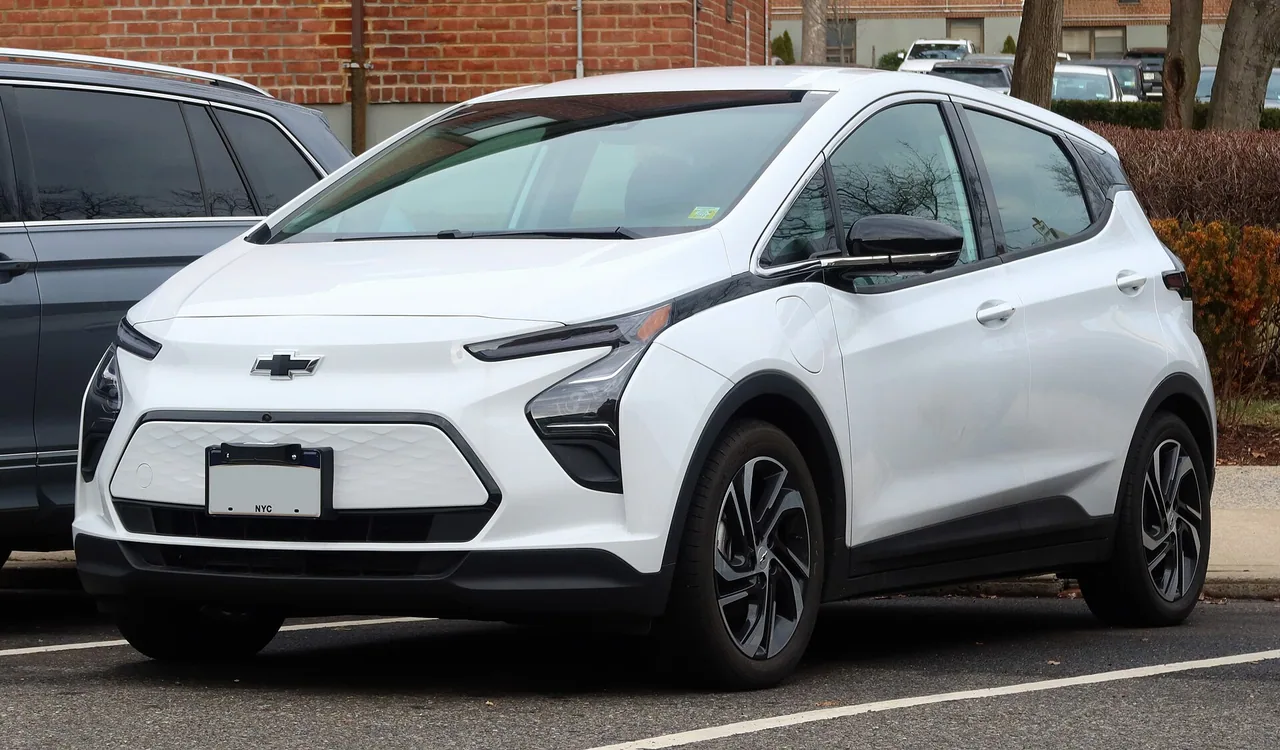
Chevrolet Bolt EV (2022-2023 facelift)
Photo: Kevauto / Wikimedia Commons, CC BY-SA 4.0, resized. Representative Chevrolet Bolt EV (2022-2023 facelift).

Chevrolet Bolt EV year by year

Chevrolet Bolt EV model years compared
Model yearTrimsScoresComplaintsFirst 52 moTop problemRecallsOpen investigationsEPA rangeCrash starsUsed priceGeorgia assessed value (2026 manual)
2023 1 73 63 63 Steering won't return to center16 of 63 (25%) 3 0 259 mi 5/5 $18,300KBB, Nov 2026 $16,225–$17,6002 values, 1 of 1 trim
2022 1 67 59 3717 recall-wait left out Battery recall repair delays17 of 59 (29%) 73 advisory 0 259 mi 5/5 $18,500KBB, Nov 2026 $14,525–$15,5252 values, 1 of 1 trim
2021 1 66 68 4018 recall-wait left out Battery fire recall charging limits18 of 68 (26%) 53 advisory 0 259 mi 5/5 $15,700KBB, Nov 2026 $11,775–$12,9502 values, 1 of 1 trim
2020 1 63 177 4067 recall-wait left out Long waits for recall repairs65 of 177 (37%) 83 advisory 0 259 mi 5/5 $15,250KBB, Nov 2026 $10,675–$11,4002 values, 1 of 1 trim

Sources: NHTSA complaints and recalls through Nov 22, 2026; NHTSA defect investigations through Nov 19, 2026; EPA Fuel Economy Guide range; NHTSA 5-Star Safety Ratings.

Georgia assessed value (2026 manual): Georgia Department of Revenue Motor Vehicle Assessment Manual for TAVT (2026 edition), spanning each model year's main trims; a state value for title tax, not a sale price or market value.

First 52 mo counts complaints filed in each judged year's first 52 months from July 1 of the prior year (for 2023, Jul 1, 2022 to Oct 31, 2026), excluding recall-wait complaints.

Battery fire recalls

NHTSA Campaign 21V650000 Model years: 2020, 2021, 2022

Park Outside

Filed Aug 20, 2021 · 52,414 potentially affected (whole campaign) · ELECTRICAL SYSTEM:PROPULSION SYSTEM:TRACTION BATTERY

Defect: General Motors, LLC (GM) is recalling certain 2020-2022 Chevrolet Bolt EV and 2022 Chevrolet Bolt EUV vehicles. The high voltage battery could catch fire when charged to full or nearly full capacity.

Risk: A battery fire increases the risk of injury.

Remedy as filed: Owners are advised to take the following interim steps: Set the Target Charge Level feature in their vehicle to limit the charge level to 90%, charge their vehicle more frequently, avoid depleting the battery to 70 miles range remaining, park outside after charging, and do not charge the vehicle indoors overnight. Defective battery modules will be replaced by GM, free of charge. Owner notification letters were mailed on October 1, 2021 and June 23, 2023. Owners may contact the Bolt EV Concierge Team at 1-833-382-4389. This recall is an expansion of NHTSA recall 21V-560. GM's number for this recall is N212345940.

Build windows in NHTSA's recall file: 2020: not stated; 2021: not stated; 2022: not stated.

NHTSA Campaign 24V481000 Model years: 2020, 2021, 2022

Park Outside

Filed Jun 27, 2024 · 72 potentially affected (whole campaign) · ELECTRICAL SYSTEM:PROPULSION SYSTEM:TRACTION BATTERY

Defect: General Motors, LLC (GM) is recalling certain 2020-2022 Chevrolet Bolt EV and 2022 Chevrolet Bolt EUV vehicles that were previously remedied under recall number 21V-650. The advanced diagnostic software may have been incorrectly installed and fail to detect defective battery modules, possibly resulting in a battery fire.

Risk: A battery fire increases the risk of injury.

Remedy as filed: Owners are advised to take the following interim steps: Set the Target Charge Level feature in their vehicle to limit the charge level to 90%, charge their vehicle more frequently, avoid depleting the battery to 70 miles range remaining, park outside after charging, and do not charge the vehicle indoors overnight. Dealers will reinstall the advanced diagnostic software, free of charge. Owner notification letters were mailed on August 1, 2024. Owners may contact the Bolt EV Concierge Team at 1-833-382-4389. GM's numbers for this recall are N242443000 and N242443002.

Build windows in NHTSA's recall file: 2020: not stated; 2021: not stated; 2022: not stated.

NHTSA Campaign 24V812000 Model years: 2020, 2021, 2022

Park Outside

Filed Oct 31, 2024 · 107 potentially affected (whole campaign) · ELECTRICAL SYSTEM:PROPULSION SYSTEM:TRACTION BATTERY THERMAL:MANAGEMENT:SOFTWARE

Defect: General Motors, LLC (GM) is recalling certain 2020-2022 Chevrolet Bolt EV and 2022 Bolt EUV vehicles previously repaired under Recall 21V-650. The installation of advanced diagnostic software may have failed. As such, the high voltage battery could catch fire when charged to full or nearly full capacity.

Risk: A battery fire increases the risk of injury.

Remedy as filed: Owners are advised to take the following interim steps: Set the Target Charge Level feature in their vehicle to limit the charge level to 90%, charge their vehicle more frequently, avoid depleting the battery to 70 miles range remaining, park outside after charging, and do not charge the vehicle indoors overnight. Dealers will reinstall advanced diagnostic software, free of charge. Owner notification letters were mailed December 3, 2024. Owners may contact the Bolt EV Concierge Team at 1-833-382-4389. GM's number for this recall is N242470160.

Build windows in NHTSA's recall file: 2020: not stated; 2021: not stated; 2022: not stated.

Related owner complaint themes grouped by TrimIndex: 2020 waits for recall repairs (65 of 177 complaints); 2020 high-voltage battery faults (16 of 177 complaints); 2020 charging limits set while a recall is open (15 of 177 complaints); 2021 charging limits set while a recall is open (18 of 68 complaints); 2022 waits for recall repairs (17 of 59 complaints).

Source: NHTSA recall file through Nov 12, 2026 (NHTSA.gov).
Common Chevrolet Bolt EV problems across model years

steering faults

Reported across 4 model years (47 complaints total): 2020: 21 of 177 (12%); 2021: 7 of 68 (10%); 2022: 3 of 59 (5%); 2023: 16 of 63 (25%).

“The steering system seems to be binding up. The wheel will not return to center after taking a corner.”

loss of drive power

Reported across 4 model years (39 complaints total): 2020: 11 of 177 (6%); 2021: 9 of 68 (13%); 2022: 12 of 59 (20%); 2023: 7 of 63 (11%).

“As I was driving I felt the Chevrolet Bolt stutter twice, as if it was loosing power.”

unintended acceleration

Reported across 4 model years (21 complaints total): 2020: 12 of 177 (7%); 2021: 2 of 68 (3%); 2022: 3 of 59 (5%); 2023: 4 of 63 (6%).

“the accelerator pedal became stuck causing the speed to increase to approximately 65 mph.”

waits for recall repairs

Reported across 2 model years (82 complaints total): 2020: 65 of 177 (37%); 2022: 17 of 59 (29%).

“The local dealer was notified of the issue and confirmed that parts were not yet available for the recall repair.”

charging limits set while a recall is open

Reported across 2 model years (33 complaints total): 2020: 15 of 177 (8%); 2021: 18 of 68 (26%).

“I cannot safely limit my battery charge in the manner instructed in the initial recall notice.”

shifting and the park lock

Reported across 2 model years (11 complaints total): 2021: 3 of 68 (4%); 2022: 8 of 59 (14%).

“all attempts to change gear into neutral, reverse, or drive resulting in all doors unlocking and the vehicle shifting back into park”

Chevrolet Bolt EV problems by year

TrimIndex grouped the NHTSA complaint narratives of 4 Chevrolet Bolt EV model years into problem themes on Nov 16, 2026; the largest is “Long waits for recall repairs” on the 2020 Chevrolet Bolt EV, 65 of 177 complaints (37%), and each row lists up to 3 of its year’s largest themes.

Chevrolet Bolt EV: the largest complaint themes of each model year
Model yearComplaintsLargest problemSecondThird
202363
Steering won't return to center16 of 63 complaints (25%)
Backup camera and screen failure7 of 63 complaints (11%)
Loss of drive power or shifting7 of 63 complaints (11%)
202259
Battery recall repair delays17 of 59 complaints (29%)
Sudden loss of drive power10 of 59 complaints (17%)
Stuck in park, will not shift8 of 59 complaints (14%)
202168
Battery fire recall charging limits18 of 68 complaints (26%)
Loss of drive power while driving9 of 68 complaints (13%)
2020177
Long waits for recall repairs65 of 177 complaints (37%)
Steering sticks, will not recenter21 of 177 complaints (12%)
Range cut by charging limits15 of 177 complaints (8%)

How themes are made and checked

Compare Chevrolet Bolt EV against rivals

Chevrolet Bolt EV frequently asked questions

What year Chevrolet Bolt EV to avoid?

No Chevrolet Bolt EV year to avoid stands out: counted over each year's first 52 months on sale, 2023 leads with 63 complaints against 40 for 2020, not counting complaints about waiting for a recall repair (67 for 2020), but 2020 has more on file in all (177 against 63).

What is the best year for the Chevrolet Bolt EV?

No best Chevrolet Bolt EV year stands out: 2023 is the only year judged without recall 21V650000, but it drew more: 63 complaints in its first 52 months on sale (63 on file), against 40 for 2020 (177 on file), 40 for 2021 (68 on file) and 37 for 2022 (59 on file) in theirs, not counting complaints about waiting for a recall repair (67 for 2020, 18 for 2021 and 17 for 2022); NHTSA data through Nov 22, 2026.

What are the most common Chevrolet Bolt EV problems?

The problems that recur across Chevrolet Bolt EV model years in owners' NHTSA complaints are steering faults (complaint themes in 2020–2023; 21 of 177 complaints in 2020), loss of drive power (complaint themes in 2020–2023; 12 of 59 complaints in 2022) and unintended acceleration (complaint themes in 2020–2023; 12 of 177 complaints in 2020) (counts of complaints, not failure rates).

Is the 2023 Chevrolet Bolt EV reliable?

Owners have filed 63 complaints about the 2023 Chevrolet Bolt EV with NHTSA in records through Nov 22, 2026. The largest group of the 2023 Chevrolet Bolt EV's complaints, steering won't return to center, holds 16 of 63 (25% of complaints). NHTSA lists 3 recall campaigns for the 2023 Chevrolet Bolt EV. In its first 52 months on sale the 2023 Chevrolet Bolt EV drew 63 complaints; the rule names it neither a year to avoid nor the best year.

Is the 2022 Chevrolet Bolt EV reliable?

Owners have filed 59 complaints about the 2022 Chevrolet Bolt EV with NHTSA in records through Nov 22, 2026. The largest group of the 2022 Chevrolet Bolt EV's complaints, battery recall repair delays, holds 17 of 59 (29% of complaints). NHTSA lists 7 recall campaigns for the 2022 Chevrolet Bolt EV; 21V650000, 24V481000 and 24V812000 carry NHTSA's do-not-drive or park-outside advice. In its first 52 months on sale the 2022 Chevrolet Bolt EV drew 37 complaints, not counting complaints about waiting for a recall repair (17 for 2022); the rule names it neither a year to avoid nor the best year.

Is the 2021 Chevrolet Bolt EV reliable?

Owners have filed 68 complaints about the 2021 Chevrolet Bolt EV with NHTSA in records through Nov 22, 2026. The largest group of the 2021 Chevrolet Bolt EV's complaints, battery fire recall charging limits, holds 18 of 68 (26% of complaints). NHTSA lists 5 recall campaigns for the 2021 Chevrolet Bolt EV; 21V650000, 24V481000 and 24V812000 carry NHTSA's do-not-drive or park-outside advice. In its first 52 months on sale the 2021 Chevrolet Bolt EV drew 40 complaints, not counting complaints about waiting for a recall repair (18 for 2021); the rule names it neither a year to avoid nor the best year.

Is the 2020 Chevrolet Bolt EV reliable?

Owners have filed 177 complaints about the 2020 Chevrolet Bolt EV with NHTSA in records through Nov 22, 2026. The largest group of the 2020 Chevrolet Bolt EV's complaints, long waits for recall repairs, holds 65 of 177 (37% of complaints). NHTSA lists 8 recall campaigns for the 2020 Chevrolet Bolt EV; 21V650000, 24V481000 and 24V812000 carry NHTSA's do-not-drive or park-outside advice. In its first 52 months on sale the 2020 Chevrolet Bolt EV drew 40 complaints, not counting complaints about waiting for a recall repair (67 for 2020); the rule names it neither a year to avoid nor the best year.