All Vehicles
2026 Hyundai Ioniq 9 Trims Compared: Range, Price & Problems
Updated
2026 Hyundai Ioniq 9: 3 trims compared. 311–335 mi EPA range, 3 recalls, 41 NHTSA complaints, top problem: Sudden loss of drive power (41% of complaints).
Data:NHTSA through
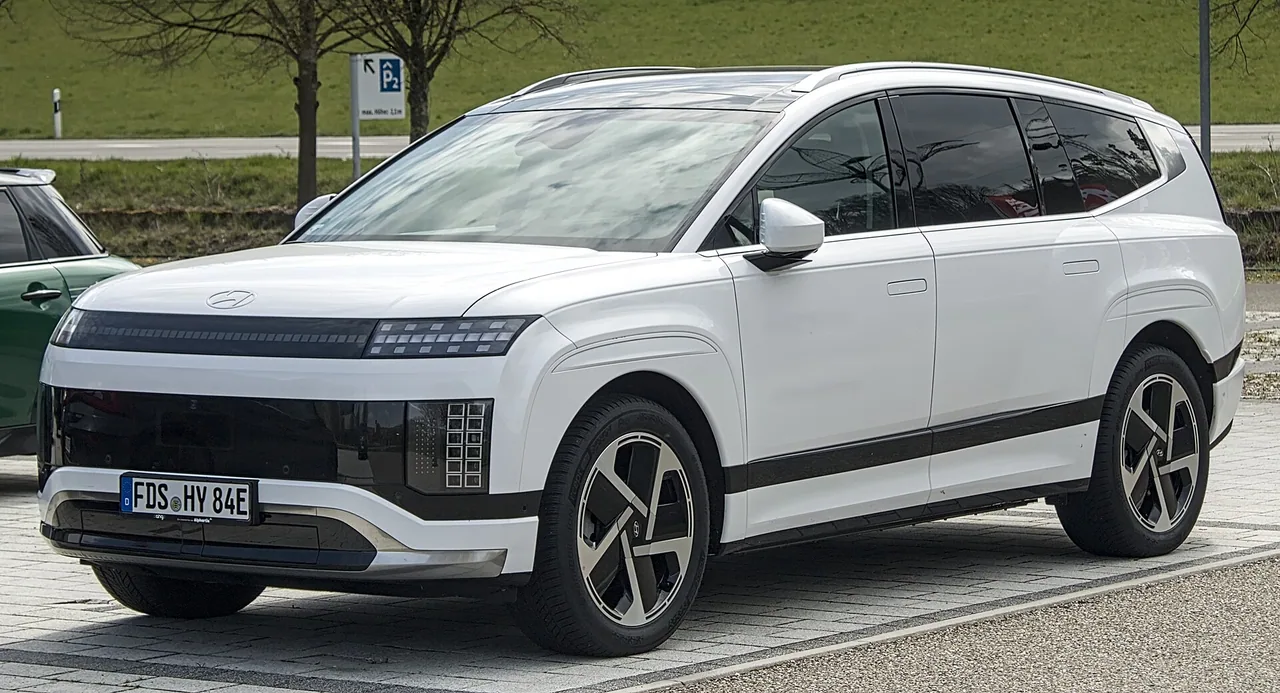

Compare the 2026 Hyundai Ioniq 9 trims
| Trim | TrimIndex score | Price new | Used price | Drive | EPA range | EPA energy use | Horsepower | Towing | Georgia tax value (2026 manual) |
|---|---|---|---|---|---|---|---|---|---|
| AWD | 73 | from $62,765starting price | $45,223–$49,995Dealer asking (38 listings, Nov 2026) | AWD | 320 mi | 38.0 kWh/100 mi | 303 hp | 5,000 lb | $52,425–$56,400 (2 series) |
| RWD | 73 | $58,955original MSRP | $43,566–$44,995Dealer asking (9 listings, Nov 2026) | RWD | 335 mi | 37.0 kWh/100 mi | 215 hp | 3,500 lb | $48,475 |
| AWD Performance | 71 | from $71,250starting price | $50,995–$59,990Dealer asking (20 listings, Nov 2026) | AWD | 311 mi | 40.0 kWh/100 mi | not stated | 5,000 lb | $60,850–$63,825 (3 series) |
Hyundai Motor America lists one figure for the 2026 Ioniq 9: 21.9 cu ft of cargo space.
Price new, horsepower and towing: Hyundai Motor America.
EPA range and EPA energy use: U.S. EPA and DOE, fueleconomy.gov.
Used price: the figure each trim page shows, with its source and the month collected.
Georgia tax value: the Georgia Department of Revenue's title-tax assessment value for each trim in its 2026 manual, one edition for every row; a state tax figure, not a sale price or market value.
TrimIndex score: out of 100.
Blank cells. Horsepower (1 row): no manufacturer document backs a rated figure.
What differs between the 2026 Hyundai Ioniq 9 trims
Compared with the 2026 Ioniq 9 RWD, the AWD Performance has all-wheel drive and 1,500 lb more towing capacity, with 24 fewer miles of EPA range and EPA energy use 3.0 kWh/100 mi higher.
Compared with the 2026 Ioniq 9 AWD Performance, the AWD has EPA energy use 2.0 kWh/100 mi lower and a starting price $8,485 lower.
Which 2026 Hyundai Ioniq 9 trim for what
- Longest EPA range: the 2026 Ioniq 9 RWD, 335 miles; next, the AWD has 320 miles.
- Highest towing rating (manufacturer): the 2026 Ioniq 9 AWD and the AWD Performance, 5,000 lb each; next, the RWD has 3,500 lb.
- Most horsepower (rated) (of the 2 trims with a figure on file): the 2026 Ioniq 9 AWD, 303 hp; next, the RWD has 215 hp.
NHTSA Recalls (3)
- NHTSA lists 3 recall campaigns for the 2026 Hyundai Ioniq 9, filed between Feb 2026 and Sep 2026.
- How they are fixed, per the filings: 1 by a software update (it can install over the air) and 2 by work on the car.
Source: NHTSA recall filings for the 2026 Hyundai Ioniq 9, data through Nov 22, 2026. Why the VIN decides
- Filed Sep 2026
The second-row power seats may fail to detect a person.
Campaign #26V588000 · Part (NHTSA): seats › mid/rear assembly › power adjustAs a result, the seats may continue to move after contacting a person during powered seat functions, such as automatic power fold-and-stow.
- What happens:
- A person, especially a child, may become trapped by a rear powered seat, increasing the risk of injury.
- Until it is fixed:
- Owners are advised to exercise caution when operating the second-row power seat functions until the repair is performed.
- The fix
- Free fix: software update over the air or at a dealer Children are advised not to be in the rear seats or near the rear seating area during power-folding operation. The seat software will be updated over-the-air (OTA) or by a dealer, as necessary, free of charge.
- Covers:
- certain 2026 Ioniq 9 vehicles equipped with a Limited, Calligraphy, or Calligraphy Design trim package.
NHTSA lists 5,360 vehicles in this campaign (all models it covers).
Check VIN status at NHTSA.gov - Filed May 2026
The fasteners for the rear suspension may loosen and detach, which can result in a loss of vehicle control.
Campaign #26V314000 · Part (NHTSA): suspension › critical fasteners- What happens:
- A loss of vehicle control increases the risk of a crash.
- The fix
- Free fix: work on the car at a dealer Dealers will inspect and replace the rear suspension fasteners and perform a rear vehicle alignment, as necessary, free of charge.
- Covers:
- certain 2025 Ioniq 5 and 2026 Ioniq 9 vehicles.
NHTSA lists 172 vehicles in this campaign (all models it covers).
Check VIN status at NHTSA.gov - Filed Feb 2026
The high voltage battery system may contain an improperly tightened bus bar, which can cause a short-circuit.
Campaign #26V068000 · Part (NHTSA): electrical system › propulsion system › traction battery- What happens:
- An electrical short in the high voltage battery system increases the risk of a fire.
- The fix
- Free fix: work on the car at a dealer Dealers will inspect and tighten the bus bar retention bolts and replace the battery system assembly, as necessary, free of charge.
- Covers:
- certain 2025-2026 IONIQ 5 and 2026 IONIQ 9 vehicles.
NHTSA lists 27 vehicles in this campaign (all models it covers).
Check VIN status at NHTSA.gov
NHTSA Complaints (41 total)
NHTSA lists 3 recall campaigns for the 2026 Hyundai Ioniq 9; 1 of them names an over-the-air software update as the fix. Owners have filed 41 complaints with NHTSA; the largest part groups are Electrical system (other) (22) and Battery and propulsion system (10). Of all 41, 4 report an injury.
What owners report most
TrimIndex grouped the 41 complaints owners filed with NHTSA on the 2026 Hyundai Ioniq 9 (every trim; NHTSA files complaints by model year, not trim) into problem themes on Nov 16, 2026: 24 of them fall in the 4 themes below, 1 of them in two. 2 complaints were filed after that grouping and are not in a theme yet. How themes are made and checked
-
Sudden loss of drive power
17 of 41 complaints (41%): An electrical system warning appears, then top speed drops, the car slows or loses drive power entirely, or it stops charging and becomes inoperable.
“it happened while I was driving and the car slowed down to a halt in a high speed traffic area.”
NHTSA complaint 11751977 “the check electric vehicle system light came on again and the car started losing power”
NHTSA complaint 11757195 -
Power seats trap occupants
3 of 41 complaints (7%): Power-folding or power-adjusting seats keep moving when a person is in the way, pinning a head, legs or a child.
All 3 complaints report an injury.
“The seat failed to detect the occupant and continued moving forward, creating a crushing hazard.”
NHTSA complaint 11725569 “The seat forcefully and continuously compressed backward, squeezing and trapping the second-row passenger's legs.”
NHTSA complaint 11774444 -
Sudden braking with nothing ahead
3 of 41 complaints (7%): With driver assistance active, the car slows sharply or comes to a full stop in traffic with no obstacle requiring it.
“the vehicle suddenly displayed an emergency braking warning and aggressively slowed despite no apparent obstacle or traffic condition requiring emergency braking.”
NHTSA complaint 11757960 “the autonomous emergency braking system activated without cause and brought the vehicle to a complete stop.”
NHTSA complaint 11741650 -
Door handles retract onto fingers
2 of 41 complaints (5%): The flush exterior door handles retract while fingers are still between the handle and the door panel.
Owners reported an injury in 1 of the 2 complaints.
“the auto-flush door handle mechanism retracted without anti-pinch detection while the contact’s fingers and the daughter's fingers were positioned between the handle and the door panel”
NHTSA complaint 11766164 “My child’s finger got caught in the door handle while the vehicle was locking.”
NHTSA complaint 11745506
41 complaints filed with NHTSA for the 2026 Hyundai Ioniq 9, between Jun 2025 and Nov 2026.
Parts named most often
| Part | Complaints | Share |
|---|---|---|
| Electrical system (other) | 22 | 54% |
| Battery and propulsion system | 10 | 24% |
| Drive unit | 8 | 20% |
| Forward collision avoidance including adaptive cruise control (3) and automatic emergency braking (3) | 5 | 12% |
| Speed control | 4 | 10% |
Share of all 41 complaints; one complaint can name more than one part, so shares add up to more than 100%. 3 complaints name no specific part.
Owners reported an injury in 4 of the 41 complaints. How these fields are filled
Complaints by year filed
| Year filed | Complaints |
|---|---|
| 2025 | 4 |
| 2026 (to Nov 22) | 37 |
Source: NHTSA owner complaints filed on every 2026 Hyundai Ioniq 9 (NHTSA files them by model year, not trim), data through Nov 22, 2026.
The 25 most severe, then newest, of 41
- Severity 5 of 5.Seats Injury
While the vehicle was stationary, the driver pressed a saved profile button on the Integrated Memory System (IMS) on the door panel to adjust the driver's seat.
Show the rest
A passenger was seated directly behind the driver in the second row. Upon pressing the memory button, the motorized driver's seat began moving backward toward the saved position. Whether due to a system malfunction or a lack of built-in detection features, the vehicle did not interrupt the motorized movement upon encountering an obstruction. The seat forcefully and continuously compressed backward, squeezing and trapping the second-row passenger's legs. The seat did not stop on its own and only ceased moving when it completely jammed against the passenger, causing minor physical injury to their legs. This constitutes a severe mechanical/software defect and a critical occupant crush hazard.
NHTSA ODI #11774444 - Severity 5 of 5.Body and structure · Electrical system (other) Injury
The motorized flush door handles lack an automatic anti-pinch resistance sensor when retracting.
Show the rest
If an object, hand, or child’s finger is caught inside the door handle while the vehicle locks, the motor continues to force the handle shut. This creates a severe crushing and entrapment hazard. This is available for inspection upon request. My child’s finger got caught in the door handle while the vehicle was locking. There have also been several near miss incidents. The problem has been reported to my local dealership where I purchased the vehicle, but they do not appear to take the issue seriously. The issue has not been inspected by the manufacturer, police, insurance representatives, or others. There are no warning lights or messages due to this issue.
NHTSA ODI #11745506 - Severity 5 of 5.Seat belts · Seats Injury
Two safety incidents occurred (October and November 2025) involving the power-folding second-row seats.
Show the rest
A child was seated in the second-row captain’s chair when a sibling activated the seat from the third row. The seat failed to detect the occupant and continued moving forward, creating a crushing hazard. In one incident, my daughter (approx. 40 lbs, 46 inches tall) was partially trapped and screamed as the seat compressed her and/or tightened the seatbelt. I had to intervene to stop the mechanism. I later tested this myself and confirmed the issue is reproducible. While seated, the seat continued moving forward and pushed me into the front passenger seat without automatically stopping. This demonstrates a failure of occupant detection and/or lack of a safety stop mechanism. This presents a serious injury risk, especially to children. The issue was demonstrated to a dealership representative.
NHTSA ODI #11725569 - Severity 5 of 5.Seats Injury at 12,000 miles
The contact owns a 2026 Hyundai Ioniq 9. The contact stated that the second-row seat button caused the seats to fold; however, the button that should have prevented unsafe operation was missing.
Show the rest
The contact’s head became lodged between the seat and the vehicle structure, and he sustained head injuries, including prolonged headaches and trauma. No medical attention was provided. There were no warning lights illuminated. The local dealer was not contacted, and the vehicle has not been diagnosed or repaired. The manufacturer was notified, and a case was opened. The failure mileage was approximately 12,000.
NHTSA ODI #11725010 - Severity 4 of 5.Battery and propulsion system
On XXX I had two warnings pop up on the car to check electric vehicle system while driving.
Show the rest
The car was still driving fine, so I took it into the dealer (ALM Hyundai in [XXX]) within a few days to have general maintenance and for the DTCs to be reviewed. The EV tech was 2 weeks out, so they just briefly reviewed the code and said it was safe to drive. Everything was fine until XXX. I fully charged the vehicle overnight on XXX. Around 11:30 a.m. on XXX I went to drive the car. This was the 3rd time I had driven it since charging it and was about 2 minutes into the drive when the check electric vehicle system light came on again and the car started losing power and accelerating on its own. It cycled this way at a few times and I quickly pulled over into a parking lot as the car was crawling. I turned the car off and back on and returned to my office. I was not able to get it towed to the Hyundai dealership until XXX. When I turned the car on in the morning of XXX, the light had disappeared and I never received an alert within the app that the code appeared in the car. Thankfully my young children were not in the car with me at the time and I was not on a highway or this could have been a serious accident. The car is still within diagnostics, but the last update that I received on XXX the service department stated that they had not been able to duplicate the issue or code. When I dropped the car off, they told me that they could not repair it if they could not duplicate the code. If they cannot find an issue and the fact that the car did not record the code makes this a serious safety hazard not only to anyone driving the vehicle, but other vehicles on the around driving around it. INFORMATION REDACTED PURSUANT TO THE FREEDOM OF INFORMATION ACT (FOIA), 5 U.S.C. 552(B)(6)
NHTSA ODI #11757195 - Severity 4 of 5.Electrical system (other) · Battery and propulsion system
On XXX, at approximately 2:20 PM, while driving about 30 mph on a suburban road in [XXX], a red battery warning light appeared on the main instrument cluster.
Show the rest
I pulled over and contacted Hyundai support. When I attempted to resume driving, the vehicle accelerated sluggishly with noticeably reduced power. I pulled over a second time and parked with the vehicle still powered on. While I was on the phone with Hyundai roadside assistance, a red ‘Stop vehicle and check power supply’ warning message appeared on the dash, and the vehicle completely lost power several minutes later, becoming inoperable. It had to be towed to a Hyundai dealership. Weather was clear and road conditions were normal. There was no crash, fire, or injury. The vehicle had approximately 3,770 miles at the time of failure. As of this report, the dealer has not yet completed diagnosis. The symptoms are consistent with the integrated charging control unit (ICCU) failure pattern widely reported in Hyundai EVs, but this has not yet been confirmed. INFORMATION REDACTED PURSUANT TO THE FREEDOM OF INFORMATION ACT (FOIA), 5 U.S.C. 552(B)(6)
NHTSA ODI #11743940 - Severity 4 of 5.Electrical system (other)
On XXX, my 2025 Hyundai Ioniq 9 displayed a battery fault warning (DTC P1AAF00).
Show the rest
I was instructed by Hyundai to bring the vehicle to a dealership immediately as other Ioniq 9 owners had experienced sudden and complete loss of motive power during highway operation. The vehicle has been at Pacifico Hyundai in [XXX] since that date. I was initially told the battery control module required replacement with only 7 units available nationwide. On May 5 I was informed via text that the entire high voltage battery pack requires replacement with no release date provided. The vehicle has been out of service for 48 days with no repair timeline. This fault presents a serious safety risk as sudden loss of power at highway speeds creates an immediate collision hazard for the driver and surrounding vehicles. INFORMATION REDACTED PURSUANT TO THE FREEDOM OF INFORMATION ACT (FOIA), 5 U.S.C. 552(B)(6)
NHTSA ODI #11741955 - Severity 4 of 5.Speed control · Forward collision avoidance
On May 14, 2026, while traveling at highway speed in a clear passing lane with no obstacles present, the autonomous emergency braking system activated without cause and brought the
Show the rest
vehicle to a complete stop. A following vehicle nearly rear-ended me. I recorded a voice memo immediately after the incident. A third-party crash detection application on my phone independently logged the hard stop event. A second phantom braking incident has since occurred. The vehicle is a 2026 IONIQ 9 Calligraphy leased in March 2026. This is the second major defect event on this vehicle, which was also out of service 28 consecutive days for a sunroof failure earlier this year. I am aware of ICCU-related systemic defects documented across the Hyundai and Kia EV platform and believe this may be connected.
NHTSA ODI #11741650 - Severity 4 of 5.Electrical system (other) · Speed control
I was driving on the highway at 70 mph approximately with my young daughter in the backseat. All of a sudden, the front display on my Hyundai Ioniq 9 went completely black and said "no signal."
Show the rest
I lost all dashboard information about my speed, gas gauge, horsepower etc. The only thing I could do was see how fast I was going because I was on google maps and my audiovisual screen in the center was still working. I drove 15 min with this to the dealership. The signal never came back. I had the car at the Planet Hyundai for 14 days. They said nothing was wrong and that I should come back when it happens again. It was TERRIFYING having no signal and wondering if my car was going to stop in the middle of the highway. The dealer said that Hyundai would not do anything about it unless it was recreated even though I had pictures of it. What a horrible experience and I am terrified to drive the car now.
NHTSA ODI #11739235 - Severity 4 of 5.Electrical system (other) · Drive unit · Speed control
Was driving down the highway when Check: electric vehicle system warning came on and car slowed suddenly and wouldnt go past 41MPH.
Show the rest
Within a min, the car slowed down further and just as I was pulling on the shoulder. Car didnt have power to move after.
NHTSA ODI #11736905
Show 15 more complaints
- Severity 4 of 5.Electrical system (other) · Drive unit · Speed control
The vehicle was plugged in overnight. To the set 80% limit. When I got up to leave for work and take family out.
Show the rest
The vehicle check electrical system warning ⚠️ came on and the then the vehicle would not drive past 41mph. Then in a few minutes dropped down to 28mph and would not go any further. Took the car to dealership which was miles away and 18 miles per hour was my top speed when I pulled in to the dealership lot. This was one day after I had dropped the car off for a route 7K mile tire rotation and filter change. They claimed they topped off fluids. I keep reading that the ICCU is failing on the Ioniqs and this symptoms seem to match. I am now waiting on diagnosis to be done Tuesday or Wednesday this week of the 5th.
NHTSA ODI #11708703 - Severity 4 of 5.Brakes
When my Ioniq 9 was in reverse, the brake did not work. The car kept rolling and I had to turn it off to stop the car.
NHTSA ODI #11700195 - Severity 3 of 5.Electrical system (other)
My 2026 Hyundai IONIQ 9 displayed an electric vehicle warning and would not start when the warning appeared. I first brought the vehicle in for an electrical issue in July 2026.
Show the rest
The dealer returned it to me, but the symptoms came back. I brought it to Sheehy Hyundai of Waldorf on October 26, 2026. During that visit, the service advisor told me in writing that the vehicle was undrivable in its current condition. My safety concern is that the recurring failure could leave me stranded without warning. The November 13 repair invoice documents a short to battery in the interlock system and fault code P0A0A12. The dealer replaced the battery management unit, and the same code returned. The dealer then replaced the positive battery cable terminal assembly and reported that the code did not return during retesting. I have the repair invoice and the dealer’s text message. I do not know whether the replaced parts are still available for inspection
NHTSA ODI #11777785 - Severity 3 of 5.Battery and propulsion system · Drive unit
The rear motor failed while driving on the highway/interstate at 70 mph.
NHTSA ODI #11775491 - Severity 3 of 5.
The door sensor on driver side does not operate, when touched does not open or close. However, the door sensor on passenger side works well.
Show the rest
Bought car and noticed the defect in one week of ownership, after two months of waiting and diagnosing by dealership, they still were unable to find the solution.
NHTSA ODI #11768202 - Severity 3 of 5.
On XXX, I experienced a safety-related problem with a rear door on my 2026 Hyundai IONIQ 9.
Show the rest
While the vehicle was parked, I attempted to open the rear door from inside the vehicle, but the door would not open. The child lock was believed to be OFF at the time. I attempted to operate the interior door handle, but the rear door remained locked and could not be opened from inside. This incident was directly witnessed by one of my coworkers, who was present when the problem occurred and can confirm what happened if additional information is required. I am concerned that an occupant could be unable to exit the vehicle in an emergency if this condition occurs again. A rear door that cannot be opened from inside could create a serious safety risk in situations involving a crash, fire, electrical malfunction, or other emergency requiring immediate evacuation. The vehicle and rear door locking system are available for inspection upon request. On XXX, I drove the vehicle to Glassman Hyundai in [XXX] because of this issue and a separate windshield wiper safety concern. The dealership did not accept the vehicle for a walk-in diagnosis that day. The earliest available service appointment was scheduled for XXX. The rear-door problem has not yet been reproduced or confirmed by a Hyundai technician, and no repair has been performed. I am not aware of any warning light or warning message related to the rear-door condition before or during the incident. I am submitting this complaint because the inability to open a rear door from inside the vehicle could prevent an occupant from exiting during an emergency, even though the door may operate normally at other times. INFORMATION REDACTED PURSUANT TO THE FREEDOM OF INFORMATION ACT (FOIA), 5 U.S.C. 552(B)(6)
NHTSA ODI #11763579 - Severity 3 of 5.Battery and propulsion system · Forward collision avoidance
I am reporting serious repeated safety failures with my 2026 Hyundai IONIQ 9 involving unintended emergency braking and sudden loss of propulsion.
Show the rest
While traveling approximately 70–75 mph northbound on I-15, the vehicle suddenly displayed an emergency braking warning and aggressively slowed despite no apparent obstacle or traffic condition requiring emergency braking. Before I could regain control, the vehicle came to a complete stop in active freeway traffic with vehicles around and behind me, creating an extreme risk of a high-speed rear-end collision. Something similar has happened on two other occasions. On a separate occasion while traveling on I-40, the vehicle again unexpectedly initiated emergency braking. I was able to disengage adaptive cruise control and regain control before the vehicle came to a complete stop. The vehicle has also experienced two separate loss-of-propulsion incidents. During one, the vehicle suddenly limited its maximum speed to approximately 22 mph and would not accelerate normally for approximately four miles before returning to normal operation without explanation. During another incident, the vehicle suddenly would not exceed approximately 40 mph. I safely pulled over, but once stopped the vehicle would not accelerate from 0 mph, leaving me unable to re-enter traffic. Normal operation returned only after shutting the vehicle off and restarting it. The Hyundai dealership has inspected the vehicle 3 times and has had it for more than 3 weeks, but states it cannot replicate the conditions. These failures are intermittent but have occurred repeatedly and involve critical braking and propulsion systems. I am concerned another event could cause serious injury or death, particularly if the vehicle brakes unexpectedly at freeway speed or loses propulsion while merging or crossing traffic. I am requesting NHTSA investigate this potential safety defect.
NHTSA ODI #11757960 - Severity 3 of 5.Electrical system (other) · Drive unit
Driving on a public road with a 50 phone speed limit, I received an error message on my dash stating electrical failure, and then the car shut down and began to coast, I had use
Show the rest
all my strength to turn the car towards the curb and coasted to a stop. I received an error message from multiple components and then the dash went blank.
NHTSA ODI #11756108 - Severity 3 of 5.Electrical system (other)
ICCU failure. Warning lights came on in the dash and diagnostic codes were available in my Hyundai app.
Show the rest
My family and I had just gotten back from a road trip and if the ICCU would have failed while we were on the trip we would have been stranded and it would have been during the heat wave. The vehicle is currently in the service department waiting for the part to come in.
NHTSA ODI #11750459 - Severity 3 of 5.Forward collision avoidance
I was driving at 35 mph speed on a straight road and the car automatically activated emergency steering and pushed towards right I had to jerk the steering towards left to prevent any accidents.
Show the rest
No adverse event occurred however this was unnerving experience.
NHTSA ODI #11745480 - Severity 3 of 5.Electrical system (other) · Battery and propulsion system
The Integrated Charging Control Unit (ICCU) on this vehicle produces loud whirring noises when charging at 80% or above. This has been documented in writing to the service department.
Show the rest
The ICCU defect is a known systemic issue across the Hyundai and Kia EV platform. The vehicle is currently scheduled to return to the dealer for this and other defects. This is the second major service visit on a vehicle leased in March 2026 that was already out of service 28 consecutive days for a sunroof failure.
NHTSA ODI #11741651 - Severity 3 of 5.Forward collision avoidance
On April 23, 2026, while driving my 2026 Hyundai Ioniq 9, the Automatic Emergency Braking system completely failed to detect an oncoming hazard.
Show the rest
The system did not alert me, did not activate, and did not apply emergency braking. I nearly collided with another vehicle as a direct result of this failure. The vehicle has a persistent diagnostic trouble code C28AB87 — CAN time-out for the front radar unit — which disables critical Advanced Driver Assistance Systems including Automatic Emergency Braking, collision avoidance, and Smart/Adaptive Cruise Control. This is the same defect that has been present since early in my lease. The vehicle has been presented for repair at two different Hyundai dealerships on three separate occasions: Attempt 1 — Oxmoor Hyundai, [XXX], March 19-20, 2026. Defect diagnosed, unable to repair. Attempt 2 — Oxmoor Hyundai, [XXX], April 1-17, 2026. Front radar unit replaced. Defect remained. Attempt 3 — [XXX] Hyundai, [XXX], April 23, 2026 to present. Suspected bad connector, part ordered. Vehicle still at dealership. Cumulative days out of service: 24 days and continuing for the same safety defect. I have formally demanded a buyback from Hyundai Motor America under Ohio Lemon Law ORC 1345.72. INFORMATION REDACTED PURSUANT TO THE FREEDOM OF INFORMATION ACT (FOIA), 5 U.S.C. 552(B)(6)
NHTSA ODI #11735039 - Severity 3 of 5.Drive unit · Electrical system (other)
Vehicle was operating perfect then got alert indicating electrical system fault but vehicle still drove (was just 2 miles from home ) but then alarms sounded and just able to pull
Show the rest
off road before vehicle died. Checked and see code DTC PIA9096 and car was inoperable after. Towed to dealer for replacement of ICCU module. They acknowledged they have seen this before. I was on a local road, but if this happened on a highway, would have been more hazardous!
NHTSA ODI #11731046 - Severity 3 of 5.Drive unit · Battery and propulsion system · Electrical system (other)
Failure of the ICCU during normal driving conditions. The vehicle was controllable, and driver was able to bring the vehicle to a safe location as vehicle performance deteriorated.
Show the rest
The failure left the driver and passenger without power during a storm in an unfamiliar area. After about 45 minutes of waiting for roadside assistance, the vehicle lost all auxiliary power and no functions were available (including lights and door lock controls). Vehicle was towed to a local dealership, where issue was diagnosed and part has been replaced. The failure was not preceded by any significant event. Warnings present on the driver's information panel while driving.
NHTSA ODI #11730311 - Severity 3 of 5.Electrical system (other) · Battery and propulsion system
Suspected ICCU failure. Progressed rapidly to car being immobile. Known issue not being addressed by Hyundai.
NHTSA ODI #11726175
NHTSA 5-Star Crash-Test Ratings
NHTSA crash-tested the all-wheel-drive 2026 Hyundai Ioniq 9 SUV (the AWD and AWD Performance): 5 stars overall, with frontal 5, side 5, rollover 5. NHTSA crash-tested the rear-wheel-drive 2026 Hyundai Ioniq 9 SUV (the RWD): 5 stars overall, with frontal 5, side 5, rollover 5.
Forum posts that mention this car
2 forum posts are on file for this model year. The 2 posts shown were retrieved May 2026.
"I'm very pleased with my Ioniq 9 but I didn't buy it for the looks. It's a non-threatening Dadmobile and it's good at a few things I can fit a bed in the back that sleeps two adults and a baby. Giant sunroof, power outlet, V2L adapter, 110kwh battery. If the Ioniq 5 was a spaceship then the Ioniq 9 is a space station. It's useful as a work vehicle too and paid for itself pretty quick Also, there are theories on how to avoid the ICCU issues: Keeping Level 2 charging under 6kW was recommended"
"Mazion makes a good point about dealers: in my three-plus years of EV ownership, I have found sales people at dealerships to be quite ignorant about what owning an EV really entails. I have yet to meet anyone at a Hyundai or Kia dealer who owns and drives an EV. When I purchased my 2022 Kia EV6 GT-Line over three years ago, it was the first that the dealer had ever seen and no one had any real training on it. I will echo others -- highway speed is the biggest range killer. The bigger battery in the IONIQ 9 helps a lot, but speed is the great equalizer. I'm on my second road trip in my IONIQ 9…"
2026 Hyundai Ioniq 9 frequently asked questions
What trims does the 2026 Hyundai Ioniq 9 come in?
TrimIndex lists 3 configurations of the 2026 Hyundai Ioniq 9, as EPA names them: AWD, RWD and AWD Performance.
What is the difference between the 2026 Hyundai Ioniq 9 RWD and AWD Performance?
Compared with the 2026 Ioniq 9 RWD, the AWD Performance has all-wheel drive and 1,500 lb more towing capacity, with 24 fewer miles of EPA range and EPA energy use 3.0 kWh/100 mi higher.
What is the range of the 2026 Hyundai Ioniq 9?
EPA rates the 2026 Hyundai Ioniq 9 at 311 to 335 miles, depending on the configuration: 335 for the RWD, 320 for the AWD and 311 for the AWD Performance.
Are there recalls on the 2026 Hyundai Ioniq 9?
Yes. NHTSA lists 3 recall campaigns for the 2026 Hyundai Ioniq 9 in records through Nov 22, 2026: 26V068000 (high-voltage battery), 26V314000 (suspension) and 26V588000 (seats).
What problems do owners report on the 2026 Hyundai Ioniq 9?
Of the 41 complaints owners filed with NHTSA about the 2026 Hyundai Ioniq 9 in records through Nov 22, 2026, the three largest problem themes are: Sudden loss of drive power (17); Power seats trap occupants (3); and Sudden braking with nothing ahead (3). 24 of them fall in the 4 themes TrimIndex grouped from their narratives on Nov 16, 2026.