All Vehicles
2022 Nissan LEAF Trims Compared: Range, Price & Problems
Updated
2022 Nissan LEAF: 3 trims compared. 149–226 mi EPA range, 4 recalls, 98 NHTSA complaints.
Data:NHTSA through
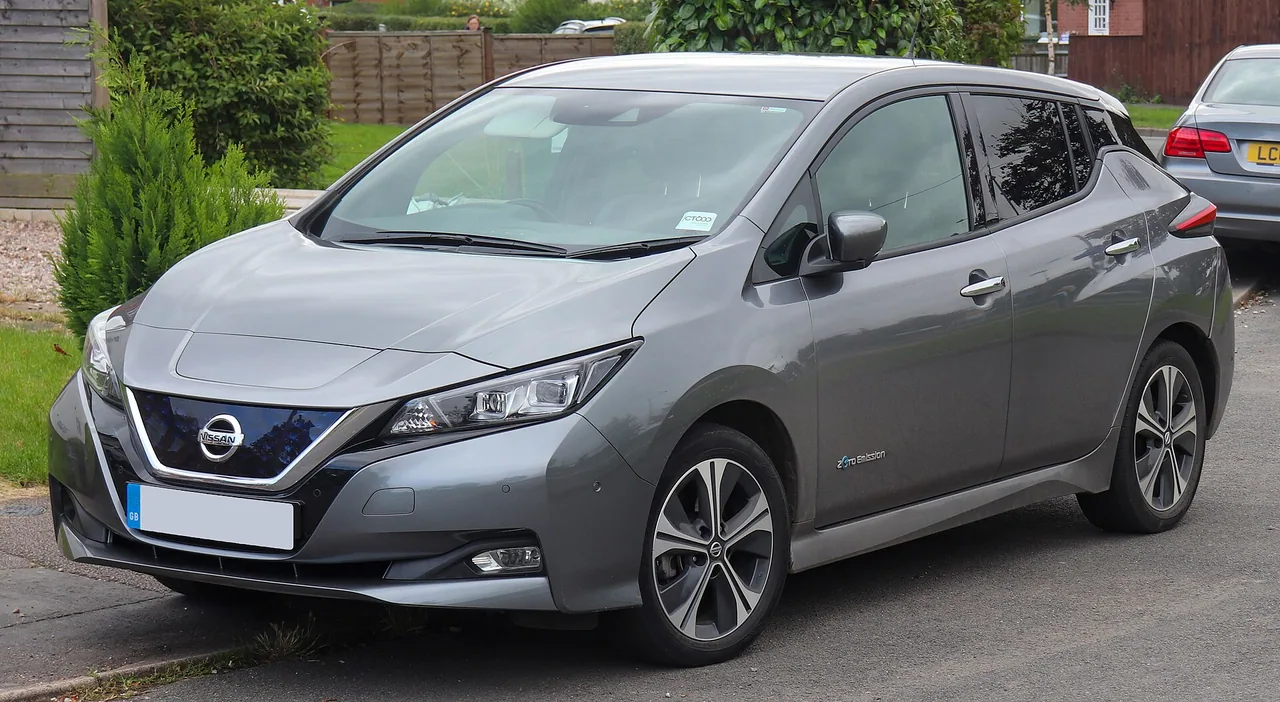

Compare the 2022 Nissan LEAF trims
| Trim | Trim names | TrimIndex score | Used price | Drive | EPA range | EPA energy use | Horsepower | Georgia tax value (2026 manual) |
|---|---|---|---|---|---|---|---|---|
| (62 kWh battery pack) | S PLUS | 60 | $14,650KBB, Nov 2026 | FWD | 226 mi | 31.3 kWh/100 mi | 214 hp | $12,000 |
| SV/SL (62 kWh battery pack) | SV PLUS, SL PLUS | 56 | $16,200KBB, Nov 2026 | FWD | 215 mi | 32.3 kWh/100 mi | 214 hp | $13,000–$14,225 (2 series) |
| (40 kWh battery pack) | S, SV | 55 | $12,500KBB, Nov 2026 | FWD | 149 mi | 30.4 kWh/100 mi | 147 hp | $10,575 |
Nissan North America lists one figure for the 2022 LEAF: 23.6 cu ft of cargo space.
EPA range and EPA energy use: U.S. EPA and DOE, fueleconomy.gov.
Horsepower: Nissan North America.
Trim names: the manufacturer documents in TrimIndex's trim-name map, each tied to the drivetrain, battery or EPA label it names.
Used price: the figure each trim page shows, with its source and the month collected.
Georgia tax value: the Georgia Department of Revenue's title-tax assessment value for each trim in its 2026 manual, one edition for every row; a state tax figure, not a sale price or market value.
TrimIndex score: out of 100.
What differs between the 2022 Nissan LEAF trims
Compared with the 2022 LEAF (40 kWh battery pack), the SV/SL (62 kWh battery pack) has 67 more hp and 66 more miles of EPA range, with a used price on file $3,700 higher (KBB, Nov 2026).
Compared with the 2022 LEAF SV/SL (62 kWh battery pack), the LEAF (62 kWh battery pack) has 11 more miles of EPA range and a used price on file $1,550 lower (KBB, Nov 2026).
Which 2022 Nissan LEAF trim for what
- Longest EPA range: the 2022 LEAF (62 kWh battery pack), 226 miles; next, the SV/SL (62 kWh battery pack) has 215 miles.
- Lowest used price on file: the 2022 LEAF (40 kWh battery pack), $12,500; next, the LEAF (62 kWh battery pack) has $14,650.
- Highest TrimIndex score: the 2022 LEAF (62 kWh battery pack), 60 out of 100; next, the SV/SL (62 kWh battery pack) has 56 out of 100.
- Most horsepower (rated): the 2022 LEAF (62 kWh battery pack) and the SV/SL (62 kWh battery pack), 214 hp each; next, the LEAF (40 kWh battery pack) has 147 hp.
NHTSA Recalls (4)
- NHTSA lists 4 recall campaigns for the 2022 Nissan LEAF, filed between Feb 2023 and Sep 2025.
- How they are fixed, per the filings: 2 by a software update, 1 by work on the car and 1 by a corrected label or manual page.
Source: NHTSA recall filings for the 2022 Nissan LEAF, data through Nov 22, 2026. Why the VIN decides
- Filed Sep 2025
The lithium-ion battery may overheat during Level 3 charging.
Campaign #25V655000 · Part (NHTSA): electrical system › propulsion system › charging › module › software- What happens:
- A quick charging battery that overheats increases the risk of a fire.
- Until it is fixed:
- Owners are advised not to use Level 3 quick charging until the remedy is completed.
- The fix
- Free fix: software update at a dealer Dealers will update the battery software, free of charge.
- Covers:
- certain 2021-2022 LEAF vehicles equipped with a Level 3 quick charging port.
NHTSA lists 19,077 vehicles in this campaign (all models it covers).
Check VIN status at NHTSA.gov - Filed Feb 2024
Damage to the camera harness can cause distortion or loss of the rearview camera display image.
Campaign #24V071000 · Part (NHTSA): back over prevention › sensing system › camera- What happens:
- A rearview camera that does not properly display an image can reduce the driver's rear view, increasing the risk of a crash.
- The fix
- Free fix: work on the car at a dealer Dealers will inspect the rearview camera and harness for damage and replace them as necessary. If no damage is found, the dealer will apply protective tape and reroute the rearview camera harness.
- Covers:
- certain 2018-2022 LEAF vehicles.
- Federal standard not met:
- 111 (Rear Visibility).
NHTSA lists 57,914 vehicles in this campaign (all models it covers).
Check VIN status at NHTSA.gov - Filed Jul 2023
The vehicle may accelerate unintentionally if the driving mode is changed ("D" to "B"; e-Pedal "On"; or "ECO" mode) after disengaging the cruise control.
Campaign #23V494000 · Part (NHTSA): vehicle speed control- What happens:
- Unintentional acceleration can increase the risk of a crash.
- The fix
- Free fix: software update at a dealer Dealers will reprogram the vehicle control module (VCM), free of charge.
- Covers:
- certain 2018-2023 LEAF vehicles.
NHTSA lists 66,159 vehicles in this campaign (all models it covers).
Check VIN status at NHTSA.gov - Filed Feb 2023
The Owner's Manual instructions for defroster operation are incorrect, and may result in reduced defroster performance under specific conditions.
Campaign #23V048000 · Part (NHTSA): equipment › other › owners/service/other manual- What happens:
- Reduced defroster performance can limit visibility out of the windshield, increasing the risk of a crash.
- The fix
- Free fix: corrected label or owner's-manual page mailed to owners Nissan will mail an addendum with updated instructions on how to operate the defroster, free of charge.
- Covers:
- certain 2018-2023 LEAF vehicles.
- Federal standard not met:
- 103 (Windshield Defrosting and Defogging Systems).
NHTSA lists 64,732 vehicles in this campaign (all models it covers).
Check VIN status at NHTSA.gov
NHTSA Investigations (1 closed petition)
NHTSA has closed 1 action on the 2022 Nissan LEAF: 1 defect petition, opened Jan 2023.
Show the 1 closed action
- Pedestrian alert soundsDefect petition DP22005, opened Jan 27, 2023, closed Aug 7, 2023
Source: NHTSA Office of Defects Investigation, investigations file, records through Nov 19, 2026.
NHTSA Complaints (98 total)
NHTSA lists 4 recall campaigns for the 2022 Nissan LEAF. Owners have filed 98 complaints with NHTSA; the largest part groups are Electrical system (other) (64) and Battery and propulsion system (20). Of all 98, 7 report a crash, 1 a fire and 2 an injury.
What owners report most
TrimIndex grouped the 98 complaints owners filed with NHTSA on the 2022 Nissan LEAF (every trim; NHTSA files complaints by model year, not trim) into problem themes on Nov 16, 2026: 81 of them fall in the 7 themes below, 8 of them in two. How themes are made and checked
-
Fast charging barred until recall repair
48 of 98 complaints (49%): Owners report a battery fire recall that barred DC fast charging, limiting the car to local driving while they waited months for a remedy that was not yet available.
“This recall prohibits use of Level 3 DC fast-charging due to a potential battery-fire risk, leaving the car unsuitable for long-distance use.”
NHTSA complaint 11695482 “subject to a Nissan safety recall advising owners not to use DC fast charging due to risk of battery overheating and fire.”
NHTSA complaint 11705752 -
Sudden loss of power while driving
17 of 98 complaints (17%): The car drops into reduced power or turtle mode, slows sharply or stalls while driving, and in some reports cannot be restarted.
“The vehicle suddenly lost a substantial amount of power and could not accelerate normally”
NHTSA complaint 11777183 “My car all of a sudden lost drive power while I was driving up Parleys Canyon on I-80”
NHTSA complaint 11760989 -
Battery charge drops suddenly
7 of 98 complaints (7%): The displayed charge or range falls rapidly during driving, leaving far less distance than shown and stranding some drivers.
“driving on the highway the battery will go from 60 something percent to 45 and drop drastically.”
NHTSA complaint 11710258 “On multiple occasions, the vehicle has lost charge unexpectedly, leaving me stranded and requiring assistance to safely return home.”
NHTSA complaint 11729239 -
Failures after recall software update
6 of 98 complaints (6%): After the battery recall update is applied, cars refuse to charge or restart, lose power on the road, or in a reported case catch fire while fast charging.
Owners reported a fire in 1 of the 6 complaints.
“After having the recall (Recall 25V655) remedy applied to my car, it will not restart after charging.”
NHTSA complaint 11748775 “resulted in a complete loss of charging capability immediately after Nissan applied its software update.”
NHTSA complaint 11766095 -
Brakes do not stop the car
4 of 98 complaints (4%): Pressing the brake pedal does not slow the car as expected and automatic emergency braking does not engage, with rear-end collisions reported.
Owners reported a crash in 3 of the 4 complaints.
“The emergency braking system never engaged and the brake pedal felt the same from beginning to end”
NHTSA complaint 11447113 “the brake pedal was depressed but failed to work properly causing her to crash into the vehicle in front”
NHTSA complaint 11598614 -
Heater blows cold air
4 of 98 complaints (4%): In cold weather the cabin heater blows cold air or stops heating partway through a drive, and windows can fog up.
“the system suddenly stops providing heat and blows cold air”
NHTSA complaint 11634852 “It just blows cold air through the defroster and not at my feet as the HVAC indicator shows”
NHTSA complaint 11643667
Show the other 1 theme
-
One-pedal mode fails to stop
3 of 98 complaints (3%): With e-Pedal on, the car keeps coasting or rolls instead of stopping when the accelerator is released, and collisions are reported.
Owners reported a crash in 2 and an injury in 1 of the 3 complaints.
“sometimes the car does NOT come to a stop and it will coast as if the epedal is not engaged”
NHTSA complaint 11449997
98 complaints filed with NHTSA for the 2022 Nissan LEAF, between Jan 2022 and Nov 2026.
Parts named most often
| Part | Complaints | Share |
|---|---|---|
| Electrical system (other) | 64 | 65% |
| Battery and propulsion system | 20 | 20% |
| Drive unit | 18 | 18% |
| Brakes | 8 | 8% |
| Forward collision avoidance | 3 | 3% |
Share of all 98 complaints; one complaint can name more than one part, so shares add up to more than 100%. 13 complaints name no specific part.
Owners reported a crash in 7, a fire in 1 and an injury in 2 of the 98 complaints. How these fields are filled
Median odometer reading when the problem happened: 24,795 miles, from the 7 complaints that give one.
Complaints by year filed
| Year filed | Complaints |
|---|---|
| 2022 | 4 |
| 2023 | 4 |
| 2024 | 8 |
| 2025 | 31 |
| 2026 (to Nov 22) | 51 |
Source: NHTSA owner complaints filed on every 2022 Nissan LEAF (NHTSA files them by model year, not trim), data through Nov 22, 2026.
The 25 most severe, then newest, of 98
- Severity 5 of 5.Fire
I am writing to formally document a catastrophic safety failure involving my vehicle, a Nissan LEAF, which resulted in a total vehicle fire, the destruction of personal property,
Show the rest
and severe risk to human life. Prior to this incident, the vehicle had operated without issue. However, the vehicle became subject to an official safety recall. In attempting to resolve this, I brought the car to a Nissan dealership multiple times, only to be informed that no remedy was available yet. I was subsequently directed to call Nissan Consumer Affairs via their 800-number. The corporate representative instructed me to take the vehicle to a dealership for a formal evaluation. Following these instructions, I brought the vehicle to an alternative Nissan dealership. This facility performed a software update and explicitly assured me that the recall issue had been resolved. Furthermore, service personnel stated that it was entirely safe to use high-speed DC fast chargers (commonly referred to as superchargers). Approximately one month after this service was completed, I connected the vehicle to an EVgo fast-charging station. While the vehicle was charging, my son and I remained inside the cabin. We were resting and on the verge of falling asleep due to the expected charging duration. Suddenly, I heard loud crackling noises and witnessed heavy fumes emerging from the vehicle. We immediately evacuated the cabin. Within moments, the vehicle filled with thick smoke, and an active fire erupted. I contacted emergency services, and the fire department arrived to extinguish the blaze. Due to the extreme toxicity of lithium-ion battery smoke, emergency personnel ordered us to evacuate the immediate area to avoid lethal inhalation. The vehicle was completely incinerated, resulting in a total loss of both the automobile and all personal property contained within it. My son and I are incredibly fortunate to have survived.
NHTSA ODI #11767952 - Severity 5 of 5.Air bags Injury · Crash
Vehicle was involved in a head on collision at approximately 25-30 MPH and driver's airbag did not deploy
NHTSA ODI #11499464 - Severity 5 of 5.Brakes · Electrical system (other) Injury · Crash
The E-pedal was on. Trying to park car and it jumped the curb when it lurched forward and brakes would not engage so I had to hit a tree to stop the car.
NHTSA ODI #11462273 - Severity 4 of 5.Electrical system (other) · Drive unit
Vehicle experienced total electrical propulsion loss while driving on a public highway and had to be towed. Dealer diagnosis confirmed Diagnostic Trouble Code P33ED-00 per Nissan Bulletin NTB26-032.
Show the rest
This is related to the open federal battery recall R25C8; the recall remedy failed. Nissan authorized a high-voltage traction battery replacement under Powertrain Authorization #[XXX]. The vehicle has been held disabled at the dealership (Nissan of Everett, Washington) since [XXX] because it is unsafe to operate, and no replacement parts are available. Nissan North America agreed in writing (Intent Letter dated June 29, 2026, Case #[XXX]) to repurchase the vehicle but has not completed the buyback. The safety risk is a sudden, total loss of motive power while driving on public roads. INFORMATION REDACTED PURSUANT TO THE FREEDOM OF INFORMATION ACT (FOIA), 5 U.S.C. 552(B)(6)
NHTSA ODI #11770700 - Severity 4 of 5.Drive unit · Battery and propulsion system
My car all of a sudden lost drive power while I was driving up Parleys Canyon on I-80.
Show the rest
My car started slowing down in traffic rapidly and I had to make emergency maneuvers to get to the side of the road. After the incident the car had trouble accelerating and couldn't keep up with traffic to get it to the shop. This is an recall campaigns needing VIN-specific checks and Nissan refuses to fix the battery.
NHTSA ODI #11760989 - Severity 4 of 5.Brakes Crash
I was at a red light on a slight decline with my foot on the regular brake. I am 99% certain the Epedal was on.
Show the rest
Something startled me and I took my foot off the regular brake, but the Epedal should have held the car still. It didn't, and I rolled into a Jeep SUV, smashing in the front of my car where the charging port is. Progressive Insurance says my car is totalled. The airbags did not deploy, and no one was hurt, but my passenger, an 89-year old with a recent hip replacement, could have been compromised. I am researching Black Box retrieval options, but they appear to cost more than my deductible. There were no warnings that the system was faulty.
NHTSA ODI #11745363 - Severity 4 of 5.Drive unit · Speed control
"2022 Nissan Leaf 40 kWh (VIN: [XXX], ~41,570 miles) lost motive power at highway speed on [XXX].
Show the rest
Vehicle entered turtle mode and shifted into neutral while traveling on the freeway, requiring me to coast to an off-ramp (I was completely unable to use the accelerator nor move the car into Park). Vehicle was inoperable and required towing. This followed a similar incident on [XXX], where the vehicle entered turtle mode 7 miles from home despite showing 120 miles of indicated range. LeafSpy diagnostics confirm 8 weak battery cells with a 261 mV spread. recall campaigns needing VIN-specific checks NHTSA 25V-655 is unresolved. This is a safety defect, not normal degradation. I am attaching photos that show significant variance in mileage--at one point, I had 95 miles, and within 7 miles, it had gone to 0 miles and after another 8 miles, it entered turtle mode. 3 miles after that, the car essentially shut off and went into neutral. INFORMATION REDACTED PURSUANT TO THE FREEDOM OF INFORMATION ACT (FOIA), 5 U.S.C. 552(B)(6)
NHTSA ODI #11744732 - Severity 4 of 5.Electrical system (other) at 86,830 miles
The contact owns a 2022 Nissan Leaf. The contact received notification of NHTSA Campaign Number: 25V655000 (ELECTRICAL SYSTEM); however, the part to do the recall repair was unavailable.
Show the rest
The local dealer was contacted and confirmed that the part was not available. The contact stated that a Level 3 charging error message was displayed, and the vehicle stalled. The vehicle was later towed to the local dealer, who performed an electrical software update, but the failure reoccurred. The contact stated that the manufacturer had exceeded a reasonable amount of time for the recall repair. The manufacturer was made aware of the failure. The failure mileage was 86,830.
NHTSA ODI #11743210 - Severity 4 of 5.Battery and propulsion system · Drive unit · Electrical system (other)
I am reporting a critical safety hazard involving my 2021 Nissan Leaf S Plus (approx. 117,000 miles).
Show the rest
Since January 2025, the vehicle has exhibited dangerous battery degradation and voltage sag during operation. On my 30-mile highway commute, while driving at normal highway speeds—especially on inclines—the vehicle would suddenly display a low-power warning, and the remaining battery percentage would instantly crash. This caused a sudden, dangerous loss of propulsion in high-speed traffic, creating severe crash risks. I primarily charged at home and rarely used DC fast charging. On May 22, 2026, while actively driving, the dashboard flashed: "Service EV system unable to restart after power off." I pulled over, and upon turning the car off, it completely bricked. The auxiliary electronics power up, but the vehicle permanently refuses to enter "READY" (Drive) mode due to a high-voltage safety lock. The vehicle was towed to an authorized Nissan dealer. The certified technician's diagnostic report confirmed that the high-voltage traction battery has completely failed and is internally damaged. Crucially, this vehicle is currently under an active, unremedied safety recall (NHTSA Recall 25V655 / Nissan R25C8) due to excessive lithium deposits that cause severe battery degradation, sudden power loss, and fire risks. The physical failure of my battery is a direct manifestation of this exact manufacturing defect. Nissan’s software-only "interim remedy" did not fix the hardware defect; it simply bricked my car after exposing my family to highway propulsion loss. Nissan must be held legally responsible for replacing these defective, recalled battery packs regardless of mileage, as they present a severe, systemic risk of catastrophic failure and traffic accidents.
NHTSA ODI #11742970 - Severity 4 of 5.Electrical system (other) at 17,000 miles
The contact owns a 2022 Nissan Leaf. The contact received notification of NHTSA Campaign Number: 25V655000(ELECTRICAL SYSTEM); however, the part to do the recall repair was unavailable.
Show the rest
The local dealer was contacted and it was confirmed that the part was not available. The contact stated that the manufacturer exceeded a reasonable amount of time for the recall repair. The manufacturer was made aware of the issue. The contact had experienced the failure listed in the recall and the vehicle did not fully charge and had stalled. The failure mileage was 17,000.
NHTSA ODI #11739434
Show 15 more complaints
- Severity 4 of 5.
It has been months this recall has been out. I have a 2022 leaf on a car note for a year now. I barely get 50-60 miles per full charge.
Show the rest
My car is basically useless if I cannot fast charge it which I haven’t been able to because of this recall that has had no remedy for months. I am paying for a car I can’t use to its full potential. Now I’ve noticed when my car is on 60% or less and I’m driving on the highway the battery will go from 60 something percent to 45 and drop drastically. This is a major inconvenience.
NHTSA ODI #11710258 - Severity 4 of 5.
The vehicle has an recall campaigns needing VIN-specific checks that could cause it to catch fire.
Show the rest
I purchased this vehicle depending on fast charging since I live in an apartment and have no where to charge at work. I have spoken to Nissan about this and requested a repurchase. Nissan asked me to wait for the recall fix and continue to drive a car that I can’t even charge with my lifestyle. This has been an open issue for over 1 year and there is no fix in sight. At this point I just don’t have transportation since I can’t fast charge. I want Nissan to repurchase my car with this defective battery
NHTSA ODI #11709205 - Severity 4 of 5.
Nissan has provided no remedy for this recall, no compensation, no rental vehicles, rendering this vehicle useless for long trips that require the use of a level 3 charger, which is why we purchased this vehicle in the first place
NHTSA ODI #11703063 - Severity 4 of 5.Brakes
The high-voltage battery on my 2022 Nissan Leaf is subject to Recall 25V655. The recall notice states that the battery cells can develop excessive lithium deposits, which increases
Show the rest
electrical resistance and can cause rapid battery heating during Level 3 fast charging. Nissan instructs owners not to use Level 3 charging at all until a “remedy” is available. The issue is that the remedy described by Nissan is not an actual repair of the battery defect. Nissan states it will install software that monitors for “state-of-charge fluctuation” and, if detected, will prevent the vehicle from restarting or recharging in order to avoid a thermal incident. This means the defect inside the battery cells is still present, and the car may disable itself if the defect begins to appear. The recall materials also state there is no warning before overheating occurs. This creates multiple safety concerns: • The underlying battery defect remains uncorrected. • The vehicle can become immobilized (unable to restart or recharge) if the software detects the condition. • Loss of Level 3 charging capability affects the ability to travel safely or plan charging when needed. • A battery fire risk exists during Level 3 charging if the defect is not detected in time. Nissan’s documents state that the software is meant only to prevent the “progression” of a thermal incident, not to repair the defective battery. I am concerned that my vehicle contains a known hazardous defect that has not been physically repaired and that the software-only response is inadequate to make sure safety. I am filing this complaint so NHTSA is aware that the remedy being offered does not address the internal battery defect itself and may leave owners exposed to continued safety and reliability risks.
NHTSA ODI #11702082 - Severity 4 of 5.Drive unit · Battery and propulsion system · Electrical system (other)
“2022 Nissan Leaf with 63,000 miles. Vehicle loses propulsion, unable to accelerate above 40 mph, and goes into turtle mode. Dealer opened the high-voltage battery and found multiple swollen modules.
Show the rest
Nissan refuses to replace swollen modules and will only replace one cell despite EV system failure. Vehicle is unsafe to drive.”
NHTSA ODI #11701924 - Severity 4 of 5.Electrical system (other) at 60,000 miles
The contact owns a 2022 Nissan Leaf. The contact received notification of NHTSA Campaign Number: 25V655000 (Electric System).
Show the rest
The contact stated that a week after purchasing the vehicle, the same type of battery was replaced for an unknown reason. The contact stated that after quick charging to 97% and almost seven months later, while driving approximately 65 MPH, the vehicle lost power, and a turtle icon was displayed. The contact added that the message "Slow Down - Overheating" was displayed. The vehicle was taken close to the residence and turned off to allow it to cool down. The vehicle was not diagnosed or repaired. The manufacturer was notified of the failure. The failure mileage was approximately 60,000.
NHTSA ODI #11696829 - Severity 4 of 5.Battery and propulsion system · Electrical system (other)
High-voltage traction battery / propulsion system repeatedly malfunctions. First incident – Aug 2023 (~91,000 mi). Vehicle displayed “EV System No Power” with DTC P31E7.
Show the rest
After parking, the car would not restart; I was stranded > 2 hours on a surface road until towed. Nissan dealer (Napleton St Louis) replaced a battery module under warranty and cited Nissan TSB NTB23-024 (bent retention plate in 62 kWh pack). Vehicle returned to service. Second incident – Apr 2024 (~128,000 mi). Same symptoms re-appeared: dashboard showed 200 mi remaining, but under moderate acceleration the range meter plunged to ~80 mi within seconds, but releasing the accelerator the range would go back up, but plunge again once accelerating again. the car gets less then the then half what the dash claims on a full charge, leaving me to not know what the full range truly is. Two dealerships have said I'm having the same issue as previously, except my car is not displaying the inhabitation error. Current safety concern: The vehicle’s range indicator fluctuates drastically under load (e.g., 190 → 70 → 140 miles) whenever the accelerator is pressed, suggesting instability or failure in the high-voltage battery. Because remaining range is no longer reliable, I have stopped using the vehicle for daily transportation to avoid being stranded—especially on highways where there is no safe place to pull over or access to chargers. A sudden loss of motive power at high speed creates a crash risk for both occupants and surrounding traffic.
NHTSA ODI #11665431 - Severity 4 of 5.Drive unit · Battery and propulsion system · Speed control Crash
in reduced traction environments vehicle will accelerate a full throttle without driver input to accelerator pedal. The issue is repeatable. though it seems to happen under multiple conditions.
Show the rest
Vehicles acceleration is often opposite of the direction selected on shifter. [XXX] INFORMATION REDACTED PURSUANT TO THE FREEDOM OF INFORMATION ACT (FOIA), 5 U.S.C. 552(B)(6)
NHTSA ODI #11647140 - Severity 4 of 5.Electrical system (other)
The contact owns a 2022 Nissan Leaf. The contact stated while driving at an undisclosed speed, the accelerator pedal was depressed, however, the vehicle failed to accelerate as intended.
Show the rest
The contact stated that several unknown warning lights were illuminated which indicated that the VDC sensor had independently activated. The contact stated that the vehicle lost motive power. The contact stated that the failure had occurred several times. The contact disabled the VDC and the vehicle was driven to the contact's intended destination. The vehicle was not diagnosed or repaired by an independent mechanic or the dealer. Independently activated. The manufacturer was not made aware of the failure. The failure mileage was approximately 44,800.
NHTSA ODI #11620454 - Severity 4 of 5.Brakes
It has happened multiple times that if I hit a pothole while braking, the brakes stop working until reapplied.
NHTSA ODI #11613718 - Severity 4 of 5.Brakes Crash at 24,795 miles
The contact owned a 2022 Nissan Leaf. The contact stated that while his wife was driving at an undisclosed speed, the brake pedal was depressed but failed to work properly causing
Show the rest
her to crash into the vehicle in front. No warning lights were illuminated. The contact stated there was a minor scratch on the front bumper. No injuries were sustained. No police report was filed. The manufacturer was made aware of the failure and sent an engineer to the dealer to diagnose the vehicle. The vehicle was diagnosed, and the contact was advised that braking did occur during the impact via the black box. The contact sold the vehicle back to the dealer. The failure mileage was 24,795.
NHTSA ODI #11598614 - Severity 4 of 5.Speed control
Our Nissan Leaf experiences dangerous behavior while driving on the freeway. After approximately 23 miles of driving, the car suddenly displays a slippery road sign (The day is
Show the rest
dry, no rain) and significantly reduces speed on its own. Attempting to accelerate has no effect. To make sure safety, we activate the hazard lights and pull the car to the side. Only after turning off the car and restarting it does the issue resolve temporarily. This situation poses an extreme risk, as any nearby vehicle could collide with ours during this sudden slowdown. Safety Concerns: Given the severity of this issue, we are genuinely frightened to drive the car daily. Unfortunately, we have limited alternatives for commuting to work. Our safety and the safety of others on the road are at stake. Our Nissan Leaf experiences dangerous behavior while driving on the freeway. After approximately 23+ miles of driving, the car suddenly displays a slippery road sign (The day is dry, no rain) and significantly reduces speed on its own. Attempting to accelerate has no effect. To make sure safety, we activate the hazard lights and pull the car to the side. Only after turning off the car and restarting it does the issue resolve temporarily. This situation poses an extreme risk, as any nearby vehicle could collide with ours during this sudden slowdown. This issue started in early 23 but it was not very often so we thought this might be a glitch and did not happen for few months. but then it started happening once or twice a month. since January 2024 it started happening more often and now it is happening almost every day. Nissan Case #[XXX] INFORMATION REDACTED PURSUANT TO THE FREEDOM OF INFORMATION ACT (FOIA), 5 U.S.C. 552(B)(6)
NHTSA ODI #11574349 - Severity 4 of 5.Brakes · Forward collision avoidance Crash
I was driving on the highway when the car in front of me applied their breaks - I took my foot off of the accelerator but the car did not slow down.
Show the rest
I applied the breaks but they did not work - in fact, the car seemed to accelerate. I heard the collision alarm sound but the automatic emergency braking system did not engage or stop the car, so I crashed into the car in front of me. Air bag deployed and then the car filled with smoke from the batteries but I couldn't get out as the power locks didn't work or allow me to open the door. The EMT's had to break the rear window to get me out of the car
NHTSA ODI #11546660 - Severity 4 of 5.Brakes · Battery and propulsion system
On my 2022 Leaf I use the epedal system, which is supposed to operate as a one-pedal driving, meaning when you the car is in epedal mode, you can drive the car with one pedal.
Show the rest
When you press the accelerator the car will move forward and when you let go of accelerator the car will come to a stop. However, sometimes the car does NOT come to a stop and it will coast as if the epedal is not engaged. This happens regardless of the batteries SOC (state of charge), weather, angle of the road, temperature, or road condition. When epedal is engaged and you lift off the accelerator, the car should always come to a stop, and it doesn't. This is dangerous because there have been many times where I have ran a stop sign or almost hit the car in front of me because I've had to slam on the brakes at the last seconds. Sometimes the epedal system works great and the car will come to a stop, but many times it does not. The braking should always be consistent and it is not, making this feature dangerous to use because you can easily hit the car/something in front of you. I know how the system works because this is my second Nissan Leaf. In my 2018 Nissan Leaf, the epedal was consistent with the braking; it always braked, no matter the situation. The 2022 does not, and it's dangerous. I brought the car to the Nissan dealer and of course they can't find anything wrong with it. There are several others I've found online that have the same issue: epedal braking is NOT consistent and it should be. There are no warning lamps or messages that come up on the dash. I'm asked to provide a date, but this happens every day. Every day the braking is inconsistent. his has been happening since the first day I bought the car in November of 2021.
NHTSA ODI #11449997 - Severity 4 of 5.Brakes · Forward collision avoidance Crash
I had an accident that totaled the Leaf the day after I bought it. It was dark. The road was more congested than usual and a dog ran out into the road.
Show the rest
According to eye witnesses, three vehicles including two Honda SUVs (the first vehicle that stated the whole mess didn't stay) managed to brake to a complete stop without rear ending one another. The Nissan Leaf could not brake quickly enough and I rear ended a CR-V with enough force that the Leaf airbags deployed and I could tell the Leaf was totaled at the scene. The emergency braking system never engaged and the brake pedal felt the same from beginning to end. I was not tailgating. The Leaf felt enough like my 2020 Kia Niro that I made the mistake of not being more cautious with a vehicle that was new to me. Bottom line: I expected the Leaf to behave in an emergency the same as a vehicle I had been driving without incident for 18 months and it didn't. My 2020 Kia Niro does not have emergency braking and I hadn't planned to test it out with the Leaf. Being dark, I saw the instant the vehicle in front of me slammed on their brakes and slammed on mine, but it felt the Leaf wasn't slowing down fast enough. Not nearly as quickly as the Honda.
NHTSA ODI #11447113
NHTSA 5-Star Crash-Test Ratings
NHTSA crash-tested the front-wheel-drive 2022 Nissan LEAF PLUS (62 kWh Battery) hatchback (the LEAF (62 kWh battery pack) and SV/SL (62 kWh battery pack)): 5 stars overall, with frontal 4, side 5, rollover 4. NHTSA crash-tested the front-wheel-drive 2022 Nissan LEAF (40 kWh Battery) hatchback (the LEAF (40 kWh battery pack)): 5 stars overall, with frontal 4, side 5, rollover 4.
Forum posts that mention this car
The 10 posts shown were retrieved Apr–May 2026.
Of the 23 forum posts on file for this model year, 11 are about range and 6 about battery.
| Topic | Posts |
|---|---|
| Range | 11 |
| Battery | 6 |
Topics with fewer than 5 posts are not counted here: overall satisfaction (3), build quality (1), software and tech (2). How posts are chosen
"The Nissan service department is apparently baffled by this fault. They're hauling it into their shop today, hopefully, and consulting with Nissan techs for a cure. The service tech did admit that my Leaf was the first one they'd done under the recall. Actually, I do have LeafSpy Pro, but I haven't yet taken the time to figure out the codes in the app are for. DTC?"
"I plan to put it to the test next summer when I put the 16" rims from my S+ on to my SV+ (I put ev01+s in my S+). The smaller rims also cause the car to ride about 1/2" lower which is positive for higher speed driving. The SV+ with tech /SL+ also pay a small penalty for additional electronics over the S+. Also thank you everyone for the great information. Maybe the SV plus is going to be the best choice for me... It sounds like the SV plus is the way to go during the MA shoulder weeks... January and February are probably where the S-Plus might get better sub 20 range... That's only 60 days…"
"I like all the Leaf’s I have had. I started with a 2018 SL, I upgraded to the 2019 SL Plus, it was a great move since I make multiple road trips per year of ~460 miles between NY and OH. My best range between charges, these road trips was 194 miles. That got me to “- -“ % and “- -“ miles on the dashboard GOM ( Guess-O-Meter ). The Leaf Spy Pro app showed me I had between 5 to 5 miles to go until a real 1% SOC. This was determined by using either the efficiency mi/kWh since the last charge or the last 32 miles averaged efficiency from the Leaf Spy Pro efficiency screen. In general my biggest…"
"If you were driving a +180 mile round trip work, I would have said, don't do it. But nothing I read here would discourage me from driving a *plus* version Leaf for that lifestyle of commute and personal use. I already know the *plus* Leaf has an extra +25 miles of hidden range, so hot or cold weather can eat that, but I still get the range listed in the dash. As other's have mentioned, extreme weather where you have a foot or more of snow and slush to drive through will eat up the range, but unless you are driving back-roads the entire way to work and forced to drive through it, I would…"
"The use profile described (110 mile RT commute, and consistent daily 135 miles) on a 225 mile rated LEAF is a better range margin than I have on a 150 mile 40 KWh LEAF (76 mile RT commute, 85-90 miles daily). I would encourage you to not become fixated on DCFC as the only option for those one-off range situations. Many times, 30 minutes on a L2 is enough to get home and can be incorporated into other errands. I did the same commute with a 24 KWh LEAF with only L2 (didn't have a DCFC port) for 3 years. Yes, it was a struggle and I used my other car much of the time for a couple months but was…"
"I have the 2022 Plus and am in Sacramento. I have been wanting to test the Sac to Sf trip but get nervous about how long it will take to recharge once I get there and how it works into plans. I might have to give it a go though"
"Denied: Buyback for Lvl 3 charging recall (Florida) Hi, I opened a Buyback request with consumer affairs and I got denied within 2 days. Does anyone have any advice on why or what I can do to get it approved? They didn't give me a reason. I bought the car at a Nissan dealer new and have only serviced it at that same dealer. I never took it in for the Lvl 3 recall because I figured there was no point, could that be why? ---- I opened a case by texting the following to Consumer Affairs at the phone number +1 (615) 675-9353: To Whom It May Concern, I am writing to formally request a buyback or…"
"I've also just learned that EVGo has blacklisted the leaf which is major ammo. Here is an addition to the script to accommodate that: I also want to note that EVgo, one of the largest fast charging networks, is refusing to initiate fast charging sessions for Nissan Leafs because of this defect. This means Level 3 charging is unavailable not just because Nissan told me to stop using it, but because charging networks themselves are blocking my vehicle. That is a direct and substantial loss of use and value."
"LeafSpy Pro said I still had approximately 10% battery left, but my car had been in "turtle" mode for a while (~10KMs) and showed empty... I got within 300 meters of my house, but the car gave up when it refused to go up a hill in the wet, so I had to roll it back down the hill to a nearby side street and get a tow truck to tow my car the 300 meters to my house. LeafSpy was still reporting about 10% of power, but the car simply refused to start. When I owned the 2022 40 kilowatt leaf in California I used the 7% rule @stp@55mph when driving. 10 miles for every 7% of battery at standard…"
"Leaf won’t start—Nissan service keeps saying there’s nothing wrong Apologies if this treads well-worn ground, but I’m at my wit’s end here: I have a 2022 Nissan Leaf that I bought almost exactly three years ago. Starting last fall, it has had occasional issues starting up—particularly in the morning, particularly when it’s “cold” (I live in the Bay Area, so we’re talking 40–50). Basically, sometimes when I try to start it, I get the ol’ “Service EV No power” message—for no reason that I’ve been able to discern. Usually if I wait about ten minutes and try again, the car will magically start up…"
Showing 10 of 23 forum posts.
2022 Nissan LEAF frequently asked questions
What trims does the 2022 Nissan LEAF come in?
TrimIndex lists 3 configurations of the 2022 Nissan LEAF, as EPA names them: LEAF (62 kWh battery pack), SV/SL (62 kWh battery pack) and LEAF (40 kWh battery pack). Manufacturer documents name the S PLUS for the 2022 LEAF (62 kWh battery pack); the SV PLUS and the SL PLUS for the SV/SL (62 kWh battery pack); and the S and the SV for the LEAF (40 kWh battery pack).
What is the difference between the 2022 Nissan LEAF (40 kWh battery pack) and (62 kWh battery pack)?
Compared with the 2022 LEAF (40 kWh battery pack), the LEAF (62 kWh battery pack) has 67 more hp and 77 more miles of EPA range, with a used price on file $2,150 higher (KBB, Nov 2026).
What is the range of the 2022 Nissan LEAF?
EPA rates the 2022 Nissan LEAF at 149 to 226 miles, depending on the configuration: 226 for the LEAF (62 kWh battery pack), 215 for the SV/SL (62 kWh battery pack) and 149 for the LEAF (40 kWh battery pack).
Are there recalls on the 2022 Nissan LEAF?
Yes. NHTSA lists 4 recall campaigns for the 2022 Nissan LEAF in records through Nov 22, 2026: 23V048000 (owner's manual), 23V494000 (speed control), 24V071000 (rearview camera) and 25V655000 (charging system).
What problems do owners report on the 2022 Nissan LEAF?
Of the 98 complaints owners filed with NHTSA about the 2022 Nissan LEAF in records through Nov 22, 2026, the three largest problem themes are: Fast charging barred until recall repair (48); Sudden loss of power while driving (17); and Battery charge drops suddenly (7). 81 of them fall in the 7 themes TrimIndex grouped from their narratives on Nov 16, 2026.