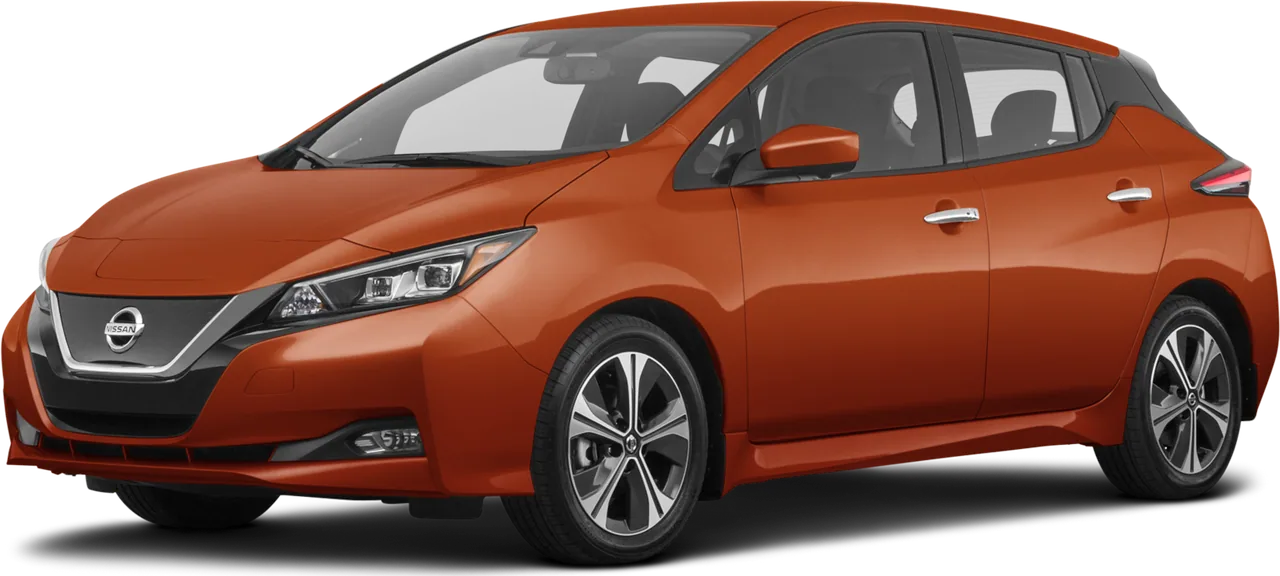
2022 Nissan Leaf
62 kW-hr battery pack
Electric Hatchback · FWD
Based on battery health, build quality, owner data, EPA range, and market pricing
Below average for 2022 EV Hatchbacks (class avg 65)
Personalize this scoreIs a low score bad?
Last scanned 39 days ago
The 2022 Nissan Leaf (62 kW-hr battery pack) packs 214 hp, 226 miles of EPA range and a 56 kWh battery, and the score gets it into the conversation; battery and service records decide whether to make an offer.
Score read
A 60/100 makes this not a casual purchase. The useful split is software and driver-assist score at 79/100 versus range and efficiency score at 44/100. Owners on Reddit repeatedly cite battery degradation and range as recurring problems. If the seller cannot show recall completion, price that risk or move on.
Price context
Used examples are running around $11,732. Treat that as a budgeting floor, not a final price; pull a current KBB Fair Purchase or Edmunds True Market Value for this exact trim before negotiating.
Who this is for
✓ Good for
- ⏱ Daily commuter ≤50 mi/day, predictable charging
✗ Avoid if you are a
- ↦ Road tripper Long trips, needs DC fast network
- $ Bargain hunter Best TCO, reliability + low depreciation
Gotchas
- Serviceable Recall paperwork has to match the exact VIN.
Mitigation Use NHTSA and the automaker lookup, then require repair records instead of a verbal promise.
- Built in Range is the easy place to overbuy this trim (44/100).
Mitigation Check your commute, winter margin, and fast-charge plan before you assume the EPA number fits your use.
Pre-purchase inspection
- 1 Run the exact VIN through NHTSA and the automaker recall lookup before discussing price.
- 2 Compare the dashboard range estimate with the EPA 226-mile rating after a full charge.
- 3 Confirm how much of the 8-year/100,000-mile battery warranty remains and whether it transfers.
- 4 If road trips matter, run a short DC fast-charge session and watch whether speed tapers normally.
- 5 Map your normal highway route and winter margin against the EPA range before you treat it as a road-trip car.
VIN status first This model has 4 NHTSA recall records. The exact VIN lookup decides whether the car in front of you is clear.
Complaint context This scan found 79 NHTSA complaint records (11.3 per 10K VINs, near industry average). Read the themes below before treating the raw count as the verdict.
Price anchor Current market range is $9,192-$14,272. Use that range to compare listings for the same trim, mileage, and condition.
Pricing & Market Value
Score Breakdown
What matters most to you?
Drag the sliders to prioritize what you care about. Your TrimIndex Score recalculates instantly.
Vehicle Specifications
Charging infrastructure note
CHAdeMO DC fast charging is being phased out across major US networks. Verify local availability before purchase, and plan primarily on Level 2 home charging.
EVs at your price point that match or beat this trim
Price-gated peer set: vehicles within $9.4K–$14.1K market value (±20% of $11.7K). 0 outscore · 5 score within ±2. Mixed across makes — no "spend more, score better" comps.
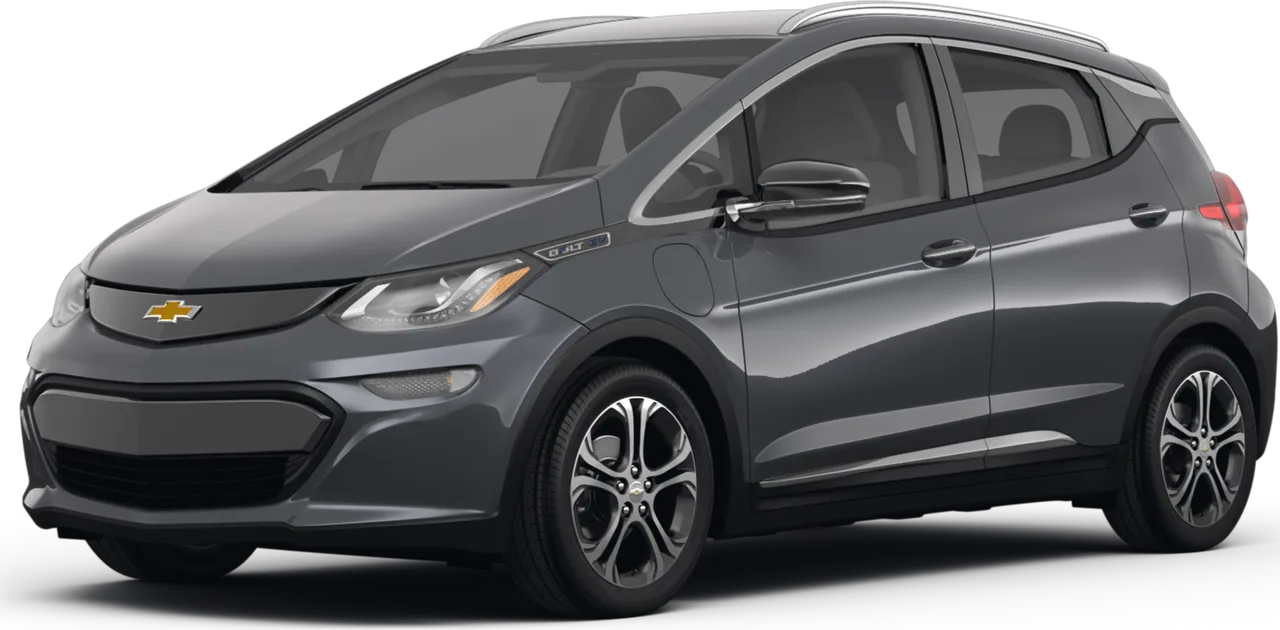
Bolt EV
- ✓ +33 mi more range
- ✓ Better infotainment UX
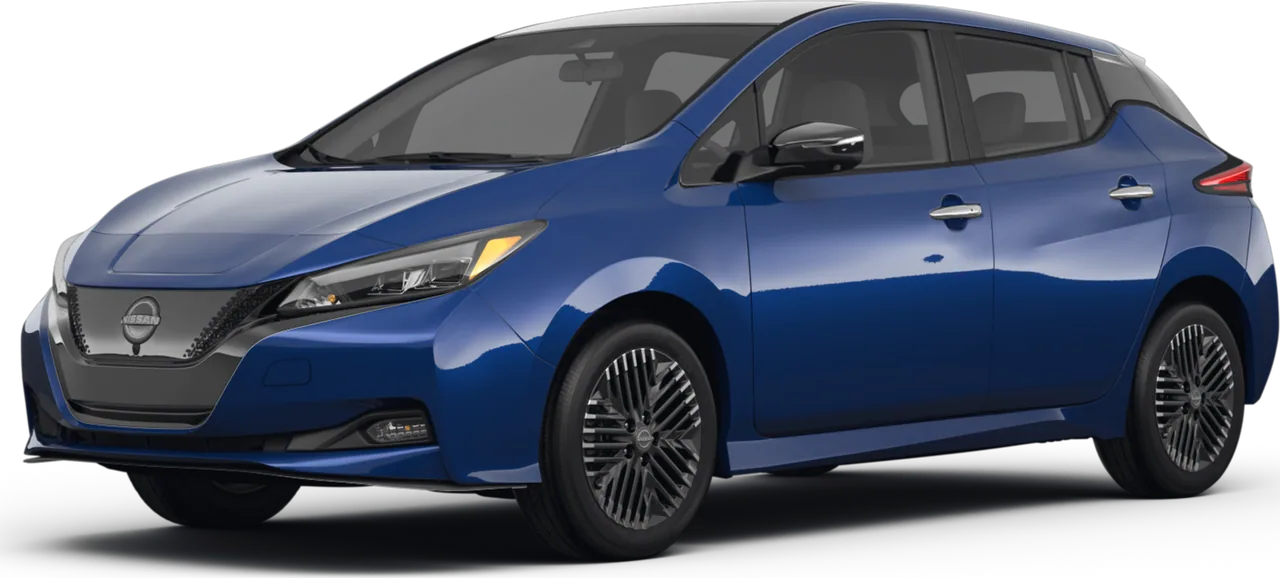
LEAF
- ✓ Different trade-offs at the same price
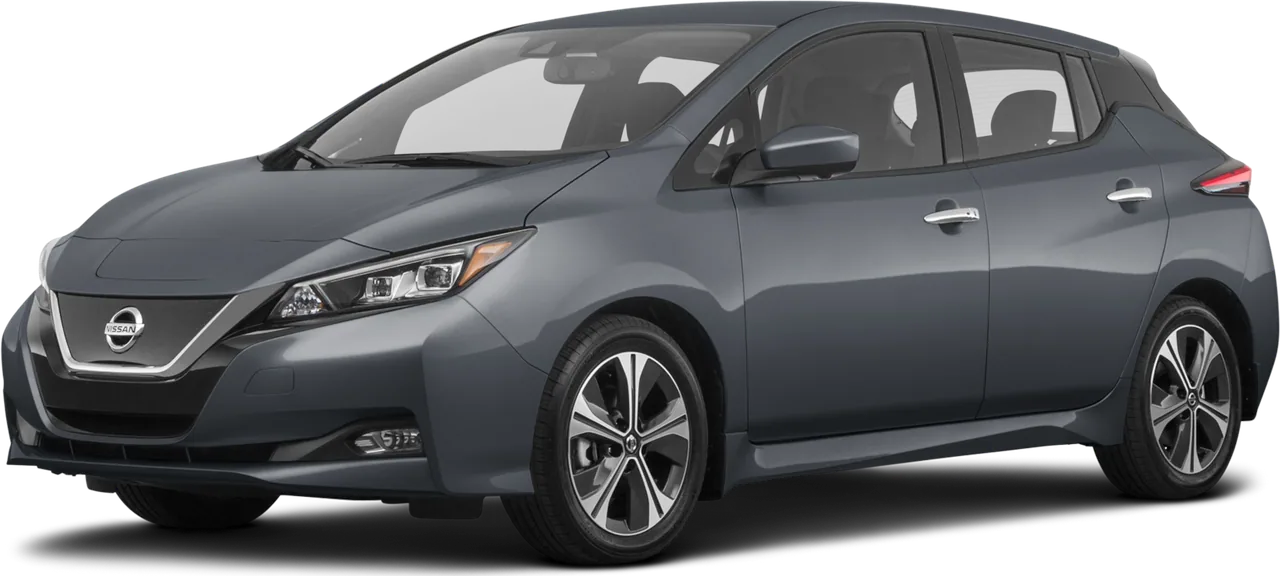
Leaf
- ✓ Different trade-offs at the same price
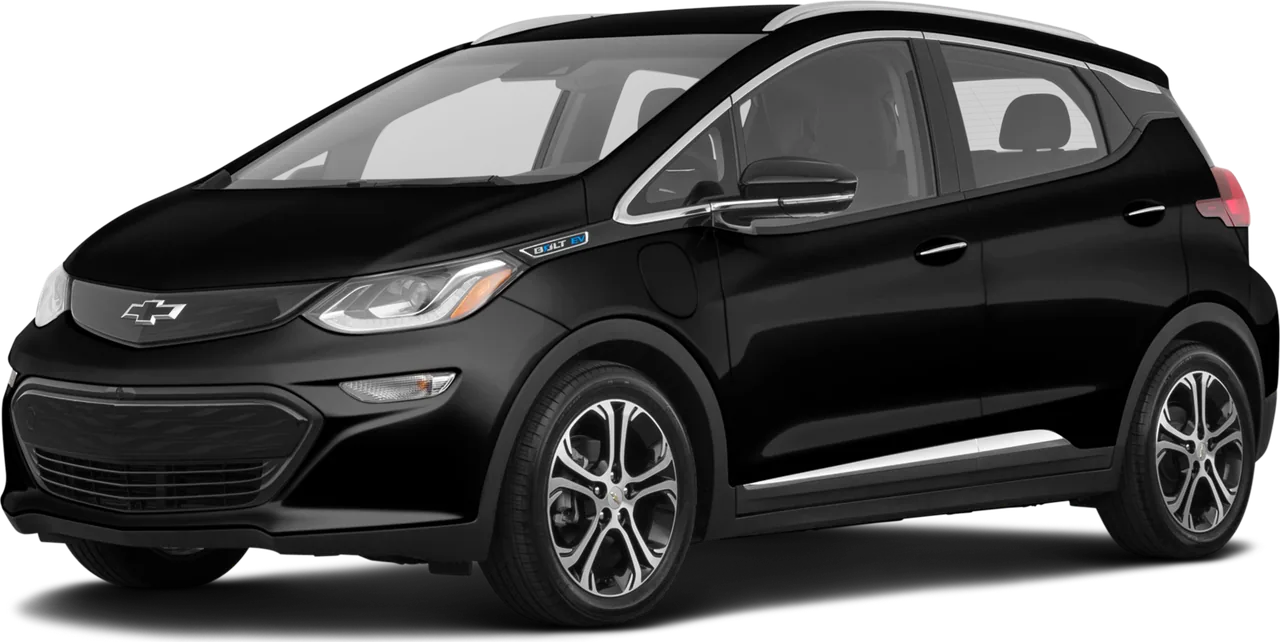
Bolt EV
- ✓ Better infotainment UX
- ✓ +33 mi more range
LEAF
- ✓ Better build quality
The federal $4,000 used-EV credit ended Sept 30, 2025.
But 10 states still run their own used-EV rebate programs — some up to $5,000. Pick your state to see what's available for this trim.
Source & disclaimer
Dealers make ~$5,711 on the average car loan.
After the price is set, the finance manager runs four plays to rebuild margin. Every buyer without a pre-approval is a target. Here's exactly what they run — and what stops each one.
78% of dealer loans carry a hidden +1.13% markup above what the lender actually charges. You never see it — it's buried in the contract. · CFPB
Dealer must match or beat your lender — they can't add margin invisibly. The markup play is dead on arrival.
Once you answer, they stretch the term to hit your number. Median result: $4K less off the price, 12 more months on the loan. · Industry avg
Financing is done. Only the sale price is on the table — and the dealer knows it.
Back-office F&I profit averages $1,975/vehicle, up 8.5% YoY. These products exist — but dealer markup is 4–10x what you'd pay elsewhere. · Dealership Guy
Dealer GAP runs $500–1K. Your insurer sells the same coverage for $100–250 over 5 years. Now you know.
"Your loan fell through — come re-sign." This pulls your APR up +5% on average. It's legal. It works because you've already driven the car home. · Ctr for Responsible Lending
A lender commitment letter means the deal is final. "Pending dealer approval" doesn't apply. You can't be yo-yo'd.
That's 33 months of your car payment — handed to the dealer's finance department for nothing.
Takes 2 minutes. No obligation to use it — but you'll walk in with all the leverage.
Pre-approval is a soft credit inquiry — no score impact. FICO treats all auto-loan hard pulls within 14 days as one, so you can still shop rates at the dealer.
NHTSA Recalls (4)
Nissan North America, Inc. (Nissan) is recalling certain 2021-2022 LEAF vehicles equipped with a Level 3 quick charging port. The lithium-ion battery may overheat during Level 3 charging.
A quick charging battery that overheats increases the risk of a fire.
Check VIN status at NHTSA.govNissan North America, Inc. (Nissan) is recalling certain 2018-2022 LEAF vehicles. Damage to the camera harness can cause distortion or loss of the rearview camera display image. As such, these vehicles fail to comply with the requirements of Federal Motor Vehicle Safety Standard number 111, "Rear Visibility."
A rearview camera that does not properly display an image can reduce the driver's rear view, increasing the risk of a crash.
Check VIN status at NHTSA.govNissan North America, Inc. (Nissan) is recalling certain 2018-2023 LEAF vehicles. The vehicle may accelerate unintentionally if the driving mode is changed ("D" to "B"; e-Pedal "On"; or "ECO" mode) after disengaging the cruise control.
Unintentional acceleration can increase the risk of a crash.
Check VIN status at NHTSA.govNissan North America, Inc. (Nissan) is recalling certain 2018-2023 LEAF vehicles. The Owner's Manual instructions for defroster operation are incorrect, and may result in reduced defroster performance under specific conditions. As such, these vehicles fail to comply with the requirements of Federal Motor Vehicle Safety Standard number 103, "Windshield Defrosting and Defogging Systems."
Reduced defroster performance can limit visibility out of the windshield, increasing the risk of a crash.
Check VIN status at NHTSA.govNHTSA Complaints (79 total · 11.3 per 10K US vehicles · near industry average)
The vehicle has an recall campaigns needing VIN-specific checks that could cause it to catch fire. I purchased this vehicle depending on fast charging since I live in an apartment and have no where to charge at work. I have spoken to Nissan about this and requested a repurchase. Nissan asked me to wait for the recall fix and continue to drive a car that I can’t even charge with my lifestyle. This has been an open issue for over 1 year and there is no fix in sight. At this point I just don’t have transportation since I can’t fast charge. I want Nissan to repurchase my car with this defective battery
The vehicle has an recall campaigns needing VIN-specific checks that could cause it to catch fire. I purchased this vehicle depending on fast charging since I live in an apartment and have no where to charge at work. I have spoken to Nissan about this and requested a repurchase. Nissan asked me to wait for the recall fix and continue to drive a car that I can’t even charge with my lifestyle. This has been an open issue for over 1 year and there is no fix in sight. At this point I just don’t have transportation since I can’t fast charge. I want Nissan to repurchase my car with this defective battery
Purchased 11/2022. Drove extensively out of town and charged with fast charger destroying the battery. Had towed into dealership 3 times they cleared the code 3 times (limp mode) Dealership refuses to change battery under warranty. Due to the fire hazard the car was put in non-op August 2024. Stuck with an unsafe car can’t drive it sell it or trade it in until the battery is replaced under warranty please help.
Purchased 11/2022. Drove extensively out of town and charged with fast charger destroying the battery. Had towed into dealership 3 times they cleared the code 3 times (limp mode) Dealership refuses to change battery under warranty. Due to the fire hazard the car was put in non-op August 2024. Stuck with an unsafe car can’t drive it sell it or trade it in until the battery is replaced under warranty please help.
The high-voltage battery on my 2022 Nissan Leaf is subject to Recall 25V655. The recall notice states that the battery cells can develop excessive lithium deposits, which increases electrical resistance and can cause rapid battery heating during Level 3 fast charging. Nissan instructs owners not to use Level 3 charging at all until a “remedy” is available. The issue is that the remedy described by Nissan is not an actual repair of the battery defect. Nissan states it will install software that monitors for “state-of-charge fluctuation” and, if detected, will prevent the vehicle from restarting or recharging in order to avoid a thermal incident. This means the defect inside the battery cells is still present, and the car may disable itself if the defect begins to appear. The recall materials also state there is no warning before overheating occurs. This creates multiple safety concerns: • The underlying battery defect remains uncorrected. • The vehicle can become immobilized (unable to restart or recharge) if the software detects the condition. • Loss of Level 3 charging capability affects the ability to travel safely or plan charging when needed. • A battery fire risk exists during Level 3 charging if the defect is not detected in time. Nissan’s documents state that the software is meant only to prevent the “progression” of a thermal incident, not to repair the defective battery. I am concerned that my vehicle contains a known hazardous defect that has not been physically repaired and that the software-only response is inadequate to make sure safety. I am filing this complaint so NHTSA is aware that the remedy being offered does not address the internal battery defect itself and may leave owners exposed to continued safety and reliability risks.
The high-voltage battery on my 2022 Nissan Leaf is subject to Recall 25V655. The recall notice states that the battery cells can develop excessive lithium deposits, which increases electrical resistance and can cause rapid battery heating during Level 3 fast charging. Nissan instructs owners not to use Level 3 charging at all until a “remedy” is available. The issue is that the remedy described by Nissan is not an actual repair of the battery defect. Nissan states it will install software that monitors for “state-of-charge fluctuation” and, if detected, will prevent the vehicle from restarting or recharging in order to avoid a thermal incident. This means the defect inside the battery cells is still present, and the car may disable itself if the defect begins to appear. The recall materials also state there is no warning before overheating occurs. This creates multiple safety concerns: • The underlying battery defect remains uncorrected. • The vehicle can become immobilized (unable to restart or recharge) if the software detects the condition. • Loss of Level 3 charging capability affects the ability to travel safely or plan charging when needed. • A battery fire risk exists during Level 3 charging if the defect is not detected in time. Nissan’s documents state that the software is meant only to prevent the “progression” of a thermal incident, not to repair the defective battery. I am concerned that my vehicle contains a known hazardous defect that has not been physically repaired and that the software-only response is inadequate to make sure safety. I am filing this complaint so NHTSA is aware that the remedy being offered does not address the internal battery defect itself and may leave owners exposed to continued safety and reliability risks.
It has been months this recall has been out. I have a 2022 leaf on a car note for a year now. I barely get 50-60 miles per full charge. My car is basically useless if I cannot fast charge it which I haven’t been able to because of this recall that has had no remedy for months. I am paying for a car I can’t use to its full potential. Now I’ve noticed when my car is on 60% or less and I’m driving on the highway the battery will go from 60 something percent to 45 and drop drastically. This is a major inconvenience.
It has been months this recall has been out. I have a 2022 leaf on a car note for a year now. I barely get 50-60 miles per full charge. My car is basically useless if I cannot fast charge it which I haven’t been able to because of this recall that has had no remedy for months. I am paying for a car I can’t use to its full potential. Now I’ve noticed when my car is on 60% or less and I’m driving on the highway the battery will go from 60 something percent to 45 and drop drastically. This is a major inconvenience.
Nissan sent me a recall notice in October 2025 and told me not to fast charge the vehicle. To date the recall has not been implemented. This makes the car unuseable for longer distances where I need to fast charge. I have also heard that EVGO is blocking this car model from even attempting to charge, regardless of if the car is affected or not by this recall.
Nissan sent me a recall notice in October 2025 and told me not to fast charge the vehicle. To date the recall has not been implemented. This makes the car unuseable for longer distances where I need to fast charge. I have also heard that EVGO is blocking this car model from even attempting to charge, regardless of if the car is affected or not by this recall.
Nissan has provided no remedy for this recall, no compensation, no rental vehicles, rendering this vehicle useless for long trips that require the use of a level 3 charger, which is why we purchased this vehicle in the first place
Nissan has provided no remedy for this recall, no compensation, no rental vehicles, rendering this vehicle useless for long trips that require the use of a level 3 charger, which is why we purchased this vehicle in the first place
Recall R25C8 affects my 2022 Leaf’s battery cells and makes Level 3 charging unsafe. The proposed software only detects the defect and may disable the car. It does not fix the battery. I request repurchase or replacement of the vehicle. I also want to note that EVgo, one of the largest fast charging networks, is refusing to initiate fast charging sessions for Nissan Leafs because of this defect. This means Level 3 charging is unavailable not just because Nissan told me to stop using it, but because charging networks themselves are blocking my vehicle. That is a direct and substantial loss of use and value.
Recall R25C8 affects my 2022 Leaf’s battery cells and makes Level 3 charging unsafe. The proposed software only detects the defect and may disable the car. It does not fix the battery. I request repurchase or replacement of the vehicle. I also want to note that EVgo, one of the largest fast charging networks, is refusing to initiate fast charging sessions for Nissan Leafs because of this defect. This means Level 3 charging is unavailable not just because Nissan told me to stop using it, but because charging networks themselves are blocking my vehicle. That is a direct and substantial loss of use and value.
The high-voltage battery on my 2022 Nissan Leaf is subject to Recall 25V655. The recall notice states that the battery cells can develop excessive lithium deposits, which increases electrical resistance and can cause rapid battery heating during Level 3 fast charging. Nissan instructs owners not to use Level 3 charging at all until a “remedy” is available. The issue is that the remedy described by Nissan is not an actual repair of the battery defect. Nissan states it will install software that monitors for “state-of-charge fluctuation” and, if detected, will prevent the vehicle from restarting or recharging in order to avoid a thermal incident. This means the defect inside the battery cells is still present, and the car may disable itself if the defect begins to appear. The recall materials also state there is no warning before overheating occurs. This creates multiple safety concerns: • The underlying battery defect remains uncorrected. • The vehicle can become immobilized (unable to restart or recharge) if the software detects the condition. • Loss of Level 3 charging capability affects the ability to travel safely or plan charging when needed. • A battery fire risk exists during Level 3 charging if the defect is not detected in time. Nissan’s documents state that the software is meant only to prevent the “progression” of a thermal incident, not to repair the defective battery. I am concerned that my vehicle contains a known hazardous defect that has not been physically repaired and that the software-only response is inadequate to make sure safety. I am filing this complaint so NHTSA is aware that the remedy being offered does not address the internal battery defect itself and may leave owners exposed to continued safety and reliability risks.
The high-voltage battery on my 2022 Nissan Leaf is subject to Recall 25V655. The recall notice states that the battery cells can develop excessive lithium deposits, which increases electrical resistance and can cause rapid battery heating during Level 3 fast charging. Nissan instructs owners not to use Level 3 charging at all until a “remedy” is available. The issue is that the remedy described by Nissan is not an actual repair of the battery defect. Nissan states it will install software that monitors for “state-of-charge fluctuation” and, if detected, will prevent the vehicle from restarting or recharging in order to avoid a thermal incident. This means the defect inside the battery cells is still present, and the car may disable itself if the defect begins to appear. The recall materials also state there is no warning before overheating occurs. This creates multiple safety concerns: • The underlying battery defect remains uncorrected. • The vehicle can become immobilized (unable to restart or recharge) if the software detects the condition. • Loss of Level 3 charging capability affects the ability to travel safely or plan charging when needed. • A battery fire risk exists during Level 3 charging if the defect is not detected in time. Nissan’s documents state that the software is meant only to prevent the “progression” of a thermal incident, not to repair the defective battery. I am concerned that my vehicle contains a known hazardous defect that has not been physically repaired and that the software-only response is inadequate to make sure safety. I am filing this complaint so NHTSA is aware that the remedy being offered does not address the internal battery defect itself and may leave owners exposed to continued safety and reliability risks.
After a recent software update, my vehicle's cabin heating system began malfunctioning. On cold days, when heat is most critical, the system suddenly stops providing heat and blows cold air (around 64°F) for the remainder of the drive. This issue compromises both safety and comfort. My car is still under warranty so I brought it to the vehicle to Eden Prairie Nissan. Initially, the technician claimed I was not performing the "proper starting procedure" (keeping the blower speed low for the first few minutes). However, the provided owner’s manual supplement makes no mention of such a procedure affecting the heating system. After speaking with the dealership manager, I learned that other Nissan Leaf owners are experiencing the same issue. I was informed that the problem is an unintended consequence of a software update designed to prevent overheating. Despite following the dealership's instructions, the issue persists. For example yesterday during a 20-minute drive, the heating system stopped after five minutes, even with the blower on the lowest setting it was 9F outside.This morning during a round trip to an appointment, the system provided no heat at all 11F outside. Thank you for your attention to this matter. Please let me know if additional details or documentation are required.
After a recent software update, my vehicle's cabin heating system began malfunctioning. On cold days, when heat is most critical, the system suddenly stops providing heat and blows cold air (around 64°F) for the remainder of the drive. This issue compromises both safety and comfort. My car is still under warranty so I brought it to the vehicle to Eden Prairie Nissan. Initially, the technician claimed I was not performing the "proper starting procedure" (keeping the blower speed low for the first few minutes). However, the provided owner’s manual supplement makes no mention of such a procedure affecting the heating system. After speaking with the dealership manager, I learned that other Nissan Leaf owners are experiencing the same issue. I was informed that the problem is an unintended consequence of a software update designed to prevent overheating. Despite following the dealership's instructions, the issue persists. For example yesterday during a 20-minute drive, the heating system stopped after five minutes, even with the blower on the lowest setting it was 9F outside.This morning during a round trip to an appointment, the system provided no heat at all 11F outside. Thank you for your attention to this matter. Please let me know if additional details or documentation are required.
It has happened multiple times that if I hit a pothole while braking, the brakes stop working until reapplied.
It has happened multiple times that if I hit a pothole while braking, the brakes stop working until reapplied.
The contact owned a 2022 Nissan Leaf. The contact stated that while his wife was driving at an undisclosed speed, the brake pedal was depressed but failed to work properly causing her to crash into the vehicle in front. No warning lights were illuminated. The contact stated there was a minor scratch on the front bumper. No injuries were sustained. No police report was filed. The manufacturer was made aware of the failure and sent an engineer to the dealer to diagnose the vehicle. The vehicle was diagnosed, and the contact was advised that braking did occur during the impact via the black box. The contact sold the vehicle back to the dealer. The failure mileage was 24,795.
The contact owned a 2022 Nissan Leaf. The contact stated that while his wife was driving at an undisclosed speed, the brake pedal was depressed but failed to work properly causing her to crash into the vehicle in front. No warning lights were illuminated. The contact stated there was a minor scratch on the front bumper. No injuries were sustained. No police report was filed. The manufacturer was made aware of the failure and sent an engineer to the dealer to diagnose the vehicle. The vehicle was diagnosed, and the contact was advised that braking did occur during the impact via the black box. The contact sold the vehicle back to the dealer. The failure mileage was 24,795.
Our Nissan Leaf experiences dangerous behavior while driving on the freeway. After approximately 23 miles of driving, the car suddenly displays a slippery road sign (The day is dry, no rain) and significantly reduces speed on its own. Attempting to accelerate has no effect. To make sure safety, we activate the hazard lights and pull the car to the side. Only after turning off the car and restarting it does the issue resolve temporarily. This situation poses an extreme risk, as any nearby vehicle could collide with ours during this sudden slowdown. Safety Concerns: Given the severity of this issue, we are genuinely frightened to drive the car daily. Unfortunately, we have limited alternatives for commuting to work. Our safety and the safety of others on the road are at stake. Our Nissan Leaf experiences dangerous behavior while driving on the freeway. After approximately 23+ miles of driving, the car suddenly displays a slippery road sign (The day is dry, no rain) and significantly reduces speed on its own. Attempting to accelerate has no effect. To make sure safety, we activate the hazard lights and pull the car to the side. Only after turning off the car and restarting it does the issue resolve temporarily. This situation poses an extreme risk, as any nearby vehicle could collide with ours during this sudden slowdown. This issue started in early 23 but it was not very often so we thought this might be a glitch and did not happen for few months. but then it started happening once or twice a month. since January 2024 it started happening more often and now it is happening almost every day. Nissan Case #[XXX] INFORMATION REDACTED PURSUANT TO THE FREEDOM OF INFORMATION ACT (FOIA), 5 U.S.C. 552(B)(6)
Our Nissan Leaf experiences dangerous behavior while driving on the freeway. After approximately 23 miles of driving, the car suddenly displays a slippery road sign (The day is dry, no rain) and significantly reduces speed on its own. Attempting to accelerate has no effect. To make sure safety, we activate the hazard lights and pull the car to the side. Only after turning off the car and restarting it does the issue resolve temporarily. This situation poses an extreme risk, as any nearby vehicle could collide with ours during this sudden slowdown. Safety Concerns: Given the severity of this issue, we are genuinely frightened to drive the car daily. Unfortunately, we have limited alternatives for commuting to work. Our safety and the safety of others on the road are at stake. Our Nissan Leaf experiences dangerous behavior while driving on the freeway. After approximately 23+ miles of driving, the car suddenly displays a slippery road sign (The day is dry, no rain) and significantly reduces speed on its own. Attempting to accelerate has no effect. To make sure safety, we activate the hazard lights and pull the car to the side. Only after turning off the car and restarting it does the issue resolve temporarily. This situation poses an extreme risk, as any nearby vehicle could collide with ours during this sudden slowdown. This issue started in early 23 but it was not very often so we thought this might be a glitch and did not happen for few months. but then it started happening once or twice a month. since January 2024 it started happening more often and now it is happening almost every day. Nissan Case #[XXX] INFORMATION REDACTED PURSUANT TO THE FREEDOM OF INFORMATION ACT (FOIA), 5 U.S.C. 552(B)(6)
I was driving on the highway when the car in front of me applied their breaks - I took my foot off of the accelerator but the car did not slow down. I applied the breaks but they did not work - in fact, the car seemed to accelerate. I heard the collision alarm sound but the automatic emergency braking system did not engage or stop the car, so I crashed into the car in front of me. Air bag deployed and then the car filled with smoke from the batteries but I couldn't get out as the power locks didn't work or allow me to open the door. The EMT's had to break the rear window to get me out of the car
I was driving on the highway when the car in front of me applied their breaks - I took my foot off of the accelerator but the car did not slow down. I applied the breaks but they did not work - in fact, the car seemed to accelerate. I heard the collision alarm sound but the automatic emergency braking system did not engage or stop the car, so I crashed into the car in front of me. Air bag deployed and then the car filled with smoke from the batteries but I couldn't get out as the power locks didn't work or allow me to open the door. The EMT's had to break the rear window to get me out of the car
Vehicle was involved in a head on collision at approximately 25-30 MPH and driver's airbag did not deploy
Vehicle was involved in a head on collision at approximately 25-30 MPH and driver's airbag did not deploy
The E-pedal was on. Trying to park car and it jumped the curb when it lurched forward and brakes would not engage so I had to hit a tree to stop the car.
The E-pedal was on. Trying to park car and it jumped the curb when it lurched forward and brakes would not engage so I had to hit a tree to stop the car.
On my 2022 Leaf I use the epedal system, which is supposed to operate as a one-pedal driving, meaning when you the car is in epedal mode, you can drive the car with one pedal. When you press the accelerator the car will move forward and when you let go of accelerator the car will come to a stop. However, sometimes the car does NOT come to a stop and it will coast as if the epedal is not engaged. This happens regardless of the batteries SOC (state of charge), weather, angle of the road, temperature, or road condition. When epedal is engaged and you lift off the accelerator, the car should always come to a stop, and it doesn't. This is dangerous because there have been many times where I have ran a stop sign or almost hit the car in front of me because I've had to slam on the brakes at the last seconds. Sometimes the epedal system works great and the car will come to a stop, but many times it does not. The braking should always be consistent and it is not, making this feature dangerous to use because you can easily hit the car/something in front of you. I know how the system works because this is my second Nissan Leaf. In my 2018 Nissan Leaf, the epedal was consistent with the braking; it always braked, no matter the situation. The 2022 does not, and it's dangerous. I brought the car to the Nissan dealer and of course they can't find anything wrong with it. There are several others I've found online that have the same issue: epedal braking is NOT consistent and it should be. There are no warning lamps or messages that come up on the dash. I'm asked to provide a date, but this happens every day. Every day the braking is inconsistent. his has been happening since the first day I bought the car in November of 2021.
On my 2022 Leaf I use the epedal system, which is supposed to operate as a one-pedal driving, meaning when you the car is in epedal mode, you can drive the car with one pedal. When you press the accelerator the car will move forward and when you let go of accelerator the car will come to a stop. However, sometimes the car does NOT come to a stop and it will coast as if the epedal is not engaged. This happens regardless of the batteries SOC (state of charge), weather, angle of the road, temperature, or road condition. When epedal is engaged and you lift off the accelerator, the car should always come to a stop, and it doesn't. This is dangerous because there have been many times where I have ran a stop sign or almost hit the car in front of me because I've had to slam on the brakes at the last seconds. Sometimes the epedal system works great and the car will come to a stop, but many times it does not. The braking should always be consistent and it is not, making this feature dangerous to use because you can easily hit the car/something in front of you. I know how the system works because this is my second Nissan Leaf. In my 2018 Nissan Leaf, the epedal was consistent with the braking; it always braked, no matter the situation. The 2022 does not, and it's dangerous. I brought the car to the Nissan dealer and of course they can't find anything wrong with it. There are several others I've found online that have the same issue: epedal braking is NOT consistent and it should be. There are no warning lamps or messages that come up on the dash. I'm asked to provide a date, but this happens every day. Every day the braking is inconsistent. his has been happening since the first day I bought the car in November of 2021.
I had an accident that totaled the Leaf the day after I bought it. It was dark. The road was more congested than usual and a dog ran out into the road. According to eye witnesses, three vehicles including two Honda SUVs (the first vehicle that stated the whole mess didn't stay) managed to brake to a complete stop without rear ending one another. The Nissan Leaf could not brake quickly enough and I rear ended a CR-V with enough force that the Leaf airbags deployed and I could tell the Leaf was totaled at the scene. The emergency braking system never engaged and the brake pedal felt the same from beginning to end. I was not tailgating. The Leaf felt enough like my 2020 Kia Niro that I made the mistake of not being more cautious with a vehicle that was new to me. Bottom line: I expected the Leaf to behave in an emergency the same as a vehicle I had been driving without incident for 18 months and it didn't. My 2020 Kia Niro does not have emergency braking and I hadn't planned to test it out with the Leaf. Being dark, I saw the instant the vehicle in front of me slammed on their brakes and slammed on mine, but it felt the Leaf wasn't slowing down fast enough. Not nearly as quickly as the Honda.
I had an accident that totaled the Leaf the day after I bought it. It was dark. The road was more congested than usual and a dog ran out into the road. According to eye witnesses, three vehicles including two Honda SUVs (the first vehicle that stated the whole mess didn't stay) managed to brake to a complete stop without rear ending one another. The Nissan Leaf could not brake quickly enough and I rear ended a CR-V with enough force that the Leaf airbags deployed and I could tell the Leaf was totaled at the scene. The emergency braking system never engaged and the brake pedal felt the same from beginning to end. I was not tailgating. The Leaf felt enough like my 2020 Kia Niro that I made the mistake of not being more cautious with a vehicle that was new to me. Bottom line: I expected the Leaf to behave in an emergency the same as a vehicle I had been driving without incident for 18 months and it didn't. My 2020 Kia Niro does not have emergency braking and I hadn't planned to test it out with the Leaf. Being dark, I saw the instant the vehicle in front of me slammed on their brakes and slammed on mine, but it felt the Leaf wasn't slowing down fast enough. Not nearly as quickly as the Honda.
I feel like the manufacture has failed to remedy recall 25V-655 in a timely manner. Not being able to fast charge is not a workable solution for the function of the car.
I feel like the manufacture has failed to remedy recall 25V-655 in a timely manner. Not being able to fast charge is not a workable solution for the function of the car.
Dear National Highway Traffic Safety Administration (NHTSA), I am submitting a formal safety complaint regarding my 2022 Nissan Leaf due to repeated and sudden battery failure that has created unsafe driving conditions. Over the past several months, my vehicle has experienced severe and unpredictable battery drain. Even after a full charge (approximately 100 miles indicated), the battery rapidly depletes to 20–30 miles or less within a short distance. On multiple occasions, the vehicle has lost charge unexpectedly, leaving me stranded and requiring assistance to safely return home. This issue presents a serious safety concern, as the sudden loss of battery power can occur while driving, increasing the risk of being stranded in unsafe locations or traffic conditions. I took the vehicle to an authorized Nissan service center (Bommarito Nissan), where it remained for several days for diagnosis. During this time, I was informed that the issue was being evaluated and that replacement of several battery modules or possibly the entire battery pack might be required. However, after internal review, the issue was dismissed and attributed solely to “weather conditions,” and no repair or replacement was performed. This explanation is not acceptable, as the same issue has occurred in normal and mild weather conditions. The problem persists and continues to impact the safe operation of the vehicle. Despite multiple requests, I have not received a complete diagnostic report or a clear technical explanation from Nissan. The vehicle remains unreliable and unsafe to operate due to the risk of sudden battery depletion. I respectfully request that NHTSA review this matter as a potential safety defect related to battery performance and loss of propulsion in an electric vehicle. Thank you for your attention to this serious safety concern. Sincerely, [XXX] [XXX] INFORMATION REDACTED PURSUANT TO THE FREEDOM OF INFORMATION ACT (FOIA), 5 U.S.C. 552(B)(6)
Dear National Highway Traffic Safety Administration (NHTSA), I am submitting a formal safety complaint regarding my 2022 Nissan Leaf due to repeated and sudden battery failure that has created unsafe driving conditions. Over the past several months, my vehicle has experienced severe and unpredictable battery drain. Even after a full charge (approximately 100 miles indicated), the battery rapidly depletes to 20–30 miles or less within a short distance. On multiple occasions, the vehicle has lost charge unexpectedly, leaving me stranded and requiring assistance to safely return home. This issue presents a serious safety concern, as the sudden loss of battery power can occur while driving, increasing the risk of being stranded in unsafe locations or traffic conditions. I took the vehicle to an authorized Nissan service center (Bommarito Nissan), where it remained for several days for diagnosis. During this time, I was informed that the issue was being evaluated and that replacement of several battery modules or possibly the entire battery pack might be required. However, after internal review, the issue was dismissed and attributed solely to “weather conditions,” and no repair or replacement was performed. This explanation is not acceptable, as the same issue has occurred in normal and mild weather conditions. The problem persists and continues to impact the safe operation of the vehicle. Despite multiple requests, I have not received a complete diagnostic report or a clear technical explanation from Nissan. The vehicle remains unreliable and unsafe to operate due to the risk of sudden battery depletion. I respectfully request that NHTSA review this matter as a potential safety defect related to battery performance and loss of propulsion in an electric vehicle. Thank you for your attention to this serious safety concern. Sincerely, [XXX] [XXX] INFORMATION REDACTED PURSUANT TO THE FREEDOM OF INFORMATION ACT (FOIA), 5 U.S.C. 552(B)(6)
The contact owns a 2022 Nissan Leaf. The contact was notified of NHTSA Campaign Number: 25V655000 (Electrical System); however, the part to do the recall repair was not yet available. The local dealer was made aware of the issue and confirmed that parts were not yet available. The contact stated that the manufacturer had exceeded a reasonable amount of time for the recall repair. The manufacturer was not made aware of the issue. The contact stated that due to the recall, the ability to drive long distances was restricted. The contact had not experienced a failure.
The contact owns a 2022 Nissan Leaf. The contact was notified of NHTSA Campaign Number: 25V655000 (Electrical System); however, the part to do the recall repair was not yet available. The local dealer was made aware of the issue and confirmed that parts were not yet available. The contact stated that the manufacturer had exceeded a reasonable amount of time for the recall repair. The manufacturer was not made aware of the issue. The contact stated that due to the recall, the ability to drive long distances was restricted. The contact had not experienced a failure.
Nissan Recall R25C8 (NHTSA ID: 25V655), Incomplete, remedy not available Primary Issue: High-voltage battery fire risk during Level 3 (DCFC) charging due to excessive lithium deposits. I have been told by Nissan not to use Level 3 fast charging. This has significantly impaired the utility of my vehicle due to: - Limited Range/Utility: Without fast charging, I can't use the car for trips beyond its immediate single-charge radius, basically turning a long-range EV into a local-only car. The proposed software may limit charging or prevent the vehicle from restarting if it detects a dangerous condition, rather than permanently fixing the defect. - Time Loss: I can't charge at home unless (only overnight & if weather permits) I run a cable out of my apartment window, across the grass & sidewalk for a trickle charge (Level 1). Otherwise I have to drive to a Level 2 charger & wait many hours to charge up. This is significantly longer, makes it impossible to quickly 'top off' as advertised. For comparison: L3 (DCFC) gets me at least 15% in about 15 minutes (60% per/hour); L2 only gets 11% per/hour. L1 only gets 2% per/hour. Without DCFC this car is almost useless. - Diminished Value: Nissan sold me a $38,000 car & I'm concerned that a software-only 'fix' that may throttle charging speeds or simply disable the car if it detects heat will permanently reduce the vehicle's market value. I actually expected to keep this car for the rest of my life, but the CHAdeMO system (which appears is becoming un-supported) that also lacks a cooling system, makes that very unlikely. - Impact to income due to part-time employment that requires travel, which the LEAF was capable of doing with DCFC stops. Now, I need to rent a vehicle for these events. Purchased Cherry Hill Nissan March 11, 2022 2/3/2026: Nissan Service appointment. They are still unable to fix the recall issue, whether via software or hardware. 3/18/2026: I received another safety recall notice. Still no solution.
Nissan Recall R25C8 (NHTSA ID: 25V655), Incomplete, remedy not available Primary Issue: High-voltage battery fire risk during Level 3 (DCFC) charging due to excessive lithium deposits. I have been told by Nissan not to use Level 3 fast charging. This has significantly impaired the utility of my vehicle due to: - Limited Range/Utility: Without fast charging, I can't use the car for trips beyond its immediate single-charge radius, basically turning a long-range EV into a local-only car. The proposed software may limit charging or prevent the vehicle from restarting if it detects a dangerous condition, rather than permanently fixing the defect. - Time Loss: I can't charge at home unless (only overnight & if weather permits) I run a cable out of my apartment window, across the grass & sidewalk for a trickle charge (Level 1). Otherwise I have to drive to a Level 2 charger & wait many hours to charge up. This is significantly longer, makes it impossible to quickly 'top off' as advertised. For comparison: L3 (DCFC) gets me at least 15% in about 15 minutes (60% per/hour); L2 only gets 11% per/hour. L1 only gets 2% per/hour. Without DCFC this car is almost useless. - Diminished Value: Nissan sold me a $38,000 car & I'm concerned that a software-only 'fix' that may throttle charging speeds or simply disable the car if it detects heat will permanently reduce the vehicle's market value. I actually expected to keep this car for the rest of my life, but the CHAdeMO system (which appears is becoming un-supported) that also lacks a cooling system, makes that very unlikely. - Impact to income due to part-time employment that requires travel, which the LEAF was capable of doing with DCFC stops. Now, I need to rent a vehicle for these events. Purchased Cherry Hill Nissan March 11, 2022 2/3/2026: Nissan Service appointment. They are still unable to fix the recall issue, whether via software or hardware. 3/18/2026: I received another safety recall notice. Still no solution.
Recall notice has been present for > 1 year and no remedy yet available for dangerous battery overheating.
Recall notice has been present for > 1 year and no remedy yet available for dangerous battery overheating.
My Nissan Leaf is currently under NHTSA Recall Number 25V-655 since Oct 2025 and I cannot charge the car on a Level 3 fast charger. This has made the car unusable for my current needs. I have been forced to rent and borrow cars for necessary long distance trips. Nissan continues to delay their planned resolution for this problem and this situation is completely unacceptable.
My Nissan Leaf is currently under NHTSA Recall Number 25V-655 since Oct 2025 and I cannot charge the car on a Level 3 fast charger. This has made the car unusable for my current needs. I have been forced to rent and borrow cars for necessary long distance trips. Nissan continues to delay their planned resolution for this problem and this situation is completely unacceptable.
Due to Recall 25V-655, I am unable to safely use level 3 charging. The first notice I received of this issue (in October, 2025), stated that a remedy would be available by December, 2025. I just received a second interim owner notification that states a remedy will be available within the 2026 calendar year. This is not a timely remedy, as I have already waited 5 months for this fix to an important safety problem, and am now being told I may have to wait another 9 months.
Due to Recall 25V-655, I am unable to safely use level 3 charging. The first notice I received of this issue (in October, 2025), stated that a remedy would be available by December, 2025. I just received a second interim owner notification that states a remedy will be available within the 2026 calendar year. This is not a timely remedy, as I have already waited 5 months for this fix to an important safety problem, and am now being told I may have to wait another 9 months.
The vehicle has been unable to charge at a lvl3 charger due to safety recall 25V-655 meaning I am no longer able to use this car as a daily commuter for my purpose.
The vehicle has been unable to charge at a lvl3 charger due to safety recall 25V-655 meaning I am no longer able to use this car as a daily commuter for my purpose.
The high-voltage battery on my 2022 Nissan Leaf SL+ is subject to Recall NHTSA ID: 25V-655. The recall notice states that the battery cells can develop excessive lithium deposits, which increases electrical resistance and can cause rapid battery heating during Level 3 fast charging. Nissan instructs owners not to use Level 3 charging at all until a “remedy” is available. The issue is that the remedy described by Nissan is not an actual repair of the battery defect and has been significantly delayed, with no remedy provided for the loss of use of my vehicle, due to the dangers of the battery, which is still covered by warranty. Nissan states it will install software that monitors for “state-of-charge fluctuation” and, if detected, will prevent the vehicle from restarting or recharging in order to avoid a thermal incident. This means the defect inside the battery cells is still present, and the car may disable itself if the defect begins to appear. The recall materials also state there is no warning before overheating occurs. This creates multiple safety concerns: • The underlying battery defect remains uncorrected. • The vehicle can become immobilized (unable to restart or recharge) if the software detects the condition. • Loss of Level 3 charging capability affects the ability to travel safely or plan charging when needed. • A battery fire risk exists during Level 3 charging if the defect is not detected in time. Nissan’s documents state that the software is meant only to prevent the “progression” of a thermal incident, not to repair the defective battery. I am concerned that my vehicle contains a known hazardous defect that has not been physically repaired and that the software-only response is inadequate to make sure safety. I am filing this complaint so NHTSA is aware that the remedy being offered does not address the internal battery defect itself and may leave owners exposed to continued safety and reliability risks.
The high-voltage battery on my 2022 Nissan Leaf SL+ is subject to Recall NHTSA ID: 25V-655. The recall notice states that the battery cells can develop excessive lithium deposits, which increases electrical resistance and can cause rapid battery heating during Level 3 fast charging. Nissan instructs owners not to use Level 3 charging at all until a “remedy” is available. The issue is that the remedy described by Nissan is not an actual repair of the battery defect and has been significantly delayed, with no remedy provided for the loss of use of my vehicle, due to the dangers of the battery, which is still covered by warranty. Nissan states it will install software that monitors for “state-of-charge fluctuation” and, if detected, will prevent the vehicle from restarting or recharging in order to avoid a thermal incident. This means the defect inside the battery cells is still present, and the car may disable itself if the defect begins to appear. The recall materials also state there is no warning before overheating occurs. This creates multiple safety concerns: • The underlying battery defect remains uncorrected. • The vehicle can become immobilized (unable to restart or recharge) if the software detects the condition. • Loss of Level 3 charging capability affects the ability to travel safely or plan charging when needed. • A battery fire risk exists during Level 3 charging if the defect is not detected in time. Nissan’s documents state that the software is meant only to prevent the “progression” of a thermal incident, not to repair the defective battery. I am concerned that my vehicle contains a known hazardous defect that has not been physically repaired and that the software-only response is inadequate to make sure safety. I am filing this complaint so NHTSA is aware that the remedy being offered does not address the internal battery defect itself and may leave owners exposed to continued safety and reliability risks.
The contact owns a 2022 Nissan Leaf. The contact stated that while attempting to charge the vehicle, the vehicle failed to charge using the fast-charging mode. The vehicle was charged in the slow-charging mode, which took 8 hours to charge the vehicle. No warning lights were illuminated. The vehicle was not diagnosed or repaired. The manufacturer was notified of the failure and confirmed that the VIN was included in NHTSA Campaign Number: 25V655000 (Electrical System). The approximate failure mileage was 18,000.
The contact owns a 2022 Nissan Leaf. The contact stated that while attempting to charge the vehicle, the vehicle failed to charge using the fast-charging mode. The vehicle was charged in the slow-charging mode, which took 8 hours to charge the vehicle. No warning lights were illuminated. The vehicle was not diagnosed or repaired. The manufacturer was notified of the failure and confirmed that the VIN was included in NHTSA Campaign Number: 25V655000 (Electrical System). The approximate failure mileage was 18,000.
Recall R25C8 not resolved in a timely manner
Recall R25C8 not resolved in a timely manner
I bought my vehicle used, in May 2025. Then, in October (if not earlier), a safety recall was issued relating to the fast charging of the EV battery. This recall tells me that I’m not to use the CHAdeMO charging port due to battery fire risk. Now, almost 6 months later, there still isn’t a remedy available. Not being able to fast charge puts a huge restriction on where I’m able to go in my car. NO ONE wants to sit around for hours waiting for their car battery to recharge in order to get to their destination. I have contacted Nissan’s corporate office to ask if they would offer me a loaner vehicle for my longer distance drives, but they said no and didn’t have any other assistance to offer until the remedy is available. I would like to know, are they given any sort of deadline to remedy such a HUGE safety recall, or what most people would consider a DEFECT? If so, what kind of penalty do they face if this deadline isn’t met? If not, is there anything I can do to hold them accountable for selling me a defective Electric Vehicle? Thank you for your time
I bought my vehicle used, in May 2025. Then, in October (if not earlier), a safety recall was issued relating to the fast charging of the EV battery. This recall tells me that I’m not to use the CHAdeMO charging port due to battery fire risk. Now, almost 6 months later, there still isn’t a remedy available. Not being able to fast charge puts a huge restriction on where I’m able to go in my car. NO ONE wants to sit around for hours waiting for their car battery to recharge in order to get to their destination. I have contacted Nissan’s corporate office to ask if they would offer me a loaner vehicle for my longer distance drives, but they said no and didn’t have any other assistance to offer until the remedy is available. I would like to know, are they given any sort of deadline to remedy such a HUGE safety recall, or what most people would consider a DEFECT? If so, what kind of penalty do they face if this deadline isn’t met? If not, is there anything I can do to hold them accountable for selling me a defective Electric Vehicle? Thank you for your time
The contact owns a 2022 Nissan Leaf. The contact received notification of NHTSA Campaign Number: 25V655000 (Electrical System); however, the part to do the recall repair was not yet available. The contact stated that due to the recall, she was forced to rent vehicles to avoid experiencing the failure stated in the recall. The local dealer was contacted and confirmed that parts were not yet available. The dealer referred the contact to the NHTSA Hotline to report the failure. The contact stated that the manufacturer had exceeded a reasonable amount of time for the recall repair. The manufacturer was not made aware of the issue. The contact had not experienced a failure.
The contact owns a 2022 Nissan Leaf. The contact received notification of NHTSA Campaign Number: 25V655000 (Electrical System); however, the part to do the recall repair was not yet available. The contact stated that due to the recall, she was forced to rent vehicles to avoid experiencing the failure stated in the recall. The local dealer was contacted and confirmed that parts were not yet available. The dealer referred the contact to the NHTSA Hotline to report the failure. The contact stated that the manufacturer had exceeded a reasonable amount of time for the recall repair. The manufacturer was not made aware of the issue. The contact had not experienced a failure.
My 2022 Nissan LEAF (VIN: [XXX], approximately 24,000 miles) is subject to an active safety recall involving the high‑voltage battery and risk of fire during DC fast charging. This includes NHTSA Recall Campaign No. 25V‑655 (Nissan Recall No. R25C8), which relates to battery overheating during Level 3 (DC fast) charging. Related prior campaigns include 24V‑700 affecting similar Nissan LEAF battery systems. Nissan has instructed owners not to use Level 3 fast charging but has failed to provide a timely repair or firm remedy date. I have been waiting [X months] with no confirmed resolution. The restriction significantly limits vehicle range and usability, increases charging time, and creates ongoing inconvenience and safety concerns. Despite the seriousness of the defect, Nissan has not offered a loaner vehicle, compensation, or alternative remedy. INFORMATION REDACTED PURSUANT TO THE FREEDOM OF INFORMATION ACT (FOIA), 5 U.S.C. 552(B)(6)
My 2022 Nissan LEAF (VIN: [XXX], approximately 24,000 miles) is subject to an active safety recall involving the high‑voltage battery and risk of fire during DC fast charging. This includes NHTSA Recall Campaign No. 25V‑655 (Nissan Recall No. R25C8), which relates to battery overheating during Level 3 (DC fast) charging. Related prior campaigns include 24V‑700 affecting similar Nissan LEAF battery systems. Nissan has instructed owners not to use Level 3 fast charging but has failed to provide a timely repair or firm remedy date. I have been waiting [X months] with no confirmed resolution. The restriction significantly limits vehicle range and usability, increases charging time, and creates ongoing inconvenience and safety concerns. Despite the seriousness of the defect, Nissan has not offered a loaner vehicle, compensation, or alternative remedy. INFORMATION REDACTED PURSUANT TO THE FREEDOM OF INFORMATION ACT (FOIA), 5 U.S.C. 552(B)(6)
My 2022 Nissan Leaf (VIN ending 558192) is affected by recall R25C8 (Lithium-ion Battery Expansion / Fire Risk from Quick Charging). The recall, announced September 30, 2025, requires a software update to the battery management system. Nissan has advised not to use the CHAdeMO DC fast charging port until remedied. No remedy is currently available, and the software update has not been deployed. This defect substantially impairs the vehicle's use, value, and safety for its intended purpose (long-distance travel), restricting it to local driving only. The delay has caused significant loss of use. We previously contacted Nissan on October 7, 2025 (Case #55896895) with no resolution. Contacted them again February 18 2026 (Case #56332493), with no resolution. This is ongoing as of February 2026.
My 2022 Nissan Leaf (VIN ending 558192) is affected by recall R25C8 (Lithium-ion Battery Expansion / Fire Risk from Quick Charging). The recall, announced September 30, 2025, requires a software update to the battery management system. Nissan has advised not to use the CHAdeMO DC fast charging port until remedied. No remedy is currently available, and the software update has not been deployed. This defect substantially impairs the vehicle's use, value, and safety for its intended purpose (long-distance travel), restricting it to local driving only. The delay has caused significant loss of use. We previously contacted Nissan on October 7, 2025 (Case #55896895) with no resolution. Contacted them again February 18 2026 (Case #56332493), with no resolution. This is ongoing as of February 2026.
Received recall notice in September/October 2025 that the lithium battery of my 2022 Nissan Leaf SV Plus could catch on fire if fast charged, creating a serious safety hazard. This prevents use of car on out of town trips, or fast charging in town when needed. This puts myself and others at risk of injury by fire and limits my ability to fully use my car to the extent that I was able when I purchased it from the dealership. I continue to be informed by the dealer that a software repair is being worked on, but no date for repair availability, nor confirmation that a software repair will allow me to take the car out of town for fast charging without slowing or shutting down of the system. No warning lamps have appeared, and the dealer has not examined my car.
Received recall notice in September/October 2025 that the lithium battery of my 2022 Nissan Leaf SV Plus could catch on fire if fast charged, creating a serious safety hazard. This prevents use of car on out of town trips, or fast charging in town when needed. This puts myself and others at risk of injury by fire and limits my ability to fully use my car to the extent that I was able when I purchased it from the dealership. I continue to be informed by the dealer that a software repair is being worked on, but no date for repair availability, nor confirmation that a software repair will allow me to take the car out of town for fast charging without slowing or shutting down of the system. No warning lamps have appeared, and the dealer has not examined my car.
The contact owns a 2022 Nissan Leaf. The contact received notification of NHTSA Campaign Number: 25V655000 (Electrical System); however, the part to do the recall repair was not yet available. The contact stated that after attempting to recharge the Hybrid battery, the vehicle failed to maintain the charge. The low-power mode warning light was illuminated with another unknown warning light. The local dealer was contacted. The vehicle was not diagnosed or repaired due to parts not being available. The contact stated that the manufacturer had exceeded a reasonable amount of time for the recall repair. The manufacturer was not made aware of the failure. The failure mileage was approximately 60,000.
The contact owns a 2022 Nissan Leaf. The contact received notification of NHTSA Campaign Number: 25V655000 (Electrical System); however, the part to do the recall repair was not yet available. The contact stated that after attempting to recharge the Hybrid battery, the vehicle failed to maintain the charge. The low-power mode warning light was illuminated with another unknown warning light. The local dealer was contacted. The vehicle was not diagnosed or repaired due to parts not being available. The contact stated that the manufacturer had exceeded a reasonable amount of time for the recall repair. The manufacturer was not made aware of the failure. The failure mileage was approximately 60,000.
The contact owns a 2022 Nissan Leaf. The contact received notification of NHTSA Campaign Number: 25V655000 (Electrical System); however, the part for the recall repair was not yet available. The contact stated that the unrepaired recall was a huge inconvenience because only the slow charge function could be used. The manufacturer was contacted; however, the contact was informed that the remedy was not yet developed. The contact had not experienced a failure.
The contact owns a 2022 Nissan Leaf. The contact received notification of NHTSA Campaign Number: 25V655000 (Electrical System); however, the part for the recall repair was not yet available. The contact stated that the unrepaired recall was a huge inconvenience because only the slow charge function could be used. The manufacturer was contacted; however, the contact was informed that the remedy was not yet developed. The contact had not experienced a failure.
The high-voltage battery on my 2022 Nissan Leaf is subject to Recall 25V655. The recall notice says that the battery cells can develop excessive lithium deposits, which increases electrical resistance and can cause rapid battery heating during Level 3 fast charging. Nissan instructs owners not to use Level 3 charging at all until a “remedy” is available. The issue is that the remedy described by Nissan is not an actual repair of the battery defect. Nissan states it will install software that monitors for “state-of-charge fluctuation” and, if detected, will prevent the vehicle from restarting or recharging in order to avoid a thermal incident. This means the defect inside the battery cells is still present, and the car may disable itself if the defect begins to appear. The recall materials also state there is no warning before overheating occurs. This creates multiple safety concerns: • The underlying battery defect remains uncorrected. • The vehicle can become immobilized (unable to restart or recharge) if the software detects the condition. • Loss of Level 3 charging capability affects the ability to travel safely or plan charging when needed. • A battery fire risk exists during Level 3 charging if the defect is not detected in time. Nissan’s documents state that the software is meant only to prevent the “progression” of a thermal incident, not to repair the defective battery. I am concerned that my vehicle contains a known hazardous defect that has not been physically repaired and that the software-only response is inadequate to make sure safety. I am filing this complaint so NHTSA is aware that the remedy being offered does not address the internal battery defect itself and may leave owners exposed to continued safety and reliability risks.
The high-voltage battery on my 2022 Nissan Leaf is subject to Recall 25V655. The recall notice says that the battery cells can develop excessive lithium deposits, which increases electrical resistance and can cause rapid battery heating during Level 3 fast charging. Nissan instructs owners not to use Level 3 charging at all until a “remedy” is available. The issue is that the remedy described by Nissan is not an actual repair of the battery defect. Nissan states it will install software that monitors for “state-of-charge fluctuation” and, if detected, will prevent the vehicle from restarting or recharging in order to avoid a thermal incident. This means the defect inside the battery cells is still present, and the car may disable itself if the defect begins to appear. The recall materials also state there is no warning before overheating occurs. This creates multiple safety concerns: • The underlying battery defect remains uncorrected. • The vehicle can become immobilized (unable to restart or recharge) if the software detects the condition. • Loss of Level 3 charging capability affects the ability to travel safely or plan charging when needed. • A battery fire risk exists during Level 3 charging if the defect is not detected in time. Nissan’s documents state that the software is meant only to prevent the “progression” of a thermal incident, not to repair the defective battery. I am concerned that my vehicle contains a known hazardous defect that has not been physically repaired and that the software-only response is inadequate to make sure safety. I am filing this complaint so NHTSA is aware that the remedy being offered does not address the internal battery defect itself and may leave owners exposed to continued safety and reliability risks.
The contact owns a 2022 Nissan Leaf. The contact received notification of NHTSA Campaign Number: 25V655000 (Electrical System); however, the part to do the recall repair was not available. The dealer was contacted, and the contact was informed that parts were not yet available. The contact was concerned that if the fast charger was used, there could potentially be a fire. The contact was pregnant and stated that the slow charger required too much time to recharge the battery. The manufacturer was made aware of the failure, and a case was filed. The contact had not experienced a failure.
The contact owns a 2022 Nissan Leaf. The contact received notification of NHTSA Campaign Number: 25V655000 (Electrical System); however, the part to do the recall repair was not available. The dealer was contacted, and the contact was informed that parts were not yet available. The contact was concerned that if the fast charger was used, there could potentially be a fire. The contact was pregnant and stated that the slow charger required too much time to recharge the battery. The manufacturer was made aware of the failure, and a case was filed. The contact had not experienced a failure.
The vehicle is subject to a manufacturer safety recall related to a fire risk involving the high-voltage battery system. After receiving the recall notice, I brought the vehicle to an authorized dealer for evaluation. The dealer confirmed that there is currently no permanent remedy available for this recall and no estimated timeline for when a corrective repair will be available. The vehicle was returned to me without a corrective repair being performed. Since the recall, the vehicle’s charging capability and usable driving range have been significantly reduced compared to normal operation. Fast-charging functionality is no longer reliably available, resulting in longer charging times and a materially decreased effective range. This condition persists and is not attributable to normal battery degradation or driving habits. The vehicle was purchased new in reliance on its advertised driving range and charging capability, which were necessary to meet predictable daily transportation requirements. Due to the post-recall charging limitations and reduced effective range, the vehicle can no longer be relied upon to perform as originally intended. The active safety recall restricts authorized dealers from selling, leasing, or transferring the vehicle until a permanent remedy is available. No remedy or definitive timeline has been provided. Continued operation of a vehicle subject to a fire-related recall without corrective repair, combined with reduced charging capability and range, raises concerns regarding recall adequacy, charging availability, trip completion, and continued safe operation.
The vehicle is subject to a manufacturer safety recall related to a fire risk involving the high-voltage battery system. After receiving the recall notice, I brought the vehicle to an authorized dealer for evaluation. The dealer confirmed that there is currently no permanent remedy available for this recall and no estimated timeline for when a corrective repair will be available. The vehicle was returned to me without a corrective repair being performed. Since the recall, the vehicle’s charging capability and usable driving range have been significantly reduced compared to normal operation. Fast-charging functionality is no longer reliably available, resulting in longer charging times and a materially decreased effective range. This condition persists and is not attributable to normal battery degradation or driving habits. The vehicle was purchased new in reliance on its advertised driving range and charging capability, which were necessary to meet predictable daily transportation requirements. Due to the post-recall charging limitations and reduced effective range, the vehicle can no longer be relied upon to perform as originally intended. The active safety recall restricts authorized dealers from selling, leasing, or transferring the vehicle until a permanent remedy is available. No remedy or definitive timeline has been provided. Continued operation of a vehicle subject to a fire-related recall without corrective repair, combined with reduced charging capability and range, raises concerns regarding recall adequacy, charging availability, trip completion, and continued safe operation.
My Nissan Leaf 2022 Electric Vehicle(VIN: [XXX] ) is subject to Safety Recall 25V-655 (Manufacturer Recall Number R25C8) dated September 30, 2025. As per the recall notice, the vehicle suffers from 'excessive lithium deposits within battery cells' which can cause 'rapid heating of the battery' and result in a battery fire. The manufacturer has officially instructed me NOT to use Level 3 Quick Charging (CHAdeMO) until a remedy is completed. This restriction substantially impairs the use and value of the vehicle, as it eliminates the ability to use the car for long-distance travel, which is its primary intended purpose. It has been over 3 months since this recall was issued, and the status remains 'Remedy not yet available.' The manufacturer has failed to provide a timely repair for this fire risk. I am currently driving a vehicle that is a known fire hazard and has restricted utility. I request an immediate resolution. INFORMATION REDACTED PURSUANT TO THE FREEDOM OF INFORMATION ACT (FOIA), 5 U.S.C. 552(B)(6)
My Nissan Leaf 2022 Electric Vehicle(VIN: [XXX] ) is subject to Safety Recall 25V-655 (Manufacturer Recall Number R25C8) dated September 30, 2025. As per the recall notice, the vehicle suffers from 'excessive lithium deposits within battery cells' which can cause 'rapid heating of the battery' and result in a battery fire. The manufacturer has officially instructed me NOT to use Level 3 Quick Charging (CHAdeMO) until a remedy is completed. This restriction substantially impairs the use and value of the vehicle, as it eliminates the ability to use the car for long-distance travel, which is its primary intended purpose. It has been over 3 months since this recall was issued, and the status remains 'Remedy not yet available.' The manufacturer has failed to provide a timely repair for this fire risk. I am currently driving a vehicle that is a known fire hazard and has restricted utility. I request an immediate resolution. INFORMATION REDACTED PURSUANT TO THE FREEDOM OF INFORMATION ACT (FOIA), 5 U.S.C. 552(B)(6)
The contact owns a 2022 Nissan Leaf. The contact received notification of NHTSA Campaign Number: 25V655000 (Electrical System); however, the part to do the recall repair was not yet available. The local dealer was not contacted. The contact stated that the manufacturer had exceeded a reasonable amount of time for the recall repair. The manufacturer was made aware of the issue. The contact had not experienced a failure.
The contact owns a 2022 Nissan Leaf. The contact received notification of NHTSA Campaign Number: 25V655000 (Electrical System); however, the part to do the recall repair was not yet available. The local dealer was not contacted. The contact stated that the manufacturer had exceeded a reasonable amount of time for the recall repair. The manufacturer was made aware of the issue. The contact had not experienced a failure.
This is related to NHTSA recall 25V-655: I am no longer able to DC fast charge my vehicle due to the recall related to charging and battery instability. This prevents me from using the car in the way that it was intended. I cannot drive more than 80 miles from my home in any direction. Less if I drive on the highway. This is not an acceptable situation for a vehicle. If a gas vehicle could not be refueled as it was designed, the vehicle would be replaced by the manufacturer. I have filed a request for buy back but the manufacturer has stated that there were not enough recalls built up on my vehicle to warrant a replacement or any compensation.
This is related to NHTSA recall 25V-655: I am no longer able to DC fast charge my vehicle due to the recall related to charging and battery instability. This prevents me from using the car in the way that it was intended. I cannot drive more than 80 miles from my home in any direction. Less if I drive on the highway. This is not an acceptable situation for a vehicle. If a gas vehicle could not be refueled as it was designed, the vehicle would be replaced by the manufacturer. I have filed a request for buy back but the manufacturer has stated that there were not enough recalls built up on my vehicle to warrant a replacement or any compensation.
The contact owns a 2022 Nissan Leaf. The contact received notification of NHTSA Campaign Number: 25V655000 (ELECTRICAL SYSTEM); however, the part to do the recall repair was not yet available. The local dealer was contacted. The contact stated that the manufacturer had exceeded a reasonable amount of time for the recall repair. The manufacturer was not made aware of the issue. The contact had not experienced a failure.
The contact owns a 2022 Nissan Leaf. The contact received notification of NHTSA Campaign Number: 25V655000 (ELECTRICAL SYSTEM); however, the part to do the recall repair was not yet available. The local dealer was contacted. The contact stated that the manufacturer had exceeded a reasonable amount of time for the recall repair. The manufacturer was not made aware of the issue. The contact had not experienced a failure.
Nissan has informed Leaf owners that we cannot use DCFC to charge the car, there is a danger of fire from an overheating battery. This poorly designed battery management system severely limits the distance one can travel in the car. It has become an expensive short commute vehicle! Nissan offered to "repurchase" my car. The offer had over $27K deductions for milage and repayment of my $10k lien I would have to pay Nissan $2,800 for them to take the car back! Nissan should take full responsibility for the known recall and poor engineering.
Nissan has informed Leaf owners that we cannot use DCFC to charge the car, there is a danger of fire from an overheating battery. This poorly designed battery management system severely limits the distance one can travel in the car. It has become an expensive short commute vehicle! Nissan offered to "repurchase" my car. The offer had over $27K deductions for milage and repayment of my $10k lien I would have to pay Nissan $2,800 for them to take the car back! Nissan should take full responsibility for the known recall and poor engineering.
The inability to fast charge has been open since Sept 2025 and there still is no resolution available.
The inability to fast charge has been open since Sept 2025 and there still is no resolution available.
The high-voltage battery on my 2022 Nissan Leaf is subject to Recall 25V655. The recall notice states that the battery cells can develop excessive lithium deposits, which increases electrical resistance and can cause rapid battery heating during Level 3 fast charging. Nissan instructs owners not to use Level 3 charging at all until a “remedy” is available. The issue is that the remedy described by Nissan is not an actual repair of the battery defect. Nissan states it will install software that monitors for “state-of-charge fluctuation” and, if detected, will prevent the vehicle from restarting or recharging in order to avoid a thermal incident. This means the defect inside the battery cells is still present, and the car may disable itself if the defect begins to appear. The recall materials also state there is no warning before overheating occurs. This creates multiple safety concerns: • The underlying battery defect remains uncorrected. • The vehicle can become immobilized (unable to restart or recharge) if the software detects the condition. • Loss of Level 3 charging capability affects the ability to travel safely or plan charging when needed. • A battery fire risk exists during Level 3 charging if the defect is not detected in time. Nissan’s documents state that the software is meant only to prevent the “progression” of a thermal incident, not to repair the defective battery. I am concerned that my vehicle contains a known hazardous defect that has not been physically repaired and that the software-only response is inadequate to make sure safety. I am filing this complaint so NHTSA is aware that the remedy being offered does not address the internal battery defect itself and may leave owners exposed to continued safety and reliability risks. This risk has been known for 3 months with no fix and no options to fix from Dealerships or calling Nissan directly. It is a safety issue not just for my family but for others due to the electrical fire risk. Thank you
The high-voltage battery on my 2022 Nissan Leaf is subject to Recall 25V655. The recall notice states that the battery cells can develop excessive lithium deposits, which increases electrical resistance and can cause rapid battery heating during Level 3 fast charging. Nissan instructs owners not to use Level 3 charging at all until a “remedy” is available. The issue is that the remedy described by Nissan is not an actual repair of the battery defect. Nissan states it will install software that monitors for “state-of-charge fluctuation” and, if detected, will prevent the vehicle from restarting or recharging in order to avoid a thermal incident. This means the defect inside the battery cells is still present, and the car may disable itself if the defect begins to appear. The recall materials also state there is no warning before overheating occurs. This creates multiple safety concerns: • The underlying battery defect remains uncorrected. • The vehicle can become immobilized (unable to restart or recharge) if the software detects the condition. • Loss of Level 3 charging capability affects the ability to travel safely or plan charging when needed. • A battery fire risk exists during Level 3 charging if the defect is not detected in time. Nissan’s documents state that the software is meant only to prevent the “progression” of a thermal incident, not to repair the defective battery. I am concerned that my vehicle contains a known hazardous defect that has not been physically repaired and that the software-only response is inadequate to make sure safety. I am filing this complaint so NHTSA is aware that the remedy being offered does not address the internal battery defect itself and may leave owners exposed to continued safety and reliability risks. This risk has been known for 3 months with no fix and no options to fix from Dealerships or calling Nissan directly. It is a safety issue not just for my family but for others due to the electrical fire risk. Thank you
The high-voltage battery on my 2022 Nissan Leaf is subject to Recall 25V655. The recall notice states that the battery cells can develop excessive lithium deposits, which increases electrical resistance and can cause rapid battery heating during Level 3 fast charging. Nissan instructs owners not to use Level 3 charging at all until a “remedy” is available. The issue is that the remedy described by Nissan is not an actual repair of the battery defect. Nissan states it will install software that monitors for “state-of-charge fluctuation” and, if detected, will prevent the vehicle from restarting or recharging in order to avoid a thermal incident. This means the defect inside the battery cells is still present, and the car may disable itself if the defect begins to appear. The recall materials also state there is no warning before overheating occurs. This creates multiple safety concerns: • The underlying battery defect remains uncorrected. • The vehicle can become immobilized (unable to restart or recharge) if the software detects the condition. • Loss of Level 3 charging capability affects the ability to travel safely or plan charging when needed. • A battery fire risk exists during Level 3 charging if the defect is not detected in time. Nissan’s documents state that the software is meant only to prevent the “progression” of a thermal incident, not to repair the defective battery. I am concerned that my vehicle contains a known hazardous defect that has not been physically repaired and that the software-only response is inadequate to make sure safety. I am filing this complaint so NHTSA is aware that the remedy being offered does not address the internal battery defect itself and may leave owners exposed to continued safety and reliability risks.
The high-voltage battery on my 2022 Nissan Leaf is subject to Recall 25V655. The recall notice states that the battery cells can develop excessive lithium deposits, which increases electrical resistance and can cause rapid battery heating during Level 3 fast charging. Nissan instructs owners not to use Level 3 charging at all until a “remedy” is available. The issue is that the remedy described by Nissan is not an actual repair of the battery defect. Nissan states it will install software that monitors for “state-of-charge fluctuation” and, if detected, will prevent the vehicle from restarting or recharging in order to avoid a thermal incident. This means the defect inside the battery cells is still present, and the car may disable itself if the defect begins to appear. The recall materials also state there is no warning before overheating occurs. This creates multiple safety concerns: • The underlying battery defect remains uncorrected. • The vehicle can become immobilized (unable to restart or recharge) if the software detects the condition. • Loss of Level 3 charging capability affects the ability to travel safely or plan charging when needed. • A battery fire risk exists during Level 3 charging if the defect is not detected in time. Nissan’s documents state that the software is meant only to prevent the “progression” of a thermal incident, not to repair the defective battery. I am concerned that my vehicle contains a known hazardous defect that has not been physically repaired and that the software-only response is inadequate to make sure safety. I am filing this complaint so NHTSA is aware that the remedy being offered does not address the internal battery defect itself and may leave owners exposed to continued safety and reliability risks.
I am filing this complaint regarding an open and unresolved safety recall on my Nissan LEAF (NHTSA Recall No. 25V-655). Nissan has instructed owners not to use Level 3 (DC fast) charging via the CHAdeMO connector due to a risk of rapid battery overheating and potential fire. As of today, no remedy is available. This recall renders my vehicle unusable for its intended and advertised purpose. I purchased this vehicle specifically for frequent long-distance travel between Seattle, WA and Vancouver, BC to visit family. Safe and reliable access to DC fast charging is essential for this driving need. Without fast-charging capability, the vehicle cannot complete these trips in a practical or safe manner. As a direct result of this unresolved recall and Nissan’s instruction not to fast-charge, I am unable to use my vehicle for these trips and have been forced to rent a car at my own expense. This is not a minor inconvenience; it is a material loss of functionality and utility. The vehicle is effectively limited to short, local driving only, which is not how it was marketed or how I purchased it to be used. Nissan has acknowledged the safety defect but has provided no timeline for a fix. The ongoing delay places an unreasonable burden on owners and leaves me with a vehicle that cannot be used as intended for an indefinite period. I am requesting that NHTSA review this matter for timely remedy enforcement and assess whether Nissan’s delay in providing a repair constitutes a failure to address a safety defect in a reasonable timeframe. Owners should not be left with a vehicle that cannot safely perform its core, advertised function while bearing ongoing financial harm.
I am filing this complaint regarding an open and unresolved safety recall on my Nissan LEAF (NHTSA Recall No. 25V-655). Nissan has instructed owners not to use Level 3 (DC fast) charging via the CHAdeMO connector due to a risk of rapid battery overheating and potential fire. As of today, no remedy is available. This recall renders my vehicle unusable for its intended and advertised purpose. I purchased this vehicle specifically for frequent long-distance travel between Seattle, WA and Vancouver, BC to visit family. Safe and reliable access to DC fast charging is essential for this driving need. Without fast-charging capability, the vehicle cannot complete these trips in a practical or safe manner. As a direct result of this unresolved recall and Nissan’s instruction not to fast-charge, I am unable to use my vehicle for these trips and have been forced to rent a car at my own expense. This is not a minor inconvenience; it is a material loss of functionality and utility. The vehicle is effectively limited to short, local driving only, which is not how it was marketed or how I purchased it to be used. Nissan has acknowledged the safety defect but has provided no timeline for a fix. The ongoing delay places an unreasonable burden on owners and leaves me with a vehicle that cannot be used as intended for an indefinite period. I am requesting that NHTSA review this matter for timely remedy enforcement and assess whether Nissan’s delay in providing a repair constitutes a failure to address a safety defect in a reasonable timeframe. Owners should not be left with a vehicle that cannot safely perform its core, advertised function while bearing ongoing financial harm.
The high-voltage battery on my 2022 Nissan Leaf is subject to Recall 25V655. The recall notice states that the battery cells can develop excessive lithium deposits, which increases electrical resistance and can cause rapid battery heating during Level 3 fast charging. Nissan instructs owners not to use Level 3 charging at all until a “remedy” is available. The issue is that the remedy described by Nissan is not an actual repair of the battery defect. Nissan states it will install software that monitors for “state-of-charge fluctuation” and, if detected, will prevent the vehicle from restarting or recharging in order to avoid a thermal incident. This means the defect inside the battery cells is still present, and the car may disable itself if the defect begins to appear. The recall materials also state there is no warning before overheating occurs. This creates multiple safety concerns: • The underlying battery defect remains uncorrected. • The vehicle can become immobilized (unable to restart or recharge) if the software detects the condition. • Loss of Level 3 charging capability affects the ability to travel safely or plan charging when needed. • A battery fire risk exists during Level 3 charging if the defect is not detected in time. Nissan’s documents state that the software is meant only to prevent the “progression” of a thermal incident, not to repair the defective battery. I am concerned that my vehicle contains a known hazardous defect that has not been physically repaired and that the software-only response is inadequate to make sure safety. I am filing this complaint so NHTSA is aware that the remedy being offered does not address the internal battery defect itself and may leave owners exposed to continued safety and reliability risks. I also want to note that EVgo, one of the largest fast charging networks, is refusing to initiate fast charging sessions for Nissan Leafs because of this defect.
The high-voltage battery on my 2022 Nissan Leaf is subject to Recall 25V655. The recall notice states that the battery cells can develop excessive lithium deposits, which increases electrical resistance and can cause rapid battery heating during Level 3 fast charging. Nissan instructs owners not to use Level 3 charging at all until a “remedy” is available. The issue is that the remedy described by Nissan is not an actual repair of the battery defect. Nissan states it will install software that monitors for “state-of-charge fluctuation” and, if detected, will prevent the vehicle from restarting or recharging in order to avoid a thermal incident. This means the defect inside the battery cells is still present, and the car may disable itself if the defect begins to appear. The recall materials also state there is no warning before overheating occurs. This creates multiple safety concerns: • The underlying battery defect remains uncorrected. • The vehicle can become immobilized (unable to restart or recharge) if the software detects the condition. • Loss of Level 3 charging capability affects the ability to travel safely or plan charging when needed. • A battery fire risk exists during Level 3 charging if the defect is not detected in time. Nissan’s documents state that the software is meant only to prevent the “progression” of a thermal incident, not to repair the defective battery. I am concerned that my vehicle contains a known hazardous defect that has not been physically repaired and that the software-only response is inadequate to make sure safety. I am filing this complaint so NHTSA is aware that the remedy being offered does not address the internal battery defect itself and may leave owners exposed to continued safety and reliability risks. I also want to note that EVgo, one of the largest fast charging networks, is refusing to initiate fast charging sessions for Nissan Leafs because of this defect.
I own a 2022 Nissan LEAF (VIN [XXX] ) that is subject to a Nissan safety recall advising owners not to use DC fast charging due to risk of battery overheating and fire. DC fast charging is a core function of an electric vehicle. Nissan’s instruction to avoid fast charging effectively removes this capability. In addition, some public charging networks have restricted or blocked Nissan LEAF fast charging, further limiting safe operation. Nissan has not provided a permanent repair. A proposed software update does not address the underlying physical battery risk and does not restore full charging functionality. As a result, the vehicle cannot be used as intended, and owners are left with reduced charging capability and increased safety uncertainty. I believe this defect presents an ongoing safety risk and warrants regulatory review. INFORMATION REDACTED PURSUANT TO THE FREEDOM OF INFORMATION ACT (FOIA), 5 U.S.C. 552(B)(6)
I own a 2022 Nissan LEAF (VIN [XXX] ) that is subject to a Nissan safety recall advising owners not to use DC fast charging due to risk of battery overheating and fire. DC fast charging is a core function of an electric vehicle. Nissan’s instruction to avoid fast charging effectively removes this capability. In addition, some public charging networks have restricted or blocked Nissan LEAF fast charging, further limiting safe operation. Nissan has not provided a permanent repair. A proposed software update does not address the underlying physical battery risk and does not restore full charging functionality. As a result, the vehicle cannot be used as intended, and owners are left with reduced charging capability and increased safety uncertainty. I believe this defect presents an ongoing safety risk and warrants regulatory review. INFORMATION REDACTED PURSUANT TO THE FREEDOM OF INFORMATION ACT (FOIA), 5 U.S.C. 552(B)(6)
The contact owns a 2022 Nissan Leaf. The contact received notification of NHTSA Campaign Number: 25V655000 (Electrical system); however, the part to do the recall repair was not yet available. The contact stated that the recall summary included a possible fire risk. In addition, the contact stated that because of the unrepaired recall, the quick charger was not usable. The manufacturer was contacted; however, the contact was informed that the part for the recall repair was not available. The contact was informed that notification would be provided whenever available. The contact had not experienced a failure.
The contact owns a 2022 Nissan Leaf. The contact received notification of NHTSA Campaign Number: 25V655000 (Electrical system); however, the part to do the recall repair was not yet available. The contact stated that the recall summary included a possible fire risk. In addition, the contact stated that because of the unrepaired recall, the quick charger was not usable. The manufacturer was contacted; however, the contact was informed that the part for the recall repair was not available. The contact was informed that notification would be provided whenever available. The contact had not experienced a failure.
Showing top 50 of 79 complaints (sorted by severity, most recent first). Full records available via NHTSA ODI search.
What Owners Are Saying
"I like all the Leaf’s I have had. I started with a 2018 SL, I upgraded to the 2019 SL Plus, it was a great move since I make multiple road trips per year of ~460 miles between NY and OH. My best range between charges, these road trips was 194 miles. That got me to “- -“ % and “- -“ miles on the dashboard GOM ( Guess-O-Meter ). The Leaf Spy Pro app showed me I had between 5 to 5 miles to go until a real 1% SOC. This was determined by using either the efficiency mi/kWh since the last charge or the last 32 miles averaged efficiency from the Leaf Spy Pro efficiency screen. In general my biggest distance between charging stations on these road trips is about 160 miles, but one station I normally use was out of order. This winter in an all day road trip around Westchester County NY, I did 172 miles and when I pulled into my driveway and plugged it, the EVconnect app said I started charging at a 1% SOC and had 6 miles of range left."
"Bought a 2023 Leaf S! Bought a 2023 Leaf S in DFW Metroplex area for USD 30.5 K (after a $500 new graduate rebate). Scanned every Nissan dealer in 250+ mile radius and landed on Grubbs Nissan. They had one that they were willing to negotiate. Saw a lot of bait and switch deals (looking at you - Clay Cooley) that frustrated/disappointed me. Before relocating to DFW, I had a 2017 Nissan Leaf S in Seattle - bought used for 11K in 2020 and sold it to Carvana (bless their aggressive, but costly market expansion approach) for 16K (10 bars) in Jul 2022. I waited for the crazy market to subside.. but took the plunge before the $7500 credit expires this Dec. Very happy with the new model; build quality is fantastic - the door closes with a thud! Looking forward to many years of fun and hassle-free ownership! One quick question - Unlike 2017, where ePedal was sorta enabled in B mode, in the 2023 model I have to explicitly enable it for every drive. Is there a menu/setting that makes it default? Thanks for reading!"
"I have been driving my 2018 SV 40Kwh on a 115 mile road trip between San Francisco & Sacramento comfortably without range anxiety since I got this 40Kwh model. Never have had to stop once for charge. In California though, not even much of woods are going to be left without charging stations. The charging network is growing exponentially!!!! I hear you, having 1 charging station between the 2 100 mile apart end points would give peace of mind.... I look for 1, but find on an average 3-5 charging stations between almost every two 150 mile end points that I try to drive within California. > mihird said: > > > > > Jerryr said: > > > > > > > > **What do you think? Should I trade the Leaf in on a SL PLUS? Perhaps trade both cars in on the SLPlus?** > > > > Click to expand... > > Click to expand... JoinedMay 10, 2013Messages4,105LocationChicago North Side I agree, double down on a plus. I only drove the 40 a couple times, but any lingering range anxiety just melts away at 62kWh. JoinedOct 5, 2015Messages1,307LocationOkanagan Valley British Columbia JoinedMay 14, 2018Messages77LocationBradenton, Florida"
"I was mean and nasty to the 30kwh battery, but have tried to be kind to the 40kwh replacement. Usually charge to 80%. Occassional 100% when planning a longer day. Zero fast charges. I have no need for longer range as I have a PHEV for that. Drive over 65mph super rarely (only to avoid traffic incidents, merge issues etc) but getting about 4 m/kwh. Lots of 65 mph driving, maybe 60%.. The other day, in good weather, charged to 100%. I was at 96 miles at 25% left -- that calculates to right at 128 miles of range out of a 3+ year old 40 kwh battery. Leafspy shows just over 88.7% SOH. I will likely lose my first bar sometime soon. Cells don't show much variance, so I think I have a good pack and they are aging appropriately..... - Arial - Book Antiqua - Courier New - Georgia - Tahoma - Times New Roman - Trebuchet MS - Verdana A Breakdown of 40 & 62 kWh Battery Pack Failures - skylitdriven - Dec 18, 2025 - Batteries / Charging / Range / Carwings"
"LeafSpy Pro said I still had approximately 10% battery left, but my car had been in "turtle" mode for a while (~10KMs) and showed empty... I got within 300 meters of my house, but the car gave up when it refused to go up a hill in the wet, so I had to roll it back down the hill to a nearby side street and get a tow truck to tow my car the 300 meters to my house. LeafSpy was still reporting about 10% of power, but the car simply refused to start. When I owned the 2022 40 kilowatt leaf in California I used the 7% rule @stp@55mph when driving. 10 miles for every 7% of battery at standard temperature and little changes in elevation. Not got number yet for the 2024 60 kilowatt. JoinedSep 8, 2024Messages1LocationUnited Kingdom I use a rule of thumb estimation of 2 miles / battery % for journeys; this works well. Heater or air-conditioning use will, of course, have an impact, and the onboard predictive algorithm is typically a 10% range penalty. The onboard average motive power calculation (trip computer) is 3.9 miles / kW•h, over a 1000 mile distance. -"
"Tried all this, with similar wording, up to _and including_ the BBB Auto Line complaint. Was given a $250 service department gift card, then flatly denied any further remedy by Nissan, then by BBB. Then, for good measure, a few weeks later when I had just about forgotten it, Nissan called me back to re-iterate that any further remedy was denied. Unbelievable."
"2022 Nissan Leaf Recall R25C8 — Battery Defect, Software “Fix,” and My Buyback Process (Templates Included) I’m sharing this in case it helps other Leaf owners dealing with Recall 25V655 / Nissan Campaign R25C8. I own a 2022 Nissan Leaf in a state with weak lemon laws. The new recall says the battery may develop excessive lithium deposits inside the cells, which increases resistance and can lead to rapid heating during Level 3 charging. Nissan’s instructions say not to use Level 3 charging at all until the “remedy” is done. However, Nissan’s own recall documents confirm the remedy is software only. It doesn’t repair the defective battery cells. The software simply monitors for “state of charge fluctuation” and may disable the vehicle from restarting or recharging if it detects the defect beginning to manifest. That's not a repair and doesn't fix the underlying issue, just potentially leaves you stranded when the car refuses to charge or restart. Since this fundamentally affects the car’s usefulness, I filed a case with Nissan requesting a repurchase or replacement. I’ve also filed an NHTSA complaint and will file with BBB Autoline if Nissan denies the request. I wanted to share some templates and scripts if anyone else is frustrated with Nissan here. **NHTSA Complaint:** The high-voltage battery on my 2022 Nissan Leaf is subject to Recall 25V655. The recall notice states that the battery cells can develop excessive lithium deposits, which increases electrical resistance and can cause rapid battery heating during Level 3 fast charging. Nissan instructs owners not to use Level 3 charging at all until a “remedy” is available. The issue is that the remedy described by Nissan is not an actual repair of the battery defect. Nissan states it will install software that monitors for “state-of-charge fluctuation” and, if detected, will prevent the vehicle from restarting or recharging in order to avoid a thermal incident. This means the defect inside the battery cells is still present, and the car may disable itself if the defect begins to appear. The recall materials also state there is no warning before overheating occurs. This creates multiple safety concerns: • The underlying battery defect remains uncorrected. • The vehicle can become immobilized (unable to restart or recharge) if the software detects the condition. • Loss of Level 3 charging capability affects the ability to travel safely or plan charging when needed. • A battery fire risk exists during Level 3 charging if the defect is not detected in time. Nissan’s documents state that the software is meant only to prevent the “progression” of a thermal incident, not to repair the defective battery. I am concerned that my vehicle contains a known hazardous defect that has not been physically repaired and that the software-only response is inadequate to ensure safety. I am filing this complaint so NHTSA is aware that the remedy being offered does not address the internal battery defect"
"Leaf won’t start—Nissan service keeps saying there’s nothing wrong Apologies if this treads well-worn ground, but I’m at my wit’s end here: I have a 2022 Nissan Leaf that I bought almost exactly three years ago. Starting last fall, it has had occasional issues starting up—particularly in the morning, particularly when it’s “cold” (I live in the Bay Area, so we’re talking 40–50). Basically, sometimes when I try to start it, I get the ol’ “Service EV | No power” message—for no reason that I’ve been able to discern. Usually if I wait about ten minutes and try again, the car will magically start up fine, but then it may refuse to start when I try to get home from wherever I’ve driven to. When this happened last November, I took it in to my local Nissan service center, and they claimed they couldn’t replicate the problem. They suggested it might be a 12V problem and said they’d topped off that battery just in case, and home I went (less the $249 diagnostic fee). The problem didn’t really recur until sometime this summer, when I got stranded away from my home and ended up walking half a mile to an auto shop to buy a new 12V battery (why not, right?), which seemed to fix the issue. But now, over the past couple of weeks, the problem has come back, with a vengeance. It’s basically guaranteed that the car won’t start first thing in the morning, and any other time is a total crapshoot. If I wait 10 or so minutes and try again, it \_will\_ usually start, but this has all been a huge pain in the ass nonetheless. Additionally, the heater isn’t working (only blows cold air), and based on my research I suspect this is related. This week I took the car back in to the service center (I was even late to the appt because the car wouldn’t start!), and this time they kept it for a few days. They claim they tested everything they could think of and could neither identify a problem nor replicate the issue. Eventually I needed the car back, so I took it home. Next morning? Wouldn’t start! (I had an appointment early in the morning, so my husband ended up having to take our young kids to school in a Lyft—without car seats!) So now I’m really at a loss for what to do next. Do I call corporate and try to press my case with them? Take it to a different Nissan branch and hope they can figure it out? Try to fix it myself? I’m pretty incensed that I paid $40k for a brand new car that, three years later, I can’t even trust to start reliably! I’ve read online (here mostly) that there might be a relay I need to switch, or possibly some HV battery cells that are kaput. But how can I even figure that out when the Nissan people keep telling me I’m nuts??? And what in the hell is so different about the street in front of my house that apparently curses my car every morning? Ugh. Thanks for the space to vent—would love to hear your thoughts and advice."
Showing 8 of 62 owner excerpts (sorted by sentiment strength)