All Vehicles
2026 Tesla Cybertruck Trims Compared: Range & Price
Updated
2026 Tesla Cybertruck: 2 trims compared. 325–335 mi EPA range, 2 recalls, 15 NHTSA complaints, top problem: Self-driving mode hits objects (27% of complaints).
Data:NHTSA through
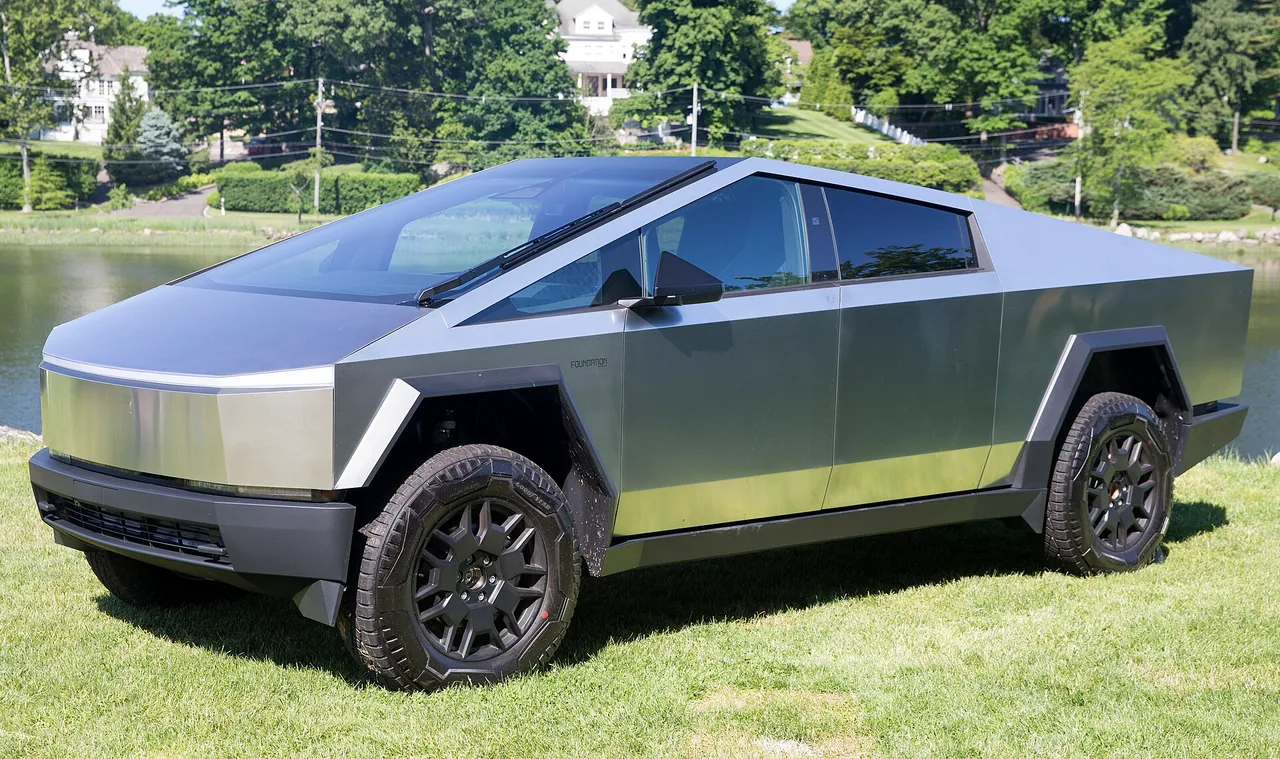

Compare the 2026 Tesla Cybertruck trims
| Trim | TrimIndex score | Drive | EPA range | EPA energy use |
|---|---|---|---|---|
| Long Range (20in Cyber wheels) | 74 | RWD | 335 mi | 43.4 kWh/100 mi |
| AWD | 72 | AWD | 325 mi | 42.9 kWh/100 mi |
EPA range and EPA energy use: U.S. EPA and DOE, fueleconomy.gov.
TrimIndex score: out of 100.
What differs between the 2026 Tesla Cybertruck trims
Compared with the 2026 Cybertruck Long Range (20in Cyber wheels), the AWD has all-wheel drive, with 10 fewer miles of EPA range.
Which 2026 Tesla Cybertruck trim for what
- Longest EPA range: the 2026 Cybertruck Long Range (20in Cyber wheels), 335 miles; next, the AWD has 325 miles.
NHTSA Recalls (2)
- NHTSA lists 2 recall campaigns for the 2026 Tesla Cybertruck, filed between Oct 2025 and Apr 2026.
- How they are fixed, per the filings: 1 by a software update (it can install over the air) and 1 by work on the car.
Source: NHTSA recall filings for the 2026 Tesla Cybertruck, data through Nov 22, 2026. Why the VIN decides
- Filed Apr 2026
The brake rotor stud holes may crack and allow the stud to separate from the wheel hub.
Campaign #26V255000 · Part (NHTSA): service brakes, hydraulic › foundation components › disc › rotor- What happens:
- Wheel stud separation can cause a loss of vehicle control, increasing the risk of a crash.
- The fix
- Free fix: work on the car by Tesla Service Tesla Service will replace the front and rear brake rotors, hubs, and lug nuts, free of charge.
- Covers:
- certain 2024-2026 Cybertruck vehicles equipped with 18-inch steel wheels.
NHTSA lists 173 vehicles in this campaign (all models it covers).
Check VIN status at NHTSA.gov - Filed Oct 2025
The vehicle controller software may cause the front parking lights to be too bright and exceed the maximum light output, adversely affecting the vision of other drivers.
Campaign #25V699000 · Part (NHTSA): exterior lighting- What happens:
- Parking lights that are too bright can reduce visibility of oncoming drivers, increasing the risk of a crash.
- The fix
- Free fix: software update over the air Tesla released an over-the-air (OTA) software update, free of charge.
- Covers:
- certain 2024-2026 Cybertruck vehicles operating software prior to 2025.38.3.
- Federal standard not met:
- 108 (Lamps, Reflective Devices, and Associated Equipment).
NHTSA lists 63,619 vehicles in this campaign (all models it covers).
Check VIN status at NHTSA.gov
NHTSA Investigations (2 open)
NHTSA has 2 open investigations covering the 2026 Tesla Cybertruck (NHTSA investigations file of Nov 19, 2026).
What these kinds of action mean
- OpenEngineering analysis EA26002, opened Mar 18, 2026
FSD Collisions in Reduced Roadway Visibility Conditions
What NHTSA says it is examining: The Office of Defects Investigation (ODI) is opening this Engineering Analysis to evaluate Tesla’s Full Self Driving Beta and Full Self Driving (Supervised) (collectively, FSD) degradation detection system.
Model years NHTSA lists for this model in the action: 2023-2026.
- OpenPreliminary evaluation PE25012, opened Oct 7, 2025
Traffic safety violations while Full Self Driving ("FSD") is engaged
What NHTSA says it is examining: The Office of Defects Investigation (“ODI”) is opening this Preliminary Evaluation (PE) to assess the scope, frequency, and potential safety consequences of FSD executing driving maneuvers that constitute traffic safety violations.
Model years NHTSA lists for this model in the action: 2023-2026.
Source: NHTSA Office of Defects Investigation, investigations file, records through Nov 19, 2026; an open investigation is not a finding of a defect in the 2026 Tesla Cybertruck.
NHTSA Complaints (15 total)
NHTSA lists 2 recall campaigns for the 2026 Tesla Cybertruck; 1 of them names an over-the-air software update as the fix. Owners have filed 15 complaints with NHTSA. Of all 15, 3 report a crash.
What owners report most
TrimIndex grouped the 15 complaints owners filed with NHTSA on the 2026 Tesla Cybertruck (every trim; NHTSA files complaints by model year, not trim) into problem themes on Nov 16, 2026: 4 of them fall in the theme below. 2 complaints were filed after that grouping and are not in a theme yet. How themes are made and checked
-
Self-driving mode hits objects
4 of 15 complaints (27%): With the self-driving mode engaged, the truck strikes parked cars, walls or entrance edges, or makes erratic movements.
Owners reported a crash in 3 of the 4 complaints.
“While Full Self-Driving (Supervised) was engaged, the vehicle began making unexpected and erratic driving movements”
NHTSA complaint 11776511 “with Full Self-Driving (Supervised) engaged and me seated in the driver's seat. The vehicle struck the concrete block wall”
NHTSA complaint 11777176
15 complaints filed with NHTSA for the 2026 Tesla Cybertruck, between Oct 2025 and Nov 2026.
Parts named most often
| Part | Complaints |
|---|---|
| Electrical system (other) | 4 |
| Steering | 4 |
| Lane keeping and blind-spot systems including assist (3) | 3 |
| Drive unit | 3 |
Counted out of all 15 complaints; one complaint can name more than one part. 2 complaints name no specific part.
Owners reported a crash in 3 of the 15 complaints. How these fields are filled
Complaints by year filed
| Year filed | Complaints |
|---|---|
| 2025 | 1 |
| 2026 (to Nov 22) | 14 |
Source: NHTSA owner complaints filed on every 2026 Tesla Cybertruck (NHTSA files them by model year, not trim), data through Nov 22, 2026.
All 15, most severe first, then newest
- Severity 4 of 5.Steering · Lane keeping and blind-spot systems
While Full Self-Driving (Supervised) is engaged and the speed profile is set to Mad Max, this 2026 Cybertruck regularly runs over granite curbs. The contact is with the right rear wheel.
Show the rest
This happens at predictable locations I can identify in advance. I sometimes forget to change the speed profile to Sloth before those locations. When I do set the speed profile to Sloth before the same locations, the curb strikes stop. The same vehicle, on the same roads, does not strike those curbs when FSD is in Sloth. This is a repeatable software path error under a specific, official speed profile, not a one-time driver misjudgment or a random road hazard. I am the supervising driver. I have not received any acknowledgment of this issue. Documented incident: [XXX], [XXX], heading west. Right turn at the intersection at the west end of [XXX]. Right rear wheel ran over a granite curb with FSD (Supervised) engaged in Mad Max. Vehicle software version 2026.38.5.13. FSD (Supervised) version 14.3.13. Mileage 8,600. Even without injury or collision, a supervised driving system that regularly puts a rear wheel over a granite curb creates a risk of tire or wheel damage, loss of control, property damage, and harm to people on or near the curb or sidewalk. Possible factor (hypothesis only): this Cybertruck has four-wheel steering. I am not stating that this is the cause. I ask NHTSA to review whether FSD (Supervised) path planning on this vehicle fails to account for rear-wheel steering or Cybertruck dimensions, because the wheel that strikes the curb is the right rear wheel, not the front. I can provide additional dates, photos, and video. Please contact me in writing only, at [XXX]. INFORMATION REDACTED PURSUANT TO THE FREEDOM OF INFORMATION ACT (FOIA), 5 U.S.C. 552(B)(6)
NHTSA ODI #11779351 - Severity 4 of 5.Forward collision avoidance Crash
On [XXX], at approximately [XXX] Hawaii time, my 2026 Tesla Cybertruck was entering my own driveway in Honolulu, Hawaii, heading toward the garage, with Full Self-Driving
Show the rest
(Supervised) engaged and me seated in the driver's seat. The vehicle struck the concrete block wall at the entrance of my driveway. I did not observe any automatic braking before the impact. After the initial impact, the vehicle did not stop or reverse — it continued moving forward. I applied the brake pedal about three seconds after the impact, and the vehicle came to a stop. No one was injured, and the vehicle remains drivable. The collision damaged the front end and driver side of the vehicle — including the hood, front driver-side door, headlight, front light bar and wheel-arch trim — and broke a section of the concrete block wall. My insurer's approved repair estimate is approximately $12,500. I have preserved photos and a walk-around video of the damage. The dashcam clips from around the time of the collision exist in two encrypted folders on the vehicle's USB drive. I have backed up both folders but cannot open or play them, and Tesla's official online viewer tool did not decrypt them. I sent Tesla a written request for investigation and data preservation on October 10, 2026, with follow-ups on October 30, 2026 and through the Tesla app on November 6, 2026. As of November 10, 2026, Tesla has provided no case number and no substantive response, and has not provided a playable copy of the collision video. INFORMATION REDACTED PURSUANT TO THE FREEDOM OF INFORMATION ACT (FOIA), 5 U.S.C. 552(B)(6)
NHTSA ODI #11777176 - Severity 4 of 5.Brakes · Electrical system (other) · Drive unit
VEHICLE SAFETY DEFECT COMPLAINT Manufacturer: Tesla, Inc. Vehicle: Tesla Cybertruck Premium All-Wheel Drive Incident date: XXX Location: [XXX] VIN: [Insert VIN] Nature of
Show the rest
complaint: Unexpected vehicle movements during Full Self-Driving operation and an extremely loud metallic grinding noise while driving. Description of incident On XXX, at approximately 8 PM Central Time, I experienced a potentially serious safety malfunction while driving my recently purchased Tesla Cybertruck. While Full Self-Driving (Supervised) was engaged, the vehicle began making unexpected and erratic driving movements. During the same drive, I heard an extremely loud noise resembling thunder or heavy metal components grinding against one another. I became concerned that a critical mechanical component could be failing while the vehicle was in motion. I was able to return home safely and have stopped operating the vehicle pending a professional inspection. This incident follows an earlier major malfunction in which the windshield-wiper system failed. Tesla service personnel subsequently informed me that the wiper motor had come apart and that associated damage required brake-system repairs. I believe the combination of unpredictable driving behavior, the severe mechanical noise, and the vehicle’s recent repair history warrants investigation for possible safety-related defects. I recorded a short video during the incident and preserved available Dashcam footage. I request that NHTSA review this incident and determine whether further investigation is warranted, including whether similar complaints have been reported involving Cybertruck Full Self-Driving behavior, braking, steering, or drivetrain components. I am willing to provide the recordings, prior repair documentation, and any additional information necessary for an investigation. Reported by: [XXX] Location: [XXX] INFORMATION REDACTED PURSUANT TO THE FREEDOM OF INFORMATION ACT (FOIA), 5 U.S.C. 552(B)(6)
NHTSA ODI #11776511 - Severity 4 of 5.Brakes
My 2026 Tesla Cybertruck (base AWD, 18-inch wheels) developed warped front brake rotors at about 6,000 to 6,831 miles, roughly one month after purchase.
Show the rest
Tesla Service Center [XXX] (invoice XXX, XXX) measured rotor lateral runout of 0.007 in against a 0.002 in spec and denied warranty coverage, saying 'Brake wear is not covered by Tesla warranty.' Tesla attributed the warping to 'spirited driving' and deceleration events of 5 m/s^2. That is about 0.5 g, which is normal braking. Tesla also stated the brake pads are like new and the brakes are not glazed, which contradicts its claim that driving style overheated and warped the rotors. Rotor runout this early on a nearly new truck points to a component or manufacturing defect, not abuse. Warped rotors cause vibration and reduce braking performance, which is a safety concern on a heavy vehicle. NHTSA recall 26V255 already covers brake rotor/hub problems on Cybertrucks with 18-inch steel wheels. NHTSA's VIN lookup shows no recall campaigns needing VIN-specific checks on my VIN. I have filed an official complaint and dispute with Tesla. INFORMATION REDACTED PURSUANT TO THE FREEDOM OF INFORMATION ACT (FOIA), 5 U.S.C. 552(B)(6)
NHTSA ODI #11776361 - Severity 4 of 5.Forward collision avoidance Crash
Tesla FSD failed to measure an entrance correctly and scratched the left side of the truck. Affected left rear passenger door, left rear flares, left rocker panel.
NHTSA ODI #11762551 - Severity 4 of 5.Steering · Lane keeping and blind-spot systems
Lane Departure Avoidance is jerking the vehicle aggressively back into the lane and is creating a serious safety concern.
Show the rest
I have already scheduled maintenance with Tesla regarding this issue, but I was told that there was nothing they could do about it. The issue occurs when driving in a lane and needing to move over quickly or make an immediate lane adjustment. If the turn signal is not activated, the vehicle will aggressively steer/jerk itself back toward the original lane. This can be dangerous because the system is essentially fighting the driver’s steering input at a moment when the driver may need to move out of the lane to avoid a hazard, merge, or reposition the vehicle. Lane Departure Avoidance should assist and warn the driver, not override the driver’s steering input to the point that the vehicle aggressively forces itself back into the lane. At minimum, the system should be adjustable to provide a vibration, warning, or chime rather than making such a strong steering correction. The current behavior makes it feel like the vehicle cannot safely exit a lane without activating the turn signal, even when the driver is intentionally and safely controlling the vehicle. This needs to be investigated and corrected because the steering intervention itself can create a hazardous situation rather than prevent one.
NHTSA ODI #11756441 - Severity 4 of 5.Crash
2026 Tesla Cybertruck was in Full Self Driving mode when backing out of a parking space. The Cybertruck backed into a parked car causing damage to both vehicles and whiplash of Cybertruck occupants.
Show the rest
The Cybertruck accelerated backwards from 1 mph to 4 mph instantly. There is vehicle video footage of the car in FSD leading up to the accident.
NHTSA ODI #11744372 - Severity 4 of 5.Electrical system (other) · Drive unit · Steering
Purchased truck on May 5th. May 7th scuba valve went bed causing air suspension failure. Low voltage system had critical safety failure causing loss of steering and throttle control.
Show the rest
Received vehicle back from Tesla shop said they could not repay the issue. Next day while driving system had total low voltage crash resulting in vehicle loosing all power. Loss of steering no throttle response all systems died. Shop kept vehicle for two weeks returned it on May 15 upon getting home parked vehicle three hours later truck had total loss of all power with 27 system voltage errors.
NHTSA ODI #11738273 - Severity 4 of 5.Steering · Electrical system (other) · Drive unit
Within approximately four days of delivery, my vehicle experienced multiple system failures during normal driving conditions.
Show the rest
The following warnings appeared simultaneously: - Low voltage electrical system issue detected - Rear axle steering disabled – turning radius limited - Power reduced - Unable to charge – Service required - Additional system warnings These issues affected critical systems including steering, electrical, and vehicle power. The steering limitation and power reduction created a significant safety concern while driving. The vehicle had only been exposed to normal rain conditions prior to the incident, raising concerns about reliability under typical use. Tesla later confirmed a failure in the low voltage distribution and control system requiring replacement of a major electronic component. Given that this occurred within days of delivery, I am concerned that this vehicle may have a serious safety defect.
NHTSA ODI #11732768 - Severity 4 of 5.
Vehicle with self driving hallucinates violating driving while impaired laws and constituting a risk to public safety.
Show the rest
Vehicle's computer literally hallucinates this is unlicensed unsafe product that cannot be considered technology because it is more dangerous than of any utility [XXX] INFORMATION REDACTED PURSUANT TO THE FREEDOM OF INFORMATION ACT (FOIA), 5 U.S.C. 552(B)(6)
NHTSA ODI #11691157
Show 5 more complaints
- Severity 3 of 5.Lane keeping and blind-spot systems
when this vehicle Lane avoidance assistance is on it is dangerous it does not allow you to keep the setting off it resets every time you get in the car and if you don't shut it off
Show the rest
and you think it's off if you try to avoid something like a pothole or an animal running out in the road it automatically pulls you back and it's very dangerous
NHTSA ODI #11768645 - Severity 2 of 5.Seats · Electrical system (other)
The driver seat of my Tesla Cybertruck does not move to my saved driver profile position and does not respond to the seat switch at all, and it could not be moved manually.
Show the rest
On November 18, 2026, in my driveway, everything else adjusted to my profile but the driver seat did not move. I drove to an appointment and could not properly reach the pedals. I have not driven the vehicle since. The problem happens only on my driver profile; the owner, [XXX], has driven it since and the seat works for him. It first happened on [XXX]. Tesla Service Fort Myers performed a calibration on [XXX] that was marked Resolved, but it did not hold. On [XXX] I connected the vehicle to our home wifi; the next time I went to drive, [XXX], the seat would not move. I reported this to Tesla Service Fort Myers in writing on [XXX] and [XXX], and replied to their inspection offer on [XXX]. Tesla has not yet provided a safety case number or written guidance on whether the vehicle is safe to drive. I filed an earlier, unrelated NHTSA complaint, 11773153, for 2020 Honda CR-V brakes. INFORMATION REDACTED PURSUANT TO THE FREEDOM OF INFORMATION ACT (FOIA), 5 U.S.C. 552(B)(6)
NHTSA ODI #11779369 - Severity 2 of 5.Wheels · Windshield wipers
I am reporting severe safety negligence by a dealership delivering a dangerous, unroadworthy vehicle by falsifying or completely skipping the mandatory Pre-Delivery Inspection (PDI).
Show the rest
I purchased a demo 2026 electric truck. Immediately after taking delivery, I drove 4 hours on the highway. During this drive, the tire pressure was dangerously low at 44 psi, and the windshield washer fluid reservoir was completely empty, severely impacting visibility and handling. The very next day, an independent tire shop measured the tire tread depth at 2/32" to 3/32", which is the absolute legal bald limit in Texas. The dealership knowingly delivered a 6,800-pound heavy vehicle on legally bald tires with unsafe pressure, putting my life and public safety at extreme risk of a high-speed blowout. The vehicle was subsequently inspected by a different official manufacturer service center. Their Service Advisor physically confirmed the tires failed safety standards and officially approved a free replacement (documented as "Rectification" in their system). However, the manufacturer later reversed this safety approval, citing a fabricated "clean" delivery report from the original selling dealership to cover up their PDI failure. The safety of myself and others was directly compromised by the delivery of a vehicle unfit for public roads. The hazard was confirmed by both an independent shop and the manufacturer's own service center, yet the manufacturer is now attempting to use falsified delivery records to avoid correcting the safety defect.
NHTSA ODI #11777214 - Severity 2 of 5.Suspension · Wheels
See attached document for complaint.
NHTSA ODI #11765268 - Severity 2 of 5.Body and structure
Passenger door controller began malfunctioning on day 1 of delivery (03/08/2026) By day 2 (03/09/2026) the controller failed completely.
Show the rest
When it failed, the window lowered (indexed), and the vehicle erroneously detects the door as being open all the time. The vehicle will not engage in FSD. As a result, the vehicle will not lock. The vehicle incorrectly assumes it is still in use when parked (forces ventilation and entertainment system to remain on). Requesting the issue correct yielded a service appointment of 03/24/2026. Subsequent attempts to treat this as a safety issue and asked for a sooner appointment did not yield a positive response.
NHTSA ODI #11723270
NHTSA 5-Star Crash-Test Ratings
NHTSA gave the rear-wheel-drive 2026 Tesla Cybertruck Pu/cc (the Long Range (20in Cyber wheels)) no overall rating; its sub-ratings are frontal 5, side 5 stars. NHTSA crash-tested the all-wheel-drive 2026 Tesla Cybertruck Pu/cc (the AWD): 5 stars overall, with frontal 5, side 5, rollover 4.
What changed from 2025
NHTSA lists 2 recall campaigns for the 2026 Tesla Cybertruck and 3 for the 2025; 2 cover both.
2026 Tesla Cybertruck frequently asked questions
What trims does the 2026 Tesla Cybertruck come in?
TrimIndex lists 2 configurations of the 2026 Tesla Cybertruck, as EPA names them: Long Range (20in Cyber wheels) and AWD.
What is the difference between the 2026 Tesla Cybertruck AWD and Long Range (20in Cyber wheels)?
Compared with the 2026 Cybertruck AWD, the Long Range (20in Cyber wheels) has 10 more miles of EPA range, with rear-wheel drive instead of all-wheel drive.
What is the range of the 2026 Tesla Cybertruck?
EPA rates the 2026 Tesla Cybertruck at 325 to 335 miles, depending on the configuration: 335 for the Long Range (20in Cyber wheels) and 325 for the AWD.
Are there recalls on the 2026 Tesla Cybertruck?
Yes. NHTSA lists 2 recall campaigns for the 2026 Tesla Cybertruck in records through Nov 22, 2026: 25V699000 (exterior lights) and 26V255000 (brakes).
What problems do owners report on the 2026 Tesla Cybertruck?
Of the 15 complaints owners filed with NHTSA about the 2026 Tesla Cybertruck in records through Nov 22, 2026, the largest problem theme is: Self-driving mode hits objects (4). 4 of them fall in the one theme TrimIndex grouped from their narratives on Nov 16, 2026.