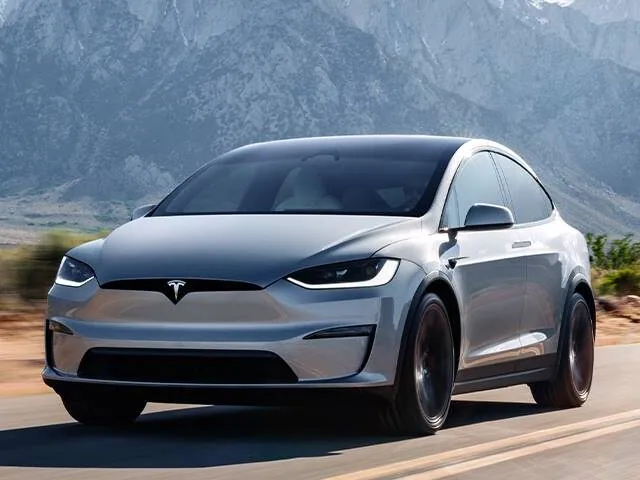
2025 Tesla Model X
Electric SUV · AWD
Based on battery health, build quality, owner data, EPA range, and market pricing
Above average for 2025 EV SUVs (class avg 66 · top 25%)
Personalize this scoreIs a low score bad?
Last scanned 22 days ago
The 2025 Tesla Model X is rated at 329 miles of EPA range and 250 kW fast charging, and the score gets it into the conversation; battery and service records decide whether to make an offer.
Score read
A 70/100 makes this a paperwork-and-test-drive decision. The useful split is software and driver-assist score at 88/100 versus owner feedback score at 44/100. Owners on Reddit repeatedly cite battery degradation and range as recurring problems. If the seller cannot show recall completion, price that risk or move on.
Price context
Used examples are running around $86,630. Treat that as a budgeting floor, not a final price; pull a current KBB Fair Purchase or Edmunds True Market Value for this exact trim before negotiating.
Who this is for
✓ Good for
- ⏱ Daily commuter ≤50 mi/day, predictable charging
- ↦ Road tripper Long trips, needs DC fast network
✗ Avoid if you are a
- $ Bargain hunter Best TCO, reliability + low depreciation
Gotchas
- Serviceable Recall paperwork has to match the exact VIN.
Mitigation Use NHTSA and the automaker lookup, then require repair records instead of a verbal promise.
- Verify Owner feedback is the part to read carefully (44/100).
Mitigation Read the complaint themes and ask whether this VIN has already had those issues repaired.
Pre-purchase inspection
- 1 Run the exact VIN through NHTSA and the automaker recall lookup before discussing price.
- 2 Compare the dashboard range estimate with the EPA 329-mile rating after a full charge.
- 3 Confirm how much of the 8-year/150,000-mile battery warranty remains and whether it transfers.
- 4 If road trips matter, run a short DC fast-charge session and watch whether speed tapers normally.
- 5 Read the complaint themes, not just the count, and ask the seller whether those issues have shown up on this VIN.
VIN status first This model has 3 NHTSA recall records. The exact VIN lookup decides whether the car in front of you is clear.
Complaint context This scan found 13 NHTSA complaint records (0.7 per 10K VINs, low for any vehicle class). Read the themes below before treating the raw count as the verdict.
Price anchor Current market range is $86,630-$86,630. Use that range to compare listings for the same trim, mileage, and condition.
Pricing & Market Value
Score Breakdown
What matters most to you?
Drag the sliders to prioritize what you care about. Your TrimIndex Score recalculates instantly.
Vehicle Specifications
EVs at your price point that match or beat this trim
Price-gated peer set: vehicles within $69.3K–$104.0K market value (±20% of $86.6K). 2 outscore · 4 score within ±2. Mixed across makes — no "spend more, score better" comps.
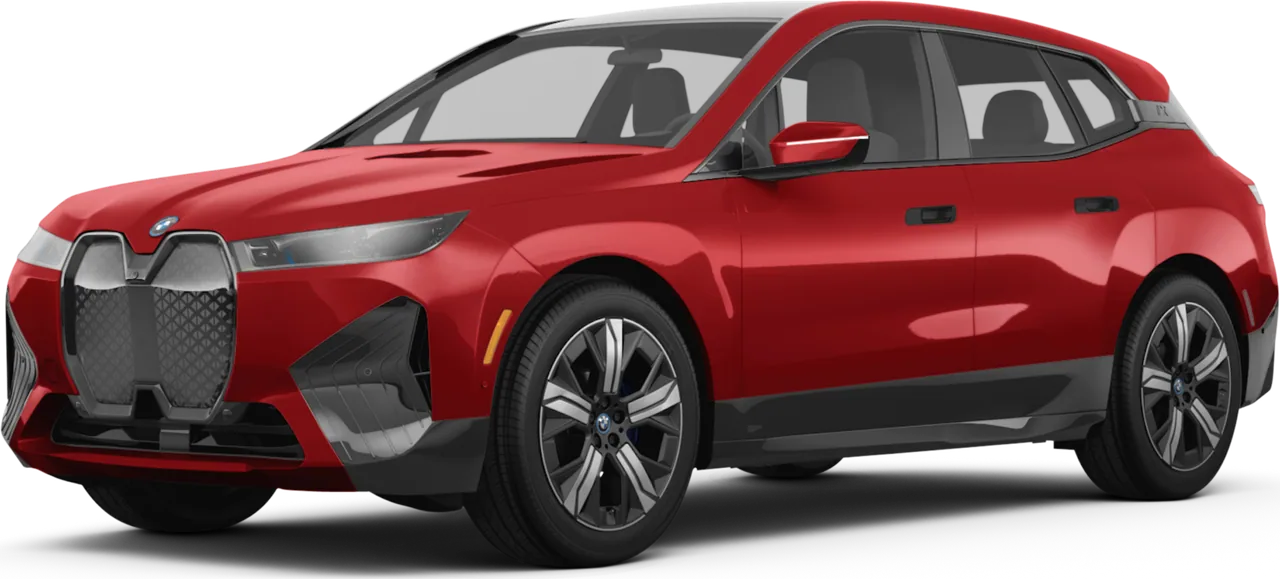
iX
- ✓ Happier owners overall
- ✓ Better safety score
- ✓ Better infotainment UX
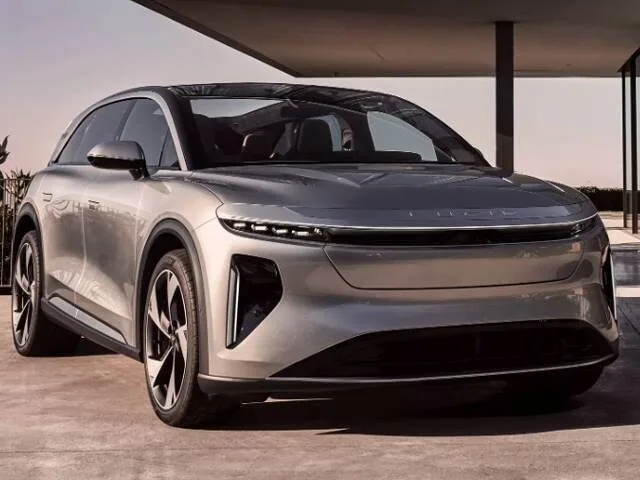
Gravity
- ✓ +121 mi more range
- ✓ Better infotainment UX
Model X
- ✓ Happier owners overall
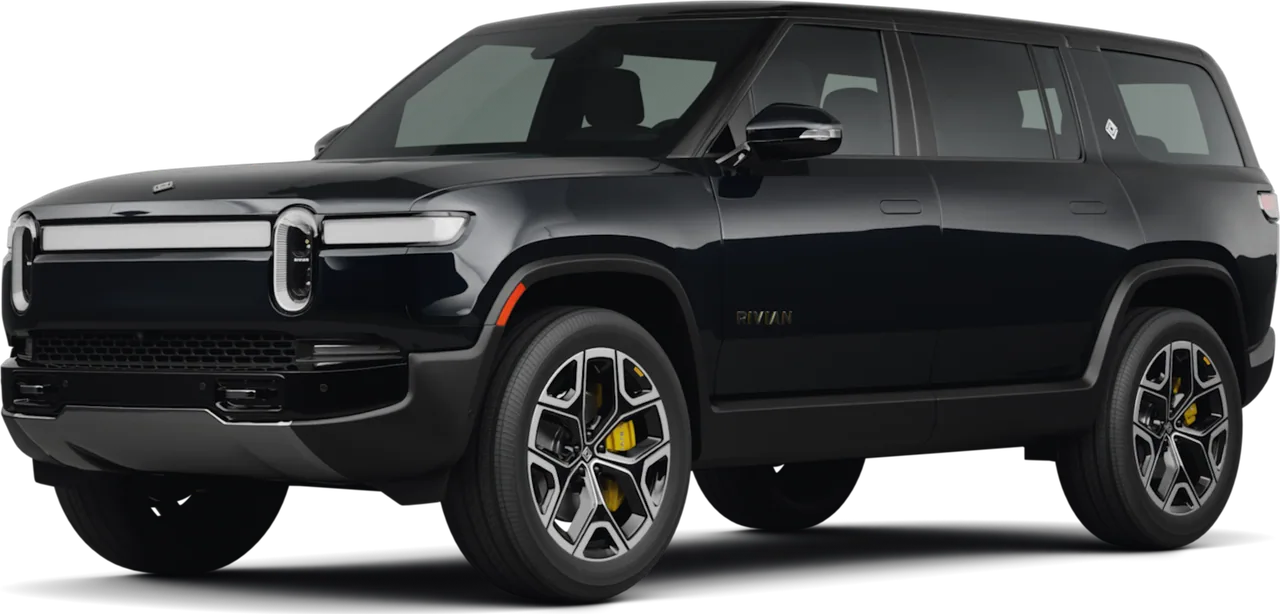
R1S
- ✓ Happier owners overall
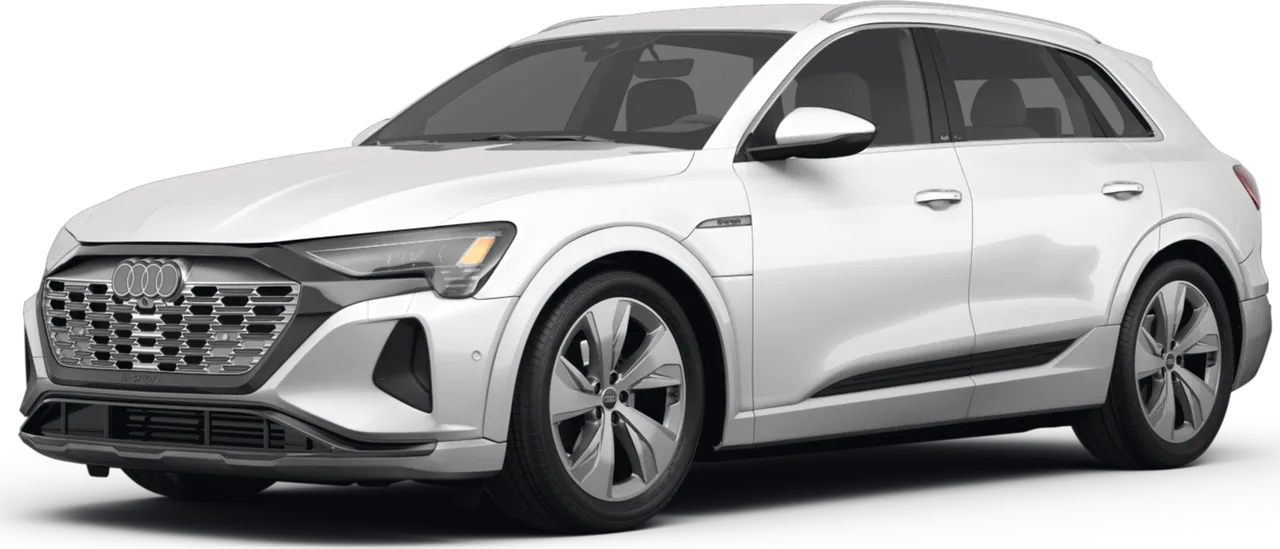
Q8 e-tron
- ✓ Better infotainment UX
- ✓ Better build quality
- ✓ Better owner satisfaction
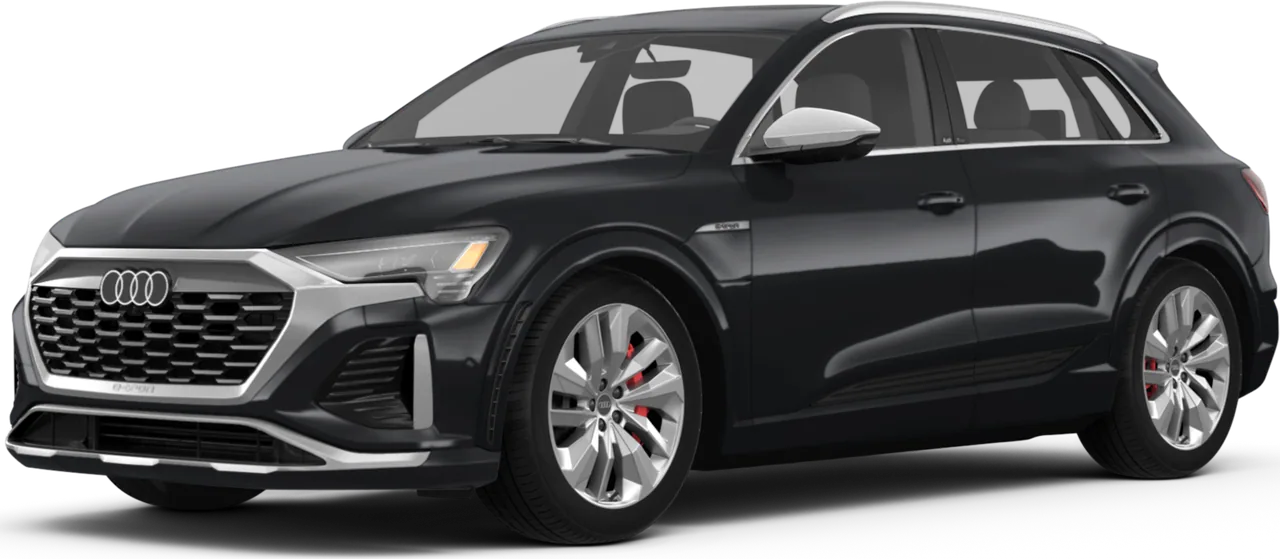
SQ8 e-tron
- ✓ Better owner satisfaction
- ✓ Better infotainment UX
The federal $4,000 used-EV credit ended Sept 30, 2025.
But 10 states still run their own used-EV rebate programs — some up to $5,000. Pick your state to see what's available for this trim.
Source & disclaimer
Dealers make ~$19,347 on the average car loan.
After the price is set, the finance manager runs four plays to rebuild margin. Every buyer without a pre-approval is a target. Here's exactly what they run — and what stops each one.
78% of dealer loans carry a hidden +1.13% markup above what the lender actually charges. You never see it — it's buried in the contract. · CFPB
Dealer must match or beat your lender — they can't add margin invisibly. The markup play is dead on arrival.
Once you answer, they stretch the term to hit your number. Median result: $4K less off the price, 12 more months on the loan. · Industry avg
Financing is done. Only the sale price is on the table — and the dealer knows it.
Back-office F&I profit averages $1,975/vehicle, up 8.5% YoY. These products exist — but dealer markup is 4–10x what you'd pay elsewhere. · Dealership Guy
Dealer GAP runs $500–1K. Your insurer sells the same coverage for $100–250 over 5 years. Now you know.
"Your loan fell through — come re-sign." This pulls your APR up +5% on average. It's legal. It works because you've already driven the car home. · Ctr for Responsible Lending
A lender commitment letter means the deal is final. "Pending dealer approval" doesn't apply. You can't be yo-yo'd.
That's 15 months of your car payment — handed to the dealer's finance department for nothing.
Takes 2 minutes. No obligation to use it — but you'll walk in with all the leverage.
Pre-approval is a soft credit inquiry — no score impact. FICO treats all auto-loan hard pulls within 14 days as one, so you can still shop rates at the dealer.
NHTSA Recalls (3)
Tesla, Inc. (Tesla) is recalling certain 2021-2024 Model S and 2021-2025 Model X vehicles. An air bag with the incorrect horn pad may have been installed, preventing the horn from sounding.
An inoperative horn may prevent the driver from alerting other drivers, increasing the risk of a crash.
Check VIN status at NHTSA.govTesla, Inc. (Tesla) is recalling certain 2024-2025 Model 3, Model S, 2023-2025 Model X, and Model Y vehicles. The computer circuit board may short, resulting in the loss of the rearview camera image. As such, these vehicles fail to comply with the requirements of Federal Motor Vehicle Safety Standard (FMVSS) number 111, "Rear Visibility."
A rearview camera that does not display an image reduces the driver's rear view, increasing the risk of a crash.
Check VIN status at NHTSA.govTesla, Inc. (Tesla) is recalling certain 2021-2025 Model S and Model X vehicles. The driver's air bag could tear during deployment. As such, these vehicles fail to comply with the requirements of Federal Motor Vehicle Safety Standard (FMVSS) numbers 208, "Occupant Crash Protection" and 212, "Windshield Mounting."
A torn air bag may not adequately protect an occupant in a crash, increasing the risk of injury.
Check VIN status at NHTSA.govNHTSA Complaints (13 total · 0.7 per 10K US vehicles · low for any vehicle class)
I am writing to report and formally document a very serious and distressing safety incident involving my Tesla Model X that occurred for a second time, on [XXX]. While driving routinely into the parking garage at my workplace, my vehicle suddenly and violently stopped without warning. There were no obstacles, vehicles, or pedestrians in front of me. The abrupt stop caused my body and head to jolt forward with force, resulting in whiplash. I am still feeling dizzy, dazed, and disoriented, and I believe I may need to consult a neurologist as I have a headache from the whiplash. This is not the first time this has occurred. A similar but less severe incident happened previously while I was driving on [XXX]. At that time, I dismissed it as a possible glitch, but after this most recent and violent episode, I am deeply alarmed. I am extremely concerned about the safety of this vehicle. What if this sudden stop had occurred on the freeway, or while my two children were in the car? The potential consequences could have been catastrophic. INFORMATION REDACTED PURSUANT TO THE FREEDOM OF INFORMATION ACT (FOIA), 5 U.S.C. 552(B)(6)
I am writing to report and formally document a very serious and distressing safety incident involving my Tesla Model X that occurred for a second time, on [XXX]. While driving routinely into the parking garage at my workplace, my vehicle suddenly and violently stopped without warning. There were no obstacles, vehicles, or pedestrians in front of me. The abrupt stop caused my body and head to jolt forward with force, resulting in whiplash. I am still feeling dizzy, dazed, and disoriented, and I believe I may need to consult a neurologist as I have a headache from the whiplash. This is not the first time this has occurred. A similar but less severe incident happened previously while I was driving on [XXX]. At that time, I dismissed it as a possible glitch, but after this most recent and violent episode, I am deeply alarmed. I am extremely concerned about the safety of this vehicle. What if this sudden stop had occurred on the freeway, or while my two children were in the car? The potential consequences could have been catastrophic. INFORMATION REDACTED PURSUANT TO THE FREEDOM OF INFORMATION ACT (FOIA), 5 U.S.C. 552(B)(6)
I own a Tesla Model X 6-seater. The second-row seatbelt repeatedly becomes twisted and fails to retract or lay flat after only a few days of normal use. I have brought the vehicle to the Tesla Service Center in Austin, TX (2323 Ridgepoint Dr) multiple times — five separate repair visits so far — for the same issue. Each time, the technicians temporarily correct the twist or adjust the belt path, but the issue returns within days. I have attached screenshots of all five repair records, including Tesla’s technician notes describing the repeated attempts to resolve the problem. The problem appears to be caused by misalignment of the seatbelt retractor or seat design, not by user misuse. When the belt twists, it cannot retract properly or lay flat across the passenger, which may reduce its effectiveness during a collision. Tesla Service has not offered a permanent fix or design correction, and the defect continues to recur. This appears to be a systemic issue in the second-row seatbelt system of the Model X six-seat configuration. Because the defect involves a federally required safety restraint that may not function as intended, I am reporting this as a potential safety defect for further investigation.
I own a Tesla Model X 6-seater. The second-row seatbelt repeatedly becomes twisted and fails to retract or lay flat after only a few days of normal use. I have brought the vehicle to the Tesla Service Center in Austin, TX (2323 Ridgepoint Dr) multiple times — five separate repair visits so far — for the same issue. Each time, the technicians temporarily correct the twist or adjust the belt path, but the issue returns within days. I have attached screenshots of all five repair records, including Tesla’s technician notes describing the repeated attempts to resolve the problem. The problem appears to be caused by misalignment of the seatbelt retractor or seat design, not by user misuse. When the belt twists, it cannot retract properly or lay flat across the passenger, which may reduce its effectiveness during a collision. Tesla Service has not offered a permanent fix or design correction, and the defect continues to recur. This appears to be a systemic issue in the second-row seatbelt system of the Model X six-seat configuration. Because the defect involves a federally required safety restraint that may not function as intended, I am reporting this as a potential safety defect for further investigation.
There is an error alert on my car that says front left safety restraint issue service is required. So seems to me the airbags or seat belt may not be working properly and its clearly labeled as a safety issue. We have to drive this vehicle nearly daily and tesla is refusing to fix for a minimum of 10 days even though this fault could threaten our lives. Make them fix ASAP
There is an error alert on my car that says front left safety restraint issue service is required. So seems to me the airbags or seat belt may not be working properly and its clearly labeled as a safety issue. We have to drive this vehicle nearly daily and tesla is refusing to fix for a minimum of 10 days even though this fault could threaten our lives. Make them fix ASAP
Left indicator button is randomly unresponsive, sometime it doesn’t work for up to a minute. This happened to me with my previous model x (bought back by tesla in a lemon case for the same issue), happened to me also in a loaner car they gave me while trying to fix this issue and now again in a recently purchased model x. In both cases Tesla replaced the steering yoke and that didn’t solved the issue This is a serious safety issue that left me frustrated and with no solution from Tesla. Every time i got a different response from tesla like: - its a software issue - its a design flaw - I’m not pressing the button correctly - I’m resting my finger on the button and that makes the button unresponsive - we couldn’t replicate the issue I have a video of the left indicator not working for a whole minute while the right one is working
Left indicator button is randomly unresponsive, sometime it doesn’t work for up to a minute. This happened to me with my previous model x (bought back by tesla in a lemon case for the same issue), happened to me also in a loaner car they gave me while trying to fix this issue and now again in a recently purchased model x. In both cases Tesla replaced the steering yoke and that didn’t solved the issue This is a serious safety issue that left me frustrated and with no solution from Tesla. Every time i got a different response from tesla like: - its a software issue - its a design flaw - I’m not pressing the button correctly - I’m resting my finger on the button and that makes the button unresponsive - we couldn’t replicate the issue I have a video of the left indicator not working for a whole minute while the right one is working
My 2025 Model X has a feature commonly called "one pedal drive", where lifting pressure off the gas pedal causes regenerative braking force. This feature is *forced on* at all times, and is unsafe in slippery icy conditions, especially turns, especially downhill. I don't know if this is because of a malfunction of their regen-braking anti-lock (the ABS equvialent), or because it's simply not possible to drive safely in slippery conditions with one-pedal-drive regen braking... but either way, this situation is unsafe. I urge you to investigate this situation, and consider issuing a recall requiring Tesla to perform a software update to give drivers the ability to turn off one-pedal-drive, for safety in snowy and icy conditions. NOTE: Tesla's owners manual for the Model Y recommends drivers disable one-pedal-drive by turning regenerative braking to LOW, but they have disabled the ability to do this on all Model S/X cars 2020+. From their Model Y owners manual: "Warning: In snowy or icy conditions, Model Y may experience loss of traction during regenerative braking, particularly when in the Standard setting and/or not using winter tires. Tesla recommends using the Low setting in snowy or icy conditions to help maintain vehicle stability." Here is a video example of this happening to a driver (not me) for reference. This is snow not ice, and not even in a turn or downhill. [XXX] INFORMATION REDACTED PURSUANT TO THE FREEDOM OF INFORMATION ACT (FOIA), 5 U.S.C. 552(B)(6)
My 2025 Model X has a feature commonly called "one pedal drive", where lifting pressure off the gas pedal causes regenerative braking force. This feature is *forced on* at all times, and is unsafe in slippery icy conditions, especially turns, especially downhill. I don't know if this is because of a malfunction of their regen-braking anti-lock (the ABS equvialent), or because it's simply not possible to drive safely in slippery conditions with one-pedal-drive regen braking... but either way, this situation is unsafe. I urge you to investigate this situation, and consider issuing a recall requiring Tesla to perform a software update to give drivers the ability to turn off one-pedal-drive, for safety in snowy and icy conditions. NOTE: Tesla's owners manual for the Model Y recommends drivers disable one-pedal-drive by turning regenerative braking to LOW, but they have disabled the ability to do this on all Model S/X cars 2020+. From their Model Y owners manual: "Warning: In snowy or icy conditions, Model Y may experience loss of traction during regenerative braking, particularly when in the Standard setting and/or not using winter tires. Tesla recommends using the Low setting in snowy or icy conditions to help maintain vehicle stability." Here is a video example of this happening to a driver (not me) for reference. This is snow not ice, and not even in a turn or downhill. [XXX] INFORMATION REDACTED PURSUANT TO THE FREEDOM OF INFORMATION ACT (FOIA), 5 U.S.C. 552(B)(6)
The contact owns a 2025 Tesla Model X. The contact stated that after the latest update was pushed out, the speed regulation on the vehicle failed to function as intended. The contact stated that the speed regulation was set to "Standard Mode" and the vehicle accelerated to 70 MPH in a 55 MPH Zone. The contact stated that was not the mode selected. In addition, when the contact set the speed regulator to "Crawl Mode," the vehicle drove 10-15 MPH below the speed limit. No warning light was illuminated. The contact was unable to control the speed of the vehicle. The vehicle was not taken to the dealer. The vehicle was not repaired. The manufacturer was not notified of the failure. The failure mileage was unknown.
The contact owns a 2025 Tesla Model X. The contact stated that after the latest update was pushed out, the speed regulation on the vehicle failed to function as intended. The contact stated that the speed regulation was set to "Standard Mode" and the vehicle accelerated to 70 MPH in a 55 MPH Zone. The contact stated that was not the mode selected. In addition, when the contact set the speed regulator to "Crawl Mode," the vehicle drove 10-15 MPH below the speed limit. No warning light was illuminated. The contact was unable to control the speed of the vehicle. The vehicle was not taken to the dealer. The vehicle was not repaired. The manufacturer was not notified of the failure. The failure mileage was unknown.
My Tesla Model X was in Autopilot mode (v13.2.9) at the time of the incident. The vehicle’s advanced driver-assistance system was actively controlling steering and speed, while I remained attentive with my hands on the wheel I was closely monitoring the car’s operation but was not manually steering, braking, or accelerating during Autopilot engagement The vehicle collided with stationary flexible delineator posts. The impact occurred at 55MPH. The flexible delineator posts were the only object struck. No other vehicles were involved in the accident, and no persons were injured.No passengers or bystanders affected. The collision with the flexible delineator posts caused damage to my vehicle’s front bumper area and cracked right headlight. There was no damage to any property besides my own vehicle. The incident was captured on the Tesla’s built-in camera system (dashcam). I have saved the video footage, which clearly shows the car’s approach and the impact with the flexible delineator posts. This video is available and can be provided for review.
My Tesla Model X was in Autopilot mode (v13.2.9) at the time of the incident. The vehicle’s advanced driver-assistance system was actively controlling steering and speed, while I remained attentive with my hands on the wheel I was closely monitoring the car’s operation but was not manually steering, braking, or accelerating during Autopilot engagement The vehicle collided with stationary flexible delineator posts. The impact occurred at 55MPH. The flexible delineator posts were the only object struck. No other vehicles were involved in the accident, and no persons were injured.No passengers or bystanders affected. The collision with the flexible delineator posts caused damage to my vehicle’s front bumper area and cracked right headlight. There was no damage to any property besides my own vehicle. The incident was captured on the Tesla’s built-in camera system (dashcam). I have saved the video footage, which clearly shows the car’s approach and the impact with the flexible delineator posts. This video is available and can be provided for review.
The contact owned a 2025 Tesla Model X. The contact stated that while driving at approximately 65 MPH with Self-driving Assist activated, while the vehicle in front deaccelerated, the vehicle had aggressively deaccelerated. The contact stated that the self-driving assist had deactivated, causing him to aggressively depress the brake pedal, stopping before it struck the vehicle in front. Several unknown warning lights illuminated. In addition, the contact stated that the vehicle was struck in the rear by another vehicle, causing the vehicle to rear-end another vehicle. The contact sought medical attention for head and back injuries. A police report was filed. The vehicle was towed to a local dealer, where it was deemed a loss. The manufacturer was made aware of the failure. The failure mileage was approximately 6,150.
The contact owned a 2025 Tesla Model X. The contact stated that while driving at approximately 65 MPH with Self-driving Assist activated, while the vehicle in front deaccelerated, the vehicle had aggressively deaccelerated. The contact stated that the self-driving assist had deactivated, causing him to aggressively depress the brake pedal, stopping before it struck the vehicle in front. Several unknown warning lights illuminated. In addition, the contact stated that the vehicle was struck in the rear by another vehicle, causing the vehicle to rear-end another vehicle. The contact sought medical attention for head and back injuries. A police report was filed. The vehicle was towed to a local dealer, where it was deemed a loss. The manufacturer was made aware of the failure. The failure mileage was approximately 6,150.
serious error made during full self drive, it wants to make an illegal left turn at the intersection of cascade road and beltine that has caused multiple near collisions (see google maps location [XXX] ). I notified tesla of this via feedback option with no change for the last 4 months. I am concerned about full self drive ignoring traffic laws. INFORMATION REDACTED PURSUANT TO THE FREEDOM OF INFORMATION ACT (FOIA), 5 U.S.C. 552(B)(6)
serious error made during full self drive, it wants to make an illegal left turn at the intersection of cascade road and beltine that has caused multiple near collisions (see google maps location [XXX] ). I notified tesla of this via feedback option with no change for the last 4 months. I am concerned about full self drive ignoring traffic laws. INFORMATION REDACTED PURSUANT TO THE FREEDOM OF INFORMATION ACT (FOIA), 5 U.S.C. 552(B)(6)
I own a 2025 Tesla Model X. A large crack appeared in the windshield spontaneously, without any impact or road debris. It has since worsened audibly while driving. Tesla is classifying this as an accident without identifying an impact point, and they have refused to cover towing or acknowledge a potential manufacturing defect. I do not feel safe driving the vehicle in this condition and believe this may be a structural glass failure. Escalation to Tesla Executive Support is ongoing. Safety concern unresolved.
I own a 2025 Tesla Model X. A large crack appeared in the windshield spontaneously, without any impact or road debris. It has since worsened audibly while driving. Tesla is classifying this as an accident without identifying an impact point, and they have refused to cover towing or acknowledge a potential manufacturing defect. I do not feel safe driving the vehicle in this condition and believe this may be a structural glass failure. Escalation to Tesla Executive Support is ongoing. Safety concern unresolved.
Sept 20, 2025. 2025 Model X door alarmed for being open when it was actually closed. Door would only open intermittently. Your in car and cannot escape through drivers door. It was locked shut and thought it was open. Parked car requested Tesla service. Mobile unit came out replaced electric opener. Door continued to lock driver in and out of car randomly for the month of October 2025. We parked car and scheduled appointments with Tesla multiple times. They were not concerned this was a safety issue. They reschedule our appointments multiple times. At the end of October after several service appointments and multiple parts replaced the door started working. Their final comments we "THEY WERENT ABLE TO VERIFY THERE WAS AN ISSUE."
Sept 20, 2025. 2025 Model X door alarmed for being open when it was actually closed. Door would only open intermittently. Your in car and cannot escape through drivers door. It was locked shut and thought it was open. Parked car requested Tesla service. Mobile unit came out replaced electric opener. Door continued to lock driver in and out of car randomly for the month of October 2025. We parked car and scheduled appointments with Tesla multiple times. They were not concerned this was a safety issue. They reschedule our appointments multiple times. At the end of October after several service appointments and multiple parts replaced the door started working. Their final comments we "THEY WERENT ABLE TO VERIFY THERE WAS AN ISSUE."
Hazard flasher button in my 2-weeks old new Tesla Model X is not working. On August 23, 2025, I was in a parking lot and needed to turn on the hazard flashers to signal to the car behind me that I was waiting for another vehicle to leave a parking space. I discovered that the hazard flasher button on my 2025 Tesla Model X did not work at all. Since I could not activate the hazard lights, I had to continue driving to find another parking spot. This was the first time I tried to use the hazard flashers since purchasing the vehicle two weeks earlier, and they have never worked. I attempted both a power cycle and vehicle reset, but the hazard button remains completely unresponsive. On this model, the hazard flasher is integrated into a touch-sensitive bar in the center console, and there is no alternative physical or touchscreen backup control. The absence of functioning hazard lights poses a significant safety risk. If I only discovered this defect during a true emergency situation (e.g., breakdown or accident), I would not have been able to warn surrounding traffic. In my opinion, relying on a touch bar for such a critical safety function is unreliable; a physical pressable button should be required. Tesla has scheduled a service appointment, but it is two weeks away, and in the meantime, I am driving a vehicle without working hazard lights. This is a safety-critical defect that should be investigated.
Hazard flasher button in my 2-weeks old new Tesla Model X is not working. On August 23, 2025, I was in a parking lot and needed to turn on the hazard flashers to signal to the car behind me that I was waiting for another vehicle to leave a parking space. I discovered that the hazard flasher button on my 2025 Tesla Model X did not work at all. Since I could not activate the hazard lights, I had to continue driving to find another parking spot. This was the first time I tried to use the hazard flashers since purchasing the vehicle two weeks earlier, and they have never worked. I attempted both a power cycle and vehicle reset, but the hazard button remains completely unresponsive. On this model, the hazard flasher is integrated into a touch-sensitive bar in the center console, and there is no alternative physical or touchscreen backup control. The absence of functioning hazard lights poses a significant safety risk. If I only discovered this defect during a true emergency situation (e.g., breakdown or accident), I would not have been able to warn surrounding traffic. In my opinion, relying on a touch bar for such a critical safety function is unreliable; a physical pressable button should be required. Tesla has scheduled a service appointment, but it is two weeks away, and in the meantime, I am driving a vehicle without working hazard lights. This is a safety-critical defect that should be investigated.
On [XXX], I visited the Tesla Brooklyn Showroom to purchase a new Tesla Model X. I tendered a valid, notarized promissory note for $128,487.79 as full payment for the vehicle. Under UCC § 3-310, a promissory note is a negotiable instrument payable on demand, legally considered a cash equivalent. Despite fulfilling my payment obligation, the vehicle was not delivered. On May 10, 2025, I returned to the showroom to deliver an enforcement packet, which included the promissory note, an Affidavit of Lien, and a UCC-1 Financial Statement. When I arrived, I attempted to hand these documents to the General Manager, Dylan Karlok, but he instructed a staff member named Marcel to throw away the legal documents and refused to accept them. This act was captured on video. Due to Tesla’s refusal to deliver the vehicle despite valid payment, I have been left without reliable transportation. The manager also falsely claimed that I did not have the funds to purchase the vehicle, which has damaged my credibility and caused significant emotional distress. I am requesting the immediate delivery of the originally ordered Tesla Model X, compensation for damages, and a formal acknowledgment from Tesla regarding the mishandling of the payment. INFORMATION REDACTED PURSUANT TO THE FREEDOM OF INFORMATION ACT (FOIA), 5 U.S.C. 552(B)(6)
On [XXX], I visited the Tesla Brooklyn Showroom to purchase a new Tesla Model X. I tendered a valid, notarized promissory note for $128,487.79 as full payment for the vehicle. Under UCC § 3-310, a promissory note is a negotiable instrument payable on demand, legally considered a cash equivalent. Despite fulfilling my payment obligation, the vehicle was not delivered. On May 10, 2025, I returned to the showroom to deliver an enforcement packet, which included the promissory note, an Affidavit of Lien, and a UCC-1 Financial Statement. When I arrived, I attempted to hand these documents to the General Manager, Dylan Karlok, but he instructed a staff member named Marcel to throw away the legal documents and refused to accept them. This act was captured on video. Due to Tesla’s refusal to deliver the vehicle despite valid payment, I have been left without reliable transportation. The manager also falsely claimed that I did not have the funds to purchase the vehicle, which has damaged my credibility and caused significant emotional distress. I am requesting the immediate delivery of the originally ordered Tesla Model X, compensation for damages, and a formal acknowledgment from Tesla regarding the mishandling of the payment. INFORMATION REDACTED PURSUANT TO THE FREEDOM OF INFORMATION ACT (FOIA), 5 U.S.C. 552(B)(6)
What Owners Are Saying
"Tesla Model X P100D hauls over 2,000 lbs like a champ I was inspired by the positive feedback my last post got (from the road trip I did) and wanted to share this too... I just bought a camper but the X's hauling limitations are 5,000 lbs, so my options were limited. I decided to buy an A Liner LXE 2021 because it's relatively cheap ($20k) and has all the things two people (and two dogs) would need (including a shower and toilet) and it weighs a cool 1,900 lbs. (\~2,200 fully loaded with our stuff). I was super impressed with the Tesla's ability to haul it (without charging mid-trip), especially given the +/- 4k elevation gain between Boise (2,730′ elevation) and Stanley (6,253′ elevation). On the way back (128 mile trip), I used \~190 miles of my battery. In other words, I made it with 80 miles left on a 270 mile charge. Someone asked for more pics so here... ​ Me driving the thing out of the dealership A Liner popped open The camping setup Inside!"
"First 10 months of owning a Tesla Model X in SoCal, by the numbers My "year 1" analysis won't happen until October, when I'll have 1 year of solid data from TeslaFi.com to analyze. However, this is 10 months of ownership, and before my annual job/gig starts where I'll be driving 300mi/week commuting to work. I'm curious how even more driving will change this data, if at all. For the record, I purchased and received my Tesla Model X 75D as new inventory vehicle from Maryland, received the vehicle on June 30, 2017. I used a friend's referral code, so I received a discount and free unlimited supercharging for life of vehicle. Service center repair/visits include: 1. Body shop/repair for passenger side FWD realignment, repaired in 3 days while I was out of town. 2. Passenger side FWD proximity sensor came loose, door frequently thought an obstruction was near the door, preventing it from opening without override. <1 day repair. 3. Uncorking, <1 day repair. 4. Annual service (12 month), I had damaged the passenger rear fender flair, Service Center in Burbank had the part in stock. Cost was $55, installation was free (took less than 15 minutes to remove old and install new). <1 day repair, but I needed to travel for work, so I took a Model S 100D loaner. Some data: I'm on SoCal Edison Time of Use "B" plan, so summer months (June - Sept), overnight charging costs $0.12/kWh. Rest of the year, overnight is $0.13/kWh. I didn't pull all the data or try to dive into costs of charging during summer vs charging rest of the year. Since the bulk of my data is October 2017 through"
"2016 Tesla Model X charges faster than 2019 Audi e-tron (real life comparison) For this comparison I used two videos. Bjorn video comparing fast charging and nextmove video comparing consumption at highway speed (120 km/h) . [They use P100D and 90D respectively, but it shouldn't make a big difference]. Quick math... E-tron usable battery is 83 KWh. It charges from 4% to 100% in 43 min. With highway speed consumption of 305 wh/km it means 272 km range. In a Model X with a consumption of 248 wh/km you need 67 kWh to get the same range. It took 39 min for the Tesla to charge 67 kWh. So in then end to charge the same range (highway speed) it takes: 43 minutes with e-tron "today" 39 minutes with Model X "in 2016" I can't wait to see the same comparison with the 2019 more efficient Model X. It should also be able to charge at 200 kw. Too bad that it doesn't have CCS port in Europe yet. Comparing them at the same Ionity charger would be perfect. (Yes, you can actually use the adapter...)"
"Discuss Tesla's Model S, Model 3, Model X, Model Y, Cybertruck, Roadster and More. You can install our site as a web app on your iOS device by utilizing the Add to Home Screen feature in Safari. Please see this thread for more details on this. - Dismiss notice Want to remove ads? Register an account and login to see fewer ads, and become a Supporting Member to remove almost all ads. - Discussion - Tesla Vehicles - Model X - Thread starter mswlogo - Start date Oct 8, 2025 Aug 27, 20189,3898,922NH My new Model X was the first time I bought an inventory Tesla. Everything has been absolutely perfect. Probably the best fit and finish yet. I charged it to 100% and it’s already down 3% that’s a lot. Yes, I know it could be calibration."
"Oct 9, 202220Brussels Car was towed to us. After a (failed) software update, the car did nothing anymore. Only the doors still open. After an extensive diagnosis, it was determined that the firmware of the MCU was different from the firmware of the various modules in the car. Because there was corrupt data on the gateway SD, the gateway itself could no longer translate the signals. After formatting the gateway SD and multiple firmware updates, communication between the modules is restored. If this occurs again, the SD card must be replaced. (Apologies for the Google translate) You must log in or register to reply here. When a Software Update Breaks Safety: My Tesla Model 3 Experience - Guy.L - Jan 11, 2026 - Software: Firmware Updates, Features, Tesla App"
"> mswlogo said: > > S3XY Commander (Scan my Tesla reports the same thing). The numbers are consistent with the instrument cluster display. > > I’m not expecting it to stay 100% capacity for long. > > 3 other Teslas didn’t come close to this. > > Something is not right. My 2019 X showed close to full capacity for like a year. And was down like 2% after 2.5 years when I traded it. > > That’s normal. > > This was down 3% down on day one and down 6% after a month. > > That’s not normal. It should not be that much that quick. Period. 1-2% that would be poor but acceptable but 6% is insane. > > I have not done another 100% charge since I lower SoC to very lower. But I’m not holding much hope. I need to wait for an opportunity I need to use up the miles after I fully charge it. > > > Click to expand... My 2015 MS showed 255 out of 270 RM after 7.5 years. It stayed 265 ish for 4 years. The older cars had a higher threshold, and there is recent evidence the new palladium packs are degrading much faster. I'm down 4% in 4 months on my '22 MS, total nearing 8% from the threshold of 96.4Kwh. All we can do to compensate is drive slower and follow class 8 trucks on the highway. I'm under 222wh/mi YTD. #### Milan Djabirov"
"> aerodyne said: > > I find SMT is very useful. > > Not really if you are counting nominal new pack capacity. Some cars approach this when new, but it degrades rapidly. If Teslafi is to be believed, very few cars exceed rated range, although capacity above 96.4 KwH may be hidden. You capacity NFP is the same as when my car was 4 years old. > > What App is that display from? > > > Click to expand... S3XY Commander (Scan my Tesla reports the same thing). The numbers are consistent with the instrument cluster display. Something is not right. My 2019 X showed close to full capacity for like a year. And was down like 2% after 2.5 years when I traded it. That’s not normal. It should not be that much that quick. Period. 1-2% that would be poor but acceptable but 6% is insane. I have not done another 100% charge since I lower SoC to very lower. But I’m not holding much hope. I need to wait for an opportunity I need to use up the miles after I fully charge it. Nov 19, 20188,34511,586Los Angeles"
"I am not really happy with this outcome, and have already protested the invoice. My fear is that if Tesla is not responsible for OTA updates pushed to our cars, that this can occur every couple of months. It doesn’t make sense that a company can disable your property at a distance and doesn’t take any responsibility afterwards. I would love to drive my MX a couple of years longer, because I like the car and am happy with it. But this issue is really bothering me and even prevents me from buying a new MX. Am I wrong, should I just get over it? I would love to have some feedback from other Tesla owners. Aug 18, 20156,7354,227South Florida > UpdateFailed said: > > they said that incompatible firmwares of carparts were the cause of the update failure > > > Click to expand... What does that mean exactly? Without knowing what the actual problem was, it’s hard to know whether it was a fluke or something you need to worry about. #### UpdateFailed"
Showing 8 of 20 owner excerpts (sorted by sentiment strength)