All Vehicles
2023 Tesla Model Y Trims Compared: Range, Price & Problems
Updated
2023 Tesla Model Y: 3 trims compared. 279–330 mi EPA range, 17 recalls, 1,208 NHTSA complaints.
Data:NHTSA through
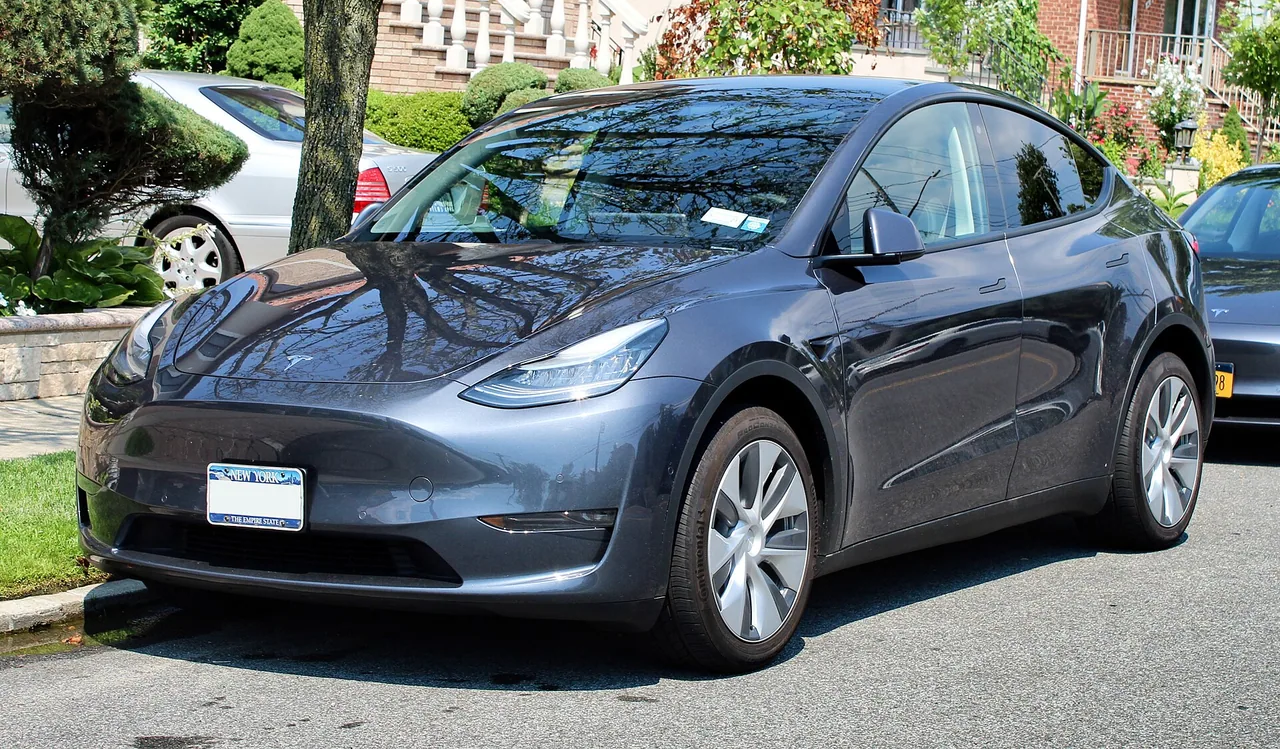

Compare the 2023 Tesla Model Y trims
| Trim | TrimIndex score | Price new | Used price | Drive | EPA range | EPA energy use | 0–60 mph | DC fast-charge peak | Georgia tax value (2026 manual) |
|---|---|---|---|---|---|---|---|---|---|
| Long Range AWD | 68 | from $65,990starting price | $33,500KBB, Nov 2026 | AWD | 330 mi | 27.6 kWh/100 mi | 4.8 s | 250 kW | $26,350 |
| AWD | 66 | from $47,240starting price | $33,400KBB, Nov 2026 | AWD | 279 mi | 27.5 kWh/100 mi | 5.0 s | 230 kW | $20,875 |
| Performance AWD | 66 | from $69,990starting price | $35,000KBB, Nov 2026 | AWD | 303 mi | 30.5 kWh/100 mi | 3.5 s | 250 kW | $26,350–$27,150 (2 values) |
Tesla, Inc. lists one figure for the 2023 Model Y: 30.2 cu ft of cargo space. Tesla, Inc. lists one figure for the 2023 Model Y: towing up to 3,500 lb.
Price new, 0–60 mph and dc fast-charge peak: Tesla, Inc., via the Internet Archive.
EPA range and EPA energy use: U.S. EPA and DOE, fueleconomy.gov.
Used price: the figure each trim page shows, with its source and the month collected.
Georgia tax value: the Georgia Department of Revenue's title-tax assessment value for each trim in its 2026 manual, one edition for every row; a state tax figure, not a sale price or market value.
TrimIndex score: out of 100.
What differs between the 2023 Tesla Model Y trims
Compared with the 2023 Model Y AWD, the Long Range AWD has 51 more miles of EPA range, with a starting price $18,750 higher.
Compared with the 2023 Model Y Long Range AWD, the Performance AWD has a 0–60 mph claim 1.3 s quicker, with 27 fewer miles of EPA range, EPA energy use 2.9 kWh/100 mi higher, a starting price $4,000 higher and a used price on file $1,500 higher (KBB, Nov 2026).
Which 2023 Tesla Model Y trim for what
- Longest EPA range: the 2023 Model Y Long Range AWD, 330 miles; next, the Performance AWD has 303 miles.
- Quickest 0–60 mph (manufacturer claims): the 2023 Model Y Performance AWD, 3.5 seconds; next, the Long Range AWD has 4.8 seconds.
NHTSA Recalls (17)
- NHTSA lists 17 recall campaigns for the 2023 Tesla Model Y, filed between Nov 2022 and Aug 2026.
- When it was filed, 26V507000 (headlights) had no final fix available yet.
- How the other 16 are fixed, per the filings: 10 by a software update (all can install over the air), 5 by work on the car and 1 by both a software update and work on the car.
Source: NHTSA recall filings for the 2023 Tesla Model Y, data through Nov 22, 2026. Why the VIN decides
- Filed Aug 2026
The headlight low beams may be too bright and exceed the maximum light output.
Campaign #26V507000 · Part (NHTSA): exterior lighting › headlights- What happens:
- Headlight low beams that are too bright can reduce visibility for oncoming drivers, increasing the risk of a crash.
- The fix
- When filed (Aug 2026) the final fix was not yet available. Check the VIN for the final repair.
- Covers:
- certain 2017-2023 Model 3 and 2020-2023 Model Y vehicles.
- Federal standard not met:
- 108 (Lamps, Reflective Devices, and Associated Equipment).
NHTSA lists 20,349 vehicles in this campaign (all models it covers).
Check VIN status at NHTSA.gov
Show the other 16 campaigns, each with a fix listed
- Filed May 2026
The rearview camera image may be delayed when the vehicle is placed in reverse.
Campaign #26V283000 · Part (NHTSA): back over prevention › software- What happens:
- A delayed rearview image reduces the driver's view behind the vehicle, increasing the risk of a crash.
- The fix
- Free fix: software update over the air Tesla has released an over-the-air (OTA) software update, free of charge.
- Covers:
- certain 2017, 2021-2023 Model 3, 2020-2023 Model Y, 2021-2023 Model S, and Model X vehicles operating software version 2026.8.6.
- Federal standard not met:
- 111 (Rear Visibility).
NHTSA lists 218,868 vehicles in this campaign (all models it covers).
Check VIN status at NHTSA.gov - Filed Feb 2025
The printed circuit board for the electronic power steering assist may experience an overstress condition, causing a loss of power steering assist when the vehicle reaches a stop and then accelerates again.
Campaign #25V092000 · Part (NHTSA): steering › electric power assist system- What happens:
- A loss of power steering assist can require greater steering effort, especially at low speeds, increasing the risk of a crash.
- The fix
- Free fix: software update over the air Tesla has released an over-the-air (OTA) software update, free of charge.
- Covers:
- certain 2023 Model 3 and Model Y vehicles operating software prior to 2023.38.4.
NHTSA lists 376,241 vehicles in this campaign (all models it covers).
Check VIN status at NHTSA.gov - Filed Jan 2025
The computer circuit board may short, resulting in the loss of the rearview camera image.
Campaign #25V002000 · Part (NHTSA): back over prevention › software- What happens:
- A rearview camera that does not display an image reduces the driver's rear view, increasing the risk of a crash.
- The fix
- Free fix: software update (it can install over the air) plus work on the car Tesla released an over-the-air (OTA) software update, free of charge. Tesla will also identify any vehicles that experienced a circuit board failure, or stress that may lead to a circuit board failure, and replace the affected computers, free of charge.
- Covers:
- certain 2024-2025 Model 3, Model S, 2023-2025 Model X, and Model Y vehicles.
- Federal standard not met:
- 111 (Rear Visibility).
NHTSA lists 239,382 vehicles in this campaign (all models it covers).
Check VIN status at NHTSA.gov - Filed Dec 2024
The tire pressure monitoring system (TPMS) warning light may not remain illuminated between drive cycles, failing to warn the driver of low tire pressure.
Campaign #24V935000 · Part (NHTSA): tires › pressure monitoring and regulating systems- What happens:
- Driving with improperly inflated tires increases the risk of a crash.
- The fix
- Free fix: software update over the air Tesla released an over-the-air (OTA) software update, free of charge.
- Covers:
- certain 2024 Cybertruck, 2017-2025 Model 3, and 2020-2025 Model Y vehicles.
- Federal standard not met:
- 138 (Tire Pressure Monitoring Systems).
NHTSA lists 696,281 vehicles in this campaign (all models it covers).
Check VIN status at NHTSA.gov - Filed Jul 2024
The hood latch assembly may fail to detect an unlatched hood condition after the hood has been opened.
Campaign #24V554000 · Part (NHTSA): electrical system › software- What happens:
- An unlatched hood can fully open, obstructing the driver's view and increasing the risk of a crash.
- The fix
- Free fix: software update over the air Tesla has released an over-the-air (OTA) software update, free of charge.
- Covers:
- certain 2021-2024 Model 3, Model S, Model X, and 2020-2024 Model Y vehicles.
NHTSA lists 1,849,638 vehicles in this campaign (all models it covers).
Check VIN status at NHTSA.gov - Filed May 2024
In the event of an unbelted driver, the seat belt warning light and audible chime may not activate as intended.
Campaign #24V376000 · Part (NHTSA): seat belts › front › warning light/devices- What happens:
- A seat belt warning system that fails to alert occupants of an unbelted seat belt can increase the risk of injury during a crash.
- The fix
- Free fix: software update over the air Tesla will release an over-the-air (OTA) software update.
- Covers:
- certain 2012-2024 Model S, 2015-2024 Model X, 2017-2023 Model 3, and 2020-2023 Model Y vehicles.
- Federal standard not met:
- 208 (Occupant Crash Protection).
NHTSA lists 125,233 vehicles in this campaign (all models it covers).
Check VIN status at NHTSA.gov - Filed Jan 2024
An incorrect font size is displayed on the instrument panel for the Brake, Park, and Antilock Brake System (ABS) warning lights.
Campaign #24V051000 · Part (NHTSA): electrical system › instrument cluster/panel- What happens:
- Warning lights with a smaller font size can make critical safety information on the instrument panel difficult to read, increasing the risk of a crash.
- The fix
- Free fix: software update over the air Tesla began releasing an over-the-air (OTA) software update, free of charge.
- Covers:
- certain 2012-2023 Model S, 2016-2024 Model X, 2017-2023 Model 3, 2019-2024 Model Y, and 2024 Cybertruck vehicles.
- Federal standard not met:
- 105 (Hydraulic and Electric Brake Systems) and 135 (Light Vehicle Brake Systems).
NHTSA lists 2,193,869 vehicles in this campaign (all models it covers).
Check VIN status at NHTSA.gov - Filed Jan 2024
Software instability may prevent the rearview camera image from displaying.
Campaign #24V035000 · Part (NHTSA): back over prevention › sensing system › camera- What happens:
- A rearview image that does not display while in reverse decreases the driver's visibility and increases the risk of a crash.
- The fix
- Free fix: software update over the air Tesla has released an over-the-air (OTA) software update, free of charge.
NHTSA lists 199,575 vehicles in this campaign (all models it covers).
Check VIN status at NHTSA.gov - Filed Dec 2023
In certain circumstances when Autosteer is engaged, the prominence and scope of the feature's controls may not be sufficient to prevent driver misuse of the SAE Level 2 advanced driver-assistance feature.
Campaign #23V838000 · Part (NHTSA): electrical system › ADAS › driver monitoring › software- What happens:
- In certain circumstances when Autosteer is engaged, and the driver does not maintain responsibility for vehicle operation and is unprepared to intervene as necessary or fails to recognize when Autosteer is canceled or not engaged, there may be an increased risk of a crash.
- The fix
- Free fix: software update over the air Tesla will release an over-the-air (OTA) software update, free of charge.
NHTSA lists 2,031,220 vehicles in this campaign (all models it covers).
Check VIN status at NHTSA.gov - Filed Jul 2023
The forward-facing camera may be misaligned, causing some of the active safety features such as emergency braking, forward collision warning, and lane assist to become unavailable without alerting the driver.
Campaign #23V489000 · Part (NHTSA): forward collision avoidance › sensing system › camera- What happens:
- Safety features that are unavailable without any warning to the driver may increase the risk of a crash.
- The fix
- Free fix: work on the car by Tesla Service Tesla Service will inspect and adjust the pitch angle, as necessary, free of charge.
- Covers:
- certain 2023 Model S, Model X, and Model Y vehicles.
NHTSA lists 1,337 vehicles in this campaign (all models it covers).
Check VIN status at NHTSA.gov - Filed Jun 2023
The pyrotechnic battery disconnect may be defective.
Campaign #23V434000 · Part (NHTSA): electrical system › propulsion system › traction battery- What happens:
- A defective battery disconnect may not isolate the vehicle's high voltage battery after a crash or fault detection, increasing the risk of electrical shock and injury.
- The fix
- Free fix: work on the car by Tesla Service Tesla Service will replace the pyrotechnic battery disconnect, free of charge.
- Covers:
- certain 2023 Model 3 and Model Y vehicles.
NHTSA lists 26 vehicles in this campaign (all models it covers).
Check VIN status at NHTSA.gov - Filed May 2023
The steering wheel fastener may be loose.
Campaign #23V385000 · Part (NHTSA): steering › critical fasteners- What happens:
- A loose fastener may allow the steering wheel to disconnect from the steering column, which can cause a loss of steering control and increase the risk of a crash.
- The fix
- Free fix: work on the car by Tesla Service Tesla Service will inspect and replace the fastener as necessary, free of charge.
- Covers:
- certain 2022-2023 Model Y vehicles.
NHTSA lists 137 vehicles in this campaign (all models it covers).
Check VIN status at NHTSA.gov - Filed Feb 2023
The bolts securing the second-row seat back frames may not have been securely tightened.
Campaign #23V130000 · Part (NHTSA): seat belts › rear/other › anchorage- What happens:
- A loose seat frame bolt may reduce the seat belt system's performance, increasing the risk of injury during a crash.
- The fix
- Free fix: work on the car by Tesla Service Tesla Service Centers will inspect and tighten the bolts as necessary, free of charge.
- Covers:
- certain 2022-2023 Model Y vehicles.
NHTSA lists 3,470 vehicles in this campaign (all models it covers).
Check VIN status at NHTSA.gov - Filed Feb 2023
The FSD Beta system may allow the vehicle to act unsafe around intersections, such as traveling straight through an intersection while in a turn-only lane, entering a stop sign-controlled intersection without coming to a complete stop, or proceeding into an intersection during a steady yellow traffic signal without due caution.
Campaign #23V085000 · Part (NHTSA): steering › automated/adaptive steeringIn addition, the system may respond insufficiently to changes in posted speed limits or not adequately account for the driver's adjustment of the vehicle's speed to exceed posted speed limits.
- What happens:
- FSD Beta software that allows a vehicle to exceed speed limits or travel through intersections in an unlawful or unpredictable manner increases the risk of a crash.
- The fix
- Free fix: software update over the air Tesla will release an over-the-air (OTA) software update, free of charge.
NHTSA lists 362,758 vehicles in this campaign (all models it covers).
Check VIN status at NHTSA.gov - Filed Dec 2022
The front suspension lateral link fasteners may not have been properly attached to the sub-frame.
Campaign #22V895000 · Part (NHTSA): suspension › subframe/mounting bracket- What happens:
- A loose fastener can allow the lateral link to separate from the sub-frame, causing instability and increasing the risk of a crash.
- The fix
- Free fix: work on the car by Tesla Service Tesla Service will tighten or replace the fasteners as necessary, free of charge.
- Covers:
- certain 2023 Model Y vehicles.
NHTSA lists 26 vehicles in this campaign (all models it covers).
Check VIN status at NHTSA.gov - Filed Nov 2022
One or both taillights may intermittently fail to illuminate.
Campaign #22V844000 · Part (NHTSA): exterior lighting › tail lights- What happens:
- A taillight that fails to illuminate may reduce the visibility of the vehicle, increasing the risk of a crash.
- The fix
- Free fix: software update over the air Tesla has released an over-the-air (OTA) software update, free of charge.
- Covers:
- certain 2023 Model 3 and 2020-2023 Model Y vehicles.
NHTSA lists 321,628 vehicles in this campaign (all models it covers).
Check VIN status at NHTSA.gov
NHTSA Investigations (5 open, 1 open petition, 7 closed, 1 closed petition)
NHTSA has 5 open investigations and 1 open defect petition covering the 2023 Tesla Model Y (NHTSA investigations file of Nov 19, 2026).
What these kinds of action mean
- OpenPreliminary evaluation PE26006, opened Jul 29, 2026
Lower Lateral Link detachment
What NHTSA says it is examining: The Office of Defects Investigation (ODI) has received 156 complaints alleging a suspension failure in model year (MY) 2018-2020 Model 3 and MY 2021-2023 Model Y vehicles. The suspension failure involves the detachment of the front lower lateral link, which potentially causes a loss of vehicle directional control.
Model years NHTSA lists for this model in the action: 2021-2023.
- OpenEngineering analysis EA26002, opened Mar 18, 2026
FSD Collisions in Reduced Roadway Visibility Conditions
What NHTSA says it is examining: The Office of Defects Investigation (ODI) is opening this Engineering Analysis to evaluate Tesla’s Full Self Driving Beta and Full Self Driving (Supervised) (collectively, FSD) degradation detection system.
Model years NHTSA lists for this model in the action: 2020-2026.
- OpenPreliminary evaluation PE25012, opened Oct 7, 2025
Traffic safety violations while Full Self Driving ("FSD") is engaged
What NHTSA says it is examining: The Office of Defects Investigation (“ODI”) is opening this Preliminary Evaluation (PE) to assess the scope, frequency, and potential safety consequences of FSD executing driving maneuvers that constitute traffic safety violations.
Model years NHTSA lists for this model in the action: 2020-2026.
- OpenAudit query AQ25002, opened Aug 20, 2025
Compliance with Standing General Order 2021-01 Reporting Requirements
What NHTSA says it is examining: The Office of Defects Investigation (“ODI”) has identified numerous incident reports submitted by Tesla, Inc. (“Tesla”) in response to Standing General Order 2021-01 (the “SGO”), in which the reported crashes occurred several months or more before the dates of the reports.
Model years NHTSA lists for this model in the action: 2020-2026.
- OpenRecall query RQ24009, opened Apr 25, 2024
Recall 23V838 Remedy Effectiveness
What NHTSA says it is examining: The Office of Defects Investigation (ODI) is opening a Recall Query to assess the remedy adequacy of Recall 23V838.
Model years NHTSA lists for this model in the action: 2020-2024.
- Open petitionDefect petition DP23002, opened Jun 29, 2023
Sudden Unintended Acceleration
What NHTSA says it is examining: The Office of Defects Investigation (ODI) received a petition requesting that ODI reevaluate its decision to deny DP20-001 on the basis that intermittent high electrical current demands on the vehicles' 12VDC systems may have caused some or all of the incidents examined by ODI in DP20-001.
Model years NHTSA lists for this model in the action: 2019-2023.
NHTSA has closed 8 actions on the 2023 Tesla Model Y: 5 preliminary evaluations, 2 engineering analyses and 1 defect petition, opened between Feb 2022 and Jan 2025. 2 of them name recalls this page lists: 25V092000, 23V085000 and 23V838000.
Show the 8 closed actions
- Actually Smart Summon sessions resulting in low-speed impactsPreliminary evaluation PE24033, opened Jan 6, 2025, closed Apr 3, 2026
- FSD Collisions in Reduced Roadway Visibility ConditionsPreliminary evaluation PE24031, opened Oct 17, 2024, closed Mar 18, 2026
- Loss of steering controlEngineering analysis EA24001, opened Feb 1, 2024, closed Jun 25, 2026; recall 25V092000
- Loss of steering controlPreliminary evaluation PE23014, opened Jul 28, 2023, closed Feb 5, 2024
- Defect Petition Interlock RequestDefect petition DP23001, opened Apr 7, 2023, closed Mar 18, 2026
- Steering Wheel DetachmentPreliminary evaluation PE23003, opened Mar 4, 2023, closed Apr 24, 2026
- Autopilot System Driver ControlsEngineering analysis EA22002, opened Jun 8, 2022, closed Apr 25, 2024; recall 23V085000, 23V838000
- Unexpected Brake ActivationPreliminary evaluation PE22002, opened Feb 16, 2022, closed Jun 29, 2026
Source: NHTSA Office of Defects Investigation, investigations file, records through Nov 19, 2026; an open investigation is not a finding of a defect in the 2023 Tesla Model Y.
NHTSA Complaints (1,208 total)
NHTSA lists 17 recall campaigns for the 2023 Tesla Model Y; 11 of them name an over-the-air software update as the fix. NHTSA lists no remedy yet for campaign 26V507000 (headlights) in records through Nov 22, 2026. Owners have filed 1,208 complaints with NHTSA; the largest part groups are Forward collision avoidance (485) and Steering (222). Of all 1,208, 159 report a crash, 4 a fire and 51 an injury.
What owners report most
TrimIndex grouped the 1,208 complaints owners filed with NHTSA on the 2023 Tesla Model Y (every trim; NHTSA files complaints by model year, not trim) into problem themes on Nov 16, 2026: 1,032 of them fall in the 41 themes below, 64 of them in two. 10 complaints were filed after that grouping and are not in a theme yet. How themes are made and checked
-
Sudden braking with nothing ahead
333 of 1,208 complaints (28%): With cruise control, Autopilot or self-driving engaged, the car brakes hard or slows sharply at highway speed with no vehicle or obstacle ahead.
Owners reported a crash in 4, a fire in 1 and an injury in 4 of the 333 complaints.
“When using cruise control at freeway speeds the car randomly brakes without warning and without and other vehicle, object or obstacle in front of the car”
NHTSA complaint 11537475 “the vehicle initiated hard emergency braking on a high-speed roadway with no obstacles, pedestrians, or vehicles in my path.”
NHTSA complaint 11721604 -
Front suspension link comes loose
137 of 1,208 complaints (11%): Bolts holding a front lower control arm or lateral link loosen or fall out, the link separates and the wheel shifts, leaving the car hard or impossible to steer.
Owners reported a crash in 3 of the 137 complaints.
“The two bolts securing the lower lateral link of the front passenger side loosened and dropped out”
NHTSA complaint 11646395 “The 2 bolts on the lower lateral control arm on the front driver side fell off as I was driving.”
NHTSA complaint 11685416 -
Power steering loss or locked wheel
109 of 1,208 complaints (9%): A steering assist reduced warning appears and the steering wheel turns very heavy or locks, while parking, turning or at highway speed, leaving the car hard to steer.
Owners reported a crash in 12 and an injury in 5 of the 109 complaints.
“The screen shows "steering assist reduced" but the steering got really really heavy to the point it couldn't be turned.”
NHTSA complaint 11536855 “Warning message appeared that said power steering assist had been reduced.”
NHTSA complaint 11535679 -
Car accelerates on its own
80 of 1,208 complaints (7%): While parking, stopping or creeping at low speed, the car surges forward or in reverse without pedal input, and owners describe hitting walls, garage doors, poles or vehicles.
Owners reported a crash in 60 and an injury in 15 of the 80 complaints.
“I went to park, stopping with the car facing the garage. Then, it suddenly accelerated and sped through the closed garage door.”
NHTSA complaint 11555911 “I had my foot on the brake pedal when the vehicle suddenly accelerated on its own”
NHTSA complaint 11601475 -
Driver assist swerves out of lane
56 of 1,208 complaints (5%): With Autopilot, Autosteer or Full Self-Driving engaged, the car jerks, weaves or steers toward other lanes, oncoming traffic, curbs or barriers, and owners describe collisions.
Owners reported a crash in 21, a fire in 1 and an injury in 7 of the 56 complaints.
“Once the lane markings begin, the car will violently jerk back into a lane.”
NHTSA complaint 11617089 “My vehicle signaled and immediately began veering directly into the occupied lane, completely failing to detect the car traveling next to me.”
NHTSA complaint 11751537 -
Loss of drive power while driving
41 of 1,208 complaints (3%): Power reduced, drive unit or electrical system warnings appear and the car loses propulsion or shuts down while moving, at times stopping in a traffic lane.
Owners reported a crash in 2 of the 41 complaints.
“The Tesla model Y has stalled and completely shut down while driving through traffic and at speed.”
NHTSA complaint 11672082 “It took only 30seconds from 60 miles per hour to completely inoperable and stopped itself in traffic.”
NHTSA complaint 11522189
Show the other 35 themes
-
False forward collision warnings
36 of 1,208 complaints (3%): The forward collision warning sounds and flashes for parked cars, distant or slowing traffic, oncoming vehicles or nothing at all.
“the forward collision warning (FCW) system triggers all the time for no reason”
NHTSA complaint 11586894 -
Automatic wipers act erratically
33 of 1,208 complaints (3%): The automatic wipers stay off in heavy rain, run on a dry windshield, or stop working partway through a downpour.
“The automatic windshield wipers run when it is dry, and they do not run when it is pouring rain.”
NHTSA complaint 11560899 -
Parking and blind spot alerts missing
22 of 1,208 complaints (2%): Park assist distance readings and proximity, rear cross traffic or blind spot alerts are unavailable or stay silent, and owners describe striking walls, poles or cars while maneuvering.
Owners reported a crash in 6 of the 22 complaints.
“I've run into stuff in the garage while parking, it doesn't sense walls, doesn't work in the rain”
NHTSA complaint 11517906 -
Cameras and driver aids stop working
20 of 1,208 complaints (2%): Camera blocked alerts, fogged or non-working cameras, or a driver assist computer fault leave Autopilot, cruise control, emergency braking, blind spot warning or auto wipers unavailable.
Owners reported a crash in 2 of the 20 complaints.
“Features such as auto wipers, traffic-aware cruise control, auto turn signals and blind spot indicators do not function.”
NHTSA complaint 11545261 -
Seat belt or buckle fails
19 of 1,208 complaints (2%): Rear seat belt buckles stop latching or let go after insertion, and owners also describe snapped belt cables and detached retractors.
Owners reported an injury in 1 of the 19 complaints.
“the rear driver's side seat belt failed to latch as needed.”
NHTSA complaint 11626435 -
Airbags do not deploy in crash
18 of 1,208 complaints (1%): In frontal, side and rear impacts owners describe, including cars declared total losses, the airbags did not deploy.
Owners reported a crash in 16 and an injury in 7 of the 18 complaints.
“Airbags (any) failed to deploy in a hard impact t-bone collision with another vehicle, endangering occupants.”
NHTSA complaint 11605236 -
Passenger restraint fault warning
17 of 1,208 complaints (1%): A safety restraint, seat occupancy or passenger airbag off warning appears for a seat, including with an adult seated, and returns after repair visits.
“fault detected on passenger restraint, service center states passenger seat needs to be replaced to make airbag operational.”
NHTSA complaint 11510973 -
Emergency braking misses obstacles ahead
16 of 1,208 complaints (1%): Forward collision warning and automatic emergency braking do not react, or react late, to a stopped or slowing vehicle, trailer, pedestrian or structure ahead.
Owners reported a crash in 12 and an injury in 2 of the 16 complaints.
“Critical safety systems—including Automatic Emergency Braking, Forward Collision Warning, and Obstacle-Aware Acceleration—did not engage to mitigate or prevent the impact.”
NHTSA complaint 11688217 -
Front suspension creaking and clunking
16 of 1,208 complaints (1%): The front suspension creaks, clicks, pops or clunks over bumps or in slow turns, and service finds cracked, split or worn arms, bushings or links.
“Repeated creaking from the front suspension over bumps, speed bumps, and railroad tracks on nearly every drive.”
NHTSA complaint 11769979 -
Excessive hands-on-wheel alerts
14 of 1,208 complaints (1%): Autosteer and driver monitoring issue repeated attention alerts and disengage even with hands on the wheel, and owners describe the alerts as a distraction.
“The contact was concerned that the excessive alerts could cause a crash because the alerts had become a distraction.”
NHTSA complaint 11587945 -
Touchscreen goes black while driving
14 of 1,208 complaints (1%): The center touchscreen goes black, freezes or stays off, removing the speed display, cameras and screen controls until it restarts.
“The vehicle's screen got blacked out twice when it was moving; thus, i couldn't read speed and perfom other functions”
NHTSA complaint 11563066 -
Brakes fail to stop the car
11 of 1,208 complaints (1%): A brake assist warning appears or the pedal is pressed hard, yet the car does not slow enough and in reports runs into the vehicle ahead.
Owners reported a crash in 8 and an injury in 2 of the 11 complaints.
“I applied the brake pedal and the vehicle did not stop as expected, resulting in contact with an object and vehicle damage.”
NHTSA complaint 11757226 -
Car swerves without driver input
9 of 1,208 complaints (1%): Without driver assistance in use, the car suddenly veers or zig-zags across lanes at speed without steering input, with crashes into barriers, railings or medians described.
Owners reported a crash in 4 and an injury in 1 of the 9 complaints.
“the vehicle suddenly began swerving rapidly left and right across multiple lanes without my intended steering input.”
NHTSA complaint 11751423 -
Self-parking and Summon hit objects
8 of 1,208 complaints (1%): Under Autopark, Smart Summon or self-driving parking, the car drives into poles, walls, curbs or parked cars without stopping or warning the driver.
Owners reported a crash in 7 and an injury in 1 of the 8 complaints.
“it failed to detect a support column next to a parking spot and while pulling out, it turned right and collided with the pole”
NHTSA complaint 11643906 -
Tires wear out early
8 of 1,208 complaints (1%): Original tires wear down early or unevenly, including on the inside edge, and need replacement well before the mileage owners expected.
“Excessive inside tire wear even tough tires are not at tread wear indicator cause dangerous situation.”
NHTSA complaint 11731343 -
Doors trap or lock out occupants
6 of 1,208 complaints (under 1%): When the car loses power, shuts down or updates, the doors stop responding to the app, key card or handle, locking occupants in or owners out.
Owners reported an injury in 1 of the 6 complaints.
“During the update all electrical systems went down and the car was locked from the inside and out”
NHTSA complaint 11763206 -
Driver side mirror vibrates
5 of 1,208 complaints (under 1%): The driver side mirror glass shakes at highway speed so the rear view is blurred.
“Mirror vibrates to a point where rear view is blurred and no longer clearly visible to driver.”
NHTSA complaint 11526692 -
Heater failure fogs windows
5 of 1,208 complaints (under 1%): The heat pump or climate system stops heating in cold weather, and the windshield and windows fog over while driving.
“We then had all four windows, and our windshield and back window completely covered in condensation and it would not resolve.”
NHTSA complaint 11707358 -
High-voltage fault leaves car inoperable
5 of 1,208 complaints (under 1%): The car shows high-voltage or power conversion faults, loses electrical power and cannot be opened or driven until components are replaced.
“including high-voltage system service required, low-voltage electrical system power reduced/vehicle shutting down”
NHTSA complaint 11743303 -
Seats move on their own
5 of 1,208 complaints (under 1%): A power seat or rear seat back moves, reclines or folds by itself while driving, pushing the occupant forward or tipping a seated child.
Owners reported an injury in 2 of the 5 complaints.
“the seat unlatched itself while driving causing the seat back to flip forward with the child in it”
NHTSA complaint 11520063 -
Side windows shatter without impact
5 of 1,208 complaints (under 1%): A side or rear door window bursts with a loud bang while driving or parked, with no sign of anything striking the glass.
“Suddenly, I heard a loud shattering (or explosive) sound. The next thing I knew, my front passenger window was completely shattered.”
NHTSA complaint 11595932 -
Sudden tire blowout
5 of 1,208 complaints (under 1%): An original tire bursts or tears open while driving, with no low-pressure alert noticed beforehand.
“My car has less than 9000 miles on it, when I had a tire burst”
NHTSA complaint 11601253 -
Condensation inside tail lights
4 of 1,208 complaints (under 1%): Water and condensation collect inside the tail light housings, and owners say it dims the brake lights.
“Tail lamp, brake lamp, turn signal, and reverse light housings become obstructed with condensation on the inside of the housings.”
NHTSA complaint 11564062 -
Driver assist shuts off mid-drive
4 of 1,208 complaints (under 1%): Self-driving or lane departure features switch off while driving, with or without a take-over-immediately alert.
“threw a critical error - something like 'autonomous steering system failure, take over immediately' with a red full screen alert”
NHTSA complaint 11623790 -
Power liftgate closes on people
4 of 1,208 complaints (under 1%): The powered rear liftgate closes unexpectedly after opening and strikes the person loading the cargo area, with head and finger injuries reported.
Owners reported an injury in 3 and a death in 1 of the 4 complaints.
“the liftgate inadvertently fell on the head near the left ear area”
NHTSA complaint 11710691 -
Screen popup after disengaging
4 of 1,208 complaints (under 1%): After the driver disengages Full Self-Driving or Autopilot, a feedback question pops up on the touchscreen and covers driving information until it is answered.
“Whenever Autopilot is disengaged by the driver, a pop up multiple choice question appears on the screen covering critical car information”
NHTSA complaint 11738006 -
Self-driving mishandles intersections
4 of 1,208 complaints (under 1%): Full Self-Driving drives through red lights or a yield sign, or stops in the path of cross traffic, until the driver takes over.
“FSD accelerated through the yield rather than stopping or yielding”
NHTSA complaint 11662916 -
Backup camera shows no image
3 of 1,208 complaints (under 1%): When the car is shifted into reverse, the backup camera view stays blank and shows no image.
Owners reported a crash in 1 of the 3 complaints.
“The backup camera failed to display any image, even with a vehicle restart”
NHTSA complaint 11561722 -
Driver assist turns on unexpectedly
3 of 1,208 complaints (under 1%): Autopilot or Full Self-Driving engages without the driver choosing it, and the car begins steering when the driver expected plain cruise control.
Owners reported a crash in 1 of the 3 complaints.
“the Auto-Pilot had engaged independently. As a result, the vehicle steered off the road, over the sidewalk, and into a resident's lawn”
NHTSA complaint 11578735 -
Front hood opens on its own
3 of 1,208 complaints (under 1%): The front hood unlatches and opens without warning, and in reports it flies up and breaks the windshield.
“The hood latch failed and caused the fronk to open and smash the windshield.”
NHTSA complaint 11614580 -
Moves forward when in reverse
3 of 1,208 complaints (under 1%): With reverse selected and shown on the screen, the car moves forward instead.
“I was on Reverse, when I pressed the accelerator, the car was moving FORWARD!”
NHTSA complaint 11571417 -
Safety systems shut off with warnings
3 of 1,208 complaints (under 1%): A string of warning messages appears and steering assist, emergency braking, stability control or propulsion are reduced or switched off, at times leaving the car undrivable.
“I received multiple warning messages indicating that traction control, stability control, and automatic emergency braking were unavailable”
NHTSA complaint 11773222 -
Speed limit signs misread
3 of 1,208 complaints (under 1%): The driver-assist system misses or misreads posted speed limit signs, capping or cutting speed well below the posted limit.
“the vehicle misread the Route 10 road sign for the speed limit sign and the vehicle decelerated to 10 MPH”
NHTSA complaint 11600474 -
Wheel alignment off at delivery
3 of 1,208 complaints (under 1%): The new car pulls to the side or the steering wheel sits off center, and repeat alignments do not fully correct it.
“Took delivery for a brand new Tesla Model Y LR 2023 on Apr 20 2023. Wheel alignment issues since the day took delivery”
NHTSA complaint 11520656 -
Burns from deploying airbags
2 of 1,208 complaints (under 1%): Occupants report burns to the hands, face or eyes and fume inhalation after the airbags deployed in a crash.
All 2 complaints report a crash and an injury.
“The contact sustained injuries, including burns to the face; both eye corneas were burned”
NHTSA complaint 11752660
1,208 complaints filed with NHTSA for the 2023 Tesla Model Y, between Nov 2022 and Nov 2026.
Parts named most often
| Part | Complaints | Share |
|---|---|---|
| Forward collision avoidance including adaptive cruise control (310) and automatic emergency braking (236) | 485 | 40% |
| Steering | 222 | 18% |
| Speed control | 169 | 14% |
| Brakes | 157 | 13% |
| Suspension | 138 | 11% |
Share of all 1,208 complaints; one complaint can name more than one part, so shares add up to more than 100%. 69 complaints name no specific part.
Owners reported a crash in 159, a fire in 4, an injury in 51 and a death in 2 of the 1,208 complaints. How these fields are filled
Median odometer reading when the problem happened: 7,000 miles, from the 85 complaints that give one.
Complaints by year filed
| Year filed | Complaints |
|---|---|
| 2022 | 9 |
| 2023 | 544 |
| 2024 | 262 |
| 2025 | 161 |
| 2026 (to Nov 22) | 232 |
Source: NHTSA owner complaints filed on every 2023 Tesla Model Y (NHTSA files them by model year, not trim), data through Nov 22, 2026.
The 25 most severe, then newest, of 1,208
- Severity 5 of 5.Brakes · Drive unit · Windshield wipers Death · Injury
SUB Safety Complaint – Persistent Front & Right Pillar Camera Failures Disabling FSD on Tesla Model Y National Highway Traffic Safety Administration Office of Defects Investigation
Show the rest
I am filing a formal vehicle safety complaint regarding recurring camera visibility failures on my Tesla Model Y that have repeatedly degraded and now completely disabled Full Self-Driving (FSD) functionality. Vehicle information •Make/Model/Year: Tesla Model Y [add year] •Location: [XXX] area Problem summary The vehicle repeatedly displays “Camera Visibility Limited” and “Camera view obstructed” warnings for the front camera and right pillar camera. Despite thorough cleaning of the cameras (dirt, debris, water), the warnings continue. Documented occurrences include: •Monday, XXX, approximately 7:36 a.m. – Front camera obstructed •Tuesday, XXX, approximately 7:28 a.m. – Front camera obstructed •Same period – Right Pillar camera “Camera Visibility Limited” •XXX (last couple of hours) – FSD completely stopped working; vehicle shows “Self-Driving Visibility Limited – Front” and related messages. The system indicated dashcam footage was saved. These repeated, unresolved camera failures prevent use of the vehicle’s advanced driver-assistance systems and create a safety concern when the system unexpectedly becomes unavailable. I have contacted Tesla Service regarding this issue. Screenshots showing the exact warning messages, dates, and times are available and can be provided. Dashcam footage of the recent events has also been saved by the vehicle. I request that NHTSA review this complaint as a potential safety-related defect involving the vehicle’s camera system and associated Autopilot/FSD functionality. Thank you for your attention. Please contact me for the supporting photos/dashcam files are needed. Sincerely, [XXX] [XXX] email [XXX] INFORMATION REDACTED PURSUANT TO THE FREEDOM OF INFORMATION ACT (FOIA), 5 U.S.C. 552(B)(6)
NHTSA ODI #11778684 - Severity 5 of 5.Air bags · Body and structure Injury · Fire · Crash
The Autopilot/Active Safety sensor system and automated emergency braking (AEB) component failed. The vehicle experienced an uncommanded, severe "phantom braking" event and simultaneous steering lock.
Show the rest
The vehicle is currently [State if it is at a tow yard, repair shop, or totaled, e.g., at an insurance-designated salvage yard] and is available for inspection upon request.
NHTSA ODI #11765505 - Severity 5 of 5.Electrical system (other) Injury
Today, the Tesla updated while my wife was in the car. During the update all electrical systems went down and the car was locked from the inside and out making it so she could not get out.
Show the rest
Because the electrical systems were down while the update was going she did not have any AC either. So she was locked in the car without AC in 107F weather. This is an extreme danger to her health and should be taken care of right away. As well if you had dog mode on it would have locked dogs in the car without AC. This is also an extreme danger because there is not a safe dog mode. the truth is it could be disable at any time without the ability to interrupt or stop the update.
NHTSA ODI #11763206 - Severity 5 of 5.Driver-assist system Injury · Crash
Tesla on autopilot crossed over the double yellow line and hit our red jeep head on. Both vehicles were totaled and all passengers were injured.
NHTSA ODI #11760950 - Severity 5 of 5.Air bags Injury · Crash at 28,000 miles
The contact owned a 2023 Tesla Model Y. The contact stated that while driving at an undisclosed speed, the contact experienced a medical emergency and the vehicle crashed into a tree.
Show the rest
The air bags deployed as needed. The contact and wife who was seated in the front passenger seat, were transported to the local medical center. The contact was unconscious when transported. The contact sustained injuries, including burns to the face; both eye corneas were burned, lungs infected due to the inhalation of toxic fumes and a broken talus on the right foot. In addition, the contact was continuing to receive medical treatment. The contact's wife sustained burns to the face and inhalation of the toxic fumes. The vehicle was towed to a local tow yard. The vehicle was deemed a total loss by the insurance company. A Police report was filed. The contact stated that the air bags were defective and unsafe. The manufacturer was not made aware of the failure. The failure mileage was approximately 28,000.
NHTSA ODI #11752660 - Severity 5 of 5.Forward collision avoidance · Steering Injury · Crash
I was driving down a city street near my home and put my Tesla Model Y in Full Self Driving and looked down for 1-2 seconds to retrieve something from my center console and the
Show the rest
warning notifications started going off and before I had any time to react, the car drove into a parked car at approximately 39 mph. I have records showing the car was in Full Self Driving for 5 seconds before impact.
NHTSA ODI #11747147 - Severity 5 of 5.Drive unit · Speed control Injury · Crash
UPDATE to previous complaint – Reference Number: [XXX] VIN: [XXX]a [XXX] UPDATE to my previous NHTSA complaint regarding sudden unintended acceleration in my Tesla Model Y (VIN:
Show the rest
[XXX] ) I previ[XXX]sudden acceleration incident on [XXX], at [XXX] 4 parking garage ramp. Tesla has now provided the Vehicle Data Report and EDR data (Case # [XXX]). The data shows accelerator pedal position increasing to 100%, with brake input occurring late. However, I am 100% certain that I did not press the accelerator pedal at any time. I have a clean driving record of over 27 years. This discrepancy between the logged data and actual driver input strongly suggests a potential safety defect in the accelerator pedal sensor system (both redundant sensors), drive-by-wire system, or brake override / Automatic Emergency Braking functionality. Attachments included with this update: Tesla Vehicle Data Report (VDR) Tesla EDR Report High-resolution photos of vehicle damage and airbag deployment I request that NHTSA review this additional technical information as part of their evaluation for a possible safety defect investigation. BTW, it is really difficult to contact Tesla to report such incidents. INFORMATION REDACTED PURSUANT TO THE FREEDOM OF INFORMATION ACT (FOIA), 5 U.S.C. 552(B)(6)
NHTSA ODI #11739880 - Severity 5 of 5.Speed control · Steering · Drive unit Injury · Crash
On Saturday 16th Oct 2026 around 10 AM EST, while driving down the ramp from Parking Floor 2 to Parking Floor 1 in the JFK Terminal 4 Short Term Parking garage (John F.
Show the rest
Kennedy International Airport, New York), the Tesla vehicle suddenly accelerated forward very fast on its own without any input on the accelerator pedal. Either I was not pressing the gas pedal at the time, or I was slowing pressing as the car was going down on ramp. The car surged ahead with significant force and struck a fence at the bottom/end of the ramp area. There were two passengers in the vehicle. No other vehicles were involved. The impact caused: My Tesla Model Y to sustain severe front-end damage and appear to be a total loss. Injuries to both passengers. Minor scratches on my hands. Sequence of Events: I was driving the vehicle at low speed down the ramp from Parking Level 2 to Level 1 in JFK Terminal 4 Short Term Parking. Without pressing the accelerator, the car unexpectedly accelerated. Braking did not prevent the impact. The vehicle came to a stop only after hitting the fence. Today, I have reported this as a sudden/unintended acceleration event to Tesla and requested a full vehicle data log review. I would like Tesla to investigate following. 1. Why the car suddenly accelerated on very speed? 2. Why the steering got locked when it happened? 3. Since it is the closed parking lot, why Tesla did not stop automatically before hitting fence? I have been driving for more than 27 years, I never had any accident, and I never got any tickets in last 27 years.
NHTSA ODI #11738920 - Severity 5 of 5.Seat belts Injury
I lease a 2023 Tesla Model Y. The rear passenger side seat belt/buckle assembly had previously experienced issues involving unexpected disengagement/unlatching.
Show the rest
The vehicle was previously brought to Tesla for service regarding the restraint system/rear passenger buckle area and Tesla represented that the issue had been addressed. On April 4, 2026, during an emergency braking event to avoid another vehicle that abruptly cut in front of me and slammed on its brakes, I was forced to brake hard and maneuver to avoid a collision. During that braking event, the rear passenger side buckle released/unlatched while my child was properly secured in a child safety seat in that seating position. As a result, the entire child safety seat violently pitched forward and my child’s face struck the seat in front of her. This incident occurred after Tesla had already been given notice of restraint system concerns involving this seating position and after prior service attempts. The issue raises serious concerns regarding rear passenger restraint integrity and child occupant safety during emergency braking situations. Tesla was formally notified again regarding this incident on May 12, 2026. As of the date of this complaint, approximately one week has passed and Tesla has not responded or attempted contact regarding the reported child occupant restraint failure. The vehicle has not yet been reinspected by Tesla following this incident and remains available for inspection. I am requesting preservation of all vehicle telemetry, restraint system data, diagnostic information, and service records related to this vehicle and prior restraint system complaints/repairs.
NHTSA ODI #11737263 - Severity 5 of 5.Driver-assist system Injury · Crash
I was driving home with Tesla FSD engaged, and my right turn was approaching. Since the Tesla did not activate the right turn signal on its own, I turned on right indicator
Show the rest
manually while FSD was still engaged. But FSD changed the lane to the left and accelerated, and rear-ended the vehicle in front of me.
NHTSA ODI #11732198
Show 15 more complaints
- Severity 5 of 5.Speed control · Forward collision avoidance Injury · Crash
Client was severely injured (traumatic brain injury, fractured skull bone and ankle with ongoing cognitve and physical symptoms, probably permanent) as a pedestrian when crossing Rt 28 in Chatham, MA.
Show the rest
He was struck by a 2023 Tesla Model Y in reduced roadway visibility conditions due to sun/shade conditions. The auto braking system failed to activate in time to avoid the collision. This appears to be directly related to NHTSA investigation PE24031.
NHTSA ODI #11723935 - Severity 5 of 5.Body and structure Death · Injury at 17,273 miles
The contact's dad owned a 2023 Tesla Model Y. The contact stated the owner opened the liftgate, attempting to unload the vehicle after a trip, when the liftgate inadvertently fell
Show the rest
on the head near the left ear area, fracturing his skull on the left side, causing him to fall backwards and hit his head on the asphalt. As a result, the contacts dads brain bled within both fractures. The contact's dad was taken to a hospital, where he succumbed to his injuries and was the only occupant of the vehicle at the time of the failure. The vehicle was inspected by Tesla, and advised that a power lift strut replacement part was needed; however, the contact wanted NHTSA to inspect the original part before the replacement. The vehicle was not repaired. A police report was not filed. The vehicle remained at his dad's residence. The manufacturer was notified of the failure and confirmed that there was a faulty power lift strut and that the taigate had 1 powered strut, causing the liftgate to close inadvertently. The approximate failure mileage was 17,273.
NHTSA ODI #11710691 - Severity 5 of 5.Air bags · Forward collision avoidance · Brakes Injury · Crash at 45,000 miles
The contact owns a 2023 Tesla Model Y. The contact stated that while driving at approximately 60 MPH in light rain, the vehicle suddenly braked and causing the vehicle to lose control.
Show the rest
The contact stated that the vehicle was on cruise control and auto drive assist. The contact stated that the vehicle veered to the left, crossed two lanes of traffic, and crashed into the highway divider wall. The contact stated that there were no warning lights. The contact stated that the left front end had crashed first, and then the driver's door and left front fender had crashed into the dividing wall. The contact stated that the driver's front air bag had deployed and burst; there was a large tear starting from the top of the air bag all the way to the steering wheel. The contact stated that he had burns on his hands due to the air bag explosion, bruises on his chest, and right arm. The contact stated that the police and emergency services arrived. A police report was filed. The contact stated that he was transported to the hospital, and the vehicle was towed to a manufacturer's collision center. The contact stated that the manufacturer's collision center downloaded the collision information from the vehicle's main frame and shared the accident report with the contact. The failure mileage was approximately 45,000.
NHTSA ODI #11708923 - Severity 5 of 5.Electrical system (other) Injury · Crash at 22,500 miles
The contact owned a 2023 Tesla Model Y. The contact stated that a software update (2025.44.25.5) was performed on the vehicle, which was for a temporary free self-driving mode.
Show the rest
The contact stated that while driving at approximately 75 MPH, the vehicle independently accelerated sideways and crashed into the highway's concrete retaining wall. The air bags deployed upon impact. The contact was taken to the hospital by ambulance, where he was treated bruised left knee, cracked ribs, and several other bruises to various parts of his body. No property damage was reported. A police report was filed. The vehicle was towed from the scene to an independent mechanic, where it was deemed a total loss. Neither the manufacturer nor the service center had been notified of the failure. The failure mileage was approximately 22,500.
NHTSA ODI #11708383 - Severity 5 of 5.Speed control · Electrical system (other) · Backup camera and rear sensors Injury · Crash
The car don't run well
NHTSA ODI #11699556 - Severity 5 of 5.Body and structure Injury
REAR LIFT GATE: When the rear lift gate opens fully, it immediately and unexpectedly closes within a few seconds with force. This could strike someone standing behind the vehicle.
Show the rest
The issue occurs every time the liftgate is opened, even on level ground. I used the pinch button to open the lift gate, and while it was opening I started to put something in the back up near the back seats. As soon as the lift gate fully opened it quickly closed down on me (seemed faster than normal) and I was stuck. The lift gate safety mechanism did not work in that it did not sense that it had closed on something and it continuedd to put pressure on me as it tried to fully close. I was able to rearrange myself and lift it off of me, but the whole time it was still trying to close and when I let it go it immedately finished shutting.
NHTSA ODI #11698186 - Severity 5 of 5.Speed control · Brakes · Battery and propulsion system Injury · Crash
Pulled into hospital parking garage. Stopped to pull parking ticket. When the parking gate was raised, Tesla immediately took off at very high uncontrolled speed. Basically a runaway vehicle.
Show the rest
There was no accerlation on my part. Brakes did not work. Hit parked car in the garage about 300 feet from the parking gate. I was taken to hospital with broken wrist. Car has been totaled.
NHTSA ODI #11697204 - Severity 5 of 5.Brakes · Forward collision avoidance Injury · Crash
The vehicle in front of us came to a sudden stop, but my Tesla failed to issue any alerts or activate automatic braking.
Show the rest
When we attempted to brake manually, the car did not allow full braking and continued moving forward, ultimately causing a collision. This strongly suggests a malfunction in the Tesla’s safety or braking system. As a result, I’ve suffered significant financial losses due to the vehicle being totaled and damage caused to other vehicles/other persons injuries involved. This incident is also likely to lead to increased insurance premiums moving forward.
NHTSA ODI #11677984 - Severity 5 of 5.Electrical system (other) Injury · Fire
On Memorial Day weekend, my car was parked outside, and apparently back passenger window was left open, which caused the backseat area of the car to be soaked in water.
Show the rest
We noticed that in the morning, and parked the car inside the garage, and kept the door and windows open so it could dry quickly. However, a few hours later, around 4:30 pm, the car caught fire while parked in the garage. We called 911 right away and quickly using two fire extinguishers, quickly put out the fire. The Frisco Fire Department opened up the investigation, and I believe they concluded the cause of the fire was an electrical short circuit due to water or battery-related issues. The fire incident occurred inside the garage, which could have potentially burned the entire house. However, due to the brave actions of my [XXX], we put the fire out, but he ended up in the hospital due to severe smoke inhalation. INFORMATION REDACTED PURSUANT TO THE FREEDOM OF INFORMATION ACT (FOIA), 5 U.S.C. 552(B)(6)
NHTSA ODI #11673191 - Severity 5 of 5.Steering Injury · Crash at 40,000 miles
The contact owned a 2023 Tesla Model Y. The contact stated that while driving approximately 45 - 50 MPH, the contact lost control of the vehicle.
Show the rest
The contact stated that while attempting to regain control of the vehicle and attempting to correct the steering wheel, the vehicle kept going to the right and to the left independently. The contact was unable to regain control of the vehicle. The contact stated that the vehicle struck a railing and a concrete divider with the passenger’s side front bumper and then the rear passenger’s side quarter panel, and the vehicle spun around on the highway and came to a stop. The contact pressed the emergency latch to exit the vehicle out of fear that the vehicle might catch on fire. The contact stated that the rear passenger’s side tire was pushed back due to the impact. There were no warning lights illuminated. The contact stated that all the air bags deployed as designed. The vehicle was towed to a local Collision Center. A Police report was filed. The contact stated that the vehicle was deemed destroyed by the Insurance Provider. The contact sustained injuries to the upper back, left shoulder, right elbow, and neck; however, there were no broken bones reported. The contact received medical attention for the injuries sustained. The local dealer was not contacted, and the vehicle was not diagnosed or repaired. The manufacturer was not yet notified of the failure. The approximate failure mileage was 40,000.
NHTSA ODI #11669530 - Severity 5 of 5.Air bags · Lane keeping and blind-spot systems · Backup camera and rear sensors Injury · Crash
The primary safety restraint system, specifically the driver's side airbag, failed to deploy during a significant frontal impact collision.
Show the rest
This severely compromised my personal safety, as my head struck the steering wheel with force, leading to injury and pain. Had the impact been more severe, the lack of airbag deployment could have led to much more serious, potentially life-threatening, injuries. Immediately after the impact, the primary braking system also malfunctioned, and the vehicle's warning and autopilot systems became compromised, posing further safety risks. The specific airbag non-deployment problem has not yet been reproduced or formally confirmed by a dealer or independent service center, vehicle is currently scheduled for its first post-accident inspection at a Tesla Collision Center address 6010 Richmond Ave, Houston TX 77057 on June 11, 2025, and is available for inspection. To date, the vehicle has not been formally inspected by the manufacturer, police, or insurance representatives for these specific malfunctions. Police responded to the accident scene and filed a report, but no technical inspection was conducted by them. There were NO prior warning lamps, messages, or symptoms indicating a malfunction with the airbag system before the collision. However, immediately after the collision, the primary brakes failed and the warning system and autopilot system showed signs of malfunction/disruption; no specific warning lights related to these post-impact issues appeared prior to their malfunction.
NHTSA ODI #11666057 - Severity 5 of 5.Electrical system (other) · Drive unit Fire
Vehicle had a open window during rain storm. Interior got wet. Next day the vehicle was left to dry out. Vehicle caught on fire and engulfed in flames in the backseat.
Show the rest
Nobody was harmed fire was contained by the Frisco Fire Department. Vehicle was then towed away.
NHTSA ODI #11663167 - Severity 5 of 5.Air bags Injury · Crash at 30,491 miles
The contact owned a 2023 Tesla Model Y. The contact stated that while driving at 45 MPH, occupied with his son in the vehicle, another vehicle collided into the front center of the
Show the rest
vehicle, causing the vehicle to merge into another lane. The air bags did not deploy. The contact sustained injuries to his neck, shoulder, and lower back. The contact son sustained injuries to the neck. No medical attention was required. The vehicle was towed to Al's Towing Yard. The contact stated that a police report was filed. The contact mentioned that the seat belts did retract. The contact stated that the failure was not diagnosed by a dealer or independent mechanic. The vehicle was deemed a total loss. The manufacturer was notified of the failure, and they informed the contact to call his insurance company. The approximate failure mileage was 30,491.
NHTSA ODI #11657299 - Severity 5 of 5.Seats Injury at 14,500 miles
The contact owns a 2023 Tesla Model Y. The contact stated that while driving at approximately 30 MPH, the front driver-side seat inadvertently adjusted the seat repeatedly; the
Show the rest
contact had to pull over and allow the vehicle temperature to cool down for several minutes for the vehicle returned to normal operation. No warning light was illuminated however the "Restoring Driver Position Settings" warning message was displayed on the instrument panel. The contact stated that his daughter was in a booster seat, seated in the rear driver-side seat and was repeatedly hit by the driver-side seat; the impact of the driver-side seat left no bruises however, the contact along with his wife, his daughter, and his son all experienced emotional distress due to the incident. No medical attention was sought. The vehicle was taken back to the place of residence. A dealer was not contacted. The vehicle was not diagnosed or repaired. The manufacturer was not notified of the failure. The failure mileage was 14,500.
NHTSA ODI #11622243 - Severity 5 of 5.Electrical system (other) Injury · Fire · Crash
The contact owned a 2023 Tesla Model Y. The contact stated while driving 30 MPH in autopilot mode when the vehicle crashed into a tree.
Show the rest
After the crash, the vehicle battery caught on fire and there was an explosion. The contact sustained bruises on the left hand that required medical attention. A police report was filed. The vehicle was towed but no further information was available. The vehicle was not diagnosed or repaired. The manufacturer was not notified of the failure. The VIN was included in NHTSA Campaign Number: 23V651000 (SERVICE BRAKES, HYDRAULIC). The failure mileage was unknown.
NHTSA ODI #11621575
NHTSA 5-Star Crash-Test Ratings
Each 2023 Tesla Model Y trim matches more than one variant NHTSA tested, so no crash-test rating is shown.
Forum posts that mention this car
The 10 posts shown were retrieved Apr–May 2026.
Of the 22 forum posts on file for this model year, 7 are about range and 6 about build quality.
| Topic | Posts |
|---|---|
| Range | 7 |
| Build quality | 6 |
Topics with fewer than 5 posts are not counted here: overall satisfaction (4), software and tech (3), battery (2). How posts are chosen
"Vehicle shutting down - Pull over safely This is a late-2023 Model Y Long Range. Last weekend, while exiting a shopping center, the screen suddenly flashed red at the bottom, the car shuddered, and a warning appeared instructing me to pull over safely. The road was slightly uphill with no shoulder. With whatever power the car allowed me to use, I managed to coast to the next intersection, where the car came to a complete stop. I tried restarting the vehicle by holding down both scroll wheels, but the issue persisted. I stepped outside, began waving to alert oncoming traffic, and opened the…"
"We get ~290 mile range on (mostly) highway road trips. Head wind, elevation change, temps, speed are factors. 290 is based on a round trip. 70 mph average. Setting autopilot helps by maintaining constant speed. Haven't paid close attention to city driving but your experience sounds about right. EPA rating is ideal conditions. Every gas car I've owned got less than EPA mpg rating. I would imagine EV owners pay more attention to range than gas car owners."
"I have gen 1 R1T. So happy with it. Came from Tesla model Y. Would I rather Gen 2, yes of course but for the price I’m paying I’m thrilled with the car. Unless there are major discounts when my lease ends I’m going to buy mine out. Ima. Big tech guy too. Just can’t justify the increased cost of Gen 2"
"After this accident, I wouldn’t get any other car. Unfortunately, couple nights ago my 2023 Tesla Model Y LR was T-boned while driving through an empty intersection. A guy ran a red light and T-boned me on the rear driver’s side about 2 feet away from direct impact on my door/B Pillar. My car spun 180 degrees, bounced off the curb (avoiding a power transformer box and a freeway pillar) and immediately stopped in the middle of the empty road under a freeway underpass. As soon as the impact hit, airbags on the left side of my car and in my seat deployed, emergency lights turned on and the car…"
"Model Y - HW4 - "Disappointingly" flawless experience :) Picked up my Model Y (with HW4) on May 29. Ordered on Apr 23. Vin F793xxx. North California. Pre-delivery experience: Awesome service during pre-delivery. I messaged the service agents to ask about HW3 vs HW4 on my car. They replied promptly and confirmed HW4. I also requested to pre-pone my car pick-up time. They proposed an earlier timeslot. They were friendly and helpful throughout our conversation, even replying with a warm "you are welcome.". Totally exceeded my expectation, especially considering the complaints I've seen on the…"
"First road trip with my new Model Y LR. 994 miles, 254 watts/mile. 1/867 total miles on the car since 9/1. Last Supercharging session charged to 80% - 263 miles. 200 mountain/interstate miles to home. Made it home with 30 miles range remaining, I skipped the recommended intermediate charging stop. For most of the drive, my distance remaining was more than range remaining. But I also had a significant downhill and three additional Superchargers I could utilize, if needed. Main thing for a new owner-- use the in-vehicle trip planner and enjoy stress-free road trips."
"The Tesla Model Y LR Brand new car continues to have issues after the software update after 3 attempts to fix it, and the loaner was denied :(. What would you do next? We picked up our brand-new Tesla at the end of December 2023. We were very excited as it was our first car. After testing multiple vehicles of different brands, we decided on getting the TESLA Model Y majorly because of its convenience features, i.e., Blind spot indicator, Side Camera, Backup Camera, Navigation, Autopilot, etc. Within 15 days of driving, we got a Sentry mode failure error on our Tesla app. Upon further…"
"2023 Tesla Model Y AWD vs 2026 Toyota BZ Hey everyones, I just recently got into the EV market and wanted to get an opinion on something. I bought a pre-owned 2023 Tesla Model Y AWD back in Nov; the car only had 4800 miles on it and was purchased directly through Tesla. For the first month and a half everything functioned well. The tech was a huge upgrade from my previous 2011 Lexus and even the overall ride quality was nice. Around mid Dec I started getting error messages and since then it has blown up into full loss of function of Full Self Drive and autopilot in general and even some of…"
"Challenging Cold Weather Experience with Tesla Model Y: Heat Pump Failure on a Mountain Pass Hello, I would like to share a very unpleasant experience we had with our Tesla Model Y Long Range 2023 in Norway last weekend. We were on a long journey and had to drive over a mountain pass where the temperature was -19 degrees Celsius. Halfway over the mountain, the heat pump stopped working, and the car's heater started blowing cold air into the cabin. This resulted in a rapid cooling of the interior. Due to the extreme conditions, we decided to turn back, but it proved challenging to drive…"
"Lemon Law: Has anyone been through it w/Tesla? I have never been through a lemon law claim, but neighbor recommended it to me. She said that they bought her BMW back when for what they paid minus mileage, which seems fair if this is possible in my situation. I am curious what to expect mainly from others since Tesla is not your local dealership..... I just filed the paperwork to notify Tesla of the claim today by sending out the package via registered mail. I absolutely love my 2023 Tesla Model Y as vehicle, but i am very concerned about the reliability of HVAC system after the warranty is…"
Showing 10 of 22 forum posts.
What changed from 2022
It lists a configuration for 2022 with no such match for 2023: RWD.
From 2022 to 2023, for the same configurations: the Long Range AWD: starting price $58,990 to $65,990; the Performance AWD: starting price $63,990 to $69,990.
NHTSA lists 17 recall campaigns for the 2023 Tesla Model Y and 20 for the 2022; 11 cover both.
2023 Tesla Model Y frequently asked questions
What trims does the 2023 Tesla Model Y come in?
TrimIndex lists 3 configurations of the 2023 Tesla Model Y, as EPA names them: Long Range AWD, AWD and Performance AWD.
What is the difference between the 2023 Tesla Model Y AWD and Performance AWD?
Compared with the 2023 Model Y AWD, the Performance AWD has 24 more miles of EPA range and a 0–60 mph claim 1.5 s quicker, with EPA energy use 3.0 kWh/100 mi higher, a starting price $22,750 higher and a used price on file $1,600 higher (KBB, Nov 2026).
What is the range of the 2023 Tesla Model Y?
EPA rates the 2023 Tesla Model Y at 279 to 330 miles, depending on the configuration: 330 for the Long Range AWD, 303 for the Performance AWD and 279 for the AWD.
Are there recalls on the 2023 Tesla Model Y?
Yes. NHTSA lists 17 recall campaigns for the 2023 Tesla Model Y in records through Nov 22, 2026: 3 for the rearview camera, 3 for the steering, 2 for the seat belts and 9 for other parts. For the 2023 Tesla Model Y, NHTSA lists no remedy yet for 26V507000.
What problems do owners report on the 2023 Tesla Model Y?
Of the 1,208 complaints owners filed with NHTSA about the 2023 Tesla Model Y in records through Nov 22, 2026, the three largest problem themes are: Sudden braking with nothing ahead (333); Front suspension link comes loose (137); and Power steering loss or locked wheel (109). 1,032 of them fall in the 41 themes TrimIndex grouped from their narratives on Nov 16, 2026.