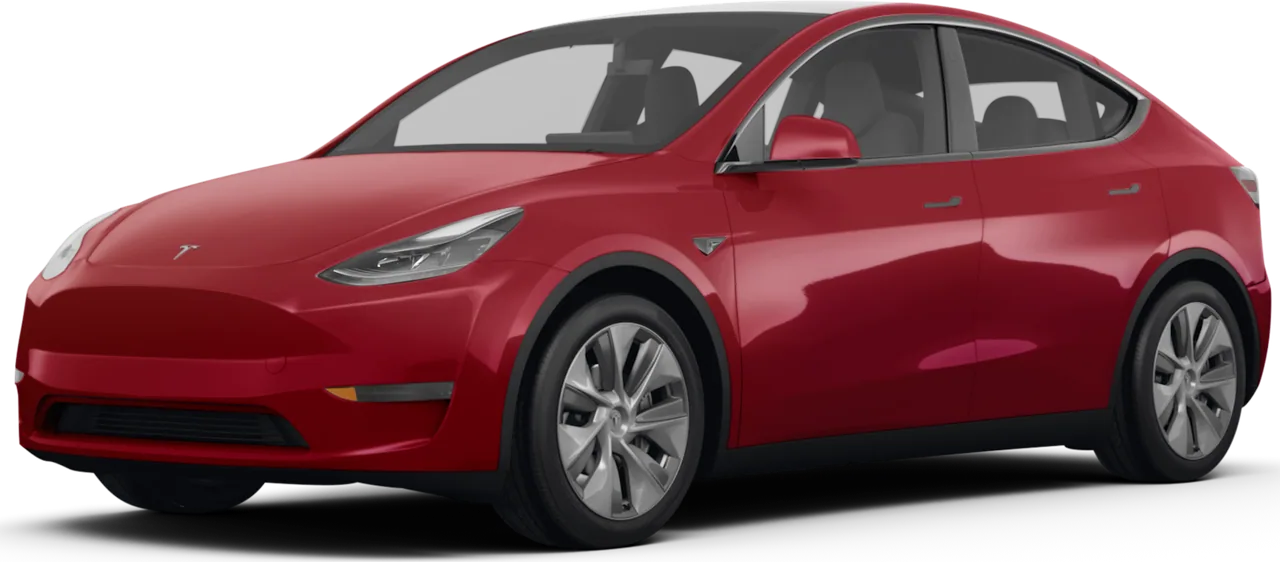
2024 Tesla Model Y Long Range AWD-I
Electric SUV · AWD
Based on battery health, build quality, owner data, EPA range, and market pricing
Above average for 2024 EV SUVs (class avg 66 · top 25%)
Personalize this scoreIs a low score bad?
Last scanned 24 days ago
The 2024 Tesla Model Y Long Range AWD-I puts down 308 miles of EPA range and 250 kW fast charging, and a mid-pack composite means the records-and-test-drive call matters more than the headline.
Score read
A 70/100 makes this worth comparing, not chasing. Do not let the composite hide this split: build quality score is 74/100, while owner feedback score is 67/100. Reddit threads cluster around owner satisfaction and build quality — verify both against the service records. Documented completion matters more than the recall count itself.
Price context
This trim started from $47,990 new. Used examples have come down since launch, but pricing varies by miles, condition, and how the model is moving right now; pull a current KBB Fair Purchase, an Edmunds True Market Value, or an active dealer listing for this exact trim, and anchor your offer there. Walk if the seller will not move off new-car-style pricing.
Who this is for
✓ Good for
- ⏱ Daily commuter ≤50 mi/day, predictable charging
- ↦ Road tripper Long trips, needs DC fast network
✗ Avoid if you are a
- $ Bargain hunter Best TCO, reliability + low depreciation
Gotchas
- Serviceable Recall paperwork has to match the exact VIN.
Mitigation Use NHTSA and the automaker lookup, then require repair records instead of a verbal promise.
- Verify Owner feedback is the part to read carefully (67/100).
Mitigation Read the complaint themes and ask whether this VIN has already had those issues repaired.
- Verify Current market pricing is not confirmed well enough for this trim.
Mitigation Compare KBB, J.D. Power, and live listings for the same trim before treating price as a buying signal.
Pre-purchase inspection
- 1 Run the exact VIN through NHTSA and the automaker recall lookup before discussing price.
- 2 Compare the dashboard range estimate with the EPA 308-mile rating after a full charge.
- 3 Confirm how much of the 8-year/120,000-mile battery warranty remains and whether it transfers.
- 4 If road trips matter, run a short DC fast-charge session and watch whether speed tapers normally.
- 5 Read the complaint themes, not just the count, and ask the seller whether those issues have shown up on this VIN.
VIN status first This model has 5 NHTSA recall records. The exact VIN lookup decides whether the car in front of you is clear.
Complaint context This scan found 269 NHTSA complaint records (1.8 per 10K VINs, low for any vehicle class). Read the themes below before treating the raw count as the verdict.
Price anchor Current market range is $32,400-$36,015. Use that range to compare listings for the same trim, mileage, and condition.
Pricing & Market Value
Score Breakdown
What matters most to you?
Drag the sliders to prioritize what you care about. Your TrimIndex Score recalculates instantly.
Vehicle Specifications
EVs at your price point that match or beat this trim
Price-gated peer set: vehicles within $27.4K–$41.0K market value (±20% of $34.2K). 1 outscore · 5 score within ±2. Mixed across makes — no "spend more, score better" comps.
Model Y
- ✓ Better bang-for-buck
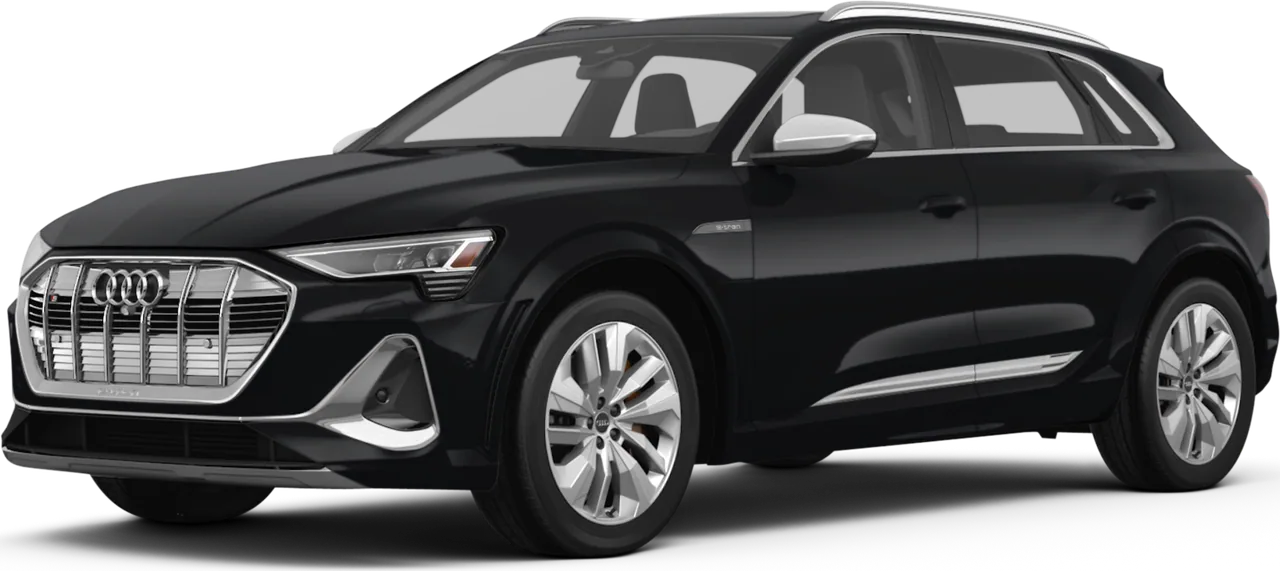
e-tron S
- ✓ Better bang-for-buck
- ✓ Better infotainment UX
- ✓ Better build quality
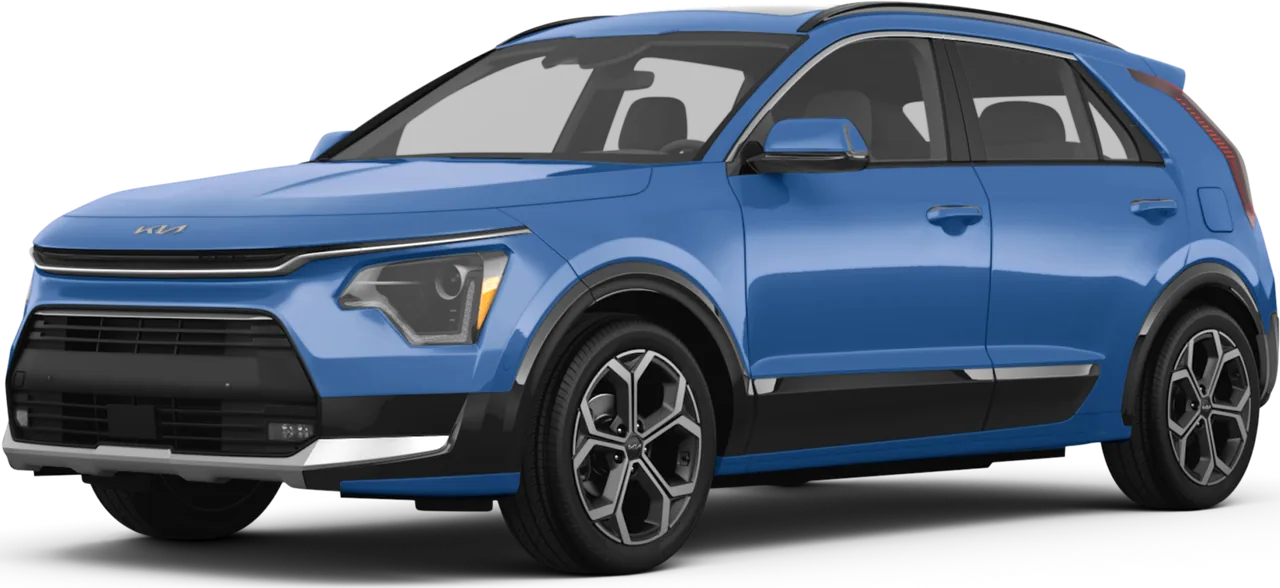
Niro
- ✓ Better infotainment UX
- ✓ Notably better build quality
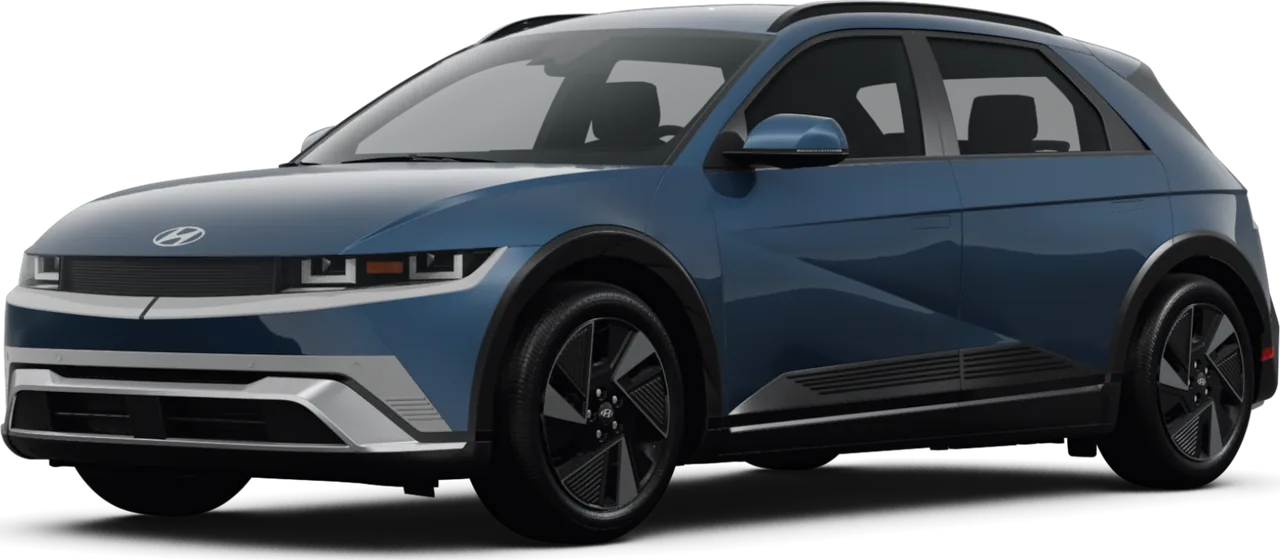
Ioniq 5
- ✓ Better infotainment UX
- ✓ Better owner satisfaction
- ✓ Better bang-for-buck
Model Y
- ✓ Better bang-for-buck
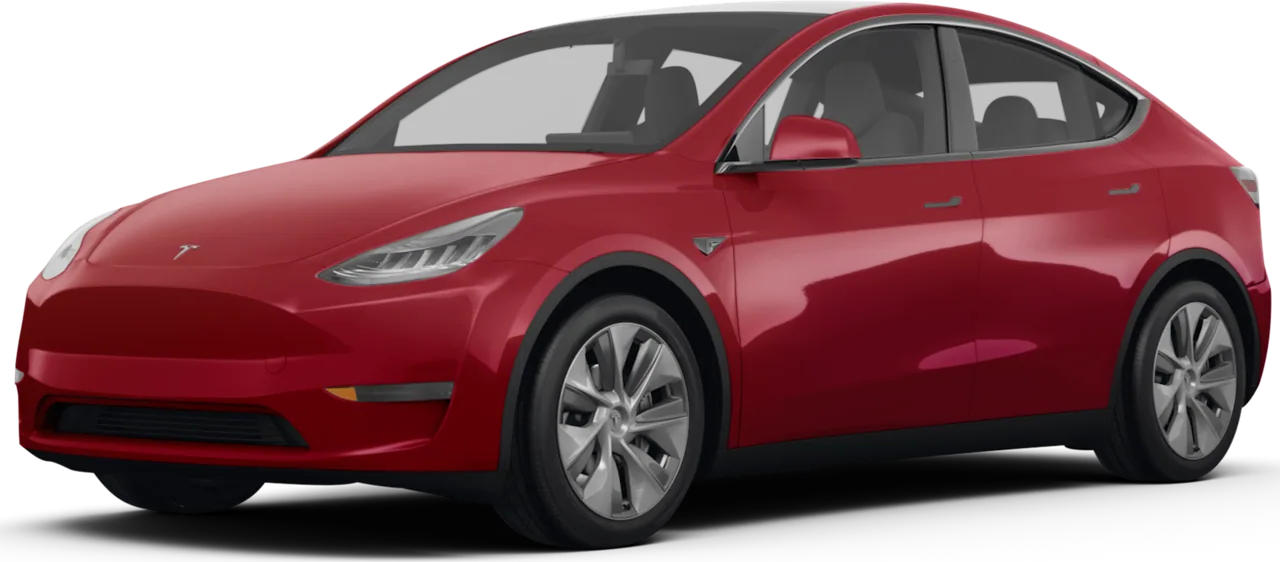
Model Y
- ✓ Better bang-for-buck
The federal $4,000 used-EV credit ended Sept 30, 2025.
But 10 states still run their own used-EV rebate programs — some up to $5,000. Pick your state to see what's available for this trim.
Source & disclaimer
Dealers make ~$9,803 on the average car loan.
After the price is set, the finance manager runs four plays to rebuild margin. Every buyer without a pre-approval is a target. Here's exactly what they run — and what stops each one.
78% of dealer loans carry a hidden +1.13% markup above what the lender actually charges. You never see it — it's buried in the contract. · CFPB
Dealer must match or beat your lender — they can't add margin invisibly. The markup play is dead on arrival.
Once you answer, they stretch the term to hit your number. Median result: $4K less off the price, 12 more months on the loan. · Industry avg
Financing is done. Only the sale price is on the table — and the dealer knows it.
Back-office F&I profit averages $1,975/vehicle, up 8.5% YoY. These products exist — but dealer markup is 4–10x what you'd pay elsewhere. · Dealership Guy
Dealer GAP runs $500–1K. Your insurer sells the same coverage for $100–250 over 5 years. Now you know.
"Your loan fell through — come re-sign." This pulls your APR up +5% on average. It's legal. It works because you've already driven the car home. · Ctr for Responsible Lending
A lender commitment letter means the deal is final. "Pending dealer approval" doesn't apply. You can't be yo-yo'd.
That's 19 months of your car payment — handed to the dealer's finance department for nothing.
Takes 2 minutes. No obligation to use it — but you'll walk in with all the leverage.
Pre-approval is a soft credit inquiry — no score impact. FICO treats all auto-loan hard pulls within 14 days as one, so you can still shop rates at the dealer.
NHTSA Recalls (5)
Tesla, Inc. (Tesla) is recalling certain 2024-2025 Model 3, Model S, 2023-2025 Model X, and Model Y vehicles. The computer circuit board may short, resulting in the loss of the rearview camera image. As such, these vehicles fail to comply with the requirements of Federal Motor Vehicle Safety Standard (FMVSS) number 111, "Rear Visibility."
A rearview camera that does not display an image reduces the driver's rear view, increasing the risk of a crash.
Check VIN status at NHTSA.govTesla, Inc. (Tesla) is recalling certain 2024 Cybertruck, 2017-2025 Model 3, and 2020-2025 Model Y vehicles. The tire pressure monitoring system (TPMS) warning light may not remain illuminated between drive cycles, failing to warn the driver of low tire pressure. As such, these vehicles fail to comply with the requirements of Federal Motor Vehicle Safety Standard number 138, "Tire Pressure Monitoring Systems."
Driving with improperly inflated tires increases the risk of a crash.
Check VIN status at NHTSA.govTesla, Inc. (Tesla) is recalling certain 2024 Model Y vehicles. The weld attaching the seat recliner mechanism to the front seat backs may fail.
The seat back frame may not properly restrain the occupant during a crash, increasing the risk of injury.
Check VIN status at NHTSA.govTesla, Inc. (Tesla) is recalling certain 2021-2024 Model 3, Model S, Model X, and 2020-2024 Model Y vehicles. The hood latch assembly may fail to detect an unlatched hood condition after the hood has been opened.
An unlatched hood can fully open, obstructing the driver's view and increasing the risk of a crash.
Check VIN status at NHTSA.govTesla, Inc. (Tesla) is recalling certain 2012-2023 Model S, 2016-2024 Model X, 2017-2023 Model 3, 2019-2024 Model Y, and 2024 Cybertruck vehicles. An incorrect font size is displayed on the instrument panel for the Brake, Park, and Antilock Brake System (ABS) warning lights. As such, these vehicles fail to comply with the requirements of Federal Motor Vehicle Safety Standard number 105, "Hydraulic and Electric Brake Systems" and 135, "Light Vehicle Brake Systems."
Warning lights with a smaller font size can make critical safety information on the instrument panel difficult to read, increasing the risk of a crash.
Check VIN status at NHTSA.govNHTSA Complaints (269 total · 1.8 per 10K US vehicles · low for any vehicle class)
INCIDENT: On April 17, 2026 at ~8:30 AM, my 2024 Tesla Model Y was operating on FSD (Supervised) approaching Wunderlich County Park parking lot entrance, Woodside, CA. Clear daylight, 11-12 MPH, turning into the parking lot. WHAT HAPPENED: A stationary metal W-beam guardrail (~2-3m long, ~1m tall) was directly in the forward path, clearly visible. FSD failed to detect the obstacle, then silently disengaged 2 seconds before impact. TIMELINE FROM IN-VEHICLE REPLAY: - 08:30:23: Vehicle fully aligned with guardrail, direct collision course - 08:30:24: FSD actively engaged (Self-Driving indicator displayed), 12 MPH, guardrail clearly visible - 08:30:25: FSD disengaged - 08:30:27: Impact TWO FAILURES: 1) DETECTION: For ~2 sec (08:30:23-08:30:25), FSD in active control with clearly visible stationary standardized guardrail directly in path. System failed to detect, decelerate, or alter course. 2) SILENT DISENGAGEMENT: FSD disengaged at 08:30:25 with no audible alert, no haptic feedback, no visual alert in driver's forward field of view, no "Take Over" prompt. Only indication was center display change, outside driver's forward line of sight required by Tesla's Owner's Manual to keep eyes on the road. DRIVER STATE: I was monitoring road per Owner's Manual. I received no warning of FSD handoff. I had no awareness FSD disengaged. I took no manual action (no brake, no steer) because I was not notified. I discovered disengagement only upon reviewing in-vehicle dashcam replay the following day. The 2-sec interval was insufficient reaction time even for an informed driver (below AAA/NHTSA 1.5-sec baseline). Research on automated handoff indicates 3-7 sec needed even when notified. I was not notified at all. CRASH: Yes, vehicle collided with the guardrail. INJURIES: None. THIRD-PARTY DAMAGE: None. FIRE: None. CONSISTENCY WITH NHTSA PROCEEDINGS: Pattern matches concerns in Investigation PE21-020, Engineering Analysis EA22-002, Recall 23V-83
INCIDENT: On April 17, 2026 at ~8:30 AM, my 2024 Tesla Model Y was operating on FSD (Supervised) approaching Wunderlich County Park parking lot entrance, Woodside, CA. Clear daylight, 11-12 MPH, turning into the parking lot. WHAT HAPPENED: A stationary metal W-beam guardrail (~2-3m long, ~1m tall) was directly in the forward path, clearly visible. FSD failed to detect the obstacle, then silently disengaged 2 seconds before impact. TIMELINE FROM IN-VEHICLE REPLAY: - 08:30:23: Vehicle fully aligned with guardrail, direct collision course - 08:30:24: FSD actively engaged (Self-Driving indicator displayed), 12 MPH, guardrail clearly visible - 08:30:25: FSD disengaged - 08:30:27: Impact TWO FAILURES: 1) DETECTION: For ~2 sec (08:30:23-08:30:25), FSD in active control with clearly visible stationary standardized guardrail directly in path. System failed to detect, decelerate, or alter course. 2) SILENT DISENGAGEMENT: FSD disengaged at 08:30:25 with no audible alert, no haptic feedback, no visual alert in driver's forward field of view, no "Take Over" prompt. Only indication was center display change, outside driver's forward line of sight required by Tesla's Owner's Manual to keep eyes on the road. DRIVER STATE: I was monitoring road per Owner's Manual. I received no warning of FSD handoff. I had no awareness FSD disengaged. I took no manual action (no brake, no steer) because I was not notified. I discovered disengagement only upon reviewing in-vehicle dashcam replay the following day. The 2-sec interval was insufficient reaction time even for an informed driver (below AAA/NHTSA 1.5-sec baseline). Research on automated handoff indicates 3-7 sec needed even when notified. I was not notified at all. CRASH: Yes, vehicle collided with the guardrail. INJURIES: None. THIRD-PARTY DAMAGE: None. FIRE: None. CONSISTENCY WITH NHTSA PROCEEDINGS: Pattern matches concerns in Investigation PE21-020, Engineering Analysis EA22-002, Recall 23V-83
Incident Date: February 12, 2024, at 1:00 PM Location: [XXX] Vehicle Model: Tesla Model 3 VIN: [Insert VIN of the Vehicle] License Plate: [Insert License Plate Number] Description of the Incident: On [XXX], while driving westbound on [XXX] at a speed of 35 MPH, [XXX] experienced a sudden and dangerous malfunction of the Tesla Model 3. Despite the driver's best efforts to maintain control, the vehicle autonomously shifted from the innermost lane to the outermost lane, jumped over the concrete sidewalk, and fell into a trench. Fortunately, no other vehicles were involved, preventing what could have been a fatal accident. The police report filed with the Suwanee, GA police department documents the incident, and the car was subsequently towed to a body shop, where it was declared totaled. It is essential to note that the auto-drive feature was disabled, and no subscription to the self-driving feature had been purchased or renewed. This raises serious concerns about a potential malfunction in Tesla’s system, and it is imperative that this issue is thoroughly investigated. Attempts to Resolve: Since the incident, numerous attempts have been made to contact Tesla for a root cause investigation and resolution, but Tesla has failed to provide any substantive response or investigation. Below is a history of our efforts: 1. March 3, 2024: Incident claim submitted during a call with Raquel. No claim number received. 2. March 14, 2024: Called Tesla Customer Service and spoke with Anthony. Case was assigned to Duluth, GA service center, but no case number was provided. 3. April 15, 2024: Spoke with Christian, and later with manager Andrew. An email was received with reference ID [XXX], but no further communication or action has been taken. INFORMATION REDACTED PURSUANT TO THE FREEDOM OF INFORMATION ACT (FOIA), 5 U.S.C. 552(B)(6)
Incident Date: February 12, 2024, at 1:00 PM Location: [XXX] Vehicle Model: Tesla Model 3 VIN: [Insert VIN of the Vehicle] License Plate: [Insert License Plate Number] Description of the Incident: On [XXX], while driving westbound on [XXX] at a speed of 35 MPH, [XXX] experienced a sudden and dangerous malfunction of the Tesla Model 3. Despite the driver's best efforts to maintain control, the vehicle autonomously shifted from the innermost lane to the outermost lane, jumped over the concrete sidewalk, and fell into a trench. Fortunately, no other vehicles were involved, preventing what could have been a fatal accident. The police report filed with the Suwanee, GA police department documents the incident, and the car was subsequently towed to a body shop, where it was declared totaled. It is essential to note that the auto-drive feature was disabled, and no subscription to the self-driving feature had been purchased or renewed. This raises serious concerns about a potential malfunction in Tesla’s system, and it is imperative that this issue is thoroughly investigated. Attempts to Resolve: Since the incident, numerous attempts have been made to contact Tesla for a root cause investigation and resolution, but Tesla has failed to provide any substantive response or investigation. Below is a history of our efforts: 1. March 3, 2024: Incident claim submitted during a call with Raquel. No claim number received. 2. March 14, 2024: Called Tesla Customer Service and spoke with Anthony. Case was assigned to Duluth, GA service center, but no case number was provided. 3. April 15, 2024: Spoke with Christian, and later with manager Andrew. An email was received with reference ID [XXX], but no further communication or action has been taken. INFORMATION REDACTED PURSUANT TO THE FREEDOM OF INFORMATION ACT (FOIA), 5 U.S.C. 552(B)(6)
The car accelerated by itself over the curb and into the building
The car accelerated by itself over the curb and into the building
In Auto Carwash while I was in vehicle it shifted from Neutral to Park causing the car behind me to hit my vehicle
In Auto Carwash while I was in vehicle it shifted from Neutral to Park causing the car behind me to hit my vehicle
This is my fifth Tesla, so i.am very familiar with the Self Driving feature which is mostly good. However, recently I got a Model Y and with in 24 hours I was rear-ended on the freeway! I had the car in Full Self Driving mode (FSD)! For some reason it just braked hard in the middle of my driving however, traffic was backing up. I injured my lower back and neck and I'm now having to go in for therapy and schedule a CAT scan. Luckily the person behind me was fine. After the incident I downloaded the zip disk which records incidences. The car had documented pre and post accident! But the actual incident there is no record... almost like it got wiped out!?!
This is my fifth Tesla, so i.am very familiar with the Self Driving feature which is mostly good. However, recently I got a Model Y and with in 24 hours I was rear-ended on the freeway! I had the car in Full Self Driving mode (FSD)! For some reason it just braked hard in the middle of my driving however, traffic was backing up. I injured my lower back and neck and I'm now having to go in for therapy and schedule a CAT scan. Luckily the person behind me was fine. After the incident I downloaded the zip disk which records incidences. The car had documented pre and post accident! But the actual incident there is no record... almost like it got wiped out!?!
The contact owns a 2024 Tesla Model Y. The contact stated that while driving approximately 25 - 35 MPH, while driving near cones on the road, the contact manually turned the vehicle towards the right, and the steering wheel failed to perform as needed. The contact attempted to manually correct the steering wheel but was unable return the steering wheel to center because the steering wheel was independently turning to the left or the right. The contact believed that the vehicle was operating in self-driving mode; however, the vehicle was not equipped with the feature. The contact depressed the brake pedal to decelerate, almost stopping the vehicle, to regain control of the vehicle. The contact was able to drive to the destination. The contact stated that the failure had occurred while driving approximately 60 - 70 MPH, and the vehicle veered to the left and the right while the lane assist was activated. The contact depressed the brake pedal and decelerated almost to a stop to regain control of the vehicle. The manufacturer was informed of the failure, but the contact had not received a follow-up call. The failure mileage was unknown.
The contact owns a 2024 Tesla Model Y. The contact stated that while driving approximately 25 - 35 MPH, while driving near cones on the road, the contact manually turned the vehicle towards the right, and the steering wheel failed to perform as needed. The contact attempted to manually correct the steering wheel but was unable return the steering wheel to center because the steering wheel was independently turning to the left or the right. The contact believed that the vehicle was operating in self-driving mode; however, the vehicle was not equipped with the feature. The contact depressed the brake pedal to decelerate, almost stopping the vehicle, to regain control of the vehicle. The contact was able to drive to the destination. The contact stated that the failure had occurred while driving approximately 60 - 70 MPH, and the vehicle veered to the left and the right while the lane assist was activated. The contact depressed the brake pedal and decelerated almost to a stop to regain control of the vehicle. The manufacturer was informed of the failure, but the contact had not received a follow-up call. The failure mileage was unknown.
Full self driving did not detect pole. I press the fsd of tesla going out of the parking lot and the car turned to the side where the pole is located hitting the side where the camera part right next to driver side. The sensor of the car did not detect completely that there is a pole on side
Full self driving did not detect pole. I press the fsd of tesla going out of the parking lot and the car turned to the side where the pole is located hitting the side where the camera part right next to driver side. The sensor of the car did not detect completely that there is a pole on side
Seatbeall does not click in
Seatbeall does not click in
On Saturday morning January 3, 2026 I was driving with my wife, daughter and dog. There was light rain at the time and I had my adaptive cruise set at approximately 72 mph. I was driving our 2024 Tesla Y. At approximately 10:21am the rear of car began to slide right as we entered gradual left curve, possibly because we hit water on road. I tried to slightly correct right and when I did that the steering wheel aggressively corrected back left which put us into a slide. Within a second we hit a tree on the passenger side. The impact was severe and on the passenger side door where my wife was sitting. At that time I theorize that my dog was ejected out of the back window and thrown across the freeway. We then rolled in the other direction (I dont know how many times) down a hill and settled upside down. I immediately smelled smoke and began to try get out of my seatbelt but I couldn’t. I carry a knife and I was able to cut myself out. I then tried to open door and could not so I began punching the glass and eventually got it moving and pushed on it and got it open. I slid myself out, turned around and saw car was on fire. I pulled my daughter out and then began extracting my wife. She was unconscious and had obvious orthopedic injuries. I am 100% confident that had I been driving my other vehicle (non Tesla) that this accident would have NOT occurred. The Tesla and its steering system caused this accident. On top of that, the batteries immediately caught fire, my seatbelt release button did not work, and the electric door button did not work. Had I not been carrying a knife and strong enough to punch door open this story would have ended up differently. The car completely burned. As far as I know, this was the first time this exact issue presented itself. However, when looking online its seems this issue is fairly common with Teslas in wet weather.
On Saturday morning January 3, 2026 I was driving with my wife, daughter and dog. There was light rain at the time and I had my adaptive cruise set at approximately 72 mph. I was driving our 2024 Tesla Y. At approximately 10:21am the rear of car began to slide right as we entered gradual left curve, possibly because we hit water on road. I tried to slightly correct right and when I did that the steering wheel aggressively corrected back left which put us into a slide. Within a second we hit a tree on the passenger side. The impact was severe and on the passenger side door where my wife was sitting. At that time I theorize that my dog was ejected out of the back window and thrown across the freeway. We then rolled in the other direction (I dont know how many times) down a hill and settled upside down. I immediately smelled smoke and began to try get out of my seatbelt but I couldn’t. I carry a knife and I was able to cut myself out. I then tried to open door and could not so I began punching the glass and eventually got it moving and pushed on it and got it open. I slid myself out, turned around and saw car was on fire. I pulled my daughter out and then began extracting my wife. She was unconscious and had obvious orthopedic injuries. I am 100% confident that had I been driving my other vehicle (non Tesla) that this accident would have NOT occurred. The Tesla and its steering system caused this accident. On top of that, the batteries immediately caught fire, my seatbelt release button did not work, and the electric door button did not work. Had I not been carrying a knife and strong enough to punch door open this story would have ended up differently. The car completely burned. As far as I know, this was the first time this exact issue presented itself. However, when looking online its seems this issue is fairly common with Teslas in wet weather.
The emergency mechanical levers for BOTH of my front doors do not work at all. I pull them while pushing the door and they do not open the car. If the power dies in the car, there is no way for me or my passenger to escape the car. I reported this to Tesla and they are not able to immediately investigate it or provide me replacement vehicle.
The emergency mechanical levers for BOTH of my front doors do not work at all. I pull them while pushing the door and they do not open the car. If the power dies in the car, there is no way for me or my passenger to escape the car. I reported this to Tesla and they are not able to immediately investigate it or provide me replacement vehicle.
On [XXX], while operating my 2024 Tesla Model Y in Full Self-Driving (Supervised) mode, the vehicle experienced an Uncommanded Steering Input leading to a collision. The vehicle was traveling at a very low speed of approximately 5 mph in a clear, simple environment. Despite this walking pace, the FSD software failed to identify a visible concrete curb and initiated a sudden, sharp turn directly into the obstacle without any prior warning or driver input. The fact that the system executed such a violent and erroneous maneuver at 5 mph indicates a fundamental failure in the Neural Network's object detection and path planning logic. If this logic failure had occurred at higher speeds or near pedestrians, the results could have been catastrophic. The local Tesla Service Center (Watertown, MA) refused to conduct a physical inspection or a log review of the steering torque. They issued a Repair Estimate of $1,217.26 while claiming 'no hardware fault codes' were present, thus ignoring the documented software malfunction. As a leaseholder of this vehicle with only 15,489 miles, I am reporting this as a significant safety defect that the manufacturer refuses to investigate. INFORMATION REDACTED PURSUANT TO THE FREEDOM OF INFORMATION ACT (FOIA), 5 U.S.C. 552(B)(6)
On [XXX], while operating my 2024 Tesla Model Y in Full Self-Driving (Supervised) mode, the vehicle experienced an Uncommanded Steering Input leading to a collision. The vehicle was traveling at a very low speed of approximately 5 mph in a clear, simple environment. Despite this walking pace, the FSD software failed to identify a visible concrete curb and initiated a sudden, sharp turn directly into the obstacle without any prior warning or driver input. The fact that the system executed such a violent and erroneous maneuver at 5 mph indicates a fundamental failure in the Neural Network's object detection and path planning logic. If this logic failure had occurred at higher speeds or near pedestrians, the results could have been catastrophic. The local Tesla Service Center (Watertown, MA) refused to conduct a physical inspection or a log review of the steering torque. They issued a Repair Estimate of $1,217.26 while claiming 'no hardware fault codes' were present, thus ignoring the documented software malfunction. As a leaseholder of this vehicle with only 15,489 miles, I am reporting this as a significant safety defect that the manufacturer refuses to investigate. INFORMATION REDACTED PURSUANT TO THE FREEDOM OF INFORMATION ACT (FOIA), 5 U.S.C. 552(B)(6)
Date & Time: December 25, approximately 6:00 PM Location: Northbound I-880 between the Mowry Avenue and Thornton Avenue exits, Fremont, CA Weather & Road Conditions: Heavy rain at the time of the incident. Road surface was wet with reduced visibility. Vehicle & System State: Tesla Model Y. Driver assistance / self-driving functionality was active at the time of the incident (traffic-aware cruise control / Autopilot functionality). Description of the Incident: While driving northbound on I-880 in heavy rain, the vehicle had been operating normally. Without warning, the vehicle appeared to incorrectly detect that it was drifting out of its lane and attempted to correct this perceived drift. Instead of a minor lane correction, the vehicle abruptly applied heavy braking and initiated a sudden and aggressive left steering maneuver. The car crossed approximately four lanes of traffic in the same direction of travel and continued rotating, ultimately performing an unintended U-turn while remaining on the northbound side of the highway. As a result, the vehicle came to a stop oriented against the direction of travel, facing oncoming northbound traffic. Immediately afterward, the vehicle unexpectedly began reversing at high speed without driver input, creating an additional imminent risk of collision with the outer highway wall (noise barrier separating the highway from adjacent residential areas). During this entire sequence of events, I was unable to regain control of the vehicle despite attempting to intervene. There were no vehicles immediately surrounding us at that moment. Had there been nearby traffic, this incident would likely have resulted in a severe or fatal multi-vehicle collision. Occupants: My wife and two young children were in the vehicle. The children were asleep in the back seat, secured in car seats. Outcome: No physical collision occurred. However, the incident caused extreme fear and distress, and we remain shaken by the event.
Date & Time: December 25, approximately 6:00 PM Location: Northbound I-880 between the Mowry Avenue and Thornton Avenue exits, Fremont, CA Weather & Road Conditions: Heavy rain at the time of the incident. Road surface was wet with reduced visibility. Vehicle & System State: Tesla Model Y. Driver assistance / self-driving functionality was active at the time of the incident (traffic-aware cruise control / Autopilot functionality). Description of the Incident: While driving northbound on I-880 in heavy rain, the vehicle had been operating normally. Without warning, the vehicle appeared to incorrectly detect that it was drifting out of its lane and attempted to correct this perceived drift. Instead of a minor lane correction, the vehicle abruptly applied heavy braking and initiated a sudden and aggressive left steering maneuver. The car crossed approximately four lanes of traffic in the same direction of travel and continued rotating, ultimately performing an unintended U-turn while remaining on the northbound side of the highway. As a result, the vehicle came to a stop oriented against the direction of travel, facing oncoming northbound traffic. Immediately afterward, the vehicle unexpectedly began reversing at high speed without driver input, creating an additional imminent risk of collision with the outer highway wall (noise barrier separating the highway from adjacent residential areas). During this entire sequence of events, I was unable to regain control of the vehicle despite attempting to intervene. There were no vehicles immediately surrounding us at that moment. Had there been nearby traffic, this incident would likely have resulted in a severe or fatal multi-vehicle collision. Occupants: My wife and two young children were in the vehicle. The children were asleep in the back seat, secured in car seats. Outcome: No physical collision occurred. However, the incident caused extreme fear and distress, and we remain shaken by the event.
The rear seat on the left, seat belt off from the mount while my 7 years old son trying to fasten seatbelt.
The rear seat on the left, seat belt off from the mount while my 7 years old son trying to fasten seatbelt.
The car spontaneously accelerated while approaching a stop sign. I was able to hit the brake to stop it.
The car spontaneously accelerated while approaching a stop sign. I was able to hit the brake to stop it.
Steering locked at 75 MPH on freeway. Model Y suddenly jerked left and locked, then jerked right and locked again. Loss of control and near-crash event. No road debris, no rain, no warnings on screen. Steering temporarily becomes unresponsive, requiring fight to correct. Tesla refuses repair because no alert code stored. Vehicle unsafe to drive.
Steering locked at 75 MPH on freeway. Model Y suddenly jerked left and locked, then jerked right and locked again. Loss of control and near-crash event. No road debris, no rain, no warnings on screen. Steering temporarily becomes unresponsive, requiring fight to correct. Tesla refuses repair because no alert code stored. Vehicle unsafe to drive.
I would like to report a significant incident involving the auto-corrective steering in my vehicle. While driving on the highway, the steering wheel experienced a strong jolt, which I believe was caused by the auto-corrective steering system. This resulted in the vehicle spinning three times and ultimately coming to rest on the grassy center divider. Fortunately, no damage occurred at that time, and I initially attributed the incident to road conditions. I continued driving for approximately 30 minutes in rainy weather without further incident. However, a few hours later, during my return journey, the same forceful jolt to the steering wheel recurred about 20 minutes into the drive. On this occasion, the car spun 1.5 times and subsequently collided backward with the concrete center divider. It is fortunate that no other vehicles were involved, given the heavy traffic and rainy conditions at the time. During both of the incidents, I had both hands on the steering wheel and was not able to correct steering due to the strong force from the steering wheel jolt. I did have a Police Report filed, but have to get number when I return home.
I would like to report a significant incident involving the auto-corrective steering in my vehicle. While driving on the highway, the steering wheel experienced a strong jolt, which I believe was caused by the auto-corrective steering system. This resulted in the vehicle spinning three times and ultimately coming to rest on the grassy center divider. Fortunately, no damage occurred at that time, and I initially attributed the incident to road conditions. I continued driving for approximately 30 minutes in rainy weather without further incident. However, a few hours later, during my return journey, the same forceful jolt to the steering wheel recurred about 20 minutes into the drive. On this occasion, the car spun 1.5 times and subsequently collided backward with the concrete center divider. It is fortunate that no other vehicles were involved, given the heavy traffic and rainy conditions at the time. During both of the incidents, I had both hands on the steering wheel and was not able to correct steering due to the strong force from the steering wheel jolt. I did have a Police Report filed, but have to get number when I return home.
On November 8, my 2024 Model Y suddenly came to a complete stop from about 40 mph while I was driving with no cruise control or Autopilot active. This was extremely dangerous — my [XXX] was in the car, and we were lucky no one was behind us. It put myself, my child, and others in the absolute risk of collision and injury. When I contacted the service center they said it sometimes happened due to "shadows" or "sun". They refused to run a diagnostic on the car for free and wanted me to pay for it. INFORMATION REDACTED PURSUANT TO THE FREEDOM OF INFORMATION ACT (FOIA), 5 U.S.C. 552(B)(6)
On November 8, my 2024 Model Y suddenly came to a complete stop from about 40 mph while I was driving with no cruise control or Autopilot active. This was extremely dangerous — my [XXX] was in the car, and we were lucky no one was behind us. It put myself, my child, and others in the absolute risk of collision and injury. When I contacted the service center they said it sometimes happened due to "shadows" or "sun". They refused to run a diagnostic on the car for free and wanted me to pay for it. INFORMATION REDACTED PURSUANT TO THE FREEDOM OF INFORMATION ACT (FOIA), 5 U.S.C. 552(B)(6)
I was driving the Tesla and coming up my circular drive(note I was driving uphill). The car suddenly accelerated and went out of control. I pumped the brake and took my foot off the accelerator but the car kept going and crashed into our house (sunroom) at end of the driveway at high speed > we went through the casement windows and brick foundation and would have gone through the other side window and down a hill and probably been killed if it were not for a heavy cast iron table that brought us to a stop. The airbags never opened.The car was totaled(the insurance company declared it a total lost and refused to repair and paid us a small amount, less than we paid for the car. This was the second repeat incident, the first one very similar was reported to NHTSA by my erhusband,reported to NHTSA 0n 1/20/2025, 6.19 pm; complaint number 11637163.after the first crash we tried to get Tesla to pick up the car. they refused. Instead they said they would check it remotely. We gave them the opportunity to inspect and repair the car between the first and second incident. They ignored us, do to their negligence we were almost killed. Please open an investigation. We have names and emails to show who we complained to.
I was driving the Tesla and coming up my circular drive(note I was driving uphill). The car suddenly accelerated and went out of control. I pumped the brake and took my foot off the accelerator but the car kept going and crashed into our house (sunroom) at end of the driveway at high speed > we went through the casement windows and brick foundation and would have gone through the other side window and down a hill and probably been killed if it were not for a heavy cast iron table that brought us to a stop. The airbags never opened.The car was totaled(the insurance company declared it a total lost and refused to repair and paid us a small amount, less than we paid for the car. This was the second repeat incident, the first one very similar was reported to NHTSA by my erhusband,reported to NHTSA 0n 1/20/2025, 6.19 pm; complaint number 11637163.after the first crash we tried to get Tesla to pick up the car. they refused. Instead they said they would check it remotely. We gave them the opportunity to inspect and repair the car between the first and second incident. They ignored us, do to their negligence we were almost killed. Please open an investigation. We have names and emails to show who we complained to.
Tesla removed the speed limit offset feature in FSD version 14.1.4 and now only uses speed profiles called Sloth, Chill, Standard, Hurry, and Mad Max, and this has made my car extremely unsafe to drive. The problem is that these profiles make the car go either way too slow or way too fast and I cannot adjust it to match actual traffic conditions anymore. To make matters worse, the speed limit detection is broken and frequently shows the wrong speed limit for the road I am on. When I use Sloth, the car never goes over the detected speed limit no matter what, so if the system thinks I am in a 35 mph zone when I am actually on a 55 mph highway, my car crawls along at 35 while traffic is flying past at 60-70 mph. I have people tailgating me, honking, flashing their lights, swerving around me dangerously, and I have almost been rear-ended multiple times because my car is going so much slower than everyone else. Without the ability to set a maximum speed offset, I am stuck going whatever speed the broken detection system thinks is right. If I switch to Standard, Hurry or Mad Max to try to keep up with traffic, sometimes the car goes way too fast for the actual conditions or blows through school zones and residential areas at unsafe speeds. I cannot fine-tune the speed anymore to drive safely with the flow of traffic. I am forced to either be a rolling roadblock and risk getting hit from behind, or use an aggressive profile that might go dangerously fast. This happens every single time I use FSD now and the combination of broken speed limit detection plus no manual offset control has created a seriously unsafe situation. I feel endangered every time I drive and I am genuinely worried about causing or being in an accident.
Tesla removed the speed limit offset feature in FSD version 14.1.4 and now only uses speed profiles called Sloth, Chill, Standard, Hurry, and Mad Max, and this has made my car extremely unsafe to drive. The problem is that these profiles make the car go either way too slow or way too fast and I cannot adjust it to match actual traffic conditions anymore. To make matters worse, the speed limit detection is broken and frequently shows the wrong speed limit for the road I am on. When I use Sloth, the car never goes over the detected speed limit no matter what, so if the system thinks I am in a 35 mph zone when I am actually on a 55 mph highway, my car crawls along at 35 while traffic is flying past at 60-70 mph. I have people tailgating me, honking, flashing their lights, swerving around me dangerously, and I have almost been rear-ended multiple times because my car is going so much slower than everyone else. Without the ability to set a maximum speed offset, I am stuck going whatever speed the broken detection system thinks is right. If I switch to Standard, Hurry or Mad Max to try to keep up with traffic, sometimes the car goes way too fast for the actual conditions or blows through school zones and residential areas at unsafe speeds. I cannot fine-tune the speed anymore to drive safely with the flow of traffic. I am forced to either be a rolling roadblock and risk getting hit from behind, or use an aggressive profile that might go dangerously fast. This happens every single time I use FSD now and the combination of broken speed limit detection plus no manual offset control has created a seriously unsafe situation. I feel endangered every time I drive and I am genuinely worried about causing or being in an accident.
Recently Tesla released it's latest version of FSD, v14.1.4. One of the key features is the revamping of the driving modes: sloth, chill, standard, and mad max. Tesla also removed the ability to manually increase or decrease the speed of the car. This is a problem. Let me illustrate it with a real-life example. Yesterday I was driving of a 40 mph road and the car correctly set the speed. I was using the standard mode so the car allowed an overage of around 10% so the actual speed was 45 mph. In our area this is typical for most drivers. As we entered a village, the posted speed limit was changed to 30 mph. The panel was perfectly visible and readable. The car did not register it and continued at 45 mph. I changed to mode to "sloth" and the car decreased its speed to 40 mph but I was still 10 mph above the legal speed limit. I came across a second 30 mph panel and again the car "ignored" it. Because I did not have the ability to manually reduce the speed of the car, I had to disengage FSD and drive the car by myself. Tesla claims FSD must be supervised. Fine. But removing the ability to manually change the speed of the car should be a requirement not a design preference.
Recently Tesla released it's latest version of FSD, v14.1.4. One of the key features is the revamping of the driving modes: sloth, chill, standard, and mad max. Tesla also removed the ability to manually increase or decrease the speed of the car. This is a problem. Let me illustrate it with a real-life example. Yesterday I was driving of a 40 mph road and the car correctly set the speed. I was using the standard mode so the car allowed an overage of around 10% so the actual speed was 45 mph. In our area this is typical for most drivers. As we entered a village, the posted speed limit was changed to 30 mph. The panel was perfectly visible and readable. The car did not register it and continued at 45 mph. I changed to mode to "sloth" and the car decreased its speed to 40 mph but I was still 10 mph above the legal speed limit. I came across a second 30 mph panel and again the car "ignored" it. Because I did not have the ability to manually reduce the speed of the car, I had to disengage FSD and drive the car by myself. Tesla claims FSD must be supervised. Fine. But removing the ability to manually change the speed of the car should be a requirement not a design preference.
There was a sudden unintended acceleration and the brake did not work, causing a major accident. Car caught fire and door would not open. The car has completely engulfed. There were no warning lamps, messages or other symptoms prior to the failure. Vehicle has been inspected by insurance and police, but not by manufacturer.
There was a sudden unintended acceleration and the brake did not work, causing a major accident. Car caught fire and door would not open. The car has completely engulfed. There were no warning lamps, messages or other symptoms prior to the failure. Vehicle has been inspected by insurance and police, but not by manufacturer.
After Tesla Berkeley performed an alignment on my 2024 Model Y on July 22, 2025, the car suffered a complete systems failure while driving on the freeway. Within minutes of leaving the service center, multiple safety systems shut down at once — steering assist, emergency braking, lane keeping, stability control, etc... all turned off, and the car went into manual mode. The vehicle became extremely difficult to control at highway speeds, forcing me to steer and brake manually without assist. Because the Service Center was closed that evening, I couldn’t contact anyone, so I drove back first thing the next morning (July 23) to report the issue. I was initially told the next available appointment was two weeks later, but I had to beg to be seen the same day because the car was unsafe to drive. Tesla redid the alignment and told me the car was fine. After reviewing the alignment reports, both the July 22 and July 23 data are mechanically impossible. The reports show rear camber changes from −1.8° / −2.3° to −1.5° / −1.6°, then to −2.0° / −1.8°, even though rear camber on a stock Model Y is not adjustable. This means the alignment equipment or calibration was inaccurate, and therefore the toe settings were also unreliable. The car was almost certainly released with incorrect rear toe, which explains the immediate handling instability and safety system shutdowns. A later independent alignment on October 13, 2025 (America’s Tire, Roseville) confirmed the correct geometry (−1.9° / −2.0°) and proved Tesla’s readings were wrong. Since the faulty alignments, my car developed severe inner-edge tire wear, and I had to replace all four tires prematurely. This incident involved a total system and steering-assist failure immediately after service, making it a clear safety hazard. Documentation (alignment reports and tire invoices) are available upon reques
After Tesla Berkeley performed an alignment on my 2024 Model Y on July 22, 2025, the car suffered a complete systems failure while driving on the freeway. Within minutes of leaving the service center, multiple safety systems shut down at once — steering assist, emergency braking, lane keeping, stability control, etc... all turned off, and the car went into manual mode. The vehicle became extremely difficult to control at highway speeds, forcing me to steer and brake manually without assist. Because the Service Center was closed that evening, I couldn’t contact anyone, so I drove back first thing the next morning (July 23) to report the issue. I was initially told the next available appointment was two weeks later, but I had to beg to be seen the same day because the car was unsafe to drive. Tesla redid the alignment and told me the car was fine. After reviewing the alignment reports, both the July 22 and July 23 data are mechanically impossible. The reports show rear camber changes from −1.8° / −2.3° to −1.5° / −1.6°, then to −2.0° / −1.8°, even though rear camber on a stock Model Y is not adjustable. This means the alignment equipment or calibration was inaccurate, and therefore the toe settings were also unreliable. The car was almost certainly released with incorrect rear toe, which explains the immediate handling instability and safety system shutdowns. A later independent alignment on October 13, 2025 (America’s Tire, Roseville) confirmed the correct geometry (−1.9° / −2.0°) and proved Tesla’s readings were wrong. Since the faulty alignments, my car developed severe inner-edge tire wear, and I had to replace all four tires prematurely. This incident involved a total system and steering-assist failure immediately after service, making it a clear safety hazard. Documentation (alignment reports and tire invoices) are available upon reques
Phantom braking happened. This is the 3rd time to my car. This time, my car stopped automatically when I was already decelerating close to 2-5 mph and the car in front was very far away. I was not using FSD nor autopilot. The emergency auto stop sign came up out of nowhere and my car jerked really hard and my child in the back experienced the jerk and this injured his shoulder.
Phantom braking happened. This is the 3rd time to my car. This time, my car stopped automatically when I was already decelerating close to 2-5 mph and the car in front was very far away. I was not using FSD nor autopilot. The emergency auto stop sign came up out of nowhere and my car jerked really hard and my child in the back experienced the jerk and this injured his shoulder.
the steering wheel used to be centered in the middle. when you turn right, its resistance would turn it left back to the center point. or when you turn left, its resistance would turn it back right towards the center point. so after each turn such as u-turn, one would grab the steering wheel lightly so it can slide back to the center position. i will call it the "no resistance" point for that centered steering wheel position. now the problem is, that no resistance point has moved a few degrees right and it brings the wheel with it. i now have to turn the steering wheel left (with the resistance that it wants to go back to right) to make the steering wheel centered and go forward straight. car goes forward straight when the steering wheel is centered so it's not an alignment problem. but in order for the steering wheel to be centered, i have to turn it slightly left because the no resistance point has shifted a few degrees right. now this is dangerous because the car can now take you off the lane easily. car is equipped with lane keeping assistance and i find the system helpful but the system is not activated some times under some circumstances. I visited a dealer and they claimed the wheel is centered that there is no need for any repairs.
the steering wheel used to be centered in the middle. when you turn right, its resistance would turn it left back to the center point. or when you turn left, its resistance would turn it back right towards the center point. so after each turn such as u-turn, one would grab the steering wheel lightly so it can slide back to the center position. i will call it the "no resistance" point for that centered steering wheel position. now the problem is, that no resistance point has moved a few degrees right and it brings the wheel with it. i now have to turn the steering wheel left (with the resistance that it wants to go back to right) to make the steering wheel centered and go forward straight. car goes forward straight when the steering wheel is centered so it's not an alignment problem. but in order for the steering wheel to be centered, i have to turn it slightly left because the no resistance point has shifted a few degrees right. now this is dangerous because the car can now take you off the lane easily. car is equipped with lane keeping assistance and i find the system helpful but the system is not activated some times under some circumstances. I visited a dealer and they claimed the wheel is centered that there is no need for any repairs.
Three different occasions, while utilizing adaptive cruise the car applied all breaks, causing me to lunge forward with the car coming to a complete stop. I did not see anything that would had caused the car to apply the breaks and the camera's did not record any obstacle. This was brought to the Tesla dealerships attention and I was told there is nothing that can be done about it. If I had not been wearing my seat belt, the potential emergency braking could had resulted in me sustaining a blunt force impact to my chest with the steering wheel, not to mention a possible motor vehicle accident with the vehicle behind me. I did look through the manual and there is no way of me turning feature off or lowering to a warning versus a suddent stop.
Three different occasions, while utilizing adaptive cruise the car applied all breaks, causing me to lunge forward with the car coming to a complete stop. I did not see anything that would had caused the car to apply the breaks and the camera's did not record any obstacle. This was brought to the Tesla dealerships attention and I was told there is nothing that can be done about it. If I had not been wearing my seat belt, the potential emergency braking could had resulted in me sustaining a blunt force impact to my chest with the steering wheel, not to mention a possible motor vehicle accident with the vehicle behind me. I did look through the manual and there is no way of me turning feature off or lowering to a warning versus a suddent stop.
On [XXX], at approximately [XXX], I was driving westbound on the [XXX], just before the [XXX] and [XXX] off-ramp, with my wife and our [XXX] baby in the car. While in traffic, I noticed the regenerative braking system was not slowing the vehicle down adequately, despite having a clear and sufficient distance from the big rig ahead of us. As the gap closed, I slammed down on the brake pedal, but it felt abnormally stiff and did not respond with the urgency or force expected. The vehicle failed to stop in time, resulting in a rear-end collision with the big rig. Thankfully, we were not injured due to the speed of the accident. The breaks have not been inspected due to it being in the collision center There was an alarm but it sounded off too late and the car ended up colliding. INFORMATION REDACTED PURSUANT TO THE FREEDOM OF INFORMATION ACT (FOIA), 5 U.S.C. 552(B)(6)
On [XXX], at approximately [XXX], I was driving westbound on the [XXX], just before the [XXX] and [XXX] off-ramp, with my wife and our [XXX] baby in the car. While in traffic, I noticed the regenerative braking system was not slowing the vehicle down adequately, despite having a clear and sufficient distance from the big rig ahead of us. As the gap closed, I slammed down on the brake pedal, but it felt abnormally stiff and did not respond with the urgency or force expected. The vehicle failed to stop in time, resulting in a rear-end collision with the big rig. Thankfully, we were not injured due to the speed of the accident. The breaks have not been inspected due to it being in the collision center There was an alarm but it sounded off too late and the car ended up colliding. INFORMATION REDACTED PURSUANT TO THE FREEDOM OF INFORMATION ACT (FOIA), 5 U.S.C. 552(B)(6)
While driving with Full Self-Driving (FSD) engaged, my vehicle proceeded through a red traffic light without any driver input on two separate occasions within the past few weeks. On both occasions: - The traffic light was clearly red. - The vehicle accelerated forward without prompt while first briefly coming to a full stop it then proceeded forward while traffic light remained on red. - There was no visible obstruction or confusion. These are serious failures in the FSD system’s signal recognition and pose an extreme safety hazard. I request a formal investigation and safety recall if warranted.
While driving with Full Self-Driving (FSD) engaged, my vehicle proceeded through a red traffic light without any driver input on two separate occasions within the past few weeks. On both occasions: - The traffic light was clearly red. - The vehicle accelerated forward without prompt while first briefly coming to a full stop it then proceeded forward while traffic light remained on red. - There was no visible obstruction or confusion. These are serious failures in the FSD system’s signal recognition and pose an extreme safety hazard. I request a formal investigation and safety recall if warranted.
The contact owned a 2024 Tesla Model Y. The contact stated that while his son was driving at approximately 38 MPH with his sister inside the vehicle, the brake pedal was depressed; however, the vehicle lost steering and braking functionality and failed to stop as intended, causing the vehicle to drive through a crosswalk. The contact stated that the steering wheel failed to respond while being turned, causing the vehicle to crash into a curb and then into a parked vehicle, which was able to stop the vehicle. The contact stated that the vehicle was towed to a Tesla Collision Center, and between Tesla and the Insurance provider, the vehicle was deemed a total loss. The Insurance Company reviewed the event data recorder (EDR) reports and confirmed the failure which contributed to the crash. The contact stated that the Police was not contacted because it was a single vehicle crash. The other vehicle owner was notified of the crash and was provided the needed information to file a claim. A Police report was not filed. The contact's son was taken to the local medical center in a family vehicle. The contact's son and daughter sustained headaches and concussions, and both received medical attention. The contact drove his son to the local medical center, where he was admitted and remained overnight. Additionally, the contact's son was continuing outpatient treatment for the injuries sustained. The manufacturer was made aware of the failure but provided no assistance. The failure mileage was approximately 3,500.
The contact owned a 2024 Tesla Model Y. The contact stated that while his son was driving at approximately 38 MPH with his sister inside the vehicle, the brake pedal was depressed; however, the vehicle lost steering and braking functionality and failed to stop as intended, causing the vehicle to drive through a crosswalk. The contact stated that the steering wheel failed to respond while being turned, causing the vehicle to crash into a curb and then into a parked vehicle, which was able to stop the vehicle. The contact stated that the vehicle was towed to a Tesla Collision Center, and between Tesla and the Insurance provider, the vehicle was deemed a total loss. The Insurance Company reviewed the event data recorder (EDR) reports and confirmed the failure which contributed to the crash. The contact stated that the Police was not contacted because it was a single vehicle crash. The other vehicle owner was notified of the crash and was provided the needed information to file a claim. A Police report was not filed. The contact's son was taken to the local medical center in a family vehicle. The contact's son and daughter sustained headaches and concussions, and both received medical attention. The contact drove his son to the local medical center, where he was admitted and remained overnight. Additionally, the contact's son was continuing outpatient treatment for the injuries sustained. The manufacturer was made aware of the failure but provided no assistance. The failure mileage was approximately 3,500.
I was driving at a speed of 60 miles per hour in rainy weather when the car’s emergency braking system suddenly activated. At the same time, the steering wheel locked due to the braking, and I completely lost control of the vehicle. The car spun multiple times before crashing into the center divider of the highway and finally coming to a stop. This was an extremely dangerous incident from a safety perspective. This was the first time such a braking malfunction occurred. The incident has not yet been investigated by the insurance company, and no warning or notification was displayed by the vehicle at any point.
I was driving at a speed of 60 miles per hour in rainy weather when the car’s emergency braking system suddenly activated. At the same time, the steering wheel locked due to the braking, and I completely lost control of the vehicle. The car spun multiple times before crashing into the center divider of the highway and finally coming to a stop. This was an extremely dangerous incident from a safety perspective. This was the first time such a braking malfunction occurred. The incident has not yet been investigated by the insurance company, and no warning or notification was displayed by the vehicle at any point.
The contact owned a 2024 Tesla Model Y. The contact's daughter was driving at approximately 30 MPH when the vehicle had independently accelerated. The contact said that her daughter drove through an intersection and crashed into another vehicle. The contact's vehicle crashed into the other vehicle's driver's left front door. The contact stated that her vehicle's front end was crushed, and the other vehicle's driver's side door, driver's side rear wheel, and tailgate were damaged. The contact stated that both vehicles had to be towed. The contact stated that the air bags had deployed in her vehicle. The contact stated she drove her daughter to the hospital. The daughter only had pain in her neck and shoulders; there were no cuts or abrasions. The police arrived and issued an incident report. The vehicle was towed to an impound lot, and the contact was advised by her insurance provider that the vehicle was a total loss. The manufacturer was not informed of the failure. The failure mileage was 16,011.
The contact owned a 2024 Tesla Model Y. The contact's daughter was driving at approximately 30 MPH when the vehicle had independently accelerated. The contact said that her daughter drove through an intersection and crashed into another vehicle. The contact's vehicle crashed into the other vehicle's driver's left front door. The contact stated that her vehicle's front end was crushed, and the other vehicle's driver's side door, driver's side rear wheel, and tailgate were damaged. The contact stated that both vehicles had to be towed. The contact stated that the air bags had deployed in her vehicle. The contact stated she drove her daughter to the hospital. The daughter only had pain in her neck and shoulders; there were no cuts or abrasions. The police arrived and issued an incident report. The vehicle was towed to an impound lot, and the contact was advised by her insurance provider that the vehicle was a total loss. The manufacturer was not informed of the failure. The failure mileage was 16,011.
The contact owned a 2024 Tesla Model Y. The contact stated that it was raining while driving on the highway at 45 MPH when the vehicle began to hydroplane, no warning lights were illuminated, The contact attempted to slow down their vehicle however upon depressing the brake pedal the vehicle would not stop, and the vehicle immediatley spun around 2 times before crashing into a concrete barrier with the rear and front end of their vehicle. No property damage was reported, and the vehicle came to a stop upon impact. The airbags did not deploy. The vehicle did not need to be towed. The hazard warning light was illuminated, and warning messages were displayed stating that cameras had been damaged. A police report was not filed. The vehicle was driven back to the contacts residence, and from there, towed to a local Tesla dealer where the vehicle was diagnosed and it was declared a total loss. The vehicle was destroyed. The manufacturer was not notified of the failure. The approximate failure mileage was 26,000.
The contact owned a 2024 Tesla Model Y. The contact stated that it was raining while driving on the highway at 45 MPH when the vehicle began to hydroplane, no warning lights were illuminated, The contact attempted to slow down their vehicle however upon depressing the brake pedal the vehicle would not stop, and the vehicle immediatley spun around 2 times before crashing into a concrete barrier with the rear and front end of their vehicle. No property damage was reported, and the vehicle came to a stop upon impact. The airbags did not deploy. The vehicle did not need to be towed. The hazard warning light was illuminated, and warning messages were displayed stating that cameras had been damaged. A police report was not filed. The vehicle was driven back to the contacts residence, and from there, towed to a local Tesla dealer where the vehicle was diagnosed and it was declared a total loss. The vehicle was destroyed. The manufacturer was not notified of the failure. The approximate failure mileage was 26,000.
The vehicle was operating in Autopilot mode as it approached a right turn but was in the incorrect lane. The vehicle accelerated in an apparent attempt to merge into the correct lane and initiate the turn, but it approached the turn at an unsafe speed. I pressed the brake pedal, which disengaged Autopilot as expected, but the vehicle failed to slow down or stop. I attempted to manually complete the turn, but although I turned the steering wheel, the wheels did not respond. The vehicle continued forward at speed, struck a curb on the opposite side of the road, and then collided with a parked vehicle. The impact with the parked vehicle ultimately brought the car to a stop. Multiple error messages briefly appeared on the screen during the incident before disappearing.
The vehicle was operating in Autopilot mode as it approached a right turn but was in the incorrect lane. The vehicle accelerated in an apparent attempt to merge into the correct lane and initiate the turn, but it approached the turn at an unsafe speed. I pressed the brake pedal, which disengaged Autopilot as expected, but the vehicle failed to slow down or stop. I attempted to manually complete the turn, but although I turned the steering wheel, the wheels did not respond. The vehicle continued forward at speed, struck a curb on the opposite side of the road, and then collided with a parked vehicle. The impact with the parked vehicle ultimately brought the car to a stop. Multiple error messages briefly appeared on the screen during the incident before disappearing.
The vehicle comes with a software feature that automatically shifts the car into park "to prevent rollaway". It does it at random times when we are driving and has multiple times almost caused an accident because my vehicle will suddently stop when I am in the middle of a road or pulling out onto a busy road. The most recent incident was on March 11 2025, I was pulling out from a parking lot, taking a right onto a very busy road. The software unexpectedly shifted the vehicle to park, stopping it completely while I was halfway in the road, with other cars approaching me at 45-50mph. In a panic it was difficult to shift back into drive quickly, and nearly caused an accident that could have been fatal. I called the manufacturer and was uanble to get through to an agent, so I sent an email and have not yet received a response.
The vehicle comes with a software feature that automatically shifts the car into park "to prevent rollaway". It does it at random times when we are driving and has multiple times almost caused an accident because my vehicle will suddently stop when I am in the middle of a road or pulling out onto a busy road. The most recent incident was on March 11 2025, I was pulling out from a parking lot, taking a right onto a very busy road. The software unexpectedly shifted the vehicle to park, stopping it completely while I was halfway in the road, with other cars approaching me at 45-50mph. In a panic it was difficult to shift back into drive quickly, and nearly caused an accident that could have been fatal. I called the manufacturer and was uanble to get through to an agent, so I sent an email and have not yet received a response.
The steering wheel is locking up. First while parked and attempting to leave. It does eventually unlock and appears to not have what i would refer to as power steering. While driving it appears to not have power steering and the steering periodically locks up which i would immediately brake a have to repeatedly yank hard on wheel until it unlocks at this point as of the moment of this writing the steering wheel is completely locks up and cannot be yank out of lock at all. I have a video of some incidents happening. One heading into on coming traffic another of the car driving up on a snow bank ( if the bank was not there the car would have ended up in a ditch ). There are caution indicators on the screen but none say stop do not drive. The first caution or warning indicator says stability control disabled drive with caution. Next indicator states traction control disabled drive with caution. Next indicator steering assist reduced steering may require increased effort. I find myself very lucky that no real damage injury or death occurred it was that dangerous on my over an hour drive. When the steering locked up in the parking lot i did contact tesla and initially everything was fine but locked up again in parking lot. I contacted them a second time with the wheel unlocking at the but no one said dont drive nor did any indicators state that actually indicated i could drive but with caution. I believe that if i were on a busy highway things would have been much worse. I was lucky. There was no indication of a totally locked steering wheel in there diagnostics indicators also nothing stating do not drive. Actually quite the opposite. I can provide driving video upon request. There were other warning indicators i have some recorded. None of the indicators stated a totally locked steering steering wheel lock up and nothing indicating do not drive. I would welcome your agency to come inspect this. It is a total danger to society.
The steering wheel is locking up. First while parked and attempting to leave. It does eventually unlock and appears to not have what i would refer to as power steering. While driving it appears to not have power steering and the steering periodically locks up which i would immediately brake a have to repeatedly yank hard on wheel until it unlocks at this point as of the moment of this writing the steering wheel is completely locks up and cannot be yank out of lock at all. I have a video of some incidents happening. One heading into on coming traffic another of the car driving up on a snow bank ( if the bank was not there the car would have ended up in a ditch ). There are caution indicators on the screen but none say stop do not drive. The first caution or warning indicator says stability control disabled drive with caution. Next indicator states traction control disabled drive with caution. Next indicator steering assist reduced steering may require increased effort. I find myself very lucky that no real damage injury or death occurred it was that dangerous on my over an hour drive. When the steering locked up in the parking lot i did contact tesla and initially everything was fine but locked up again in parking lot. I contacted them a second time with the wheel unlocking at the but no one said dont drive nor did any indicators state that actually indicated i could drive but with caution. I believe that if i were on a busy highway things would have been much worse. I was lucky. There was no indication of a totally locked steering wheel in there diagnostics indicators also nothing stating do not drive. Actually quite the opposite. I can provide driving video upon request. There were other warning indicators i have some recorded. None of the indicators stated a totally locked steering steering wheel lock up and nothing indicating do not drive. I would welcome your agency to come inspect this. It is a total danger to society.
The contact owns a 2024 Tesla Model Y. The contact stated while parking the vehicle in front of the garage at the residence, the contact removed her foot from the accelerator pedal and the vehicle accelerated independently and crashed into the garage door. The contact stated that the garage door was damaged. The contact called the Insurance company to report the failure and emailed pictures of the crash. No warning light was illuminated. A dealer was not contacted. The vehicle was not diagnosed or repaired. The manufacturer was not notified of the failure. The manufacturer referred the contact to the NHTSA Hotline to report the failure. The approximate failure mileage was 13,133.
The contact owns a 2024 Tesla Model Y. The contact stated while parking the vehicle in front of the garage at the residence, the contact removed her foot from the accelerator pedal and the vehicle accelerated independently and crashed into the garage door. The contact stated that the garage door was damaged. The contact called the Insurance company to report the failure and emailed pictures of the crash. No warning light was illuminated. A dealer was not contacted. The vehicle was not diagnosed or repaired. The manufacturer was not notified of the failure. The manufacturer referred the contact to the NHTSA Hotline to report the failure. The approximate failure mileage was 13,133.
The seat belt buckle on the driver's seat failed to latch. After several attempts, it appeared to latch but did not make a clicking sound. The driver is unsure whether the seat belt is functioning properly. This is a new car, less than 5 months old.
The seat belt buckle on the driver's seat failed to latch. After several attempts, it appeared to latch but did not make a clicking sound. The driver is unsure whether the seat belt is functioning properly. This is a new car, less than 5 months old.
The contact called concerning the owner of a 2024 Tesla Model Y. The contact stated while idle at a red light in her vehicle, the 2024 Tesla Model Y rear-ended her vehicle. When speaking with the owner of the vehicle it was informed that the Tesla was on autopilot causing the crash. The owner stated that they could not feel when the impact occurred. No air bags deployed. The contact's vehicle was damaged near the license. The contact stated she sustained a soar neck but medical attention was not sought. The owner of the Tesla did not sustain any injuries that were known. A police report was not filed. The contact was unsure if the dealer was contacted or if the vehicle was repaired. The contact was unsure if the manufacturer was informed. The failure mileage was unknown.
The contact called concerning the owner of a 2024 Tesla Model Y. The contact stated while idle at a red light in her vehicle, the 2024 Tesla Model Y rear-ended her vehicle. When speaking with the owner of the vehicle it was informed that the Tesla was on autopilot causing the crash. The owner stated that they could not feel when the impact occurred. No air bags deployed. The contact's vehicle was damaged near the license. The contact stated she sustained a soar neck but medical attention was not sought. The owner of the Tesla did not sustain any injuries that were known. A police report was not filed. The contact was unsure if the dealer was contacted or if the vehicle was repaired. The contact was unsure if the manufacturer was informed. The failure mileage was unknown.
SUDDEN ACCELERATION, I WAS DRIVING IN MY OWN DRIVEWAY AND A MODEST SPEED T15 MPH I HAVE A CIRCULAR DRIVEWAY AND I WAS ASCENDING UP THE CIRCLE WHEN THE CAR SUDDENLY ACCELERATED WITHOUT MY ACTION. i TOOK MYI FOOT OFF THE ACCELERATOR AND HIT THE BREAK BUT THE CAR DID NOT STOP OR SLOW DOWN. IT CONTINUED UP MY DRIVEWAY ON MY LAWN AND ACCROSS MY LAWN THROUGH A FENCE AND I WOUND UP IN MY NEIGHBORS LOT WITH CONSIDERABLE DAMAGE. I WAS SHAKEN BUT DID NOT SEEK MEDICAL ATTENTION AT THE TIME. MY NEIGHBOR AND MY WIFE ASSISTED. THE CAR WAS TOWED TO TESLA CONTRACTOR BODY SHOP -RECON. WHERE IT IS NOW. I HAVE REQUESTED THAT TESLA EVALUATE AND REPAIR THE CAR BEFORE I DRIVE IT AGAIN AND PICK IT UP FROM THE BODY SHOP. I NOTIFIED THE BODY SHOPP(TONI MCCARTHY) AND TESLA SERVICE(RADCLIFFE SERVICE PERSON WORKS FOR DON HADDON SERVICE MANAGER).SO FAR NOTHING HAS HAPPENED. TESLA ASKED ME TO SEND A PHOTO OF THE ACCELERATOR BUT SINCE THE CAR IS STILL IN THEIR AUTHORIZED BODY SHOP, I AM UNABLE TO DO IT. i AM AFRAID TO DRIVE THE CAR AND ASKED THEM TO TOW IT FROM THE BODY SHOP TO THE ROCKVILLE TESLA DEALER BUT THEY SEEM RELUCTANT TO DO THIS. MY WIFE HAD A SEPARATE PRIOR EXPERIENCE WITH SUDDEN ACCELERATION.N HOPING FOR NHTSA INTERVENTION
SUDDEN ACCELERATION, I WAS DRIVING IN MY OWN DRIVEWAY AND A MODEST SPEED T15 MPH I HAVE A CIRCULAR DRIVEWAY AND I WAS ASCENDING UP THE CIRCLE WHEN THE CAR SUDDENLY ACCELERATED WITHOUT MY ACTION. i TOOK MYI FOOT OFF THE ACCELERATOR AND HIT THE BREAK BUT THE CAR DID NOT STOP OR SLOW DOWN. IT CONTINUED UP MY DRIVEWAY ON MY LAWN AND ACCROSS MY LAWN THROUGH A FENCE AND I WOUND UP IN MY NEIGHBORS LOT WITH CONSIDERABLE DAMAGE. I WAS SHAKEN BUT DID NOT SEEK MEDICAL ATTENTION AT THE TIME. MY NEIGHBOR AND MY WIFE ASSISTED. THE CAR WAS TOWED TO TESLA CONTRACTOR BODY SHOP -RECON. WHERE IT IS NOW. I HAVE REQUESTED THAT TESLA EVALUATE AND REPAIR THE CAR BEFORE I DRIVE IT AGAIN AND PICK IT UP FROM THE BODY SHOP. I NOTIFIED THE BODY SHOPP(TONI MCCARTHY) AND TESLA SERVICE(RADCLIFFE SERVICE PERSON WORKS FOR DON HADDON SERVICE MANAGER).SO FAR NOTHING HAS HAPPENED. TESLA ASKED ME TO SEND A PHOTO OF THE ACCELERATOR BUT SINCE THE CAR IS STILL IN THEIR AUTHORIZED BODY SHOP, I AM UNABLE TO DO IT. i AM AFRAID TO DRIVE THE CAR AND ASKED THEM TO TOW IT FROM THE BODY SHOP TO THE ROCKVILLE TESLA DEALER BUT THEY SEEM RELUCTANT TO DO THIS. MY WIFE HAD A SEPARATE PRIOR EXPERIENCE WITH SUDDEN ACCELERATION.N HOPING FOR NHTSA INTERVENTION
Several malfunctions: all cameras including rear cameras were disabled, high beams would flash on and off continuously when in auto mode. Front Passenger safety restraint failure alert message that eventually turned off. The car continuously has a humming noise even after turned off. Navigation system was not operable.
Several malfunctions: all cameras including rear cameras were disabled, high beams would flash on and off continuously when in auto mode. Front Passenger safety restraint failure alert message that eventually turned off. The car continuously has a humming noise even after turned off. Navigation system was not operable.
Here is my draft: Vehicle Information: • Make: Tesla • Model: Model Y • Year: 2024 Description of the Problem: After a software update pushed by Tesla, the AP4 computer in my 2024 Tesla Model Y shorted out, causing a complete failure of all systems controlled by this computer. The following safety-critical and driver-assist features have become non-functional: 1.Cruise Control (adaptive or otherwise) 2.Forward Collision Warning 3.Lane Departure Warning 4.Lane Keeping Assistance 5.Blind Spot Warning 6.Parking Collision Warning 7.Full Self-Driving and Auto Park features 8.Cameras required for Autopilot functionality Additionally, because the GPS system has failed, the vehicle’s Navigation system is inoperable. This impacts Tesla’s unique route planning feature that sets up Supercharger stops during long journeys. Without a functioning navigation system, I cannot properly plan my travel or locate charging stations, which severely affects the usability of the vehicle. Safety Concerns: The failure of these systems, especially safety features like forward collision warning, lane keeping assistance, and blind spot monitoring, puts both the driver and others on the road at risk. Losing access to safety-critical functions after an update is unacceptable and poses a serious danger to vehicle occupants and surrounding traffic. Incident Details: • The issue occurred immediately following a software update. • Tesla pushed the update remotely without providing any warning or indication of potential risks. • The failure appears to be related to a hardware short in the AP4 computer, directly caused or exacerbated by the update. Desired Outcome: • A thorough investigation into Tesla’s software update process and its effect on vehicle hardware and safety systems. • A resolution that prevents similar failures in other vehicles and ensures system updates do not compromise vehicle safety or critical functionality.
Here is my draft: Vehicle Information: • Make: Tesla • Model: Model Y • Year: 2024 Description of the Problem: After a software update pushed by Tesla, the AP4 computer in my 2024 Tesla Model Y shorted out, causing a complete failure of all systems controlled by this computer. The following safety-critical and driver-assist features have become non-functional: 1.Cruise Control (adaptive or otherwise) 2.Forward Collision Warning 3.Lane Departure Warning 4.Lane Keeping Assistance 5.Blind Spot Warning 6.Parking Collision Warning 7.Full Self-Driving and Auto Park features 8.Cameras required for Autopilot functionality Additionally, because the GPS system has failed, the vehicle’s Navigation system is inoperable. This impacts Tesla’s unique route planning feature that sets up Supercharger stops during long journeys. Without a functioning navigation system, I cannot properly plan my travel or locate charging stations, which severely affects the usability of the vehicle. Safety Concerns: The failure of these systems, especially safety features like forward collision warning, lane keeping assistance, and blind spot monitoring, puts both the driver and others on the road at risk. Losing access to safety-critical functions after an update is unacceptable and poses a serious danger to vehicle occupants and surrounding traffic. Incident Details: • The issue occurred immediately following a software update. • Tesla pushed the update remotely without providing any warning or indication of potential risks. • The failure appears to be related to a hardware short in the AP4 computer, directly caused or exacerbated by the update. Desired Outcome: • A thorough investigation into Tesla’s software update process and its effect on vehicle hardware and safety systems. • A resolution that prevents similar failures in other vehicles and ensures system updates do not compromise vehicle safety or critical functionality.
Starting on 12/4/2024, my car's camera stopped working, no blind spot warning, no navigation, no rear view camera and no cruise control. Reported to Tesla on 12/8 and they said it is a known problem nationwide and some Autopilot computers are getting shut or something. They have given me an appointment for 1/4/2025. The vehicle is really unsafe to drive without these components working and the vehicle draws on heavy amount of battery usage without these controls and for my commute on highway, I am always nervous about if there is going to be enough for me to reach the next charging station. I would expect this falls into safety recall and Tesla should at least send out a service bulletin as well as provide alternate vehicles for the owners to use until this can be fixed.
Starting on 12/4/2024, my car's camera stopped working, no blind spot warning, no navigation, no rear view camera and no cruise control. Reported to Tesla on 12/8 and they said it is a known problem nationwide and some Autopilot computers are getting shut or something. They have given me an appointment for 1/4/2025. The vehicle is really unsafe to drive without these components working and the vehicle draws on heavy amount of battery usage without these controls and for my commute on highway, I am always nervous about if there is going to be enough for me to reach the next charging station. I would expect this falls into safety recall and Tesla should at least send out a service bulletin as well as provide alternate vehicles for the owners to use until this can be fixed.
Tesla has told me the AP4 computer has failed in my car which has resulted in them having to replace it. I had this issue start right around Thanksgiving. I scheduled the soonest appointment available for 01/03. Not offering me a rental or anything on my brand new '24 Tesla. It has just over 1,000 miles on it and is ~1 months old now. This issue impacts: emergency braking, blind spot detection, lane keep/centering, assisting with parking, automatic high beams and wipers, cruise control/ adaptive cruise control, back camera, Vehicles built in GPS to be stuck at one location every time, has made my touchscreen not automatically brighten or dim, my auto dimming mirrors be too dim in most driving conditions, constantly fail to install system improvements and safety updates, and because my vehicle keeps trying to do this, it has caused increased battery drain as well. This has increased the safety risk of my vehicle tremendously... Tesla has not seemed to publicly acknowledge the issue yet either.
Tesla has told me the AP4 computer has failed in my car which has resulted in them having to replace it. I had this issue start right around Thanksgiving. I scheduled the soonest appointment available for 01/03. Not offering me a rental or anything on my brand new '24 Tesla. It has just over 1,000 miles on it and is ~1 months old now. This issue impacts: emergency braking, blind spot detection, lane keep/centering, assisting with parking, automatic high beams and wipers, cruise control/ adaptive cruise control, back camera, Vehicles built in GPS to be stuck at one location every time, has made my touchscreen not automatically brighten or dim, my auto dimming mirrors be too dim in most driving conditions, constantly fail to install system improvements and safety updates, and because my vehicle keeps trying to do this, it has caused increased battery drain as well. This has increased the safety risk of my vehicle tremendously... Tesla has not seemed to publicly acknowledge the issue yet either.
Vehicle Information: •Make: Tesla •Model: Model Y •Year: 2024 Description of the Problem: After a software update pushed by Tesla, the AP4 computer in my 2024 Tesla Model Y shorted out, causing a complete failure of all systems controlled by this computer. The following safety-critical and driver-assist features have become non-functional: 1.Cruise Control (adaptive or otherwise) 2.Forward Collision Warning 3.Lane Departure Warning 4.Lane Keeping Assistance 5.Blind Spot Warning 6.Parking Collision Warning 7.Full Self-Driving and Auto Park features 8.Cameras required for Autopilot functionality Additionally, because the GPS system has failed, the vehicle’s Navigation system is inoperable. The GPS stays in the last position prior to the update. This impacts Tesla’s unique route planning feature that sets up Supercharger stops during long journeys. Without a functioning navigation system, I cannot properly plan my travel or locate charging stations, which severely affects the usability of the vehicle. Safety Concerns: The failure of these systems, especially safety features like forward collision warning, lane keeping assistance, and blind spot monitoring, puts both the driver and others on the road at risk. Losing access to safety-critical functions after an update is unacceptable and poses a serious danger to vehicle occupants and surrounding traffic. Incident Details: •The issue occurred immediately following a software update. •Tesla pushed the update remotely without providing any warning or indication of potential risks. •The failure appears to be related to a hardware short in the AP4 computer, directly caused or exacerbated by the update. Desired Outcome: •A thorough investigation into Tesla’s software update process and its effect on vehicle hardware and safety systems. •A resolution that prevents similar failures in other vehicles and ensures system updates do not compromise vehicle safety or critical functionality.
Vehicle Information: •Make: Tesla •Model: Model Y •Year: 2024 Description of the Problem: After a software update pushed by Tesla, the AP4 computer in my 2024 Tesla Model Y shorted out, causing a complete failure of all systems controlled by this computer. The following safety-critical and driver-assist features have become non-functional: 1.Cruise Control (adaptive or otherwise) 2.Forward Collision Warning 3.Lane Departure Warning 4.Lane Keeping Assistance 5.Blind Spot Warning 6.Parking Collision Warning 7.Full Self-Driving and Auto Park features 8.Cameras required for Autopilot functionality Additionally, because the GPS system has failed, the vehicle’s Navigation system is inoperable. The GPS stays in the last position prior to the update. This impacts Tesla’s unique route planning feature that sets up Supercharger stops during long journeys. Without a functioning navigation system, I cannot properly plan my travel or locate charging stations, which severely affects the usability of the vehicle. Safety Concerns: The failure of these systems, especially safety features like forward collision warning, lane keeping assistance, and blind spot monitoring, puts both the driver and others on the road at risk. Losing access to safety-critical functions after an update is unacceptable and poses a serious danger to vehicle occupants and surrounding traffic. Incident Details: •The issue occurred immediately following a software update. •Tesla pushed the update remotely without providing any warning or indication of potential risks. •The failure appears to be related to a hardware short in the AP4 computer, directly caused or exacerbated by the update. Desired Outcome: •A thorough investigation into Tesla’s software update process and its effect on vehicle hardware and safety systems. •A resolution that prevents similar failures in other vehicles and ensures system updates do not compromise vehicle safety or critical functionality.
After a recent software update - all Cameras/Sensors/Cruise Control/ADAS systems are no longer functioning.
After a recent software update - all Cameras/Sensors/Cruise Control/ADAS systems are no longer functioning.
The seat belt in the back right seat stopped latching after a few months of use. It’s where we buckle my child on his booster seat so I was very concerned that it failed
The seat belt in the back right seat stopped latching after a few months of use. It’s where we buckle my child on his booster seat so I was very concerned that it failed
#Issue Description I experienced an issue with Tesla’s Full Self-Driving (FSD) system when a trailer hitch was attached to my vehicle. From what I observed, the FSD system appeared to detect the trailer hitch as an object in close proximity to the vehicle. This caused the vehicle to accelerate rapidly to the FSD maximum speed of 85 MPH, regardless of the road conditions or posted speed limits. This issue occurred when the lane markings were visible, but the hitch obstructed the rear camera’s view. On the FSD display, this obstruction was represented as a persistent “cloud” following the vehicle. I attempted to adjust the maximum speed limit manually to mitigate the acceleration, but this did not prevent the behavior. Each time I engaged FSD, the car would accelerate rapidly, even in situations where such high speeds were not appropriate for the road conditions. # Steps Taken to Resolve the Issue I covered the rear camera, which allowed FSD to function normally and prevented the rapid acceleration. The “cloud” visualization on the FSD display also disappeared once the camera was covered. # Trailer Mode Tesla offers a “Trailer Mode,” but I did not enable it since I was only using a hitch without towing a trailer. My understanding is that FSD does not operate in Trailer Mode. # Reference: This issue has been reported by other Tesla owners, as discussed here: [XXX] INFORMATION REDACTED PURSUANT TO THE FREEDOM OF INFORMATION ACT (FOIA), 5 U.S.C. 552(B)(6)
#Issue Description I experienced an issue with Tesla’s Full Self-Driving (FSD) system when a trailer hitch was attached to my vehicle. From what I observed, the FSD system appeared to detect the trailer hitch as an object in close proximity to the vehicle. This caused the vehicle to accelerate rapidly to the FSD maximum speed of 85 MPH, regardless of the road conditions or posted speed limits. This issue occurred when the lane markings were visible, but the hitch obstructed the rear camera’s view. On the FSD display, this obstruction was represented as a persistent “cloud” following the vehicle. I attempted to adjust the maximum speed limit manually to mitigate the acceleration, but this did not prevent the behavior. Each time I engaged FSD, the car would accelerate rapidly, even in situations where such high speeds were not appropriate for the road conditions. # Steps Taken to Resolve the Issue I covered the rear camera, which allowed FSD to function normally and prevented the rapid acceleration. The “cloud” visualization on the FSD display also disappeared once the camera was covered. # Trailer Mode Tesla offers a “Trailer Mode,” but I did not enable it since I was only using a hitch without towing a trailer. My understanding is that FSD does not operate in Trailer Mode. # Reference: This issue has been reported by other Tesla owners, as discussed here: [XXX] INFORMATION REDACTED PURSUANT TO THE FREEDOM OF INFORMATION ACT (FOIA), 5 U.S.C. 552(B)(6)
With beta self driving engaged, I turned south on [XXX] intending to turn west on [XXX]. At [XXX], there are 2 right turn lanes. I approached the intersection turning from the left lane. Rather than turn right, the car continued straight. I was able to manually override the system and luckily brought the car under control; otherwise, I am sure I would have ended up in a very bad spot. Later the same day beta did not recognize a turn lane into my community but rather proceeded straight. I have since disabled the beta FSD. I am responding to today's CNN article of your pending investigation. I cannot respond to your other questions above. Thank you! INFORMATION REDACTED PURSUANT TO THE FREEDOM OF INFORMATION ACT (FOIA), 5 U.S.C. 552(B)(6)
With beta self driving engaged, I turned south on [XXX] intending to turn west on [XXX]. At [XXX], there are 2 right turn lanes. I approached the intersection turning from the left lane. Rather than turn right, the car continued straight. I was able to manually override the system and luckily brought the car under control; otherwise, I am sure I would have ended up in a very bad spot. Later the same day beta did not recognize a turn lane into my community but rather proceeded straight. I have since disabled the beta FSD. I am responding to today's CNN article of your pending investigation. I cannot respond to your other questions above. Thank you! INFORMATION REDACTED PURSUANT TO THE FREEDOM OF INFORMATION ACT (FOIA), 5 U.S.C. 552(B)(6)
My car slammed on the brakes on the highway this morning at 75 mph. A box truck was following me but thankfully he didn't hit me. I was in what Tesla calls Traffic Aware Cruise Control (TACC) at the time and quickly brought the car out of TACC and hit the accelerator to get me back up to speed so I didn't pose a danger to other drivers on the highway. I dont know exactly how much my car slowed, but it was enough to throw me forward in my seat. There were no vehicles in front of me at the time. This was a classic example of "phantom braking", which is talked about a lot in the Tesla community. This is my 2nd report of phantom braking to the NHTSA.
My car slammed on the brakes on the highway this morning at 75 mph. A box truck was following me but thankfully he didn't hit me. I was in what Tesla calls Traffic Aware Cruise Control (TACC) at the time and quickly brought the car out of TACC and hit the accelerator to get me back up to speed so I didn't pose a danger to other drivers on the highway. I dont know exactly how much my car slowed, but it was enough to throw me forward in my seat. There were no vehicles in front of me at the time. This was a classic example of "phantom braking", which is talked about a lot in the Tesla community. This is my 2nd report of phantom braking to the NHTSA.
I was in a parking lot on [XXX] in Mamaroneck, New York waiting in line to get out at approximately [XXX]. Many cars were ahead of me due to the school drop-off rush, with parents and kids lined up in the parking lot waiting to leave. While I was waiting, the Tesla unexpectedly accelerated on its own, but I managed to hit the brakes just in time to avoid colliding with the car in front of me. A few seconds later, my car suddenly accelerated again without any input from me. I tried to steer away from the cars in front while repeatedly pressing the brakes, but they weren’t working. All I could think about was avoiding hitting another car or person, so I swerved the car toward the building in the parking lot. The impact was hard, and the car finally stopped, but the airbags didn’t deploy. I’m deeply shaken by the incident; I could have seriously injured someone or even worse. When I got home, I discovered that this issue is a known problem with Tesla, yet they’re placing the blame on drivers. Having never been in a car accident before, this experience has been overwhelming. As a mother and attorney, I believe it’s crucial to examine this situation more closely. Tesla controls the data, and it’s clear that responsible drivers wouldn’t suddenly veer into a building in a crowded parking lot without cause. I urge you to act on this life threatening defective car and investigate this problem before it is too late. INFORMATION REDACTED PURSUANT TO THE FREEDOM OF INFORMATION ACT (FOIA), 5 U.S.C. 552(B)(6)
I was in a parking lot on [XXX] in Mamaroneck, New York waiting in line to get out at approximately [XXX]. Many cars were ahead of me due to the school drop-off rush, with parents and kids lined up in the parking lot waiting to leave. While I was waiting, the Tesla unexpectedly accelerated on its own, but I managed to hit the brakes just in time to avoid colliding with the car in front of me. A few seconds later, my car suddenly accelerated again without any input from me. I tried to steer away from the cars in front while repeatedly pressing the brakes, but they weren’t working. All I could think about was avoiding hitting another car or person, so I swerved the car toward the building in the parking lot. The impact was hard, and the car finally stopped, but the airbags didn’t deploy. I’m deeply shaken by the incident; I could have seriously injured someone or even worse. When I got home, I discovered that this issue is a known problem with Tesla, yet they’re placing the blame on drivers. Having never been in a car accident before, this experience has been overwhelming. As a mother and attorney, I believe it’s crucial to examine this situation more closely. Tesla controls the data, and it’s clear that responsible drivers wouldn’t suddenly veer into a building in a crowded parking lot without cause. I urge you to act on this life threatening defective car and investigate this problem before it is too late. INFORMATION REDACTED PURSUANT TO THE FREEDOM OF INFORMATION ACT (FOIA), 5 U.S.C. 552(B)(6)
The contact owned a 2024 Tesla Model Y. The contact stated that while the contact's wife was driving at an undisclosed speed, the vehicle was involved in a T-bone crash. The contact stated that the driver's side of the vehicle crashed into it while the vehicle was stopped at a four-way intersection. The contact stated that none of the driver's side air bags deployed. The contact stated that only the passenger's side air bags were deployed. The fire department and Police department arrived on the scene. The fire department had to cut the driver's door off to remove the contact's wife from the vehicle. The contact's wife was transported to the local hospital. The contact's wife was severely injured. The contact's wife sustained injuries to the head and the neck along with other injuries. In addition, the contact's wife has continued treatment with a chiropractor, physical therapy, and continued medical appointments. The vehicle was condemned as a total loss. A Police report was filed. The manufacturer was not made aware of the failure. The failure mileage was approximately 1,000.
The contact owned a 2024 Tesla Model Y. The contact stated that while the contact's wife was driving at an undisclosed speed, the vehicle was involved in a T-bone crash. The contact stated that the driver's side of the vehicle crashed into it while the vehicle was stopped at a four-way intersection. The contact stated that none of the driver's side air bags deployed. The contact stated that only the passenger's side air bags were deployed. The fire department and Police department arrived on the scene. The fire department had to cut the driver's door off to remove the contact's wife from the vehicle. The contact's wife was transported to the local hospital. The contact's wife was severely injured. The contact's wife sustained injuries to the head and the neck along with other injuries. In addition, the contact's wife has continued treatment with a chiropractor, physical therapy, and continued medical appointments. The vehicle was condemned as a total loss. A Police report was filed. The manufacturer was not made aware of the failure. The failure mileage was approximately 1,000.
Showing top 50 of 269 complaints (sorted by severity, most recent first). Full records available via NHTSA ODI search.
What Owners Are Saying
"GM and Ford EVs Don’t Come Close to Tesla, Here’s Why... I want this to be a healthy discussion and not drift sideways. I just bought a 2026 Tesla Model Y Juniper, my first Tesla, and after only a few days of ownership I’m honestly blown away by what it offers for the price. For context, my previous car was a 2022 Chevy Bolt EUV. That car was fine for what I paid, about $26,000 after the 2021 tax credit. It got me from point A to point B without trouble, but it was basic. Before ordering the Tesla, I spent real time with other new EVs to make sure I was being fair. The first was a fully loaded 2026 Chevy Blazer EV with the Super Cruise package. I put about 280 miles on it and came away extremely unimpressed. The Google-based infotainment system is laggy, freezes randomly, and doesn’t have many apps to download from. Apple Music worked, but iPhone integration was clunky. You have to carry a key fob because there is no phone-as-key option. There is no integrated dashcam to record accidents or incidents. I contacted at least 5 different people in the GM EV Concierge department, including supervisors, and nobody could tell me whether my vehicle had a feature or how to verify or enable it. Super Cruise was the biggest disappointment. Even on mapped highways in perfect weather, it constantly disengaged with “take over now” warnings. On several occasions, it drifted toward the center of a two-lane highway before handing control back, which felt unsafe and made me lose trust in the system. GM’s ads claiming it’s the best driver-assist system? Not even close. Next, I spent a few days in a friend’s 2025 Ford Mustang Mach-E with Blue Cruise. BlueCruise felt sharper and more confident than Super Cruise, and I trusted it more to stay centered. But the limited mapped-road coverage meant frequent disengagements that became annoying on longer trips. The infotainment system was faster and supported CarPlay and Android Auto, which made daily use easier, but it still felt like a half step behind what Tesla offers. Then I drove my Model Y. Night and day. I can unlock and drive away using my phone or Apple Watch, and if those are unavailable I can use a simple key card. Driver profiles are a game changer: the car recognizes my wife as she approaches and automatically sets her mirrors, seat, steering wheel, climate controls, and signs her into her music apps. Sentry Mode and the integrated dashcam record possible hit-and-run events or anyone lingering near the car and notify me through the app. Supercharging is effortless. I simply pull up, plug in, and it charges without creating accounts with a dozen different networks. The rear seats fold down and back up at the push of a button, and the interior is roomy and comfortable. The delivery process alone shows how different Tesla is. I ordered online, scheduled pickup, and avoided dealership games and ridiculous add-ons like nitrogen tire air, $300 wheel locks, or the $600 “opticam” pitch. Other dealers tried to a"
"I Test Drove a Model Y Today - WOW I test drove the Tesla Model Y today. I had never been in a Tesla previously. I was floored by this car. I'm sold. Regenerative braking is interesting. I was trying to explain to friends my driving experience. So there is a master brake pedal but you don't use it much. If you ever played the old school RC cars, where you pull the trigger and the car zooms off, and you ease off on the trigger and the car slows, that's exactly how the Tesla drives. You have a zoom pedal! And if you ease off on the zoom pedal you slow rather quickly and will come to a stop. The concept took me a few minutes because it's so foreign to how I learned to drive 30+ years ago. Very fun after you learn the perfect touch on the zoom pedal! Speaking of zoom. I was not prepared for just how fast this car is. I literally burst out laughing every time I hit the pedal because the sensation is just insane. So fun. Much to my SOs chagrin I hit the freeway with the intention of using Autopilot. I let the car drive itself for a couple of minutes. Perfectly navigated down I80 at 75mph. Felt solid. Lastly my SO and I came away with the same impression on fit and finish and overall build quality. After reading many horror stories over the years about Tesla's quality, this car was flawless in and out. Very upscale feel inside. Quiet and comfortable. Really happy with the car in that respect as well. The TouchPad was very intuitive. I ordered a Red LR. Still undecided on FSD. I was happy with the performance of Auto Pilot. But I might change my mind before the price increase on June 1st. Amazing car! I took some photos and my friend has already customized my car for me. Imgur"
"Tesla with HW4 FSD is the best daily driving experience I ever had. FSD was doing 80% of my driving a couple months ago, now it’s like 95%. Supercharger network is nice, but FSD is the feature I can’t live without."
"France to Japan in Tesla model Y I'm contemplating doing this with my gf, having to find people along the way who would agree to have us charge at their home, etc. I'ld like to hear what Reddit has to say about this project! Choice of the vehicle : We want it to be an EV. We need good range, good miles per kWh, lot of space in the back for sleeping etc, 4WD. And my wife isn't comfortable with the idea of driving very big cars, like the Cybertruck for example. Also, very big cars wouldn't be practical in europeans cities (we live in Montpellier's downtown). (And we don't want to do something like buy a Cybertruck for this travel, sell it and buy a VW ID3 when we're back, since we want to do (big) road trips several times in the next 2/3 decades) I've looked at a lot of vehicles, and the Model Y Long Range seems to be the best choice. Would someone use another car ? If so, which one and why ? And if you think the Y is the best choice : Why ? I know it has amazing range, very good miles per kWh for its size, lot of space in the back (The Y has 2158L of trunk / frunk etc...) : it's beautiful, very nice to drive etc. Apart from all this : Why would you choose the Y for around the world road trips (and not another SUV / CUV etc ?) ​ ​ Questions about the Y : What is the maximum maximum range of the Y ? (The long range one) I'm not talking about WLTP or "Official range" or something. I mean, driving only at optimal speed (something like 40mph ?) in a not rainy day on long, straight roads, with almost no altitude variations etc ? Does someone has a link about a test in these conditions ? :o ​ ​ Other questions : \-> Do you have advices for such a project ? \-> I'm looking for tips on easily transportable solar panels packs for charging the car ? (I know it would be very slow charging, but it's just in case we're stranded and have a few miles to reach the destination) \-> Really good mattresses : Foldables ? Not foldables ? Which ones ? (If you have the mattress you recommend, do you think you could bear sleeping in it 5 days a week for a year ? Would it be stupid to have 2, one on top of the other, for extra comfiness ?)"
"Betrayed by a Broken Promise: My Tesla Roadside Assistance Nightmare (Netherlands) I've had my new Tesla Model Y since December 2024, and like any new owner, I had faith in the brand's promise of quality and support, backed by their warranty and Tesla Roadside Assistance. That faith was shattered the first time I needed help. When my low tire pressure light came on, I did what any responsible car owner would do: I went to a gas station to add air. As I was filling the front tire, the valve stem—a critical and basic component—snapped clean off. It wasn't from misuse or an accident; it was a simple failure of cheap, flimsy material on a brand-new car. A simple valve stem shouldn't fail on a brand-new vehicle. This reveals a troubling lack of quality control. Stranded with a flat tire, I immediately called Tesla Roadside Assistance, confident they would help. Instead, I was met with shocking indifference. The agent bluntly informed me that a broken valve stem was not covered under my warranty, and they could do nothing for me. This isn't just an unhelpful policy—it's a betrayal of the "roadside assistance" you are promised. The frustration didn't stop there. Both the chat agent and the person I spoke with on the phone were rude and dismissive. I had just paid in full for a premium vehicle and was being treated as an inconvenience. The Real Roadside Assistance I Deserved Facing a ridiculous denial from the company I had just bought a car from, I had no choice but to call my insurance provider, ABN AMRO. They immediately understood the situation and provided the help Tesla refused. They arranged for a free tow to a repair shop. The entire ordeal—a simple valve stem replacement—cost me a frustrating 90 Euros out of my own pocket. My experience has completely eroded my trust in Tesla. This wasn't a complex mechanical failure; it was a basic part that shouldn't have failed, compounded by a customer service experience that was hostile and unhelpful. If I had leased this car, I would have returned it immediately. I will never buy another Tesla. The company's shiny exterior hides a disappointing reality: a lack of quality control and a complete disregard for customer loyalty."
"Tesla Model Y Software v12 (2024.44.3.1) Update Issues: Anyone Else? Hi all, Just updated my 2024 MY (7-seater) to software version v12 (2024.44.3.1), and it’s been a disaster. Since the update, I’ve lost all connectivity, which means no autopilot, no GPS/connectivity, driver assistance features, and no functioning cameras. Even basic screen functions are acting up, and the car is borderline unusable apart from actually being able to drive. I’ve already tried multiple resets by holding both scroll wheels, but nothing has improved. It’s incredibly frustrating, especially since the car worked perfectly fine before this update. Has anyone else experienced similar issues with this update? Any advice or insights on how to troubleshoot would be really appreciated. Thanks in advance! Update: I got my car back after Tesla replaced the computer, and everything worked fine for about two weeks. The same issues—loss of connectivity, non-functional cameras, autopilot, and GPS—started happening again. The car is now back at the service center for a second computer replacement."
"The Tesla Model Y LR Brand new car continues to have issues after the software update after 3 attempts to fix it, and the loaner was denied :(. What would you do next? We picked up our brand-new Tesla at the end of December 2023. We were very excited as it was our first car. After testing multiple vehicles of different brands, we decided on getting the TESLA Model Y majorly because of its convenience features, i.e., Blind spot indicator, Side Camera, Backup Camera, Navigation, Autopilot, etc. Within 15 days of driving, we got a Sentry mode failure error on our Tesla app. Upon further investigation, we also found that the side cameras, backup cameras, and navigation were also not working. ​ **Attempt 1:** We immediately took it to the service center in Jan to see if they could help us fix the issue. The service center accepted all the problems and mentioned they needed time to fix them as it might be a computer or firmware update issue. They gave us a loaner and assured us to resolve the issue. Four days later, we got a message notification that the car was fixed, and when we went to pick it up, we noticed the cameras were blacking out intermittently(2-5) seconds. They again took the car, gave us the loaner, and mentioned they would send this to a high-caliber technician to fix it. **Attempt 2:** Fifteen days later, we again got the notification to pick up the car, as it had been fixed, but this time, while picking it up, we noticed water getting clogged at the trunk hatch. We brought this to the service help desk, and they again kept it at the service center as they needed time to fix it. **Attempt 3:** After a few days, for the third time, we got a notification that all issues were resolved, and we were finally excited, keeping our hopes high to drive back our car home happily. But again, lousy luck, as when we went to pick up the car and moved out of the parking lot, our vehicle was swamped with all of the issues we faced in January 2024. This time, again, no cameras on screen, navigation, autopilot, or sentry mode were working anymore. We immediately addressed it to the service center. They asked to wait patiently for the next update when the issues will fix themselves. They have no timeline for when we will get the new update. They had engineering work on the car multiple times and confirmed it was not a computer replacement and would not solve these as it was a firmware issue. The service helpdesk argued that these Cameras, Blind spot indicators, Side Cameras, Backup Cameras, Navigation, Autopilot, etc., are all convenient features, and the car is safe to drive to, which we disagree with as the decision to buy a Tesla car was significant because of these features which makes it safe to drive. They even said, "Sorry about the inconvenience caused, but we won't be able to give you the loaner back." In the service summary, they asked to do a scroll reset if the issue occurs in the future. I have done that four times, but none"
"A buddy of mine has now rejected two Model Ys due to a significant number of quality and fit lapses, a number of which were not fixable by the SC. Clearly, Tesla does not yet have production under control... #7· Jun 18, 2020 Interesting, any idea of the build date/VIN of those cars? Wondering if they are older builds or if production quality is just inconsistent at this point. #8· Jul 13, 2020\\ \\ \\ (Edited) I had some noise associated with my AC operation. Tesla informed me of a new part for the Model-Y to address that issue."
Showing 8 of 74 owner excerpts (sorted by sentiment strength)