All Vehicles
2026 Tesla Model Y Trims Compared: Range, Price & Problems
Updated
2026 Tesla Model Y: 5 trims compared. 294–357 mi EPA range, 8 recalls, 473 NHTSA complaints.
Data:NHTSA through
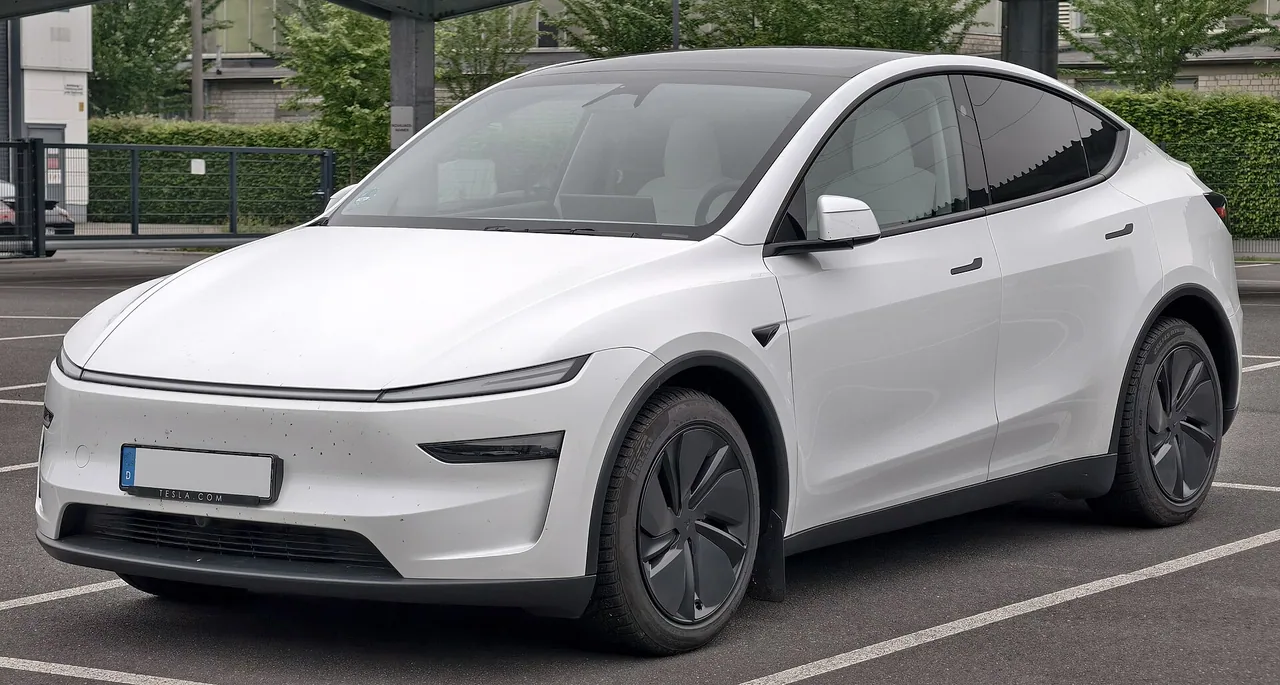

Compare the 2026 Tesla Model Y trims
| Trim | TrimIndex score | Price new | Drive | EPA range | EPA energy use | 0–60 mph | DC fast-charge peak |
|---|---|---|---|---|---|---|---|
| Long Range RWD | 72 | from $44,990starting price | RWD | 357 mi | 25.2 kWh/100 mi | 5.4 s | 250 kW |
| Long Range AWD | 71 | from $48,990starting price | AWD | 327 mi | 27.5 kWh/100 mi | 4.6 s | 250 kW |
| Standard RWD (18in Wheels) | 70 | from $39,990starting price | RWD | 321 mi | 24.3 kWh/100 mi | 6.8 s | 225 kW |
| Standard RWD (19in Wheels) | 68 | not stated | RWD | 303 mi | 25.7 kWh/100 mi | 6.8 s | 225 kW |
| Performance AWD | 67 | from $57,490starting price | AWD | 306 mi | 32.0 kWh/100 mi | 3.3 s | 250 kW |
| Standard AWD | 67 | from $41,990starting price | AWD | 294 mi | 26.5 kWh/100 mi | 4.6 s | not stated |
Used dealer asking prices for the 2026 Model Y model year: $43,449–$50,910 (median $48,792 across 916 active US used listings, Nov 2026) — covers all trims of the model year, not a single trim's sale price.
Price new, 0–60 mph and dc fast-charge peak: Tesla, Inc., via the Internet Archive.
EPA range and EPA energy use: U.S. EPA and DOE, fueleconomy.gov.
TrimIndex score: out of 100.
Blank cells. Price new (1 row): no manufacturer price for that trim on file; DC fast-charge peak (1 row): no manufacturer figure on file.
What differs between the 2026 Tesla Model Y trims
Compared with the 2026 Model Y Standard RWD (18in Wheels), the Standard AWD has all-wheel drive and a 0–60 mph claim 2.2 s quicker, with 27 fewer miles of EPA range, EPA energy use 2.2 kWh/100 mi higher and a starting price $2,000 higher.
Compared with the 2026 Model Y Standard AWD, the Long Range RWD has 63 more miles of EPA range, with rear-wheel drive instead of all-wheel drive, a 0–60 mph claim 0.8 s slower and a starting price $3,000 higher.
Compared with the 2026 Model Y Long Range RWD, the Long Range AWD has all-wheel drive and a 0–60 mph claim 0.8 s quicker, with 30 fewer miles of EPA range, EPA energy use 2.3 kWh/100 mi higher and a starting price $4,000 higher.
Compared with the 2026 Model Y Long Range AWD, the Performance AWD has a 0–60 mph claim 1.3 s quicker, with 21 fewer miles of EPA range, EPA energy use 4.5 kWh/100 mi higher and a starting price $8,500 higher.
Which 2026 Tesla Model Y trim for what
- Longest EPA range: the 2026 Model Y Long Range RWD, 357 miles; next, the Long Range AWD has 327 miles.
- Quickest 0–60 mph (manufacturer claims): the 2026 Model Y Performance AWD, 3.3 seconds; next, the Long Range AWD and the Standard AWD have 4.6 seconds.
NHTSA Recalls (8)
- NHTSA lists 8 recall campaigns for the 2026 Tesla Model Y, filed between May 2025 and Aug 2026.
- How they are fixed, per the filings: 6 by work on the car, 1 by a corrected label or manual page and 1 by a manufacturer buyback.
Source: NHTSA recall filings for the 2026 Tesla Model Y, data through Nov 22, 2026. Why the VIN decides
- Filed Aug 2026
One or more front suspension lateral link fasteners may not have been properly tightened, allowing the lateral link to loosen or separate from the sub-frame.
Campaign #26V558000 · Part (NHTSA): suspension › critical fasteners- What happens:
- A lateral link separation could shift the wheel alignment, causing a loss of vehicle control and increasing the risk of a crash.
- The fix
- Free fix: work on the car by Tesla Service Tesla Service will tighten or replace the fasteners and check wheel the alignment, free of charge. In addition, Tesla Service will replace any related parts that may have been damaged as necessary.
- Covers:
- certain 2026 Model Y vehicles.
NHTSA lists 19 vehicles in this campaign (all models it covers).
Check VIN status at NHTSA.gov - Filed Jul 2026
The vehicles were originally built for a foreign market and do not have knee air bags, may not be equipped with certain interior safety countermeasures, and may not have been tested for bumper impact resistance procedures.
Campaign #26V445000 · Part (NHTSA): air bags › knee bolster- What happens:
- A noncompliant vehicle may have reduced occupant protections, increasing the risk of injury during a crash.
- The fix
- Manufacturer buyback offered Tesla will repurchase noncompliant vehicles currently registered in the United States, free of charge.
- Covers:
- certain 2026 Model Y and 2024 Model 3 vehicles.
- Federal standard not met:
- 208 (Occupant Crash Protection), 201 (Occupant Protection in Interior Impact) and Part 581 (Bumper Standards).
NHTSA lists 15 vehicles in this campaign (all models it covers).
Check VIN status at NHTSA.gov - Filed May 2026
The certification label may not have been installed.
Campaign #26V315000 · Part (NHTSA): equipment › other › labels- What happens:
- Missing weight information provided by the label may lead to unintentionally overloading the vehicle, increasing the risk of a crash.
- The fix
- Free fix: corrected label or owner's-manual page by Tesla Service Tesla Service will inspect and install a certification label as necessary, free of charge.
- Covers:
- certain 2025-2026 Model Y vehicles.
- Federal standard not met:
- Part 567 (Certification).
NHTSA lists 14,575 vehicles in this campaign (all models it covers).
Check VIN status at NHTSA.gov - Filed Oct 2025
The battery pack contactors may fail, causing a loss of drive power.
Campaign #25V690000 · Part (NHTSA): electrical system › propulsion system › fuses, relays, contacts, and shunts- What happens:
- A loss of drive power can increase the risk of a crash.
- The fix
- Free fix: work on the car by Tesla Service Tesla Service will replace the battery pack contactors, free of charge.
- Covers:
- certain 2025 Model 3 and 2026 Model Y vehicles.
NHTSA lists 12,963 vehicles in this campaign (all models it covers).
Check VIN status at NHTSA.gov - Filed Oct 2025
The reverse lights may fail to illuminate while the vehicle is in reverse, due to a defect in the wiring.
Campaign #25V658000 · Part (NHTSA): electrical system › wiring- What happens:
- Reverse lights that fail to illuminate reduce visibility and may not alert pedestrians or other drivers that the vehicle is backing up, increasing the risk of a crash.
- The fix
- Free fix: work on the car by Tesla Service Tesla Service will replace the reverse lights and reverse facia harness, free of charge.
- Covers:
- certain 2026 Model Y vehicles.
- Federal standard not met:
- 108 (Lamps, Reflective Devices, and Associated Equipment).
NHTSA lists 260 vehicles in this campaign (all models it covers).
Check VIN status at NHTSA.gov - Filed Jul 2025
The ring terminal of the horn ground wire may be improperly secured, allowing the circuit to open and preventing the horn from sounding.
Campaign #25V490000 · Part (NHTSA): electrical system › horn- What happens:
- An inoperable horn may prevent the driver from alerting other drivers as needed, increasing the risk of a crash.
- The fix
- Free fix: work on the car by Tesla Service Tesla service will replace the steering wheel, free of charge.
- Covers:
- certain 2026 Model Y vehicles.
NHTSA lists 6 vehicles in this campaign (all models it covers).
Check VIN status at NHTSA.gov - Filed Jun 2025
The fasteners attaching the seat back to the seat bottom may have been improperly tightened.
Campaign #25V410000 · Part (NHTSA): seats › critical fasteners- What happens:
- The seat may not properly restrain the occupant, increasing the risk of injury during a crash.
- The fix
- Free fix: work on the car by Tesla Service Tesla Service Centers will inspect and tighten or replace the seat assembly fasteners as necessary, free of charge.
- Covers:
- certain 2026 Model 3 and Model Y vehicles.
NHTSA lists 48 vehicles in this campaign (all models it covers).
Check VIN status at NHTSA.gov - Filed May 2025
The hose connector may block the windshield washer nozzles, preventing washer fluid from reaching the windshield.
Campaign #25V359000 · Part (NHTSA): visibility › windshield wiper/washer › linkages- What happens:
- The inability to clean the windshield reduces the driver’s visibility and increases the risk of a crash.
- The fix
- Free fix: work on the car by Tesla Service Tesla service will inspect and replace the wiper arm elbow connector as necessary, free of charge.
- Covers:
- certain 2026 Model Y vehicles.
- Federal standard not met:
- 104 (Windshield Wiping and Washing Systems).
NHTSA lists 172 vehicles in this campaign (all models it covers).
Check VIN status at NHTSA.gov
NHTSA Investigations (3 open, 1 closed)
NHTSA has 3 open investigations covering the 2026 Tesla Model Y (NHTSA investigations file of Nov 19, 2026).
What these kinds of action mean
- OpenEngineering analysis EA26002, opened Mar 18, 2026
FSD Collisions in Reduced Roadway Visibility Conditions
What NHTSA says it is examining: The Office of Defects Investigation (ODI) is opening this Engineering Analysis to evaluate Tesla’s Full Self Driving Beta and Full Self Driving (Supervised) (collectively, FSD) degradation detection system.
Model years NHTSA lists for this model in the action: 2020-2026.
- OpenPreliminary evaluation PE25012, opened Oct 7, 2025
Traffic safety violations while Full Self Driving ("FSD") is engaged
What NHTSA says it is examining: The Office of Defects Investigation (“ODI”) is opening this Preliminary Evaluation (PE) to assess the scope, frequency, and potential safety consequences of FSD executing driving maneuvers that constitute traffic safety violations.
Model years NHTSA lists for this model in the action: 2020-2026.
- OpenAudit query AQ25002, opened Aug 20, 2025
Compliance with Standing General Order 2021-01 Reporting Requirements
What NHTSA says it is examining: The Office of Defects Investigation (“ODI”) has identified numerous incident reports submitted by Tesla, Inc. (“Tesla”) in response to Standing General Order 2021-01 (the “SGO”), in which the reported crashes occurred several months or more before the dates of the reports.
Model years NHTSA lists for this model in the action: 2020-2026.
NHTSA has closed 1 action on the 2026 Tesla Model Y: 1 preliminary evaluation, opened Jan 2025.
Show the 1 closed action
- Actually Smart Summon sessions resulting in low-speed impactsPreliminary evaluation PE24033, opened Jan 6, 2025, closed Apr 3, 2026
Source: NHTSA Office of Defects Investigation, investigations file, records through Nov 19, 2026; an open investigation is not a finding of a defect in the 2026 Tesla Model Y.
NHTSA Complaints (473 total)
NHTSA lists 8 recall campaigns for the 2026 Tesla Model Y. Owners have filed 473 complaints with NHTSA; the largest part group is Forward collision avoidance (140). Of all 473, 109 report a crash, 1 a fire and 34 an injury.
What owners report most
TrimIndex grouped the 473 complaints owners filed with NHTSA on the 2026 Tesla Model Y (every trim; NHTSA files complaints by model year, not trim) into problem themes on Nov 16, 2026: 375 of them fall in the 31 themes below, 32 of them in two. 14 complaints were filed after that grouping and are not in a theme yet. How themes are made and checked
-
Front trunk has no emergency release
42 of 473 complaints (9%): The front trunk has no interior emergency release button or light, so a person closed inside cannot open it from within.
“The vehicle is missing the lighted interior emergency release button inside the front trunk (frunk)”
NHTSA complaint 11706020 “The 2026 Tesla Model Y does not include an interior emergency release button inside the front trunk”
NHTSA complaint 11698681 -
Self-driving hits objects while parking
41 of 473 complaints (9%): While parking, reversing or pulling out under self-driving, autopark or summon, the car moves into walls, pillars, poles, curbs or other vehicles.
Owners reported a crash in 32 of the 41 complaints.
“With Full Self-Driving activated, while the vehicle was performing a maneuver to exit a parking space, it reversed directly into a stationary concrete pillar.”
NHTSA complaint 11726425 “the vehicle failed to detect a fixed square concrete bollard located within the parking space”
NHTSA complaint 11754995 -
Self-driving steers into obstacles
34 of 473 complaints (7%): With self-driving or Autopilot engaged, the car abruptly swerves or steers off its path into curbs, poles, barriers, other vehicles, ditches or off the roadway.
Owners reported a crash in 21 and an injury in 6 of the 34 complaints.
“with Full Self-Driving (FSD) Mode engaged, the vehicle attempted to steer into a concrete barrier on several occasions”
NHTSA complaint 11766903 “my 2026 Tesla Model Y struck a curb and post while Full Self-Driving (FSD) was engaged”
NHTSA complaint 11776961 -
Self-driving picks wrong lanes
27 of 473 complaints (6%): With self-driving or Autopilot engaged, the car chooses the wrong lane, crosses solid lines, or turns or drifts into oncoming traffic or the wrong side of the road.
Owners reported a crash in 6, a fire in 1 and an injury in 3 of the 27 complaints.
“FSD attempted a wrong way turn into oncoming traffic instead of taking the correct leftmost lane.”
NHTSA complaint 11729951 “the vehicle made a left turn independently onto oncoming traffic while on autopilot, causing her to collide with another vehicle”
NHTSA complaint 11695774 -
No driver control of self-driving speed
25 of 473 complaints (5%): Under self-driving the car exceeds or misreads posted limits and follows closely, and owners report no way to set a maximum speed or following distance.
“Near the bottom of the driveway self driving suddenly reset the speed limit from 10 MPH to 55 MPH.”
NHTSA complaint 11706163 “Tesla's FSD system has ZERO opportunity for the driver to adjust what the car believes is the speed limit.”
NHTSA complaint 11749812 -
Sudden braking with nothing ahead
25 of 473 complaints (5%): The car brakes hard or slows sharply on its own with no vehicle or obstacle ahead, under cruise control, Autopilot or self-driving and also during manual driving.
Owners reported a crash in 3 and an injury in 5 of the 25 complaints.
“the car suddenly performed a hard brake (phantom braking), coming to a complete stop for no apparent reason.”
NHTSA complaint 11669845 “just did hard full stop brake at a traffic light and brought the car to a complete stop even when the light was green”
NHTSA complaint 11753870
Show the other 25 themes
-
Self-driving runs red lights and signs
20 of 473 complaints (4%): With self-driving engaged, the car proceeds on red lights or red arrows, rolls through stop signs, or turns where a sign prohibits turning.
Owners reported a crash in 2 and an injury in 1 of the 20 complaints.
“while the light was still red and the cross traffic was green (traffic flowing), the Tesla released the brake, accelerating into the intersection.”
NHTSA complaint 11709468 -
Lane assist jerks the steering wheel
19 of 473 complaints (4%): During manual driving the steering wheel jerks or pulls on its own inside the lane, and lane departure assistance switches itself back on at each drive.
Owners reported a crash in 1 and an injury in 1 of the 19 complaints.
“the Lane Departure Avoidance system jerked the steering wheel abruptly to the other side while the vehicle was still inside the desired lane”
NHTSA complaint 11758623 -
Suspension clunking and rattling
18 of 473 complaints (4%): The suspension clunks, knocks, pops, squeaks or rattles over small bumps, uneven pavement and tight low-speed turns, and the noise returns after service visits.
“I began hearing a distinct knocking / clunking noise coming from the suspension when driving over small road imperfections and at low speeds.”
NHTSA complaint 11724197 -
Sudden acceleration at low speed
16 of 473 complaints (3%): At low speed while parking, reversing, stopping or turning, the car surges forward or backward without driver input and strikes curbs, walls, garages or other vehicles.
Owners reported a crash in 12 and an injury in 5 of the 16 complaints.
“the vehicle suddenly and unexpectedly accelerated without any input”
NHTSA complaint 11732416 -
Loss of drive power while driving
12 of 473 complaints (3%): While driving, the car shows fault messages and suddenly loses propulsion or shuts down, slowing or stopping in traffic and leaving it unable to drive.
Owners reported a crash in 1 of the 12 complaints.
“the 2026 Model Y suddenly lost power and became unable to accelerate, creating an immediate safety hazard.”
NHTSA complaint 11695103 -
Steering becomes heavy or locks
12 of 473 complaints (3%): Power steering assist fails to come on or drops out, a warning may appear, and the steering wheel becomes very hard to turn, unresponsive or locked.
Owners reported a crash in 2 of the 12 complaints.
“the steering wheel became extremely heavy, hot, and then completely locked.”
NHTSA complaint 11702579 -
Self-driving enters closed lanes and gates
11 of 473 complaints (2%): Under self-driving the car steers toward or into closed express lanes, lowered gate arms, railroad crossing barriers, chained entrances or closed ramps.
Owners reported a crash in 4 and an injury in 1 of the 11 complaints.
“FSD signaled and abruptly changed lanes into a closed express lane entrance blocked by lowered gate arms”
NHTSA complaint 11768656 -
Brakes fail to stop the car
10 of 473 complaints (2%): Pressing the brake pedal does little or nothing to slow the car, or the pedal feels stiff and needs far more effort than normal.
Owners reported a crash in 6 and an injury in 1 of the 10 complaints.
“The brake pedal was unresponsive and failed to slow down even with regenerative braking engaged.”
NHTSA complaint 11777153 -
No warning or braking before crash
9 of 473 complaints (2%): The car strikes a vehicle or object, including stopped traffic ahead, without slowing, without a forward collision warning and without automatic emergency braking engaging.
Owners reported a crash in 8 and an injury in 2 of the 9 complaints.
“As the vehicle approached traffic ahead, it did not slow or brake as expected.”
NHTSA complaint 11757356 -
Self-driving shuts off unexpectedly
9 of 473 complaints (2%): Self-driving or Autopilot switches off or hands back control without warning, including mid-turn or at speed, or stops working and cannot be re-engaged.
Owners reported a crash in 4 and an injury in 1 of the 9 complaints.
“I was driving to work using autopilot when alarms sounded, the hazard lights turned on, and the screen flashed a warning that I had to take over immediately.”
NHTSA complaint 11700778 -
Takeover feedback popup distracts driver
9 of 473 complaints (2%): After the driver takes over from self-driving or Autopilot, a feedback prompt stays on the touchscreen, covering part of it or blocking controls until the driver answers it.
“The popup remains on the touchscreen indefinitely unless I provide an answer, obstructing part of the display.”
NHTSA complaint 11772803 -
Vibration at highway speed
8 of 473 complaints (2%): At highway speeds the steering wheel, seats and floor vibrate or shake, and the vibration remains after tire balancing and alignment.
“you can feel vibration from steering wheel at highway speeds it is really specific at 80mph”
NHTSA complaint 11670595 -
Windshield and glass crack easily
8 of 473 complaints (2%): The windshield or side glass cracks or shatters with little or no visible impact, and small chips spread into large cracks.
“Not only does it chip incredibly easily, but any chip immediately becomes a large crack, usually overnight”
NHTSA complaint 11739830 -
Seat belt does not work properly
6 of 473 complaints (1%): Seat belts fail to lock on a sharp pull, lock and refuse to extend, unlatch while in use, or arrive inoperable and need replacement.
“when I attempted to pull the seatbelt, it would not extend and instead locked in place.”
NHTSA complaint 11734726 -
Car sways or drifts on highway
5 of 473 complaints (1%): At highway speed the car sways side to side or gets pushed sideways by wind or passing trucks, needing constant steering corrections to stay in the lane.
“The vehicle continuously rocks side-to-side in a pronounced, pendulum-like motion that requires constant steering corrections to stay in the lane”
NHTSA complaint 11702553 -
Doors won't open or car locks
5 of 473 complaints (1%): The doors do not open from inside or outside, or the car locks itself with the key inside, leaving a person stuck inside or unable to get in.
“repeated lockouts of my 2026 Model Y that trapped my disabled husband inside the vehicle”
NHTSA complaint 11772851 -
Driver seat shifts while driving
5 of 473 complaints (1%): The driver seat moves, rocks, pops or squeaks side to side during turns, acceleration and braking, and the movement continues after service.
“the driver's seat seatback rocks forward and backward during normal acceleration and braking.”
NHTSA complaint 11722326 -
Self-driving speeds through school zones
5 of 473 complaints (1%): Under self-driving the car enters active school zones well above the posted school-zone limit, and the driver has to take over to slow down.
“FSD did not appropriately respond to the active school zone or reduce the vehicle's speed to the posted 35 mph limit”
NHTSA complaint 11756753 -
Airbags not deploying in crash
4 of 473 complaints (1%): In collisions, including ones that totaled the car or injured occupants, the airbags did not deploy.
Owners reported a crash in 4 and an injury in 2 of the 4 complaints.
“Given the severity of the collision, I am concerned that none of the airbags deployed.”
NHTSA complaint 11767879 -
Center brake light fault alert
4 of 473 complaints (1%): The screen shows a center brake light condition alert, and the center brake light fails to light at times.
“Screen provides alert that "center brake light condition deteceted".”
NHTSA complaint 11756780 -
Cracked wheels and tire splits
4 of 473 complaints (1%): Factory wheels develop cracks or tires split or fail at the sidewall without an impact the owner recalls, and the tire loses air.
“developed a severe 2-inch structural split/crack along the tire shoulder/sidewall under normal daily commuting on paved roads.”
NHTSA complaint 11759166 -
Safety systems suddenly disabled
4 of 473 complaints (1%): While driving, alerts appear saying emergency braking, traction and stability control, vehicle hold or other safety features have become unavailable.
“multiple safety systems suddenly disabled while driving, including regenerative braking behavior, traction and stability control, lane safety features, and automatic emergency braking”
NHTSA complaint 11719201 -
Self-driving drives into road hazards
4 of 473 complaints (1%): Under self-driving the car drives into debris, potholes or flooded roadway without slowing or steering around them.
Owners reported a crash in 1 of the 4 complaints.
“the vehicle failed to detect a large block of wood in the roadway”
NHTSA complaint 11742610 -
Front camera haze and warnings
3 of 473 complaints (1%): Haze or dirt builds up inside the forward camera housing, the car reports reduced camera visibility, and driver-assist features become limited.
“has repeatedly developed contamination/haze inside the enclosed forward-facing windshield camera area”
NHTSA complaint 11768898 -
Tire pressure warning faults
3 of 473 complaints (1%): The tire pressure monitoring system reports sensor faults or stops reporting, so low tire pressure may go unflagged.
“showed a "Pressure Sensor Fault (may clear next drive)" without issuing any "Low Tire Pressure" alert”
NHTSA complaint 11751866
473 complaints filed with NHTSA for the 2026 Tesla Model Y, between May 2025 and Nov 2026.
Parts named most often
| Part | Complaints | Share |
|---|---|---|
| Forward collision avoidance including adaptive cruise control (76) and automatic emergency braking (64) | 140 | 30% |
| Lane keeping and blind-spot systems including assist (43) and warning (18) | 60 | 13% |
| Steering | 57 | 12% |
| Electrical system (other) | 46 | 10% |
| Speed control | 39 | 8% |
Share of all 473 complaints; one complaint can name more than one part, so shares add up to more than 100%. 92 complaints name no specific part.
Owners reported a crash in 109, a fire in 1 and an injury in 34 of the 473 complaints. How these fields are filled
Median odometer reading when the problem happened: 5,000 miles, from the 31 complaints that give one.
Complaints by year filed
| Year filed | Complaints |
|---|---|
| 2025 | 129 |
| 2026 (to Nov 22) | 344 |
Source: NHTSA owner complaints filed on every 2026 Tesla Model Y (NHTSA files them by model year, not trim), data through Nov 22, 2026.
The 25 most severe, then newest, of 473
- Severity 5 of 5.Speed control · Forward collision avoidance Injury · Crash
Auto pilot in progress emergency braking but no reason for it Moving with traffic Tesla spun around and crash into 2 walls My arm was burned
NHTSA ODI #11779358 - Severity 5 of 5.Air bags · Forward collision avoidance Injury · Crash
On October 21, 2026, my 2026 Tesla Model Y was operating with Full Self-Driving (Supervised) engaged when I experienced unexpected acceleration and difficulty controlling the steering wheel.
Show the rest
Instead of following the intended roadway and turning, the vehicle traveled over raised traffic islands, left the roadway, entered a parking lot, and collided with two parked vehicles, causing one to overturn. I sustained injuries requiring hospitalization and experienced significant physical and emotional trauma. The vehicle was subsequently declared a total loss. I also have concerns regarding airbag deployment. I did not observe the airbags deploying during the collision, but when I later inspected the vehicle at the storage facility, the driver's front airbag was deployed. I request that NHTSA investigate the potential involvement of the FSD system, unexpected acceleration, steering control, and airbag deployment, including examination of Tesla's internal vehicle logs and electronic control data.
NHTSA ODI #11779249 - Severity 5 of 5.Forward collision avoidance Injury · Crash
The 2026 Tesla Y (Unit 1) entered the highway in the far left hand lane as it was traveling north on I35. According to the driver, he was using the Tesla's self driving mode as he entered the highway.
Show the rest
The Tesla vehicle abruptly and illegally crossed over three lanes of traffic crashing into a Hyundai Elantra who was in the far right hand lane (Unit 2). Unit 1 was towed away from the scene. Unit 2 was drivable but severely damaged. The 2026 Tesla Y's airbag deployed and the driver was taken from the scene by ambulance to the hospital. It appeared that the driver of Unit 1 had severe head trauma.
NHTSA ODI #11777314 - Severity 5 of 5.Air bags · Brakes · Speed control Injury · Crash
On November 7, 2026, at approximately 4:30 PM Eastern Time, I was turning my nearly new Tesla Model Y Premium AWD Dual Motor into my residential driveway at low speed.
Show the rest
I recall having my foot on the brake before the vehicle unexpectedly accelerated toward my garage. I attempted to stop the vehicle, but it collided with the garage, causing substantial property damage and injuries to two passengers. I subsequently obtained the vehicle's Event Data Recorder (EDR) report and Vehicle Data Report (VDR). The EDR records increasing accelerator demand, reaching 100%, while its sampled pre-impact brake signal indicates no brake application. The VDR records brake application approximately 17 milliseconds after collision detection, followed by secondary collision mitigation after impact. These records do not establish why the vehicle accelerated contrary to my recollection or whether its obstacle-detection and collision-avoidance systems recognized the garage and attempted to intervene. I request that NHTSA evaluate this incident as a potential vehicle safety concern. I can provide the EDR, VDR, diagnostic data, and camera recordings for technical review.
NHTSA ODI #11777368 - Severity 5 of 5.Driver-assist system Injury · Crash at 3,148 miles
The contact owned a 2026 Tesla Model Y. The contact stated that while driving 70 MPH with the Full Self-Driving mode activated, the Full Self-Driving mode independently
Show the rest
deactivated, and the contact received an audible alert. The vehicle drifted into another lane, and the rear driver’s side bumper struck the front passenger’s side bumper of another vehicle before crashing into the median barrier. The air bags deployed. The contact was wearing glasses and suffered laceration around the eye, eye blunt trauma, fractured bone below the eye, skin abrasion on the left forearm and left thigh, and a jammed finger. Medical attention was received, but surgery was not required. A Police report was filed. The vehicle was towed to a tow yard and deemed a total loss by the insurance company. The failure mileage was 3,148.
NHTSA ODI #11777017 - Severity 5 of 5.Injury · Crash
Full Self-Driving (Supervised), aka FSD, of my 2026 Telsa Model Y malfunction: Sudden unintended acceleration. I parked my Tesla on my driveway and did some cleanup in my garage.
Show the rest
When I tried to park my Tesla back into garage manually, I couldn't swipe on the Telsa console from 'park' to 'drive': it didn't stick on 'drive' and reverted back to 'park'. I tried more than 3 times. It all failed. I saw FSD 'Start' button was available on the Tesla Console, so I decided to use it to get Telsa moving forward, then took control and parked it into garage manually. As soon as I pressed 'Start' button, it accelerated very fast. I tried hard to hit the brake, but there was no effect to slow down the car. In a very short period of time (I guessed around 2 seconds), it ran through my garage and hit a heavy-duty rack around garage wall. I could see the car approaching rack really fast, I put forward my hands and leaned backward, then I heard a very loud bang sound from the impact. After I gained consciousness from shell-shocked, I didn't know where I was. I became disoriented. Then I heard 911 operator on the phone asking me questions (because 911 call was triggered after collision). I couldn't open my driver side door because it was blocked by some structure, neither I could open passenger side door because it was also blocked by some structure. I saw backseat windows were down, so I climbed out of it. After that, I realized Tesla ran through garage concrete wall, and half of the car body were out of the wall. Police, Firefighter and ambulance all came. Luckily there was no fire, and I suffered minor cut on both my knees. Panoramic glass roof and windshield caved in and almost shattered. Panoramic glass roof collapsed into car interior a couple days later. My insurance company took the car since Airbag was popped and the car is a total loss.
NHTSA ODI #11777152 - Severity 5 of 5.Forward collision avoidance Injury · Crash
I am reporting a serious safety concern involving my 2026 Tesla Model Y AWD. VIN: [XXX] Mileage: Approximately 16,000 miles At approximately 8:00 a.m.
Show the rest
XXX Monday, I was driving manually uphill in bright sunlight. Sun glare affected my visibility, and I did not notice that the vehicle ahead had stopped. I did not receive a forward-collision warning before my Tesla struck the vehicle in front at approximately 25 mph. After the first impact, I felt the steering wheel move by itself. The vehicle then moved sideways and struck a tree. The resulting damage includes the front bumper, hood, front wheel area, and left-front door. The vehicle is undrivable. The airbags did not deploy. I am requesting a formal safety investigation into the unexpected steering movement, the absence of a forward-collision warning, and the vehicle's behavior after the first impact. INFORMATION REDACTED PURSUANT TO THE FREEDOM OF INFORMATION ACT (FOIA), 5 U.S.C. 552(B)(6)
NHTSA ODI #11773557 - Severity 5 of 5.Air bags · Forward collision avoidance · Lane keeping and blind-spot systems Injury · Crash
I am formally requesting an investigation and corrective software update addressing Tesla Full Self-Driving (FSD) improperly navigating into closed HOV/express lanes.
Show the rest
On October 14, 2026, at approximately 5:19 PM, my Tesla was operating with FSD engaged, Mad Max mode selected, and HOV lane navigation enabled. The vehicle entered a closed Georgia Peach Pass express lane, passed the first security barrier, and subsequently collided with a second barrier despite my attempt to intervene by braking. The collision shattered my windshield, damaged the windshield frame, and caused minor physical injuries. My primary concern is that FSD failed to recognize or appropriately respond to a physically closed express lane. This presents a potentially serious safety hazard for other Tesla drivers and surrounding motorists.
NHTSA ODI #11772591 - Severity 5 of 5.Drive unit Injury · Crash
The car is 4 months old (a 2026 Tesla y i bought new recently) — a rear hit my left tire with left axel brook not survive the crash it is any engineering problem with tesla
Show the rest
manufactory this never happen this damage in my life time when i am rear ending how I report to tesl also i have clam with my insurance allstate under clam number 0840045827
NHTSA ODI #11769329 - Severity 5 of 5.Forward collision avoidance · Brakes Injury
Repeated Unexpected Braking / Suspected AEB Activation My 2026 Tesla Model Y has repeatedly experienced sudden unexpected braking at the same location near my home over the past several weeks.
Show the rest
The incidents have occurred both while Full Self-Driving (Supervised) was engaged and, importantly, while I was manually driving with FSD disengaged. During some periods, this occurs almost every morning. It has also occurred during both daytime and nighttime driving. The location currently has construction activity, and the behavior is highly location-specific. In the most serious recent incident, the vehicle suddenly braked while another vehicle was following behind us, creating a near rear-end collision. Our approximately two-year-old child was in the rear seat, and repeated sudden braking events have frightened our child on multiple occasions. We now do not feel safe driving this vehicle with our child through this location, but the road is a necessary route for entering and leaving our neighborhood. We reported the issue to Tesla and provided multiple specific timestamps. Tesla performed remote diagnostics and stated that no vehicle hardware fault was detected. Tesla told us that it believes the behavior is related to the construction/road environment at this location and that it currently has no repair or solution for the issue. My concern is that an active safety/braking system can repeatedly initiate unexpected braking during normal manual driving because of a specific road environment. The absence of a hardware fault does not resolve the safety risk. I am requesting that NHTSA document and evaluate this recurring unexpected braking behavior, including whether similar incidents are occurring in other Tesla Model Y vehicles.
NHTSA ODI #11768758
Show 15 more complaints
- Severity 5 of 5.Body and structure Injury
On September 26, 2026, the automatic rear liftgate of my 2026 Tesla Model Y struck me on the head while it was closing. I was not manually pulling, pushing, or holding the liftgate at the time.
Show the rest
The liftgate made contact with my head, causing a cut and bleeding, and then stopped. I sought emergency medical treatment following the incident and was diagnosed with a mild concussion. I am concerned that the liftgate's obstruction detection/anti-pinch system did not detect the obstruction early enough to prevent contact with my head or did not respond appropriately before impact. The fact that the powered liftgate made physical contact with my head before stopping raises a serious safety concern regarding the liftgate's obstruction detection sensors and closing mechanism. I am reporting this incident because the automatic liftgate caused an actual physical injury requiring emergency medical evaluation. I request that NHTSA document this incident and investigate whether there is a potential safety defect involving the automatic liftgate, obstruction/anti-pinch sensors, or closing mechanism.
NHTSA ODI #11767318 - Severity 5 of 5.Air bags Injury · Crash
My Tesla 2026 Y was in an accident and was totalled. I sustained a broken tibia and a broken sternum. The airbags did not deploy. There was no warning the airbags were faulty. The car was hauled away from the collision center.
NHTSA ODI #11767400 - Severity 5 of 5.Steering · Lane keeping and blind-spot systems Injury
I am filing a safety complaint about the lane departure avoidance system in my 2026 Tesla Model Y (VIN [XXX]) software version 2026.26.6.5, purchased XXX, odometer [mileage]).
Show the rest
The system makes abrupt, forceful steering corrections during normal driving. I have to resist these unexpected steering inputs repeatedly, and this has caused growing pain in my left hand, including carpal tunnel symptoms. The system cannot be fully disabled. Even when I turn it off, it turns itself back on every time the car is restarted, so I cannot prevent these interventions. I believe steering force that the driver cannot reliably turn off creates a risk of loss of control, particularly in traffic or on narrow roads. I reported this to Tesla on XXX, and Tesla stated that nothing can be done. I ask that NHTSA review this complaint and evaluate whether this system's steering force and its inability to stay disabled are a safety-related defect. I can provide further information or medical documentation on request. Sincerely, [XXX] INFORMATION REDACTED PURSUANT TO THE FREEDOM OF INFORMATION ACT (FOIA), 5 U.S.C. 552(B)(6)
NHTSA ODI #11766501 - Severity 5 of 5.Body and structure Injury
Safety Complaint and Incident Report: Severe Injury Caused by Unprotected Sharp Metal Edge.
Show the rest
I am writing to formally lodge a safety complaint regarding a serious design/manufacturing hazard on my Tesla vehicle. While washing the vehicle and wiping down the area near the liftgate/trunk strut, my finger was severely cut by an exposed, unshielded metal sheet edge. This area is extremely sharp and lacks any protective trim, warning labels, or factory finishing, presenting an unacceptable safety hazard during routine vehicle care. This poses a severe risk of injury to any owner or user. I am submitting this formal complaint to document the safety defect and request that Tesla address this manufacturing oversight immediately to prevent further injuries to consumers.
NHTSA ODI #11764852 - Severity 5 of 5.Injury · Crash
2026 Tesla Model Y was operating with Autopilot engaged. While making a right turn at a school, the vehicle struck a brick area, continued forward, struck a wall and rolled over.
Show the rest
The driver and passenger survived without apparent injury. The vehicle was towed and appears to be a total loss.
NHTSA ODI #11761625 - Severity 5 of 5.Injury · Crash
My FSD in my Tesla was engaged, all of sudden it stopped on the highway without enough warning, and it cause my car to ram into the wall next to HOV lane.
NHTSA ODI #11760745 - Severity 5 of 5.Forward collision avoidance · Backup camera and rear sensors Injury
I had brought my Tesla Model Y to a stop. Given that the car has an auto-park feature, I did not put the car in park. My daughter got out of the car and opened the rear passenger door.
Show the rest
I moved towards the Tesla screen to open the rear trunk for her. As I moved, my foot accidentally hit the accelerator running the car over her foot and causing a possible fracture. She was in agonizing pain and I had to call emergency services. This situation can be easily avoided by Tesla by immobilizing the car (placing it in Park) when the car has been brought to a stop or has been brought to a very low speed and ANY door is opened. Right now, immobilizing the car happens only if the driver door is opened when the car has been brought to a stop or the speed is very low.
NHTSA ODI #11760821 - Severity 5 of 5.Steering Injury · Crash
On August 3, 2026, my Tesla Model Y was traveling at approximately 50 mph with Tesla Full Self-Driving (FSD) engaged.
Show the rest
At approximately 4:12:47 PM CDT, FSD became unavailable and then became available again. At 4:12:51.628 PM CDT, FSD was recorded as ACTIVE_FSD again. Approximately 2.36 seconds after FSD was re-engaged, at 4:12:53.987 PM CDT, the vehicle's steering began a sudden and rapid rightward movement. I did not turn the steering wheel or intentionally provide a rightward steering input that initiated this maneuver. The recorded steering angle increased rapidly from approximately +11.4° to +20.7°, +33.3°, +83.3°, +137.9°, +154.7°, and ultimately approximately +282° within about 1.6 seconds. Importantly, FSD was still recorded as ACTIVE_FSD when the steering movement began. FSD changed to UNAVAILABLE at approximately 4:12:54.364 PM CDT, about 0.38 seconds after the steering movement had already started. The steering continued to escalate after FSD became unavailable.The vehicle subsequently experienced severe lateral acceleration of approximately 0.96 g, and crash detection activated at approximately 4:12:55.710 PM CDT. The accelerator was recorded at 0% during the developing steering event and increased only after crash detection. Hard braking and ABS activation occurred afterward.I do not have Tesla Dashcam footage, but I have retained Tesla's vehicle telemetry export containing FSD state, steering, steering-torque, accelerator, braking, vehicle-speed, stability-control, and crash-event data.I am concerned that Tesla FSD may have initiated or contributed to the unexpected steering maneuver that resulted in the collision. I am certain that I did not initiate the sudden rightward steering maneuver.I request that NHTSA investigate whether this represents a potential safety defect or unexpected FSD behavior, particularly the sequence of FSD re-engagement followed approximately 2.36 seconds later by the unexpected steering event while FSD was still ACTIVE_FSD
NHTSA ODI #11756945 - Severity 5 of 5.Forward collision avoidance Injury
While returning the Tesla during a demo drive, the car suddenly braked extremely hard in the middle of the road for no reason. It was bright and sunny, and we were coming up to a green light.
Show the rest
It caused me to slam my head back into the seat. There was seemingly no reason for the emergency braking, and if someone were behind me, it would have caused a collision.
NHTSA ODI #11755731 - Severity 5 of 5.Driver-assist system Injury · Crash at 13,986 miles
The contact owned a 2026 Tesla Model Y. The contact stated that while her daughter was driving 16 MPH with the self-driving feature activated the vehicle failed to stop at a stop sign.
Show the rest
Seconds later the contact's daughter attempted to disengage the self-driving feature and then depressed the brake pedal to stop from entering a right-turn-only minor road stop-controlled intersection. However, the front passenger’s side of the vehicle was struck by another vehicle, before striking another vehicle. The contact stated that the air bags on the passenger’s side of the vehicle deployed. The contact's daughter sustained minor leg injuries. Medical attention was not needed, and the contact was not sure whether occupants of the other vehicle required medical attention. A Police report was filed. The contact stated that the vehicle had not detected the oncoming traffic and that the crash could have been prevented. The vehicle was towed to a tow yard where it was deemed a total loss. The vehicle was not diagnosed or repaired. The manufacturer was notified of the failure. The failure mileage was 13,986.
NHTSA ODI #11754808 - Severity 5 of 5.Electrical system (other) · Brakes Injury
My tesla model Y was driving on FSD (full self driving) and just did hard full stop brake at a traffic light and brought the car to a complete stop even when the light was green.
Show the rest
Both of toddler kids in the back got pulled jolted forward where the seat belt hurt them. This stopping was random was unnecessary as no threat of other cars or the light was present. Luckily no one was behind us or they would have rear ended our car causing a serious accident. This really left my children in shock.
NHTSA ODI #11753870 - Severity 5 of 5.Speed control · Electrical system (other) Injury · Crash
I am writing to bring to your immediate attention a serious safety incident involving our brand‑new 2026 Tesla Model Y (Juniper), equipped with FSD version 14.2.2.5 and Software Version 2025.45.10.
Show the rest
We purchased this vehicle as our dream car, and for nearly six months it delivered exactly what we hoped for—innovation, safety, and an exceptional driving experience. That trust was the foundation of our decision to choose Tesla. On [XXX], at approximately [XXX] in Frisco, TX, that trust was shaken by a sudden and alarming event. After coming to a stop and while making a routine right turn at under 10 mph, the vehicle unexpectedly accelerated on its own, causing an immediate loss of control. The entire incident unfolded in seconds, leaving no opportunity to react or correct the vehicle’s behavior. The incident happened at the intersection of [XXX]. The "Autopilot" feature in Tesla was on at the time of the incident. The impact was severe. The airbags deployed, the vehicle was declared a total loss by insurance, and first responders—including the Frisco Police Department—were required to clear the wreckage. My wife sustained injuries in the crash and continues to recover. Witnesses at the scene confirmed that the acceleration was abrupt and not driver‑initiated. The emotional and physical toll has been significant. More importantly, the nature of this incident raises serious concerns about a potential safety issue that could affect other Tesla owners. We feel compelled to make sure this incident is thoroughly examined. If there is a systemic issue—software‑related or otherwise—it is critical that it be identified and addressed to protect other drivers and uphold the integrity of the Tesla name. We truly miss our vehicle and the confidence we once had in it. We hope Tesla will treat this matter with the seriousness it deserves and provide a transparent path forward. Thank you for your time, attention, and commitment to safety. INFORMATION REDACTED PURSUANT TO THE FREEDOM OF INFORMATION ACT (FOIA), 5 U.S.C. 552(B)(6)
NHTSA ODI #11745911 - Severity 5 of 5.Forward collision avoidance Injury
While driving, the vehicle repeatedly triggered emergency braking without any obstacle present.
Show the rest
The car continuously displayed warnings indicating pedestrians in front and behind the vehicle when no people were present. Due to these false detections, FSD became disabled during operation. The repeated sudden braking caused severe lower back pain, and I will be seeking medical treatment. This vehicle is unsafe to operate and presents a serious safety risk to myself and surrounding traffic. I have full video evidence of the incidents.
NHTSA ODI #11737322 - Severity 5 of 5.Speed control Injury · Crash at 9,440 miles
The contact owns a 2026 Tesla Model Y. The contact stated that while attempting to park the vehicle suddenly lurched forward and crashed into a curb, then the vehicle lunched
Show the rest
forward and crashed into a brick wall. The vehicle then erroneously drove in reverse at a high rate of speed and crashed into a second parked vehicle. The contact indicated that after the incident, in order to shut the vehicle off, the doors had to be opened. The contact's foot remained on the brake pedal during the incident. During the crash, the driver sustained a fractured right foot, and the rear center passenger sustained a bruised back. Both injuries later required medical treatment. No police report was taken. The vehicle was later towed to the home. The cause of the failure was not determined. The manufacturer and local dealer were notified of the failure. The failure mileage was 9,440
NHTSA ODI #11734360 - Severity 5 of 5.Brakes · Body and structure · Forward collision avoidance Injury · Crash
On April 11 2026, I was involved in a serious accident involving my 2026 Tesla Model Y.
Show the rest
At the time of the incident, I was returning home from my daughter’s event in downtown and had just entered my residential driveway. As I approached the driveway, I applied the brakes and slowed the vehicle. While momentarily stationary or near-stationary, I spoke to my wife, who was seated in the front passenger seat, advising her to secure the food she was holding due to the uneven surface of the driveway. Upon removing my foot from the brake pedal, the vehicle suddenly and unexpectedly accelerated without any input. The vehicle proceeded forward and collided with my garage door. Notably, no collision warning alerts were issued, and no automatic emergency braking system engaged prior to or during the impact. Following the initial collision with garage door, the vehicle failed to stop and instead continued to accelerate into the garage, striking a refrigerator. The impact resulted in substantial damage to the refrigerator and caused extensive structural harm to the property, affecting the garage, adjacent living space, floors, and interior walls. The severity of the collision triggered deployment of the front airbags. At the time, my wife was seated in the front passenger seat, and my [XXX] daughter, along with her friend, was seated in the rear of the vehicle. Emergency services were called, I have forehead bruises and a burn on my hand from airbag deployment. My wife is advised physiotherapy for severe back pain and my daughter has since experienced ongoing emotional distress, nightmares.I am dealing with car and home claims issues for damages I am seeking a formal investigation into the cause of this incident, specifically addressing: 1)The unexpected and unintended acceleration of the vehicle 2)The failure of the vehicle to stop after the initial collision with the garage door 3)The absence of forward collision warnings and failure of automatic emergency braking. INFORMATION REDACTED PURSUANT TO THE FREEDOM OF INFO
NHTSA ODI #11732416
NHTSA 5-Star Crash-Test Ratings
Each 2026 Tesla Model Y trim matches more than one variant NHTSA tested, so no crash-test rating is shown.
Forum posts that mention this car
1 forum post is on file for this model year. The post shown was retrieved May 2026.
"2026 Model Y LR AWD (Juniper) Autopilot degraded Smart Summon unreliable and repeated camera and computer failures Anyone else? Hey everyone, Just wanted to see if anyone else with a 2026 Tesla Model Y Long Range AWD Juniper is facing the same issues I am. I took delivery of my Juniper on July 11 2025, and by August 21 Tesla had to replace the entire computer because Autosteer completely stopped working. The service report said it was caused by a low-voltage power state issue in the Autopilot system. Then on October 9, they replaced the forward-facing Bi-Cam and the rear-view mirror…"
What changed from 2025
TrimIndex lists 2 configurations for 2026 that match no 2025 configuration by name, by drive, EPA range and battery, or by name and rated horsepower: Standard RWD (18in Wheels) and Standard AWD.
From 2025 to 2026, for the same configurations: the Long Range RWD: EPA range 337 to 357 mi, 0–60 mph claim 6.5 s to 5.4 s; the Long Range AWD: EPA range 311 to 327 mi, starting price $47,990 to $48,990; the Performance AWD: EPA range 277 to 306 mi, starting price $51,490 to $57,490.
NHTSA lists 8 recall campaigns for the 2026 Tesla Model Y and 3 for the 2025; 1 covers both.
2026 Tesla Model Y frequently asked questions
What trims does the 2026 Tesla Model Y come in?
TrimIndex lists 5 configurations of the 2026 Tesla Model Y, as EPA names them: Long Range RWD, Long Range AWD, Standard RWD (18in Wheels), Performance AWD and Standard AWD. 1 wheel, tire or charger option is listed under its trim.
What is the difference between the 2026 Tesla Model Y Standard RWD (18in Wheels) and Performance AWD?
Compared with the 2026 Model Y Standard RWD (18in Wheels), the Performance AWD has all-wheel drive, a 0–60 mph claim 3.5 s quicker and a DC fast-charge peak 25 kW higher, with 15 fewer miles of EPA range, EPA energy use 7.6 kWh/100 mi higher and a starting price $17,500 higher.
What is the range of the 2026 Tesla Model Y?
EPA rates the 2026 Tesla Model Y at 294 to 357 miles, depending on the configuration: 357 for the Long Range RWD, 327 for the Long Range AWD, 321 for the Standard RWD (18in Wheels), 306 for the Performance AWD and 294 for the Standard AWD.
Are there recalls on the 2026 Tesla Model Y?
Yes. NHTSA lists 8 recall campaigns for the 2026 Tesla Model Y in records through Nov 22, 2026: 25V359000, 25V410000, 25V490000, 25V658000, 25V690000 and 26V315000 and 2 more.
What problems do owners report on the 2026 Tesla Model Y?
Of the 473 complaints owners filed with NHTSA about the 2026 Tesla Model Y in records through Nov 22, 2026, the three largest problem themes are: Front trunk has no emergency release (42); Self-driving hits objects while parking (41); and Self-driving steers into obstacles (34). 375 of them fall in the 31 themes TrimIndex grouped from their narratives on Nov 16, 2026.