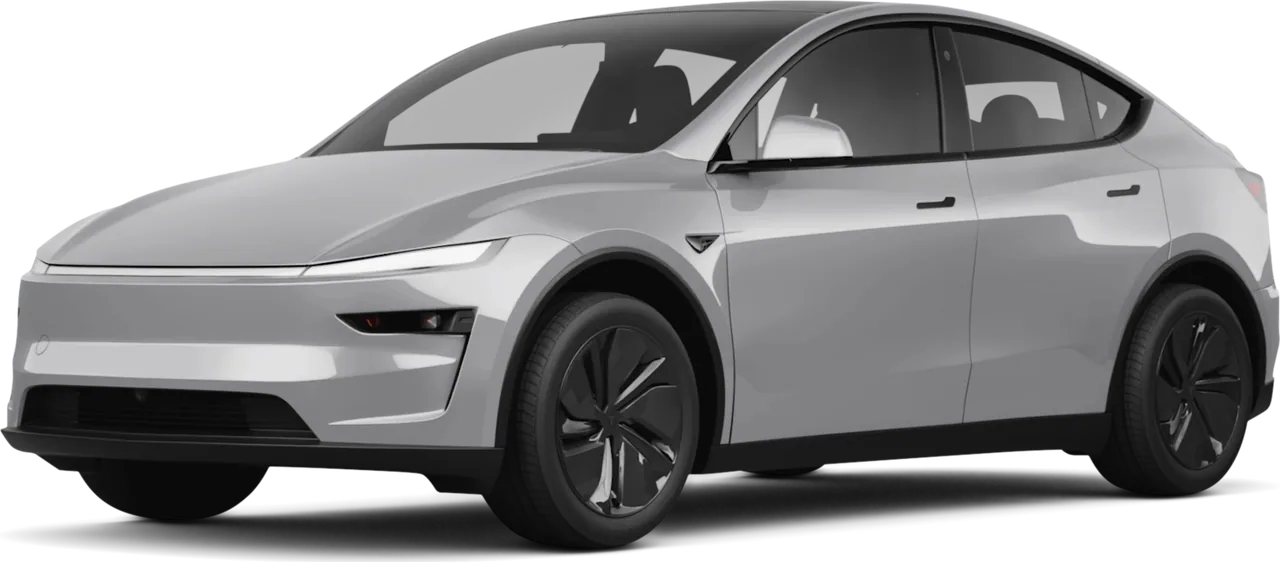
2026 Tesla Model Y Long Range RWD
Electric SUV · RWD
Based on battery health, build quality, owner data, EPA range, and market pricing
Below average for 2026 EV Compact SUVs (class avg 68)
Personalize this scoreIs a low score bad?
Last scanned 22 days ago
The 2026 Tesla Model Y Long Range RWD comes with 357 miles of EPA range and 250 kW fast charging, and a worth-pursuing score, but only after a hard inspection and a fair price.
Score read
A 67/100 makes this a records-first inspection. Battery-health score is the cleaner read at 77/100; owner feedback score needs more diligence at 42/100. On Reddit, owners keep flagging the same two issues: owner satisfaction and software tech. A clean VIN lookup matters more than the headline count.
Price context
This trim started from $44,990 new. Used examples have come down since launch, but pricing varies by miles, condition, and how the model is moving right now; pull a current KBB Fair Purchase, an Edmunds True Market Value, or an active dealer listing for this exact trim, and anchor your offer there. Walk if the seller will not move off new-car-style pricing.
Who this is for
✓ Good for
- ⏱ Daily commuter ≤50 mi/day, predictable charging
- ↦ Road tripper Long trips, needs DC fast network
✗ Avoid if you are a
- $ Bargain hunter Best TCO, reliability + low depreciation
Gotchas
- Serviceable Recall paperwork has to match the exact VIN.
Mitigation Use NHTSA and the automaker lookup, then require repair records instead of a verbal promise.
- Verify Owner feedback is the part to read carefully (42/100).
Mitigation Read the complaint themes and ask whether this VIN has already had those issues repaired.
- Verify Current market pricing is not confirmed well enough for this trim.
Mitigation Compare KBB, J.D. Power, and live listings for the same trim before treating price as a buying signal.
Pre-purchase inspection
- 1 Run the exact VIN through NHTSA and the automaker recall lookup before discussing price.
- 2 Compare the dashboard range estimate with the EPA 357-mile rating after a full charge.
- 3 Confirm how much of the 8-year/120,000-mile battery warranty remains and whether it transfers.
- 4 If road trips matter, run a short DC fast-charge session and watch whether speed tapers normally.
- 5 Read the complaint themes, not just the count, and ask the seller whether those issues have shown up on this VIN.
VIN status first This model has 5 NHTSA recall records. The exact VIN lookup decides whether the car in front of you is clear.
Complaint context This scan found 223 NHTSA complaint records (1.5 per 10K VINs, low for any vehicle class). Read the themes below before treating the raw count as the verdict.
Price needs outside confirmation Current market pricing is incomplete, so MSRP should not be used as the deal signal. Compare KBB, J.D. Power, and live listings for this exact trim.
Pricing & Market Value
Score Breakdown
What matters most to you?
Drag the sliders to prioritize what you care about. Your TrimIndex Score recalculates instantly.
Vehicle Specifications
The federal $4,000 used-EV credit ended Sept 30, 2025.
But 10 states still run their own used-EV rebate programs — some up to $5,000. Pick your state to see what's available for this trim.
Source & disclaimer
Dealers make ~$3,575 on the average car loan.
After the price is set, the finance manager runs four plays to rebuild margin. Every buyer without a pre-approval is a target. Here's exactly what they run — and what stops each one.
78% of dealer loans carry a hidden +1.13% markup above what the lender actually charges. You never see it — it's buried in the contract. · CFPB
Dealer must match or beat your lender — they can't add margin invisibly. The markup play is dead on arrival.
Once you answer, they stretch the term to hit your number. Median result: $4K less off the price, 12 more months on the loan. · Industry avg
Financing is done. Only the sale price is on the table — and the dealer knows it.
Back-office F&I profit averages $1,975/vehicle, up 8.5% YoY. These products exist — but dealer markup is 4–10x what you'd pay elsewhere. · Dealership Guy
Dealer GAP runs $500–1K. Your insurer sells the same coverage for $100–250 over 5 years. Now you know.
"Your loan fell through — come re-sign." This pulls your APR up +5% on average. It's legal. It works because you've already driven the car home. · Ctr for Responsible Lending
A lender commitment letter means the deal is final. "Pending dealer approval" doesn't apply. You can't be yo-yo'd.
Margin handed to the dealer's finance department — for nothing.
Takes 2 minutes. No obligation to use it — but you'll walk in with all the leverage.
Pre-approval is a soft credit inquiry — no score impact. FICO treats all auto-loan hard pulls within 14 days as one, so you can still shop rates at the dealer.
NHTSA Recalls (5)
Tesla, Inc. (Tesla) is recalling certain 2025 Model 3 and 2026 Model Y vehicles. The battery pack contactors may fail, causing a loss of drive power.
A loss of drive power can increase the risk of a crash.
Check VIN status at NHTSA.govTesla, Inc. (Tesla) is recalling certain 2026 Model Y vehicles. The reverse lights may fail to illuminate while the vehicle is in reverse, due to a defect in the wiring. As such, these vehicles fail to comply with the requirements of Federal Motor Vehicle Safety Standard (FMVSS) number 108, "Lamps, Reflective Devices, and Associated Equipment."
Reverse lights that fail to illuminate reduce visibility and may not alert pedestrians or other drivers that the vehicle is backing up, increasing the risk of a crash.
Check VIN status at NHTSA.govTesla, Inc. (Tesla) is recalling certain 2026 Model Y vehicles. The ring terminal of the horn ground wire may be improperly secured, allowing the circuit to open and preventing the horn from sounding.
An inoperable horn may prevent the driver from alerting other drivers as needed, increasing the risk of a crash.
Check VIN status at NHTSA.govTesla, Inc. (Tesla) is recalling certain 2026 Model 3 and Model Y vehicles. The fasteners attaching the seat back to the seat bottom may have been improperly tightened.
The seat may not properly restrain the occupant, increasing the risk of injury during a crash.
Check VIN status at NHTSA.govTesla, Inc. (Tesla) is recalling certain 2026 Model Y vehicles. The hose connector may block the windshield washer nozzles, preventing washer fluid from reaching the windshield. As such, these vehicles fail to comply with the requirements of Federal Motor Vehicle Safety Standard (FMVSS) number 104, "Windshield Wiping and Washing Systems."
The inability to clean the windshield reduces the driver's visibility and increases the risk of a crash.
Check VIN status at NHTSA.govNHTSA Complaints (223 total · 1.5 per 10K US vehicles · low for any vehicle class)
What component or system failed or malfunctioned, and is it available for inspection upon request? Make/Model: Tesla [Y] Rear Body got significant dent While attempting to reverse into a parking space at a Tesla Supercharger station, the vehicle—operating with Full Self-Driving (FSD) engaged—collided with a stationary pole located behind the designated parking spot. FSD failed to detect the tesla supercharger and tried to park in EVgo charging station despite of plenty of vacant Tesla supercharger spots nearby. No other vehilcle was involved netiher any property damage. We would like to make sure tesla FSD takes full responsibility of damage. as their FSD system malfunctioned. Tesla should bare all charges for repair.
What component or system failed or malfunctioned, and is it available for inspection upon request? Make/Model: Tesla [Y] Rear Body got significant dent While attempting to reverse into a parking space at a Tesla Supercharger station, the vehicle—operating with Full Self-Driving (FSD) engaged—collided with a stationary pole located behind the designated parking spot. FSD failed to detect the tesla supercharger and tried to park in EVgo charging station despite of plenty of vacant Tesla supercharger spots nearby. No other vehilcle was involved netiher any property damage. We would like to make sure tesla FSD takes full responsibility of damage. as their FSD system malfunctioned. Tesla should bare all charges for repair.
The contact owns a 2026 Tesla Model Y. The contact stated that while attempting to park the vehicle suddenly lurched forward and crashed into a curb, then the vehicle lunched forward and crashed into a brick wall. The vehicle then erroneously drove in reverse at a high rate of speed and crashed into a second parked vehicle. The contact indicated that after the incident, in order to shut the vehicle off, the doors had to be opened. The contact's foot remained on the brake pedal during the incident. During the crash, the driver sustained a fractured right foot, and the rear center passenger sustained a bruised back. Both injuries later required medical treatment. No police report was taken. The vehicle was later towed to the home. The cause of the failure was not determined. The manufacturer and local dealer were notified of the failure. The failure mileage was 9,440
The contact owns a 2026 Tesla Model Y. The contact stated that while attempting to park the vehicle suddenly lurched forward and crashed into a curb, then the vehicle lunched forward and crashed into a brick wall. The vehicle then erroneously drove in reverse at a high rate of speed and crashed into a second parked vehicle. The contact indicated that after the incident, in order to shut the vehicle off, the doors had to be opened. The contact's foot remained on the brake pedal during the incident. During the crash, the driver sustained a fractured right foot, and the rear center passenger sustained a bruised back. Both injuries later required medical treatment. No police report was taken. The vehicle was later towed to the home. The cause of the failure was not determined. The manufacturer and local dealer were notified of the failure. The failure mileage was 9,440
The contact owns a 2026 Tesla Model Y. The contact stated while driving using the ADS feature, the vehicle failed to slow down while making a right turn. The contact stated that when the vehicle came to the turn sign, the vehicle failed to yield and continued making the right turn. The contact's vehicle crashed into the rear of the vehicle in front of the contact's vehicle. The contact had to depress the brake pedal to stop the vehicle. No Police Report was filed. No injuries were sustained. The contact later received a warning that the vehicle's cameras needed cleaning. The technician came to the contact's residence and cleaned the cameras. The contact was advised to contact the NHTSA Hotline and report the failure. The manufacturer was made aware of the failure. The failure mileage was unknown.
The contact owns a 2026 Tesla Model Y. The contact stated while driving using the ADS feature, the vehicle failed to slow down while making a right turn. The contact stated that when the vehicle came to the turn sign, the vehicle failed to yield and continued making the right turn. The contact's vehicle crashed into the rear of the vehicle in front of the contact's vehicle. The contact had to depress the brake pedal to stop the vehicle. No Police Report was filed. No injuries were sustained. The contact later received a warning that the vehicle's cameras needed cleaning. The technician came to the contact's residence and cleaned the cameras. The contact was advised to contact the NHTSA Hotline and report the failure. The manufacturer was made aware of the failure. The failure mileage was unknown.
On April 11 2026, I was involved in a serious accident involving my 2026 Tesla Model Y. At the time of the incident, I was returning home from my daughter’s event in downtown and had just entered my residential driveway. As I approached the driveway, I applied the brakes and slowed the vehicle. While momentarily stationary or near-stationary, I spoke to my wife, who was seated in the front passenger seat, advising her to secure the food she was holding due to the uneven surface of the driveway. Upon removing my foot from the brake pedal, the vehicle suddenly and unexpectedly accelerated without any input. The vehicle proceeded forward and collided with my garage door. Notably, no collision warning alerts were issued, and no automatic emergency braking system engaged prior to or during the impact. Following the initial collision with garage door, the vehicle failed to stop and instead continued to accelerate into the garage, striking a refrigerator. The impact resulted in substantial damage to the refrigerator and caused extensive structural harm to the property, affecting the garage, adjacent living space, floors, and interior walls. The severity of the collision triggered deployment of the front airbags. At the time, my wife was seated in the front passenger seat, and my [XXX] daughter, along with her friend, was seated in the rear of the vehicle. Emergency services were called, I have forehead bruises and a burn on my hand from airbag deployment. My wife is advised physiotherapy for severe back pain and my daughter has since experienced ongoing emotional distress, nightmares.I am dealing with car and home claims issues for damages I am seeking a formal investigation into the cause of this incident, specifically addressing: 1)The unexpected and unintended acceleration of the vehicle 2)The failure of the vehicle to stop after the initial collision with the garage door 3)The absence of forward collision warnings and failure of automatic emergency braking. INFORMATION REDACTED PURSUANT TO THE FREEDOM OF INFO
On April 11 2026, I was involved in a serious accident involving my 2026 Tesla Model Y. At the time of the incident, I was returning home from my daughter’s event in downtown and had just entered my residential driveway. As I approached the driveway, I applied the brakes and slowed the vehicle. While momentarily stationary or near-stationary, I spoke to my wife, who was seated in the front passenger seat, advising her to secure the food she was holding due to the uneven surface of the driveway. Upon removing my foot from the brake pedal, the vehicle suddenly and unexpectedly accelerated without any input. The vehicle proceeded forward and collided with my garage door. Notably, no collision warning alerts were issued, and no automatic emergency braking system engaged prior to or during the impact. Following the initial collision with garage door, the vehicle failed to stop and instead continued to accelerate into the garage, striking a refrigerator. The impact resulted in substantial damage to the refrigerator and caused extensive structural harm to the property, affecting the garage, adjacent living space, floors, and interior walls. The severity of the collision triggered deployment of the front airbags. At the time, my wife was seated in the front passenger seat, and my [XXX] daughter, along with her friend, was seated in the rear of the vehicle. Emergency services were called, I have forehead bruises and a burn on my hand from airbag deployment. My wife is advised physiotherapy for severe back pain and my daughter has since experienced ongoing emotional distress, nightmares.I am dealing with car and home claims issues for damages I am seeking a formal investigation into the cause of this incident, specifically addressing: 1)The unexpected and unintended acceleration of the vehicle 2)The failure of the vehicle to stop after the initial collision with the garage door 3)The absence of forward collision warnings and failure of automatic emergency braking. INFORMATION REDACTED PURSUANT TO THE FREEDOM OF INFO
Safety Defect: Uncommanded trunk actuation while the user was asleep inside the vehicle. The vehicle’s proximity-sensing system (Bluetooth Phone Key) triggered a full power-open cycle without any active user input. The system failed to recognize that the vehicle was occupied and failed to detect an external obstruction, resulting in a collision. This poses a severe risk of unauthorized vehicle access or personal injury while a user is sleeping or camping in the vehicle.
Safety Defect: Uncommanded trunk actuation while the user was asleep inside the vehicle. The vehicle’s proximity-sensing system (Bluetooth Phone Key) triggered a full power-open cycle without any active user input. The system failed to recognize that the vehicle was occupied and failed to detect an external obstruction, resulting in a collision. This poses a severe risk of unauthorized vehicle access or personal injury while a user is sleeping or camping in the vehicle.
On [XXX] 1512PM. Drive on [XXX] with auto pilot driving. Seen on construction and hit some object driver side by front bumper, fender, Side mirror,Door and Wheel. Couldn't avoid crash by control handle. There is none of airbag action. All deployed. INFORMATION REDACTED PURSUANT TO THE FREEDOM OF INFORMATION ACT (FOIA), 5 U.S.C. 552(B)(6)
On [XXX] 1512PM. Drive on [XXX] with auto pilot driving. Seen on construction and hit some object driver side by front bumper, fender, Side mirror,Door and Wheel. Couldn't avoid crash by control handle. There is none of airbag action. All deployed. INFORMATION REDACTED PURSUANT TO THE FREEDOM OF INFORMATION ACT (FOIA), 5 U.S.C. 552(B)(6)
Subject: Tesla Self-Driving / Autopilot Incorrect Maneuver at Intersection Vehicle: Tesla (model: ***Y_)Software: Full Self-Driving / Autopilot (specify which was active)Date: __[XXX]__Time: _[XXX]___Location: _***San Carlos, [XXX] ____ (city, intersection or street) Description of Incident: While the vehicle was operating with Tesla’s driver-assistance system engaged, the navigation indicated the car would turn right at an intersection. As the vehicle approached the intersection and began the maneuver, it unexpectedly continued straight instead of completing the right turn. This caused the vehicle to enter the intersection in front of other vehicles that were stopped at another traffic light. I had to intervene to make sure safety. There was no clear reason for the incorrect maneuver, and the system behavior was unexpected and potentially dangerous. Additional Information: •Weather conditions: ___good weather _clear__ •Traffic conditions: ___lot of traffic people getting off work___ •Driver intervention: Yes / No (explain briefly)yes heading straight to cars if I had not made a quick maneuver and turn the steering wheel. I would have crash hitting at least one or two cars. •Dashcam footage available: Yes / No NO I am submitting this report so the event can be reviewed for possible software or safety issues with the driver-assistance system. INFORMATION REDACTED PURSUANT TO THE FREEDOM OF INFORMATION ACT (FOIA), 5 U.S.C. 552(B)(6)
Subject: Tesla Self-Driving / Autopilot Incorrect Maneuver at Intersection Vehicle: Tesla (model: ***Y_)Software: Full Self-Driving / Autopilot (specify which was active)Date: __[XXX]__Time: _[XXX]___Location: _***San Carlos, [XXX] ____ (city, intersection or street) Description of Incident: While the vehicle was operating with Tesla’s driver-assistance system engaged, the navigation indicated the car would turn right at an intersection. As the vehicle approached the intersection and began the maneuver, it unexpectedly continued straight instead of completing the right turn. This caused the vehicle to enter the intersection in front of other vehicles that were stopped at another traffic light. I had to intervene to make sure safety. There was no clear reason for the incorrect maneuver, and the system behavior was unexpected and potentially dangerous. Additional Information: •Weather conditions: ___good weather _clear__ •Traffic conditions: ___lot of traffic people getting off work___ •Driver intervention: Yes / No (explain briefly)yes heading straight to cars if I had not made a quick maneuver and turn the steering wheel. I would have crash hitting at least one or two cars. •Dashcam footage available: Yes / No NO I am submitting this report so the event can be reviewed for possible software or safety issues with the driver-assistance system. INFORMATION REDACTED PURSUANT TO THE FREEDOM OF INFORMATION ACT (FOIA), 5 U.S.C. 552(B)(6)
After a 2 months of ownership, the motor that deploys the steering wheel to the driving position started a deep resistive noise. Took it to the service center in Bend, Oregon October 29, 2025. Their response, consumer education. ("This is normal") Second trip to Bend, Nov 4, 2025 they took the steering wheel off and adjusted the steering column. The problem persisted. The repair center ordered a new steering column. Another trip to Bend, Oregon, December 2, 2025, they replaced the steering column. Within a week, the grinding noise returned in the new steering column. If we activate it twice in succession, the deploying motor overheats and shuts down, leading to the driving wheel (and airbag) in the high and retracted position. Inquiring of the service manager at Bend, OR repair facility, he said Tesla is aware of the problem but does not have a replacement that itself will not have the same problem as the parts that are removed. (In other words, they cannot fix it.) Putting the Airbag in the wrong position while driving would deploy the driver's air bag too high to meet the safety standard under which it was tested and certified for a collision rating. Do I have a lemon?
After a 2 months of ownership, the motor that deploys the steering wheel to the driving position started a deep resistive noise. Took it to the service center in Bend, Oregon October 29, 2025. Their response, consumer education. ("This is normal") Second trip to Bend, Nov 4, 2025 they took the steering wheel off and adjusted the steering column. The problem persisted. The repair center ordered a new steering column. Another trip to Bend, Oregon, December 2, 2025, they replaced the steering column. Within a week, the grinding noise returned in the new steering column. If we activate it twice in succession, the deploying motor overheats and shuts down, leading to the driving wheel (and airbag) in the high and retracted position. Inquiring of the service manager at Bend, OR repair facility, he said Tesla is aware of the problem but does not have a replacement that itself will not have the same problem as the parts that are removed. (In other words, they cannot fix it.) Putting the Airbag in the wrong position while driving would deploy the driver's air bag too high to meet the safety standard under which it was tested and certified for a collision rating. Do I have a lemon?
Since taking delivery of my 2026 Tesla Model Y, the driver's seat seatback rocks forward and backward during normal acceleration and braking. The movement is both audible (squeaking/creaking) and tactile — the seat physically shifts under the driver's weight during vehicle operation. This is not an intermittent or minor issue; it occurs consistently every time the vehicle accelerates from a stop or decelerates. A rocking driver's seat is a safety concern. The driver's seating position directly affects their ability to control the steering wheel, reach pedals accurately, and be properly restrained by the seatbelt and airbag system in the event of a collision. A seat that moves unexpectedly during normal driving undermines all of these functions. I am requesting NHTSA investigate whether this defect is present across 2026 Model Y vehicles beyond the scope of recall SB-25-13-003, and whether Tesla's practice of charging diagnostic fees for safety-related warranty claims warrants further regulatory action."
Since taking delivery of my 2026 Tesla Model Y, the driver's seat seatback rocks forward and backward during normal acceleration and braking. The movement is both audible (squeaking/creaking) and tactile — the seat physically shifts under the driver's weight during vehicle operation. This is not an intermittent or minor issue; it occurs consistently every time the vehicle accelerates from a stop or decelerates. A rocking driver's seat is a safety concern. The driver's seating position directly affects their ability to control the steering wheel, reach pedals accurately, and be properly restrained by the seatbelt and airbag system in the event of a collision. A seat that moves unexpectedly during normal driving undermines all of these functions. I am requesting NHTSA investigate whether this defect is present across 2026 Model Y vehicles beyond the scope of recall SB-25-13-003, and whether Tesla's practice of charging diagnostic fees for safety-related warranty claims warrants further regulatory action."
I am reporting a suspected defect involving the front suspension or steering system of my 2026 Tesla Model Y AWD. The vehicle produces loud popping, knocking, and rattling noises from the front end when turning the steering wheel at low speeds, particularly when the steering approaches full lock in either direction. The issue is most noticeable when entering or exiting uneven surfaces such as sloped driveways or parking lot entrances where the suspension is under load. During these conditions, the front suspension produces distinct mechanical popping or knocking sounds that appear to originate from the front wheel or suspension area. The noise does not occur while driving straight. It becomes significantly more noticeable when turning left or right at low speeds and worsens as the steering approaches full lock. In addition to the noise, a noticeable mechanical jolt or feedback can be felt through the steering wheel when the popping or knocking occurs. This issue began suddenly without any warning signs. One moment the vehicle was operating normally, and the next the popping and knocking noises began. Since that time the issue has continued consistently during turning maneuvers. The vehicle has not been involved in any collision and has been driven under normal conditions. Numerous other 2026 Tesla Model Y owners have reported similar front suspension symptoms, suggesting this may represent a broader pattern of potential suspension or steering component issues. Because the noise and feedback occur through the steering system while the suspension is under load, this raises concern that a suspension or steering component may be shifting, binding, or prematurely wearing. This condition raises safety concerns because abnormal movement or failure of steering or suspension components could affect vehicle control during turning or emergency maneuvers. I request that this issue be investigated for a possible defect trend affecting Tesla Model Y vehicles.
I am reporting a suspected defect involving the front suspension or steering system of my 2026 Tesla Model Y AWD. The vehicle produces loud popping, knocking, and rattling noises from the front end when turning the steering wheel at low speeds, particularly when the steering approaches full lock in either direction. The issue is most noticeable when entering or exiting uneven surfaces such as sloped driveways or parking lot entrances where the suspension is under load. During these conditions, the front suspension produces distinct mechanical popping or knocking sounds that appear to originate from the front wheel or suspension area. The noise does not occur while driving straight. It becomes significantly more noticeable when turning left or right at low speeds and worsens as the steering approaches full lock. In addition to the noise, a noticeable mechanical jolt or feedback can be felt through the steering wheel when the popping or knocking occurs. This issue began suddenly without any warning signs. One moment the vehicle was operating normally, and the next the popping and knocking noises began. Since that time the issue has continued consistently during turning maneuvers. The vehicle has not been involved in any collision and has been driven under normal conditions. Numerous other 2026 Tesla Model Y owners have reported similar front suspension symptoms, suggesting this may represent a broader pattern of potential suspension or steering component issues. Because the noise and feedback occur through the steering system while the suspension is under load, this raises concern that a suspension or steering component may be shifting, binding, or prematurely wearing. This condition raises safety concerns because abnormal movement or failure of steering or suspension components could affect vehicle control during turning or emergency maneuvers. I request that this issue be investigated for a possible defect trend affecting Tesla Model Y vehicles.
Yesterday at about [XXX] I was driving using FSD. I was making a left turn on a green arrow turning from [XXX] onto [XXX]. My car hesitated, then accelerated and then abruptly braked nearly causing me to be rear ended by the SUV behind me who was angrily beeping at me. I had to rapidly accelerate to avoid being hit. The left turn signal was green before during and after my turn. I believe that the sun shining brightly on the traffic light made it difficult for my Tesla to accurately recognize that the turn signal was green. I felt this was very unsafe. [XXX] [XXX] INFORMATION REDACTED PURSUANT TO THE FREEDOM OF INFORMATION ACT (FOIA), 5 U.S.C. 552(B)(6)
Yesterday at about [XXX] I was driving using FSD. I was making a left turn on a green arrow turning from [XXX] onto [XXX]. My car hesitated, then accelerated and then abruptly braked nearly causing me to be rear ended by the SUV behind me who was angrily beeping at me. I had to rapidly accelerate to avoid being hit. The left turn signal was green before during and after my turn. I believe that the sun shining brightly on the traffic light made it difficult for my Tesla to accurately recognize that the turn signal was green. I felt this was very unsafe. [XXX] [XXX] INFORMATION REDACTED PURSUANT TO THE FREEDOM OF INFORMATION ACT (FOIA), 5 U.S.C. 552(B)(6)
I am submitting this complaint to report a safety concern involving Tesla’s Full Self-Driving (FSD) system. On [XXX], while my vehicle was operating under FSD in Las vegas NV, the vehicle was positioned in a clearly marked left-turn-only lane. The roadway had visible pavement arrows indicating a required left turn. Despite these clear lane-direction markings, the FSD system proceeded straight instead of turning left. The maneuver occurred abruptly. I did not receive a clear or timely takeover warning prior to the deviation. The transition from a left-turn lane into a straight path happened quickly, leaving extremely limited reaction time (estimated less than one second). As a result of the system’s unexpected behavior, a collision occurred with another vehicle traveling straight. At the time of the incident: Weather conditions were clear. Road markings were visible. There were no obstructions blocking lane markings. I was attentive and looking at the road. The police report assigned fault to me as the driver; however, the vehicle was actively operating under Tesla’s FSD system when it disregarded the clearly marked left-turn-only lane. I am concerned that this behavior represents a potential safety defect involving: Lane interpretation errors Failure to follow traffic control markings Insufficient takeover warning timing If this issue is systemic, it may pose a broader safety risk to other road users. I respectfully request that NHTSA review this matter as a potential safety defect related to Tesla’s Full Self-Driving system. INFORMATION REDACTED PURSUANT TO THE FREEDOM OF INFORMATION ACT (FOIA), 5 U.S.C. 552(B)(6)
I am submitting this complaint to report a safety concern involving Tesla’s Full Self-Driving (FSD) system. On [XXX], while my vehicle was operating under FSD in Las vegas NV, the vehicle was positioned in a clearly marked left-turn-only lane. The roadway had visible pavement arrows indicating a required left turn. Despite these clear lane-direction markings, the FSD system proceeded straight instead of turning left. The maneuver occurred abruptly. I did not receive a clear or timely takeover warning prior to the deviation. The transition from a left-turn lane into a straight path happened quickly, leaving extremely limited reaction time (estimated less than one second). As a result of the system’s unexpected behavior, a collision occurred with another vehicle traveling straight. At the time of the incident: Weather conditions were clear. Road markings were visible. There were no obstructions blocking lane markings. I was attentive and looking at the road. The police report assigned fault to me as the driver; however, the vehicle was actively operating under Tesla’s FSD system when it disregarded the clearly marked left-turn-only lane. I am concerned that this behavior represents a potential safety defect involving: Lane interpretation errors Failure to follow traffic control markings Insufficient takeover warning timing If this issue is systemic, it may pose a broader safety risk to other road users. I respectfully request that NHTSA review this matter as a potential safety defect related to Tesla’s Full Self-Driving system. INFORMATION REDACTED PURSUANT TO THE FREEDOM OF INFORMATION ACT (FOIA), 5 U.S.C. 552(B)(6)
The 2026 Tesla model Y was driving in FSD (Supervised) mode in the Home Depot Colma, California parking lot, located at [XXX] on [XXX] at [XXX]. It stopped to let a black pickup truck in front of it pull about 3/4 of the way into a parking place on the right side. After waiting several seconds, it turned the wheels slightly to the left and slowly crept around the pickup truck, when the truck reversed and hit the passenger side of the vehicle at low speed just ahead of the rear wheel well. I believe a human driver would have waited until the pickup truck was fully parked before proceeding, thus preventing this accident, thus highlighting a failure of the FSD (Supervised) system. There were no warning lamps, messages or other symptoms of the problem prior to the failure, The accident was reported to my insurance company and the vehicle was inspected by a collision repair shop. The manufacturer has not been informed. INFORMATION REDACTED PURSUANT TO THE FREEDOM OF INFORMATION ACT (FOIA), 5 U.S.C. 552(B)(6)
The 2026 Tesla model Y was driving in FSD (Supervised) mode in the Home Depot Colma, California parking lot, located at [XXX] on [XXX] at [XXX]. It stopped to let a black pickup truck in front of it pull about 3/4 of the way into a parking place on the right side. After waiting several seconds, it turned the wheels slightly to the left and slowly crept around the pickup truck, when the truck reversed and hit the passenger side of the vehicle at low speed just ahead of the rear wheel well. I believe a human driver would have waited until the pickup truck was fully parked before proceeding, thus preventing this accident, thus highlighting a failure of the FSD (Supervised) system. There were no warning lamps, messages or other symptoms of the problem prior to the failure, The accident was reported to my insurance company and the vehicle was inspected by a collision repair shop. The manufacturer has not been informed. INFORMATION REDACTED PURSUANT TO THE FREEDOM OF INFORMATION ACT (FOIA), 5 U.S.C. 552(B)(6)
INCIDENT INVOLVING FSD (SUPERVISED) v14.2.2.4. On February 15, 2026, while the vehicle was operating under Full Self-Driving (Supervised) v14.2.2.4, the system failed to detect a stationary curb. The vehicle initiated a trajectory that resulted in a collision, causing a structural gouge in the passenger-side rear tire sidewall. Per MA 540 CMR 4.04, this damage renders the vehicle unroadworthy. I have saved Dashcam/Sentry video footage as proof of the system's failure to navigate the obstacle.
INCIDENT INVOLVING FSD (SUPERVISED) v14.2.2.4. On February 15, 2026, while the vehicle was operating under Full Self-Driving (Supervised) v14.2.2.4, the system failed to detect a stationary curb. The vehicle initiated a trajectory that resulted in a collision, causing a structural gouge in the passenger-side rear tire sidewall. Per MA 540 CMR 4.04, this damage renders the vehicle unroadworthy. I have saved Dashcam/Sentry video footage as proof of the system's failure to navigate the obstacle.
Windshield developed a long crack overnight while parked in an enclosed garage with stable temperatures. No rock impact was observed or heard during driving prior to parking. Upon inspection, a small mark resembling an impact point was found, but it is unclear whether this is an external impact or a stress fracture originating from within the glass. No unusual temperature changes occurred overnight. The crack appeared spontaneously and is disproportionately large. In 15+ years of driving other vehicles, I have never experienced a windshield crack under similar circumstances. This is a widely reported issue among Tesla Model Y owners, with numerous reports of spontaneous windshield cracking with no identifiable external cause. The windshield is a structural safety component critical for passenger airbag deployment and roof crush resistance in rollover accidents. Fragile or defect-prone windshield glass poses an unreasonable safety risk.
Windshield developed a long crack overnight while parked in an enclosed garage with stable temperatures. No rock impact was observed or heard during driving prior to parking. Upon inspection, a small mark resembling an impact point was found, but it is unclear whether this is an external impact or a stress fracture originating from within the glass. No unusual temperature changes occurred overnight. The crack appeared spontaneously and is disproportionately large. In 15+ years of driving other vehicles, I have never experienced a windshield crack under similar circumstances. This is a widely reported issue among Tesla Model Y owners, with numerous reports of spontaneous windshield cracking with no identifiable external cause. The windshield is a structural safety component critical for passenger airbag deployment and roof crush resistance in rollover accidents. Fragile or defect-prone windshield glass poses an unreasonable safety risk.
The contact owns a 2026 Tesla Model Y. The contact stated that while driving at approximately 10 MPH into a parking spot, the contact depressed the brake pedal, but the vehicle failed to stop. The vehicle drove over a parking bump, struck a bench, and the automatic emergency braking system engaged, preventing the vehicle from hitting the wall. The air bags did not deploy. The contact stated that she had back pains, but was unsure whether they were related to the failure. There was no medical attention received. A police report was filed. The vehicle was able to be driven away from the crash site. The vehicle was taken to the dealer, who test-drove the vehicle. The contact was informed that the vehicle was not equipped with a manual parking brake; however, the brakes were functioning normally according to the computer, and to wait for corporate's report before taking the vehicle to a collision center for front-end repairs. The vehicle was not repaired. The manufacturer was made aware of the failure and opened an investigation. The contact was informed that the vehicle was safe to drive. The failure mileage was approximately 6,000.
The contact owns a 2026 Tesla Model Y. The contact stated that while driving at approximately 10 MPH into a parking spot, the contact depressed the brake pedal, but the vehicle failed to stop. The vehicle drove over a parking bump, struck a bench, and the automatic emergency braking system engaged, preventing the vehicle from hitting the wall. The air bags did not deploy. The contact stated that she had back pains, but was unsure whether they were related to the failure. There was no medical attention received. A police report was filed. The vehicle was able to be driven away from the crash site. The vehicle was taken to the dealer, who test-drove the vehicle. The contact was informed that the vehicle was not equipped with a manual parking brake; however, the brakes were functioning normally according to the computer, and to wait for corporate's report before taking the vehicle to a collision center for front-end repairs. The vehicle was not repaired. The manufacturer was made aware of the failure and opened an investigation. The contact was informed that the vehicle was safe to drive. The failure mileage was approximately 6,000.
Rear-end collision. My Tesla impacted the rear of another vehicle at approximately 15–18 mph. No forward collision warning observed. Owner-provided data shows AEB status as SNA. Impact is such that the car is totaled.
Rear-end collision. My Tesla impacted the rear of another vehicle at approximately 15–18 mph. No forward collision warning observed. Owner-provided data shows AEB status as SNA. Impact is such that the car is totaled.
At approximately 5:50 PM on Feb 12, 2026, a collision occurred while the vehicle was under the control of "Full Self-Driving (Supervised)." While parked in a commercial lot, I engaged FSD to initiate a route home. A stationary semi-truck was positioned behind my vehicle. Upon engagement, the FSD system failed to detect the presence of the stationary truck. The vehicle initiated a rearward/lateral maneuver at a speed of 1 mph, directly striking the corner of the semi-truck. Safety Failure Details: The collision resulted in significant damage to the right rear quarter panel and associated sensors of my Tesla Model Y. Dashcam footage and system telemetry confirm that FSD was active (Supervised mode) during the entire duration of the maneuver. The system's occupancy network and vision suite failed to identify a large, stationary object within its immediate path of travel at a crawl speed. Request for Investigation: I am reporting a critical failure of the FSD software’s object detection and path planning capabilities. The system commanded a movement into a clear obstruction without issuing any takeover alerts or applying emergency braking, despite the low speed and high visibility of the obstacle.
At approximately 5:50 PM on Feb 12, 2026, a collision occurred while the vehicle was under the control of "Full Self-Driving (Supervised)." While parked in a commercial lot, I engaged FSD to initiate a route home. A stationary semi-truck was positioned behind my vehicle. Upon engagement, the FSD system failed to detect the presence of the stationary truck. The vehicle initiated a rearward/lateral maneuver at a speed of 1 mph, directly striking the corner of the semi-truck. Safety Failure Details: The collision resulted in significant damage to the right rear quarter panel and associated sensors of my Tesla Model Y. Dashcam footage and system telemetry confirm that FSD was active (Supervised mode) during the entire duration of the maneuver. The system's occupancy network and vision suite failed to identify a large, stationary object within its immediate path of travel at a crawl speed. Request for Investigation: I am reporting a critical failure of the FSD software’s object detection and path planning capabilities. The system commanded a movement into a clear obstruction without issuing any takeover alerts or applying emergency braking, despite the low speed and high visibility of the obstacle.
I am reporting a safety incident involving my Tesla while Autopilot/Full Self-Driving was engaged. On February 11, 2025 at approximately 9:22 am, on Waccamaw Medical Park Ct Conway, SC 29526, I was driving on a normal city street with the system actively controlling steering and speed. Without any warning or alert, the vehicle suddenly steered to the right toward the curb and struck it. I was very attentive, but the steering movement happened too quickly for me to safely prevent the impact. No forward collision warning, lane departure alert, or disengagement occurred prior to the incident. The impact caused damage to the wheel and tire (see attached photo). This behavior appears to be an incorrect steering decision by the automated driving system after misinterpreting the roadway edge or lane boundary. I am requesting review of the vehicle logs and investigation of the system behavior during this event.
I am reporting a safety incident involving my Tesla while Autopilot/Full Self-Driving was engaged. On February 11, 2025 at approximately 9:22 am, on Waccamaw Medical Park Ct Conway, SC 29526, I was driving on a normal city street with the system actively controlling steering and speed. Without any warning or alert, the vehicle suddenly steered to the right toward the curb and struck it. I was very attentive, but the steering movement happened too quickly for me to safely prevent the impact. No forward collision warning, lane departure alert, or disengagement occurred prior to the incident. The impact caused damage to the wheel and tire (see attached photo). This behavior appears to be an incorrect steering decision by the automated driving system after misinterpreting the roadway edge or lane boundary. I am requesting review of the vehicle logs and investigation of the system behavior during this event.
Front suspension makes knocking and rattling noise - Tesla's solution was to remove structural braces from the car that transmit the noise - the car has not been recertified with the braces removed, I am concerned about adverse safety, especially in small frontal overlap collision.
Front suspension makes knocking and rattling noise - Tesla's solution was to remove structural braces from the car that transmit the noise - the car has not been recertified with the braces removed, I am concerned about adverse safety, especially in small frontal overlap collision.
Vehicle equipped with Tesla Full Self-Driving (Supervised v 14.2) software exhibits unsafe automated following behavior. The system maintains following distances that are too short at steady speeds, including behind stable lead vehicles with no braking or traffic disturbances. Tesla’s own Safety Score system flags this behavior as “following too closely,” indicating elevated collision risk. However, the driver has no available control to adjust minimum following distance or impose safer headway while using FSD This represents unsafe autonomous tailgating behavior with loss of driver control authority over safe following distance, creating increased risk of rear-end collision and hazardous automated driving conditions. Tesla offers several controls (Sloth, Chill, Standard, Hurry, and MadMax) modes, none of which solve the issue if the driver in front is driving the speed limit. My car under FSD will crowd (or tailgate) the front car regardless of the mode. In one instance, I was following a car under FSD in sloth mode and it made the car in front of me pull over just to get me off their tail.... this is certainly now how I wish to drive, and don't want my car driving this way. Failure mode: automated headway policy dominance, lack of driver override, unsafe autonomous following distance.
Vehicle equipped with Tesla Full Self-Driving (Supervised v 14.2) software exhibits unsafe automated following behavior. The system maintains following distances that are too short at steady speeds, including behind stable lead vehicles with no braking or traffic disturbances. Tesla’s own Safety Score system flags this behavior as “following too closely,” indicating elevated collision risk. However, the driver has no available control to adjust minimum following distance or impose safer headway while using FSD This represents unsafe autonomous tailgating behavior with loss of driver control authority over safe following distance, creating increased risk of rear-end collision and hazardous automated driving conditions. Tesla offers several controls (Sloth, Chill, Standard, Hurry, and MadMax) modes, none of which solve the issue if the driver in front is driving the speed limit. My car under FSD will crowd (or tailgate) the front car regardless of the mode. In one instance, I was following a car under FSD in sloth mode and it made the car in front of me pull over just to get me off their tail.... this is certainly now how I wish to drive, and don't want my car driving this way. Failure mode: automated headway policy dominance, lack of driver override, unsafe autonomous following distance.
Incident Date: December 11, 2025 Vehicle: 2026 Tesla Model Y Location: DFW Airport, Irving, TX System: Full Self-Driving (Autopilot / FSD) Description: On December 11, 2025, my 2026 Tesla Model Y was operating under Full Self-Driving while exiting an airport when the vehicle struck a gate arm, causing property damage and windshield/body damage. No injuries occurred, but the collision happened while the FSD system was actively controlling the vehicle. Following the collision, I requested the vehicle operational and FSD engagement data from Tesla for the incident timeframe. Tesla provided a CSV records; however, the FSD engagement and autonomy decision-layer data were almost entirely missing, despite the vehicle being in motion and presumably under FSD control. On follow-up requests, Tesla stated they are unable to provide additional autonomy data and that “Tesla does not collect all your vehicle data,” despite marketing the system as Full Self-Driving and collecting extensive telemetry. This raises a safety concern because: 1.A collision occurred during FSD operation. 2.Tesla is not providing complete autonomy data for safety assessment. 3.There appears to be no transparency into FSD decision-making, object detection, or control authority at the time of impact. 4.Owners, insurers, and potentially regulators cannot review how FSD behaved during a safety-related event. I am submitting this complaint so NHTSA is aware that: (1) A collision occurred under FSD control, and (2) Tesla refused complete operational autonomy logs for evaluation.
Incident Date: December 11, 2025 Vehicle: 2026 Tesla Model Y Location: DFW Airport, Irving, TX System: Full Self-Driving (Autopilot / FSD) Description: On December 11, 2025, my 2026 Tesla Model Y was operating under Full Self-Driving while exiting an airport when the vehicle struck a gate arm, causing property damage and windshield/body damage. No injuries occurred, but the collision happened while the FSD system was actively controlling the vehicle. Following the collision, I requested the vehicle operational and FSD engagement data from Tesla for the incident timeframe. Tesla provided a CSV records; however, the FSD engagement and autonomy decision-layer data were almost entirely missing, despite the vehicle being in motion and presumably under FSD control. On follow-up requests, Tesla stated they are unable to provide additional autonomy data and that “Tesla does not collect all your vehicle data,” despite marketing the system as Full Self-Driving and collecting extensive telemetry. This raises a safety concern because: 1.A collision occurred during FSD operation. 2.Tesla is not providing complete autonomy data for safety assessment. 3.There appears to be no transparency into FSD decision-making, object detection, or control authority at the time of impact. 4.Owners, insurers, and potentially regulators cannot review how FSD behaved during a safety-related event. I am submitting this complaint so NHTSA is aware that: (1) A collision occurred under FSD control, and (2) Tesla refused complete operational autonomy logs for evaluation.
On January 20, around 9:35 am, Phoenix time, I had the car in self-driving mode for a left-hand turn at the intercession of Camino Real and River Road in Tucson, Arizona. A real-time view shows that it’s a tricky and dangerous left-hand turn. For the past 3 weeks, the car navigated it well, waiting until it was perfectly safe to do so. Today, however, the car moved quickly and unexpectedly into the center of River Road, narrowly escaping a head on collision with a west-bound car, and then paused, squeezed in between west and east-bound lanes when I tapped the brake and took the wheel. Everything happened so quickly. I made the left turn into the east-bound lane, but, looking back, I don’t know how an accident didn’t occur, as traffic was still moving in east-bound lanes rapidly. There must have been enough distance between two cars at just the right time, that nothing hit me.
On January 20, around 9:35 am, Phoenix time, I had the car in self-driving mode for a left-hand turn at the intercession of Camino Real and River Road in Tucson, Arizona. A real-time view shows that it’s a tricky and dangerous left-hand turn. For the past 3 weeks, the car navigated it well, waiting until it was perfectly safe to do so. Today, however, the car moved quickly and unexpectedly into the center of River Road, narrowly escaping a head on collision with a west-bound car, and then paused, squeezed in between west and east-bound lanes when I tapped the brake and took the wheel. Everything happened so quickly. I made the left turn into the east-bound lane, but, looking back, I don’t know how an accident didn’t occur, as traffic was still moving in east-bound lanes rapidly. There must have been enough distance between two cars at just the right time, that nothing hit me.
On December 21, at approximately 9:17 PM, my Tesla was operating with Full Self-Driving (Supervised) engaged while reversing out of a parking space at 4 Cook Cir, Medford, MA, USA. During the maneuver, the FSD system failed to detect a low-positioned barrier and collided with it, impacting the rear right quarter panel near the rear right wheel. The damage was caused by the actions of the FSD system while under active control. The vehicle remained drivable; however, the incident represents a failure of the Full Self-Driving system to make sure safe operation during a low-speed maneuver. I believe this incident resulted from a defect or malfunction in the FSD software and request a formal safety investigation. On December 21, at approximately 9:17 PM, my Tesla was operating with Full Self-Driving (Supervised) engaged while reversing out of a parking space at 4 Cook Cir, Medford, MA, USA. During the maneuver, the FSD system failed to detect a low-positioned barrier and collided with it, impacting the rear right quarter panel near the rear right wheel. The damage was caused by the actions of the FSD system while under active control. The vehicle remained drivable; however, the incident represents a failure of the Full Self-Driving system to make sure safe operation during a low-speed maneuver. I believe this incident resulted from a defect or malfunction in the FSD software and request a formal safety investigation. Photographs of the vehicle damage and the incident location are attached.
On December 21, at approximately 9:17 PM, my Tesla was operating with Full Self-Driving (Supervised) engaged while reversing out of a parking space at 4 Cook Cir, Medford, MA, USA. During the maneuver, the FSD system failed to detect a low-positioned barrier and collided with it, impacting the rear right quarter panel near the rear right wheel. The damage was caused by the actions of the FSD system while under active control. The vehicle remained drivable; however, the incident represents a failure of the Full Self-Driving system to make sure safe operation during a low-speed maneuver. I believe this incident resulted from a defect or malfunction in the FSD software and request a formal safety investigation. On December 21, at approximately 9:17 PM, my Tesla was operating with Full Self-Driving (Supervised) engaged while reversing out of a parking space at 4 Cook Cir, Medford, MA, USA. During the maneuver, the FSD system failed to detect a low-positioned barrier and collided with it, impacting the rear right quarter panel near the rear right wheel. The damage was caused by the actions of the FSD system while under active control. The vehicle remained drivable; however, the incident represents a failure of the Full Self-Driving system to make sure safe operation during a low-speed maneuver. I believe this incident resulted from a defect or malfunction in the FSD software and request a formal safety investigation. Photographs of the vehicle damage and the incident location are attached.
While driving on a residential street at night with Full Self-Driving (Supervised) engaged, the vehicle suddenly applied Automatic Emergency Braking without any visible obstacle, vehicle, pedestrian, or hazard present. The braking was abrupt and unexpected and did not correspond to traffic, road conditions, or driver input. No collision occurred, but the sudden stop caused a whiplash effect to occupants, creating a risk of injury despite the absence of an external hazard. The driver immediately disengaged the system after the event. Tesla later reviewed vehicle data and confirmed that an Automatic Emergency Braking event occurred while FSD (Supervised) was active. Tesla identified the software version as FSD v14.2.1 and documented the incident as unexpected emergency braking, with the date, time, location, and environmental conditions recorded.
While driving on a residential street at night with Full Self-Driving (Supervised) engaged, the vehicle suddenly applied Automatic Emergency Braking without any visible obstacle, vehicle, pedestrian, or hazard present. The braking was abrupt and unexpected and did not correspond to traffic, road conditions, or driver input. No collision occurred, but the sudden stop caused a whiplash effect to occupants, creating a risk of injury despite the absence of an external hazard. The driver immediately disengaged the system after the event. Tesla later reviewed vehicle data and confirmed that an Automatic Emergency Braking event occurred while FSD (Supervised) was active. Tesla identified the software version as FSD v14.2.1 and documented the incident as unexpected emergency braking, with the date, time, location, and environmental conditions recorded.
A structural chassis component (V-brace) was permanently removed from my vehicle by Tesla Service during a service visit. The removal was performed under a Tesla-described engineering retrofit (Tesla Service Article 9188600). The component was not reinstalled or replaced, and Tesla stated that once removed it cannot be reinstalled. The service visit was originally initiated due to a persistent rattle/noise from the vehicle The safety concern arises from: •A permanent modification to a structural chassis component, performed without my authorization. •Removal of a component originally installed for structural reinforcement and stability, creating uncertainty regarding vehicle rigidity, crash behavior, and handling. •The continued presence of an unresolved structural noise/rattle, which can be distracting to the driver and may indicate an underlying structural or mechanical issue. The vehicle was sold and delivered with this component installed, and its removal was not disclosed or approved prior to service. The noise/rattle was present prior to the service visit and prompted the service appointment. The structural component removal occurred during the service visit. The problem was reproduced and confirmed by Tesla Service and they: •Acknowledged the noise/rattle concern. •Performed a structural retrofit involving removal of the V-brace. •Marked the concern as “resolved”, despite the noise still being present. •Later stated the noise is considered “normal”, even though it is not present in all Model Y vehicles, including the Juniper variant. No warning lights or system messages appeared. The only symptom was a persistent rattle/noise originating from the vehicle chassis The vehicle was inspected and modified by Tesla Service, acting on behalf of the manufacturer. The modification was performed under a Tesla engineering directive. No independent service center, insurance representative, or law enforcement agency has inspected the vehicle.
A structural chassis component (V-brace) was permanently removed from my vehicle by Tesla Service during a service visit. The removal was performed under a Tesla-described engineering retrofit (Tesla Service Article 9188600). The component was not reinstalled or replaced, and Tesla stated that once removed it cannot be reinstalled. The service visit was originally initiated due to a persistent rattle/noise from the vehicle The safety concern arises from: •A permanent modification to a structural chassis component, performed without my authorization. •Removal of a component originally installed for structural reinforcement and stability, creating uncertainty regarding vehicle rigidity, crash behavior, and handling. •The continued presence of an unresolved structural noise/rattle, which can be distracting to the driver and may indicate an underlying structural or mechanical issue. The vehicle was sold and delivered with this component installed, and its removal was not disclosed or approved prior to service. The noise/rattle was present prior to the service visit and prompted the service appointment. The structural component removal occurred during the service visit. The problem was reproduced and confirmed by Tesla Service and they: •Acknowledged the noise/rattle concern. •Performed a structural retrofit involving removal of the V-brace. •Marked the concern as “resolved”, despite the noise still being present. •Later stated the noise is considered “normal”, even though it is not present in all Model Y vehicles, including the Juniper variant. No warning lights or system messages appeared. The only symptom was a persistent rattle/noise originating from the vehicle chassis The vehicle was inspected and modified by Tesla Service, acting on behalf of the manufacturer. The modification was performed under a Tesla engineering directive. No independent service center, insurance representative, or law enforcement agency has inspected the vehicle.
There is a SERIOUS safety-related FSD (full self driving) fundamental design flaw with stop sign behavior. On previous versions AND on the latest and best version of FSD (currently that is v14.2.1.25) when FSD approaches a stop sign AND there is no white painted stopping line, FSD will make its full initial stop (also called the zero-speed stop) directly at or behind the stop sign instead of making the initial full stop beyond the stop sign at a location where the driver can see cross traffic. Sometimes the FSD initial full stop is 20, 30, 40, even 50+ feet back away from the edge of the road. At these distances from the edge of the road, most of the time, there is NO VISUAL of cross traffic left and right. The FSD stop then turns into the FSD "creep" where FSD, after stopping 30 feet back WILL THEN commit to the turn from 30 feet back giving drivers little to no time to see cross traffic. If I am the supervisor of FSD who is liable for my safety and my vehicle's safety, I need to be able to see cross traffic before my car (with FSD engaged) decides to commit to the turn, but FSD DOES NOT CARE IF THE DRIVER CAN SEE. The "creep" is perhaps the least human-like manuever that FSD performs. From the stopped location directly at the stop sign, they creep may inch up and stop again, it may inch up a COUPLE TIMES and stop again, it may pull up to the edge of the road and stop again, OR it may just pull out into oncoming traffic in one swift motion. Bc of this behavior, FSD has almost got rear ended countless times at stop signs. Also, cross traffic see's the creep and thinks i'm about to pull out in front of them Drivers go beyond the stop sign to a location where they can see to make their one and only full stop. To avoid this issue, FSD needs to do this too (i.e. make initial full stop at the edge of the road) This is legal in mostly every state (I live in PA) Tesla has not provided a single response to these reports and nothing seems to be getting done about it.
There is a SERIOUS safety-related FSD (full self driving) fundamental design flaw with stop sign behavior. On previous versions AND on the latest and best version of FSD (currently that is v14.2.1.25) when FSD approaches a stop sign AND there is no white painted stopping line, FSD will make its full initial stop (also called the zero-speed stop) directly at or behind the stop sign instead of making the initial full stop beyond the stop sign at a location where the driver can see cross traffic. Sometimes the FSD initial full stop is 20, 30, 40, even 50+ feet back away from the edge of the road. At these distances from the edge of the road, most of the time, there is NO VISUAL of cross traffic left and right. The FSD stop then turns into the FSD "creep" where FSD, after stopping 30 feet back WILL THEN commit to the turn from 30 feet back giving drivers little to no time to see cross traffic. If I am the supervisor of FSD who is liable for my safety and my vehicle's safety, I need to be able to see cross traffic before my car (with FSD engaged) decides to commit to the turn, but FSD DOES NOT CARE IF THE DRIVER CAN SEE. The "creep" is perhaps the least human-like manuever that FSD performs. From the stopped location directly at the stop sign, they creep may inch up and stop again, it may inch up a COUPLE TIMES and stop again, it may pull up to the edge of the road and stop again, OR it may just pull out into oncoming traffic in one swift motion. Bc of this behavior, FSD has almost got rear ended countless times at stop signs. Also, cross traffic see's the creep and thinks i'm about to pull out in front of them Drivers go beyond the stop sign to a location where they can see to make their one and only full stop. To avoid this issue, FSD needs to do this too (i.e. make initial full stop at the edge of the road) This is legal in mostly every state (I live in PA) Tesla has not provided a single response to these reports and nothing seems to be getting done about it.
While Full Self-Driving (Supervised) was fully engaged (blue steering wheel icon active), the vehicle approached an uncontrolled intersection, selected the wrong path, hesitated severely (camera shaking violently), provided ZERO visual or audible warnings, and completely ignored driver's emergency brake input (pedal depressed >90% approximately 1.5 seconds before impact). The vehicle continued forward by inertia and collided with a roadside curb, resulting in wheel damage. Attached dashcam video clearly shows: • FSD active throughout the event • No alerts or chimes • Violent steering oscillation/hesitation • Driver's foot slamming brake pedal with no deceleration • Impact despite timely braking This incident matches the ongoing NHTSA investigation PE25-012 regarding FSD intersection hesitation and failure to respond to driver input.
While Full Self-Driving (Supervised) was fully engaged (blue steering wheel icon active), the vehicle approached an uncontrolled intersection, selected the wrong path, hesitated severely (camera shaking violently), provided ZERO visual or audible warnings, and completely ignored driver's emergency brake input (pedal depressed >90% approximately 1.5 seconds before impact). The vehicle continued forward by inertia and collided with a roadside curb, resulting in wheel damage. Attached dashcam video clearly shows: • FSD active throughout the event • No alerts or chimes • Violent steering oscillation/hesitation • Driver's foot slamming brake pedal with no deceleration • Impact despite timely braking This incident matches the ongoing NHTSA investigation PE25-012 regarding FSD intersection hesitation and failure to respond to driver input.
On several occasions, my Tesla Model Y has braked for no reason while using Traffic Aware Cruise Control as well as when using Autopilot. I can re-create this situation on the same parts of the highway. The sudden, uncommanded stopping creates a hazardous situation with the cars being me as I may get rear ended. At this point, I do not feel safe using Autopilot or TACC. I submitted a ticket to Tesla but they declined to work on it.
On several occasions, my Tesla Model Y has braked for no reason while using Traffic Aware Cruise Control as well as when using Autopilot. I can re-create this situation on the same parts of the highway. The sudden, uncommanded stopping creates a hazardous situation with the cars being me as I may get rear ended. At this point, I do not feel safe using Autopilot or TACC. I submitted a ticket to Tesla but they declined to work on it.
The contact is a police officer from the Simi police department, who called on behalf of the owner of a 2026 Tesla Model Y. The contact stated the owner was driving at 30 MPH with full autopilot mode with direction destination set, the vehicle increased in speed to make a U-turn on the opposite side of a driveway; therefore, the driver attempted to disengage the autopilot and depressed the brake pedal. The vehicle failed to stop and instead increased in speed, causing the driver to crash into a curb, a Dodge Ram truck, a light pole, and an occupied Nissan Maxima vehicle, where the vehicle came to a stop. Both vehicles that were crashed into were occupied by 1 occupant each. The contact stated the owner's air bags did not deploy. The contact stated that the owner did not sustain any injuries. No medical attention was required. The vehicle was towed to an auto collision center; however, the vehicle looked drivable. A police report was filed. The manufacturer was not notified of the failure. The approximate failure mileage was 5,000.
The contact is a police officer from the Simi police department, who called on behalf of the owner of a 2026 Tesla Model Y. The contact stated the owner was driving at 30 MPH with full autopilot mode with direction destination set, the vehicle increased in speed to make a U-turn on the opposite side of a driveway; therefore, the driver attempted to disengage the autopilot and depressed the brake pedal. The vehicle failed to stop and instead increased in speed, causing the driver to crash into a curb, a Dodge Ram truck, a light pole, and an occupied Nissan Maxima vehicle, where the vehicle came to a stop. Both vehicles that were crashed into were occupied by 1 occupant each. The contact stated the owner's air bags did not deploy. The contact stated that the owner did not sustain any injuries. No medical attention was required. The vehicle was towed to an auto collision center; however, the vehicle looked drivable. A police report was filed. The manufacturer was not notified of the failure. The approximate failure mileage was 5,000.
While operating under active Full Self-Driving (Supervised) mode the Tesla abruptly and without any driver input shifted from Drive into Neutral while accelerating through a curved highway on-ramp at highway speeds. This uncommanded gear change caused an immediate and total loss of motive power, resulting in the vehicle colliding with the guardrail before I was able to manually re-engage Drive. If I had not reacted promptly and calmly all passengers could have been killed with a collision at high speeds. The earliest available appointment for inspection at a Tesla service center has been scheduled for December 23. There were no warnings at all.
While operating under active Full Self-Driving (Supervised) mode the Tesla abruptly and without any driver input shifted from Drive into Neutral while accelerating through a curved highway on-ramp at highway speeds. This uncommanded gear change caused an immediate and total loss of motive power, resulting in the vehicle colliding with the guardrail before I was able to manually re-engage Drive. If I had not reacted promptly and calmly all passengers could have been killed with a collision at high speeds. The earliest available appointment for inspection at a Tesla service center has been scheduled for December 23. There were no warnings at all.
Approximately one month after purchasing a new vehicle, the steering system suddenly failed without any warning. While the car was parked at home and started normally, the steering wheel became extremely heavy, hot, and then completely locked. The vehicle could not be steered at all and became entirely non-drivable. Multiple warning messages appeared, including warnings related to reduced steering assist effectiveness and lane departure avoidance being unavailable. This occurred at approximately 1,000 miles. The failure happened suddenly with no prior symptoms. This defect created a serious safety risk. If this had occurred while driving, it could have resulted in loss of vehicle control and a potential crash. The vehicle was not drivable and had to be towed to a Tesla service center. The issue has been reported to Tesla and is currently under inspection. The exact cause of the failure is UNKNOWN at this time. A sudden and complete loss of steering control on a nearly new vehicle is extremely dangerous and indicates a potential defect in the steering system or related electrical components.
Approximately one month after purchasing a new vehicle, the steering system suddenly failed without any warning. While the car was parked at home and started normally, the steering wheel became extremely heavy, hot, and then completely locked. The vehicle could not be steered at all and became entirely non-drivable. Multiple warning messages appeared, including warnings related to reduced steering assist effectiveness and lane departure avoidance being unavailable. This occurred at approximately 1,000 miles. The failure happened suddenly with no prior symptoms. This defect created a serious safety risk. If this had occurred while driving, it could have resulted in loss of vehicle control and a potential crash. The vehicle was not drivable and had to be towed to a Tesla service center. The issue has been reported to Tesla and is currently under inspection. The exact cause of the failure is UNKNOWN at this time. A sudden and complete loss of steering control on a nearly new vehicle is extremely dangerous and indicates a potential defect in the steering system or related electrical components.
I [XXX] ) was driving my Tesla Model Y (2026) with Full-Self-Driving engaged while leaving the parking lot of the Flower Mound Community Activity Center (1200 Gerault Rd., Flower Mound, TX, 75028). After exiting the parking area and entering the roadway, the car came to a stop between two lanes and unexpectedly began reversing, even though there was another vehicle behind me. The system failed to detect the car behind, and a collision occurred before I could even understand what was happening. I have all the video recordings of the incident. INFORMATION REDACTED PURSUANT TO THE FREEDOM OF INFORMATION ACT (FOIA), 5 U.S.C. 552(B)(6)
I [XXX] ) was driving my Tesla Model Y (2026) with Full-Self-Driving engaged while leaving the parking lot of the Flower Mound Community Activity Center (1200 Gerault Rd., Flower Mound, TX, 75028). After exiting the parking area and entering the roadway, the car came to a stop between two lanes and unexpectedly began reversing, even though there was another vehicle behind me. The system failed to detect the car behind, and a collision occurred before I could even understand what was happening. I have all the video recordings of the incident. INFORMATION REDACTED PURSUANT TO THE FREEDOM OF INFORMATION ACT (FOIA), 5 U.S.C. 552(B)(6)
On the day of the incident, I drove my vehicle into the charging station and activated the Tesla FSD autonomous driving and automatic parking functions. During the automatic parking attempt by the vehicle, the system exhibited the following severe loss of control behaviors: 1. The vehicle automatically collided with the vehicle in front without any human operation. 2. It paused for about 1 second after the collision. 3. Then, the vehicle suddenly accelerated in reverse at high speed, again without any driver operation. 4. It directly hit another Tesla that was charging behind my vehicle. The entire process is fully executed automatically by the vehicle system. I cannot intervene or stop the system through the steering wheel or brakes. II. Severe Security Risks When the accident happened, my friend was sitting in the passenger seat. If the vehicle had moved a few more inches, it could have caused serious injury or even a life-threatening situation. This system failure is a combination of Sudden Unintended Acceleration (SUA) and the loss of control in autonomous driving decision-making, posing a significant systemic risk to public traffic safety. I immediately contacted Tesla and sent a complaint letter to the North Carolina Consumer Center. They accepted my complaint and sent an email to Tesla, but it has been over twenty days and I have not received a response from Tesla.
On the day of the incident, I drove my vehicle into the charging station and activated the Tesla FSD autonomous driving and automatic parking functions. During the automatic parking attempt by the vehicle, the system exhibited the following severe loss of control behaviors: 1. The vehicle automatically collided with the vehicle in front without any human operation. 2. It paused for about 1 second after the collision. 3. Then, the vehicle suddenly accelerated in reverse at high speed, again without any driver operation. 4. It directly hit another Tesla that was charging behind my vehicle. The entire process is fully executed automatically by the vehicle system. I cannot intervene or stop the system through the steering wheel or brakes. II. Severe Security Risks When the accident happened, my friend was sitting in the passenger seat. If the vehicle had moved a few more inches, it could have caused serious injury or even a life-threatening situation. This system failure is a combination of Sudden Unintended Acceleration (SUA) and the loss of control in autonomous driving decision-making, posing a significant systemic risk to public traffic safety. I immediately contacted Tesla and sent a complaint letter to the North Carolina Consumer Center. They accepted my complaint and sent an email to Tesla, but it has been over twenty days and I have not received a response from Tesla.
When using cruise control (traffic aware cruise control and autosteer) the car acts dangerously and stops for no reason. I've been driving on open roads with no traffic in front of me on regular roads, the car will slam on the brakes and it causes the people behind me to need to slam on their brakes as well. I feel like I'm going to get into an accident constantly... I was on the freeway and no one around in front of me and the car slammed on the brakes to almost a stop on a 70 mph speed limit road. Today the same thing occurred in high traffic on a 55mph road, luckily the driver behind me wasn't to close and was able to stop in time... There is no option to use regular cruise control or disable enough features to prevent this from occurring... It's incredibly terrifying. If they can't do traffic aware cruise, there should be the option to do regular cruise... And it shouldn't require passing Tesla $8000 for full self driving to be able to drive your car at a speed without the that of being rear ended. This feels like extortion... I've submitted feature requests to Tesla, talked to their bot about fixing this and I've currently been on hold for almost an hour without any response. This dangerous tech is unacceptable!
When using cruise control (traffic aware cruise control and autosteer) the car acts dangerously and stops for no reason. I've been driving on open roads with no traffic in front of me on regular roads, the car will slam on the brakes and it causes the people behind me to need to slam on their brakes as well. I feel like I'm going to get into an accident constantly... I was on the freeway and no one around in front of me and the car slammed on the brakes to almost a stop on a 70 mph speed limit road. Today the same thing occurred in high traffic on a 55mph road, luckily the driver behind me wasn't to close and was able to stop in time... There is no option to use regular cruise control or disable enough features to prevent this from occurring... It's incredibly terrifying. If they can't do traffic aware cruise, there should be the option to do regular cruise... And it shouldn't require passing Tesla $8000 for full self driving to be able to drive your car at a speed without the that of being rear ended. This feels like extortion... I've submitted feature requests to Tesla, talked to their bot about fixing this and I've currently been on hold for almost an hour without any response. This dangerous tech is unacceptable!
There is no release button in the front trunk. 7 year old got inside and was unable to get out until someone got to the control on the car.
There is no release button in the front trunk. 7 year old got inside and was unable to get out until someone got to the control on the car.
While driving in rain at night, the vehicle’s automated driving system attempted to make a turn at an intersection near active train tracks. Instead of remaining on the roadway, the system steered the vehicle directly onto the train tracks, where the vehicle became stuck between the tracks and the paved road surface. All four tires were damaged, and the vehicle could not return to the travel lane under its own control. If a train had been approaching, this situation could have resulted in a severe or fatal collision. I had to manually reverse the vehicle a significant distance to return to the roadway. The malfunction appeared to result from the automated driving system misidentifying the roadway under rain and low-visibility conditions. This suggests a recurring risk for any vehicle using the system at this location in similar conditions. The safety issue has not yet been inspected or confirmed by the manufacturer. No warning lights or alerts were displayed prior to the incident. The affected components and system are available for inspection upon request. I also have dash-cam video of the incident documenting the event.
While driving in rain at night, the vehicle’s automated driving system attempted to make a turn at an intersection near active train tracks. Instead of remaining on the roadway, the system steered the vehicle directly onto the train tracks, where the vehicle became stuck between the tracks and the paved road surface. All four tires were damaged, and the vehicle could not return to the travel lane under its own control. If a train had been approaching, this situation could have resulted in a severe or fatal collision. I had to manually reverse the vehicle a significant distance to return to the roadway. The malfunction appeared to result from the automated driving system misidentifying the roadway under rain and low-visibility conditions. This suggests a recurring risk for any vehicle using the system at this location in similar conditions. The safety issue has not yet been inspected or confirmed by the manufacturer. No warning lights or alerts were displayed prior to the incident. The affected components and system are available for inspection upon request. I also have dash-cam video of the incident documenting the event.
On November 4, 2025, I believe my New Tesla (only 2 month old) had just updated to a new software version. That morning, when I tried to start the car to drive to Walgreens Pharmacy, the vehicle did not start — the screen was locked. I pressed the brake pedal several times, but there was no response. Then I pressed the accelerator and the brake again, and the car finally started. I believe i turned on the Full Self-Driving (FSD) mode as usual. The car backed out of my garage and moved only about ten houses down our street when I suddenly felt it was out of control, and within seconds, it hit a stationary vehicle on our street. I did not hear Forward Collision Warning or feel the Automatic Braking system engage. The tesla report told me that the collision warning failure and the Safety systems are affected, and the passage side (front right) tire shows 0 psi). The The damage was highly unusual — although I was driving slowly, approximately 10 to 15 miles per hour on my street, the front wheel became completely detached from the suspension, the suspension itself was severely damaged, However, the rest of the car’s body sustained with minimal impact. I had hard time to find Tesla service to help me, so I contacted Allstate and they had a towing company to transport the vehicle to Gwatney Collision Center, the only Tesla-certified body shop in our area.
On November 4, 2025, I believe my New Tesla (only 2 month old) had just updated to a new software version. That morning, when I tried to start the car to drive to Walgreens Pharmacy, the vehicle did not start — the screen was locked. I pressed the brake pedal several times, but there was no response. Then I pressed the accelerator and the brake again, and the car finally started. I believe i turned on the Full Self-Driving (FSD) mode as usual. The car backed out of my garage and moved only about ten houses down our street when I suddenly felt it was out of control, and within seconds, it hit a stationary vehicle on our street. I did not hear Forward Collision Warning or feel the Automatic Braking system engage. The tesla report told me that the collision warning failure and the Safety systems are affected, and the passage side (front right) tire shows 0 psi). The The damage was highly unusual — although I was driving slowly, approximately 10 to 15 miles per hour on my street, the front wheel became completely detached from the suspension, the suspension itself was severely damaged, However, the rest of the car’s body sustained with minimal impact. I had hard time to find Tesla service to help me, so I contacted Allstate and they had a towing company to transport the vehicle to Gwatney Collision Center, the only Tesla-certified body shop in our area.
I currently have a 2026 Tesla Model Y and was unfortunately involved in a collision due to what appears to be a Full Self-Driving (FSD) software failure. I had engaged FSD mode while driving my child to his doctor’s appointment. The navigation directed me through narrow residential streets. While traveling on a narrwow residential street, I encountered a garbage truck stopped in the middle of the road, blocking traffic. My vehicle came to a stop behind the truck (with FSD engaged and my full attention on the road). The FSD system then began to “lurk” forward, seemingly assessing whether it could pass the truck through a very tight space on the left side. At first, I was uncertain whether there was enough clearance, but I decided to trust the FSD’s judgment, as it relies on multiple exterior cameras for precise distance evaluation—far more accurate than what I could estimate from inside the vehicle. However, as the vehicle attempted to proceed, I immediately heard and felt a long scrape along the right side of my car. It became clear that the FSD system had miscalculated the available space, and the gap was too narrow for my vehicle to pass safely. As a result, the right side of my car sustained significant damage, including both wheel caps/rims, both doors, the side panel, and the rear bumper. The impact occurred against the metal fender of the garbage truck. I am deeply concerned that this incident—caused by a software error—may occur again and to others, resulting in more serious outcomes. I am attaching photos of the vehicle, the accident scene, and the repair estimate.
I currently have a 2026 Tesla Model Y and was unfortunately involved in a collision due to what appears to be a Full Self-Driving (FSD) software failure. I had engaged FSD mode while driving my child to his doctor’s appointment. The navigation directed me through narrow residential streets. While traveling on a narrwow residential street, I encountered a garbage truck stopped in the middle of the road, blocking traffic. My vehicle came to a stop behind the truck (with FSD engaged and my full attention on the road). The FSD system then began to “lurk” forward, seemingly assessing whether it could pass the truck through a very tight space on the left side. At first, I was uncertain whether there was enough clearance, but I decided to trust the FSD’s judgment, as it relies on multiple exterior cameras for precise distance evaluation—far more accurate than what I could estimate from inside the vehicle. However, as the vehicle attempted to proceed, I immediately heard and felt a long scrape along the right side of my car. It became clear that the FSD system had miscalculated the available space, and the gap was too narrow for my vehicle to pass safely. As a result, the right side of my car sustained significant damage, including both wheel caps/rims, both doors, the side panel, and the rear bumper. The impact occurred against the metal fender of the garbage truck. I am deeply concerned that this incident—caused by a software error—may occur again and to others, resulting in more serious outcomes. I am attaching photos of the vehicle, the accident scene, and the repair estimate.
On August 8, 2025, while driving on the highway, the 2026 Model Y suddenly lost power and became unable to accelerate, creating an immediate safety hazard. The accelerator pedal was completely unresponsive even when fully pressed. The vehicle rapidly slowed from approximately 65 mph to around 44 mph and then to 22 mph while in the left lane of a two-lane highway, with a truck on the right and multiple vehicles behind. This unexpected power loss made it extremely difficult to change lanes or maintain a safe speed with surrounding traffic, placing myself and others at serious risk of collision. Prior to the incident, warning messages appeared on the dashboard stating “Powertrain requires service” and “Speed limited to 74 mph.” A service appointment had already been scheduled through the manufacturer’s app, but the earliest available date was several days later. The issue was reported to Tesla Customer Support, and the vehicle was towed to the Tesla Palo Alto Service Center for inspection. The first repair (August 9–13, 2025) involved replacing the electric oil pump. However, the identical malfunction recurred immediately after pickup, and I returned the vehicle the same day. The Service Representative initially claimed the issue could be resolved by “resetting the message,” but I expressed that I felt unsafe driving the vehicle with the same unresolved defect. The vehicle was retained for further diagnosis. The second repair (August 13–28, 2025) replaced the rear drive inverter. Tesla issued nearly identical invoices for both repairs, causing confusion about what work was actually performed. Despite repeated requests, Tesla has not provided full diagnostic reports or documentation verifying the vehicle’s safety. This malfunction appears to involve a critical failure of the powertrain or propulsion system. The condition has been documented, and the vehicle remains available for further inspection upon request.
On August 8, 2025, while driving on the highway, the 2026 Model Y suddenly lost power and became unable to accelerate, creating an immediate safety hazard. The accelerator pedal was completely unresponsive even when fully pressed. The vehicle rapidly slowed from approximately 65 mph to around 44 mph and then to 22 mph while in the left lane of a two-lane highway, with a truck on the right and multiple vehicles behind. This unexpected power loss made it extremely difficult to change lanes or maintain a safe speed with surrounding traffic, placing myself and others at serious risk of collision. Prior to the incident, warning messages appeared on the dashboard stating “Powertrain requires service” and “Speed limited to 74 mph.” A service appointment had already been scheduled through the manufacturer’s app, but the earliest available date was several days later. The issue was reported to Tesla Customer Support, and the vehicle was towed to the Tesla Palo Alto Service Center for inspection. The first repair (August 9–13, 2025) involved replacing the electric oil pump. However, the identical malfunction recurred immediately after pickup, and I returned the vehicle the same day. The Service Representative initially claimed the issue could be resolved by “resetting the message,” but I expressed that I felt unsafe driving the vehicle with the same unresolved defect. The vehicle was retained for further diagnosis. The second repair (August 13–28, 2025) replaced the rear drive inverter. Tesla issued nearly identical invoices for both repairs, causing confusion about what work was actually performed. Despite repeated requests, Tesla has not provided full diagnostic reports or documentation verifying the vehicle’s safety. This malfunction appears to involve a critical failure of the powertrain or propulsion system. The condition has been documented, and the vehicle remains available for further inspection upon request.
I would like to formally report several incidents I have experienced with my newly purchased Tesla Model Y. I acquired the vehicle on [XXX], collected it from Washington D.C., and drove it back to Houston between September 20 and 21. Prior to my return journey, I conducted a test drive. During this drive, at dusk, I engaged Full Self-Driving (FSD) mode. The vehicle stopped appropriately at a traffic light; however, once the light turned green, it moved forward but veered into the yellow safety buffer zone located between the lanes of opposing traffic. I intervened by manually steering the car back into the correct lane. A similar occurrence happened in Washington D.C. while attempting a left turn under a highway overpass—the vehicle again crossed into the yellow lines. These incidents suggest that the FSD system did not reliably detect the yellow lane markers. On the weekend of [XXX], during my drive to Houston, I primarily used FSD. While navigating a road construction zone, the system failed to recognize large safety cones (yellow columns) and nearly collided with them. Fortunately, I was attentive and promptly took control, braked, and changed lanes to avoid an accident. This demonstrated the FSD’s inability to identify these safety markers. On Tuesday, [XXX], I drove the vehicle to work and returned home using FSD. As I exited the highway onto a ramp merging with frontage lanes, I observed that FSD did not reduce speed appropriately and nearly made contact with vehicles on the frontage road. This indicates that the system was unable to interpret the ramp as a short section intended for deceleration and safe merging. On [XXX], while returning home in the evening after work, I used FSD due to light traffic. The vehicle navigated turns and stops satisfactorily and paused roadside before my house. When I resumed manual control to park, the vehicle suddenly became unresponsive, accelerated onto my front yard, struck the flower bed stones, INFORMATION REDACTED PURSUANT TO THE FREEDOM OF INFORMATION ACT (FOIA), 5
I would like to formally report several incidents I have experienced with my newly purchased Tesla Model Y. I acquired the vehicle on [XXX], collected it from Washington D.C., and drove it back to Houston between September 20 and 21. Prior to my return journey, I conducted a test drive. During this drive, at dusk, I engaged Full Self-Driving (FSD) mode. The vehicle stopped appropriately at a traffic light; however, once the light turned green, it moved forward but veered into the yellow safety buffer zone located between the lanes of opposing traffic. I intervened by manually steering the car back into the correct lane. A similar occurrence happened in Washington D.C. while attempting a left turn under a highway overpass—the vehicle again crossed into the yellow lines. These incidents suggest that the FSD system did not reliably detect the yellow lane markers. On the weekend of [XXX], during my drive to Houston, I primarily used FSD. While navigating a road construction zone, the system failed to recognize large safety cones (yellow columns) and nearly collided with them. Fortunately, I was attentive and promptly took control, braked, and changed lanes to avoid an accident. This demonstrated the FSD’s inability to identify these safety markers. On Tuesday, [XXX], I drove the vehicle to work and returned home using FSD. As I exited the highway onto a ramp merging with frontage lanes, I observed that FSD did not reduce speed appropriately and nearly made contact with vehicles on the frontage road. This indicates that the system was unable to interpret the ramp as a short section intended for deceleration and safe merging. On [XXX], while returning home in the evening after work, I used FSD due to light traffic. The vehicle navigated turns and stops satisfactorily and paused roadside before my house. When I resumed manual control to park, the vehicle suddenly became unresponsive, accelerated onto my front yard, struck the flower bed stones, INFORMATION REDACTED PURSUANT TO THE FREEDOM OF INFORMATION ACT (FOIA), 5
My Tesla Model Y was in Full Self Driving Mode when it turned into a garbage truck, leading to a total loss to my car. There were no warnings from the Tesla system that could have helped me prevent the crash. Thankfully, no one was hurt, but my car is not longer usable.
My Tesla Model Y was in Full Self Driving Mode when it turned into a garbage truck, leading to a total loss to my car. There were no warnings from the Tesla system that could have helped me prevent the crash. Thankfully, no one was hurt, but my car is not longer usable.
The contact owned a 2026 Tesla Model Y. The contact stated that while depressing the brake pedal to attempt to stop at a stop sign, the vehicle failed to respond as intended. The contact mentioned that when attempting to make a left turn, the steering wheel seized and became difficult to maneuver, and the vehicle crashed into a curb and merged into a landscaping facility. The contact was able to shift the vehicle into neutral, then reverse. The vehicle began to work as intended, and he looked out of his rearview mirror. He could see smoke coming from the rear passenger side, and he heard an abnormal noise coming from the rear passenger tire. No warning lights illuminated. A dealer was contacted. The vehicle was towed to a dealer to be diagnosed; however, the diagnosis was unknown. The contact mentioned the dealer, and insurance deemed the vehicle a total loss. The vehicle was not repaired. The manufacturer was notified of the failure and offered no assistance. The approximate failure mileage was 4,900.
The contact owned a 2026 Tesla Model Y. The contact stated that while depressing the brake pedal to attempt to stop at a stop sign, the vehicle failed to respond as intended. The contact mentioned that when attempting to make a left turn, the steering wheel seized and became difficult to maneuver, and the vehicle crashed into a curb and merged into a landscaping facility. The contact was able to shift the vehicle into neutral, then reverse. The vehicle began to work as intended, and he looked out of his rearview mirror. He could see smoke coming from the rear passenger side, and he heard an abnormal noise coming from the rear passenger tire. No warning lights illuminated. A dealer was contacted. The vehicle was towed to a dealer to be diagnosed; however, the diagnosis was unknown. The contact mentioned the dealer, and insurance deemed the vehicle a total loss. The vehicle was not repaired. The manufacturer was notified of the failure and offered no assistance. The approximate failure mileage was 4,900.
I am genuinely concerned about the risk of my 2026 Tesla Y catching fire and/or being trapped inside the vehicle leading to death. In the past 30 days, have seen several accidents in Tesla products leading to fires with people trapped inside ultimately perishing. This includes the North Miami crash on 10/01/2025. No one in my family will travel inside this 2026 Tesla Y due to the fires. They have begged me to stop driving. I purchased this vehicle based on the published safety records including by Tesla. My wife just started cancer treatment and the intention purchasing was for a safe vehicle. Due to my very real concerns, I cannot risk my children being orphaned.
I am genuinely concerned about the risk of my 2026 Tesla Y catching fire and/or being trapped inside the vehicle leading to death. In the past 30 days, have seen several accidents in Tesla products leading to fires with people trapped inside ultimately perishing. This includes the North Miami crash on 10/01/2025. No one in my family will travel inside this 2026 Tesla Y due to the fires. They have begged me to stop driving. I purchased this vehicle based on the published safety records including by Tesla. My wife just started cancer treatment and the intention purchasing was for a safe vehicle. Due to my very real concerns, I cannot risk my children being orphaned.
What happenedï¼While driving at 20 mph on [XXX] Sunny without any prior “Hood Ajar” warning, the hood suddenly popped open and smashed the windshield. The vehicle became undrivable. Safety riskï¼Obstructed forward visibility; near-miss crash. When/whereï¼[XXX], Sunnyvale, CA 94086, California Vehicle infoï¼2025 Tesla Model Y Evidenceï¼TeslaCam (Front cam) [XXX] (skip to 0:25 in the video.) [XXX] (skip to 0:33 in the video.) [XXX] (skip to 0:01 in the video.) INFORMATION REDACTED PURSUANT TO THE FREEDOM OF INFORMATION ACT (FOIA), 5 U.S.C. 552(B)(6)
What happenedï¼While driving at 20 mph on [XXX] Sunny without any prior “Hood Ajar” warning, the hood suddenly popped open and smashed the windshield. The vehicle became undrivable. Safety riskï¼Obstructed forward visibility; near-miss crash. When/whereï¼[XXX], Sunnyvale, CA 94086, California Vehicle infoï¼2025 Tesla Model Y Evidenceï¼TeslaCam (Front cam) [XXX] (skip to 0:25 in the video.) [XXX] (skip to 0:33 in the video.) [XXX] (skip to 0:01 in the video.) INFORMATION REDACTED PURSUANT TO THE FREEDOM OF INFORMATION ACT (FOIA), 5 U.S.C. 552(B)(6)
What component or system failed or malfunctioned, and is it available for inspection upon request? The Full Self-Driving (FSD) system malfunctioned. While traveling northbound with the flow of traffic in the middle lane of a surface street, the vehicle initiated a sudden right turn onto a freeway on-ramp at excessive speed and without adequate steering input. This resulted in the vehicle colliding with the left-side barrier. The vehicle is currently in the custody of State Farm Insurance and can be made available for inspection upon request. Dashcam footage of the incident has been preserved. How was your safety or the safety of others put at risk? The unexpected maneuver caused the vehicle to lose control and strike the barrier, placing both the driver and other motorists at risk. The driver had no time to react to this unexpected action. The driver sustained a whiplash injury along with left shoulder and right chest pain. If another vehicle had been present in the adjacent lane, a collision could have occurred. Has the problem been reproduced or confirmed by a dealer or independent service center? No. The issue has not been reproduced or confirmed by a dealer or service center at this time. Has the vehicle or component been inspected by the manufacturer, police, insurance representatives or others? The vehicle has been inspected by State Farm Insurance for collision damage. A request has been made to Tesla to preserve and provide all electronic data logs, event data, and over-the-air communications. No law enforcement or EMS responded at the scene. Were there any warning lamps, messages or other symptoms of the problem prior to the failure, and when did they first appear? No warning lamps, messages, or alerts were displayed prior to or during the incident. The maneuver occurred suddenly and without any indication that corrective driver action was needed.
What component or system failed or malfunctioned, and is it available for inspection upon request? The Full Self-Driving (FSD) system malfunctioned. While traveling northbound with the flow of traffic in the middle lane of a surface street, the vehicle initiated a sudden right turn onto a freeway on-ramp at excessive speed and without adequate steering input. This resulted in the vehicle colliding with the left-side barrier. The vehicle is currently in the custody of State Farm Insurance and can be made available for inspection upon request. Dashcam footage of the incident has been preserved. How was your safety or the safety of others put at risk? The unexpected maneuver caused the vehicle to lose control and strike the barrier, placing both the driver and other motorists at risk. The driver had no time to react to this unexpected action. The driver sustained a whiplash injury along with left shoulder and right chest pain. If another vehicle had been present in the adjacent lane, a collision could have occurred. Has the problem been reproduced or confirmed by a dealer or independent service center? No. The issue has not been reproduced or confirmed by a dealer or service center at this time. Has the vehicle or component been inspected by the manufacturer, police, insurance representatives or others? The vehicle has been inspected by State Farm Insurance for collision damage. A request has been made to Tesla to preserve and provide all electronic data logs, event data, and over-the-air communications. No law enforcement or EMS responded at the scene. Were there any warning lamps, messages or other symptoms of the problem prior to the failure, and when did they first appear? No warning lamps, messages, or alerts were displayed prior to or during the incident. The maneuver occurred suddenly and without any indication that corrective driver action was needed.
Yesterday on October 1st I was driving car recently last few days my car usually go more right side but I thought this may be due to keep in lane car feature or something so I didn’t bother much but yesterday when I was driving at around 11:13 am I didn’t know I reciived notifications in car about 1.automatic vehicle hold disabled 2.tracking control disabled 3. Stability control disabled 4.break pedal regenerative breaking unavailable 5.lane departure avoidance feature unavailable 6. Automatic emergency breaking unavailable And I see from y car pe drive vidio recording in 11:14 minute one my car hit curb and it damages my both side wheel and tire so badly damaged and broke like out of both pieces came off but didn’t flat my tire and when this happens I was trying it break but it didn’t break instead in lost all function so it was kind going fast and lost all control and with lot of work my car wind on side and then completely turn to other side this all happened in few seconds and was very scary I wasn’t far from tesla service centre and I have wheel protection and tire protection plan so I took straight to tesla service centre and I ask them about using my that plan and after some time they said based on damage and they check video they said this is collision and at that time I wasn’t aware what to do and this and that and I wasn’t fighting and I didn’t know about video or notifications all untill they show me and ask me to file insurence claim for collision and luckily I took picture of notification picture in car at that time and then I end up following insurence claim process in hour of something it took me and then went in car to take tesla flash drive and my stuff I saw they put vehicle in service mode and all notifications were cleared and I even tell them luckily there wasn’t car near by or highways and no one on street and it avoided big incident but all this failure due to impact or this impact due to failure I want investigation because I suspect
Yesterday on October 1st I was driving car recently last few days my car usually go more right side but I thought this may be due to keep in lane car feature or something so I didn’t bother much but yesterday when I was driving at around 11:13 am I didn’t know I reciived notifications in car about 1.automatic vehicle hold disabled 2.tracking control disabled 3. Stability control disabled 4.break pedal regenerative breaking unavailable 5.lane departure avoidance feature unavailable 6. Automatic emergency breaking unavailable And I see from y car pe drive vidio recording in 11:14 minute one my car hit curb and it damages my both side wheel and tire so badly damaged and broke like out of both pieces came off but didn’t flat my tire and when this happens I was trying it break but it didn’t break instead in lost all function so it was kind going fast and lost all control and with lot of work my car wind on side and then completely turn to other side this all happened in few seconds and was very scary I wasn’t far from tesla service centre and I have wheel protection and tire protection plan so I took straight to tesla service centre and I ask them about using my that plan and after some time they said based on damage and they check video they said this is collision and at that time I wasn’t aware what to do and this and that and I wasn’t fighting and I didn’t know about video or notifications all untill they show me and ask me to file insurence claim for collision and luckily I took picture of notification picture in car at that time and then I end up following insurence claim process in hour of something it took me and then went in car to take tesla flash drive and my stuff I saw they put vehicle in service mode and all notifications were cleared and I even tell them luckily there wasn’t car near by or highways and no one on street and it avoided big incident but all this failure due to impact or this impact due to failure I want investigation because I suspect
Full Self Driving safety-critical issue (running a red light) and could have resulted in a collision. [XXX], ~[XXX] MDT. VIN: [XXX], Model Y, FSD software version 13.2.9 [XXX], in the left turn lane (heading west on [XXX], intending to turn south onto [XXX] ). FSD incorrectly proceeded through a red light at the SE intersection of [XXX] and [XXX] (northbound side) when the light at the SW intersection (southbound side) turned green, crossing the northbound lanes and completing a left turn onto southbound [XXX]. Clear weather, light traffic, no oncoming traffic on northbound [XXX]. FSD misread the traffic light signals, likely confusing the green light at the SW intersection (southbound [XXX] ) with the red light at the SE intersection (northbound [XXX] ). INFORMATION REDACTED PURSUANT TO THE FREEDOM OF INFORMATION ACT (FOIA), 5 U.S.C. 552(B)(6)
Full Self Driving safety-critical issue (running a red light) and could have resulted in a collision. [XXX], ~[XXX] MDT. VIN: [XXX], Model Y, FSD software version 13.2.9 [XXX], in the left turn lane (heading west on [XXX], intending to turn south onto [XXX] ). FSD incorrectly proceeded through a red light at the SE intersection of [XXX] and [XXX] (northbound side) when the light at the SW intersection (southbound side) turned green, crossing the northbound lanes and completing a left turn onto southbound [XXX]. Clear weather, light traffic, no oncoming traffic on northbound [XXX]. FSD misread the traffic light signals, likely confusing the green light at the SW intersection (southbound [XXX] ) with the red light at the SE intersection (northbound [XXX] ). INFORMATION REDACTED PURSUANT TO THE FREEDOM OF INFORMATION ACT (FOIA), 5 U.S.C. 552(B)(6)
Our 2026 Tesla Model Y could not stop at a traffic light and rear ended the vehicle in front of it. Pumping the brake peddle had no effect. The incident did show up in the vehicles app. The front end was damaged (hood, drivers side fender and bumper). I contacted a Tesla representative and was instructed to make an appointment at a collision repair center to have the body work done prior to having the brake system diagnosed. I do not feel safe driving this vehicle at this time. I feel that Tesla should bear the cost for the collision repairs.
Our 2026 Tesla Model Y could not stop at a traffic light and rear ended the vehicle in front of it. Pumping the brake peddle had no effect. The incident did show up in the vehicles app. The front end was damaged (hood, drivers side fender and bumper). I contacted a Tesla representative and was instructed to make an appointment at a collision repair center to have the body work done prior to having the brake system diagnosed. I do not feel safe driving this vehicle at this time. I feel that Tesla should bear the cost for the collision repairs.
24 hour after taking delivery, operating on Full Self Driving on a residential street at 25-30 mph, the car struck a landscaping trailer parked on the right.The tailgate of the trailer was down and the car struck the left rear upright post of the trailer causing significant damage to my car. No automatic breaking occurred: the car struck the trailer at full speed. The collision alarm sounded just as the vehicle struck the trailer, not before. I requested vehicle status info form Tesla, but the video stops well before the collision and I can't decipher the rest. But I can send it to you if it would be helpful,.
24 hour after taking delivery, operating on Full Self Driving on a residential street at 25-30 mph, the car struck a landscaping trailer parked on the right.The tailgate of the trailer was down and the car struck the left rear upright post of the trailer causing significant damage to my car. No automatic breaking occurred: the car struck the trailer at full speed. The collision alarm sounded just as the vehicle struck the trailer, not before. I requested vehicle status info form Tesla, but the video stops well before the collision and I can't decipher the rest. But I can send it to you if it would be helpful,.
Showing top 50 of 223 complaints (sorted by severity, most recent first). Full records available via NHTSA ODI search.
What Owners Are Saying
"I Test Drove a Model Y Today - WOW I test drove the Tesla Model Y today. I had never been in a Tesla previously. I was floored by this car. I'm sold. Regenerative braking is interesting. I was trying to explain to friends my driving experience. So there is a master brake pedal but you don't use it much. If you ever played the old school RC cars, where you pull the trigger and the car zooms off, and you ease off on the trigger and the car slows, that's exactly how the Tesla drives. You have a zoom pedal! And if you ease off on the zoom pedal you slow rather quickly and will come to a stop. The concept took me a few minutes because it's so foreign to how I learned to drive 30+ years ago. Very fun after you learn the perfect touch on the zoom pedal! Speaking of zoom. I was not prepared for just how fast this car is. I literally burst out laughing every time I hit the pedal because the sensation is just insane. So fun. Much to my SOs chagrin I hit the freeway with the intention of using Autopilot. I let the car drive itself for a couple of minutes. Perfectly navigated down I80 at 75mph. Felt solid. Lastly my SO and I came away with the same impression on fit and finish and overall build quality. After reading many horror stories over the years about Tesla's quality, this car was flawless in and out. Very upscale feel inside. Quiet and comfortable. Really happy with the car in that respect as well. The TouchPad was very intuitive. I ordered a Red LR. Still undecided on FSD. I was happy with the performance of Auto Pilot. But I might change my mind before the price in"
"France to Japan in Tesla model Y I'm contemplating doing this with my gf, having to find people along the way who would agree to have us charge at their home, etc. I'ld like to hear what Reddit has to say about this project! Choice of the vehicle : We want it to be an EV. We need good range, good miles per kWh, lot of space in the back for sleeping etc, 4WD. And my wife isn't comfortable with the idea of driving very big cars, like the Cybertruck for example. Also, very big cars wouldn't be practical in europeans cities (we live in Montpellier's downtown). (And we don't want to do something like buy a Cybertruck for this travel, sell it and buy a VW ID3 when we're back, since we want to do (big) road trips several times in the next 2/3 decades) I've looked at a lot of vehicles, and the Model Y Long Range seems to be the best choice. Would someone use another car ? If so, which one and why ? And if you think the Y is the best choice : Why ? I know it has amazing range, very good miles per kWh for its size, lot of space in the back (The Y has 2158L of trunk / frunk etc...) : it's beautiful, very nice to drive etc. Apart from all this : Why would you choose the Y for around the world road trips (and not another SUV / CUV etc ?) ​ ​ Questions about the Y : What is the maximum maximum range of the Y ? (The long range one) I'm not talking about WLTP or "Official range" or something. I mean, driving only at optimal speed (something like 40mph ?) in a not rainy day on long, straight roads, with almost no altitude variations etc ?"
"Range increases in the next 1-5 years Hi guys, I am very interested in buying a tesla but I wanted your opinion on how much do you think the ranges will increase over the next 5 years. Do you think we will be able to have a long range model with a range of 1000kms? (Affordable models like Y and 3) I know currently the EPA range is an estimate and real world range is variable depending on weather, driving conditions etc. Given I’m in Canada the winters are brutal and the range decrease in winters is significant. (Atleast that is what I heard). I also love doing road trips nearby to cottages/parks which are generally 300-400kms and I worry that I might run out of charging where ports aren’t available to me, if I go somewhere remote It would be really helpful if I could have an objective opinion from someone who lives where it gets colder and makes such trips Edit: thanks guys for all your views. It has been super helpful! I am currently torn between the plugin hybrid wrangler and the Tesla Model Y. I think I’m going to go for the MY!"
"2026 Model Y LR AWD (Juniper) Autopilot degraded Smart Summon unreliable and repeated camera and computer failures Anyone else? Hey everyone, Just wanted to see if anyone else with a 2026 Tesla Model Y Long Range AWD Juniper is facing the same issues I am. I took delivery of my Juniper on July 11 2025, and by August 21 Tesla had to replace the entire computer because Autosteer completely stopped working. The service report said it was caused by a low-voltage power state issue in the Autopilot system. Then on October 9, they replaced the forward-facing Bi-Cam and the rear-view mirror triple-camera assembly and yet, here we are. I’m still getting • Autopilot degraded • “Autosteer temporarily unavailable” even on well-marked highways • Smart Summon hesitating or refusing to move • Autopark trying to park into curbs • Random camera degradation warnings that appear and vanish After talking with several Tesla technicians and reading through other owner reports, it’s clear this isn’t an isolated issue. Many Juniper owners are dealing with the same recurring failures. These aren’t minor calibration quirks; they’re serious reliability problems that make Autopilot borderline unusable. I’ve done every software update, calibration, and reset imaginable. At this point, I’m pushing for a vehicle replacement because a brand-new car shouldn’t need two major hardware replacements in under three months fyi has 7000 km/s on it. i decided to email the resolution centre they replied " Tesla vehicles, like all advanced electric vehicles, may occasionally require software updates or hard"
"I was unfortunately disappointed with my first new Tesla. Seeking advice. I received my 2025 Tesla Model Y Long Range AWD on December 27th, after placing my order on December 15th. Three miles after the initial inspection, a safety system malfunction notification appeared (see attached image). This was a brand new vehicle, and upon returning to the dealership, the service advisor apologized and admitted the fault should have been identified during the pre-delivery inspection. However, due to my signed acceptance, a return was not an option. After further discussion, the advisor agreed the vehicle was unsafe to operate and scheduled a service appointment. My new Tesla is currently unavailable, with no confirmed return date, following a considerable delay in delivery. My previous vehicle, a 2017 Toyota Corolla, provided reliable service for 70,000 miles with routine maintenance. This experience has left me disappointed and unsure how to proceed. I would appreciate advice on how I could have interacted with the dealership to be taken more seriously. Perhaps my calm demeanor led them to believe they could easily dismiss my concerns. Do you have any suggestions on how I could have achieved a better outcome, such as receiving a replacement vehicle or compensation, such as an additional month of FSD?"
"Tesla Model Y/3 LTE Connectivity Problem I recently picked up my model Y and on day 2 I noticed an LTE connectivity problem. This problem has two symptoms: 1) It takes \~3mins to wake up the vehicle on the phone app (normally under 20s); 2) If you enter the vehicle when it is in deep sleep, the LTE signal is lost in the first several minutes. I did some research on the internet and found that this problem also happened in model 3 before. So I scheduled an appointment to ask them fix this and all the other build quality issues I had on day 2 (The back shell of the front passenger seat had a pretty deep scratch, lol). The service team was helpful and fixed all issues but the LTE one. They kept telling me they couldn't find any problem with the LTE. They explained that the long wake-up time was normal and the LTE signal was lost because I parked my car in a garage (My garage has a 3-bar signal, which is not bad tbh). Luckily, I got a model 3 loaner when my model Y was in service and the loaner I got did not have this issue so I was pretty sure there was a problem with the LTE modem board at that time. To prove this, I recorded a video of how the loaner picked up the signal immediately. Then I returned the loaner and picked up my model y from SC. When I was back at home, I recorded another video to show that my model Y could not pick up the signal in the first 3 minutes. After I sent both videos to SC, a specialist scheduled another appointment for me. About one wee"
"Model Y-1 Year review I've had my Tesla Model Y for almost 1 year, picked it up mid September 2020 and I've put 11,250 miles on it. I figured some of y'all may be interested in hearing my thoughts. Let's start with the bad about the Model Y. First, the suspension. The Model Y is a very firm vehicle, it's not like a cushion or a pillow ride like some air suspension vehicles have. My friend has a Q8, which is way better than my Model Y. Another bad is the road-trip ability/charging. The supercharger network is praised upon by many people transitioning to Tesla vehicles but in my experience, it's been a mixed bag. I never felt like I would run out of range and always made it to my destination/supercharger with at least 10% battery. Supercharging is annoying. I made a trip to Houston and back in my Model Y and there are 3 charging stops along the way. The way it's mapped you have 2 options. If you stop at the first charger (Corsicana TX) you would have to stop at the 3rd Charger (Huntsville TX) otherwise you wouldn't make it. You may be thinking ok just go to the charger in the middle and have one-stop. That's even worse because Tesla only put 4 stalls at that location. On the way to Houston, I had 4 cars AHEAD of me. I waited 30 min just to get a spot, it was fine 25 min and I'd be on my way. I was kinda annoyed because a trip that takes 4 hrs 30 took close to 5 and a half hours pretty much. On the way back I figured I'd go to the outer two chargers, guess what happened, another wait, at both. The first one was a 15-minute wait then a 10-minute charge. The second one was a 1"
Showing 7 of 12 owner excerpts (sorted by sentiment strength)