All Vehicles
2026 Toyota C-HR (electric) Trims Compared: Range & Price
Updated
2026 Toyota C-HR (electric): 2 trims compared. 273–287 mi EPA range, 1 recall, 8 NHTSA complaints.
Data:NHTSA through
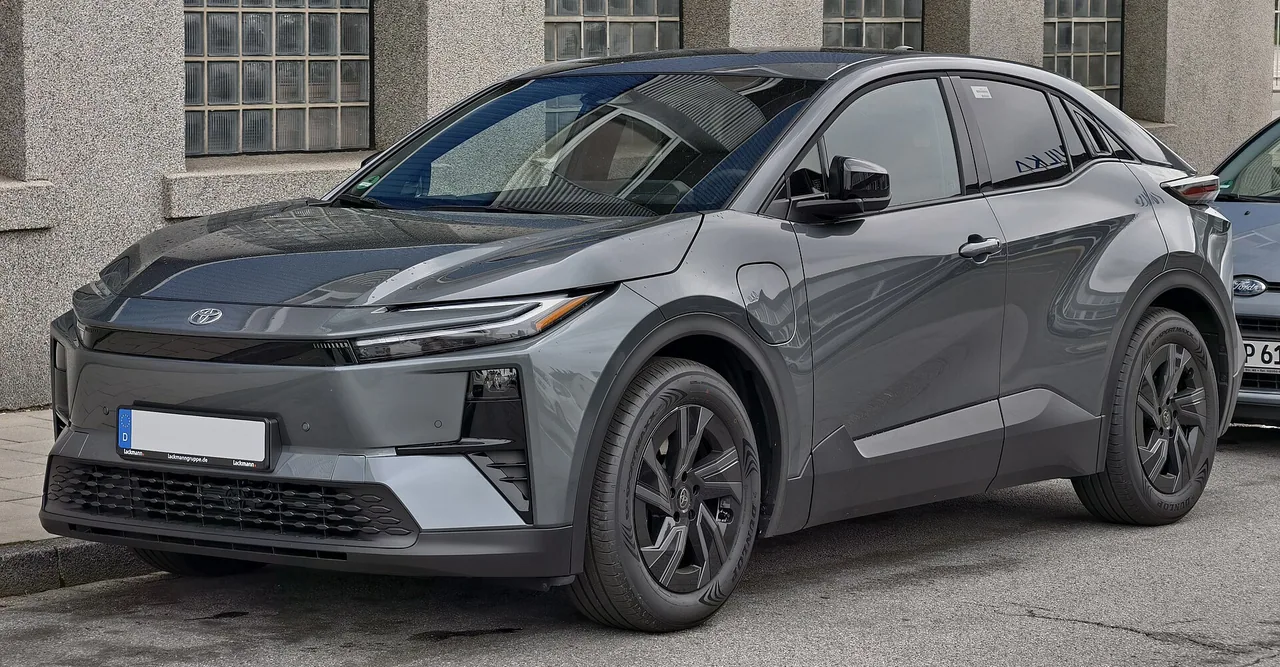

Compare the 2026 Toyota C-HR (electric) trims
| Trim | TrimIndex score | Price new | Drive | EPA range | EPA energy use | Horsepower | 0–60 mph |
|---|---|---|---|---|---|---|---|
| SE AWD (18-inch wheels) | 71 | $37,000original MSRP | AWD | 287 mi | 29.0 kWh/100 mi | 338 hp | 4.9 s |
| XSE AWD (20-inch wheels) | 70 | from $39,000starting price | AWD | 273 mi | 29.6 kWh/100 mi | 338 hp | 4.9 s |
Toyota Motor North America lists one figure for the 2026 C-HR (electric): DC fast charging peaking at 150 kW. Toyota Motor North America lists one figure for the 2026 C-HR (electric): seating for 5. Toyota Motor North America lists one figure for the 2026 C-HR (electric): 25.3 cu ft of cargo space. Used dealer asking prices for the 2026 C-HR (electric) model year: $33,025–$37,089 (median $35,199 across 166 active US used listings, Nov 2026) — covers all trims of the model year, not a single trim's sale price.
Price new, horsepower and 0–60 mph: Toyota Motor North America.
EPA range and EPA energy use: U.S. EPA and DOE, fueleconomy.gov.
TrimIndex score: out of 100.
What differs between the 2026 Toyota C-HR (electric) trims
Compared with the 2026 C-HR (electric) XSE AWD (20-inch wheels), the SE AWD (18-inch wheels) has 14 more miles of EPA range.
Which 2026 Toyota C-HR (electric) trim for what
- Longest EPA range: the 2026 C-HR (electric) SE AWD (18-inch wheels), 287 miles; next, the XSE AWD (20-inch wheels) has 273 miles.
NHTSA Recalls (1)
- NHTSA lists 1 recall campaign for the 2026 Toyota C-HR, filed Sep 2026.
Source: NHTSA recall filings for the 2026 Toyota C-HR, data through Nov 22, 2026. Why the VIN decides
- Filed Sep 2026
A software programming error may cause the electric drive system battery to become overcharged under certain driving conditions, which can shut down the electric drive system and result in a loss of drive power.
Campaign #26V570000 · Part (NHTSA): electrical system › propulsion system- What happens:
- An unexpected loss of drive power increases the risk of a crash.
- The fix
- Free fix: software update at a dealer Dealers will update the battery electric vehicle electronic control unit (BEV ECU) software, free of charge.
- Covers:
- certain 2026 C-HR battery electric vehicles.
NHTSA lists 8,521 vehicles in this campaign (all models it covers).
Check VIN status at NHTSA.gov
NHTSA Complaints (8 total)
NHTSA lists 1 recall campaign for the 2026 Toyota C-HR (electric). Owners have filed 8 complaints with NHTSA. Of all 8, 1 reports an injury.
What owners report most
TrimIndex grouped the 8 complaints owners filed with NHTSA on the 2026 Toyota C-HR (electric) (every trim; NHTSA files complaints by model year, not trim) into problem themes on Nov 16, 2026: 8 of them fall in the 2 themes below. How themes are made and checked
-
Dead battery, car will not start
5 of 8 complaints (63%): After sitting parked, the low-voltage battery drains and the car becomes unresponsive and will not start, needing a jump start or a tow.
Owners reported an injury in 1 of the 5 complaints.
“The battery became completely discharged after the vehicle was sitting for approximately one day”
NHTSA complaint 11757527 “the 12v battery discharged to the point where the car became inoperable”
NHTSA complaint 11754709 -
Headlights shake while driving
3 of 8 complaints (38%): The headlight beams bounce and flutter over bumps and at speed, so oncoming drivers flash their high beams in response.
“When driving at both low and high way speeds the head lights shake and flutter excessively”
NHTSA complaint 11764634 “Headlights shake at speeds and over bumps/potholes”
NHTSA complaint 11753383
8 complaints filed with NHTSA for the 2026 Toyota C-HR, between Jun 2026 and Sep 2026.
Parts named most often
| Part | Complaints |
|---|---|
| Electrical system (other) | 5 |
| Exterior lights | 3 |
Counted out of all 8 complaints; one complaint can name more than one part.
Owners reported an injury in 1 of the 8 complaints. How these fields are filled
Source: NHTSA owner complaints filed on every 2026 Toyota C-HR (NHTSA files them by model year, not trim), data through Nov 22, 2026.
All 8, most severe first, then newest
- Severity 5 of 5.Electrical system (other) · Battery and propulsion system Injury
1.The vehicle’s 12-volt battery/electrical system has malfunctioned. The battery became completely discharged after the vehicle was sitting for approximately one day, leaving me
Show the rest
unable to start the vehicle. The vehicle is a 2026 Toyota C-HR, and I was extremely concerned because I had no reasonable expectation that a nearly new vehicle would become inoperable simply from sitting for a short period. The vehicle and battery are available for inspection upon request. 2. This failure created a serious safety concern because the vehicle became completely inoperable without warning after sitting for only one day. I rely on this vehicle for transportation, and a sudden electrical/battery failure could leave me stranded in an unsafe or remote location, potentially without the ability to start the vehicle or leave the area. I consider this a significant safety issue, particularly because I was not adequately informed that I would need to take extraordinary measures to prevent the battery from draining. 3 Yes. After the battery failed, I was able to get the vehicle jump-started and drove it directly to Dalton Toyota for inspection. The dealership was made aware of the battery failure and the circumstances under which it occurred. I was subsequently told that I should either disconnect/remove the battery or slow-charge it, which does not provide me with confidence that the underlying problem has actually been resolved. 4. The vehicle was inspected by Dalton Toyota, the selling/dealership service facility. I brought the vehicle to the dealership immediately after experiencing the battery failure. I have not had the vehicle inspected by police or an insurance representative. 5.There were no adequate warning messages or warning lamps alerting me that the 12-volt battery was about to fail. The vehicle had been sitting for one day, and when I attempted to use it, the battery was dead and the vehicle would not start.
NHTSA ODI #11757527 - Severity 2 of 5.Exterior lights
When driving at both low and high way speeds the head lights shake and flutter excessively. I get highbeam flashes from people I’m passing I can see the lights shaking on the cars In front of me.
Show the rest
Toyota knows about this problem and won’t do anything
NHTSA ODI #11764634 - Severity 2 of 5.Electrical system (other)
The 12 Volt battery failed and the car was therefore not responsive after it was parked for 1 week. Had to jump start the car at 1AM. The car is brand new (purchased in June 2026).
Show the rest
The battery should obviously not fail so soon. The dealer confirmed that the battery failed test with a DCA tester and replaced the battery.
NHTSA ODI #11757155 - Severity 2 of 5.Electrical system (other)
After 4 weeks of purchasing the car with only 500 miles, car's 12 volt battery drained, and car wouldn't turn on, had to have it towed to toyota dealer they had it for 3 weeks and
Show the rest
couldn't figure out where parasitic drain was coming from, they replaced 12 volt battery kept car for few days and it wouldn't start again when it was at their dealership, they kept it another few days and charged the battery and told me car was ready, they didn't fix the cause just as they don't know was told, if car isn't driven for few days battery drains, if it's driven daily it's OK. It's disgraceful from toyota to allow this and not do anything about it.
NHTSA ODI #11757070 - Severity 2 of 5.Electrical system (other)
This report is for a 2026 Toyota C-HR BEV (Battery Electric Vehicle). I am reporting two separate events (as of August 4, 2026). The dates the events occurred were June 20, 2026 and July 2, 2026.
Show the rest
Each time, the 12v battery discharged to the point where the car became inoperable. Each time, after 12v battery discharge there was not enough power in the 12v battery to perform the necessary functions to activate the traction battery. No power to the traction battery means no power to the electric motors, leaving the vehicle unable to move. The status of the charge level on the traction battery was greater than 50% state of charge on both June 20 and July 2. My subsequent 12v battery monitoring indicates that the 12v battery continues to discharge to very low levels overnight and when the car is not driven. Available for inspection?: Yes, the car is available for inspection upon request. Safety at risk?: Conceivably, yes. The car was inoperable, meaning unavailable if needed in an emergency. The key fob was no longer functional, meaning that a physical key had to be accessed to unlock the doors. Vehicle inspected by manufacturer: Yes, the vehicle was inspected by our local Toyota Service department from July 6 - July 8, 2026. The complaint was noted as “CUSTOMER STATES THE VEHICLE WILL NOT START HAS TO PUT CHARGER ON IN ORDER TO START” The diagnosis was noted as “Cannot confirm customer complaint." We were told to use the vehicle normally. If another 12v battery failure occurs, we were instructed not to charge the 12v battery. Instead, have the car towed to the dealership. Warning lights prior to the failure? No, there were no warning lights prior to the failure. After the 12v battery failed to power up the car, there were a multiple distress messages flashed on the display screen, accompanied by audible beeping alerts.
NHTSA ODI #11754709 - Severity 2 of 5.Exterior lights
I purchased this car in June, on the first night of driving, I noted that the headlights shake miserably as if they were loose. I went to the source dealership twice over this issue.
Show the rest
Nothing was done as they said they could not test it during the day and they leave at 5PM. I called Toyota corporate, reported an unrelated problem and the headlight problem. Alternative dealer resolved unrelated problem and acknowledged that headlights do seem loose, but that corporate would be unlikely to do anything. Assessed and noted that the headlamp assembly on both sides is only mounted from top support bracket and the outer side where it meets the bumper and fender. Being that the assembly is so large, and noting that there is no support below, this allows for the headlight assemblies to bounce around. Upon showing multiple Facebook groups pertaining to the owners of Toyota BZ, BZ Woodland, CHR and sister models Subaru Uncharted, Solterra and Trailseeker. Multiple individuals confirmed that the headlights seem to shake vertically when hitting deviations in the road, or at highway speeds. Street signs seem to strobe from the constant movement, oncoming traffic flash their high beams since they perceive it as a high beam. Someone suggested aiming the headlights lower which reduce visibility for whomever is driving the car. I do have videos showing the problem and demonstrating what is happening.
NHTSA ODI #11753376 - Severity 2 of 5.Exterior lights
Headlights shake at speeds and over bumps/potholes. Have tested with friend and they said it looks like I’m flashing my high beams rapidly when it’s just the cars headlight beam
Show the rest
pattern shaking like the light is loose. Vehicle has not been inspect but service is due soon. Will inform dealership about the issue.
NHTSA ODI #11753383 - Severity 2 of 5.Electrical system (other)
The referenced vehicle is a 2026 Toyota CH-R electric vehicl, purchased new on April 30th, 2026 from an authorized Toyota dealership. On June 24th, 2026.
Show the rest
I tried to start the car at around 5:30am that was parked at my home, the car failed to start, after several attempts, the car became totally unresponsive to any button or my remote. It appears the battery was extremely low or dead. I ended up called towing services. The tow truck driver came, used a portable car battery jumper and able to start the car, put the car into neutral gear and tow to the Toyota dealership for investigation. The next day, Toyota dealership called me back and informed me they have completed all the checks and the vehicle is not performing within specification, no issues or fixes were performed, and they said the 12V battery was fine after 2.5 hours of charging. The dealership was unable to reproduce the issue. There was no previous warning of any kind prior to this issue happen. I believe this vehicle may be too frequently transmitting data when the vehicle is OFF, and causing its 12V battery to drain quickly in some cases, which in term causing the vehicle unable to start. Especially if and when the car is parked in poor cellular reception area, the car may constantly try and try to connect and transmit data, and causing rapid discharge of its 12V battery when the car is in OFF position. This can be a safety and reliability issue if not properly addressed. It could caused someone to be stuck somewhere, if in extreme weather conditions, it could be life threatening to someone if their vehicle is unable to start due to this issue. In less than two months of ownership, this has already happened. Based on person research on the internet, here are other owner of the same Toyota CH-R and another similar vehicle of Toyota BZ, also reported similar issue. I have also contacted Toyota brand engagement center and filed a case for this issue. Requesting NHTSA's attention on this matter.
NHTSA ODI #11746827
NHTSA 5-Star Crash-Test Ratings
NHTSA crash-tested the all-wheel-drive 2026 Toyota C-hr SUV (every trim): 5 stars overall, with frontal 4, side 5, rollover 4.
2026 Toyota C-HR (electric) frequently asked questions
What trims does the 2026 Toyota C-HR (electric) come in?
TrimIndex lists 2 configurations of the 2026 Toyota C-HR (electric), as EPA names them: SE AWD (18-inch wheels) and XSE AWD (20-inch wheels).
What is the difference between the 2026 Toyota C-HR (electric) SE AWD (18-inch wheels) and XSE AWD (20-inch wheels)?
Compared with the 2026 C-HR (electric) SE AWD (18-inch wheels), the XSE AWD (20-inch wheels) has 14 fewer miles of EPA range.
What is the range of the 2026 Toyota C-HR (electric)?
EPA rates the 2026 Toyota C-HR (electric) at 273 to 287 miles, depending on the configuration: 287 for the SE AWD (18-inch wheels) and 273 for the XSE AWD (20-inch wheels).
Are there recalls on the 2026 Toyota C-HR (electric)?
Yes. NHTSA lists 1 recall campaign for the 2026 Toyota C-HR (electric) in records through Nov 22, 2026: 26V570000 (electric drive system).
What problems do owners report on the 2026 Toyota C-HR (electric)?
Of the 8 complaints owners filed with NHTSA about the 2026 Toyota C-HR (electric) in records through Nov 22, 2026, the two largest problem themes are: Dead battery, car will not start (5); and Headlights shake while driving (3). All 8 fall in the 2 themes TrimIndex grouped from their narratives on Nov 16, 2026.