Audi e-tron vs. Audi Q8 e-tron: Same Brussels MLB evo Chassis, 70+ Miles More Range
Updated
Platform Twin Verdict
Audi's 2024 Q8 e-tron is a thorough mid-cycle evolution of the 2020–2023 e-tron built on the identical 115.1-inch MLB evo chassis in Brussels with the same 402 hp dual-motor layout. Denser cell stacking expands the battery from 95 to 114 kWh—lifting EPA range from 218–226 miles to 272–300 miles while escaping early 2020–2022 battery recall 23V867000—though both share brake-pedal recall 26V240000 and Q8 adds brake-shudder filings.
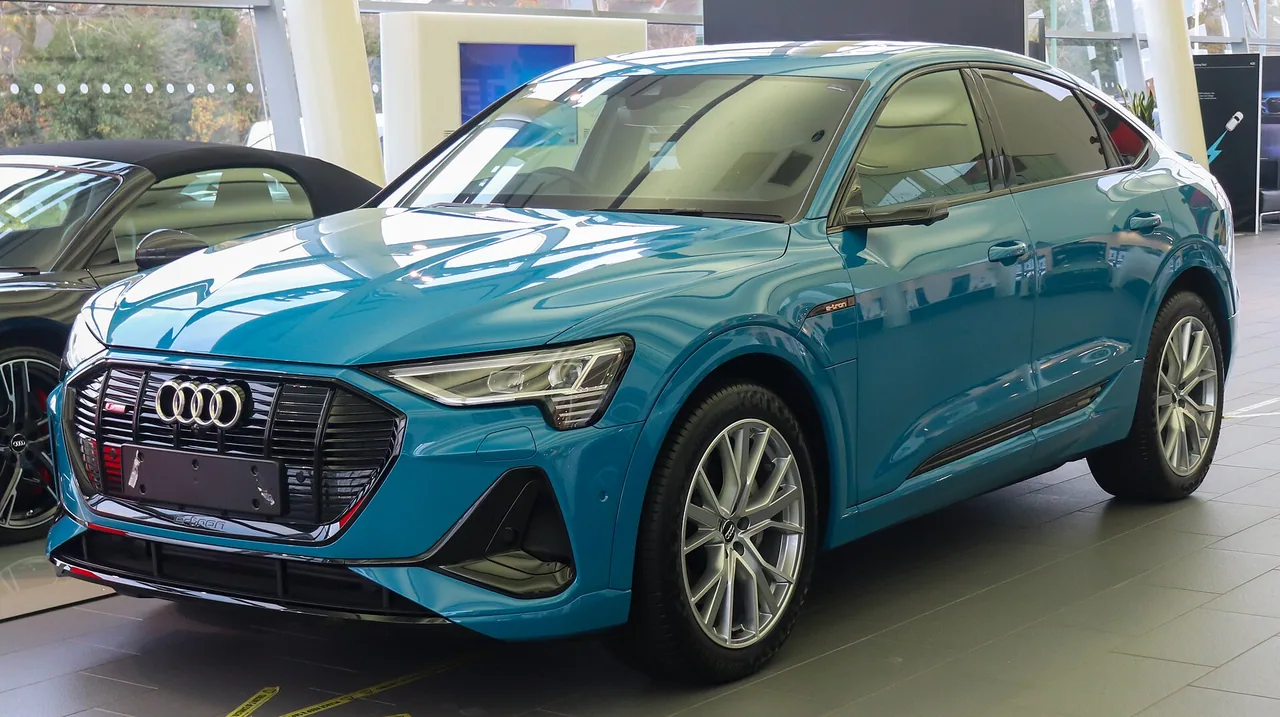
Audi e-tron
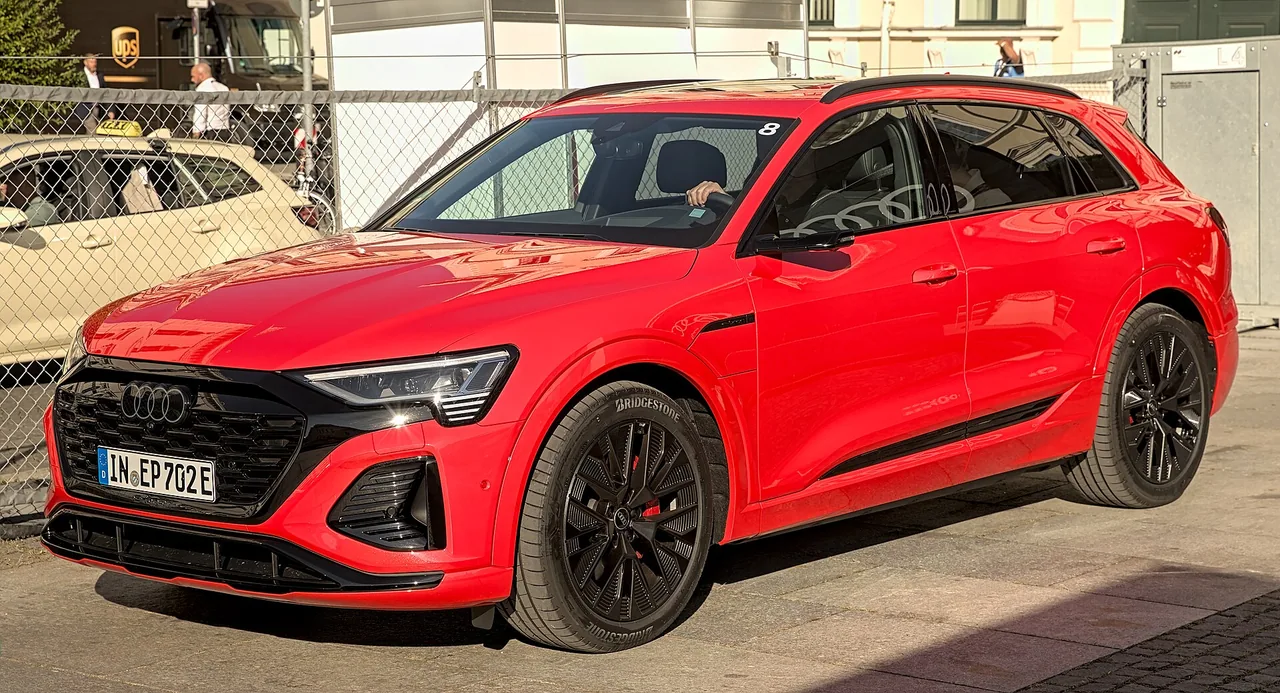
Audi Q8 e-tron
Latest Data Refresh Check · Nov 25, 2026
Reviewed data refresh (2026-11-25) updated records for e-tron (2023, 2022, 2020: new NHTSA complaints) and Q8 e-tron (2025); tables and dates below reflect the refreshed snapshot.
Hardware Refresh & Evolution Spotlight
Same Brussels 115.1" MLB evo SUV—95 kWh (218–226 mi) evolves to 114 kWh (272–300 mi).
Live Market & Badge-Tax Readout
What you pay for the badge: new MSRP vs. used market
Current market snapshot: e-tron ($8,700 less on KBB used midpoint).
TrimIndex never blends KBB, J.D. Power, and dealer asking figures into one range.
Day-to-Day Ownership Split
Where e-tron and Q8 e-tron actually diverge
Sharing a platform does not mean identical ownership. Here are the concrete calibration, cabin, software, charging, and dealer differences buyers feel every day.
Battery Capacity & Highway Range
That 55-to-75-mile range expansion is the single decisive upgrade separating the Q8 e-tron from its predecessor.
Battery Recall & SoH Aging Signal
Early 2020–2022 e-tron buyers must demand dealer ODIS cell-health printouts; 2023 e-tron and 2024–2025 Q8 e-tron dodge 23V867000 cleanly.
Steering Ratio & Chassis Sharpness
Q8 e-tron feels more planted and responsive on highway sweepers without sacrificing the e-tron's famously vault-like ride.
Motor Stator & Aero Efficiency
Q8 e-tron remains thirstier than newer dedicated skateboards like the Q6 e-tron, yet improves efficiency enough to unlock near-300-mile trips.
NHTSA Complaint Patterns
The 2023 e-tron posts the quietest complaint record overall, while 2024 Q8 e-tron replaces propulsion worries with a brake-rotor check.
Refreshed EPA, charging & safety specs side by side
Pulled directly from TrimIndex’s EPA Fuel Economy, NHTSA NCAP, and charging-access database (NHTSA records through Nov 22, 2026).
| Specification | Audi e-tron | Audi Q8 e-tron |
|---|---|---|
| EPA range (all trims) EPA Fuel Economy Guide | 218–226 mi | 272–300 mi |
| Efficiency (lower is better) EPA Fuel Economy Guide | 42.9–44.0 kWh/100 mi | 38.9–43.2 kWh/100 mi |
| Usable battery capacity | 95.0 kWh | 114.0 kWh |
| Peak DC fast charging | 150–170 kW | 170 kW |
| Rated horsepower | 402 hp | 402 hp |
| Drivetrains offered | AWD | AWD |
| Seating capacity | 5 seats | 5 seats |
| Fast-charging port & Supercharger | CCS1 (Combined Charging System) | CCS1 (Combined Charging System) |
| NHTSA 5-Star overall rating NHTSA NCAP crash tests | 5 of 5 stars | 5 of 5 stars |
How Audi squeezed 114 kWh and 300 miles into the exact same MLB evo floor pan
When Audi rechristened the original e-tron as the Q8 e-tron for 2024, engineers did not swap platforms—they re-engineered the chemistry and packaging inside Brussels' existing 115.1-inch MLB evo frame. Switching to denser stacked prismatic cells raised gross capacity 20% from 95 kWh to 114 kWh inside the identical structural housing, while rewinding the rear induction motor from 12 to 14 stator coils generated stronger magnetic torque with less current draw.
Paired with self-sealing active radiator shutters and reshaped underbody wheel spoilers, those incremental upgrades erased the original e-tron's Achilles heel. Where a 2020–2023 e-tron topped out at 218–226 miles EPA—dropping close to 165 miles on freezing highway commutes—the 2024 Q8 e-tron quattro stretches to 285 miles (272 miles on 2025 SUVs) and up to 300 miles in Sportback trim. Both keep Audi's celebrated flat fast-charging curve that holds near 150–170 kW all the way past 75% state of charge.
Review trim-by-trim KBB depreciation discounts, ODIS battery inspection tips, and exact NHTSA recall numbers across both MLB evo generations.
Read Audi e-tron & Q8 e-tron Depreciation Guide →95 kWh battery SoH readings, CCS1 realities, and choosing your price tier
Because luxury EV depreciation hits both badges heavily, the refreshed market cards above often show an enticingly narrow spread between a clean 2023 e-tron and a one-year-newer 2024 Q8 e-tron. Before jumping at the cheapest 2020–2022 e-tron listing, weigh two critical facts from TrimIndex's database. First, three vetted individual-car owner OBD scans on the 95 kWh pack span 75.0% to 87.6% State of Health between 15,000 and 40,000 miles—wider dispersion than MEB or J1 packs, making an Audi dealer ODIS battery printout mandatory before buying.
Second, neither generation has verified Tesla Supercharger access on file in TrimIndex's database; both rely on CCS1 stations (or Magic Dock locations). That makes the Q8 e-tron's extra 60+ miles of native range doubly valuable for drivers who venture outside dense metro CCS corridors. Meanwhile, check Brussels plant closure context: Audi ceased Brussels Q8 e-tron production after 2025 as the newer Ingolstadt PPE Q6 e-tron took over—keep replacement trim/glass lead times in mind while enjoying the steep secondary-market value.
- Recall 23V867000 (26,866 units): affects 2020–2022 e-tron HV battery modules only; 2023 e-tron and 2024–2025 Q8 e-tron are unaffected.
- Recall 26V240000 (18,853 units): covers brake-pedal pushrod fasteners across BOTH 2020–2023 e-tron and 2024 Q8 e-tron.
- Recall 23V842000 (93,196 units) & 25V900000: replace overheating 240V portable charging cords and update rearview camera software across both generations.
Model-year timeline: e-tron vs. Q8 e-tron
Refreshed automatically from TrimIndex’s database on each reviewed run so you can spot overlapping model years, Avoid flags, and pricing shifts.
| Year | e-tron Score & Standing | e-tron Price | Q8 e-tron Score & Standing | Q8 e-tron Price |
|---|---|---|---|---|
| 2025 | Not sold | Not produced No US model year | $74,800–$78,200 Orig. MSRP | |
| 2024 | Not sold | Not produced No US model year | $31,180–$45,625 J.D. Power · Nov 2026 | |
| 2023 | $29,600 KBB · Nov 2026 | Not sold | Not produced No US model year | |
| 2022 | $24,900–$26,200 KBB · Nov 2026 | Not sold | Not produced No US model year | |
| 2021 | $23,400–$23,800 KBB · Nov 2026 | Not sold | Not produced No US model year | |
| 2020 | $21,800 KBB · Nov 2026 | Not sold | Not produced No US model year |
Which platform twin should you buy?
Choose the Audi e-tron if…
- You drive mostly within a 150-mile daily radius, charge at home, and want flagship German air-suspension quietness at a rock-bottom used price.
- You target a clean 2023 e-tron (only seven complaints, three recalls, 170 kW DCFC, outside 23V867000) to capture maximum reliability per dollar.
- You have verified an ODIS battery SoH printout showing healthy cell balance on a recall-cleared 2021–2022 bargain.
Choose the Audi Q8 e-tron if…
- You regularly drive highway distances where 272–300 miles EPA removes the need for frequent CCS1 fast-charging stops.
- You want the quicker 14.6:1 steering ratio, updated front bushings, redesigned 114 kWh cell stack outside recall 23V867000, and fresher 8-year / 100K-mile battery warranty runway.
- Steep first-year Q8 e-tron depreciation narrows the price step over a 2023 e-tron enough to justify upgrading immediately.
Used-Market Sweet Spot
For most shoppers, the heavily depreciated 2024 Audi Q8 e-tron quattro (285 mi EPA, 114 kWh, outside battery recall 23V867000) is the clear long-term winner—solving the original SUV's only major functional flaw without changing its plush cabin. Strict budget buyers who never exceed 150 miles a day get the cleanest bargain in a 2023 Audi e-tron, skipping early 2020–2022 battery-recall headaches while keeping 170 kW charging.
e-tron & Q8 e-tron platform questions
Are the Audi e-tron and Audi Q8 e-tron built on the same platform?
Yes. The 2024–2025 Audi Q8 e-tron is the direct mid-cycle evolution of the 2020–2023 Audi e-tron, assembled in the same Brussels, Belgium factory on the identical 115.1-inch MLB evo chassis with the same 402-horsepower dual-motor AWD layout and interior cabin.
How much more range does the Q8 e-tron get than the original Audi e-tron?
Upgrading from the 95 kWh pack to the denser 114 kWh pack—along with a 14-coil rear motor stator and active aero shutters—boosts EPA range from 218–226 miles on the 2020–2023 e-tron to 272–285 miles on the Q8 e-tron SUV and up to 300 miles on the Q8 Sportback e-tron.
Does the 2024 Audi Q8 e-tron suffer from e-tron battery recall 23V867000?
No. High-voltage battery overheating recall 23V867000 covers 26,866 2020–2022 Audi e-tron and 2022 e-tron S builds. Both the 2023 e-tron and the 2024–2025 Q8 e-tron sit outside that campaign—though both generations share brake-pedal fastener recall 26V240000 and charger recall 23V842000.
What problem do 2024 Audi Q8 e-tron owners report most often to NHTSA?
Among 26 total NHTSA complaints on the 2024 Audi Q8 e-tron, the leading theme is shuddering brakes and warped rotors (6 of 26 filings, 23%). Always perform firm highway braking checks during your test drive and verify brake-pedal recall 26V240000 is closed.
Can the Audi e-tron or Q8 e-tron use Tesla Superchargers?
No verified Tesla Supercharger access is recorded in TrimIndex's charging database for 2020–2025 Audi e-tron or Q8 e-tron models. Both use a CCS1 fast-charging port peaking at 150–170 kW and rely on CCS1 networks or Tesla Magic Dock locations.