Chevrolet Blazer EV & Equinox EV: Longer Wheelbase & 102 kWh vs. Value & 319-Mile Efficiency
Updated
Platform Twin Verdict
Chevrolet builds both electric crossovers in Ramos Arizpe on GM BEV3, creating an unusual showroom overlap. On 85 kWh FWD and AWD trims, the shorter Equinox EV beats the base Blazer EV on EPA range, electrical efficiency, and even rear cargo volume behind the second row. Step up to Blazer EV only when you want the 102 kWh battery, 190 kW fast charging, 3,500-pound RWD towing, or 615-horsepower SS acceleration.
Chevrolet Blazer EV
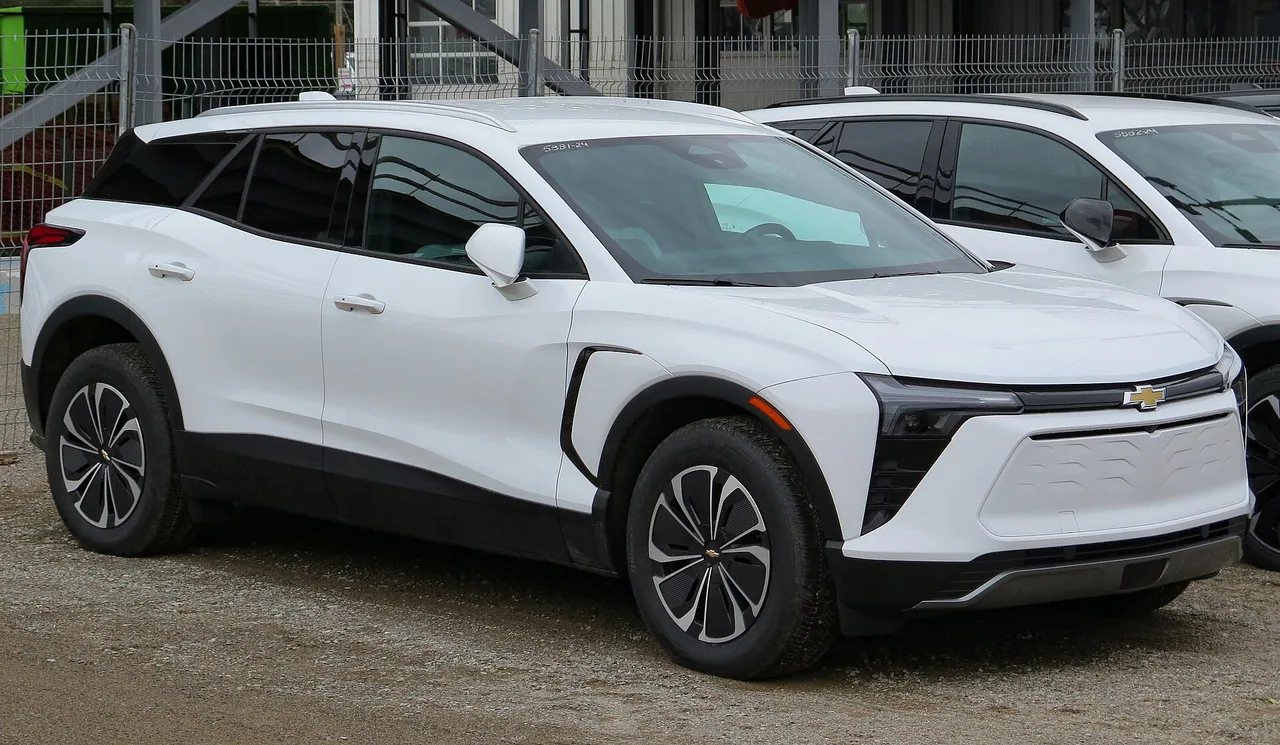
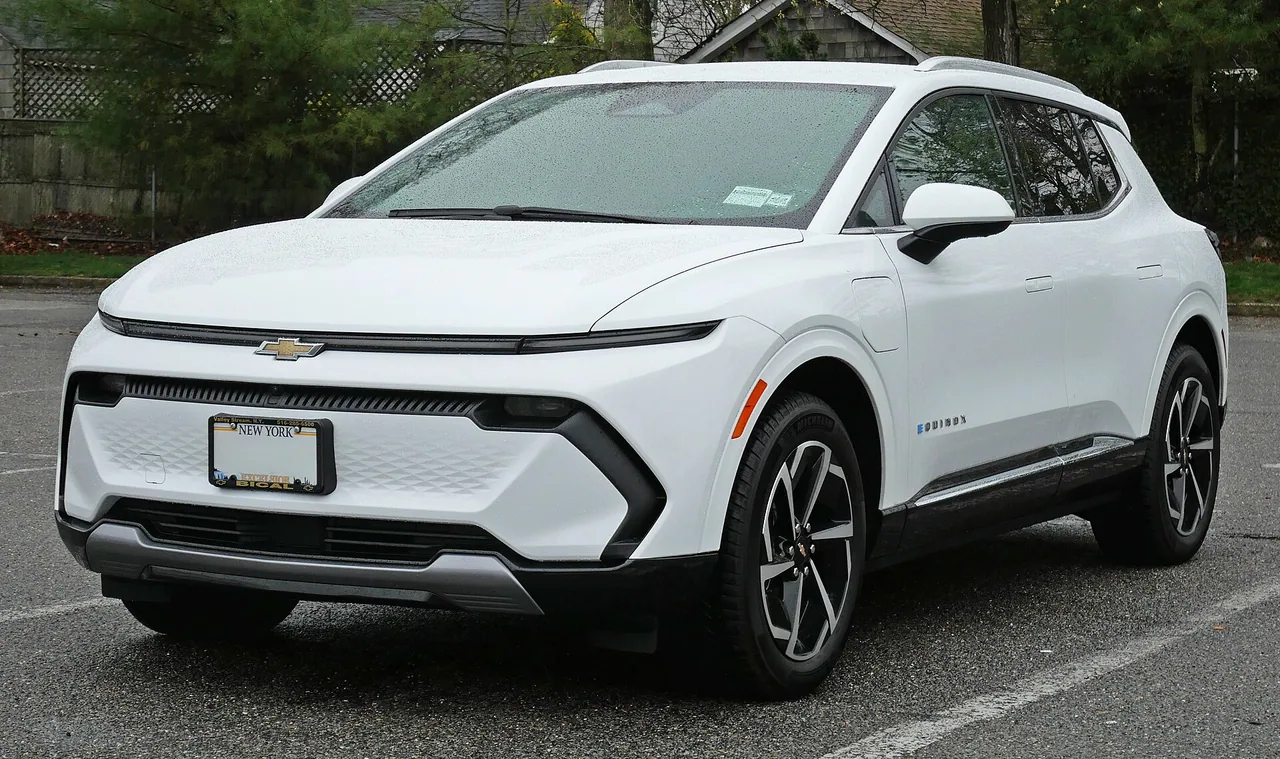
Chevrolet Equinox EV
Latest Data Refresh Check · Nov 25, 2026
Reviewed data refresh (2026-11-25) updated records for Blazer EV (2026, 2025) and Equinox EV (2025, 2024); tables and dates below reflect the refreshed snapshot.
Live Market & Badge-Tax Readout
What you pay for the badge: new MSRP vs. used market
Current market snapshot: Blazer EV: $25,000 (KBB) vs. Equinox EV: $20,215–$28,115 (J.D. Power).
TrimIndex never blends KBB, J.D. Power, and dealer asking figures into one range.
Where dealer asking prices are shown above or in the timeline below, figures summarize active US used dealer listings (asking prices, not final sale prices; excluded from Value-to-Score).
Day-to-Day Ownership Split
Where Blazer EV and Equinox EV actually diverge
Sharing a platform does not mean identical ownership. Here are the concrete calibration, cabin, software, charging, and dealer differences buyers feel every day.
102 kWh Range & Fast-Charging Headroom
Equinox EV squeezes extraordinary mileage from 85 kWh, but road-trippers chasing 190 kW fast charging or 3,500-lb towing need a 102 kWh Blazer EV.
Efficiency & Daily Charging Cost
Equinox EV lowers household electricity bills and beats 85 kWh Blazer EV AWD by 24 miles on a single charge.
Footprint, Cabin Width & Cargo Reality
Do not assume the larger Blazer EV carries more everyday grocery or stroller gear behind row two—Equinox EV packs smarter.
Home AC Charging Hardware
Equinox EV surprises by offering faster optional home AC charging on select AWD builds, though 11 kW remains the better range pick.
Dominant NHTSA Owner Pain Points
Equinox EV's top annoyance is an easy-to-mitigate interior glare design flaw; Blazer EV's major recalls focus on brake electronics and parking-brake wiring.
Refreshed EPA, charging & safety specs side by side
Pulled directly from TrimIndex’s EPA Fuel Economy, NHTSA NCAP, and charging-access database (NHTSA records through Nov 22, 2026).
| Specification | Chevrolet Blazer EV | Chevrolet Equinox EV |
|---|---|---|
| EPA range (all trims) EPA Fuel Economy Guide | 279–334 mi | 285–319 mi |
| Efficiency (lower is better) EPA Fuel Economy Guide | 32.3–39.7 kWh/100 mi | 31.1–35.1 kWh/100 mi |
| Usable battery capacity | 85.0–102.0 kWh | 85.0 kWh |
| Peak DC fast charging | 150–190 kW | 150 kW |
| Rated horsepower | 220–615 hp | 213–288 hp |
| Drivetrains offered | AWD, FWD, RWD | AWD, FWD |
| Seating capacity | Not on file | 5 seats |
| Fast-charging port & Supercharger | CCS1 (Combined Charging System) · With an adapter, since Sep 18, 2024 | CCS1 (Combined Charging System) · With an adapter, since Sep 18, 2024 |
| NHTSA 5-Star overall rating NHTSA NCAP crash tests | 5 of 5 stars | 5 of 5 stars |
The 85 kWh trap: why Equinox EV outclasses base Blazer EV trims
Walk across a Chevrolet dealership lot or browse used listings and it is easy to overpay for the Blazer EV nameplate without getting better EV hardware. On 85 kWh FWD and standard AWD models, Blazer EV and Equinox EV share identical 10-module battery packs, identical 150 kW peak fast-charging limits, identical 1,500-pound towing ratings, and virtually the same 17.7-inch Google Built-In software interface.
Yet the smaller Equinox EV actually wins almost every practical benchmark at that 85 kWh tier. Its 2024–2026 FWD hits 319 miles EPA (beating 2025–2026 Blazer EV FWD at 312 miles—or 283 miles on 22-inch wheels), and 2025–2026 Equinox EV AWD reaches 307 miles EPA versus just 283 miles on an 85 kWh Blazer EV AWD. Even the trunk favors the cheaper sibling: upright rear glass gives Equinox EV 26.4 cubic feet behind the second row compared with 25.5 cubic feet in Blazer EV.
Where the Blazer EV's 5.5 inches of extra wheelbase pay off at the base tier is rear-seat knee stretch, shoulder width, and planted highway ride feel. Unless you regularly haul tall adults in back or specifically want Blazer's wider, aggressive stance, paying extra for an 85 kWh Blazer EV over an Equinox EV rarely pencils out.
- AWD range gap on identical 85 kWh packs: 2025–2026 Equinox EV AWD (307 mi) beats 2025–2026 Blazer EV AWD (283 mi) by 24 EPA miles.
- Cargo surprise: Equinox EV holds 26.4 cu ft behind row two (57.2 max) vs. Blazer EV's 25.5 cu ft (59.1 max).
- Efficiency gap: Equinox EV runs 31.1–35.1 kWh/100 mi vs. Blazer EV's 32.3–39.7 kWh/100 mi.
Where Blazer EV pulls away: 102 kWh RS RWD, 3,500-lb towing, and 615 hp SS
Everything changes once you look above the 85 kWh floor. Because Equinox EV's shorter 116.3-inch wheelbase cannot house GM's 12-module Ultium pack, Chevrolet reserved the 102 kWh battery exclusively for the Blazer EV—turning upper Blazer trims into a mechanically different road-trip machine.
A 2024 or 2025 Blazer EV RS RWD steps up to 340–365 horsepower, rear-wheel-drive handling balance, 190 kW peak DC fast charging, 324–334 miles of EPA range, and a 3,500-pound towing capacity more than double Equinox EV's 1,500-pound cap. If sheer pace is the priority, the 2025–2026 Blazer EV SS AWD unleashes 615 horsepower and a 3.4-second 0–60 sprint—performance territory Equinox EV never approaches (though note SS is rated for zero towing).
That split creates a crystal-clear rule for Chevrolet shoppers: shop Equinox EV against 85 kWh Blazer EV trims, and shop 102 kWh Blazer EV RS RWD or SS trims against depreciated Cadillac LYRIQs instead.
Blazer EV RS RWD and SS share their exact 102 kWh / 190 kW pack and motor outputs with the Spring Hill Cadillac LYRIQ—see where used luxury depreciation erases the badge gap.
Read Cadillac LYRIQ vs. Blazer EV Teardown →Two Chevrolet NHTSA profiles: Equinox windshield glare vs. Blazer brake recalls
Both models share the Ramos Arizpe build environment, GM's eBoost brake module (examined under open NHTSA Engineering Analysis EA26006), a minor 2025 door-striker campaign (24V737000), and the familiar GM turn-signal stalk quirk where canceling a turn briefly flashes the opposite blinker. Beyond those overlaps, their NHTSA records diverge dramatically.
Equinox EV's 287 complaints center on a glaring cabin ergonomics oversight: sunlight and streetlights reflecting off the ribbed upper dashboard directly into the windshield (64 of 108 filings in 2024; 85 of 166 in 2025). Its 10 recalls include three FMVSS 141 pedestrian-alert volume updates (24V925000, 25V639000, 25V878000), a 22,914-unit 21-inch Continental tire tread recall (25V704000), and a 2,890-unit 2025 AWD adaptive-cruise brake software campaign (25V012000), plus 11 of 12 early 2026 complaints flagging phantom braking.
Blazer EV logged fewer total complaints (99) but heavier chassis and brake-control recall actions: inclusion in GM's 67,380-unit October 2026 BSCM brake software recall (26V717000—which did not list Equinox EV), a 40,233-unit rear parking-brake wiring harness corrosion recall (25V433000) capable of engaging the parking brake while driving, and dominant phantom emergency braking shares (24/78 in 2024; 14/21 in 2025).
Confirm closure of Blazer EV campaigns 26V717000 and 25V433000 or Equinox EV campaigns 25V704000, 25V878000, and 25V012000 alongside open eBoost probe EA26006.
Open GM Ultium Recalls & EA26006 Guide →Model-year timeline: Blazer EV vs. Equinox EV
Refreshed automatically from TrimIndex’s database on each reviewed run so you can spot overlapping model years, Avoid flags, and pricing shifts.
| Year | Blazer EV Score & Standing | Blazer EV Price | Equinox EV Score & Standing | Equinox EV Price |
|---|---|---|---|---|
| 2026 | $38,053–$49,417 Dealer asking · Nov 2026 | $28,379–$37,606 Dealer asking · Nov 2026 | ||
| 2025 | $24,396–$32,764 Dealer asking · Nov 2026 | $24,204–$27,058 Dealer asking · Nov 2026 | ||
| 2024 | $21,407–$31,227 J.D. Power · Nov 2026 | $20,215–$28,115 J.D. Power · Nov 2026 |
Which platform twin should you buy?
Choose the Chevrolet Blazer EV if…
- You specifically want the 102 kWh battery, 190 kW peak DC fast charging, and up to 334 miles of rear-wheel-drive range in RS RWD trim.
- You need 3,500 pounds of towing capacity (RS RWD) or 615-horsepower Blazer EV SS acceleration.
- Extra rear legroom and cabin width from the 121.8-inch wheelbase matter for tall rear passengers or bulky car seats.
- You want to avoid Equinox EV's ribbed-dashboard glare without adding an aftermarket dash mat.
Choose the Chevrolet Equinox EV if…
- You are shopping 85 kWh FWD or AWD trims—Equinox EV delivers longer EPA range (307–319 miles), better efficiency, and more cargo space behind row two for less money.
- Lower purchase price, cheaper tires, and easier tight-garage parking (190.6 in overall length) beat wide-body styling.
- You want an optional 19.2 kW Level 2 AC onboard charger on select AWD trims for fast home replenishment.
- You want the highest-value entry into GM's 300+ mile Ultium range tier with a 5-Star NHTSA crash rating.
Used-Market Sweet Spot
For most families, a 2025 Chevrolet Equinox EV FWD (319 mi EPA) or 11 kW AWD (307 mi EPA) is the smarter everyday purchase over an 85 kWh Blazer EV—just budget for a matte dash mat and confirm recalls 25V878000 and 25V704000 are done. Only spend up for the Blazer EV when landing a 102 kWh RS RWD (324–334 mi EPA, 190 kW DC, 3,500-lb tow) or SS AWD with campaigns 26V717000 and 25V433000 closed.
Blazer EV & Equinox EV platform questions
Is the Chevrolet Blazer EV actually bigger inside than the Equinox EV?
Only in wheelbase legroom, width, and folded cargo volume. Blazer EV rides a 5.5-inch longer wheelbase (121.8 vs. 116.3 inches) and holds 59.1 cu ft with rear seats folded versus 57.2 cu ft in Equinox EV. However, with the rear bench upright, Equinox EV actually edges Blazer EV slightly at 26.4 cu ft versus 25.5 cu ft.
Why does the Equinox EV AWD get more EPA range than the Blazer EV AWD?
Both standard AWD models use the identical 85 kWh usable NMC Ultium battery pack, but the Equinox EV is lighter, narrower, and more aerodynamic. That efficiency advantage stretches 2025–2026 Equinox EV AWD (11 kW charger) to 307 miles EPA versus 283 miles on a standard 85 kWh Blazer EV AWD.
Does the Blazer EV fast-charge faster than the Equinox EV?
Only on 102 kWh Blazer EV trims (RS RWD and SS AWD), which peak at 190 kW DC. Base 85 kWh Blazer EV FWD and AWD builds top out at 150 kW DC—identical to every Chevrolet Equinox EV.
Do either the Chevrolet Blazer EV or Equinox EV include Apple CarPlay?
No. Chevrolet omitted Apple CarPlay and Android Auto across every 2024–2026 Blazer EV and Equinox EV trim, relying instead on built-in Google Automotive Services on a 17.7-inch touchscreen. Shoppers wanting GM BEV3 hardware with wireless CarPlay should look at the Honda Prologue or 2023–2025 Cadillac LYRIQ.
Which has fewer NHTSA problems: Chevy Blazer EV or Chevy Equinox EV?
Blazer EV has fewer total NHTSA complaints (99 vs. 287) because it avoided the Equinox EV's ribbed-dashboard windshield glare issue (149 filings in 2024–2025). However, Blazer EV carries more critical braking and wiring recalls—including 26V717000 (BSCM software) and 25V433000 (parking-brake harness)—and both share open eBoost investigation EA26006.