Chevrolet Bolt EV vs. Bolt EUV: Shared BEV2 Guts, Split Recall History
Updated
Platform Twin Verdict
Chevrolet's Bolt EV and stretched Bolt EUV share Orion Assembly's front-drive BEV2 platform, identical 65 kWh LG pouch packs, and the same slow 55 kW DC fast-charging ceiling. Yet their recall footprints split sharply: earlier 2020–2022 Bolt EVs absorbed the bulk of GM's LG battery-fire campaigns, while 2023 Bolt EUV carries zero NHTSA recalls. Both siblings share a documented 2022–2023 sticky steering gear complaint wave, so test-drive centering carefully before deciding.
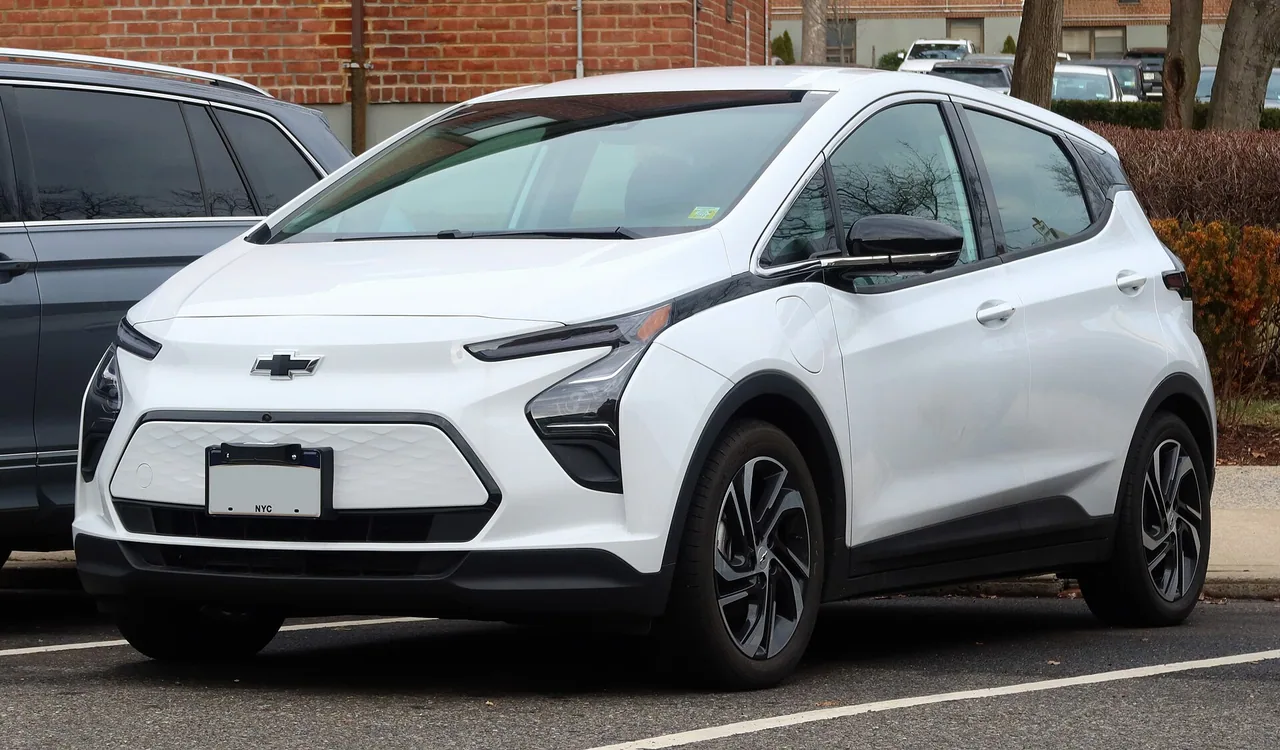
Chevrolet Bolt EV
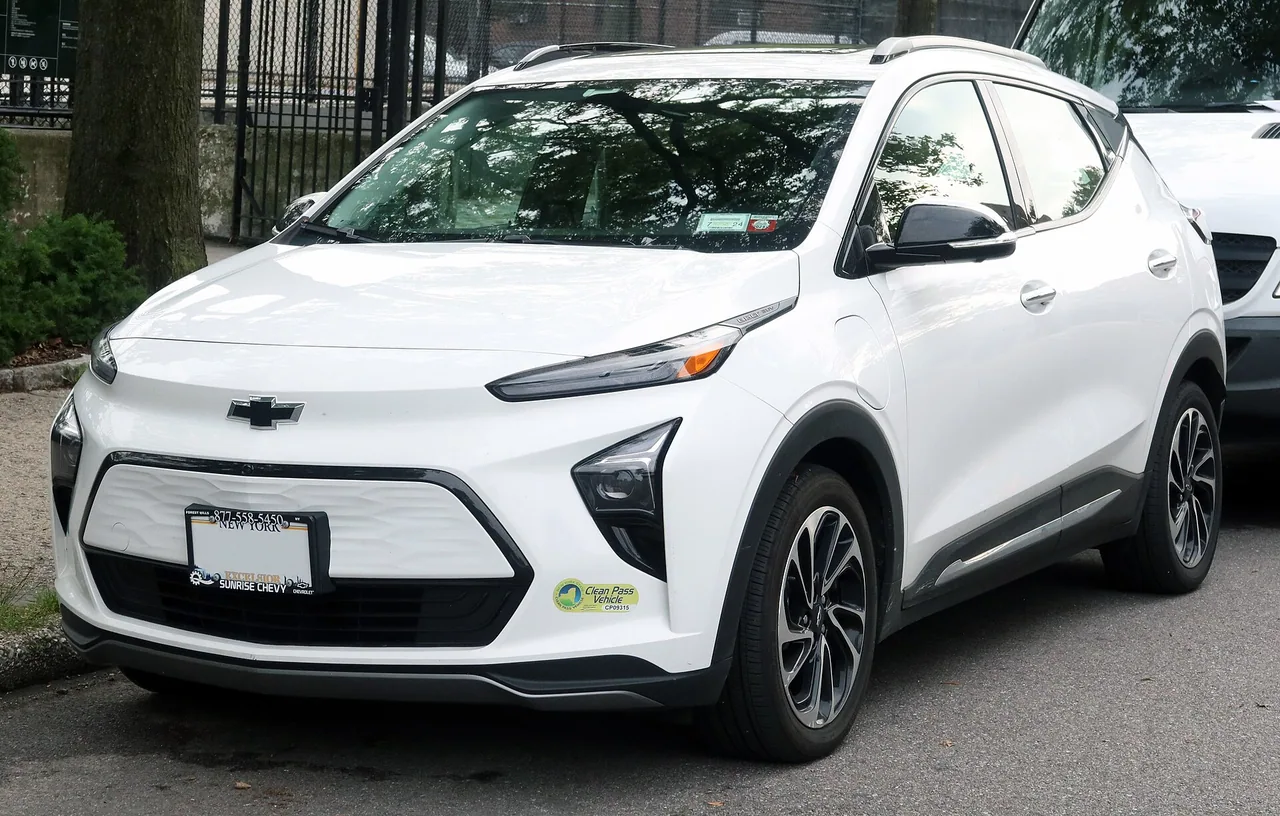
Chevrolet Bolt EUV
Latest Data Refresh Check · Nov 25, 2026
Reviewed data refresh (2026-11-25) updated records for Bolt EV (2021: new NHTSA complaints) and Bolt EUV (2023, 2022: new NHTSA complaints); tables and dates below reflect the refreshed snapshot.
Reliability Divergence Alert · NHTSA Record Split
Bolt EV carries heavier 2020–2022 battery recall history; both share 2023 sticky steering (Bolt EV: 23 recalls / 367 complaints vs. Bolt EUV: 4 recalls / 147 complaints).
Live Market & Badge-Tax Readout
What you pay for the badge: new MSRP vs. used market
Current market snapshot: Bolt EV ($1,900 less on KBB used midpoint).
TrimIndex never blends KBB, J.D. Power, and dealer asking figures into one range.
Day-to-Day Ownership Split
Where Bolt EV and Bolt EUV actually diverge
Sharing a platform does not mean identical ownership. Here are the concrete calibration, cabin, software, charging, and dealer differences buyers feel every day.
NHTSA Recall Exposure & Fire Advisories
Buying a 2023 Bolt EUV sidesteps the 2020–2022 battery-fire recall wave completely, though a 2020–2021 Bolt EV that received a brand-new replacement LG pack resets its battery warranty clock.
Rear Legroom & Exterior Footprint
Bolt EUV feels a full class roomier in row two while still fitting small city spots; cargo volume behind the rear bench stays nearly identical between the two.
EPA Range & Efficiency
Bolt EV edges ahead by 12 miles per charge, though real-world city driving differences barely register.
Super Cruise & Comfort Options
Bolt EUV is the only entry-level used EV of its era with factory hands-free highway driving and ventilated leather seating.
Home Charging Cord & Adapter Readiness
Bolt EUV lowers day-one home-charger setup cost—just verify the original Dual Level cord and both plug pigtails remain in the sub-trunk.
Refreshed EPA, charging & safety specs side by side
Pulled directly from TrimIndex’s EPA Fuel Economy, NHTSA NCAP, and charging-access database (NHTSA records through Nov 22, 2026).
| Specification | Chevrolet Bolt EV | Chevrolet Bolt EUV |
|---|---|---|
| EPA range (all trims) EPA Fuel Economy Guide | 259 mi | 247 mi |
| Efficiency (lower is better) EPA Fuel Economy Guide | 28.1–28.7 kWh/100 mi | 29.4 kWh/100 mi |
| Usable battery capacity | 65.0 kWh | 65.0 kWh |
| Peak DC fast charging | 55 kW | 55 kW |
| Drivetrains offered | FWD | FWD |
| Fast-charging port & Supercharger | CCS1 (Combined Charging System) · With an adapter, since Sep 18, 2024 | CCS1 (Combined Charging System) · With an adapter, since Sep 18, 2024 |
| NHTSA 5-Star overall rating NHTSA NCAP crash tests | 5 of 5 stars | 5 of 5 stars |
Navigating the LG 21V-650 recall divide: warranty reset vs. clean 2023 builds
No discussion of GM's BEV2 siblings works without untangling NHTSA campaign 21V-650, the sweeping LG Energy Solution cell-manufacturing defect (torn anode tabs paired with folded separators) that triggered fire advisories across Orion-built Bolts. Because Bolt EV spanned 2020–2023 while Bolt EUV arrived for 2022–2023 right as production paused for battery rework, their NHTSA ledgers look dramatically different.
Every 2020–2022 Bolt EV carries three Park-Outside / fire-risk recall advisories per year (9 advisory campaigns total), and owner complaints from 2020 through 2022 overwhelmingly chronicle wait times and charging caps: 65 of 177 complaints in 2020 (37%) cited long waits for recall repairs, 18 of 68 in 2021 (26%) flagged battery fire recall charging limits, and 17 of 59 in 2022 (29%) reported battery recall repair delays.
Yet for savvy used buyers today, that recall history creates two distinct winning strategies. On a 2020–2021 Bolt EV, if GM replaced the full pack under recall, the car received a brand-new 65 kWh battery and a fresh 8-year/100,000-mile warranty starting from the replacement date—check GM's recall portal by VIN to separate full-pack replacements from cars that only received the 80%-cap diagnostic software update. Meanwhile, 2023 Bolt EV (3 recalls, 0 advisory) and 2023 Bolt EUV (0 recalls) rolled off Orion with updated post-remediation cells from day one.
- Three verified catalog battery State of Health readings on the shared 65 kWh pack span 75% to 93.5% between 3,457 and 32,700 miles—underscoring why pulling a VIN-specific pack replacement history and OBD-II SoH scan pays off.
- Confirm a 2020–2022 unit is no longer locked inside GM's 6,214-mile (10,000 km) 80% maximum charge software monitor window before taking delivery.
- Some 2020 Bolt EV units need a quick Chevrolet dealer software flash so the charge-port latch locks properly onto GM's NACS DC adapter at Tesla Superchargers.
Two identical-looking 2020–2022 Bolts can have completely different battery warranties depending on whether GM installed a fresh LG pack or applied diagnostic limit software. Check the full Bolt battery recall timeline before running a VIN.
Read the Bolt battery recall guide →Living with the 55 kW fast-charge ceiling—and whether EUV's Super Cruise is worth it
Do not let the Bolt EUV's crossover styling fool you into assuming it carries GM's newer Ultium fast-charging hardware. Both Bolt EV and Bolt EUV stay pinned to a 400-volt BEV2 architecture topping out around 55 kW on DC fast chargers (and tapering below 40 kW past 55% state of charge). Adding 100 miles on a highway trip still requires roughly 30 to 40 minutes whether you plug into CCS1 or a Tesla Supercharger via GM's NACS adapter.
For home-charging households driving under 150 miles a day, however, that 55 kW cap rarely intrudes—and that is where Bolt EUV Premier shines. Finding an EUV equipped with the optional Super Cruise package unlocks hands-free lane-centering across mapped divided highways (note that active Super Cruise requires an OnStar subscription after the 3-year factory plan lapses). Even without Super Cruise, EUV's three extra inches of back-seat legroom and standard Dual Level Charge Cord explain why third-party used valuations often cluster remarkably close to 2022–2023 Bolt EVs.
Review refreshed single-source market ranges, EPA efficiency, NHTSA complaint counts, and year-by-year standing in one view.
Open Bolt EUV vs. Bolt EV comparison →Model-year timeline: Bolt EV vs. Bolt EUV
Refreshed automatically from TrimIndex’s database on each reviewed run so you can spot overlapping model years, Avoid flags, and pricing shifts.
| Year | Bolt EV Score & Standing | Bolt EV Price | Bolt EUV Score & Standing | Bolt EUV Price |
|---|---|---|---|---|
| 2023 | $18,300 KBB · Nov 2026 | $18,800 KBB · Nov 2026 | ||
| 2022 | $18,500 KBB · Nov 2026 | $18,750 KBB · Nov 2026 | ||
| 2021 | $15,700 KBB · Nov 2026 | Not sold | Not produced No US model year | |
| 2020 | $15,250 KBB · Nov 2026 | Not sold | Not produced No US model year |
Which platform twin should you buy?
Choose the Chevrolet Bolt EV if…
- You want the lowest entry price via a 2020–2021 build whose battery was fully replaced under GM's recall warranty.
- You park in tight urban spaces where a 6.3-inch shorter hatchback bumper makes daily parallel parking effortless.
- You rarely carry adults in the back seat and prefer an extra 12 miles of EPA range (259 mi vs. 247 mi).
- You have no interest in paying for an OnStar Super Cruise subscription or panoramic glass roof.
Choose the Chevrolet Bolt EUV if…
- You haul rear-seat passengers or bulky rear-facing child seats and need the EUV's 3.0 extra inches of rear legroom.
- You want a clean 2023 recall sheet (0 NHTSA recalls) without sorting through 2020–2021 battery recall paperwork.
- You want factory-available Super Cruise hands-free highway driving, ventilated seats, and roof rails.
- You want the included Dual Level 120V/240V portable charger for low-cost home garage charging.
Used-Market Sweet Spot
If rear-seat space or highway tech matters, a 2023 Chevrolet Bolt EUV with a verified smooth, self-centering steering rack is the standout BEV2 choice—carrying zero recalls and minimal price spread over a 2023 Bolt EV. On a tighter budget, a 2020–2021 Bolt EV with documented full LG battery replacement delivers a refreshed 65 kWh warranty for compact-car money.
Bolt EV & Bolt EUV platform questions
Does the Chevrolet Bolt EUV charge faster than the Bolt EV?
No. Both models use the exact same 400-volt BEV2 electrical architecture and 65 kWh LG NMC pack capped at roughly 55 kW on DC fast chargers. Both can charge on Tesla Superchargers (enabled September 18, 2024) using GM's NACS DC adapter, but fast-charging speed remains identical.
Is the Chevrolet Bolt EUV all-wheel drive?
No. Despite its crossover silhouette and roof rails, the Bolt EUV is strictly front-wheel drive just like the Bolt EV. Neither BEV2 model ever offered dual-motor AWD.
Did the Bolt EUV have the same battery fire recall as the Bolt EV?
Early 2022 Bolt EUV units fell under the same LG battery-fire recall lineage (3 advisory recalls on MY2022), while 2023 Bolt EUV builds arrived after LG cell manufacturing fixes and carry zero NHTSA recalls. By contrast, 2020–2022 Bolt EVs span 20 recalls including 9 advisory campaigns.
What is the steering problem reported on 2023 Bolt EV and Bolt EUV models?
Owners across both 2023 models report steering racks that bind or refuse to self-center after turns—appearing in 16 of 63 NHTSA complaints on the 2023 Bolt EV (25%) and 23 of 121 complaints on the 2023 Bolt EUV (19%), plus 8 of 26 on the 2022 EUV (31%). Always test steering returnability before purchase.
Which Bolt models come with Super Cruise hands-free driving?
Only the Chevrolet Bolt EUV Premier offered optional Super Cruise hardware; it was never available on the standard Bolt EV hatchback. Check for the light bar built into the top rim of the steering wheel and confirm active OnStar Super Cruise plan requirements.