Honda Prologue & Chevrolet Blazer EV: Same Ramos Arizpe Chassis, Opposite Software Bets
Updated
Platform Twin Verdict
Both crossovers roll down GM's Ramos Arizpe line on an identical 121.8-inch BEV3 wheelbase, yet daily ownership splits sharply. Honda kept wireless Apple CarPlay, physical climate toggles, and softer suspension tuning, capping out at the 85 kWh pack. Chevrolet dropped smartphone projection for a larger Google-only cabin while unlocking 102 kWh RWD range, 615 hp SS speed, and Super Cruise.
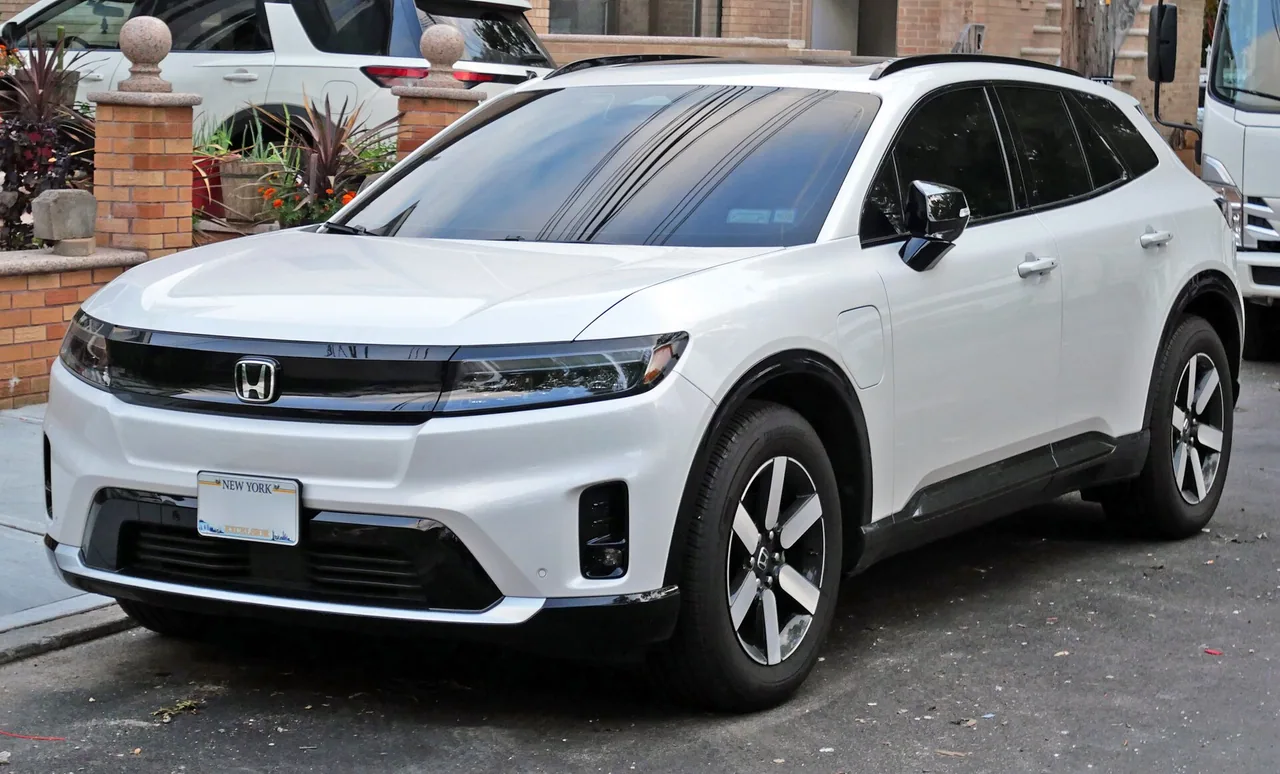
Honda Prologue
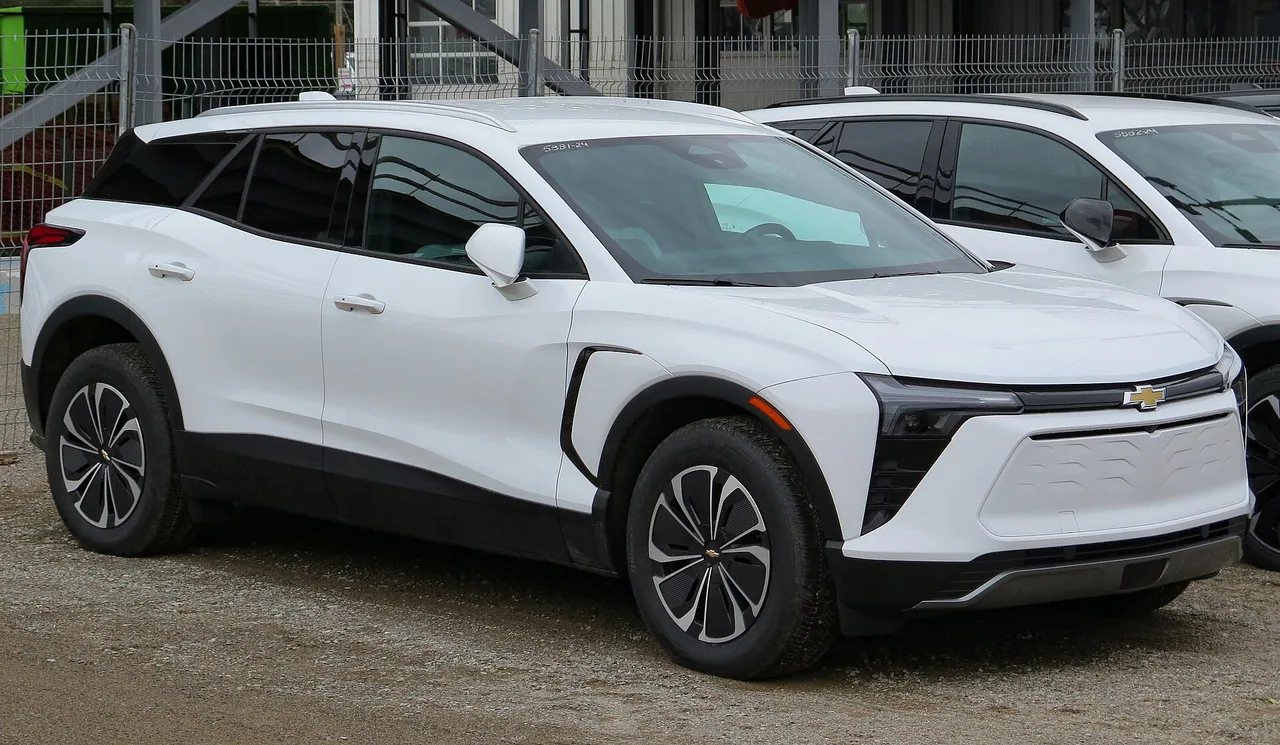
Chevrolet Blazer EV
Latest Data Refresh Check · Nov 25, 2026
Reviewed data refresh (2026-11-25) updated records for Prologue (2026, 2025, 2024: new NHTSA complaints) and Blazer EV (2026, 2025); tables and dates below reflect the refreshed snapshot.
Biggest Daily Ownership Split · Infotainment & Smartphone Projection
Drivers who depend on Apple Maps, CarPlay messaging, or podcast apps avoid daily friction in the Prologue; Google ecosystem users get far more screen real estate in the Blazer EV.
Live Market & Badge-Tax Readout
What you pay for the badge: new MSRP vs. used market
Depreciation shrinks the badge gap: Blazer EV started ~$4,350 higher on MSRP, while the same-source used midpoint gap narrows to $2,500.
Prologue ($4,350 lower avg MSRP)
TrimIndex never blends KBB, J.D. Power, and dealer asking figures into one range.
Where dealer asking prices are shown above or in the timeline below, figures summarize active US used dealer listings (asking prices, not final sale prices; excluded from Value-to-Score).
Day-to-Day Ownership Split
Where Prologue and Blazer EV actually diverge
Sharing a platform does not mean identical ownership. Here are the concrete calibration, cabin, software, charging, and dealer differences buyers feel every day.
Infotainment & Smartphone Projection
Drivers who depend on Apple Maps, CarPlay messaging, or podcast apps avoid daily friction in the Prologue; Google ecosystem users get far more screen real estate in the Blazer EV.
Battery Ceiling, Range & Fast Charging
At the 85 kWh tier they are nearly equals, but frequent highway road-trippers get meaningfully longer legs and faster charging only on 102 kWh Blazer EV trims.
Drivetrain Choice & Performance
Blazer EV is the only EV sold with FWD, RWD, and AWD configurations under one roof; Prologue sticks to mainstream family crossover pace.
Hands-Free Highway Assist
Interstate commuters who want genuine hands-free highway cruising must pick the Chevrolet.
Supercharger Rollout & App Billing
Both charge at V3 and V4 Superchargers with a physical adapter, though GM's app integration matured earlier.
Refreshed EPA, charging & safety specs side by side
Pulled directly from TrimIndex’s EPA Fuel Economy, NHTSA NCAP, and charging-access database (NHTSA records through Nov 22, 2026).
| Specification | Honda Prologue | Chevrolet Blazer EV |
|---|---|---|
| EPA range (all trims) EPA Fuel Economy Guide | 273–308 mi | 279–334 mi |
| Efficiency (lower is better) EPA Fuel Economy Guide | 32.5–36.8 kWh/100 mi | 32.3–39.7 kWh/100 mi |
| Usable battery capacity | 85.0 kWh | 85.0–102.0 kWh |
| Peak DC fast charging | 150–155 kW | 150–190 kW |
| Rated horsepower | 212–300 hp | 220–615 hp |
| Drivetrains offered | AWD, FWD | AWD, FWD, RWD |
| Seating capacity | 5 seats | Not on file |
| Fast-charging port & Supercharger | CCS1 (Combined Charging System) · With an adapter | CCS1 (Combined Charging System) · With an adapter, since Sep 18, 2024 |
| NHTSA 5-Star overall rating NHTSA NCAP crash tests | 5 of 5 stars | 5 of 5 stars |
Why Honda's cockpit decisions created the sharpest software divide in EV twins
When General Motors announced it would phase out Apple CarPlay and Android Auto across new Ultium passenger vehicles, the Chevrolet Blazer EV became the test case for that strategy. Every Blazer EV routes navigation, route-based battery preconditioning, Spotify, and voice commands through Google Built-In on a sweeping 17.7-inch center screen. Once the complimentary data period expires, keeping native maps and streaming active requires either a paid OnStar plan or tethering a phone hotspot.
Honda refused to follow GM's projection ban when commissioning the Prologue. Although the Prologue runs the same underlying Android Automotive operating system and OnStar telematics backbone (which even powers HondaLink), Honda preserved wireless Apple CarPlay and Android Auto across every EX, Touring, and Elite trim. Honda also swapped in its own steering wheel, simplified climate buttons, and softer suspension bushings so CR-V and Pilot owners stepping into their first EV encounter familiar ergonomics.
That software divergence matters most five years into used ownership. A second buyer picking up a depreciated Prologue can run Apple Maps or Waze indefinitely without paying a monthly telematics subscription, whereas a used Blazer EV buyer inherits GM's connected-services dependency—though they gain a dramatically sharper 17.7-inch map canvas and optional Super Cruise hands-free lane changes in return.
- Prologue cabin edge: wireless CarPlay/Android Auto standard, physical HVAC dials, quieter visual clutter, familiar Honda steering-wheel buttons.
- Blazer EV cabin edge: 17.7-inch display nearly 6 inches larger diagonally, optional Super Cruise hands-free highway assist, sportier RS/SS bolsters.
- Hidden shared quirk: HondaLink remote app commands still depend on GM's OnStar cellular module, producing 25 NHTSA connectivity complaints on 2024 Prologues.
85 kWh parity vs. Chevrolet's exclusive 102 kWh RWD and SS tiers
Compare an 85 kWh Prologue AWD to an 85 kWh Blazer EV AWD and the mechanical spec sheet nearly mirrors itself: 288 hp in 2024 rising to 300 hp for 2025–2026, 150 kW peak DC fast charging (Prologue ticks up to 155 kW in 2026), 1,500 pounds of towing capacity, and 279–294 miles of EPA range depending on wheel size. Even interior cargo space lands close, with Blazer EV holding 25.5 cubic feet behind the second row (59.1 folded) versus Prologue's 23.7–25.2 cubic feet (54.5–57.7 max).
The hardware truce breaks as soon as you step up the Chevrolet trim ladder. GM reserved the 12-module 102 kWh Ultium battery exclusively for its own brands, giving the Blazer EV RS RWD up to 334 miles of EPA range, 365 hp, 190 kW peak DC fast charging, and a 3,500-pound tow rating. At the top sits the 615-horsepower Blazer EV SS AWD (302–303 miles EPA, 3.4 seconds 0–60 mph), a performance class Honda never licensed.
Both twins lose notable highway range on oversized wheels. Stepping from standard tires to 22-inch wheels on a 2025–2026 Blazer EV FWD cuts EPA range from 312 miles down to 283 miles, while Prologue Elite's 21-inch rollers trim AWD range versus Touring.
Compare Blazer EV and Equinox EV packaging →Why NHTSA complaints exploded on Prologue axles while Blazer EV skewed to braking software
Building two nameplates under one Mexican factory roof did not produce identical complaint filings. Across NHTSA records through November 2026, the Honda Prologue accumulated 1,050 owner complaints across 2024–2026 builds—over ten times the Blazer EV's 99 filings—despite only 4 Honda recalls versus 12 on the Chevrolet. One specific mechanical component explains more than half of Honda's volume: front CV half-shafts clicking, knocking, or popping during low-speed turns.
That front-axle clicking accounts for 496 of 875 grouped 2024 Prologue complaints (56%) and 78 of 155 complaints in 2025 (50%), with many owners noting the noise returned after initial dealer axle swaps. Blazer EV owners barely report CV clicks; instead, Blazer EV complaints cluster around abrupt phantom emergency braking (24 of 78 filings in 2024; 14 of 21 in 2025) and unintended electric parking brake activation linked to a 40,233-unit rear wiring harness recall (25V433000).
Underneath those brand-specific spikes, shared GM safety plumbing still links both crossovers. Both 2024 models received parallel recalls for fracturing right-front lower control arms (Honda 24V540000 and GM 24V487000), both suffer phantom automatic emergency braking and self-canceling turn-signal stalk bounce-back, and NHTSA explicitly included 2024–2026 Honda Prologues as peer vehicles alongside Blazer EV inside open Engineering Analysis EA26006 investigating GM's eBoost brake module.
GM's October 2026 brake system control module software recall (26V717000) covers 67,380 Ultium builds including 2024–2027 Blazer EVs, while NHTSA's open EA26006 eBoost brake-assist investigation spans both Blazer EV and peer Prologue builds.
Read the GM Ultium Recalls & EA26006 Guide →Model-year timeline: Prologue vs. Blazer EV
Refreshed automatically from TrimIndex’s database on each reviewed run so you can spot overlapping model years, Avoid flags, and pricing shifts.
| Year | Prologue Score & Standing | Prologue Price | Blazer EV Score & Standing | Blazer EV Price |
|---|---|---|---|---|
| 2026 | $30,371–$36,990 Dealer asking · Nov 2026 | $38,053–$49,417 Dealer asking · Nov 2026 | ||
| 2025 | $25,972–$34,735 Dealer asking · Nov 2026 | $24,396–$32,764 Dealer asking · Nov 2026 | ||
| 2024 | $17,004–$29,214 J.D. Power · Nov 2026 | $21,407–$31,227 J.D. Power · Nov 2026 |
Which platform twin should you buy?
Choose the Honda Prologue if…
- Wireless Apple CarPlay or Android Auto is non-negotiable and you do not want a monthly connected-car subscription for maps.
- You prefer physical climate toggles, conventional Honda ergonomics, and softer, family-oriented ride tuning over stiff sporty damping.
- You want access to Honda's franchised service network and steep off-lease depreciation on 2024–2025 FWD or AWD builds.
- Your daily driving and occasional road trips fit comfortably inside an 85 kWh pack and 150–155 kW fast-charging ceiling.
Choose the Chevrolet Blazer EV if…
- You want the 102 kWh battery, 190 kW peak DC fast charging, 324–334 miles of RWD EPA range, and 3,500-pound towing capacity.
- Hands-free Super Cruise highway driving or the 615-horsepower Blazer EV SS AWD performance tier sits high on your wishlist.
- You prefer a sweeping 17.7-inch Google Built-In display with integrated route-based battery preconditioning.
- You want to avoid the Honda Prologue's widespread front CV axle clicking complaints while keeping the same 121.8-inch footprint.
Used-Market Sweet Spot
For CarPlay-first buyers, a 2025 Honda Prologue FWD (308 mi EPA) or AWD Touring (294 mi EPA) with documented updated front axles and closed recall 26V306000 delivers maximum usability after steep first-year depreciation. For highway road-trippers or towing needs, a 2024–2025 Chevrolet Blazer EV RS RWD (102 kWh, 324–334 mi EPA, 190 kW DC) unlocks Cadillac-grade battery hardware once recalls 26V717000 and 25V433000 are verified closed.
Prologue & Blazer EV platform questions
Are the Honda Prologue and Chevrolet Blazer EV built on the same platform?
Yes. General Motors contract-builds the Honda Prologue at its Ramos Arizpe, Mexico assembly plant alongside the Chevrolet Blazer EV on the identical 121.8-inch GM BEV3 Ultium chassis. All 85 kWh trims share battery modules, motors, and eBoost brake hardware, though Honda engineered its own exterior sheet metal, interior controls, wireless CarPlay software, and suspension tuning.
Why does the Honda Prologue have Apple CarPlay when the Blazer EV does not?
General Motors removed Apple CarPlay and Android Auto across new Ultium Chevrolet models to push its native Google Built-In ecosystem and OnStar data plans. Honda retained product control over the Prologue's cockpit specification and kept wireless Apple CarPlay and Android Auto standard alongside Google Built-In on every 2024–2026 trim.
Does the Chevrolet Blazer EV suffer from the Honda Prologue's front axle clicking problem?
No comparable spike appears in NHTSA Blazer EV filings. While front CV half-shaft clicking while turning makes up 56% of 2024 Prologue complaints (496 of 875) and 50% of 2025 filings (78 of 155), Blazer EV complaints center instead on false-positive automatic braking and rear parking-brake wiring harnesses covered by recall 25V433000.
Which charges faster on road trips: Honda Prologue or Chevy Blazer EV?
Trim selection decides it. Every Honda Prologue and every 85 kWh Blazer EV FWD/AWD peaks at 150 kW (155 kW on 2026 Prologue). Choosing a 102 kWh Chevrolet Blazer EV RS RWD or SS AWD increases peak DC fast charging to 190 kW and stretches EPA range up to 334 miles.
Can both the Honda Prologue and Chevrolet Blazer EV use Tesla Superchargers?
Yes. Both 2024–2026 models carry CCS1 charge ports and work on compatible V3 and V4 Tesla Superchargers with an OEM-approved NACS-to-CCS1 adapter. GM opened access in September 2024 and Honda followed in July 2025, though Honda notes Plug & Charge is not supported at Tesla stalls, requiring app-based session activation.