Chevrolet Silverado EV vs. GMC Sierra EV: Same GM BT1 Truck Underneath
Updated
Platform Twin Verdict
Both pickups roll off Detroit-Hamtramck's Factory ZERO line on General Motors' 800-volt BT1 structural-battery chassis with dual-motor all-wheel drive and up to 350 kW DC charging. Shoppers who want maximum highway reach (up to 493 miles EPA) or lower-entry fleet trims belong in the Chevrolet Silverado EV. Buyers prioritizing Denali cabin materials, portrait-screen ergonomics, and up to 760 horsepower get those upgrades in the GMC Sierra EV.
Chevrolet Silverado EV
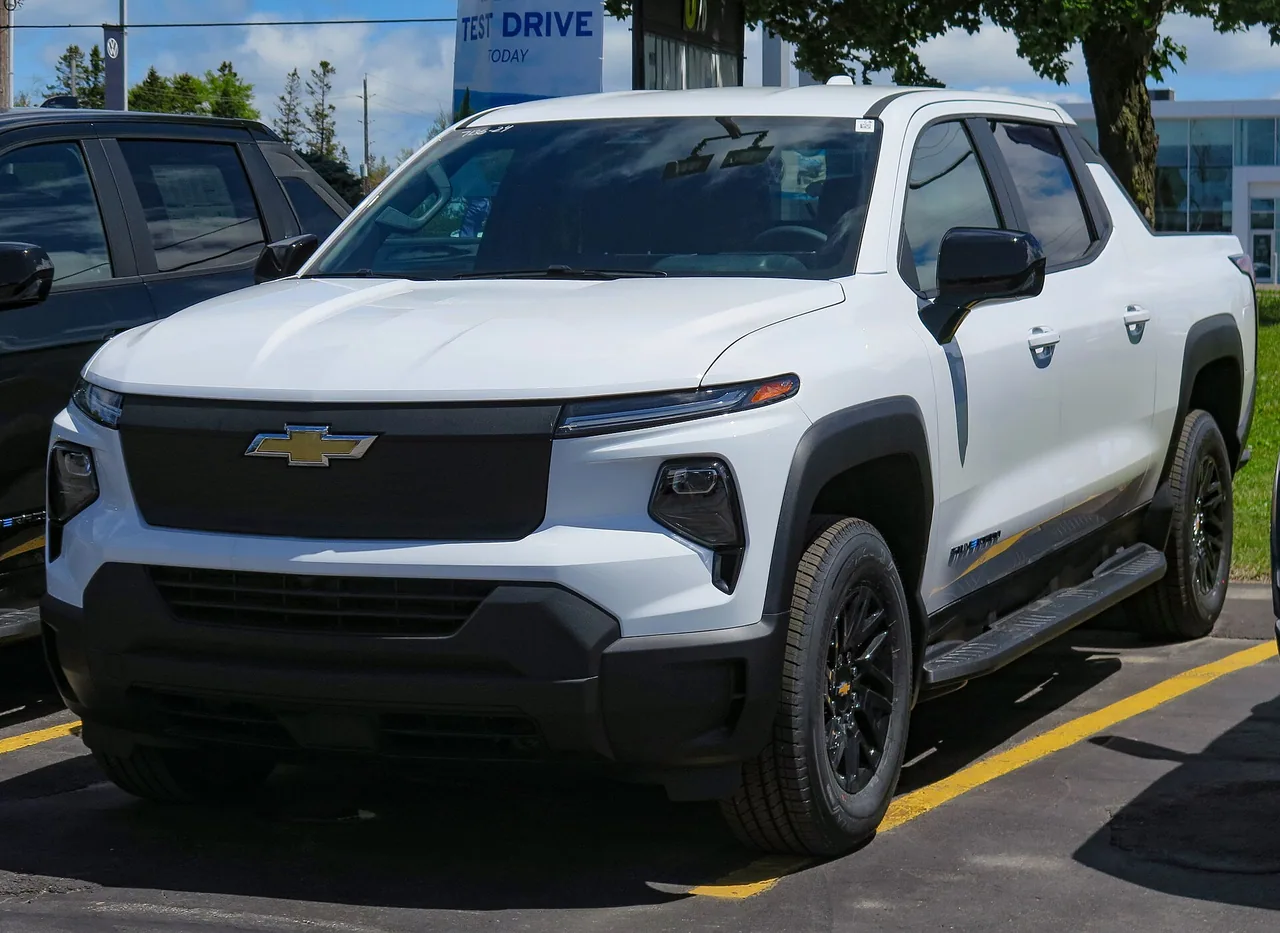
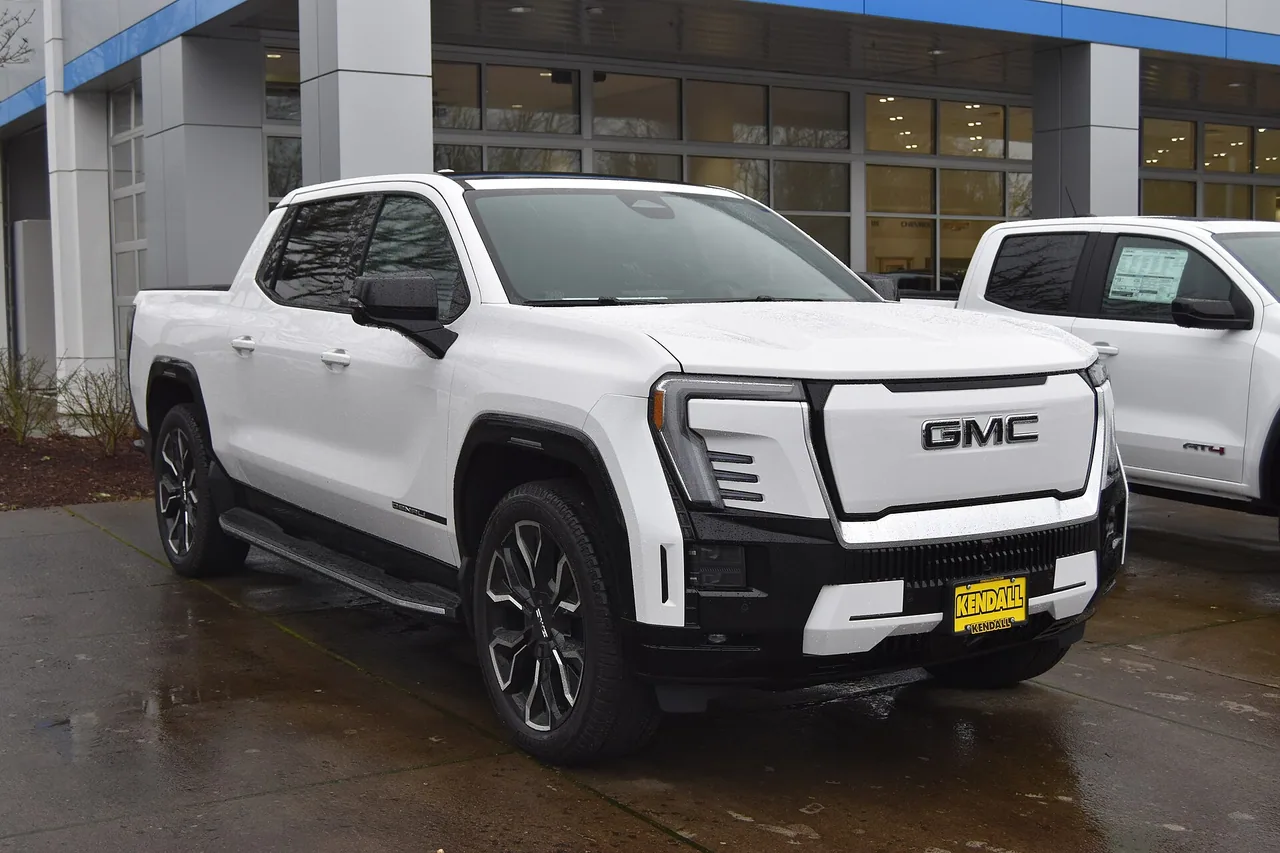
GMC Sierra EV
Latest Data Refresh Check · Nov 25, 2026
Re-checked against TrimIndex's latest reviewed data snapshot (2026-11-25): no material recall, complaint, or pricing shift recorded on either twin in the most recent cycle.
Live Market & Badge-Tax Readout
What you pay for the badge: new MSRP vs. used market
Current market snapshot: Silverado EV: $47,600 (KBB) vs. Sierra EV: $56,998–$82,977 (Used dealer asking prices).
TrimIndex never blends KBB, J.D. Power, and dealer asking figures into one range.
Where dealer asking prices are shown above or in the timeline below, figures summarize active US used dealer listings (asking prices, not final sale prices; excluded from Value-to-Score).
Day-to-Day Ownership Split
Where Silverado EV and Sierra EV actually diverge
Sharing a platform does not mean identical ownership. Here are the concrete calibration, cabin, software, charging, and dealer differences buyers feel every day.
Maximum EPA Range & Pack Spread
Silverado EV leads by up to 83 miles at the top of the EPA chart because Chevrolet sells lighter-trim Max Range configurations without Denali weight and wheel penalties.
Peak Output & Chassis Hardware
Sierra EV bundles higher standard output and air-spring hardware out of the gate, whereas Silverado EV unbundles them to lower the entry sticker.
Dashboard Layout & Cabin Finish
Neither truck includes Apple CarPlay or Android Auto, making Google Built-In usability and GMC's tactile physical climate toggles a tangible daily advantage in the Sierra EV.
Trim Ladder & Work-Truck Availability
Value-focused buyers find far more entry-point variety in Silverado EV inventory, while Sierra EV behaves almost exclusively as a luxury pickup.
Midgate & Tailgate Packaging
Mechanically the pass-through openings mirror each other, but buyers inspecting used Silverado EV WT trims must confirm whether the fixed bulkhead or folding midgate was fitted.
Refreshed EPA, charging & safety specs side by side
Pulled directly from TrimIndex’s EPA Fuel Economy, NHTSA NCAP, and charging-access database (NHTSA records through Nov 22, 2026).
| Specification | Chevrolet Silverado EV | GMC Sierra EV |
|---|---|---|
| EPA range (all trims) EPA Fuel Economy Guide | 282–493 mi | 283–410 mi |
| Efficiency (lower is better) EPA Fuel Economy Guide | 47.8–53.4 kWh/100 mi | 49.5–52.4 kWh/100 mi |
| Usable battery capacity | 190.0 kWh | Not on file |
| Peak DC fast charging | 220–350 kW | 350 kW |
| Rated horsepower | 510–645 hp | 645–760 hp |
| Drivetrains offered | AWD | AWD |
| Fast-charging port & Supercharger | CCS1 (Combined Charging System) · With an adapter, since Sep 18, 2024 | CCS1 (Combined Charging System) · With an adapter, since Sep 18, 2024 |
| NHTSA 5-Star overall rating NHTSA NCAP crash tests | 5 of 5 stars | 5 of 5 stars |
Why Silverado EV hits 493 miles while Sierra EV tops out at 410 miles
Under the cabin floor, Chevrolet and GMC draw from the exact same Factory ZERO module catalog: 14-module standard packs, 20-module extended packs, and stacked 24-module max-range packs built from LG Energy Solution NMC pouch cells. Despite sharing those cells and posting virtually identical energy consumption (47.8 to 53.4 kWh/100 mi on Silverado EV versus 49.5 to 52.4 kWh/100 mi on Sierra EV), EPA range diverges sharply at the top end.
Chevrolet launched the Silverado EV with commercial Work Truck trims running smaller, aerodynamically cleaner wheels and lower curb weight, pushing the 2025–2026 Max Range calibrations to 492–493 miles EPA. GMC instead launched the 2025 Sierra EV around loaded Denali trims wearing heavy 24-inch wheels, full panoramic glass, and luxury sound deadening, yielding 390 miles in 2025 and 283–410 miles across the 2026 range.
Fast-charging hardware also depends on module tier rather than grille emblem. Both trucks peak at 350 kW on 800-volt chargers with the larger stacked packs because GM's contactor matrix switches two 400-volt banks into series during DC sessions. Note that entry 14-module Silverado EV trims top out at 220 kW, so checking the window sticker's battery tier matters more than choosing Chevy over GMC.
- Silverado EV 2024 launch trims carried a 450-mile EPA rating; 2025–2026 expanded both down (282–286 mi) and up (492–493 mi).
- Sierra EV entered the catalog a year later (2025–2026) with 350 kW DC fast charging across its cataloged trims.
- On 400-volt Tesla Superchargers (V3 stalls), GM's internal pack switching splits the double-stack pack back into parallel banks so neither truck suffers the slow charging bottlenecks seen on non-switching 800-volt EVs.
Every 2024–2026 Silverado EV and 2025–2026 Sierra EV leaves Factory ZERO with a CCS1 port. Both models gained official Tesla Supercharger access on September 18, 2024 via a GM-approved NACS DC adapter, so confirm whether the seller includes the OEM adapter in the eTrunk.
Compare Silverado EV and Sierra EV side by side →Reading the Chevy-versus-GMC badge gap on used lots
Because GMC positioned the Sierra EV as a flagship Denali first and delayed broader trim rollouts into 2026, its original stickers clustered far above entry Silverado EV Work Truck and LT pricing. That one-year head start for Chevrolet also means 2024 Silverado EV units already have published third-party used valuations, while 2025–2026 Sierra EV listings still lean heavily on dealer asking snapshots.
When comparing an RST Silverado EV against an equivalent Sierra EV Denali from overlapping model years, mechanical parity turns the decision into an interior and ride-quality calculation. Both carry air suspension, rear-axle steering, Super Cruise availability, and the folding midgate. Paying a steep badge premium only makes sense if GMC's portrait screen, upgraded leather/wood trim, and extra Max Power horsepower genuinely matter to you.
Conversely, commercial buyers or high-mileage commuters looking at retired 2024 Silverado EV WT trucks avoid Denali depreciation exposure entirely while keeping the exact same structural battery, thermal loop, and 8-year/100,000-mile pack coverage.
Living without CarPlay and testing the Midgate seals
General Motors stripped Apple CarPlay and Android Auto from both BT1 pickups in favor of Google Built-In running over OnStar cellular telemetry. That architecture ties route-based battery preconditioning directly into Google Maps, which works smoothly when cellular connectivity stays intact—but NHTSA filings already show why data-module stability matters.
On 2025 Silverado EVs, OnStar and navigation connection loss accounts for 4 of 15 recorded complaints (27%), underscoring how dependent the cabin is on the telematics control module. Buyers moving between the two cabins will also notice ergonomic differences: Silverado's horizontal screen sits angled toward the driver with physical climate buttons beneath, while Sierra's vertical display stacks map, media, and camera views simultaneously.
Before closing on any Midgate-equipped truck, remove the rear glass panel, stow it inside the dedicated tailgate-facing door pocket, and fold both 60/40 segments flat. Inspect the perimeter rubber gaskets for pinching or water intrusion along the rear cab carpet, as mis-latched midgates create wind whistle at highway speed.
Both pickups share electrical harnesses, telematics hardware, and Ultium high-voltage battery management modules across GM's broader EV lineup. Review active and historical NHTSA campaigns across GM EVs before signing.
Read the GM Ultium recall tracker →Model-year timeline: Silverado EV vs. Sierra EV
Refreshed automatically from TrimIndex’s database on each reviewed run so you can spot overlapping model years, Avoid flags, and pricing shifts.
| Year | Silverado EV Score & Standing | Silverado EV Price | Sierra EV Score & Standing | Sierra EV Price |
|---|---|---|---|---|
| 2026 | $57,660–$76,456 Dealer asking · Nov 2026 | $56,998–$82,977 Dealer asking · Nov 2026 | ||
| 2025 | $57,089–$70,676 Dealer asking · Nov 2026 | $72,468–$80,220 Dealer asking · Nov 2026 | ||
| 2024 | $47,600 KBB · Nov 2026 | Not sold | Not produced No US model year |
Which platform twin should you buy?
Choose the Chevrolet Silverado EV if…
- You want up to 493 miles of EPA range for towing buffers or sparse charging corridors.
- You prefer lower-entry WT or LT trim pricing without paying for Denali luxury cosmetics.
- You want an extra model year of used-market supply (2024 builds already trading with third-party guide pricing).
- You prefer a wide, driver-angled landscape infotainment screen over a tall vertical display.
Choose the GMC Sierra EV if…
- You want Denali-grade wood, quilted upholstery, and panoramic glass instead of utility-oriented truck trim.
- You want peak 760-horsepower Max Power output and standard Air Ride Adaptive Suspension on launch trims.
- You prefer a portrait 16.8-inch touchscreen with physical climate switches and split-screen camera/navigation layout.
- You plan to buy a loaded flagship regardless and find a discounted Sierra EV near loaded Silverado RST money.
Used-Market Sweet Spot
For pure electric-truck utility per dollar, a 2024–2025 Silverado EV with the 24-module max-range pack delivers the exact Factory ZERO 800-volt chassis and deeper EPA range without the Denali markup. Shoppers who already budget for a loaded RST should cross-shop a lightly used 2025 Sierra EV Denali, where steeper flagship depreciation narrows the gap while upgrading cabin insulation and seating.
Silverado EV & Sierra EV platform questions
Are the Chevrolet Silverado EV and GMC Sierra EV built on the same platform?
Yes. Both pickups are built side by side at GM's Factory ZERO in Detroit-Hamtramck on the 800-volt BT1 structural-battery platform. They share the exact 145.7-inch wheelbase, LG Energy Solution Ultium NMC pouch battery module architecture, dual-motor AWD layouts, and NHTSA 5-Star crash structure.
Why does the Silverado EV get up to 493 miles of range while the Sierra EV tops out at 410 miles?
Chevrolet offers lighter-weight, smaller-wheel Work Truck and Max Range builds paired with the stacked 24-module battery, stretching EPA range to 492–493 miles in 2025–2026. GMC launched the Sierra EV around heavier luxury Denali trims with large wheels and full panoramic glass, resulting in 390 miles for 2025 and 283–410 miles across 2026 trims.
Can both the Silverado EV and Sierra EV charge at Tesla Superchargers?
Yes. Both trucks ship with a native CCS1 port through model year 2026 and gained official Tesla Supercharger access on September 18, 2024 using a GM-approved NACS DC adapter. Thanks to GM's internal 400V/800V pack switching, both trucks charge smoothly on 400-volt Tesla V3 cabinets as well as 800-volt 350 kW CCS1 chargers.
Is the GMC MultiPro Midgate different from Chevrolet's Multi-Flex Midgate?
Structurally they use the same fold-down cab bulkhead cutout, 60/40 split folding pass-through, and removable rear window to haul items over 10 feet long. The main difference is trim availability: early Sierra EV Denali builds standardized the midgate, while entry Silverado EV Work Truck builds omit it.
Does either the Silverado EV or Sierra EV offer Apple CarPlay?
No. General Motors omitted Apple CarPlay and Android Auto from retail builds of both trucks in favor of Google Built-In with native Google Maps battery preconditioning and OnStar data connectivity. Before buying used, confirm the telematics module connects cleanly and check active OnStar connectivity plan terms.