Lucid Air vs. Lucid Gravity: How Casa Grande Stretched Its 900V Platform Into an SUV
Updated
Platform Twin Verdict
Both built in Casa Grande, Arizona on Lucid's 900-volt LEAP architecture, the Lucid Air sedan and Gravity three-row SUV share ultra-compact drive units, LG Energy Solution 21700 NMC cells, and class-crushing efficiency—yet Gravity is barely one inch longer while adding up to seven seats, a 400 kW native NACS port, and much faster 400V Supercharger boosting. Steep used depreciation makes Air the value coup; Gravity solves Air's charging and utility limits.
Lucid Air
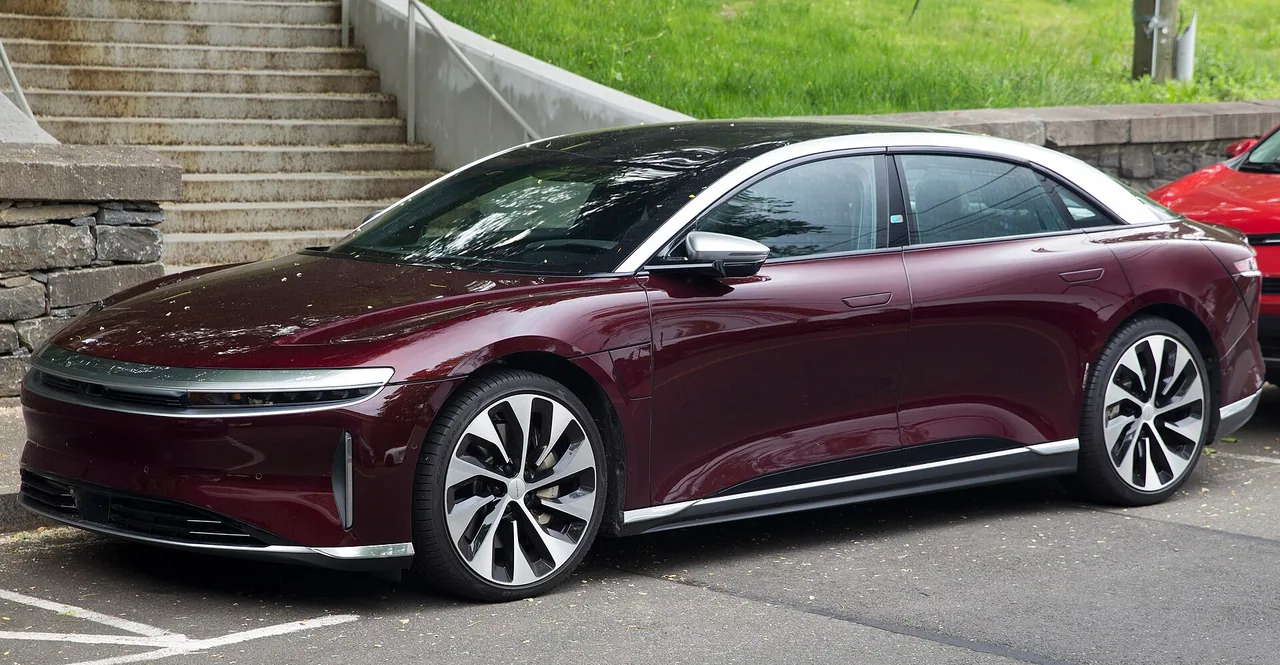
Lucid Gravity
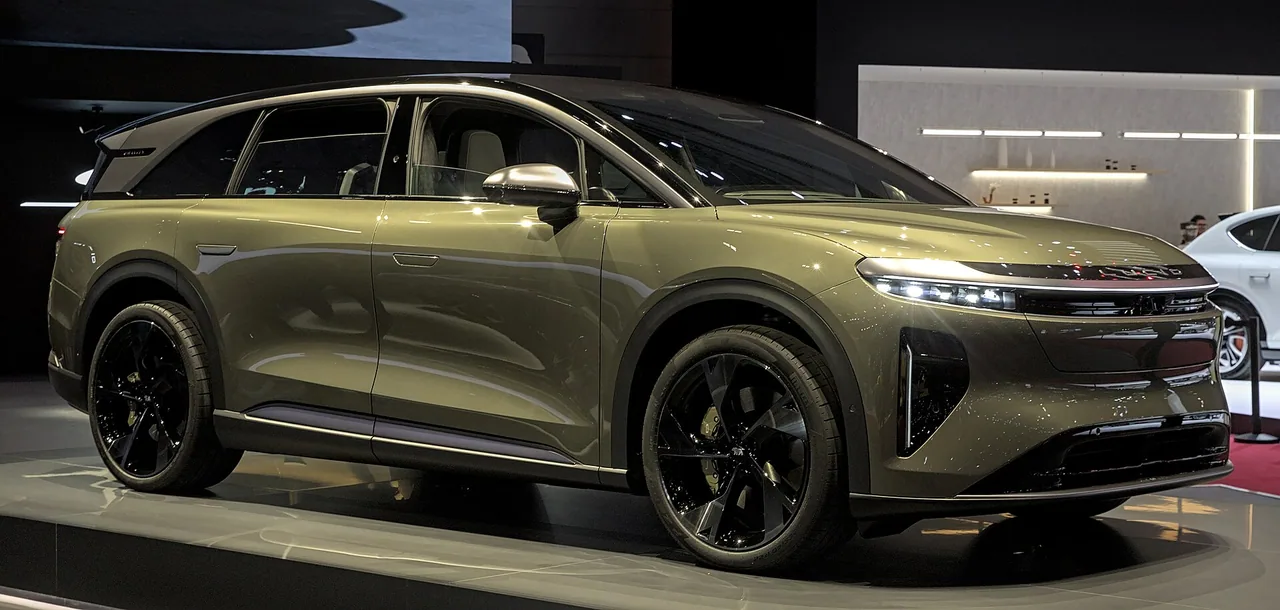
Latest Data Refresh Check · Nov 25, 2026
Reviewed data refresh (2026-11-25) updated records for Gravity (2026, 2025: new NHTSA complaints); tables and dates below reflect the refreshed snapshot.
Live Market & Badge-Tax Readout
What you pay for the badge: new MSRP vs. used market
Current market snapshot: Air: $32,100–$56,400 (KBB) vs. Gravity: $83,929–$111,330 (Used dealer asking prices).
Gravity ($13,000 lower avg MSRP)
TrimIndex never blends KBB, J.D. Power, and dealer asking figures into one range.
Where dealer asking prices are shown above or in the timeline below, figures summarize active US used dealer listings (asking prices, not final sale prices; excluded from Value-to-Score).
Day-to-Day Ownership Split
Where Air and Gravity actually diverge
Sharing a platform does not mean identical ownership. Here are the concrete calibration, cabin, software, charging, and dealer differences buyers feel every day.
Native NACS & Tesla V3 Supercharger Speed
Gravity eliminates Air's single biggest road-trip annoyance: slow voltage-conversion bottlenecks at older 400V Tesla V3 Superchargers.
Packaging: Clamshell Sedan vs. 3-Row SUV
Lucid's compact drive-unit packaging shines brightest in Gravity, fitting genuine three-row space inside a midsize sedan footprint.
Efficiency Ceiling vs. Performance Spread
Air remains the undisputed range and efficiency king of all EVs; Gravity sacrifices surprisingly little range to deliver full SUV versatility.
Depreciation Gap & Used Entry Cost
Used Air delivers 900V flagship engineering at half-price luxury-EV territory; Gravity commands full early-adopter pricing.
NHTSA Recall Maturity vs. Early SUV Bugs
Air has far more closed recall history—and known weak points to verify—while Gravity is still working through first-year hardware and software teething.
Refreshed EPA, charging & safety specs side by side
Pulled directly from TrimIndex’s EPA Fuel Economy, NHTSA NCAP, and charging-access database (NHTSA records through Nov 22, 2026).
| Specification | Lucid Air | Lucid Gravity |
|---|---|---|
| EPA range (all trims) EPA Fuel Economy Guide | 406–520 mi | 337–450 mi |
| Efficiency (lower is better) EPA Fuel Economy Guide | 23.1–32.1 kWh/100 mi | 30.3–33.9 kWh/100 mi |
| Usable battery capacity | 88.0–112.0 kWh | 117.0 kWh |
| Peak DC fast charging | 200–300 kW | 400 kW |
| Rated horsepower | 819–1,234 hp | 560–828 hp |
| Drivetrains offered | AWD, RWD | AWD |
| Seating capacity | 5 seats | Not on file |
| Fast-charging port & Supercharger | CCS1 (Combined Charging System) · With an adapter | NACS (SAE J3400) · Yes, with its built-in NACS port |
| NHTSA 5-Star overall rating NHTSA NCAP crash tests | 5 of 5 stars | Not rated |
Why Gravity's 900V Wunderbox changes the Tesla Supercharger equation
Running a 900-volt battery pack delivers huge gains on 350 kW and 400 kW ultra-fast stations, cutting current draw, heat, and cable thickness. The historic catch with 900-volt EVs on North America's largest charging network—400-volt Tesla V3 Superchargers—is stepping 400-volt station power up to pack voltage efficiently.
On the 2022–2026 Lucid Air, drivers gain Tesla Supercharger access with Lucid's official NACS-to-CCS1 adapter, yet the Air's earlier Wunderbox boost path delivers far lower charging throughput at 400V V3 stalls than its 300 kW CCS peak on 800V/900V Electrify America or Ionna sites. Lucid redesigned the propulsion boost architecture for Gravity alongside its native NACS inlet: Gravity uses its rear motor drive unit as a high-power boost converter to pull dramatically faster speeds from 400V V3 Superchargers while scaling all the way to 400 kW on next-generation 900V–1000V DC chargers.
- Lucid Air (2022–2026): CCS1 inlet, 200 kW (Pure) to 300 kW (Touring/GT/Sapphire) peak DC; NACS-to-CCS1 adapter needed at Tesla Superchargers with lower V3 boost rate.
- Lucid Gravity (2025–2026): Built-in NACS inlet, 400 kW peak DC on 900V+ stations, high-output rear-motor boost conversion on 400V Tesla V3 Superchargers.
- Gravity wheel/row choice shifts EPA range dramatically: 450 mi (2-row, 20F/21R wheels) down to 386 mi (3-row, 21F/22R or 22F/23R wheels) on Grand Touring, and 337 mi on Touring.
Half-price 900V engineering: why used Lucid Air out-values almost every rival
Few vehicles in the entire TrimIndex catalog illustrate luxury-EV depreciation more vividly than the Lucid Air. Original 2022–2024 Air Touring and Grand Touring stickers routinely landed well north of six figures, yet secondary-market listings place clean 2023–2024 examples in midsize-crossover territory—delivering 410 to 516 miles of EPA range, five-star NHTSA crash ratings, and sub-3-second AWD poise for a fraction of Gravity's early asking prices.
That spread makes the buying decision unusually clean. If you do not need a third row or frequent Tesla V3 fast-charging sessions, a vetted 2024 Lucid Air Touring or Grand Touring AWD (skipping Pure RWD's separate half-shaft bolt and Gen 4 inverter recalls) captures 90% of Lucid's LEAP engineering magic after the first owner absorbed the depreciation cliff.
Lucid Air sits alongside Taycan, EQS, and e-tron GT in TrimIndex's luxury depreciation study—standing out for delivering 400–520 miles of EPA range even on base and mid trims.
Read $100K Luxury EVs at Half Price →What NHTSA filings reveal about early Casa Grande build maturity
Lucid's propulsion efficiency is world-class, yet its NHTSA log reflects the growing pains of a young low-volume automaker shipping complex software-defined vehicles. On Air, complaints across 2022–2025 alternate between sudden propulsion-loss faults (7 of 24 in 2022; 5 of 10 in 2024) and low-speed unintended acceleration reports (6 of 30 in 2023; 5 of 18 in 2025), alongside repeated defroster coolant-heater recalls (24V011000, 24V495000) that remain under open NHTSA Audit Query AQ24004.
Gravity avoided carrying over Air's coolant-heater and RWD driveline campaigns, yet its first 18 NHTSA filings in 2026 show classic launch-year body and ADAS wrinkles: 4 reports of DreamDrive hands-free driving dropping out abruptly, 4 reports of middle-row seats folding unexpectedly or failing to latch (parallel to seat-anchor weld recall 26V192000), and 3 propulsion-loss filings. Both twins benefit enormously from thorough software-version checks and proximity to a Lucid Service Center.
Recall 26V540000 advised owners of 27,185 model-year 2022–2026 Lucid Air sedans to park outside until an over-the-air software update patched exterior lighting circuit overcurrent protection. Confirm current software build on any Air VIN.
View the Park-Outside EV Recall Tracker →Model-year timeline: Air vs. Gravity
Refreshed automatically from TrimIndex’s database on each reviewed run so you can spot overlapping model years, Avoid flags, and pricing shifts.
| Year | Air Score & Standing | Air Price | Gravity Score & Standing | Gravity Price |
|---|---|---|---|---|
| 2026 | $45,049–$54,872 Dealer asking · Nov 2026 | $83,929–$111,330 Dealer asking · Nov 2026 | ||
| 2025 | $37,229–$67,941 Dealer asking · Nov 2026 | Not on file No published price | ||
| 2024 | $35,235–$56,920 J.D. Power · Nov 2026 | Not sold | Not produced No US model year | |
| 2023 | $32,977–$64,826 J.D. Power · Nov 2026 | Not sold | Not produced No US model year | |
| 2022 | $40,300–$56,400 KBB · Nov 2026 | Not sold | Not produced No US model year |
Which platform twin should you buy?
Choose the Lucid Air if…
- You want 410–520 miles of EPA range and five-star luxury-sedan dynamics at deeply depreciated used-market pricing.
- You prefer a low-slung sports-sedan driving position or crave the 1,234-hp tri-motor Sapphire flagship.
- You charge mostly at home or on 350 kW CCS stations rather than relying heavily on 400V Tesla V3 Superchargers.
Choose the Lucid Gravity if…
- You need two- or three-row family cargo flexibility without stepping up to a wider, longer full-size SUV.
- You road-trip on Tesla Superchargers and want Gravity's native NACS port, upgraded 400V boost hardware, and 400 kW peak DC capability.
- You want 437–450 miles of EPA SUV range (Grand Touring on 20F/21R wheels)—far ahead of any other three-row electric SUV.
Used-Market Sweet Spot
For value-minded enthusiasts, a 2024 Lucid Air Touring or Grand Touring AWD (with OTA recall 26V540000 and coolant-heater updates verified) unlocks unmatched range per dollar while sidestepping Air Pure RWD's specific driveline recalls. For families buying new, the Gravity Grand Touring on 20F/21R wheels (437–450 mi EPA, native NACS) justifies its premium only once recall 26V192000 and second-row seat latch checks pass cleanly.
Air & Gravity platform questions
Why does the Lucid Gravity charge faster at Tesla Superchargers than the Lucid Air?
Gravity ships with a native NACS port and a next-generation 900V boost system that uses its rear drive unit to step up 400-volt Tesla V3 Supercharger power at much higher rates—plus 400 kW peak on 900V+ stations. The 2022–2026 Air uses CCS1 with a NACS adapter and an earlier Wunderbox boost path with slower V3 throughput.
How much bigger is the Lucid Gravity than the Lucid Air?
Length is almost identical: Gravity measures 198.0 inches long—just 1.0 inch longer than the 197.0-inch Lucid Air—on a 119.0-inch wheelbase (+2.5 inches). The extra space comes from Gravity's 65.0-inch SUV height (+9.6 inches taller) and compact motor packaging that opens up three rows of seating.
What is the Lucid Air park-outside recall 26V540000?
Filed in August 2026 across 27,185 model-year 2022–2026 Lucid Air sedans, NHTSA campaign 26V540000 warned that insufficient overcurrent protection in the exterior lighting circuit could allow overheating, advising owners to park outside until Lucid's free over-the-air (OTA) software update was installed. Gravity is not affected by 26V540000.
What recalls and early issues affect the 2025–2026 Lucid Gravity?
Gravity has three early NHTSA recalls: insufficient welds on second-row lap-belt anchor brackets (26V192000, 4,476 vehicles), an OTA rearview-camera software fix (26V018000), and front-seat backrest covers on 66 units (25V855000). Early 2026 owner complaints highlight DreamDrive hands-free dropouts (4 of 18) and middle-row seat folding/latching issues (4 of 18).