Tesla Model 3 vs. Model Y: Same 75% Hardware, Split by Highland and Juniper
Updated
Platform Twin Verdict
Roughly three-quarters of a Tesla Model Y's parts carry over from the Model 3, including motors, octovalve heat pumps, native NACS 250 kW charging, and 5-Star NHTSA ratings. Yet refresh timing split their ergonomics wide open: 2024–2025 Highland Model 3s dropped turn-signal stalks and drew NHTSA button complaints, whereas Model Y kept stalks through 2025 and even retained a signal stalk on the 2026 Juniper refresh alongside far better hatchback utility.
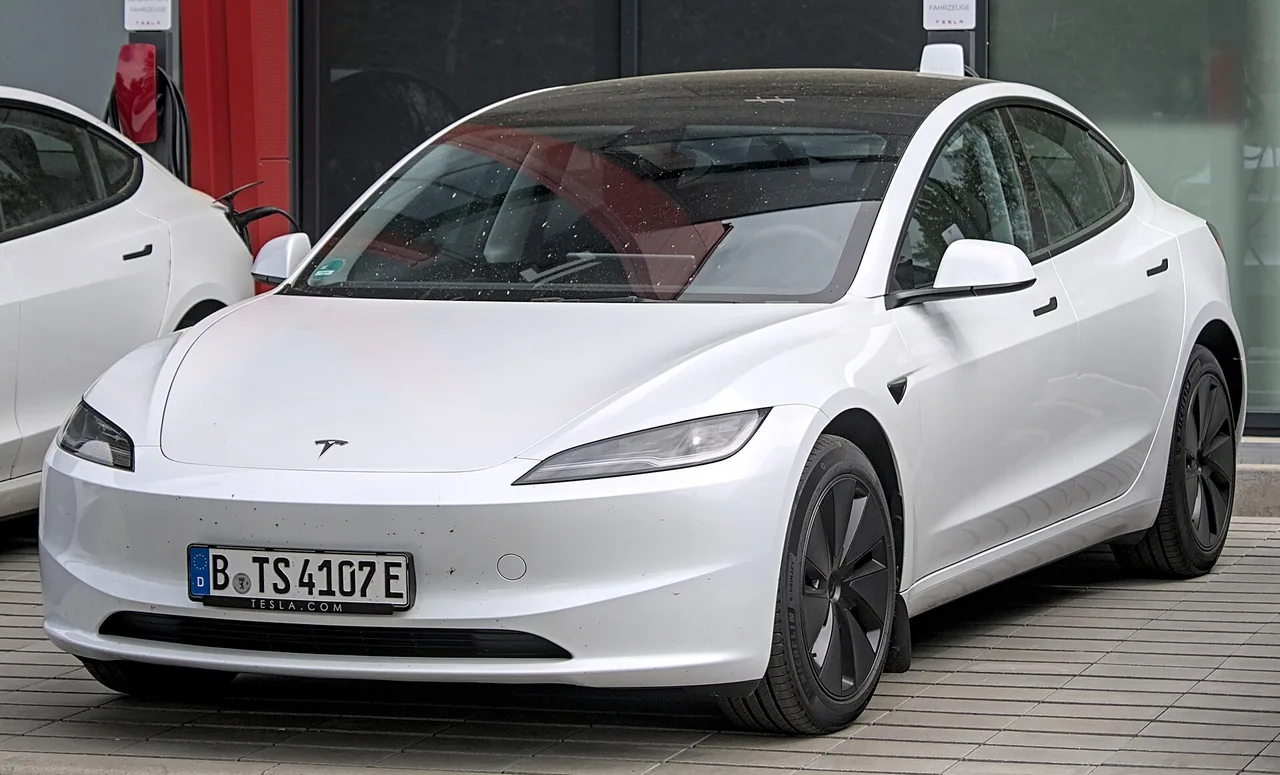
Tesla Model 3
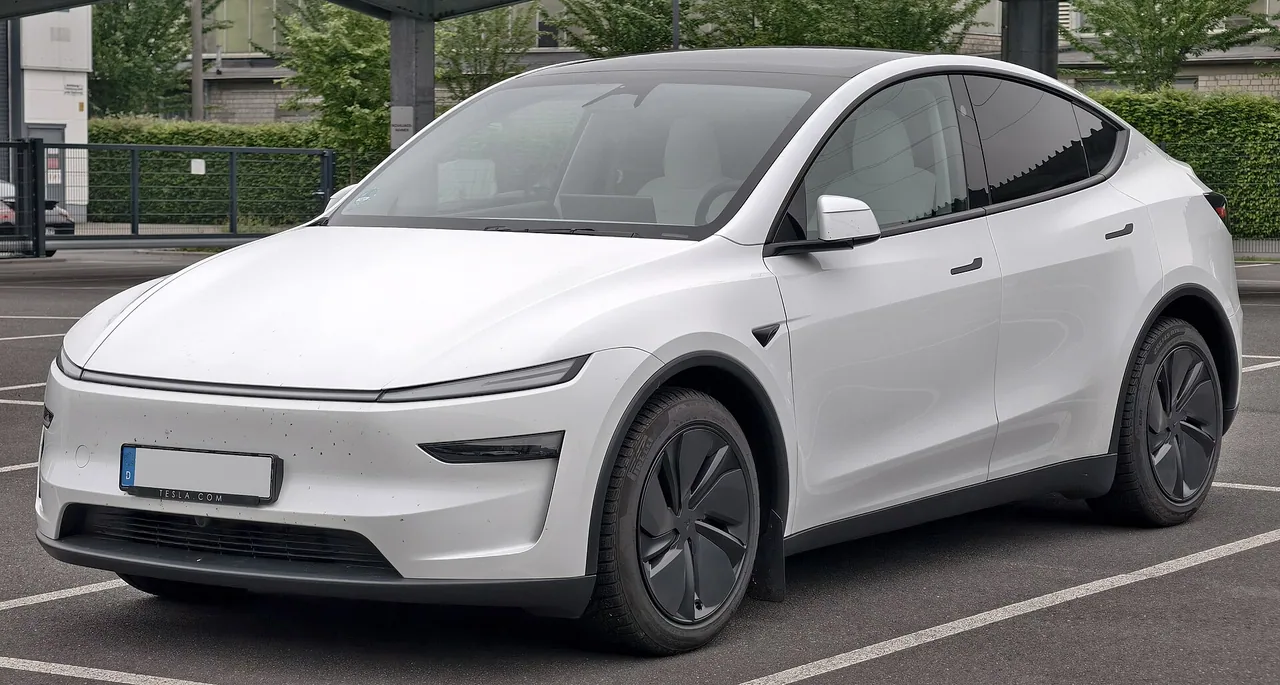
Tesla Model Y
Latest Data Refresh Check · Nov 25, 2026
Reviewed data refresh (2026-11-25) updated records for Model 3 (2026, 2025, 2023, 2022: new NHTSA complaints) and Model Y (2026, 2025, 2024, 2023: new NHTSA complaints); tables and dates below reflect the refreshed snapshot.
Live Market & Badge-Tax Readout
What you pay for the badge: new MSRP vs. used market
Current market snapshot: Virtual tie on KBB used midpoint.
TrimIndex never blends KBB, J.D. Power, and dealer asking figures into one range.
Where dealer asking prices are shown above or in the timeline below, figures summarize active US used dealer listings (asking prices, not final sale prices; excluded from Value-to-Score).
Day-to-Day Ownership Split
Where Model 3 and Model Y actually diverge
Sharing a platform does not mean identical ownership. Here are the concrete calibration, cabin, software, charging, and dealer differences buyers feel every day.
Cargo Access, Seating & Ride Height
Model Y's liftgate swallows strollers, bikes, and camping gear that cannot clear a Model 3 trunk lip—easily the biggest day-to-day difference.
Highland (2024) vs. Juniper (2026) Ergonomics
Drivers who dislike steering-wheel touch blinkers prefer 2023 Model 3s or any Model Y over 2024–2025 Highland Model 3s.
Efficiency, Range & Handling Feel
Model 3 remains the sharper driver's car and squeezes extra miles from every kWh, though Juniper narrows the efficiency gap sharply.
Battery Chemistry Mix (LFP vs. NCA / 4680)
Used buyers seeking LFP longevity and 100% daily charge convenience find far more inventory among 2022–2024 Model 3 RWD sedans.
Recent NHTSA Complaint Themes (2024–2026)
Early-year 2020–2023 phantom braking hits both twins equally, but late-model pre-purchase checks diverge sharply between steering-wheel buttons (Model 3) and HW4 camera stability (Model Y).
Refreshed EPA, charging & safety specs side by side
Pulled directly from TrimIndex’s EPA Fuel Economy, NHTSA NCAP, and charging-access database (NHTSA records through Nov 22, 2026).
| Specification | Tesla Model 3 | Tesla Model Y |
|---|---|---|
| EPA range (all trims) EPA Fuel Economy Guide | 220–363 mi | 244–357 mi |
| Efficiency (lower is better) EPA Fuel Economy Guide | 23.7–30.9 kWh/100 mi | 24.3–32.4 kWh/100 mi |
| Peak DC fast charging | 100–250 kW | 170–250 kW |
| Rated horsepower | 510 hp | Not on file |
| Drivetrains offered | AWD, RWD | AWD, RWD |
| Seating capacity | Not on file | 5–7 seats |
| Fast-charging port & Supercharger | NACS (SAE J3400) · Yes, with its built-in NACS port | NACS (SAE J3400) · Yes, with its built-in NACS port |
| NHTSA 5-Star overall rating NHTSA NCAP crash tests | 5 of 5 stars | 5 of 5 stars |
Why 2024–2025 Model 3 and Model Y feel like two different generations
Normally, platform siblings age in lockstep. Tesla broke that rhythm by rolling out the Model 3 'Highland' overhaul for model year 2024 while keeping the older Model Y body on sale through 2025 before launching the 'Juniper' Model Y for 2026. For used shoppers comparing 2024 or 2025 listings side by side, the two cars feel unexpectedly unalike inside.
A 2024–2025 Model 3 Highland rides noticeably quieter and smoother than a 2024 Model Y thanks to acoustic glass all around, revised frequency-selective dampers, ventilated front seats, ambient lighting, and a rear 8-inch passenger touchscreen. The downside shows up right inside NHTSA's complaint ledger: deleting the turn-signal stalk in favor of capacitive left-spoke buttons triggered 74 of 224 complaints in 2024 (33%) and 21 of 128 in 2025 (16%), as drivers struggled to signal cleanly mid-turn or through roundabouts.
Tesla evidently listened when finalizing the 2026 Juniper Model Y. While matching Highland's hushed glass, upgraded suspension, and ventilated seats—and stretching EPA range up to 357 miles—Juniper brought back a physical turn-signal stalk on the steering column. Meanwhile, 2023 pre-refresh Model 3s and 2023–2025 Model Ys give budget shoppers conventional stalks at substantially lower used prices.
- Model 3 added the octovalve heat pump in MY2021 (avoiding 2020's resistive cabin heater penalty in winter); Model Y had the heat pump from day one in MY2020.
- AMD Ryzen infotainment processors replaced older Intel Atom units starting in late 2021/2022 across both twins, making 2022+ screens dramatically snappier.
- 2023 Model Y received Tesla's 'comfort suspension' update mid-run, softening the stiff ride that drew criticism on 2020–2022 builds.
Match overlapping 2020–2026 years, single-source guide values, EPA efficiency, and NHTSA recall histories in TrimIndex's curated 3-vs-Y tool.
Open Tesla Model 3 vs. Model Y compare →LFP vs. NCA packs, 4680 builds, and battery aging across the 3/Y fleet
Under the floor, not every Model 3 or Model Y packs the same chemistry. Starting in MY2022, Tesla widely equipped Standard Range / RWD Model 3 builds with CATL lithium-iron-phosphate (LFP) cells—heavier per kWh and capped at 170 kW DC fast charging, yet tolerant of routine 100% daily charges and carrying deep cycle durability. Long Range and Performance trims across both Model 3 and Model Y primarily run Panasonic 2170 NCA cells peaking at 250 kW DC and carrying the longer 8-year/120,000-mile warranty.
In addition, certain Gigafactory Texas Model Y builds introduced structural 4680 NCA packs where cells bond directly into the floor tray, making out-of-warranty module repair more involved than conventional 2170 packs. TrimIndex's catalog logs six verified State of Health readings across the shared cohort ranging from 83% to 97% between 22,000 and 55,000 miles—confirming typical early degradation settles near 5–12% before flattening out.
Before buying any used 3 or Y, check the on-screen Charging menu: if the daily charge slider recommends '100% daily,' you are looking at an LFP pack; if it marks an '80% Daily' threshold, it is an NCA pack. You can also run Tesla's built-in Service Mode battery health test (or inspect recent owner test screenshots) to rule out outlier degradation.
See real-world degradation benchmarks, replacement cost brackets, and which Model Y model years drop fastest off MSRP before narrowing your shortlist.
Read the Model Y depreciation guide →How NHTSA complaint patterns shifted from 2020–2023 into 2024–2026
Because Model 3 (2,731 complaints, 82 recalls) and Model Y (4,423 complaints, 100 recalls) make up the largest EV fleets on US roads, raw complaint volume is naturally high—and over-the-air software updates close the vast majority of Tesla's NHTSA recalls without a service-center visit. What matters most for buyers is how the dominant failure themes changed year by year.
Across 2020–2023, both cars were dominated by the exact same complaint: phantom braking ('Sudden braking with nothing ahead / no obstacle'), peaking at 507 of 777 filings on 2022 Model 3 (65%) and 506 of 1,108 on 2021 Model Y (46%) as Tesla removed forward radar in favor of camera-only Tesla Vision. By 2024–2025, phantom braking subsided as the #1 theme, replaced on Model Y by HW4 computer and camera suite dropouts ('All cameras and driver aids fail' in 88 of 342 filings in 2024; 15 of 119 in 2025) and on 2026 Juniper Model Y by 42 of 473 filings highlighting front-trunk emergency release concerns.
Model-year timeline: Model 3 vs. Model Y
Refreshed automatically from TrimIndex’s database on each reviewed run so you can spot overlapping model years, Avoid flags, and pricing shifts.
| Year | Model 3 Score & Standing | Model 3 Price | Model Y Score & Standing | Model Y Price |
|---|---|---|---|---|
| 2026 | $43,152–$52,709 Dealer asking · Nov 2026 | $41,910–$50,910 Dealer asking · Nov 2026 | ||
| 2025 | $37,879–$50,555 Dealer asking · Nov 2026 | $33,369–$45,698 Dealer asking · Nov 2026 | ||
| 2024 | $29,546–$46,354 J.D. Power · Nov 2026 | $32,844–$42,737 J.D. Power · Nov 2026 | ||
| 2023 | $26,700–$32,200 KBB · Nov 2026 | $33,400–$35,000 KBB · Nov 2026 | ||
| 2022 | $24,400–$29,800 KBB · Nov 2026 | $27,587–$33,017 J.D. Power · Nov 2026 | ||
| 2021 | $22,900–$27,800 KBB · Nov 2026 | $25,900–$29,600 KBB · Nov 2026 | ||
| 2020 | $17,735–$25,873 J.D. Power · Nov 2026 | $27,300–$27,400 KBB · Nov 2026 |
Which platform twin should you buy?
Choose the Tesla Model 3 if…
- You want sharper sedan handling, lower highway kWh use, and up to 363 miles of EPA range.
- You want an LFP-pack 2022–2024 RWD trim that tolerates routine 100% daily home charging.
- You want Highland's hushed double-pane cabin and ventilated seats at a lower price than a 2026 Juniper Model Y.
- You do not haul tall boxy cargo and prefer lower tire replacement and purchase costs.
Choose the Tesla Model Y if…
- You need a wide hatchback liftgate, flat-folding cargo hold, or occasional third-row seating.
- You want physical turn-signal stalks in a 2023–2025 build—or Juniper's 2026 refresh with a retained signal stalk.
- You want an easier step-in hip height and commanding crossover visibility for family duties.
- You shop 2020 builds and want the winter efficiency of a heat pump (Model 3 didn't get it until 2021).
Used-Market Sweet Spot
For value-focused families, a 2023 Model Y Long Range AWD hits the platform sweet spot: AMD Ryzen processor, comfort suspension update, physical stalks, heat pump, and 8-year/120,000-mile pack coverage without 2024 HW4 computer teething bugs. Commuters who don't need a hatch get standout durability and efficiency from a 2022–2023 Model 3 RWD (LFP + stalks) or a 2024+ Highland if stalkless blinkers don't bother you.
Model 3 & Model Y platform questions
Which years of Tesla Model 3 and Model Y still have a turn-signal stalk?
Model 3 kept physical steering-column stalks through 2023 and removed them starting with the 2024 Highland refresh (driving 95 NHTSA turn-signal button complaints across 2024–2025). Model Y kept traditional stalks through 2025 and retained a physical turn-signal stalk even on the redesigned 2026 Juniper refresh.
Do all 2020–2026 Model 3 and Model Y vehicles have a heat pump?
Every Model Y from its 2020 launch onward includes Tesla's octovalve heat pump for cold-weather efficiency. The Model 3 received the heat pump starting with model year 2021, so 2020 Model 3 sedans rely on a less efficient resistive cabin heater in freezing temperatures.
Which Model 3 or Model Y trims use an LFP battery instead of NCA?
In US catalog builds, CATL LFP packs appear primarily in 2022+ Model 3 Standard/RWD trims, allowing routine 100% charging with a 170 kW DC peak and 8-year/100,000-mile warranty. Most Long Range, Performance, and US Model Y trims use Panasonic 2170 (or select Texas 4680) NCA packs peaking at 250 kW DC.
Why do Model 3 and Model Y have so many NHTSA recalls?
Across 2020–2026, Model 3 logs 82 recalls and Model Y logs 100 recalls, but the vast majority are resolved silently via over-the-air (OTA) software updates rather than dealership visits. Always confirm the car runs current firmware and check NHTSA.gov by VIN for any physical hardware campaigns.