Volkswagen ID.4 vs. ID. Buzz: Same MEB Drive Unit Stretched Into a Three-Row Electric Van
Updated
Platform Twin Verdict
Volkswagen stretched the ID.4's MEB skateboard by nearly 19 inches to build the Hanover-assembled ID. Buzz three-row electric minivan, dropping the exact same 282 hp RWD and 335 hp AWD APP550 drive units underneath. The van adds a bigger 86 kWh usable pack and faster 200 kW charging, yet its upright brick aerodynamics cap EPA range at 231–234 miles—trailing a 77 kWh ID.4 Pro by nearly 60 miles while sharing VW's blanking-screen infotainment quirk.
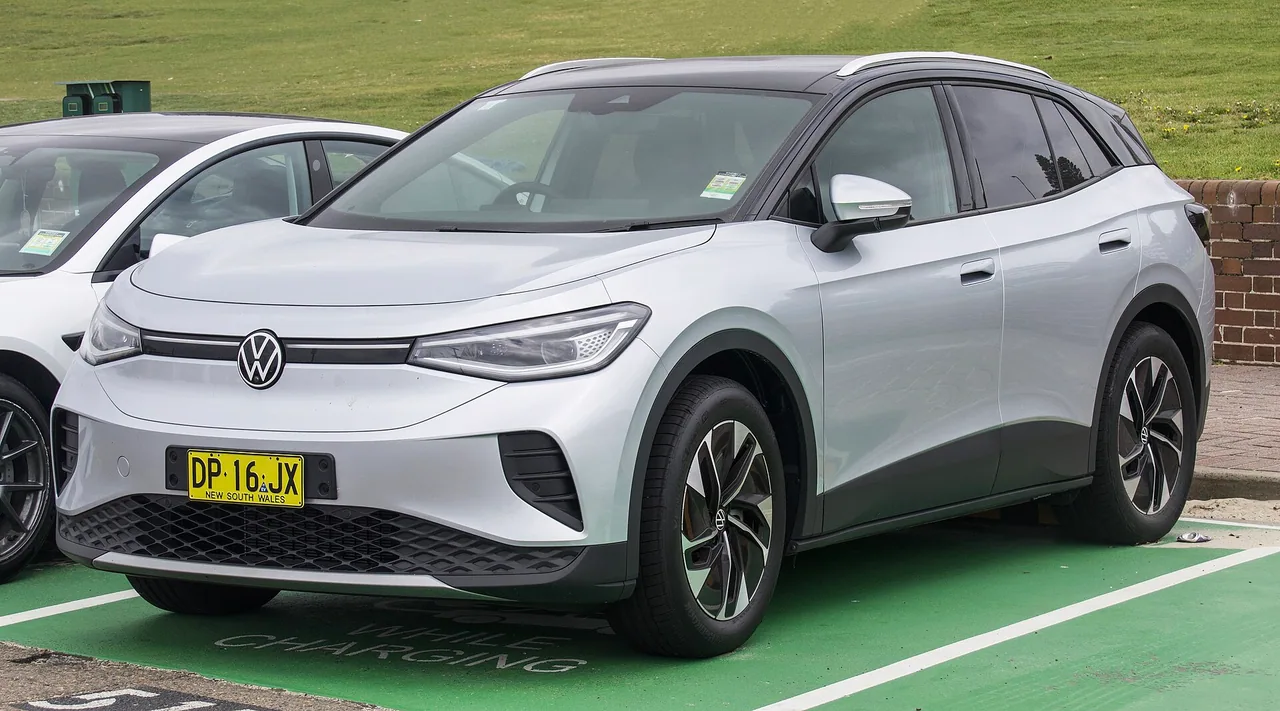
Volkswagen ID.4
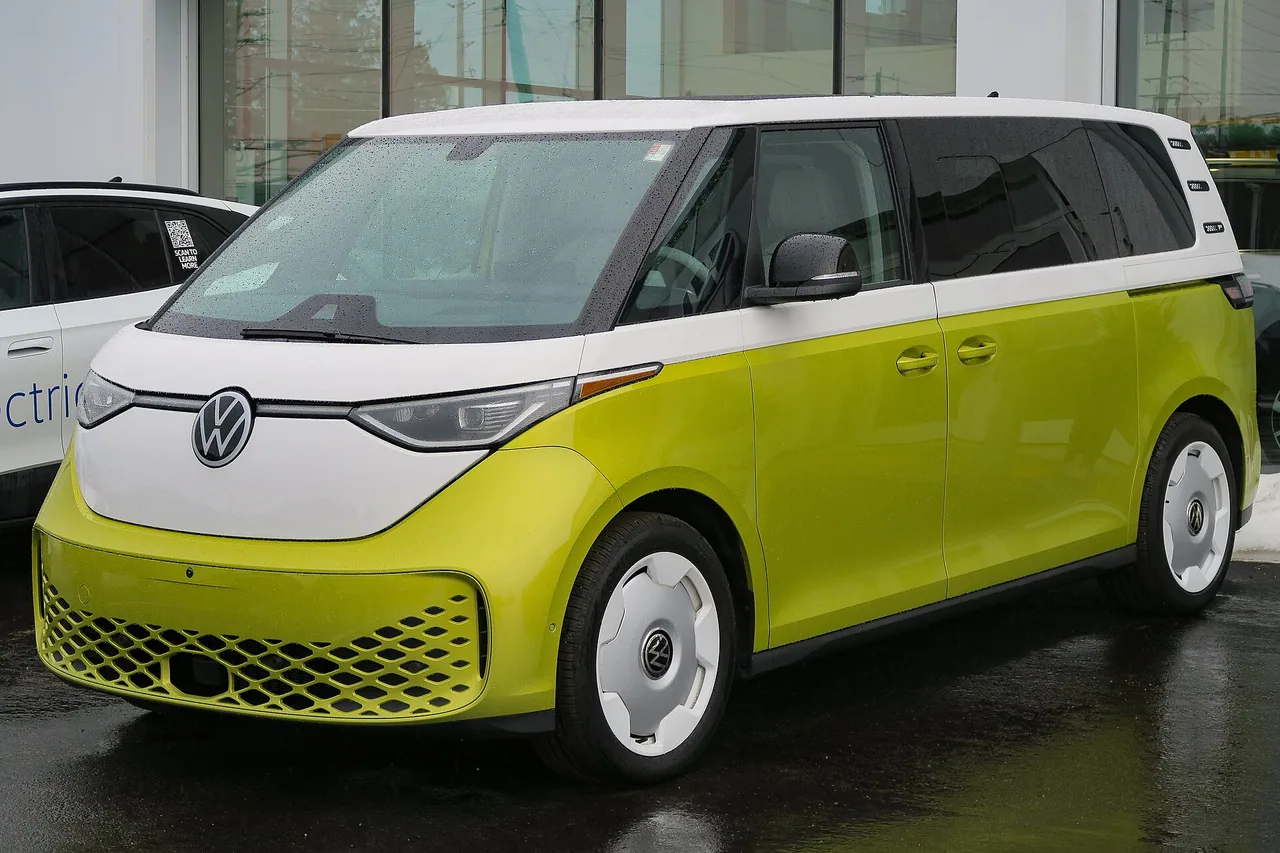
Volkswagen ID. Buzz
Latest Data Refresh Check · Nov 25, 2026
Reviewed data refresh (2026-11-25) updated records for ID.4 (2025, 2024, 2023, 2022: new NHTSA complaints) and ID. Buzz (2025: new NHTSA complaints); tables and dates below reflect the refreshed snapshot.
Live Market & Badge-Tax Readout
What you pay for the badge: new MSRP vs. used market
Current market snapshot: ID.4: $18,250–$22,100 (KBB) vs. ID. Buzz: $59,279–$64,911 (Used dealer asking prices).
TrimIndex never blends KBB, J.D. Power, and dealer asking figures into one range.
Where dealer asking prices are shown above or in the timeline below, figures summarize active US used dealer listings (asking prices, not final sale prices; excluded from Value-to-Score).
Day-to-Day Ownership Split
Where ID.4 and ID. Buzz actually diverge
Sharing a platform does not mean identical ownership. Here are the concrete calibration, cabin, software, charging, and dealer differences buyers feel every day.
Wheelbase & Three-Row Packaging
Nobody cross-shops these on styling alone—the ID. Buzz justifies its footprint solely through minivan sliding doors and real three-row passenger room.
Battery Size vs. Aerodynamic Range
Even with 9 kWh more battery onboard, the ID. Buzz sacrifices roughly 57 miles of rated range to drag and curb weight.
Peak DC Fast Charging
The van's 200 kW peak partially cushions its shorter range on interstate trips, though frequent charging stops remain necessary.
Assembly Plant & Maturity
ID.4 offers steep secondary-market savings if you pick recall-cleared years, whereas the ID. Buzz remains a scarce, niche launch-year import.
Refreshed EPA, charging & safety specs side by side
Pulled directly from TrimIndex’s EPA Fuel Economy, NHTSA NCAP, and charging-access database (NHTSA records through Nov 22, 2026).
| Specification | Volkswagen ID.4 | Volkswagen ID. Buzz |
|---|---|---|
| EPA range (all trims) EPA Fuel Economy Guide | 206–291 mi | 231–234 mi |
| Efficiency (lower is better) EPA Fuel Economy Guide | 29.8–36.3 kWh/100 mi | 40.8–42.0 kWh/100 mi |
| Usable battery capacity | 62.0–77.0 kWh | 86.0 kWh |
| Peak DC fast charging | 125–175 kW | 200 kW |
| Rated horsepower | 282–335 hp | 282–335 hp |
| Drivetrains offered | AWD, RWD | AWD, RWD |
| Seating capacity | 5 seats | Not on file |
| Fast-charging port & Supercharger | CCS1 (Combined Charging System) · With an adapter | CCS1 (Combined Charging System) · With an adapter |
| NHTSA 5-Star overall rating NHTSA NCAP crash tests | 5 of 5 stars | 5 of 5 stars |
The physics of stretching MEB: why 86 kWh in a van loses to 77 kWh in a crossover
Volkswagen designed the MEB floor pan like an accordion specifically so one engineering investment could span compact hatchbacks, family crossovers, and full-size commercial vans. Inserting 18.8 inches between the axles of the US-spec ID. Buzz created space for two extra battery modules—bumping usable energy from 77 kWh in an ID.4 Pro to 86 kWh (91 kWh gross) in the van—while keeping the exact same APP550 rear motor and 335-horsepower 4Motion AWD architecture.
On the road, frontal area overrides battery capacity. EPA ratings expose the gap immediately: a 2024–2026 ID.4 Pro achieves 29.8 to 36.3 kWh/100 mi and up to 291 miles per charge, whereas the 2025 ID. Buzz drinks 40.8 to 42.0 kWh/100 mi for 234 miles (RWD) or 231 miles (AWD). At 70 mph highway speeds or in freezing winter weather, aerodynamic drag scales quadratically, meaning families planning 300-mile holiday drives will stop noticeably more often in the van even with its faster 200 kW charging ceiling.
Compare 70 mph winter range and real-world 80% daily charging buffers between the 291-mile ID.4 Pro and the 231–234-mile ID. Buzz.
Open EV Range Calculator →Model-year timeline: ID.4 vs. ID. Buzz
Refreshed automatically from TrimIndex’s database on each reviewed run so you can spot overlapping model years, Avoid flags, and pricing shifts.
| Year | ID.4 Score & Standing | ID.4 Price | ID. Buzz Score & Standing | ID. Buzz Price |
|---|---|---|---|---|
| 2026 | $30,996–$40,345 Dealer asking · Nov 2026 | Not sold | Not produced No US model year | |
| 2025 | $25,925–$37,788 Dealer asking · Nov 2026 | $59,279–$64,911 Dealer asking · Nov 2026 | ||
| 2024 | $17,722–$33,820 J.D. Power · Nov 2026 | Not sold | Not produced No US model year | |
| 2023 | $14,443–$25,790 J.D. Power · Nov 2026 | Not sold | Not produced No US model year | |
| 2022 | $14,261–$21,264 J.D. Power · Nov 2026 | Not sold | Not produced No US model year | |
| 2021 | $13,309–$18,573 J.D. Power · Nov 2026 | Not sold | Not produced No US model year |
Which platform twin should you buy?
Choose the Volkswagen ID.4 if…
- You only need five seats and want up to 291 miles of EPA range with lower per-mile home charging costs.
- You want steep used-market value on an off-lease 2023–2024 crossover rather than paying launch-year van premiums.
- You regularly park in compact city spaces or take frequent 250-mile highway trips without wanting extra charging stops.
Choose the Volkswagen ID. Buzz if…
- You need genuine adult third-row legroom and dual power sliding doors for car seats, gear, or family carpools.
- You want 200 kW peak DC fast charging and Hanover commercial-van build quality in a flat-floor electric minivan.
- Your daily driving fits comfortably inside a 180-to-230-mile real-world radius and iconic Microbus design brings real joy.
Used-Market Sweet Spot
For pure value-per-mile transportation, a recall-cleared 2024 Volkswagen ID.4 Pro (77 kWh, APP550 motor, 291 mi EPA) delivers dramatically longer range and lower operating costs than its van sibling. Buy the 2025 ID. Buzz specifically when three usable rows and sliding doors solve a real family packaging problem—and expect used asking spreads to soften as more 2025 leases return.
ID.4 & ID. Buzz platform questions
Why does the ID. Buzz have less range than the ID.4 despite a bigger battery?
Aerodynamic drag and vehicle mass explain the gap. Although the ID. Buzz packs 86 kWh usable versus 77 kWh in an ID.4 Pro, its upright minivan nose and tall roof push EPA consumption to 40.8–42.0 kWh/100 mi compared with 29.8–36.3 kWh/100 mi on the ID.4—limiting the van to 231–234 miles EPA versus up to 291 miles on the ID.4.
Does the VW ID. Buzz suffer from the same recalls as the ID.4?
Not on hardware sourced from Chattanooga. Because every US ID. Buzz is assembled in Hanover, Germany, it avoids Chattanooga's door-handle water-ingress recall (24V651000) and the ID.4's six Park-Outside advisories. However, the 2025 ID. Buzz already mirrors VW's blanking center-screen complaint pattern (3 of 18 filings).
Does the VW ID. Buzz charge faster than the ID.4?
Yes in peak kilowatts. The ID. Buzz's larger 86 kWh pack supports up to 200 kW DC fast charging, compared with 175 kW on 2024–2026 77 kWh ID.4 Pro trims (and 125–135 kW on earlier or 62 kWh ID.4 builds). Because the van uses more electricity per mile, miles added per minute on the highway are fairly close.