All Vehicles
2025 Tesla Model 3 Trims Compared: Range, Price & Problems
Updated
2025 Tesla Model 3: 4 trims compared. 298–363 mi EPA range, 3 recalls, 128 NHTSA complaints, top problem: Turn signal buttons unreliable (16% of complaints).
Data:NHTSA through
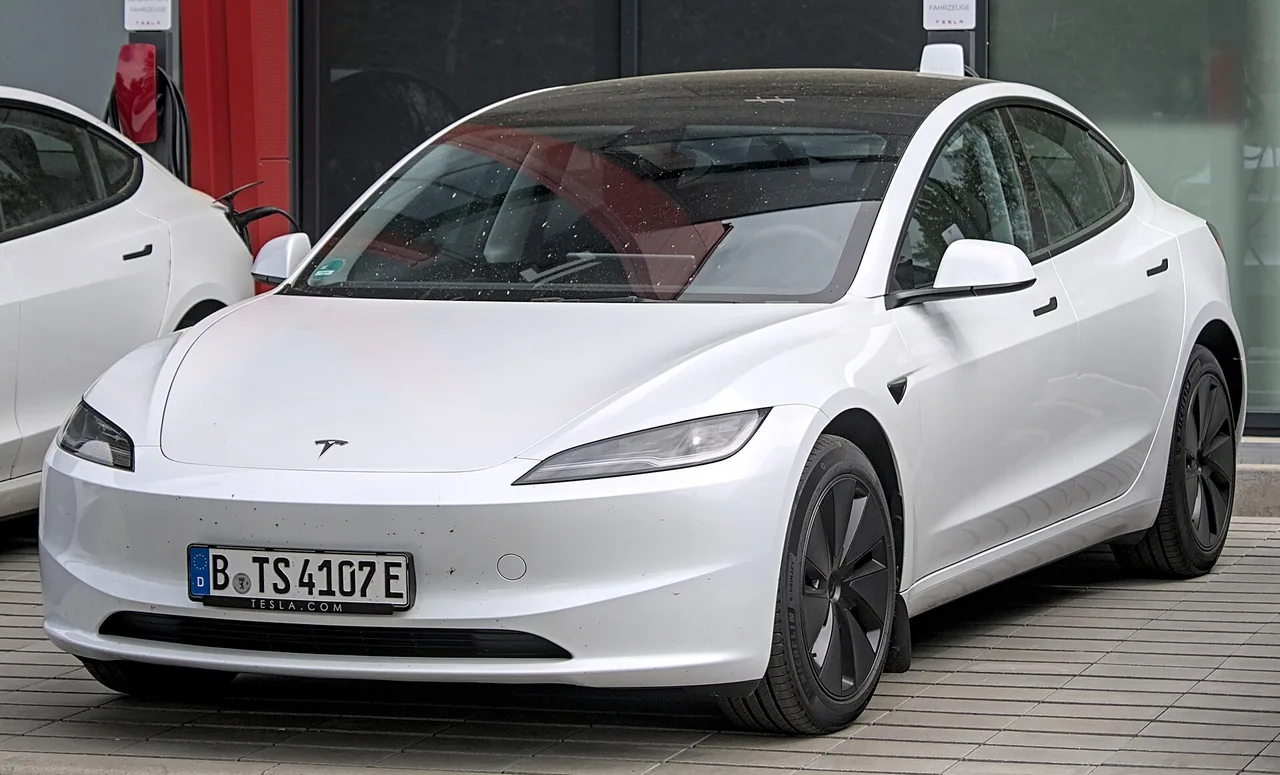

Compare the 2025 Tesla Model 3 trims
| Trim | TrimIndex score | Price new | Used price | Drive | EPA range | EPA energy use | 0–60 mph | DC fast-charge peak | Cargo | Georgia tax value (2026 manual) |
|---|---|---|---|---|---|---|---|---|---|---|
| Long Range AWD | 74 | from $47,490starting price | $39,606–$41,008Dealer asking (9 listings, Nov 2026) | AWD | 346 mi | 26.4 kWh/100 mi | 4.2 s | 250 kW | 21 cu ft | $29,425–$33,175 (2 values) |
| Long Range RWD | 74 | from $42,490starting price | $37,879–$40,883Dealer asking (47 listings, Nov 2026) | RWD | 363 mi | 24.6 kWh/100 mi | 4.9 s | 250 kW | 21 cu ft | $29,425–$33,175 (2 values) |
| Long Range RWD-I (19in wheels) | 72 | not stated | $37,879–$40,883Dealer asking (47 listings, Nov 2026) | RWD | 346 mi | 25.6 kWh/100 mi | 4.9 s | 250 kW | 21 cu ft | $29,425–$33,175 (2 values) |
| Performance AWD | 67 | from $54,990starting price | $48,057–$50,555Dealer asking (73 listings, Nov 2026) | AWD | 298 mi | 30.9 kWh/100 mi | 2.9 s | not stated | 21 cu ft | $55,000 |
Price new, 0–60 mph, dc fast-charge peak and cargo: Tesla, Inc., via the Internet Archive.
EPA range and EPA energy use: U.S. EPA and DOE, fueleconomy.gov.
Used price: the figure each trim page shows, with its source and the month collected.
Georgia tax value: the Georgia Department of Revenue's title-tax assessment value for each trim in its 2026 manual, one edition for every row; a state tax figure, not a sale price or market value.
TrimIndex score: out of 100.
Blank cells. Price new (1 row): no manufacturer price for that trim on file; DC fast-charge peak (1 row): no manufacturer figure on file.
What differs between the 2025 Tesla Model 3 trims
Compared with the 2025 Model 3 Long Range RWD-I (19in wheels), the Long Range RWD has 17 more miles of EPA range.
Compared with the 2025 Model 3 Long Range RWD, the Performance AWD has all-wheel drive and a 0–60 mph claim 2.0 s quicker, with 65 fewer miles of EPA range, EPA energy use 6.3 kWh/100 mi higher and a starting price $12,500 higher.
Compared with the 2025 Model 3 Performance AWD, the Long Range AWD has 48 more miles of EPA range, EPA energy use 4.5 kWh/100 mi lower and a starting price $7,500 lower, with a 0–60 mph claim 1.3 s slower.
Which 2025 Tesla Model 3 trim for what
- Longest EPA range: the 2025 Model 3 Long Range RWD, 363 miles; next, the Long Range AWD and the Long Range RWD-I (19in wheels) have 346 miles.
- Quickest 0–60 mph (manufacturer claims): the 2025 Model 3 Performance AWD, 2.9 seconds; next, the Long Range AWD has 4.2 seconds.
NHTSA Recalls (3)
- NHTSA lists 3 recall campaigns for the 2025 Tesla Model 3, filed between Dec 2024 and Oct 2025.
- How they are fixed, per the filings: 1 by a software update (it can install over the air), 1 by work on the car and 1 by both a software update and work on the car.
Source: NHTSA recall filings for the 2025 Tesla Model 3, data through Nov 22, 2026. Why the VIN decides
- Filed Oct 2025
The battery pack contactors may fail, causing a loss of drive power.
Campaign #25V690000 · Part (NHTSA): electrical system › propulsion system › fuses, relays, contacts, and shunts- What happens:
- A loss of drive power can increase the risk of a crash.
- The fix
- Free fix: work on the car by Tesla Service Tesla Service will replace the battery pack contactors, free of charge.
- Covers:
- certain 2025 Model 3 and 2026 Model Y vehicles.
NHTSA lists 12,963 vehicles in this campaign (all models it covers).
Check VIN status at NHTSA.gov - Filed Jan 2025
The computer circuit board may short, resulting in the loss of the rearview camera image.
Campaign #25V002000 · Part (NHTSA): back over prevention › software- What happens:
- A rearview camera that does not display an image reduces the driver's rear view, increasing the risk of a crash.
- The fix
- Free fix: software update (it can install over the air) plus work on the car Tesla released an over-the-air (OTA) software update, free of charge. Tesla will also identify any vehicles that experienced a circuit board failure, or stress that may lead to a circuit board failure, and replace the affected computers, free of charge.
- Covers:
- certain 2024-2025 Model 3, Model S, 2023-2025 Model X, and Model Y vehicles.
- Federal standard not met:
- 111 (Rear Visibility).
NHTSA lists 239,382 vehicles in this campaign (all models it covers).
Check VIN status at NHTSA.gov - Filed Dec 2024
The tire pressure monitoring system (TPMS) warning light may not remain illuminated between drive cycles, failing to warn the driver of low tire pressure.
Campaign #24V935000 · Part (NHTSA): tires › pressure monitoring and regulating systems- What happens:
- Driving with improperly inflated tires increases the risk of a crash.
- The fix
- Free fix: software update over the air Tesla released an over-the-air (OTA) software update, free of charge.
- Covers:
- certain 2024 Cybertruck, 2017-2025 Model 3, and 2020-2025 Model Y vehicles.
- Federal standard not met:
- 138 (Tire Pressure Monitoring Systems).
NHTSA lists 696,281 vehicles in this campaign (all models it covers).
Check VIN status at NHTSA.gov
NHTSA Investigations (3 open, 1 closed)
NHTSA has 3 open investigations covering the 2025 Tesla Model 3 (NHTSA investigations file of Nov 19, 2026).
What these kinds of action mean
- OpenEngineering analysis EA26002, opened Mar 18, 2026
FSD Collisions in Reduced Roadway Visibility Conditions
What NHTSA says it is examining: The Office of Defects Investigation (ODI) is opening this Engineering Analysis to evaluate Tesla’s Full Self Driving Beta and Full Self Driving (Supervised) (collectively, FSD) degradation detection system.
Model years NHTSA lists for this model in the action: 2017-2026.
- OpenPreliminary evaluation PE25012, opened Oct 7, 2025
Traffic safety violations while Full Self Driving ("FSD") is engaged
What NHTSA says it is examining: The Office of Defects Investigation (“ODI”) is opening this Preliminary Evaluation (PE) to assess the scope, frequency, and potential safety consequences of FSD executing driving maneuvers that constitute traffic safety violations.
Model years NHTSA lists for this model in the action: 2017-2026.
- OpenAudit query AQ25002, opened Aug 20, 2025
Compliance with Standing General Order 2021-01 Reporting Requirements
What NHTSA says it is examining: The Office of Defects Investigation (“ODI”) has identified numerous incident reports submitted by Tesla, Inc. (“Tesla”) in response to Standing General Order 2021-01 (the “SGO”), in which the reported crashes occurred several months or more before the dates of the reports.
Model years NHTSA lists for this model in the action: 2017-2026.
NHTSA has closed 1 action on the 2025 Tesla Model 3: 1 preliminary evaluation, opened Jan 2025.
Show the 1 closed action
- Actually Smart Summon sessions resulting in low-speed impactsPreliminary evaluation PE24033, opened Jan 6, 2025, closed Apr 3, 2026
Source: NHTSA Office of Defects Investigation, investigations file, records through Nov 19, 2026; an open investigation is not a finding of a defect in the 2025 Tesla Model 3.
NHTSA Complaints (128 total)
NHTSA lists 3 recall campaigns for the 2025 Tesla Model 3; 2 of them name an over-the-air software update as the fix. Owners have filed 128 complaints with NHTSA; the largest part groups are Forward collision avoidance (30) and Steering (27). Of all 128, 29 report a crash and 8 an injury.
What owners report most
TrimIndex grouped the 128 complaints owners filed with NHTSA on the 2025 Tesla Model 3 (every trim; NHTSA files complaints by model year, not trim) into problem themes on Nov 16, 2026: 95 of them fall in the 14 themes below, 8 of them in two. 1 complaint was filed after that grouping and is not in a theme yet. How themes are made and checked
-
Self-driving steers out of lane
12 of 128 complaints (9%): With Autopilot or Full Self-Driving engaged, the car turns or veers abruptly out of its path into curbs, poles, barriers, adjacent vehicles or oncoming traffic.
Owners reported a crash in 9 and an injury in 4 of the 12 complaints.
“operating with Full Self-Driving (FSD) engaged performed an aggressive, uncommanded turn while under computer control”
NHTSA complaint 11686758 “Full Self-Driving (FSD) was engaged when my vehicle unexpectedly and abruptly deviated from its expected course and collided with a vehicle”
NHTSA complaint 11764601 -
Steering locks up or turns heavy
10 of 128 complaints (8%): The power steering assist drops out or the wheel locks, leaving the steering very hard to turn or unresponsive, in some reports during a turn ending in a crash.
Owners reported a crash in 3 and an injury in 1 of the 10 complaints.
“The contact also stated the steering had locked, and she was unable to turn the steering wheel.”
NHTSA complaint 11681518 “there was no assist for steering, and a high degree of force was needed to turn the steering wheel”
NHTSA complaint 11702267 -
Unexpected acceleration
9 of 128 complaints (7%): Owners report the car surging forward or backward on its own, including with the brake pressed, and crashing into garages, fences, trees or other vehicles.
Owners reported a crash in 7 and an injury in 1 of the 9 complaints.
“the vehicle unexpectedly accelerated forward over a curb, crashed through a iron fence”
NHTSA complaint 11669732 “I experienced a sudden acceleration with the car going from about 20mph to, I think, over 40 mph and crashed into the garage area of my house.”
NHTSA complaint 11646628 -
Horn quiet in rain or snow
8 of 128 complaints (6%): The horn becomes muffled, barely audible or silent when wet from rain, puddles or a car wash, or packed with snow, until it dries.
“The sound produced by the horn is barely audible for a couple of hours until presumably it dries out.”
NHTSA complaint 11714778 “The horn does not work when wet or in snow.”
NHTSA complaint 11635245 -
Braking and stability aids shut off
6 of 128 complaints (5%): Warnings appear that traction control, stability control, ABS, emergency braking or vehicle hold are disabled, sometimes together with steering or brake problems.
Owners reported a crash in 1 of the 6 complaints.
“Multiple warning messages appeared, including: •Regenerative Braking Disabled •ABS Fault •Traction Control Fault”
NHTSA complaint 11682354 “Steering assist reduced, traction control disabled, stability control disabled.”
NHTSA complaint 11652701
Show the other 8 themes
-
Self-driving ignores signals and road rules
6 of 128 complaints (5%): Under Full Self-Driving the car moves on red lights, drives the wrong way down streets or into oncoming lanes, or fails to stop for a closing gate.
“approaching a closing gate, the vehicle failed to come to a complete stop.”
NHTSA complaint 11771168 -
Sudden braking with nothing ahead
6 of 128 complaints (5%): On Autopilot, cruise control, self-driving or manual driving, the car brakes hard from speed to a near stop with no vehicle or obstacle ahead.
“Phantom braking from freeway speed to almost a stop, with no other vehicles presenting issues nearby.”
NHTSA complaint 11664926 -
No driver speed limit in self-driving
5 of 128 complaints (4%): With Full Self-Driving engaged the car travels above posted limits and the driver can no longer set or cap the maximum speed after an update.
“In the New Tesla update to Full Self Drive they removed the ability to adjust the speed control while using FSD”
NHTSA complaint 11695166 -
Self-parking and Summon hit objects
5 of 128 complaints (4%): During Autopark, Smart Summon or self-driving parking maneuvers, the car drives or reverses into curbs, gates, poles, garages or parked cars without stopping.
Owners reported a crash in 5 and an injury in 1 of the 5 complaints.
“attempting to parallel park into a parking space when it made a sudden left turn and crashed into a curb.”
NHTSA complaint 11645905 -
Vibration at highway speed
5 of 128 complaints (4%): The car or steering wheel shakes at highway speed, and owners report repeat service visits involving tires, wheels, suspension or steering parts.
“A front wheel of this vehicle and/or its suspension is undergoing extremely dangerous vibrations at highway speeds”
NHTSA complaint 11753275 -
Loss of drive power while driving
4 of 128 complaints (3%): The car loses propulsion or shuts down while driving, entering limp mode or stopping in traffic, with drive motor or inverter failures diagnosed.
“the vehicle abruptly went into limp mode and lost normal driving power”
NHTSA complaint 11681858 -
Airbags not deploying in crashes
3 of 128 complaints (2%): Owners describe crashes, including a side impact, in which none of the airbags deployed.
Owners reported a crash in 3 and an injury in 1 of the 3 complaints.
“My side tool the impact and no side curtain airbags deployed and neither did the dash airbags.”
NHTSA complaint 11681387 -
Self-driving disengages without warning
3 of 128 complaints (2%): Full Self-Driving or Autosteer switches itself off mid-maneuver, during braking, in a curve or in sun glare, handing control back abruptly.
Owners reported a crash in 1 of the 3 complaints.
“the car suddenly issued an urgent take-over-immediately alert and Autosteer disengaged with no advance warning.”
NHTSA complaint 11762901
128 complaints filed with NHTSA for the 2025 Tesla Model 3, between Nov 2024 and Nov 2026.
Parts named most often
| Part | Complaints | Share |
|---|---|---|
| Forward collision avoidance including adaptive cruise control (20) and automatic emergency braking (12) | 30 | 23% |
| Steering | 27 | 21% |
| Electrical system (other) | 20 | 16% |
| Lane keeping and blind-spot systems including assist (13) and warning (7) | 18 | 14% |
| Speed control | 15 | 12% |
Share of all 128 complaints; one complaint can name more than one part, so shares add up to more than 100%. 23 complaints name no specific part.
Owners reported a crash in 29 and an injury in 8 of the 128 complaints. How these fields are filled
Median odometer reading when the problem happened: 9,840 miles, from the 9 complaints that give one.
Complaints by year filed
| Year filed | Complaints |
|---|---|
| 2024 | 3 |
| 2025 | 81 |
| 2026 (to Nov 22) | 44 |
Source: NHTSA owner complaints filed on every 2025 Tesla Model 3 (NHTSA files them by model year, not trim), data through Nov 22, 2026.
The 25 most severe, then newest, of 128
- Severity 5 of 5.Steering Injury · Crash
On XXX, at approximately 8:10 PM PDT in [XXX], I was driving my 2025 Tesla Model 3 (VIN [XXX]) with Full Self-Driving (Supervised) engaged.
Show the rest
While FSD was actively steering a right turn at an intersection, the vehicle turned too wide, crossed into the oncoming lane, and collided head-on with another vehicle. Both vehicles were totaled and the airbags deployed. Tesla's own Vehicle Data Report for this crash confirms the FSD system (state: ACTIVE_FSD) was engaged and steering the vehicle in the seconds before impact at approximately 20-26 mph, and that FSD disengaged less than one second before the collision. I was lightly pressing the accelerator (Tesla's documented method to confirm proceeding through an intersection) while FSD controlled steering. No automatic emergency braking prevented the vehicle from entering the oncoming lane during the FSD-executed turn. I sustained injuries requiring six months of psychological treatment. I believe FSD's intersection turning behavior is defective: the system executed a turning maneuver that placed the vehicle into oncoming traffic, causing a head-on collision. INFORMATION REDACTED PURSUANT TO THE FREEDOM OF INFORMATION ACT (FOIA), 5 U.S.C. 552(B)(6)
NHTSA ODI #11770448 - Severity 5 of 5.Injury · Crash
-Full Self-Driving (FSD) was engaged when my vehicle unexpectedly and abruptly deviated from its expected course and collided with a vehicle on the other side of the road.
Show the rest
My vehicle was totaled so I cannot confirm availability for inspection, however I have te vehicle’s USB drive which contains data about the vehicle and collision. -The abrupt and unexpected maneuver created an immediate safety risk to me and the public; had there been pedestrians in the area, that risk would have been severe and potentially catastrophic. Based on the vehicle data available to me, approximately 0.85 seconds elapsed between the vehicle’s departure from its expected course and the collision, leaving insufficient time for any human to reasonably prevent a crash. Nevertheless, my quick response adjusted the trajectory and minimized the damage to the other vehicle. I sustained injuries from the airbag deployment and force of impact. The other driver was evaluated, but was not seriously injured. -The problem has not been reproduced to my knowledge. Tesla Insurance communicated their position is to hold the insured liable when a collision involving FSD occurs. I escalated to the Head of Claims in an attempt to get answers, but they ultimately refused to answer my questions or provide an explanation for the behavior of the vehicle. -The vehicle gave no warning whatsoever: no warning of diminished FSD capabilities, no warning to take over immediately, no FSD disengagement, nor any indication that anything abnormal was about to occur. No warnings of any kind were displayed in the days or weeks prior. -In summary, I believe the available evidence warrants investigation of a potential Tesla FSD safety defect. The data confirms FSD was actively engaged, and the swift unexpected behavior resulted in the loss of my vehicle and could have had catastrophic consequences. Tesla continues to make FSD more integrated and accesible while refusing to address issues, which makes me fear for the public.
NHTSA ODI #11764601 - Severity 5 of 5.Lane keeping and blind-spot systems · Backup camera and rear sensors Injury · Crash
On May 24, 2026, at approximately 8:28 AM, I activated Actually Smart Summon on my 2025 Tesla Model 3 using the Tesla mobile application to reverse the vehicle from my garage.
Show the rest
Before this incident, the vehicle displayed no warnings, alerts, messages, or other indication of a problem, and I had previously usd Actually Smart Summon without similar behavior. Shortly after activation, the Tesla mobile application became unresponsive, and the vehicle did not stop despite my attempts to stop it through the app. I attempted to open the vehicle door during the incident but was unable to do so while the maneuver continued. Because I could no longer stop the vehicle through the app or access the vehicle, I placed my phone in my pocket so I could use both hands to try to stop the vehicle and prevent further damage. At that point, I was no longer pressing or holding the Actually Smart Summon control in the application. As the vehicle continued reversing, I repeatedly repositioned myself behind it and pushed against the rear of the vehicle with my body multiple times. Despite this physical intervention, the vehicle continued reversing and applying rearward force, forcing me to repeatedly move out of its path to avoid being pinned between the vehicle and my neighbor s garage. The vehicle pressed into my neighbor s garage with enough force that the impact transferred to the parked vehicle inside the garage. It did not stop upon the initial impact and continued pressing into the garage afterward. This sustained movement is clearly visible on the preserved TeslaCam footage and independent home-security recordings. I narrowly escaped being crushed between the vehicle and the garage while attempting to stop the vehicle and prevent further damage, sustaining a muscle strain in the process. The incident created a serious risk of bodily injury in addition to substantial property damage. I do not know which specific component or system failed. Based on the sequence of events, the incident
NHTSA ODI #11747470 - Severity 5 of 5.Injury
The passenger side front fold down visor/mirror failed. It is available for inspection upon request.
Show the rest
The safety of myself, the driver, and the front passenger, were put at risk, because the design of the car allows the front passenger headset to be moved forward via the power seat adjustment to a point where it presses against the visor/mirror, and causes the glass in the mirror to shatter. If you never open the visor, you don't know that the glass is shattered. So when we are on the highway, and my passenger folds down the mirror to check her make up, small glass shards fly everywhere, requiring both the driver and passengers full attention on a busy highway. The dealer advised before even looking at the car that the problem would not be covered under warranty, and want to charge $200 for repair. I cancelled the appointment. Independent research shows this is a known issue caused by a design flaw with the passenger front seat being allowed to move into the zone of the visor/mirror. The vehicle has not been inspected due to their refusal to do so at their own cost. There was zero warning from delivery until now via any method whether it be a warning label, screen, or in the manual.
NHTSA ODI #11744449 - Severity 5 of 5.Forward collision avoidance · Lane keeping and blind-spot systems Injury · Crash
Tesla Full Self-Driving (Supervised) was engaged at the time of the incident. The vehicle was traveling at low speed on a straight roadway when it unexpectedly initiated a sudden
Show the rest
steering maneuver out of its lane toward a roadside structure (outdoor restaurant seating area), resulting in a collision. The driver did not provide steering input prior to or during the maneuver. There were no warning messages or alerts indicating a hazard or need for evasive action before the event. Vehicle telemetry data reviewed after the incident indicates that the steering system executed a rapid, large-angle deflection without corresponding driver input, consistent with a system-initiated maneuver. The system continued to apply throttle during the event. The incident created a direct safety risk to the vehicle occupants and nearby pedestrians due to unintended vehicle path deviation toward a fixed structure. Additional Context: When this car was in the repair shop for repairs, we were told that during the replacement of the dashboard/computer system, the technicians observed a persistent system code that would not clear. Tesla technical support was contacted, and the system was ultimately reinstalled to resolve the issue. While the direct connection between this code and the FSD malfunction is unknown, the persistent code may indicate preexisting software system instability. The vehicle has been inspected by repair professionals, and supporting data (telemetry and video) is preserved and available for review upon request. Cause of the malfunction is currently UNKNOWN, but evidence indicates a failure in the driver assistance system’s steering control.
NHTSA ODI #11727685 - Severity 5 of 5.Brakes · Speed control · Forward collision avoidance Injury · Crash
On September 7, 2025 at ~7:53 PM, my 2025 Tesla Model 3 operating with Full Self-Driving (FSD) engaged performed an aggressive, uncommanded turn while under computer control.
Show the rest
The maneuver occurred so abruptly that I could not safely override steering before impact, and a crash resulted. The Tesla app Trip View for Trip 3 (7:34–7:53 PM) shows “Vehicle on FSD” for 18 min 54 sec and records an “Aggressive Turning” event at 7:53 PM (2.0 sec) immediately before the trip ended (screenshot attached). This reflects a steering/driver-assist control defect in FSD’s turning behavior and a failure of collision-mitigation to prevent the crash. I sustained bodily injuries and the vehicle incurred significant damage. I request that this incident be treated as a safety-critical malfunction warranting investigation and corrective action.
NHTSA ODI #11686758 - Severity 5 of 5.Speed control · Steering Injury · Crash at 9,840 miles
The contact owns a 2023 Tesla Model 3. The contact stated that while in reverse (R) and backing up at approximately 5 MPH down a slight incline, the vehicle accelerated inadvertently.
Show the rest
The contact stated that she turned the steering wheel to the right to get on the road. The contact had taken her foot off the accelerator pedal when the vehicle gained momentum and drove backwards about 50 feet and crashed into a tree with the rear end. The contact stated that the passenger side rear bumper and an aftermarket trailer hitch were dented, crumpled, and bent. The contact stated that the rear windshield was cracked on the driver's side. The contact stated that the regenerative braking feature never engaged. The contact also stated the steering had locked, and she was unable to turn the steering wheel. The contact stated that there were no warning lights. The tree had stopped the vehicle, and the contact stated that she was unable to restart the vehicle. The contact stated her left eye had a bruise, and there were no other injuries. The police were called, but advised that since there were no serious injuries or other vehicles involved, there was no need to send an officer to the scene. The manufacturer was notified of the failure. The contact had the vehicle towed to a dealer. The vehicle was not diagnosed and was not repaired. The failure mileage was 9,840.
NHTSA ODI #11681518 - Severity 5 of 5.Air bags · Body and structure · Seat belts Injury · Crash
On June 7, 2025, I was a passenger in a 2025 Tesla 3. Driver of Tesla made an unsafe lane change coming off an Interstate and my side was struck almost T-bone style by an oncoming
Show the rest
vehicle going between 45-55mph. Our seatbelts did not lock us in place causing the driver to hit his head on steering wheel and then on driver side window causing lacerations and possible concussion. My side tool the impact and no side curtain airbags deployed and neither did the dash airbags. I am concerned that the location and speed with which we were hit could have been much worse up to and including death as the airbags did not deploy nor seatbelts firmly lock us in place. The car was deemed a total loss and all 4 panels on passengers side were impacted in the collision. I have pictures, Tesla video, police report I can provide. I want this looked into for defect of the Tesla sensors. All public data indicates that at a minimum the side curtain airbags should have deployed as there isnt much of a wrinkle zone and the speed of impact should have deployed them. I was unable to get out passenger side door and had to crawl across driver seat to get to EMS assistance. I was then transported along w Tesla driver to local hospital.
NHTSA ODI #11681387 - Severity 4 of 5.Electrical system (other) · Driver-assist system Crash
See attached document for complaint.
NHTSA ODI #11776207 - Severity 4 of 5.Speed control Crash
The contact owns a 2025 Tesla Model 3. The contact stated that while driving 13 MPH and making a right turn, the Full Self-Driving mode engaged unintendedly, and the vehicle
Show the rest
suddenly veered to the left, accelerated unintendedly, and struck a median curb. The vehicle then veered to the right and struck another curb before driving onto the grass near the hospital. The vehicle was towed to a collision center. The insurance company inspected the vehicle. The dealer service center was contacted and sent an email to the manufacturer regarding the failure; however, there was no response. The vehicle was repaired. The failure mileage was unknown.
NHTSA ODI #11776219
Show 15 more complaints
- Severity 4 of 5.Equipment and accessories
The carpet floor mat on the driver's side accordions up under the accelerator and brake pedals creating a driving hazard.
Show the rest
The driver side floor mat is supposed to be secured in place by an approximately 1 inch wide strip of velcro running the length of the floor mat under the edge closest to the seat. The Velcro is secured to the mat on three exterior edges. The Velcro is not secured on the interior edge allowing the Velcro to fold upwards and lose grip with the underlying carpet. Once the Velcro detaches and folds from the mat, it loses all grip and begins to slide. I informed two different Tesla dealers about the incident and they simply suggested I buy an identical replacement mat. They did not consider it a warranty issue and didn't admit that the mats were inherently defective even though this identical problem has been clearly documented and discussed on numerous internet forums.
NHTSA ODI #11775741 - Severity 4 of 5.Electrical system (other) · Steering · Brakes Crash
Statement Regarding My 2025 Tesla Model 3 Accident I was driving my 2025 Tesla Model 3 when the accelerator pedal appeared to become stuck, causing the vehicle to continue accelerating.
Show the rest
The vehicle reached approximately 70 mph, and I was unable to regain control. I attempted to stop the vehicle by applying the brakes, but the brakes felt hard or would not respond, and the vehicle would not stop as expected. I was driving the vehicle myself and was not using Autopilot or Full Self-Driving. Because I could not bring the vehicle to a stop, I collided with three other cars. I believe the suspected accelerator and braking malfunction contributed to the accident. The police responded to the accident and prepared a report. My Tesla was towed from the scene to a tow yard. I reported the accident to my insurance company, which provides full coverage on my vehicle. At this time, my insurance company has not yet declared the Tesla a total loss, and I still have an outstanding car loan. I sustained bruising to my hand and ribs and went to the emergency room for medical evaluation. I am requesting that the vehicle be preserved for an independent inspection so the cause of the accident can be investigated, including the reported accelerator and braking problems and any relevant electronic vehicle data. This statement reflects my recollection of what happened and is provided so the accident and suspected vehicle malfunction can be properly investigated.
NHTSA ODI #11773590 - Severity 4 of 5.
I am reporting concerns involving the high-voltage battery and battery management system (BMS) of my 2025 Tesla Model 3 Long Range AWD.
Show the rest
The vehicle's displayed range at 100% charge has progressively declined from approximately 320 miles to 304, then 298, and most recently approximately 295 miles. A previous Tesla Battery Health Test reported approximately 89% battery health. However, the vehicle currently will not allow me to perform another Battery Health Test, leaving its present battery condition unknown. I am concerned that additional degradation or an underlying battery or BMS issue may be going undetected. Tesla instructed me to perform a BMS calibration by discharging the battery below 10%, allowing the vehicle to rest, charging to 100%, and allowing it to rest again. I followed these instructions, but the displayed-range concern persisted. I submitted multiple service requests, two of which Tesla closed without resolving my concerns. Tesla later performed additional remote diagnostics and stated that nothing was wrong with the vehicle. However, my concerns remain, and I have not received a documented in-person evaluation addressing the battery capacity, BMS operation, or cell/module balance. The specific cause is UNKNOWN. I cannot confirm whether the condition presents a safety risk, and I have not identified a specific safety incident, such as an unexpected loss of propulsion or battery thermal event. I have no specific warning lamps or fault messages to report. The vehicle and high-voltage battery are available for inspection. I am requesting that the reported condition be evaluated to determine whether an underlying battery or BMS defect exists and whether it could affect the vehicle's safe operation.
NHTSA ODI #11770630 - Severity 4 of 5.Drive unit · Battery and propulsion system · Electrical system (other)
I was on the freeway in the fast lane approaching a tunnel and vehicle came with warning vehicle shutting down. Code DL_a063. Vehicle stopped in fast lane would not move to shoulder.
Show the rest
No prior warning there was any issue. State police came and had vehicle towed. Lucky the car behind me was able to stop in time.
NHTSA ODI #11755831 - Severity 4 of 5.Brakes · Electrical system (other) · Steering
While operating the vehicle at low speed (~35 MPH reducing to a stop) on August 1, 2026, at approximately 10:38 AM under normal road and weather conditions, the vehicle experienced
Show the rest
a catastrophic and simultaneous loss of primary braking capability and steering responsiveness. > Detailed Description of Failure: > * Brake Failure: Upon pressing the brake pedal, the vehicle failed to decelerate or stop adequately despite continuous application, nearly causing a collision. > * Steering Loss / Disconnection: Concurrently, while the steering wheel could physically be turned, it offered no directional control—turning the wheel had no effect on the vehicle's path, feeling as if the steering linkage or assist was entirely disconnected or disengaged. > Vehicle Warnings / Diagnostic Codes: > The vehicle's onboard display immediately registered critical active safety and chassis failures, specifically displaying: > * "ABS (anti-lock braking system) disabled - Drive with caution" > * "Automatic Emergency Braking is unavailable - Feature may be restored on next drive" > Dashcam video and system screen captures documenting the exact speed, timestamp, and error messages have been saved and are available upon request. No crash occurred, but the sudden, simultaneous failure of core braking and electronic steering systems presents an extreme safety hazard. >
NHTSA ODI #11754149 - Severity 4 of 5.Steering · Electrical system (other) Crash
While out on vacation in [XXX] on XXX at around 11 am I had just finished charging the Tesla at a supercharging station.
Show the rest
I was headed to go eat breakfast at the intersection of [XXX] and XXX on the right lane. I stopped briefly prior to making a right onto [XXX]. Upon making the right turn the vehicle kept turning all the way right and making a sharp right turn instead of a soft right. When I noticed the sharp right turn I tried to turn the steering wheel towards the left but the steering wheel was locked and it wouldn't respond. The car drove me into a concrete barricade and caused a collision. My children were in the car and thankfully no one in my vehicle was seriously injured nor were there any pedestrians on the sidewalk near the barricade. I contacted Tesla for the repair and investigation into why the steering wheel locked. Tesla has not provided a loaner vehicle in the meantime despite my frequent requests. This incident is a serious and critical safety issue that may have caused deaths had I been traveling at a higher rate of speed or been on the highway heading back to [XXX]. The strange thing is that this vehicle is still under warranty with Tesla and had been working just fine without any issues since I got the vehicle in XXX. No warning messages, or symptoms to indicate any malfunction. INFORMATION REDACTED PURSUANT TO THE FREEDOM OF INFORMATION ACT (FOIA), 5 U.S.C. 552(B)(6)
NHTSA ODI #11751359 - Severity 4 of 5.Forward collision avoidance Crash
My Tesla's FSD turned off midway through a curve at highway speeds. I hit the guard rail and scratched the right side of the car.
Show the rest
I could have run straight through the guardrail from the inertia or made the back car hit me due to the slowing down, though thankfully I took control of the vehicle to limit the damage. I visited a Tesla repair center, but they said they didn't address these types of issues and referred me to the Tesla.com/legal page and a body shop they work with. Obviously, every time FSD turns off there is a chime, but that sudden alert for an event that spanned 5 seconds, 2 for me to take control, failed to be enough.
NHTSA ODI #11749219 - Severity 4 of 5.Speed control · Steering · Lane keeping and blind-spot systems
Tesla Full Self-Driving (Supervised) repeatedly ignored the “Avoid Toll Roads” navigation setting and attempted last-second lane changes into Express Toll Lanes at freeway speeds.
Show the rest
This has occurred approximately 10 times. I was repeatedly forced to take over steering immediately to avoid entering the toll lane, creating a serious safety risk due to sudden maneuvers in heavy traffic. On several occasions, I could not safely intervene before the lane change was completed. Tesla Service Center inspected the vehicle, found no hardware or camera faults, and stated the behavior appears to be software-related.
NHTSA ODI #11747730 - Severity 4 of 5.Forward collision avoidance Crash
Tesla FSD out of control and run into a light pole
NHTSA ODI #11738196 - Severity 4 of 5.Steering · Lane keeping and blind-spot systems Crash
On March 14, 2026, at 20:54:21 UTC, while the Autopilot system was engaged, the vehicle malfunctioned by initiating a sudden, unprompted right-hand steering command within 0.3
Show the rest
seconds, resulting in a collision with another vehicle traveling in the adjacent right lane. Telemetry data from the event confirms the system failed to maintain the lane despite the Primary Steering Torque Sensor measuring 0.00 Nm, proving no driver input caused the maneuver. This unintended steering event at cruising speed created an immediate safety risk to myself and the occupants of the other vehicle. To date, the manufacturer (Tesla) has declined to perform a technical or remote diagnostic review, redirecting the case to a collision center instead. No warning lamps, audio chimes, or system messages occurred prior to the failure; the vehicle is currently available for inspection and raw CSV telemetry logs can be provided to investigators upon request.
NHTSA ODI #11730092 - Severity 4 of 5.Body and structure Crash
On April 23, 2025, at approximately 8:15 PM, I activated Tesla's Smart Summon feature to retrieve my vehicle from a parking spot.
Show the rest
While operating autonomously under Smart Summon, the vehicle failed to detect a pole in the parking area and drove into it, causing approximately $11,000 in damage to the vehicle. I was not inside or manually controlling the vehicle at the time. The vehicle's autonomous driving software failed to identify and avoid a stationary obstacle.
NHTSA ODI #11729029 - Severity 4 of 5.Seat belts · Body and structure
I purchased a new 2025 Tesla Model 3. During normal driving conditions, the rear bumper detached without any collision or impact.
Show the rest
The bumper became loose while the vehicle was moving, creating a potential safety hazard. Tesla Service inspected the vehicle but declined warranty coverage and refused to properly repair the issue. The bumper was only temporarily reattached and remains misaligned. Additionally, shortly after purchasing the vehicle, the seat belt assembly had a failure and had to be repaired by Tesla under warranty. While Tesla addressed that issue, it adds to my concern about the overall quality and reliability of a brand-new vehicle. Because the vehicle is new and the failure occurred during normal driving, I believe this may indicate a defect. I am requesting assistance in reviewing this situation. Vehicle: 2025 Tesla Model 3 VIN: [XXX] INFORMATION REDACTED PURSUANT TO THE FREEDOM OF INFORMATION ACT (FOIA), 5 U.S.C. 552(B)(6)
NHTSA ODI #11724746 - Severity 4 of 5.Forward collision avoidance · Lane keeping and blind-spot systems Crash
Inused tesla to back up from my driveway and it hit my Gate little damage but the car did it. Did not calculate and crash sensor sisnt work car crash the car on fss (automatic pilot)
NHTSA ODI #11721994 - Severity 4 of 5.Backup camera and rear sensors Crash
I was using the vehicle's Autopark feature to parallel park on a public street in a normal/spacious parking spot. I selected the parking spot on the center screen and started Autopark.
Show the rest
During the maneuver, the vehicle reversed into the parked car behind me and caused a dent (low-speed crash). I was supervising the maneuver and did not press the accelerator or brake before impact. After the incident, I reviewed dashcam footage and vehicle telemetry. The rear vehicle was clearly visible in the rear camera view. Telemetry shows the vehicle had already shifted to Drive before impact, but it continued moving backward for about 1 second and then contacted the parked car behind. Telemetry also shows accelerator pedal position was 0 and brake was not applied during the impact sequence. This appears to be an automated parking/close-range obstacle stopping failure or delayed stopping response. No warning lamp or prior vehicle fault message was observed before the incident. The issue has not been reproduced since the incident. I have dashcam footage and telemetry logs documenting the event.
NHTSA ODI #11719945 - Severity 4 of 5.Steering · Wheels · Suspension
Lately I keep getting the following concerning message on the dashboard of almost brand new 2025 Tesla 3 car, even after reset the screen: Steering Assist Reduced Steering may
Show the rest
require Increased Effort See the attached picture of this message, I took this photo On Dec 25, 2025 at 12:56 pm with parked car. I am pretty concerned with potential safety issue with the important steering-function while driving on highway and other roads. The car has only 804 miles as of Dec 26, 2025. The new car was picked up on May 31, 2025 with 15 miles. I have the FSD on monthly subscription. I have sent a message to Tesla. It has provided me with a service appointment at its West Bloomfield Township Center in Michigan on Jan 26, 2026 at 10:30 am. At the time of setting the appointment an estimate of about $450 was provided. It is concerning since the new car is under warranty. I am submitting this concerning safety related issue to NHTSA - to please investigate.
NHTSA ODI #11707174
NHTSA 5-Star Crash-Test Ratings
NHTSA lists the all-wheel-drive 2025 Tesla Model 3 (All variants) sedan (the Long Range AWD and Performance AWD) without a star rating. NHTSA lists the rear-wheel-drive 2025 Tesla Model 3 (All variants) sedan (the Long Range RWD and Long Range RWD-I (19in wheels)) without a star rating.
Forum posts that mention this car
The 10 posts shown were retrieved Apr 2026.
Of the 27 forum posts on file for this model year, 10 are about overall satisfaction and 10 about software and tech.
| Topic | Posts |
|---|---|
| Overall satisfaction | 10 |
| Software and tech | 10 |
Topics with fewer than 5 posts are not counted here: build quality (3), range (4). How posts are chosen
"Software Update Glitch Advice Since the most recent update, my Tesla Model 3 has stopped working entirely. These issues started immediately after the most recent software update where I think the software may have improperly updated. As soon as I try to start the car up, numerous alerts simultaneously sound and any attempts to drive the car are dangerous as the car’s brakes cease to function properly. I tried a soft reset and hard reset but that didn’t fix anything. My other attempts at fixing the car consisted of switching between driving modes (hold, creep, roll) and keeping the car powered…"
"This is such an interesting story! Something similar happened to me actually in a backwards way. One day I logged into my Tesla app and I had a new car! A shiny Model 3 that was in my city! I thought to myself, THIS IS WEIRD! I reached out to Tesla and they quickly fixed it. Lucky for the new owner, I did not cause such a pain as my European counterpart, but if I was a terrible person, I could have easily located and driven off with the car. It seems that this might be a bit more common than we think."
"2025 Model 3 Review After ~1.5 Months 2025 Model 3 Highland Long Range RWD Space Gray Live in Wilmington, NC. Ordered the car 10/15/2024 picked up 11/01/2024 in Raleigh, NC Have well over 3000 miles on the car Summary If you are on the fence about the model 3 I say go for it. Cars owned previously (lived most of my life in Southern CT; listing these so you know my frame of reference) *1995 BMW 325i traded for *2008 BMW 335xi traded for *2018 Chevy Colorado traded for *2018 Ford Raptor (Best ICE Car I owned IMO) *2018 Audi Q7 (Still own wife drives for work in CT; Kids will share) *2022 Rivian…"
"Tesla Model 3 Highland, thoughts after 500 km Hi, Picked up the tesla model 3 highland (RWD, 18" wheels) last saturday and drove about 500 km with it the past weekend, also with rear passengers. For context, I have never sat in a Tesla before, nor driven one and I am a first time EV owner. Here are my first thoughts and answers to frequent concerns: You get used to driving without stalks in about an hour. Initially roundabouts may feel a bit awkward however after using it for a bit you know where the buttons are. The steeringwheel buttons themselves are very tactile and feel close to normal…"
"I took a drive from the DC suburbs, up I-95 to near Princeton NJ and back yesterday in my month-old M3 LR RWD with < 1,000 miles on the odometer. There were three occupants in the car, climate control was at about 70°F with outside temps in the 50's, and I drove near the speed limit most of the way (generally not more than +2 or +3 mph). Speed limits were mostly 55 or 65 mph and there were only a few short traffic slowdowns. The average speed including some local driving at either end was 55.8 mph, so moving time was about 6.3 hours. I charged from 55% to ~99% just before leaving so the…"
"My Tesla Model 3 Standard range updated and it increased my range. Is this normal? I purchased a model 3 standard range a couple months ago and with my research I knew the software and technology can be updated at anytime but I did not know it was capable of increasing the range. It’s only 4 miles though. Can the 0-60 be updated too? 😂"
"I’m writing this post to share a troubling experience I recently had with my Tesla Model 3 — an experience that raises serious questions about vehicle safety, accountability, and consumer responsibility in the age of software-defined cars. A few days ago, I was prompted by Tesla to install a routine software update. This is something Tesla owners are used to: updates are presented as improvements, bug fixes, and sometimes even safety enhancements. I had no warnings, no alerts, and no indication that anything was wrong with my car prior to the update. Everything appeared to be functioning…"
"Tesla assigned my Model 3 to some random person in Europe Maybe you’ve heard of me. I’m the guy who managed to reverse-engineer the Tesla Key Cards that are used on the Model 3 and Model Y. But that’s not what this post is about. This is the story about how Tesla accidentally assigned my vehicle to some random person “in Europe”, giving them the ability to remotely control various aspects of my vehicle—even the garage door to my home—without my knowledge or consent. It started a few days ago, when my partner told me that the garage door was open and I walked out to investigate. This seemed…"
"I put the car in service mode last night to get some more detailed error messages that I took pics of and sent to service while I was there dropping the car off. I really wanted to try re-installing the firmware on the car myself from home to see if that fixed the problem in case there was just a bug since the last update I did the day I got the car, but decided it would prob be best to just let Tesla look at it."
"Tesla Model 3 RWD never qualified for federal credit? I really feel like I’ve been screwed over by Tesla sales and I really need some help! Background: (March 2023) Two years ago, while still a college student, I purchased a Tesla Model 3 RWD, expecting to qualify for the $7,500 federal tax credit. At the time, Tesla’s website showed that this model was eligible, and I confirmed multiple times with the sales team that I would be able to apply for the credit. (April 11, 2023) Vehicle was delivered. The Issue: (January 2024) When I filed my tax return, my claim for the EV tax credit was…"
Showing 10 of 27 forum posts.
What changed from 2024
TrimIndex lists a configuration for 2025 that matches no 2024 configuration by name, by drive, EPA range and battery, or by name and rated horsepower: Long Range RWD-I (19in wheels).
It lists 2 configurations for 2024 with no such match for 2025: Long Range AWD-E and RWD.
From 2024 to 2025, for the same configurations: the Performance AWD: starting price $53,990 to $54,990.
NHTSA lists 3 recall campaigns for the 2025 Tesla Model 3 and 5 for the 2024; 2 cover both.
2025 Tesla Model 3 frequently asked questions
What trims does the 2025 Tesla Model 3 come in?
TrimIndex lists 4 configurations of the 2025 Tesla Model 3, as EPA names them: Long Range AWD, Long Range RWD, Long Range RWD-I (19in wheels) and Performance AWD.
What is the difference between the 2025 Tesla Model 3 Long Range RWD and Performance AWD?
Compared with the 2025 Model 3 Long Range RWD, the Performance AWD has all-wheel drive and a 0–60 mph claim 2.0 s quicker, with 65 fewer miles of EPA range, EPA energy use 6.3 kWh/100 mi higher and a starting price $12,500 higher.
What is the range of the 2025 Tesla Model 3?
EPA rates the 2025 Tesla Model 3 at 298 to 363 miles, depending on the configuration: 363 for the Long Range RWD, 346 for the Long Range AWD, 346 for the Long Range RWD-I (19in wheels) and 298 for the Performance AWD.
Are there recalls on the 2025 Tesla Model 3?
Yes. NHTSA lists 3 recall campaigns for the 2025 Tesla Model 3 in records through Nov 22, 2026: 24V935000 (tire-pressure monitor), 25V002000 (rearview camera) and 25V690000 (electric drive system).
What problems do owners report on the 2025 Tesla Model 3?
Of the 128 complaints owners filed with NHTSA about the 2025 Tesla Model 3 in records through Nov 22, 2026, the three largest problem themes are: Turn signal buttons unreliable (21); Self-driving steers out of lane (12); and Steering locks up or turns heavy (10). 95 of them fall in the 14 themes TrimIndex grouped from their narratives on Nov 16, 2026.