All Vehicles
2026 Tesla Model 3 Trims Compared: Range, Price & Problems
Updated
2026 Tesla Model 3: 5 trims compared. 309–363 mi EPA range, 1 recall, 32 NHTSA complaints, top problem: Self-driving steers off course (22% of complaints).
Data:NHTSA through
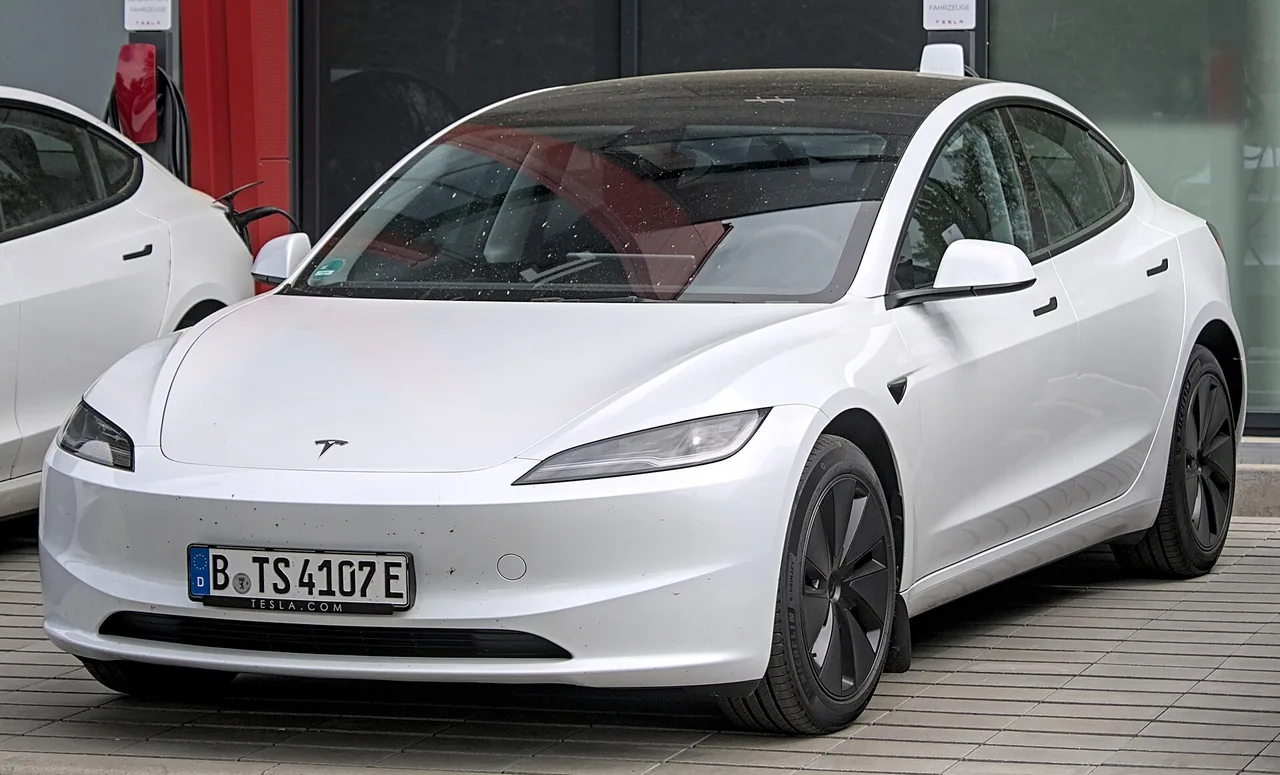

Compare the 2026 Tesla Model 3 trims
| Trim | TrimIndex score | Price new | Used price | Drive | EPA range | EPA energy use | 0–60 mph | DC fast-charge peak | Cargo |
|---|---|---|---|---|---|---|---|---|---|
| Premium AWD | 78 | from $47,490starting price | $45,796–$47,292Dealer asking (11 listings, Nov 2026) | AWD | 346 mi | 26.4 kWh/100 mi | 4.2 s | 250 kW | 21 cu ft |
| Premium RWD | 77 | from $42,490starting price | $43,152–$45,991Dealer asking (24 listings, Nov 2026) | RWD | 363 mi | 24.6 kWh/100 mi | 4.9 s | 250 kW | 21 cu ft |
| Standard RWD | 77 | from $36,990starting price | not stated | RWD | 321 mi | 24.3 kWh/100 mi | 5.8 s | 225 kW | not stated |
| Performance AWD | 74 | from $54,990starting price | $50,360–$52,709Dealer asking (28 listings, Nov 2026) | AWD | 314 mi | 30.2 kWh/100 mi | 2.9 s | 250 kW | 21 cu ft |
| Performance | 73 | from $54,990starting price | $50,360–$52,709Dealer asking (28 listings, Nov 2026) | AWD | 309 mi | 29.6 kWh/100 mi | 2.9 s | 250 kW | 21 cu ft |
Price new, 0–60 mph, dc fast-charge peak and cargo: Tesla, Inc., via the Internet Archive.
EPA range and EPA energy use: U.S. EPA and DOE, fueleconomy.gov.
Used price: the figure each trim page shows, with its source and the month collected.
TrimIndex score: out of 100.
Blank cells. Used price (1 row): no used guide price or active dealer asking prices on file yet; Cargo (1 row): no manufacturer cargo figure on file.
What differs between the 2026 Tesla Model 3 trims
Compared with the 2026 Model 3 Standard RWD, the Premium RWD has 42 more miles of EPA range, a 0–60 mph claim 0.9 s quicker and a DC fast-charge peak 25 kW higher, with a starting price $5,500 higher.
Compared with the 2026 Model 3 Premium RWD, the Premium AWD has all-wheel drive and a 0–60 mph claim 0.7 s quicker, with 17 fewer miles of EPA range and a starting price $5,000 higher.
Compared with the 2026 Model 3 Premium AWD, the Performance has a 0–60 mph claim 1.3 s quicker, with 37 fewer miles of EPA range, EPA energy use 3.2 kWh/100 mi higher and a starting price $7,500 higher.
Which 2026 Tesla Model 3 trim for what
- Longest EPA range: the 2026 Model 3 Premium RWD, 363 miles; next, the Premium AWD has 346 miles.
- Quickest 0–60 mph (manufacturer claims): the 2026 Model 3 Performance AWD and the Performance, 2.9 seconds each; next, the Premium AWD has 4.2 seconds.
NHTSA Recalls (1)
- NHTSA lists 1 recall campaign for the 2026 Tesla Model 3, filed Jun 2025.
Source: NHTSA recall filings for the 2026 Tesla Model 3, data through Nov 22, 2026. Why the VIN decides
- Filed Jun 2025
The fasteners attaching the seat back to the seat bottom may have been improperly tightened.
Campaign #25V410000 · Part (NHTSA): seats › critical fasteners- What happens:
- The seat may not properly restrain the occupant, increasing the risk of injury during a crash.
- The fix
- Free fix: work on the car by Tesla Service Tesla Service Centers will inspect and tighten or replace the seat assembly fasteners as necessary, free of charge.
- Covers:
- certain 2026 Model 3 and Model Y vehicles.
NHTSA lists 48 vehicles in this campaign (all models it covers).
Check VIN status at NHTSA.gov
NHTSA Investigations (3 open)
NHTSA has 3 open investigations covering the 2026 Tesla Model 3 (NHTSA investigations file of Nov 19, 2026).
What these kinds of action mean
- OpenEngineering analysis EA26002, opened Mar 18, 2026
FSD Collisions in Reduced Roadway Visibility Conditions
What NHTSA says it is examining: The Office of Defects Investigation (ODI) is opening this Engineering Analysis to evaluate Tesla’s Full Self Driving Beta and Full Self Driving (Supervised) (collectively, FSD) degradation detection system.
Model years NHTSA lists for this model in the action: 2017-2026.
- OpenPreliminary evaluation PE25012, opened Oct 7, 2025
Traffic safety violations while Full Self Driving ("FSD") is engaged
What NHTSA says it is examining: The Office of Defects Investigation (“ODI”) is opening this Preliminary Evaluation (PE) to assess the scope, frequency, and potential safety consequences of FSD executing driving maneuvers that constitute traffic safety violations.
Model years NHTSA lists for this model in the action: 2017-2026.
- OpenAudit query AQ25002, opened Aug 20, 2025
Compliance with Standing General Order 2021-01 Reporting Requirements
What NHTSA says it is examining: The Office of Defects Investigation (“ODI”) has identified numerous incident reports submitted by Tesla, Inc. (“Tesla”) in response to Standing General Order 2021-01 (the “SGO”), in which the reported crashes occurred several months or more before the dates of the reports.
Model years NHTSA lists for this model in the action: 2017-2026.
Source: NHTSA Office of Defects Investigation, investigations file, records through Nov 19, 2026; an open investigation is not a finding of a defect in the 2026 Tesla Model 3.
NHTSA Complaints (32 total)
NHTSA lists 1 recall campaign for the 2026 Tesla Model 3. Owners have filed 32 complaints with NHTSA; the largest part groups are Forward collision avoidance (8) and Steering (7). Of all 32, 11 report a crash and 2 an injury.
What owners report most
TrimIndex grouped the 32 complaints owners filed with NHTSA on the 2026 Tesla Model 3 (every trim; NHTSA files complaints by model year, not trim) into problem themes on Nov 16, 2026: 19 of them fall in the 4 themes below, 1 of them in two. 1 complaint was filed after that grouping and is not in a theme yet. How themes are made and checked
-
Self-driving steers off course
7 of 32 complaints (22%): With self-driving engaged, or with no steering input, the steering turns sharply on its own, sending the car toward medians, oncoming lanes, mailboxes or trees.
Owners reported a crash in 1 of the 7 complaints.
“the vehicle was driving in the left-turn lane and jerked over into the oncoming traffic”
NHTSA complaint 11768125 “The vehicle suddenly turned right without warning, struck a mailbox, broke the right-side mirror”
NHTSA complaint 11744965 -
Self-driving hits objects while parking
6 of 32 complaints (19%): While self-driving or Autopark reverses or maneuvers in garages and parking lots, the car strikes walls, pillars or parked vehicles without warning.
All 6 complaints report a crash.
“While reversing under FSD (Supervised), the vehicle's right rear corner collided with the corner of a stationary structural pillar in the parking garage.”
NHTSA complaint 11761157 “the FSD system misjudged the maneuver and the vehicle struck the wall of the garage”
NHTSA complaint 11733346 -
Car does not brake for obstacles
4 of 32 complaints (13%): The car fails to slow or warn for a vehicle or object ahead, and owners report striking cars, debris or other obstacles.
Owners reported a crash in 3 of the 4 complaints.
“The vehicle failed to initiate a timely braking sequence for a lead vehicle, resulting in an impact”
NHTSA complaint 11766182 “forward collision warning and automatic emergency breaking failed to work and are still currently an ongoing problem”
NHTSA complaint 11774044 -
Sudden braking with nothing ahead
3 of 32 complaints (9%): While driving with cruise control or self-driving engaged, the car brakes hard with no obstacle in the road, risking a rear-end collision.
“The vehicle routinely experiences sudden, severe, and unprovoked phantom braking events while driving at speed”
NHTSA complaint 11757060 “the car phantom braked for no reason going from 65 to 40 mph in a matter of seconds”
NHTSA complaint 11758118
32 complaints filed with NHTSA for the 2026 Tesla Model 3, between Jan 2026 and Nov 2026.
Parts named most often
| Part | Complaints | Share |
|---|---|---|
| Forward collision avoidance including automatic emergency braking (5) and adaptive cruise control (4) | 8 | 25% |
| Steering | 7 | 22% |
| Backup camera and rear sensors including warnings (5) | 5 | 16% |
| Lane keeping and blind-spot systems | 4 | 13% |
Share of all 32 complaints; one complaint can name more than one part, so shares add up to more than 100%. 7 complaints name no specific part.
Owners reported a crash in 11 and an injury in 2 of the 32 complaints. How these fields are filled
Source: NHTSA owner complaints filed on every 2026 Tesla Model 3 (NHTSA files them by model year, not trim), data through Nov 22, 2026.
The 25 most severe, then newest, of 32
- Severity 5 of 5.Body and structure Injury
While the vehicle was parked outdoors and the powered rear trunk lid was fully open, I leaned/bent forward into the trunk to retrieve an item.
Show the rest
The edge of the trunk lid near the taillight assembly made contact with my scalp, causing a laceration. The wound bled significantly。The trunk lid’s fully-open position, combined with the geometry/edge of the liftgate near the taillight, creates a head-strike hazard for an average-height adult bending into the cargo area. I am requesting that NHTSA investigate whether the powered trunk lid’s open-position geometry presents an unreasonable risk of head injury to vehicle occupants/owners during normal use.
NHTSA ODI #11745391 - Severity 5 of 5.Seat belts · Air bags Injury · Crash
I was involved in a rear-end collision while stopped at an intersection. The impact was significant. During the crash, the front airbags did not deploy.
Show the rest
More importantly, the seat belts in both front seats (driver and front passenger) failed to function as expected. Instead of tightening during impact, the seat belts appeared to loosen, allowing excessive forward movement of the occupants. As a result, I was thrown forward and struck the steering wheel. The lack of seat belt pretensioning raises serious concerns about a potential failure of the vehicle’s restraint system. This incident suggests that the seat belt pretensioners and/or related crash detection systems may not have activated properly under a significant collision event. I am concerned that this represents a safety defect that could increase the risk of injury in a crash. I request that this incident be investigated as a possible failure of the restraint system, including seat belt pretensioners and crash sensing mechanisms.
NHTSA ODI #11732730 - Severity 4 of 5.Air bags Crash
Suspected Airbag and Seatbelt Restraint-System Non-Deployment – 2026 Tesla Model 3 On XXX, at approximately 8:22 PM CST, our 2026 Tesla Model 3 was involved in a serious
Show the rest
single-vehicle accident on [XXX] westbound near the [XXX] exit in [XXX]. Our teenage daughter was driving and, while attempting to move toward the exit, reportedly struck a raised curb or divider that was difficult to see. The vehicle lost control, rotated, and collided with a highway guardrail. It became lodged against the guardrail structure, requiring towing personnel to free the vehicle. The vehicle sustained extensive damage and has been declared a total loss by Progressive Insurance. Fortunately, the driver escaped without apparent injury and was wearing her seatbelt. Despite the collision sequence, none of the vehicle's front, side, or curtain airbags deployed, nor did any seatbelt pretensioners activate. We obtained Tesla's official Event Data Recorder (EDR) report, raw EDR file, diagnostic logs, and camera recordings through Tesla's vehicle data request process. The EDR recorded two separate collision events approximately 0.7 seconds apart: - Event 1: Maximum resultant delta-V of 22 km/h, including lateral delta-V of -17 km/h. - Event 2: Maximum resultant delta-V of 21 km/h, including lateral delta-V of -21 km/h. For both events, the EDR explicitly reports "Deployment Not Commanded" for all airbags and seatbelt pretensioners. Both event records indicate that recording was completed, the restraint controller retained external power, and the airbag warning lamp was off prior to the recorded events. The vehicle diagnostic logs also recorded stability-control, traction-control, and automatic emergency braking fault indications during the developing accident sequence. We have not determined whether these faults resulted from the initial impact or represent an independent vehicle issue. INFORMATION REDACTED PURSUANT TO THE FREEDOM OF INFORMATION ACT (FOIA), 5 U.S.C. 552(B)(6)
NHTSA ODI #11778923 - Severity 4 of 5.Forward collision avoidance · Backup camera and rear sensors Crash
• forward collision warning and automatic emergency breaking failed to work and are still currently an ongoing problem and not functioning.
Show the rest
They are and have always Been enabled and can be inspected upon request. • my safety and those in my car and around me put at risk, by the system and software not functioning as intended and providing extra alertness and reaction to avoid collision. •the earliest service date I could get from Tesla is Nov 11. I have requested they preserve all data from dates Oct 20-27 2026 •no, my car has not been inspected yet. I have taken, Videos and have saved in car camera footage to show the ongoing defect. •no warnings lights or alerts prior to the incident. The problem first became apparent and clear Oct 26, 2026. I had FSD subscription that ended Oct 24, 2026 and the system warnings worked just fine during that time even while driving manually.
NHTSA ODI #11774044 - Severity 4 of 5.
On [XXX], the owner of a 2026 Tesla Model 3, left the garage of her house in the Tesla, and engaged the self-driving as the driver has done dozens of time in the past.
Show the rest
The car proceeded down the driveway, as it has always done in the past. However, in an instant, before the driver had time to react, the car went straight where the driveway curved, and the car hit a tree. The video from the Tesla cameras was saved and confirms that the car was in self driving mode, there was no driver intervention causing the accident, and the driver did not have time to react and prevent the accident. This accident was due to a failure of the Tesla self-driving. The encrypted dashcam video was copied from the USB drive named [XXX], from the folder [XXX], and then accessed by logging into [XXX] and dragging and dropping the video file into the dashcam app. That was saved to our PC as [XXX}. Since the saved video did not show the telemetry data, the video was loaded into [XXX] and saved with the telemetry information visible. Another video was saved capturing the whole ExportDash.cam interface. That has bars showing where the car was actively steering, braking, or applying acceleration (“gas pedal”). This shows that the car was actively steering a second before the collision, but then stopped. There was no time for the driver to react to the car's failure to properly steer. The video showing the car in self-driving mode and failing to navigate a turn on the driveway can be accessed at this youtube link: [XXX] INFORMATION REDACTED PURSUANT TO THE FREEDOM OF INFORMATION ACT (FOIA), 5 U.S.C. 552(B)(6)
NHTSA ODI #11771457 - Severity 4 of 5.Steering · Brakes at 450 miles
The contact owns a 2026 Tesla Model 3. The contact stated that while driving 65 MPH, the steering wheel independently turned to the left and the right.
Show the rest
The brake pedal was depressed; however, the vehicle failed to stop as intended. The contact stated that the vehicle was shaking and uncontrollable. The contact depressed the brake pedal down, unbuckled, the seat belt and opened the door and the vehicle came to a stop. The Police was contacted and arrived on the scene. The Police removed the vehicle from the roadway onto the shoulder of the road. The contact was advised to tow the vehicle to the dealer. The vehicle was towed to the dealer, but the diagnostic test report was not provided to the contact. The contact was informed that the information was reported to the engineers. The contact was advised to contact the NHTSA Hotline to report the failure. The failure mileage was approximately 450.
NHTSA ODI #11769327 - Severity 4 of 5.Steering
Car was in self-driving and struck a piece of concrete. The car was in hands free and was being monitored by me, the driver.
Show the rest
This obstruction was in the left side of the lane, about 2" tall, a foot wide and 6" across. I thought the car would see it and miss it but I was wrong, it clipped the concrete, punctured the tires side wall and damaged the tire rim. Tesls'a position was that I shouldn't have trusted the car abilities to avoid the obstruction. This is a basic for collision avoidance, and this system should not be allowed to run in self-drive without hands on the wheel unless the car is capable of avoidance of obstructions large enough to disable the car. This car is dangerous if it can operate at freeway speeds, hands free, and not have the ability to avoid obstructions that could cause it to be out of control.
NHTSA ODI #11769065 - Severity 4 of 5.
I had FSD (Full Self Driving) (Supervised) enabled. The navigation map and turn instructions (which appear on the right side of the touchscreen) indicated that my car was to make a
Show the rest
left turn at the upcoming intersection. After a full stop (at the Stop sign), my car crept out into the intersection, preparing to make an unprotected left turn (UPL) onto a major street (2 lanes of traffic in each direction). My car stopped (creeping out) when FSD “realized” that it was not yet safe to make the turn. My car, however had crept out far enough so that other vehicles coming from my left (in the right lane) had to swerve left to avoid hitting my car. There was another car behind my car so I could not “manually” back up (taking over from FSD) to remove the front of my car from the path of vehicles coming from my left. (If just one of the drivers of those vehicles coming from my left had been distracted, a likely collision with the front of my car could have occurred!) Eventually, there was a sufficient gap that I could (manually) make a right turn instead. Since this incident, I have had to preview the navigation map for every trip (before enabling FSD) and be prepared to route around any UPLs. After driving this car over 6500 miles (98 % on FSD), I have found FSD to be very safe overall! My only notable “risk of collision” event was the above-described UPL attempt! I have contacted Tesla Customer Service (via phone calls and online) on several occasions to report this hazard, but nothing has been done; (although on a live phone call, the representative acknowledged that others had also voiced my concern!) During a chat with Tesla’s “Grok” chatbot, Grok stated that a ‘Prefer Protected Turns’ option would be a low complexity addition that could coexist with continued UPL improvement”. Given this information, I think Tesla is being negligent by not adding the “Prefer Protected Turns” option to the vehicle user interface.
NHTSA ODI #11767200 - Severity 4 of 5.Crash
On Sept 22 2026at approximately 10:26 AM, my Tesla vehicle was involved in a low-speed, 5 -10 mph rear-end collision while the Full Self-Driving (FSD) Supervised automation system was engaged.
Show the rest
The vehicle failed to initiate a timely braking sequence for a lead vehicle, resulting in an impact. There was a sudden accleration right before the hit along with a sudden braking. Critical Safety Failures & Discrepancies: 1. Unwarned System Degradation: Following the incident, Tesla Service technicians reviewed my vehicle diagnostics and explicitly stated that internal logs flagged the FSD system performance as degraded or "suspect" since the beginning of September 2026. However, prior to the crash, the vehicle provided zero driver-facing warning messages, dashboard alerts, or mobile application notifications indicating that the automated safety systems were compromised or operating with a defect. 2. Telemetry Log Contradiction: Tesla's initial internal review claims that the vehicle's telemetry indicates an accelerator pedal override by the driver. I explicitly state that my foot was not on the accelerator pedal and no such override was physically made. There is an active sensor tracking or system logging discrepancy regarding driver inputs during this FSD failure. Evidence Maintained: I have preserved the complete, 4-angle synchronized TeslaCam dashcam footage of the incident on my computer as visual proof of the vehicle's un-accelerated 5 mph forward creep. Furthermore, I have submitted an official Data Privacy Request to Tesla to force the extraction of the raw, unredacted vehicle telemetry logs (DI_accelPedalPos) to legally dispute their pedal position claims. I am filing this report to assist NHTSA's active investigations into Tesla Autopilot/FSD traffic safety violations, specifically concerning automated braking failures and inaccurate driver-override telemetry classification.
NHTSA ODI #11766182 - Severity 4 of 5.Steering
I was using the self driving feature and all of a sudden the steering wheel went haywire and was spinning. the car was swerving very aggressively in between lanes. putting my foot on the brake and hands on the wheel did not do anything.
NHTSA ODI #11765239
Show 15 more complaints
- Severity 4 of 5.Speed control
When using Tesla's Full Self Driving (supervised) speed control is erratic and not subject to the driver's control, such as it would be when using adaptive cruise control.
Show the rest
As a result, the available speed modes (sloth, chill, standard, hurry and Mad Max) can cause the vehicle to dangerously exceed speed limits and at times to drive well below the posted speed limit, causing confusion and frustration to following drivers. There is no reason why the software cannot be changed to a safer method that would permit the driver to select the speed at which the car will travel, i.e. the speed limit, similar to adaptive cruise control found in most modern vehicles. When the operator of a vehicle is not in charge of the vehicle's speed, this is inherently dangerous.
NHTSA ODI #11763840 - Severity 4 of 5.
“The affected system was Tesla Full Self-Driving (FSD) (Supervised). FSD correctly selected the northbound left-turn lane but, while executing the left turn to westbound Pecan
Show the rest
Street, intermittently directed the vehicle into the eastbound lanes carrying opposing traffic.”
NHTSA ODI #11761111 - Severity 4 of 5.Backup camera and rear sensors · Steering Crash
On August 26, 2026, at approximately 8:56 AM, I entered a public parking garage in Washington, DC. Full Self-Driving (Supervised) was engaged and controlling the vehicle during a reversing maneuver.
Show the rest
I remained attentive to the vehicle's surroundings, including pedestrians and surrounding traffic. While reversing under FSD (Supervised), the vehicle's right rear corner collided with the corner of a stationary structural pillar in the parking garage. I did not command the vehicle to steer into the pillar. Upon becoming aware of the impact, I immediately applied the brake. There were no injuries. The collision resulted in damage to the right rear area of the vehicle. After the incident, I photographed and recorded the scene and vehicle damage and saved the available Tesla Dashcam footage. I also requested the vehicle data from Tesla. I am reporting this incident because the vehicle collided with a stationary structure while FSD (Supervised) was engaged and controlling the reversing maneuver. I do not know the specific technical cause of the incident. The vehicle and available recorded data can be made available for inspection upon request.
NHTSA ODI #11761157 - Severity 4 of 5.Steering · Suspension · Wheels
I purchased my car on 3/23/26. Since delivery I have noticed that the car bounces at low speeds 20-30mph and the steering wheel vibrates at highway speeds 65 - 80mph.
Show the rest
I have had the car to tesla service center 6 times since march. They have replaced all 4 tires, found and replaced a bent wheel (rim) on the passenger side. Then this last visit they replaced the passenger right wheel hub. They claim that when comparing it to the 1 other car available to road test my car was the same even though it still has the wheel vibration at highway speeds. they claim it falls within specs and is safe. I do not feel this is acceptable because they dont know what else to do. Now if I want them to check the car they say I must pay for any diagnosis and repairs if needed because they say they fixed the car. I do not feel safe driving at highway speeds as I am not sure what may happen which could endanger myself or passengers
NHTSA ODI #11755161 - Severity 4 of 5.Steering · Lane keeping and blind-spot systems Crash
Firstly, we were driving in the center lane on I-84W (three lanes), with Full Self Driving (FSD) at 55 mph.
Show the rest
The car veered left on it owns (under FSD) into the center median with the front driver side of the vehicle struck the metal beam guardrail causing both air bags to deploy on the driver and left rear passenger sides. The car continued to move forward in the next 4-6 seconds under FSD (approximately 10-20 feet range) and then came to a complete stop with flashing warning screen asking driver to take over the steering wheel immediately.
NHTSA ODI #11751300 - Severity 4 of 5.Lane keeping and blind-spot systems · Forward collision avoidance · Backup camera and rear sensors Crash
Incident involving my 2026 Tesla Model 3 equipped with HW4 hardware and the latest FSD (Supervised) software.
Show the rest
During a garage reverse maneuver performed under FSD supervision, the vehicle had sufficient time to assess the surrounding environment before initiating the maneuver. There were no pedestrians or moving obstacles nearby. An adjacent parked vehicle was present next to the intended reversing path. During the maneuver, the vehicle made initial contact with the adjacent vehicle. At no point did the vehicle provide any collision warning, alert, or indication that a collision had occurred. After the initial contact, the vehicle continued moving and a second impact occurred shortly afterward, resulting in additional damage. Immediately after the second impact, the driver intervened and took control of the vehicle to stop the maneuver, before further damage is caused. My main concerns are: 1. Why did FSD fail to identify the adjacent vehicle before the maneuver? 2. Why was no collision warning provided before or after the initial contact? 3. Why did the vehicle continue the reversing maneuver after the first impact instead of stopping till driver intervention? 4. What if is pediatrician who qualify ADA, children, elder was in the position of the adjacent vehicle, this failed sensing would cause imparable result. I would appreciate a technical review of this event and a detailed explanation of Tesla’s findings.
NHTSA ODI #11749677 - Severity 4 of 5.
Tesla Model 3 Full Self-Driving (Supervised) feature I was using Self-Driving mode in my Tesla Model 3 while traveling on [XXX].
Show the rest
The vehicle suddenly turned right without warning, struck a mailbox, broke the right-side mirror, and came to a complete stop. There were no vehicles in front of or behind my car at the time of the incident. INFORMATION REDACTED PURSUANT TO THE FREEDOM OF INFORMATION ACT (FOIA), 5 U.S.C. 552(B)(6)
NHTSA ODI #11744965 - Severity 4 of 5.Crash
We bought the new 2026 Tesla Model 3 and picked it up on 5/3/2026. The next date 5/4/2026, I was trying to drive it to work.
Show the rest
I got in the car and used the Tesla’s Full Self-Driving function and let it drive the car by itself. It started moving forward and tried to make a U turn. Since there was not enough space for it to make a U turn because there was a car parked on the sidewalk, so it stopped for a moment. But unfortunately, it continued to move forward and hit the car parked on the sidewalk. It supposedly backed up a little after the stop, but it didn’t detect the car parked on the sidewalk and still moved forward and hit the parked car. The Tesla's FSD is malfunctioning and caused my accident because there was such a big car in front and it didn't detect it and still hit it.
NHTSA ODI #11741020 - Severity 4 of 5.Forward collision avoidance · Lane keeping and blind-spot systems · Backup camera and rear sensors Crash
The vehicle's Full Self-Driving (FSD) system was actively controlling the vehicle while executing a reverse maneuver into a residential garage — a routine the system had
Show the rest
successfully performed on multiple prior occasions. During this session, the FSD system misjudged the maneuver and the vehicle struck the wall of the garage, causing damage. The failed component is the FSD software/sensor system. The vehicle is available for inspection upon request. Safety was put at risk because the system was in full control of vehicle movement in a confined space. The unexpected behavior did not provide sufficient time for the supervising driver to intervene before impact. No warning lamps or messages appeared prior to the failure. The system gave no indication it would behave differently from previous successful executions of the same maneuver. The incident has not yet been confirmed by a dealer or inspected by the manufacturer, though a vehicle incident data report has been requested from Tesla.
NHTSA ODI #11733346 - Severity 4 of 5.Backup camera and rear sensors · Steering · Speed control Crash
On February 5, 2026, at 12:21 PM PST, my 2026 Tesla Model 3 (Hardware 4) collided with a 5-inch wooden pillar while using the Autopark feature.
Show the rest
The system failed to provide any audio chimes or visual warnings prior to the impact. I officially requested the driving logs from Tesla to investigate the cause of this failure, but Tesla refused to provide any logs or data. Furthermore, Tesla Service Center technicians insisted there were no hardware defects, effectively confirming that the collision was caused by a software/algorithmic failure of the Tesla Vision system to detect a stationary vertical object. Despite Tesla’s claim that the vehicle is "operating as designed," the system's inability to recognize common infrastructure and its failure to warn the driver constitutes a severe safety risk. This defect must be investigated to make sure the safety of the Hardware 4 autonomous platform, as the lack of proximity alerts could lead to far more serious accidents involving pedestrians or other obstacles.
NHTSA ODI #11730303 - Severity 4 of 5.Body and structure · Forward collision avoidance Crash
The vehicle's FSD system malfunctioned and initiated an unintended reverse toward a closing garage door.
Show the rest
To prevent a total-loss event (the door crushing the glass roof and trunk), I was forced to perform an emergency manual takeover. Due to the vehicle's position caused by the malfunction, I had to maneuver through a confined space, resulting in the side-scrape. I am filing this as a malfunction claim because the damage was a direct consequence of the car's autonomous failure
NHTSA ODI #11711494 - Severity 3 of 5.Driver-assist system · Visibility (wipers, glass, defroster) at 57,525 miles
The contact owns a 2026 Tesla Model 3. The contact stated that while driving at 25 MPH in Full Self-Driving mode, an animal entered the roadway, causing the vehicle to hesitate
Show the rest
before the autonomous braking system independently engaged with severe abnormal jerking. The contact stated that the bumper detached; however, the vehicle remained drivable. The dealer was contacted. The vehicle was taken to the dealer, where the contact was informed that paperwork authorization was required prior to diagnostic testing. The contact stated that while driving at night, the auto-dimming rearview and side mirrors failed to dim properly, requiring the driver to wear sunglasses at night. The manufacturer was notified of the failures and informed the contact that diagnostic testing required an out-of-pocket fee. The failure mileage was approximately 57,525.
NHTSA ODI #11775622 - Severity 3 of 5.Driver-assist system at 9,999 miles
The contact owns a 2026 Tesla Model 3. The contact stated that while driving 35 MPH with the Autonomous Self-Driving feature enabled, the vehicle was driving in the left-turn lane
Show the rest
and jerked over into the oncoming traffic. The failure mileage was approximately 9,999.
NHTSA ODI #11768125 - Severity 3 of 5.Forward collision avoidance
My Tesla was operating under FSD at 9pm on a dark country road. I was traveling at 45mph and vehicle randomly applied hard emergency braking and I had to take over.
Show the rest
It appeared that the vehicle may have been responding to a dark oil stain or possibly a mailbox. Had another vehicle been closely behind me, there would’ve been a collision.
NHTSA ODI #11762324 - Severity 3 of 5.Forward collision avoidance
Driving on a 2 lane road going 65 with Traffic-Aware Cruise Control enabled at 65 MPH with a car behind and no car in front of us.
Show the rest
the car phantom braked for no reason going from 65 to 40 mph in a matter of seconds. Luckily we were able to accelerate to avoid being rear ended
NHTSA ODI #11758118
NHTSA 5-Star Crash-Test Ratings
Each 2026 Tesla Model 3 trim matches more than one variant NHTSA tested, so no crash-test rating is shown.
Forum posts that mention this car
3 forum posts are on file for this model year. The 3 posts shown were retrieved May 2026.
"New Tesla owner: few questions Hey all, Earlier this month I picked up a Tesla Model 3 RWD on a PCH deal-this will be my first EV and it felt like great value. Had a couple of questions: What real-world range are people getting after delivery? How much does it drop in winter? What charger would you recommend? And can anyone suggest a good installation company? Cheers! Edit: it’s M3 RWD"
"I’m writing this post to share a troubling experience I recently had with my Tesla Model 3 — an experience that raises serious questions about vehicle safety, accountability, and consumer responsibility in the age of software-defined cars. A few days ago, I was prompted by Tesla to install a routine software update. This is something Tesla owners are used to: updates are presented as improvements, bug fixes, and sometimes even safety enhancements. I had no warnings, no alerts, and no indication that anything was wrong with my car prior to the update. Everything appeared to be functioning…"
"I’ve had a Model 3 RWD for 2 years and don’t look at range anymore. I changed my readout to %. I know my commute to work takes 10% in the spring and summer and maybe 12% in the winter (possibly more if I preheat it unplugged. ) Honestly after a few months range won’t matter even on longer journeys, just let the car figure it out"
What changed from 2025
TrimIndex lists 2 configurations for 2026 that match no 2025 configuration by name, by drive, EPA range and battery, or by name and rated horsepower: Standard RWD and Performance.
It lists a configuration for 2025 with no such match for 2026: Long Range RWD-I (19in wheels).
From 2025 to 2026, for the same configurations: the Performance AWD: EPA range 298 to 314 mi.
NHTSA lists 1 recall campaign for the 2026 Tesla Model 3 and 3 for the 2025; none covers both.
2026 Tesla Model 3 frequently asked questions
What trims does the 2026 Tesla Model 3 come in?
TrimIndex lists 5 configurations of the 2026 Tesla Model 3, as EPA names them: Premium AWD, Premium RWD, Standard RWD, Performance AWD and Performance.
What is the difference between the 2026 Tesla Model 3 Standard RWD and Performance?
Compared with the 2026 Model 3 Standard RWD, the Performance has all-wheel drive, a 0–60 mph claim 2.9 s quicker and a DC fast-charge peak 25 kW higher, with 12 fewer miles of EPA range, EPA energy use 5.3 kWh/100 mi higher and a starting price $18,000 higher.
What is the range of the 2026 Tesla Model 3?
EPA rates the 2026 Tesla Model 3 at 309 to 363 miles, depending on the configuration: 363 for the Premium RWD, 346 for the Premium AWD, 321 for the Standard RWD, 314 for the Performance AWD and 309 for the Performance.
Are there recalls on the 2026 Tesla Model 3?
Yes. NHTSA lists 1 recall campaign for the 2026 Tesla Model 3 in records through Nov 22, 2026: 25V410000 (seats).
What problems do owners report on the 2026 Tesla Model 3?
Of the 32 complaints owners filed with NHTSA about the 2026 Tesla Model 3 in records through Nov 22, 2026, the three largest problem themes are: Self-driving steers off course (7); Self-driving hits objects while parking (6); and Car does not brake for obstacles (4). 19 of them fall in the 4 themes TrimIndex grouped from their narratives on Nov 16, 2026.