All Vehicles
2024 Tesla Model 3 Trims Compared: Range, Price & Problems
Updated
2024 Tesla Model 3: 5 trims compared. 272–363 mi EPA range, 5 recalls, 224 NHTSA complaints, top problem: Turn signal buttons stick or fail (33% of complaints).
Data:NHTSA through
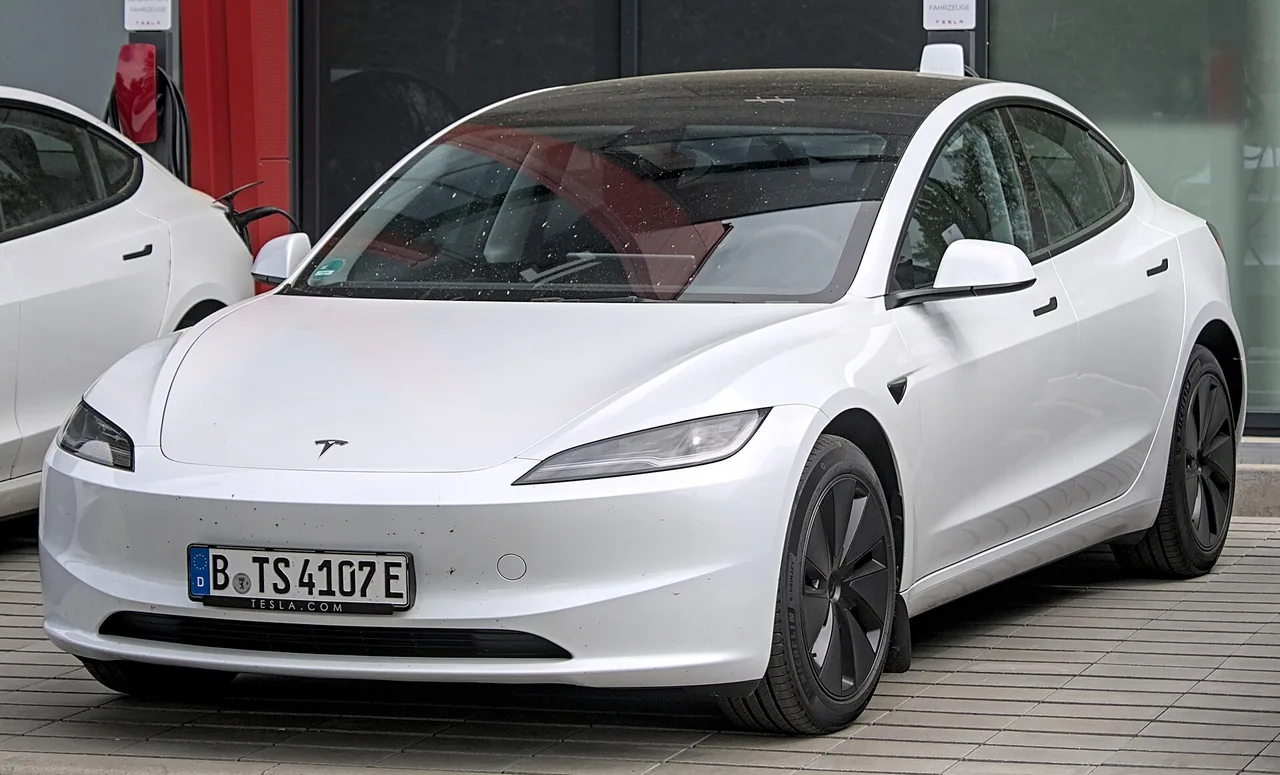

Compare the 2024 Tesla Model 3 trims
| Trim | TrimIndex score | Price new | Drive | EPA range | EPA energy use | 0–60 mph | Cargo | Georgia tax value (2026 manual) |
|---|---|---|---|---|---|---|---|---|
| Long Range AWD | 73 | not stated | AWD | 342 mi | 25.8 kWh/100 mi | 4.2 s | 21 cu ft | $23,725–$29,350 (2 values) |
| Long Range RWD | 72 | from $42,490starting price | RWD | 363 mi | 24.6 kWh/100 mi | 4.9 s | 21 cu ft | $23,725–$29,350 (2 values) |
| Long Range AWD-E | 70 | not stated | AWD | 341 mi | 26.4 kWh/100 mi | not stated | 21 cu ft | $23,725–$29,350 (2 values) |
| Performance AWD | 69 | from $53,990starting price | AWD | 303 mi | 30.1 kWh/100 mi | 2.9 s | 21 cu ft | $41,250 |
| RWD | 68 | from $38,990starting price | RWD | 272 mi | 25.4 kWh/100 mi | 5.8 s | 21 cu ft | $23,725–$29,350 (3 values) |
Used price for the 2024 Model 3 model year: $29,546–$46,354 (J.D. Power, Nov 2026), one figure J.D. Power gives for the whole model year, not a price for each trim.
Price new, 0–60 mph and cargo: Tesla, Inc., via the Internet Archive.
EPA range and EPA energy use: U.S. EPA and DOE, fueleconomy.gov.
Georgia tax value: the Georgia Department of Revenue's title-tax assessment value for each trim in its 2026 manual, one edition for every row; a state tax figure, not a sale price or market value.
TrimIndex score: out of 100.
Blank cells. Price new (2 rows): no manufacturer price for that trim on file; 0–60 mph (1 row): no manufacturer 0–60 mph claim on file.
What differs between the 2024 Tesla Model 3 trims
Compared with the 2024 Model 3 RWD, the Long Range RWD has 91 more miles of EPA range and a 0–60 mph claim 0.9 s quicker, with a starting price $3,500 higher.
Compared with the 2024 Model 3 Long Range RWD, the Performance AWD has all-wheel drive and a 0–60 mph claim 2.0 s quicker, with 60 fewer miles of EPA range, EPA energy use 5.5 kWh/100 mi higher and a starting price $11,500 higher.
Compared with the 2024 Model 3 Performance AWD, the Long Range AWD-E has 38 more miles of EPA range and EPA energy use 3.7 kWh/100 mi lower.
Which 2024 Tesla Model 3 trim for what
- Longest EPA range: the 2024 Model 3 Long Range RWD, 363 miles; next, the Long Range AWD has 342 miles.
- Quickest 0–60 mph (manufacturer claims) (of the 4 trims with a figure on file): the 2024 Model 3 Performance AWD, 2.9 seconds; next, the Long Range AWD has 4.2 seconds.
- Lowest used price on file (of the 2 trims with a figure on file): the 2024 Model 3 RWD, $33,800; next, the Performance AWD has $42,700.
NHTSA Recalls (5)
- NHTSA lists 5 recall campaigns for the 2024 Tesla Model 3, filed between Apr 2024 and Jul 2026.
- How they are fixed, per the filings: 2 by a software update (all can install over the air), 1 by work on the car, 1 by both a software update and work on the car and 1 by a manufacturer buyback.
Source: NHTSA recall filings for the 2024 Tesla Model 3, data through Nov 22, 2026. Why the VIN decides
- Filed Jul 2026
The vehicles were originally built for a foreign market and do not have knee air bags, may not be equipped with certain interior safety countermeasures, and may not have been tested for bumper impact resistance procedures.
Campaign #26V445000 · Part (NHTSA): air bags › knee bolster- What happens:
- A noncompliant vehicle may have reduced occupant protections, increasing the risk of injury during a crash.
- The fix
- Manufacturer buyback offered Tesla will repurchase noncompliant vehicles currently registered in the United States, free of charge.
- Covers:
- certain 2026 Model Y and 2024 Model 3 vehicles.
- Federal standard not met:
- 208 (Occupant Crash Protection), 201 (Occupant Protection in Interior Impact) and Part 581 (Bumper Standards).
NHTSA lists 15 vehicles in this campaign (all models it covers).
Check VIN status at NHTSA.gov - Filed Jan 2025
The computer circuit board may short, resulting in the loss of the rearview camera image.
Campaign #25V002000 · Part (NHTSA): back over prevention › software- What happens:
- A rearview camera that does not display an image reduces the driver's rear view, increasing the risk of a crash.
- The fix
- Free fix: software update (it can install over the air) plus work on the car Tesla released an over-the-air (OTA) software update, free of charge. Tesla will also identify any vehicles that experienced a circuit board failure, or stress that may lead to a circuit board failure, and replace the affected computers, free of charge.
- Covers:
- certain 2024-2025 Model 3, Model S, 2023-2025 Model X, and Model Y vehicles.
- Federal standard not met:
- 111 (Rear Visibility).
NHTSA lists 239,382 vehicles in this campaign (all models it covers).
Check VIN status at NHTSA.gov - Filed Dec 2024
The tire pressure monitoring system (TPMS) warning light may not remain illuminated between drive cycles, failing to warn the driver of low tire pressure.
Campaign #24V935000 · Part (NHTSA): tires › pressure monitoring and regulating systems- What happens:
- Driving with improperly inflated tires increases the risk of a crash.
- The fix
- Free fix: software update over the air Tesla released an over-the-air (OTA) software update, free of charge.
- Covers:
- certain 2024 Cybertruck, 2017-2025 Model 3, and 2020-2025 Model Y vehicles.
- Federal standard not met:
- 138 (Tire Pressure Monitoring Systems).
NHTSA lists 696,281 vehicles in this campaign (all models it covers).
Check VIN status at NHTSA.gov - Filed Jul 2024
The hood latch assembly may fail to detect an unlatched hood condition after the hood has been opened.
Campaign #24V554000 · Part (NHTSA): electrical system › software- What happens:
- An unlatched hood can fully open, obstructing the driver's view and increasing the risk of a crash.
- The fix
- Free fix: software update over the air Tesla has released an over-the-air (OTA) software update, free of charge.
- Covers:
- certain 2021-2024 Model 3, Model S, Model X, and 2020-2024 Model Y vehicles.
NHTSA lists 1,849,638 vehicles in this campaign (all models it covers).
Check VIN status at NHTSA.gov - Filed Apr 2024
The driver seat side air bag module was assembled without a deflector that directs gas flow during deployment.
Campaign #24V284000 · Part (NHTSA): air bags › side/window › thorax- What happens:
- Without a deflector, the air bag may deploy improperly, increasing the risk of injury during a crash.
- The fix
- Free fix: work on the car by Tesla Service Tesla service replaced the side air bag, free of charge. The affected vehicle was repaired April 12, 2024.
- Covers:
- one 2024 Model 3 vehicle.
NHTSA lists 1 vehicle in this campaign.
Check VIN status at NHTSA.gov
NHTSA Investigations (4 open, 3 closed)
NHTSA has 4 open investigations covering the 2024 Tesla Model 3 (NHTSA investigations file of Nov 19, 2026).
What these kinds of action mean
- OpenEngineering analysis EA26002, opened Mar 18, 2026
FSD Collisions in Reduced Roadway Visibility Conditions
What NHTSA says it is examining: The Office of Defects Investigation (ODI) is opening this Engineering Analysis to evaluate Tesla’s Full Self Driving Beta and Full Self Driving (Supervised) (collectively, FSD) degradation detection system.
Model years NHTSA lists for this model in the action: 2017-2026.
- OpenPreliminary evaluation PE25012, opened Oct 7, 2025
Traffic safety violations while Full Self Driving ("FSD") is engaged
What NHTSA says it is examining: The Office of Defects Investigation (“ODI”) is opening this Preliminary Evaluation (PE) to assess the scope, frequency, and potential safety consequences of FSD executing driving maneuvers that constitute traffic safety violations.
Model years NHTSA lists for this model in the action: 2017-2026.
- OpenAudit query AQ25002, opened Aug 20, 2025
Compliance with Standing General Order 2021-01 Reporting Requirements
What NHTSA says it is examining: The Office of Defects Investigation (“ODI”) has identified numerous incident reports submitted by Tesla, Inc. (“Tesla”) in response to Standing General Order 2021-01 (the “SGO”), in which the reported crashes occurred several months or more before the dates of the reports.
Model years NHTSA lists for this model in the action: 2017-2026.
- OpenRecall query RQ24009, opened Apr 25, 2024
Recall 23V838 Remedy Effectiveness
What NHTSA says it is examining: The Office of Defects Investigation (ODI) is opening a Recall Query to assess the remedy adequacy of Recall 23V838.
Model years NHTSA lists for this model in the action: 2017-2024.
NHTSA has closed 3 actions on the 2024 Tesla Model 3: 3 preliminary evaluations, opened between Feb 2022 and Jan 2025.
Show the 3 closed actions
- Actually Smart Summon sessions resulting in low-speed impactsPreliminary evaluation PE24033, opened Jan 6, 2025, closed Apr 3, 2026
- FSD Collisions in Reduced Roadway Visibility ConditionsPreliminary evaluation PE24031, opened Oct 17, 2024, closed Mar 18, 2026
- Unexpected Brake ActivationPreliminary evaluation PE22002, opened Feb 16, 2022, closed Jun 29, 2026
Source: NHTSA Office of Defects Investigation, investigations file, records through Nov 19, 2026; an open investigation is not a finding of a defect in the 2024 Tesla Model 3.
NHTSA Complaints (224 total)
NHTSA lists 5 recall campaigns for the 2024 Tesla Model 3; 3 of them name an over-the-air software update as the fix. Owners have filed 224 complaints with NHTSA; the largest part groups are Forward collision avoidance (49) and Electrical system (other) (41). Of all 224, 28 report a crash, 1 a fire and 13 an injury.
What owners report most
TrimIndex grouped the 224 complaints owners filed with NHTSA on the 2024 Tesla Model 3 (every trim; NHTSA files complaints by model year, not trim) into problem themes on Nov 16, 2026: 167 of them fall in the 16 themes below, 14 of them in two. How themes are made and checked
-
Sudden braking with nothing ahead
18 of 224 complaints (8%): With cruise control or driver assistance active, the car brakes hard or drops its speed abruptly when no hazard is present.
Owners reported an injury in 1 of the 18 complaints.
“with driver set cruise control, the phantom braking was so severe that it took me down from 75 to around 15”
NHTSA complaint 11623240 “the speed will drop around 15 miles of speed immediately. it also will slow on rolling hills and random long turns on cruise control.”
NHTSA complaint 11632959 -
Horn muffled or silent in rain
15 of 224 complaints (7%): The horn becomes very quiet, muffled or inaudible when the car is wet from rain, snow or washing, and returns to normal when it dries.
“The vehicle's horn becomes completely inaudible during heavy rain, particularly during downpours.”
NHTSA complaint 11726987 “When driving in the rain or in wet conditions, the car’s horn cannot be heard at all.”
NHTSA complaint 11666208 -
Self-driving steers off course
11 of 224 complaints (5%): With Full Self-Driving or Autopilot engaged, the car turns or veers unexpectedly into barriers, wrong-way lanes, other vehicles or off the road.
Owners reported a crash in 6 and an injury in 3 of the 11 complaints.
“while driving with Tesla Autopilot engaged, the vehicle initiated an unexpected and improper right turn at the intersection of”
NHTSA complaint 11655731 “The car would veer off the road when flasing lights appeared and would jerk suddenly for no reason”
NHTSA complaint 11712202 -
Unexpected acceleration
7 of 224 complaints (3%): The car accelerates on its own, including from a stop at a red light or while parking or turning, in some cases into a collision.
Owners reported a crash in 3 and an injury in 2 of the 7 complaints.
“Full Self Drive abruptly tried to accelerate into the intersection while sitting at a stop light.”
NHTSA complaint 11634787 “While approaching the driveway the car accidentally accelerated on its own, cause a collision.”
NHTSA complaint 11693178
Show the other 10 themes
-
Loss of drive power while driving
6 of 224 complaints (3%): The car loses propulsion or shuts down while moving, sometimes with a rear motor warning, and stops or coasts to a halt.
“The car barely gave me 10 seconds before it lost power, locked up and wouldn’t move.”
NHTSA complaint 11613166 -
Turn signal shows wrong direction
6 of 224 complaints (3%): Pressing a turn signal button lights the signal for the opposite direction.
“Turn signal indicator buttons stick and/or activate the opposite turn indicator of the button pressed.”
NHTSA complaint 11697082 -
No warning when backing into objects
5 of 224 complaints (2%): While reversing or self-parking, the car strikes objects without an audible warning or automatic braking.
Owners reported a crash in 4 of the 5 complaints.
“While using Tesla’s Auto Park feature, the vehicle struck an obstacle without detecting it before or after impact.”
NHTSA complaint 11680594 -
Steering becomes stiff or heavy
5 of 224 complaints (2%): Power steering assist drops out and the steering wheel becomes very hard to turn, sometimes with a steering assist reduced message.
Owners reported a crash in 2 of the 5 complaints.
“the steering wheel was extremely hard and difficult to move. A message popped on my screen saying "Steering assist reduced”
NHTSA complaint 11605649 -
Feedback prompt covers screen
4 of 224 complaints (2%): After the driver takes over from Full Self-Driving, a feedback survey appears on the touchscreen and stays over controls until answered.
Owners reported a crash in 1 of the 4 complaints.
“a feedback notification pops up on the bottom left corner of the infotainment screen that fully blocks the media control panel”
NHTSA complaint 11756598 -
No way to cap self-driving speed
4 of 224 complaints (2%): After a Full Self-Driving update, the driver can no longer set a maximum speed and the car drives above posted limits.
“this new update no longer allows you to set your speed while using FSD”
NHTSA complaint 11699081 -
Camera blocked or fogged warnings
3 of 224 complaints (1%): Camera blockage warnings appear, including fog inside the front camera housing, and driver assistance features switch off.
“The front camera that is known as Tesla vision consistently stays fogged up.”
NHTSA complaint 11638547 -
Loss of control on wet roads
3 of 224 complaints (1%): On wet or rainy roads the car slides sideways or spins and the driver cannot regain control.
Owners reported a crash in 2 of the 3 complaints.
“my vehicle suddenly moved sideways and began to lose control.”
NHTSA complaint 11773585 -
Screen and cameras stop working
3 of 224 complaints (1%): The touchscreen freezes or the car loses its camera views, with backup camera, parking aids and driver assistance unavailable.
“Entire screen froze. FSD stopped working completely. The system GPS stopped working, auto wipers stopped working, auto park, anything related to the cameras stopped working”
NHTSA complaint 11631537 -
Vibration or shaking at speed
3 of 224 complaints (1%): The car and steering wheel shake or vibrate while driving, more at highway speed, and service visits did not resolve it.
“There is a vibration felt in the steering and throughout the entire car when driving both at low and high speed.”
NHTSA complaint 11635441
224 complaints filed with NHTSA for the 2024 Tesla Model 3, between Mar 2024 and Nov 2026.
Parts named most often
| Part | Complaints | Share |
|---|---|---|
| Forward collision avoidance including adaptive cruise control (32) and automatic emergency braking (18) | 49 | 22% |
| Electrical system (other) | 41 | 18% |
| Steering | 40 | 18% |
| Exterior lights | 27 | 12% |
| Speed control | 21 | 9% |
Share of all 224 complaints; one complaint can name more than one part, so shares add up to more than 100%. 49 complaints name no specific part.
Owners reported a crash in 28, a fire in 1 and an injury in 13 of the 224 complaints. How these fields are filled
Median odometer reading when the problem happened: 14,408 miles, from the 8 complaints that give one.
Complaints by year filed
| Year filed | Complaints |
|---|---|
| 2024 | 96 |
| 2025 | 83 |
| 2026 (to Nov 22) | 45 |
Source: NHTSA owner complaints filed on every 2024 Tesla Model 3 (NHTSA files them by model year, not trim), data through Nov 22, 2026.
The 25 most severe, then newest, of 224
- Severity 5 of 5.Body and structure · Electrical system (other) Injury · Fire · Crash
Client left the road and the vehicle hit a tree by the roadside. The vehicle caught fire and client was incapacitated and unable to operate the door handle from the inside or unlock the doors.
Show the rest
Bystanders attempted to open all four doors from the outside, but they were all locked. Bystanders noted that the handles themselves were functional and believe it was an electrical issue keeping the doors locked. Bystanders broke the windows and attempted to open the doors from the inside, but they were unable to access the emergency door release because the driver door panel was on fire in proximity to the emergency release. Bystanders began mechanically disassembling the door to get him out and he was eventually extracted by the fire rescue team. The inability to open the door delayed our client being extricated from the vehicle and as a result he suffered severe injuries, including the loss of both legs, due to severe burns. The vehicle is currently being held by Copart Miami South and is available for inspection. So far, it has been inspected by the insurance company and our experts. Warning lamps, symptoms, etc.: UNKNOWN. Vehicle is badly damaged, so we are not able to recreate/confirm the problem at this time.
NHTSA ODI #11761374 - Severity 5 of 5.Injury
I am reporting a recurring safety defect regarding the exterior door handle assembly on my 2024 Tesla Model 3.
Show the rest
On 6/15/26, the exterior door handle of caused a finger entrapment incident, resulting in an avulsion of a gel nail and significant trauma to the nail bed. The artificial nail remains trapped within the door assembly. Despite seeking service at the local Tesla Service Center, technicians failed to retrieve the object or address the entrapment hazard. This design creates a severe pinch-point hazard that poses an ongoing risk of injury to all users Despite bringing the vehicle in for service on 6/18/26 to have the hazardous object removed, the service center performed only a cursory visual inspection and refused to disassemble the handle, leaving the entrapment hazard in place. The design of the door handle creates a clear pinch-point/entrapment zone that poses a safety risk to all occupants. I am reporting this to document both the design defect and the failure of the manufacturer to address the resulting safety hazard upon request.
NHTSA ODI #11745062 - Severity 5 of 5.Forward collision avoidance Injury · Crash
I was using actual smart summon to get my vehicle out of my garage. While standing behind the vehicle, it indicated that the car was in drive with no reversing lights on.
Show the rest
The vehicle then rapidly lurches backwards, striking me and a freezer. After reviewing the dashcam footage the vehicle stated it was in drive and never once activated its reverse lights, even when they was objects and a human behind the car, still reversed at a high rate of speed.
NHTSA ODI #11739971 - Severity 5 of 5.Forward collision avoidance Injury
On March 21, 2026, the vehicle’s Automatic Emergency Braking (AEB) and Traffic-Aware Cruise Control (TACC), suffered a severe "phantom braking" failure.
Show the rest
While driving, the vehicle engaged in a violent, full-force emergency brake application without any external hazard or driver input. This unprompted deceleration caused the seatbelt to exert extreme pressure and trauma on my abdomen. As I was [XXX] pregnant, this abrupt stop was medically treated as a high-force accident. The trauma caused pregnancy abnormalities, requiring a 20-hour hospital admission for observation and fetal monitoring. I contacted Tesla customer service multiple times. Initially, I was told a service check was necessary, but the Service Center stated they could not provide assistance for "automatic behavior" issues. A corporate representative (Angel) admitted the vehicle should have been flagged for a formal medical claim and instructed me not to visit the service center. Despite this, I took the vehicle to the Service Center on April 15, 2026. Technicians confirmed they had no findings or solutions regarding the phantom braking event. No warning lamps, audible alerts, or system messages appeared prior to the failure. Upon requesting the vehicle data logs for the date of the incident, I noticed that the specific timeframe of the event was "missing" from the record. The manufacturer cited a VIN-matching error as the cause for the data gap. On April 20, 2026, Tesla corporate denied that a claim had ever been filed and stated they would not take responsibility for injuries related to pregnancy or a fetus, claiming these do not meet their internal threshold for medical injury. The vehicle remains available for inspection. INFORMATION REDACTED PURSUANT TO THE FREEDOM OF INFORMATION ACT (FOIA), 5 U.S.C. 552(B)(6)
NHTSA ODI #11732498 - Severity 5 of 5.Steering · Lane keeping and blind-spot systems Injury · Crash
I purchased a 2024 Tesla Model 3 a little over a year ago. Recently, and after an update, myself, and other drivers in my life, noticed the self-driving feature was malfunctioning
Show the rest
- to the point I used the audio reporting feature to report this problem twice to Tesla. The car would veer off the road when flasing lights appeared and would jerk suddenly for no reason when it thought there was a obstruction in the road (sticks, plastic bags, etc.). Last month this malfunction has caused an accident, and my car has been totaled, my insurance will not cover it, and I have been advised by two separate attorneys to sue. This has been litigated in court with lawsuits against Tesla (See Benavides v. Tesla; see also IN RE: TESLA ADVANCED DRIVER ASSISTANCE SYSTEMS LITIGATION). I had notified Telsa twice of this issue, the car left the lane and did not notice a concrete barrier on the left side going north on I-95 in or around Broward County. To my knowledge no one has inspected the car. I was not warned that this car would cause an accident, the problem first appeared when I reported the issue using the voice reporting feature around November 2025. It is currently located at a tow facility in Broward County, FL and can be inspected there.
NHTSA ODI #11712202 - Severity 5 of 5.Drive unit · Forward collision avoidance Injury · Crash
Possible unintended acceleration incident While approaching the driveway the car accidentally accelerated on its own, cause a collision.
Show the rest
We request that Tesla preserve all vehicle logs and telemetry data for safety investigation. VIN: [XXX] INFORMATION REDACTED PURSUANT TO THE FREEDOM OF INFORMATION ACT (FOIA), 5 U.S.C. 552(B)(6)
NHTSA ODI #11693178 - Severity 5 of 5.Air bags · Electrical system (other) · Forward collision avoidance Injury · Crash
My Model 3 was T-boned in an intersection, hitting both the front and rear doors, as a result of a vehicle running a red light. The driver that hit us was speeding and didn’t hit brakes.
Show the rest
The impact pushed the Tesla almost in a complete 360 on an adjacent street where the driver side of the car jumped a curb and stopped after hitting a pole slightly on the driver side. Red light etc all substantiated by police report. Airbags deployed on the passenger side from the seat and upper panels. Front airbags failed on both sides. There was also a delayed airbag deployment from the back of the driver seat that only ripped the seat but never deployed fully. The smell of fire / burning and debris was all that happened from the driver seat. I requested a crash report from Tesla which outlines the speed and airbag deployment. The report says that knee level airbags deployed but they never did. I crossed referenced crash test speed data and various complaints about Tesla airbags. The data reviewed seems to indicate that I experienced failed equipment which is currently under review. I’ve also reviewed various sources of information about 7 2024 Model 3 driver side airbag known issues, where Tesla only recalled one vehicle. I’ve been told that other recalls for this issue are u see evaluation and to keep checking my vin for details. I share this because serious injuries can be caused by this failure, especially when hit by an SUV. The vehicle was totaled, not drivable and towed from the scene. Please be cautious if you have a 2024 model 3 and demand that Tesla look into the airbag manufacturing issues promptly and issue relative recalls. The collision alert also failed.
NHTSA ODI #11692742 - Severity 5 of 5.Brakes · Steering Injury · Crash at 13,816 miles
The contact owned a 2024 Tesla Model 3. The contact stated that while her daughter was driving 65 MPH, and was driving on the exit ramp, the brake pedal was depressed, but the
Show the rest
vehicle failed to respond. The contact's daughter stated that the brake pedal felt hard. The contact's daughter used the emergency brake but failed to function as intended. In addition, the steering wheel locked. The contact's daughter, to avoid hitting the vehicle in front, was able to pull over to the side of the road using excessive force on the steering wheel, and hit a tree, where it came to a stop. The driver-side air bags and side curtain air bags deployed. Three of the contact’s daughters were taken to the hospital by ambulance. The contact's daughter suffered three fractures in her left eye, three fingers on her left hand were fractured, and the seat belt left a burn on her neck. The contact's three other daughters were passengers inside the vehicle. The daughter who sat in the front passenger seat suffered hematomas on the abdomen and had bruises on her face, legs, and arms. The daughter who sat behind the driver in the back suffered injuries, scratches on the legs, the glass debris from the window caused cuts on the head, and had bruises on her chest and back. The daughter who sat in the front passenger seat was not seriously injured. A police report was filed. The vehicle was towed to the towing yard. The vehicle was not diagnosed or repaired. The insurance company was notified. The contact filed a claim, and it was denied. The manufacturer was notified of the failure but denied assistance. The failure mileage was 13,816.
NHTSA ODI #11683464 - Severity 5 of 5.Electrical system (other) · Air bags Injury · Crash at 9,611 miles
The contact owned a 2024 Tesla Model 3. The contact stated that while driving 65 MPH on the freeway, the central touchscreen interface displayed a blank screen.
Show the rest
The contact mentioned the autopilot engaged independently, causing the vehicle to merge to the left and collide with another vehicle in front of the driver's side. No air bags deployed. The contact stated that she sustained injuries on the left side of her wrist and arms, and a bruise on her right arm near her elbow and upper right thigh swollen on her neck, shoulders, and full back and both hands are swollen. Medical attention was required. A police report was filed. The vehicle was towed to a collision garage. The contact stated that the vehicle was taken to a dealer to be diagnosed; however, the dealer diagnosed and informed the contact to speak with a lemon law expert. The vehicle was deemed a total loss. The contact stated the vehicle has been in the dealer over nine times. The manufacturer was notified and opened a case, then closed it. The approximate failure mileage was 9,611.
NHTSA ODI #11682153 - Severity 5 of 5.Electrical system (other) · Drive unit · Speed control Injury · Crash
I was in a drive thru of a fast food restaurant and the car rapidly accelerated on its own and crashed into a wall. The air bags deployed and we were injured.
Show the rest
We also narrowly missed hitting a pedestrian. The car hasn’t been inspected by anyone yet, however it is available if someone wants to inspect it.
NHTSA ODI #11668314
Show 15 more complaints
- Severity 5 of 5.Forward collision avoidance Injury · Crash
Vehicle: 2024 Tesla Model 3 Date of Incident: [Insert Date] Location: Intersection of [XXX] Operating Mode: Tesla Autopilot (Engaged) On the above date, while driving with Tesla
Show the rest
Autopilot engaged, the vehicle initiated an unexpected and improper right turn at the intersection of [XXX] This maneuver was not indicated in the planned navigation route, nor was it consistent with the legal road markings or signage in the area. The vehicle turned into a clearly marked “Do Not Enter” and “Wrong Way” zone, without any driver input or confirmation. I attempted to intervene, but the turn happened abruptly and could not be safely overridden in time. This resulted in a collision, vehicle damage, and physical trauma to both occupants — including nausea and vomiting in my wife immediately after impact. Dashcam footage from the right repeater camera confirms the presence of multiple “Do Not Enter” signs visible at the point of the turn. We have requested the Tesla Event Data Recorder (EDR) logs to confirm that Autopilot was active and that steering input came from the system, not the driver. I am reporting this as a serious safety concern related to Tesla’s Autopilot system and its decision-making at intersections. If this had occurred in a busier traffic environment, the result could have been far worse. This type of navigational or perception failure should be investigated immediately. Both occupants are seeking medical treatment and continuing to deal with the emotional and physical aftereffects of this incident. INFORMATION REDACTED PURSUANT TO THE FREEDOM OF INFORMATION ACT (FOIA), 5 U.S.C. 552(B)(6)
NHTSA ODI #11655731 - Severity 5 of 5.Seats Injury at 15,000 miles
The contact owns a 2024 Tesla Model 3. The contact stated that the driver lowered the front driver's seat using the seat adjustment mechanism while seated in the rear driver's seat.
Show the rest
The contact stated that the front driver's side seat crushed his toe. The big left toe was crushed. The contact had to have medical attention. The contact stated that the medical attention consisted of an x-ray and pain medication. The contact stated that the injury was extremely painful. The manufacturer was not made aware of the failure. The failure mileage was approximately 15,000.
NHTSA ODI #11602348 - Severity 5 of 5.Seats Injury
I was sitting in the back seat adjusting my seat belt. The person sitting in the front seat ahead of me was adjusting their seat position.
Show the rest
When they did this, the steel seat mechanism came down on the big toe of my left foot. It crushed the toe so hard that I was not able to remove it from the lowering seat mechanism. This was extremely painful and required medical attention at urgent care and at my primary care physician. I consider this a serious safety defect and design error in this model and possibly other models of this car.
NHTSA ODI #11602357 - Severity 4 of 5.Steering
The steering wheel cover material (PUR/vegan leather) has separated, cracked, and peeled extensively, primarily at the 3 o’clock and 9 o’clock hand positions.
Show the rest
This matches Tesla Service Bulletin SB-23-32-003 regarding steering wheel material separation. The material is delaminating from the underlying structure under normal use. No hand lotion, sanitizer, or other chemicals have ever been applied. Photos available. Vehicle is still under the Basic Vehicle Limited Warranty (4 years/50,000 miles).
NHTSA ODI #11775783 - Severity 4 of 5.Drive unit · Steering Crash
Subject: Vehicle Safety Complaint — 2024 Tesla Model 3 RWD — Sudden Loss of Steering Control and Total-Loss Crash I am submitting this complaint concerning a serious safety
Show the rest
incident involving my 2024 Tesla Model 3 Rear-Wheel Drive. While driving manually on a wet highway in [XXX], my vehicle suddenly moved sideways and began to lose control. I was not using Autopilot or Full Self-Driving. Despite my attempt to maintain control using the steering wheel, I was unable to steer the vehicle back under control. The vehicle left the roadway and entered a pond, resulting in a total loss. I have video footage documenting the incident and surrounding road conditions. I am concerned that this incident may have involved a vehicle safety defect, potentially involving the steering system, electronic stability control, traction-control system, or another vehicle system responsible for maintaining directional control. I understand that wet-road conditions and hydroplaning are possible explanations; however, I believe the reported inability to regain steering control warrants a thorough technical investigation rather than assuming that weather alone caused the crash. I request that NHTSA review this incident for potential safety implications involving the 2024 Tesla Model 3 RWD and determine whether similar complaints or technical findings may indicate a broader safety issue. I also request that Tesla preserve all available vehicle telemetry, diagnostic logs, fault codes, steering-system data, wheel-speed information, and electronic stability-control records associated with the incident. Vehicle information * Make and model: Tesla Model 3 * Model year: 2024 * Drivetrain: Rear-Wheel Drive * Driving mode: Manual * Incident location: [XXX] * Weather: Wet roadway / rain * Outcome: Vehicle left the roadway and entered a pond; total loss * Evidence available: Video footage INFORMATION REDACTED PURSUANT TO THE FREEDOM OF INFORMATION ACT (FOIA), 5 U.S.C. 552(B)(6)
NHTSA ODI #11773585 - Severity 4 of 5.Electrical system (other) · Speed control · Steering
On October 16, 2026, my 2024 Tesla Model 3 initiated a standard, factory-prompted over-the-air (OTA) firmware update. During this automated install process, the car's firmware crashed.
Show the rest
Following the crash, the vehicle was left unresponsive. Tesla Service conducted a diagnostic review and isolated the problem to a physical failure of the internal hardware: Assembly - Power Conversion System - 48Amp - 1Phase. The vehicle was performing flawlessly and charging efficiently prior to the software update execution. The PCS module did not break due to driver abuse, mechanical wear, environmental damage, or physical aging. It failed strictly because Tesla’s proprietary software update process overtaxed, corrupted, or bricked the internal semiconductor boards during a forced rewrite command. A consumer should not be financially penalized for hardware damage caused by a manufacturer's remote software push.
NHTSA ODI #11772374 - Severity 4 of 5.Steering · Lane keeping and blind-spot systems · Brakes
On XXX at approx. 10:30 AM EST, my 2024 Tesla Model 3 was operating on Full Self-Driving (Supervised) on [XXX]. Without warning, the vehicle steered off the paved roadway.
Show the rest
The driver attempted to take control by [turning the steering wheel / pressing the brake], but the vehicle did not respond to her input and FSD did not disengage. The car left the road and struck [the curb / roadside edge] before coming to a stop on the grass. Damage: rims cracked and bent, tires deflated and unseated from the rims, grass and soil packed into the wheels, wheel covers torn off, and scrape damage to the fender/wheel arch. The car could not be driven and was towed. Photos attached. Injuries: [none / describe]. Component/system: Full Self-Driving (Supervised) - steering control and driver override. The vehicle is at the Tesla Service Center in [LOCATION] and is available for inspection upon request. I have asked Tesla in writing to preserve all vehicle logs, event data and camera footage, and submitted a data privacy request for the incident data on XXX Safety risk: The driver could not regain control of the vehicle. With oncoming traffic, pedestrians or a deeper roadside hazard, this could have caused serious injury or death. Reproduced/confirmed by dealer: UNKNOWN. Tesla has not provided a diagnosis yet. Inspected by: Tesla Service (in progress). Warning lamps or messages before the failure: [None observed. I believe FSD failed to keep the vehicle on the road and failed to yield control when the driver intervened. I request NHTSA review this incident as part of its ongoing FSD investigation. INFORMATION REDACTED PURSUANT TO THE FREEDOM OF INFORMATION ACT (FOIA), 5 U.S.C. 552(B)(6)
NHTSA ODI #11770113 - Severity 4 of 5.Driver-assist system Crash
Tesla FSD rear ended vehicle stopped at red light.
NHTSA ODI #11769220 - Severity 4 of 5.Forward collision avoidance · Lane keeping and blind-spot systems Crash
My Tesla displays a mandatory FSD (Supervised) disengagement feedback survey on the center touchscreen while the vehicle is in motion.
Show the rest
Whenever I disengage FSD and resume manual control, the vehicle automatically asks me to select a reason for the disengagement. On one occasion, after disabling the software due to fsd getting too close the construction, while being flustered,I attempted to disable the prompt and select a random option to get rid of it but kept pressing the wrong area of the screen due to trying to keep paying attention to the road and simultaneously trying to get rid of the prompt, in my frustration to do so,I side swiped one of the big construction cones, it was not a collision and there was no damage but it could have been worse, so I am selecting collision in the questionnaire. Attached as a file is the full complaint, the 2000 char limit is not enough.
NHTSA ODI #11767930 - Severity 4 of 5.Forward collision avoidance · Backup camera and rear sensors Crash
On XXX at approximately 12:56 PM Pacific on [XXX], my 2024 Tesla Model 3 VIN [XXX] was operating in Full Self-Driving (Supervised).
Show the rest
The system detected oncoming traffic, stopped, then reversed to yield and backed into a parked 2015 Ford Transit van that had an occupant inside. I am the registered owner. [XXX] was the driver. TeslaCam saved events at 12:56:33 and 12:56:43. There was little visible damage, no injuries logged, and no police report. Tesla's consumer privacy form does not accept a crash narrative. I requested a Vehicle Data Report / copy of my data on XXX. USAA/[XXX] claim XXX later assigned 100 percent fault to the Tesla driver for backing, treating this as a conventional reverse collision rather than an FSD commanded maneuver. I am reporting this as a safety defect in FSD (Supervised) because the vehicle reversed into a parked occupied vehicle while the feature was engaged. INFORMATION REDACTED PURSUANT TO THE FREEDOM OF INFORMATION ACT (FOIA), 5 U.S.C. 552(B)(6)
NHTSA ODI #11759977 - Severity 4 of 5.Crash
On June 16, 2026, while operating the "Autopilot" self-driving system, my vehicle autonomously activated the right turn signal to enter a parking space.
Show the rest
Subsequently, the vehicle experienced an unexpected acceleration. Despite my immediate application of the brakes, the vehicle collided with a storefront window, resulting in property damage. My insurance provider covered all associated damages, including vehicle repairs. Immediately following the incident, I informed Tesla and requested access to the vehicle's electronic records, which were made available at a Tesla service center. Tesla is currently rescheduling my vehicle, acknowledging the severity of the self-driving system's malfunction. Concurrently, Tesla continues to charge me for the self-driving capability, despite having advised me to refrain from using it until all necessary vehicle tests have been completed. What further actions should I undertake, and how can the National Highway Traffic Safety Administration (NHTSA) provide assistance in this matter? Thank you.
NHTSA ODI #11757620 - Severity 4 of 5.Steering Crash
On July 18, 2026, at approximately 10:00 AM EST, my son was manually driving a 2024 Tesla Model 3 at approximately 26 MPH when the steering suddenly became extremely stiff and difficult to turn.
Show the rest
He attempted to steer away from a roadside barrier but was unable to turn the steering wheel sufficiently, resulting in a collision. There was no warning or indication observed on the dashboard before the steering suddenly became extremely stiff. Autopilot, cruise control, and Full Self-Driving were not activated; the vehicle was being driven manually. Fortunately, my son did not sustain any physical injuries. However, a sudden loss of normal steering control is a serious safety concern and could potentially cause severe injuries to the driver, passengers, pedestrians, or occupants of other vehicles. After the accident, the vehicle was towed to the insurance-designated facility and is currently being examined by the insurance adjuster. Within a few minutes of the accident, the vehicle also became completely locked, preventing us from retrieving personal belongings. I previously reported this incident to NHTSA under complaint number 11751698, but all required documentation was not available at that time. I am therefore submitting the complaint again with the additional information and documentation now available. I respectfully request that NHTSA investigate this incident and determine the root cause of the sudden steering stiffness and whether there is a safety-related defect or condition that could affect other vehicles.
NHTSA ODI #11755390 - Severity 4 of 5.Air bags · Body and structure · Electrical system (other) Crash
I am writing to report an accident involving my son who was driving Tesla 2024 Model-3 on July 18th 2026 approximately 10:15 AM EST.
Show the rest
He was returning home from his volunteering with Emergency medical Service(EMS) when the vehicle's steering wheel suddenly froze. while attempting to maneuver the vehicle to safe location, it collided with a roadside barrier. fortunately, my son was not injured, but the vehicle sustained significant damage, including deployment of airbag and damage to front passenger side. this incident occurred at a speed of approximately 26 MPH
NHTSA ODI #11751698 - Severity 4 of 5.Parking brake
2024 Model 3, under 20k miles; burning smell and brake drag from right rear wheel while driving; parking brake fault alerts UI_a019, EPBR_a176, EPBR_a182; dealer inspection found
Show the rest
cracked EPB caliper case housing near the electrical connector; Tesla SB-20-33-002 documents this same crack occurring without external impact.
NHTSA ODI #11750946 - Severity 4 of 5.Body and structure Crash
On two separate occasions, June 4 at approximately 5:35pm and July 2 at approximately 3:40pm, the vehicle backed into a carport pole at my home while a Tesla driver assistance feature was engaged.
Show the rest
I reported both incidents to Tesla and filed complaints with NHTSA.
NHTSA ODI #11748800
NHTSA 5-Star Crash-Test Ratings
NHTSA lists the all-wheel-drive 2024 Tesla Model 3 sedan (the Long Range AWD, Long Range AWD-E and Performance AWD) without a star rating. NHTSA lists the rear-wheel-drive 2024 Tesla Model 3 sedan (the Long Range RWD and RWD) without a star rating.
Forum posts that mention this car
The 9 posts shown were retrieved Apr 2026.
Of the 30 forum posts on file for this model year, 14 are about overall satisfaction, 8 about software and tech and 5 about build quality.
| Topic | Posts |
|---|---|
| Overall satisfaction | 14 |
| Software and tech | 8 |
| Build quality | 5 |
Topics with fewer than 5 posts are not counted here: range (2), battery (1). How posts are chosen
"Working in tech myself, I know how interrupted software updates can lead to unpredictable issues. After the update, I started noticing odd behaviors like distorted live traffic views, cars jumping around on the display, and even the visualization showing my car driving down the street while I was stationary at a stoplight. I asked the technician if they’d consider rolling the car back to a previous firmware if they can’t identify any hardware problems, as I’ve heard this can resolve rare cases like this. He said it’s something they rarely do but might consider. So far, I haven’t heard back…"
"Tesla Model 3 Performance 2024 Owners: How's the Ride Quality for City Driving? Hey everyone! I currently own a 2023 Model 3 RWD with the LFP battery pack and have driven over 5800 miles with it. I’ve already pre-ordered the 2024 Model 3 Performance but recently started having second thoughts. I'm wondering if the AWD or even the RWD Long Range might be a better fit for my needs. For those of you who own the 2024 Model 3 Performance, how does the ride feel for day-to-day city driving? Do you find it too stiff or uncomfortable? Anyone else in my shoes wish they had gone for the AWD or Long…"
"Tesla Model 3 RWD Long Range (2024/Highland) Review Apologies for the long post - I'm hoping this post will help some people answer questions regarding the car. I'm making this post to share my experience so far with my Tesla Model 3 (2024) Highland while trying to be as unbiased as possible. It's a long range rwd model that I purchased at the end of last year and as of now has sub 500 miles on it. For some additional background, I live in Southern California around LA (Imagine dry/desert weather). Purchasing Process: Process was incredibly smooth compared to going into a traditional car…"
"Tesla Model 3 Highland, thoughts after 500 km Hi, Picked up the tesla model 3 highland (RWD, 18" wheels) last saturday and drove about 500 km with it the past weekend, also with rear passengers. For context, I have never sat in a Tesla before, nor driven one and I am a first time EV owner. Here are my first thoughts and answers to frequent concerns: You get used to driving without stalks in about an hour. Initially roundabouts may feel a bit awkward however after using it for a bit you know where the buttons are. The steeringwheel buttons themselves are very tactile and feel close to normal…"
"My Tesla Model 3 Standard range updated and it increased my range. Is this normal? I purchased a model 3 standard range a couple months ago and with my research I knew the software and technology can be updated at anytime but I did not know it was capable of increasing the range. It’s only 4 miles though. Can the 0-60 be updated too? 😂"
"Software Update Glitch Advice Since the most recent update, my Tesla Model 3 has stopped working entirely. These issues started immediately after the most recent software update where I think the software may have improperly updated. As soon as I try to start the car up, numerous alerts simultaneously sound and any attempts to drive the car are dangerous as the car’s brakes cease to function properly. I tried a soft reset and hard reset but that didn’t fix anything. My other attempts at fixing the car consisted of switching between driving modes (hold, creep, roll) and keeping the car powered…"
"I have the following unresolved issues. Should I try and fix them at the service centre one by one or all together? I have a 2024 M3P here in Canada (Shanghai built). I’ve been to the SC 3 times now for more serious issues which have been fixed for the most part. My question is how to I go about getting the following resolved. Should I make a service appointment with all of these issues together or do then one at a time? Several of these happen constantly but some come and go for whatever reason and I worry the SC will simply say they cannot be reproduced despite annoying me to the point that…"
"Tesla Model 3 RWD never qualified for federal credit? I really feel like I’ve been screwed over by Tesla sales and I really need some help! Background: (March 2023) Two years ago, while still a college student, I purchased a Tesla Model 3 RWD, expecting to qualify for the $7,500 federal tax credit. At the time, Tesla’s website showed that this model was eligible, and I confirmed multiple times with the sales team that I would be able to apply for the credit. (April 11, 2023) Vehicle was delivered. The Issue: (January 2024) When I filed my tax return, my claim for the EV tax credit was…"
"I was soooooo hoping that these issues were not a problem on a 2024 Performance, surely they would quality check these expensive cars before delivering them to new owners.... NOPE. who ever is Tesla's quality control person needs to be fired, or they need to send a team to my garage and fix all the flaws in mine. Bad paint: white spots on hood, trunk, horizontal ripples on rear driver side. _Trunk replaced and repainted 3 times, Hood replaced. S.O.L. on ripples_ Leaky Drive Motor: They didn't believe me until they removed the aero shield to find it covered in oil. _replaced_ Broken front aero…"
Showing 9 of 30 forum posts.
What changed from 2023
TrimIndex lists 2 configurations for 2024 that match no 2023 configuration by name, by drive, EPA range and battery, or by name and rated horsepower: Long Range RWD and Long Range AWD-E.
From 2023 to 2024, for the same configurations: the Long Range AWD: EPA range 358 to 342 mi; the Performance AWD: EPA range 315 to 303 mi, starting price $62,990 to $53,990; the RWD: starting price $46,990 to $38,990.
NHTSA lists 5 recall campaigns for the 2024 Tesla Model 3 and 12 for the 2023; 2 cover both.
2024 Tesla Model 3 frequently asked questions
What trims does the 2024 Tesla Model 3 come in?
TrimIndex lists 5 configurations of the 2024 Tesla Model 3, as EPA names them: Long Range AWD, Long Range RWD, Long Range AWD-E, Performance AWD and RWD.
What is the difference between the 2024 Tesla Model 3 RWD and Performance AWD?
Compared with the 2024 Model 3 RWD, the Performance AWD has all-wheel drive, 31 more miles of EPA range and a 0–60 mph claim 2.9 s quicker, with EPA energy use 4.7 kWh/100 mi higher, a starting price $15,000 higher and a used price on file $8,900 higher (KBB, Nov 2026).
What is the range of the 2024 Tesla Model 3?
EPA rates the 2024 Tesla Model 3 at 272 to 363 miles, depending on the configuration: 363 for the Long Range RWD, 342 for the Long Range AWD, 341 for the Long Range AWD-E, 303 for the Performance AWD and 272 for the RWD.
Are there recalls on the 2024 Tesla Model 3?
Yes. NHTSA lists 5 recall campaigns for the 2024 Tesla Model 3 in records through Nov 22, 2026: 24V284000 (air bags), 24V554000 (vehicle software), 24V935000 (tire-pressure monitor), 25V002000 (rearview camera) and 26V445000 (air bags).
What problems do owners report on the 2024 Tesla Model 3?
Of the 224 complaints owners filed with NHTSA about the 2024 Tesla Model 3 in records through Nov 22, 2026, the three largest problem themes are: Turn signal buttons stick or fail (74); Sudden braking with nothing ahead (18); and Horn muffled or silent in rain (15). 167 of them fall in the 16 themes TrimIndex grouped from their narratives on Nov 16, 2026.