BMW i4 vs. BMW i5: Shared 5th-Gen eDrive Motors in Two Distinct Sedan Sizes
Updated
Platform Twin Verdict
BMW's i4 and i5 share rare-earth-free fifth-generation eDrive motors, Samsung SDI prismatic cells, 205 kW fast charging, and Lectron Supercharger access on the CLAR architecture. Surprisingly, the smaller Munich-built i4 eDrive40 holds slightly more usable battery energy (81.1 vs. 79 kWh), adds a practical liftback hatch, and already shows verified 92%–96.8% pack health up to 72,000 miles. Step up to the Dingolfing-built i5 only for rear-seat length and 85 mph Highway Assistant.
BMW i4
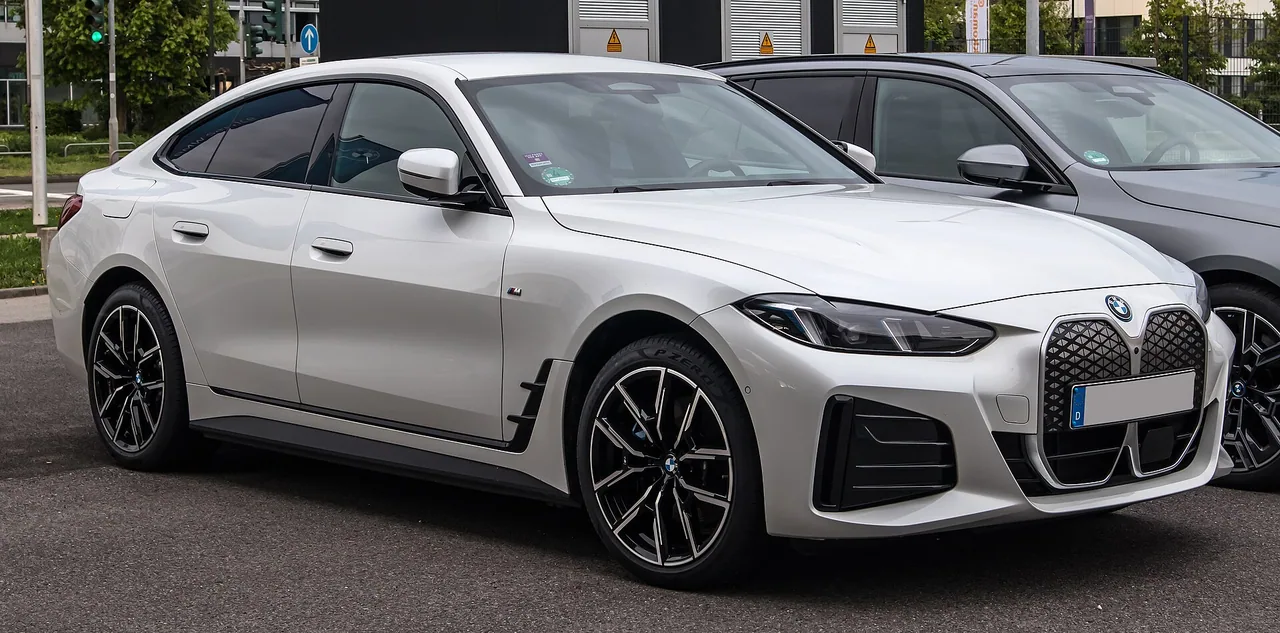
BMW i5
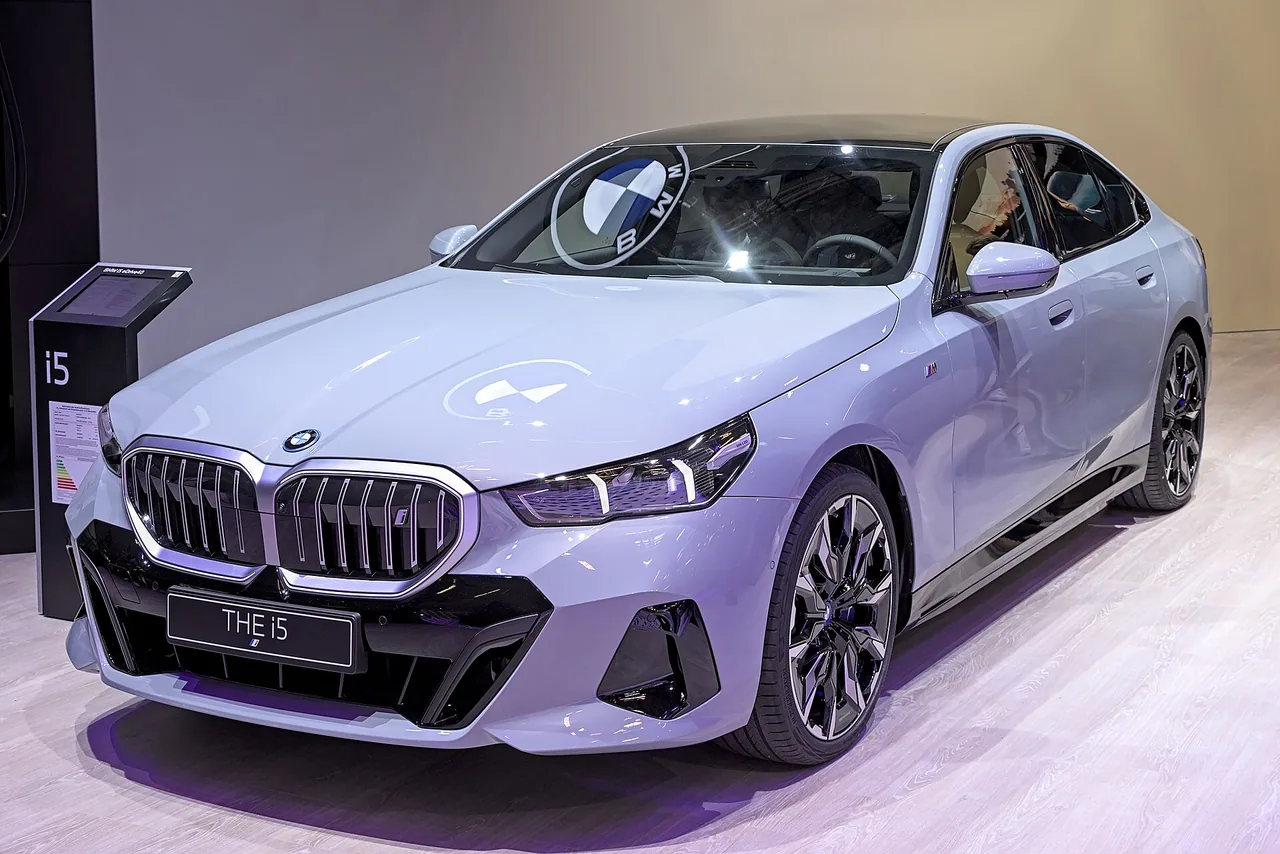
Latest Data Refresh Check · Nov 25, 2026
Reviewed data refresh (2026-11-25) updated records for i5 (2024: new NHTSA complaints); tables and dates below reflect the refreshed snapshot.
Live Market & Badge-Tax Readout
What you pay for the badge: new MSRP vs. used market
Price gap stays clear on the used market: i4 ($10,850 less on KBB used midpoint).
i4 ($14,000 lower avg MSRP)
TrimIndex never blends KBB, J.D. Power, and dealer asking figures into one range.
Where dealer asking prices are shown above or in the timeline below, figures summarize active US used dealer listings (asking prices, not final sale prices; excluded from Value-to-Score).
Day-to-Day Ownership Split
Where i4 and i5 actually diverge
Sharing a platform does not mean identical ownership. Here are the concrete calibration, cabin, software, charging, and dealer differences buyers feel every day.
Liftback Cargo Access vs. Rear Cabin Space
Solo commuters and couples love the i4's hatchback versatility; families carrying teens or clients in row two will appreciate the i5's stretched cabin immediately.
Usable Battery Size & EPA Reach
Remarkably, the smaller i4 beats the larger i5 in both usable kWh (81.1 vs. 79) and maximum EPA range (333 vs. 310 mi) while using less electricity per 100 miles.
Hands-Free Highway Tech & Cabin Generation
Interstate commuters who want true 85 mph hands-free driving need the i5; drivers who prefer compact, driver-centric ergonomics often favor the i4.
Verified Battery Health & Used-Market Maturity
i4 brings proven high-mileage degradation proof and far deeper used-market selection across five model years.
NHTSA Recall & Complaint Signatures
Check high-voltage drivetrain software/module history on 2023 i4s, and demand written proof of Integrated Braking System (IBS) hardware replacement on any 2024–2025 i5.
Refreshed EPA, charging & safety specs side by side
Pulled directly from TrimIndex’s EPA Fuel Economy, NHTSA NCAP, and charging-access database (NHTSA records through Nov 22, 2026).
| Specification | BMW i4 | BMW i5 |
|---|---|---|
| EPA range (all trims) EPA Fuel Economy Guide | 251–333 mi | 253–310 mi |
| Efficiency (lower is better) EPA Fuel Economy Guide | 28.0–35.9 kWh/100 mi | 30.6–37.5 kWh/100 mi |
| Usable battery capacity | 67.0–81.1 kWh | 79.0 kWh |
| Peak DC fast charging | 180–205 kW | 205 kW |
| Rated horsepower | 281–593 hp | 335–593 hp |
| Drivetrains offered | AWD, RWD | AWD, RWD |
| Seating capacity | 5 seats | 5 seats |
| Fast-charging port & Supercharger | CCS1 (Combined Charging System) · With an adapter | CCS1 (Combined Charging System) · With an adapter |
The counterintuitive spec sheet: why BMW i4 out-ranges the bigger i5
Most shoppers assume moving up from a 4-Series Gran Coupe to a 5-Series executive sedan buys a bigger battery. On BMW's CLAR platform, the opposite holds true. Because both vehicles share their floorpan packaging constraints with gasoline 4-Series and 5-Series siblings, BMW's engineers packed 81.1 kWh net usable energy into the i4 eDrive40/xDrive40/M50—yet the newer G60 i5 carries 79 kWh net usable (81.2 kWh gross).
Pair that 2.1 kWh capacity advantage with the i4's smaller frontal area and lighter curb weight (28.0–35.9 kWh/100 mi vs. 30.6–37.5 kWh/100 mi on the i5), and the i4 pulls ahead on highway range: topping out at 333 miles EPA in 2026 (301–318 mi in 2022–2025) compared with the i5's 253–310 mile band. Both peak at 205 kW DC fast charging (180 kW on the smaller 67 kWh i4 eDrive35), giving the i4 slightly faster miles-added-per-minute stops.
Better still, real-world longevity proof already exists on the i4 pack. TrimIndex's catalog logs four verified i4 State of Health observations between 30,000 and 72,079 miles holding between 92% and 96.8% capacity—reassuring evidence that BMW's Samsung SDI Gen5 prismatic cells and refrigerant thermal management handle high-mileage use gracefully.
- BMW's electrically excited synchronous motors eliminate permanent magnets, avoiding magnetic drag at highway cruise and reducing rare-earth supply dependency.
- Note that CLAR's shared combustion-chassis center tunnel remains present inside the rear floor of both i4 and i5, reducing center-rear foot space compared with dedicated flat-floor skateboards.
- Both models gained Tesla Supercharger access across MY2022–2026 using the BMW-approved Lectron Vortex Plus NACS DC adapter following a required over-the-air RSU.
Explore year-by-year EPA efficiency, single-source guide prices, NHTSA recalls, and trim specs across both CLAR sedans.
Open BMW i4 vs. BMW i5 comparison →Integrated Braking System delays on i5 vs. 2023 drivetrain alerts on i4
Even though BMW builds the i4 in Munich and the i5 in Dingolfing on a shared mechanical family, their NHTSA complaint signatures highlight very different buyer checklists. On the 2024–2025 i5, the headline pain point is BMW's global Continental-supplied Integrated Braking System (IBS) campaign—which prompted a massive stop-sale and parts bottleneck. In TrimIndex's NHTSA data, 'Brake recall repair delayed for parts' accounts for 6 of 22 complaints on the 2024 i5 (27%), followed by 'Brakes fail to stop the car' (2 of 8, 25%) on 2025 units.
The i4 avoided the worst of the i5's IBS wait times, yet early 2022–2024 i4 records carry their own distinct alerts. Model year 2022 carries 1 advisory recall (among 8 campaigns), 2023 recorded 47 complaints led by 'Drivetrain malfunction and power loss' (20 of 47, 43%)—often linked to Combined Charging Unit (CCU) or drive-electronics software faults remedied by recalls and updates—and 2024 recorded 9 of 26 complaints citing unintended acceleration reports.
Neither sedan shows catastrophic battery-pack failure trends, making clean recall completion and verified CCU/IBS repair invoices the single fastest way to separate a trouble-free example from an unresolved headache.
Track how 2022–2025 BMW i4 trims depreciate off MSRP, which trims pack the 81.1 kWh battery, and what to check before buying.
Read the BMW i4 buying guide →Compact BMW driver's liftback vs. quiet G60 highway cruiser
Behind the wheel, the 5.5-inch wheelbase split completely reshapes character. The i4 sits lower, turns in more crisply, and feels closest to a traditional 3-Series/4-Series sport sedan—especially on rear-drive eDrive40 trims with standard rear air springs keeping the heavy battery pack composed over undulating tarmac. Opening the wide rear hatch makes it surprisingly easy to live with as an only car.
The i5 trades some tossability for executive polish. Its longer G60 chassis glides over expansion joints, shields cabin occupants from tire roar, and offers BMW's optional Highway Assistant—allowing genuine hands-free cruising up to 85 mph on mapped divided highways. Because i4 launched two years earlier and already posts discounts approaching 47% off MSRP on 2022 builds, buyers focused strictly on value per mile get dramatically more range and practicality per dollar in a used i4 eDrive40.
Model-year timeline: i4 vs. i5
Refreshed automatically from TrimIndex’s database on each reviewed run so you can spot overlapping model years, Avoid flags, and pricing shifts.
| Year | i4 Score & Standing | i4 Price | i5 Score & Standing | i5 Price |
|---|---|---|---|---|
| 2026 | $54,186–$68,418 Dealer asking · Nov 2026 | $54,667–$83,945 Dealer asking · Nov 2026 | ||
| 2025 | $37,938–$57,955 Dealer asking · Nov 2026 | $43,374–$69,942 Dealer asking · Nov 2026 | ||
| 2024 | $33,100–$45,600 KBB · Nov 2026 | $41,400–$55,100 KBB · Nov 2026 | ||
| 2023 | $29,600–$42,600 KBB · Nov 2026 | Not sold | Not produced No US model year | |
| 2022 | $29,200–$36,600 KBB · Nov 2026 | Not sold | Not produced No US model year |
Which platform twin should you buy?
Choose the BMW i4 if…
- You want up to 333 miles of EPA range and a slightly larger 81.1 kWh usable pack than the i5.
- You value five-door liftback cargo flexibility and tighter 112.4-inch-wheelbase sport-sedan handling.
- You want proven battery longevity (92%–96.8% verified SoH readings up to 72,000 miles) and deeper 2022–2024 used discounts.
- Rear passengers are occasional rather than daily tall adults.
Choose the BMW i5 if…
- You regularly carry adults in the rear seat and need the 5-Series' extra 5.5 inches of wheelbase.
- You commute long interstate stretches and want BMW's 85 mph hands-free Highway Assistant.
- You prefer a hushed, executive ride and the newer G60 iDrive 8.5 Interaction Bar interior.
- You confirm IBS brake recall completion and prefer a traditional four-door executive trunk silhouette.
Used-Market Sweet Spot
For pure EV value on BMW's CLAR architecture, a 2023–2024 BMW i4 eDrive40 (81.1 kWh pack, 205 kW charging, verified drivetrain recall completion) out-ranges the i5, swallows bulkier gear through its liftback hatch, and already reflects steep early depreciation. Choose a 2024–2025 BMW i5 eDrive40 only when back-seat space or 85 mph hands-free Highway Assistant earns its keep.
i4 & i5 platform questions
Do the BMW i4 and BMW i5 share the same electric motors and battery?
Both use BMW's rare-earth-free 5th-generation electrically excited synchronous motors and Samsung SDI Gen5 prismatic NMC cell family with refrigerant cooling and 205 kW peak DC charging. However, i4 eDrive40/xDrive40/M50 actually packs 81.1 kWh usable energy (67 kWh on eDrive35), compared with 79 kWh usable in the i5.
Can both the BMW i4 and BMW i5 charge at Tesla Superchargers?
Yes. Both models (MY2022–2026) feature a CCS1 port and work at NACS Partner Tesla Supercharger stations using the BMW-approved Lectron Vortex Plus DC adapter once the vehicle completes BMW's required over-the-air Remote Software Upgrade (RSU). Eligible vehicles also support Plug & Charge.
What is the brake recall issue affecting the BMW i5?
Early 2024–2025 BMW i5 sedans fell under BMW's widespread Integrated Braking System (IBS) hardware recall, which experienced prolonged parts delays—driving 6 of 22 NHTSA complaints on the 2024 i5 (27%). Always verify the VIN shows completed IBS replacement before purchasing.
How well do BMW i4 batteries hold up over high mileage?
TrimIndex's catalog tracks four verified BMW i4 battery State of Health readings between 30,000 and 72,079 miles ranging from 92% to 96.8% capacity retention—indicating strong durability for BMW's refrigerant-cooled Samsung SDI Gen5 prismatic packs.
Which car is more practical for cargo and passengers: the i4 or i5?
It splits cleanly by mission: the i4's wide 5-door liftback hatch handles bulky cargo far better than the i5's conventional trunk lid, while the i5's 5.5-inch-longer wheelbase offers significantly better adult rear legroom and headroom.