All Vehicles
2023 Tesla Model 3 Trims Compared: Range, Price & Problems
Updated
2023 Tesla Model 3: 3 trims compared. 272–358 mi EPA range, 12 recalls, 434 NHTSA complaints.
Data:NHTSA through
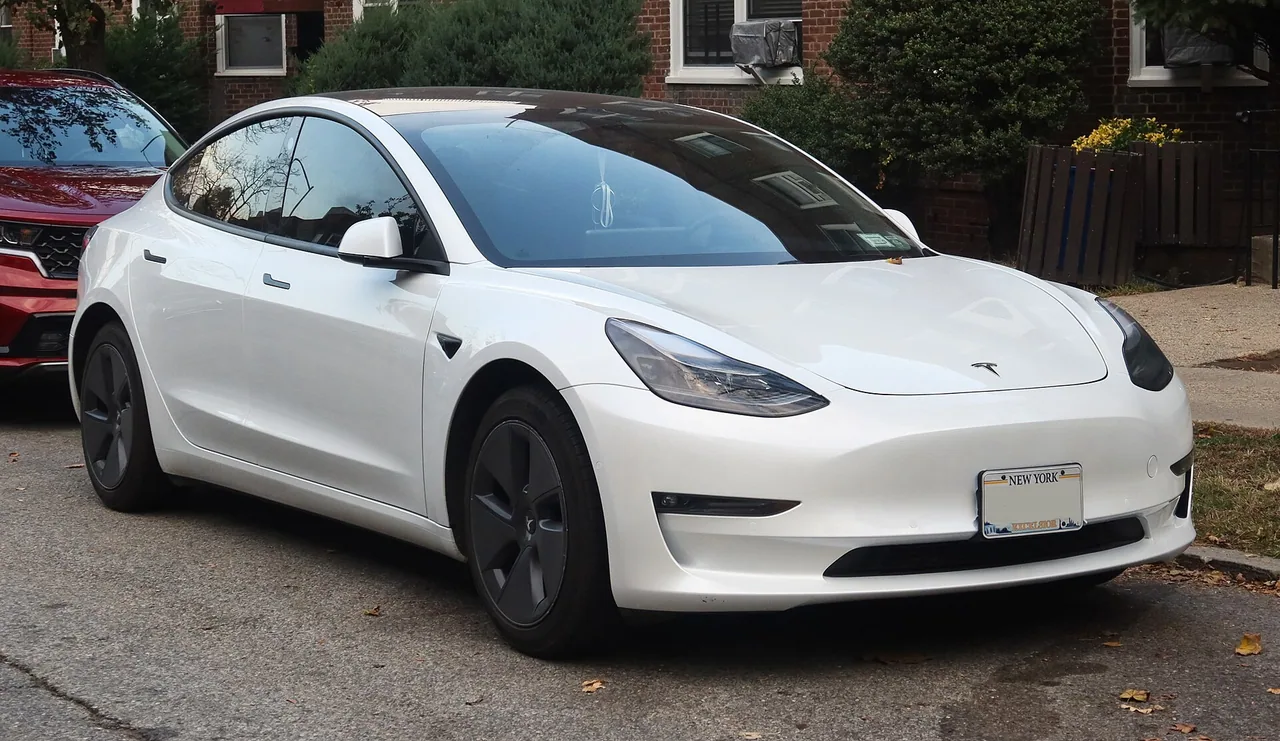

Compare the 2023 Tesla Model 3 trims
| Trim | TrimIndex score | Price new | Used price | Drive | EPA range | EPA energy use | 0–60 mph | DC fast-charge peak | Georgia tax value (2026 manual) |
|---|---|---|---|---|---|---|---|---|---|
| Long Range AWD | 70 | from $57,990starting price | $30,100KBB, Nov 2026 | AWD | 358 mi | 25.8 kWh/100 mi | 4.2 s | 250 kW | $21,425–$24,025 (2 values) |
| RWD | 65 | from $46,990starting price | $26,700KBB, Nov 2026 | RWD | 272 mi | 25.5 kWh/100 mi | 5.8 s | 170 kW | $21,425–$24,025 (2 series) |
| Performance AWD | 64 | from $62,990starting price | $32,200KBB, Nov 2026 | AWD | 315 mi | 30.0 kWh/100 mi | 3.1 s | 250 kW | $24,025–$24,725 (2 values) |
Tesla, Inc. lists one figure for the 2023 Model 3: 19.8 cu ft of cargo space.
Price new, 0–60 mph and dc fast-charge peak: Tesla, Inc., via the Internet Archive.
EPA range and EPA energy use: U.S. EPA and DOE, fueleconomy.gov.
Used price: the figure each trim page shows, with its source and the month collected.
Georgia tax value: the Georgia Department of Revenue's title-tax assessment value for each trim in its 2026 manual, one edition for every row; a state tax figure, not a sale price or market value.
TrimIndex score: out of 100.
What differs between the 2023 Tesla Model 3 trims
Compared with the 2023 Model 3 RWD, the Long Range AWD has all-wheel drive, 86 more miles of EPA range, a 0–60 mph claim 1.6 s quicker and a DC fast-charge peak 80 kW higher, with a starting price $11,000 higher and a used price on file $3,400 higher (KBB, Nov 2026).
Compared with the 2023 Model 3 Long Range AWD, the Performance AWD has a 0–60 mph claim 1.1 s quicker, with 43 fewer miles of EPA range, EPA energy use 4.1 kWh/100 mi higher, a starting price $5,000 higher and a used price on file $2,100 higher (KBB, Nov 2026).
Which 2023 Tesla Model 3 trim for what
- Longest EPA range: the 2023 Model 3 Long Range AWD, 358 miles; next, the Performance AWD has 315 miles.
- Quickest 0–60 mph (manufacturer claims): the 2023 Model 3 Performance AWD, 3.1 seconds; next, the Long Range AWD has 4.2 seconds.
- Lowest used price on file: the 2023 Model 3 RWD, $26,700; next, the Long Range AWD has $30,100.
- Highest TrimIndex score: the 2023 Model 3 Long Range AWD, 70 out of 100; next, the RWD has 65 out of 100.
NHTSA Recalls (12)
- NHTSA lists 12 recall campaigns for the 2023 Tesla Model 3, filed between Oct 2021 and Aug 2026.
- When it was filed, 26V507000 (headlights) had no final fix available yet.
- How the other 11 are fixed, per the filings: 9 by a software update (all can install over the air) and 2 by work on the car.
Source: NHTSA recall filings for the 2023 Tesla Model 3, data through Nov 22, 2026. Why the VIN decides
- Filed Aug 2026
The headlight low beams may be too bright and exceed the maximum light output.
Campaign #26V507000 · Part (NHTSA): exterior lighting › headlights- What happens:
- Headlight low beams that are too bright can reduce visibility for oncoming drivers, increasing the risk of a crash.
- The fix
- When filed (Aug 2026) the final fix was not yet available. Check the VIN for the final repair.
- Covers:
- certain 2017-2023 Model 3 and 2020-2023 Model Y vehicles.
- Federal standard not met:
- 108 (Lamps, Reflective Devices, and Associated Equipment).
NHTSA lists 20,349 vehicles in this campaign (all models it covers).
Check VIN status at NHTSA.gov
Show the other 11 campaigns, each with a fix listed
- Filed May 2026
The rearview camera image may be delayed when the vehicle is placed in reverse.
Campaign #26V283000 · Part (NHTSA): back over prevention › software- What happens:
- A delayed rearview image reduces the driver's view behind the vehicle, increasing the risk of a crash.
- The fix
- Free fix: software update over the air Tesla has released an over-the-air (OTA) software update, free of charge.
- Covers:
- certain 2017, 2021-2023 Model 3, 2020-2023 Model Y, 2021-2023 Model S, and Model X vehicles operating software version 2026.8.6.
- Federal standard not met:
- 111 (Rear Visibility).
NHTSA lists 218,868 vehicles in this campaign (all models it covers).
Check VIN status at NHTSA.gov - Filed Feb 2025
The printed circuit board for the electronic power steering assist may experience an overstress condition, causing a loss of power steering assist when the vehicle reaches a stop and then accelerates again.
Campaign #25V092000 · Part (NHTSA): steering › electric power assist system- What happens:
- A loss of power steering assist can require greater steering effort, especially at low speeds, increasing the risk of a crash.
- The fix
- Free fix: software update over the air Tesla has released an over-the-air (OTA) software update, free of charge.
- Covers:
- certain 2023 Model 3 and Model Y vehicles operating software prior to 2023.38.4.
NHTSA lists 376,241 vehicles in this campaign (all models it covers).
Check VIN status at NHTSA.gov - Filed Dec 2024
The tire pressure monitoring system (TPMS) warning light may not remain illuminated between drive cycles, failing to warn the driver of low tire pressure.
Campaign #24V935000 · Part (NHTSA): tires › pressure monitoring and regulating systems- What happens:
- Driving with improperly inflated tires increases the risk of a crash.
- The fix
- Free fix: software update over the air Tesla released an over-the-air (OTA) software update, free of charge.
- Covers:
- certain 2024 Cybertruck, 2017-2025 Model 3, and 2020-2025 Model Y vehicles.
- Federal standard not met:
- 138 (Tire Pressure Monitoring Systems).
NHTSA lists 696,281 vehicles in this campaign (all models it covers).
Check VIN status at NHTSA.gov - Filed Jul 2024
The hood latch assembly may fail to detect an unlatched hood condition after the hood has been opened.
Campaign #24V554000 · Part (NHTSA): electrical system › software- What happens:
- An unlatched hood can fully open, obstructing the driver's view and increasing the risk of a crash.
- The fix
- Free fix: software update over the air Tesla has released an over-the-air (OTA) software update, free of charge.
- Covers:
- certain 2021-2024 Model 3, Model S, Model X, and 2020-2024 Model Y vehicles.
NHTSA lists 1,849,638 vehicles in this campaign (all models it covers).
Check VIN status at NHTSA.gov - Filed May 2024
In the event of an unbelted driver, the seat belt warning light and audible chime may not activate as intended.
Campaign #24V376000 · Part (NHTSA): seat belts › front › warning light/devices- What happens:
- A seat belt warning system that fails to alert occupants of an unbelted seat belt can increase the risk of injury during a crash.
- The fix
- Free fix: software update over the air Tesla will release an over-the-air (OTA) software update.
- Covers:
- certain 2012-2024 Model S, 2015-2024 Model X, 2017-2023 Model 3, and 2020-2023 Model Y vehicles.
- Federal standard not met:
- 208 (Occupant Crash Protection).
NHTSA lists 125,233 vehicles in this campaign (all models it covers).
Check VIN status at NHTSA.gov - Filed Jan 2024
An incorrect font size is displayed on the instrument panel for the Brake, Park, and Antilock Brake System (ABS) warning lights.
Campaign #24V051000 · Part (NHTSA): electrical system › instrument cluster/panel- What happens:
- Warning lights with a smaller font size can make critical safety information on the instrument panel difficult to read, increasing the risk of a crash.
- The fix
- Free fix: software update over the air Tesla began releasing an over-the-air (OTA) software update, free of charge.
- Covers:
- certain 2012-2023 Model S, 2016-2024 Model X, 2017-2023 Model 3, 2019-2024 Model Y, and 2024 Cybertruck vehicles.
- Federal standard not met:
- 105 (Hydraulic and Electric Brake Systems) and 135 (Light Vehicle Brake Systems).
NHTSA lists 2,193,869 vehicles in this campaign (all models it covers).
Check VIN status at NHTSA.gov - Filed Dec 2023
In certain circumstances when Autosteer is engaged, the prominence and scope of the feature's controls may not be sufficient to prevent driver misuse of the SAE Level 2 advanced driver-assistance feature.
Campaign #23V838000 · Part (NHTSA): electrical system › ADAS › driver monitoring › software- What happens:
- In certain circumstances when Autosteer is engaged, and the driver does not maintain responsibility for vehicle operation and is unprepared to intervene as necessary or fails to recognize when Autosteer is canceled or not engaged, there may be an increased risk of a crash.
- The fix
- Free fix: software update over the air Tesla will release an over-the-air (OTA) software update, free of charge.
NHTSA lists 2,031,220 vehicles in this campaign (all models it covers).
Check VIN status at NHTSA.gov - Filed Jun 2023
The pyrotechnic battery disconnect may be defective.
Campaign #23V434000 · Part (NHTSA): electrical system › propulsion system › traction battery- What happens:
- A defective battery disconnect may not isolate the vehicle's high voltage battery after a crash or fault detection, increasing the risk of electrical shock and injury.
- The fix
- Free fix: work on the car by Tesla Service Tesla Service will replace the pyrotechnic battery disconnect, free of charge.
- Covers:
- certain 2023 Model 3 and Model Y vehicles.
NHTSA lists 26 vehicles in this campaign (all models it covers).
Check VIN status at NHTSA.gov - Filed Feb 2023
The FSD Beta system may allow the vehicle to act unsafe around intersections, such as traveling straight through an intersection while in a turn-only lane, entering a stop sign-controlled intersection without coming to a complete stop, or proceeding into an intersection during a steady yellow traffic signal without due caution.
Campaign #23V085000 · Part (NHTSA): steering › automated/adaptive steeringIn addition, the system may respond insufficiently to changes in posted speed limits or not adequately account for the driver's adjustment of the vehicle's speed to exceed posted speed limits.
- What happens:
- FSD Beta software that allows a vehicle to exceed speed limits or travel through intersections in an unlawful or unpredictable manner increases the risk of a crash.
- The fix
- Free fix: software update over the air Tesla will release an over-the-air (OTA) software update, free of charge.
NHTSA lists 362,758 vehicles in this campaign (all models it covers).
Check VIN status at NHTSA.gov - Filed Nov 2022
One or both taillights may intermittently fail to illuminate.
Campaign #22V844000 · Part (NHTSA): exterior lighting › tail lights- What happens:
- A taillight that fails to illuminate may reduce the visibility of the vehicle, increasing the risk of a crash.
- The fix
- Free fix: software update over the air Tesla has released an over-the-air (OTA) software update, free of charge.
- Covers:
- certain 2023 Model 3 and 2020-2023 Model Y vehicles.
NHTSA lists 321,628 vehicles in this campaign (all models it covers).
Check VIN status at NHTSA.gov - Filed Oct 2021
The left and/or right side curtain air bag may have been improperly secured to the roof rail, which could result in a twisted air bag.
Campaign #21V834000 · Part (NHTSA): air bags › side/window › curtain- What happens:
- A twisted side curtain air bag may improperly deploy, increasing the risk of injury or occupant ejection during a crash.
- The fix
- Free fix: work on the car by Tesla Service Tesla Service will inspect and realign the left and right side curtain air bag as necessary, free of charge.
- Covers:
- certain 2020-2021, 2023 Model 3 vehicles.
- Federal standard not met:
- 214 (Side Impact Protection) and 226 (Ejection Mitigation).
NHTSA lists 3 vehicles in this campaign (all models it covers).
Check VIN status at NHTSA.gov
NHTSA Investigations (5 open, 1 open petition, 6 closed, 1 closed petition)
NHTSA has 5 open investigations and 1 open defect petition covering the 2023 Tesla Model 3 (NHTSA investigations file of Nov 19, 2026).
What these kinds of action mean
- OpenPreliminary evaluation PE26006, opened Jul 29, 2026
Lower Lateral Link detachment
What NHTSA says it is examining: The Office of Defects Investigation (ODI) has received 156 complaints alleging a suspension failure in model year (MY) 2018-2020 Model 3 and MY 2021-2023 Model Y vehicles. The suspension failure involves the detachment of the front lower lateral link, which potentially causes a loss of vehicle directional control.
Model years NHTSA lists for this model in the action: 2018-2020, 2023.
- OpenEngineering analysis EA26002, opened Mar 18, 2026
FSD Collisions in Reduced Roadway Visibility Conditions
What NHTSA says it is examining: The Office of Defects Investigation (ODI) is opening this Engineering Analysis to evaluate Tesla’s Full Self Driving Beta and Full Self Driving (Supervised) (collectively, FSD) degradation detection system.
Model years NHTSA lists for this model in the action: 2017-2026.
- OpenPreliminary evaluation PE25012, opened Oct 7, 2025
Traffic safety violations while Full Self Driving ("FSD") is engaged
What NHTSA says it is examining: The Office of Defects Investigation (“ODI”) is opening this Preliminary Evaluation (PE) to assess the scope, frequency, and potential safety consequences of FSD executing driving maneuvers that constitute traffic safety violations.
Model years NHTSA lists for this model in the action: 2017-2026.
- OpenAudit query AQ25002, opened Aug 20, 2025
Compliance with Standing General Order 2021-01 Reporting Requirements
What NHTSA says it is examining: The Office of Defects Investigation (“ODI”) has identified numerous incident reports submitted by Tesla, Inc. (“Tesla”) in response to Standing General Order 2021-01 (the “SGO”), in which the reported crashes occurred several months or more before the dates of the reports.
Model years NHTSA lists for this model in the action: 2017-2026.
- OpenRecall query RQ24009, opened Apr 25, 2024
Recall 23V838 Remedy Effectiveness
What NHTSA says it is examining: The Office of Defects Investigation (ODI) is opening a Recall Query to assess the remedy adequacy of Recall 23V838.
Model years NHTSA lists for this model in the action: 2017-2024.
- Open petitionDefect petition DP23002, opened Jun 29, 2023
Sudden Unintended Acceleration
What NHTSA says it is examining: The Office of Defects Investigation (ODI) received a petition requesting that ODI reevaluate its decision to deny DP20-001 on the basis that intermittent high electrical current demands on the vehicles' 12VDC systems may have caused some or all of the incidents examined by ODI in DP20-001.
Model years NHTSA lists for this model in the action: 2017-2023.
NHTSA has closed 7 actions on the 2023 Tesla Model 3: 4 preliminary evaluations, 2 engineering analyses and 1 defect petition, opened between Feb 2022 and Jan 2025. 2 of them name recalls this page lists: 25V092000, 23V085000 and 23V838000.
Show the 7 closed actions
- Actually Smart Summon sessions resulting in low-speed impactsPreliminary evaluation PE24033, opened Jan 6, 2025, closed Apr 3, 2026
- FSD Collisions in Reduced Roadway Visibility ConditionsPreliminary evaluation PE24031, opened Oct 17, 2024, closed Mar 18, 2026
- Loss of steering controlEngineering analysis EA24001, opened Feb 1, 2024, closed Jun 25, 2026; recall 25V092000
- Loss of steering controlPreliminary evaluation PE23014, opened Jul 28, 2023, closed Feb 5, 2024
- Defect Petition Interlock RequestDefect petition DP23001, opened Apr 7, 2023, closed Mar 18, 2026
- Autopilot System Driver ControlsEngineering analysis EA22002, opened Jun 8, 2022, closed Apr 25, 2024; recall 23V085000, 23V838000
- Unexpected Brake ActivationPreliminary evaluation PE22002, opened Feb 16, 2022, closed Jun 29, 2026
Source: NHTSA Office of Defects Investigation, investigations file, records through Nov 19, 2026; an open investigation is not a finding of a defect in the 2023 Tesla Model 3.
NHTSA Complaints (434 total)
NHTSA lists 12 recall campaigns for the 2023 Tesla Model 3; 9 of them name an over-the-air software update as the fix. NHTSA lists no remedy yet for campaign 26V507000 (headlights) in records through Nov 22, 2026. Owners have filed 434 complaints with NHTSA; the largest part groups are Forward collision avoidance (181) and Steering (92). Of all 434, 73 report a crash, 1 a fire and 37 an injury.
What owners report most
TrimIndex grouped the 434 complaints owners filed with NHTSA on the 2023 Tesla Model 3 (every trim; NHTSA files complaints by model year, not trim) into problem themes on Nov 16, 2026: 378 of them fall in the 27 themes below, 26 of them in two. 3 complaints were filed after that grouping and are not in a theme yet. How themes are made and checked
-
Sudden braking with nothing ahead
128 of 434 complaints (29%): With cruise control, Autopilot or Full Self-Driving engaged, the car brakes hard or slows sharply on open road with no vehicle or object ahead.
Owners reported a crash in 3 and an injury in 1 of the 128 complaints.
“Multiple times on the highway the car would slam the brakes for no reason in autopilot mode reducing the speed significantly.”
NHTSA complaint 11506806 “While adaptive cruise control was engaged my car slammed on the brakes for no reason.”
NHTSA complaint 11755758 -
Loss of power steering
57 of 434 complaints (13%): The steering wheel becomes stiff, locks or cannot be turned, with or without a steering assist message, while driving and when pulling away.
Owners reported a crash in 8 and an injury in 3 of the 57 complaints.
“Power steering failure. Vehicle became extremely difficult to turn while moving.”
NHTSA complaint 11520582 “the steering wheel became stuck or extremely difficult to turn”
NHTSA complaint 11742836 -
Car accelerates on its own
31 of 434 complaints (7%): The car surges forward without matching pedal input, at times while parking, slowing or with the brake pressed, and some reports end in a crash.
Owners reported a crash in 25 and an injury in 9 of the 31 complaints.
“The car suddenly lunged forward, rapidly accelerating.”
NHTSA complaint 11742761 “even while pressing the brake pedal—my 2023 Tesla Model 3 unexpectedly accelerated”
NHTSA complaint 11685171 -
Driver assist steers off course
19 of 434 complaints (4%): With Autopilot, Full Self-Driving or lane assist active, the car steers, drifts or changes lanes on its own toward other vehicles, curbs, barriers or off the road.
Owners reported a crash in 7 and an injury in 3 of the 19 complaints.
“Full self drive FSD took car in opposite road direction, sudden lane changes, almost crash in upcoming traffic.”
NHTSA complaint 11592950 “While my car was in full self-driving mode, it attempted to make a lane change to the right which almost caused a crash into another vehicle.”
NHTSA complaint 11626500 -
Loss of drive power while driving
19 of 434 complaints (4%): The car shows warnings, loses propulsion and slows to a stop or refuses to drive, leaving it stranded in traffic or on the highway shoulder.
“Rear Drive Unit Inverter failed and left me stranded on a busy highway on the shoulder.”
NHTSA complaint 11531224 “I was driving my 2023 Tesla 3 on the street last night and it suddenly slowed down and stopped.”
NHTSA complaint 11554773 -
Brakes fail to stop the car
14 of 434 complaints (3%): The car does not slow when the driver presses the brake pedal or automatic braking does not react, and the car strikes a vehicle or object ahead.
Owners reported a crash in 14 and an injury in 4 of the 14 complaints.
“Despite pressing the brake pedal hard multiple times, the vehicle did not decelerate as expected and ultimately collided with the vehicle ahead”
NHTSA complaint 11622852 “the brake pedal failed to respond, the driver was unable to control the steering wheel and crashed into a Ford vehicle and a tree”
NHTSA complaint 11611655
Show the other 21 themes
-
Rear doors cannot be opened
14 of 434 complaints (3%): Rear passengers cannot open the doors from inside when power is lost or the car stays locked, and owners find no obvious manual release.
Owners reported a crash in 1 and an injury in 1 of the 14 complaints.
“There is no manual door release for rear doors in the Tesla model 3 RWD.”
NHTSA complaint 11716471 -
Airbags do not deploy in crash
12 of 434 complaints (3%): In a collision with significant damage, the airbags or the driver airbag do not inflate, even where the screen stated they had deployed.
Owners reported a crash in 11 and an injury in 6 of the 12 complaints.
“causing him to crash into an embankment. The driver's side airbag did not deploy.”
NHTSA complaint 11673405 -
Car pulls to the side
11 of 434 complaints (3%): The car veers left or right when the wheel is held straight, or the steering wheel sits off-center, and alignments do not resolve it.
Owners reported a crash in 1 of the 11 complaints.
“While releasing the steering wheel, the vehicle would either veer to the left or the right.”
NHTSA complaint 11542837 -
Windshield wipers act erratically
10 of 434 complaints (2%): The wipers switch on with a dry windshield, fail to respond to rain, or stop working mid-storm, and adjusting them requires the touchscreen.
“While driving in rain, the windshield wipers will randomly stop.”
NHTSA complaint 11582914 -
Self-driving runs red lights
9 of 434 complaints (2%): With Full Self-Driving or Autopilot engaged, the car moves forward against red lights or through a lowered railway crossing gate.
Owners reported a crash in 2 and an injury in 1 of the 9 complaints.
“The Tesla ran a red light on two separate occasions while in full self driving mode.”
NHTSA complaint 11692335 -
Suspension parts break or come loose
8 of 434 complaints (2%): Suspension links, control arms or subframe bolts wear out, crack, come loose or fall out, with owners reporting noise, rattles, vibration or instability.
“Rattle sound in suspension and not sure if part is loose or bushing is worn out”
NHTSA complaint 11609710 -
Autopilot attention alerts after update
7 of 434 complaints (2%): After a recall software update, Autopilot issues hands-on-wheel and attention alerts while drivers hold the wheel and watch the road, then disengages unexpectedly.
“I am getting alerts while my hands are on the steering wheel and paying attention to the road”
NHTSA complaint 11561449 -
Glass cracks without impact
7 of 434 complaints (2%): A side window, windshield or glass roof cracks or shatters with nothing striking it or after a tiny impact, including while parked or in temperature swings.
“am reporting an issue involving unexplained cracking of my Tesla windshield with no known impact or debris strike”
NHTSA complaint 11713633 -
Restraint system fault warnings
6 of 434 complaints (1%): The car displays safety restraint system or occupant classification fault messages for a front or rear seat, and service visits or updates do not clear them.
“The Occupant Classification System (OCS) in the passenger front seat has displayed an error multiple times”
NHTSA complaint 11564205 -
Tire blowouts and cracked wheels
6 of 434 complaints (1%): Tires blow out or go flat and wheels crack or bend on cars with little mileage, with owners citing summer tires or alignment as factors.
“the rear passenger's side tire experienced a blowout, and the rim was severely damaged.”
NHTSA complaint 11511654 -
Parking sensors miss obstacles
4 of 434 complaints (1%): Without ultrasonic park assist, the car gives no warning of nearby obstacles while parking, and owners report backing into walls or poles.
Owners reported a crash in 1 of the 4 complaints.
“Apparently they have removed the ultrasonic sensor and did not enable any user interface to do with Park assist”
NHTSA complaint 11502089 -
Software or recall updates fail
4 of 434 complaints (1%): Owners report the car not receiving or installing the software updates needed to complete open recalls, with the app or screen showing no update available.
“Vehicle does not have the proper software updates needed to clear the two NHTSA recalls for my VIN.”
NHTSA complaint 11572243 -
Bumper or underbody panel falls off
3 of 434 complaints (1%): The bumper or underbody shield detaches and drags or falls off while driving, in reports through rain or puddles, with no collision.
“The Tesla model 3 rear bumper came off completely while driving in rain when I drove into a very light puddle.”
NHTSA complaint 11553937 -
Driving range lower than shown
3 of 434 complaints (1%): The battery's usable driving range falls well short of the displayed estimate, drops quickly in use, or shrinks at full charge within months.
“Battery Range incorrect, quickly dropped from 50% to 18% after 3 uses an estimated less then 10 miles”
NHTSA complaint 11534895 -
False forward collision warnings
3 of 434 complaints (1%): The forward collision warning sounds with no vehicle ahead, and owners report these alerts raising their insurance premiums.
“I’ve had multiple false forward collision warning resulting in my insurance premium increasing by sizeable amounts”
NHTSA complaint 11607626 -
Front seat mounting bolts loose
3 of 434 complaints (1%): Front seats arrive or return from service with mounting bolts missing or loose, so the seat rail lifts or the seat tips forward.
“The front passenger seat assembly was only connected to the car chassis by the two front mounting bolts.”
NHTSA complaint 11552431 -
Seat belt will not latch
3 of 434 complaints (1%): A front or rear seat belt buckle does not latch or lock when the occupant tries to fasten it.
“Front driver seatbelt will not latch or lock.”
NHTSA complaint 11664126 -
Trunk lid closing on people
3 of 434 complaints (1%): The rear trunk lid comes down or keeps closing unexpectedly, in some reports onto a person's finger or head.
Owners reported an injury in 2 of the 3 complaints.
“the contact attempted to open the trunk and the trunk inadvertently closed on the contact's finger”
NHTSA complaint 11672299 -
Trunk or frunk opening by itself
3 of 434 complaints (1%): The front or rear trunk opens on its own while starting or driving the car, or will not stay latched.
Owners reported a crash in 1 of the 3 complaints.
“upon starting the vehicle and shifting to drive(D), the front trunk opened inadvertently, blocking the visibility of the roadway”
NHTSA complaint 11686613 -
Vibration at highway speeds
3 of 434 complaints (1%): The car or steering wheel shakes and vibrates at highway speeds, and owners report it continuing after wheel, tire or brake work.
“After 12 service visits, new wheels tires and even a new brake rotor the car is still vibrating.”
NHTSA complaint 11554750
434 complaints filed with NHTSA for the 2023 Tesla Model 3, between Nov 2022 and Nov 2026.
Parts named most often
| Part | Complaints | Share |
|---|---|---|
| Forward collision avoidance including adaptive cruise control (116) and automatic emergency braking (98) | 181 | 42% |
| Steering | 92 | 21% |
| Speed control | 70 | 16% |
| Brakes | 57 | 13% |
| Electrical system (other) | 46 | 11% |
Share of all 434 complaints; one complaint can name more than one part, so shares add up to more than 100%. 29 complaints name no specific part.
Owners reported a crash in 73, a fire in 1, an injury in 37 and a death in 1 of the 434 complaints. How these fields are filled
Median odometer reading when the problem happened: 3,400 miles, from the 39 complaints that give one.
Complaints by year filed
| Year filed | Complaints |
|---|---|
| 2022 | 11 |
| 2023 | 211 |
| 2024 | 104 |
| 2025 | 55 |
| 2026 (to Nov 22) | 53 |
Source: NHTSA owner complaints filed on every 2023 Tesla Model 3 (NHTSA files them by model year, not trim), data through Nov 22, 2026.
The 25 most severe, then newest, of 434
- Severity 5 of 5.Forward collision avoidance Injury
On September 20, 2026, at approximately 10:26 AM EDT, I was driving my Tesla on ON I-76 E MM 332.4 with Full Self-Driving (Supervised) engaged.
Show the rest
It was raining, the pavement was wet, and there was heavy road spray. The vehicle's front dashcam recording, time-stamped "Sep 20, 2026, 10:26:02 AM," shows the car traveling in the right lane at about 55-56 mph with the on-screen indicator reading "Self Driving." The vehicle then steered to the right, out of its lane, toward the concrete barrier and roadside embankment. The "Self Driving" indicator disappears about half a second before the vehicle leaves the lane, at about 54 mph. I did not steer or brake before the vehicle left the lane. The vehicle then lost stability, spun across the roadway, and slowed from about 53 mph to nearly a stop, facing against the direction of traffic. While facing oncoming traffic, it was struck by an oncoming white sedan, which sustained front-end damage my car had been declared a total loss. I believe the Full Self-Driving system failed to keep the vehicle in its lane in rain and gave too little or no warning before handing control back to me, leaving no reasonable time to recover. I have kept the original dashcam footage and have sent Tesla a written request to preserve and release all vehicle data for this event, including FSD engagement and disengagement logs, driver-available records, and stability control data. I can provide the footage and any records Tesla releases to NHTSA on request.
NHTSA ODI #11766760 - Severity 5 of 5.Body and structure Injury
Vehicle: Tesla Model 3 Issue: Power trunk failed to detect obstruction Date of incident: July 5, 2026 Location: Surprise, AZ During normal use of the vehicle, my child pressed the
Show the rest
“close trunk” button while I was leaning into the trunk area. The powered trunk began closing and did not stop when it made contact with my head. Instead of reversing direction, the trunk continued applying downward force until I moved out of the way. This indicates a failure of the trunk’s obstruction detection system, which is supposed to prevent injury by stopping or reversing when an object or person is detected. This malfunction poses a significant safety risk, especially to children who may accidentally activate the trunk or to adults loading items. A powered trunk should not be able to continue closing on a person’s head. I request that NHTSA investigate whether this is a defect in the Tesla Model 3 trunk sensor system and whether similar incidents have been reported.
NHTSA ODI #11748682 - Severity 5 of 5.Body and structure · Air bags · Forward collision avoidance Death · Fire · Crash
A fatal crash occurred involving a 2023 Tesla Model 3. The vehicle departed the roadway, impacted a guardrail, struck a utility pole on the driver’s side, rolled down an
Show the rest
embankment, and came to rest upright. The crash resulted in catastrophic intrusion into the driver’s compartment and a fatal injury to the driver. I am requesting that NHTSA investigate the crashworthiness and occupant protection performance of this vehicle, including the structural integrity of the occupant compartment, airbag deployment and effectiveness, and the performance of any advanced driver assistance systems, including collision warnings and automatic emergency braking. I am also requesting review and preservation of all available vehicle data, including Event Data Recorder (EDR) information, vehicle telemetry, driver assistance system status, warning notifications, braking data, steering data, and any other information recorded before and during the crash. At this time, I do not know whether a vehicle defect or system malfunction occurred. My concern is whether the vehicle’s safety systems and occupant protection systems functioned as intended and whether additional vehicle data may help determine if any safety-related issues contributed to the severity of the crash.
NHTSA ODI #11746034 - Severity 5 of 5.Brakes · Speed control Injury · Crash
-I was driving down into an indoor basement level garage very slowly as there is a steep incline. It descends from street level to basement level within a distance of approximately 30 to 35 ft.
Show the rest
At the end of the incline is a sharp curve to the right, followed by a sharp left turn to proceed straight. -While on the incline, the car was slowing to a stop. I gently tapped the accelerator to keep it moving. -The car suddenly lunged forward, rapidly accelerating. The acceleration was not consistent with the amount of accelerator input I applied. -I quickly steered right to avoid hitting the wall, then immediately steered left to avoid hitting parked cars and garage columns. -I braked as hard as possible, pumping it. The brake pedal was stiff. The car kept moving forward despite my efforts and did not stop until I crashed into a parked car at the end of the garage. -My son was in the front passenger seat. We both had seatbelts on. Other than whiplash, there were no major injuries. -There were no warnings, messages or any indications that a problem was present prior to the incident. -There was no one in the parked vehicle that was struck and no other people in the garage. -My cell phone automatically alerted emergency services. The police responded, and I reported the incident.
NHTSA ODI #11742761 - Severity 5 of 5.Steering Injury · Crash
While making a right turn from a near-stopped position, the steering wheel became stuck or extremely difficult to turn.
Show the rest
The vehicle initially turned right normally, but when I attempted to steer back left/counterclockwise to complete the turn and straighten the vehicle, the steering wheel did not respond as expected. This caused the vehicle to continue in the wrong direction and resulted in a collision. I believe the electronic power steering assist system malfunctioned or failed. My concern is that the power steering assist experienced an overstress condition, causing a loss of power steering assist after the vehicle almost reached a stop and then accelerated again. This put my safety and the safety of others at risk because I was unable to steer the vehicle as intended during a low-speed turning maneuver.
NHTSA ODI #11742836 - Severity 5 of 5.Forward collision avoidance · Lane keeping and blind-spot systems Injury · Crash
While driving at highway speed under normal operating conditions with the accelerator engaged and no braking input, the vehicle suddenly experienced a sustained 6-minute-12-second
Show the rest
ADAS/EDR degradation cascade. This included OVERHEAT_PROTECT_FANONLY activation, repeated AEB_CAN_STATE_UNAVAILABLE toggling, FAULT 14.0 brake-signal mismatch, impossible negative brake pressures, and 27+ ABS/EBD/ESP fault-lamp cycles. No warning lamps, messages, or alerts appeared prior to the cascade. The degradation resulted in loss of braking assist and stability control functions, causing two collision events (right-side T-bone impact followed by curb strike) despite no driver error or input. This failure mode matches the exact ADAS/EDR degradation pattern under active NHTSA Engineering Analysis EA26002. Full technical details, timestamps, fault logs, sampling gaps, and EDR data are provided in the attached narrative PDF and supporting CSV files.
NHTSA ODI #11732616 - Severity 5 of 5.Electrical system (other) Injury
The rear doors intermittently will not unlock. Even after hitting the unlock button from menu or short or long press of the driver unlock button or from the app unlock button.
Show the rest
The driver only unlock feature is disabled. I have video that would not upload. Snapshots of video included.
NHTSA ODI #11722702 - Severity 5 of 5.Forward collision avoidance Injury · Crash
In autopilot mode on 1/28/26 the vehicle without any warnings went through a red light causing an accident. A week prior it failed to adjust speed in a 35 mile per hour zone maintaining 71.
NHTSA ODI #11720413 - Severity 5 of 5.Brakes · Speed control · Forward collision avoidance Injury · Crash
On [XXX], my 2023 Tesla Model 3 (VIN: [XXX] ) suddenly accelerated on its own and the brakes failed to respond despite repeated pressing.
Show the rest
To avoid hitting other vehicles, I turned into a property driveway and struck a tree. The airbags deployed. This was a case of sudden unintended acceleration combined with complete brake failure, creating a serious safety hazard. Forward Collision Warning also did not prevent the impact. A police report was filed by the Dekalb County Police Department, GA, USA (Report #[XXX], Case #[XXX]), which specifically documented brake failure as the cause of the accident. The report also notes that the driver was injured by the airbag and that the vehicle had to be towed from the scene. A copy of the police report can be provided upon request. INFORMATION REDACTED PURSUANT TO THE FREEDOM OF INFORMATION ACT (FOIA), 5 U.S.C. 552(B)(6)
NHTSA ODI #11688608 - Severity 5 of 5.Body and structure Injury
While exiting the front passenger cut her leg on the door. It appears she contacted the inside bottom, rear edge of the door when closing. This cut her leg requiring immediate medical attention. It took several stitches to close the wound.
NHTSA ODI #11685309
Show 15 more complaints
- Severity 5 of 5.Electrical system (other) Injury · Crash at 50,000 miles
The contact's daughter owned a 2023 Tesla Model 3. The contact stated that while driving during rain at 60 MPH, the contact lost control of the vehicle as the vehicle spun in a
Show the rest
circle at hit a highway wall barrier. The barrier wall was damaged as a result of the accident, and the contact was given a bill for $3,222.15. The air bags deployed upon impact. The contact did not seek medical attention but suffered from both back and head pains. A police report was filed. Due to the accident, the vehicle was towed to an independent mechanic, where the vehicle remained in their possession. The contact wrote a letter to the manufacturer about the failure, but had yet to receive a response. The vehicle was deemed a total loss as a result of the accident. The failure mileage was approximately 50,000.
NHTSA ODI #11684448 - Severity 5 of 5.Air bags · Speed control Injury · Crash
Vehicle Information: 2023 Tesla Model 3 VIN: [XXX] Incident Date: [XXX] Location: [XXX] Summary of the Problem: On [XXX], while Autopilot was active, my 2023 Tesla Model 3 suddenly
Show the rest
accelerated without driver input. I was pressing the brake pedal, but the vehicle surged forward uncontrollably, struck a fence and a tree, and caused major property damage. Both I and my wife (passenger) required urgent care treatment after the crash. Details / Safety Defect Evidence: •Tesla’s own raw logs show the accelerator spiked to 100% immediately before impact. •Brake pressure was recorded prior to impact, proving the brake pedal was applied. •Despite this, Tesla’s official Vehicle Data Report falsely states “manual brake not applied.” •Autopilot did not disengage when the brake was pressed, contrary to Tesla’s design claims. •The vehicle logged a “Near-Deploy Collision” at ~27 mph, yet the airbags did not deploy. Why This Is a Safety Defect: This incident reflects multiple critical failures: 1.Sudden unintended acceleration. 2.Failure of brake-override safety design. 3.Airbag non-deployment in a crash severe enough to trigger “Near-Deploy.” 4.Inaccurate Tesla reporting that conceals braking input. This defect created an extremely dangerous situation that could easily have resulted in fatalities. I am requesting NHTSA investigate Tesla vehicles for unintended acceleration, brake override failure, and airbag non-deployment. INFORMATION REDACTED PURSUANT TO THE FREEDOM OF INFORMATION ACT (FOIA), 5 U.S.C. 552(B)(6)
NHTSA ODI #11683817 - Severity 5 of 5.Air bags · Brakes · Forward collision avoidance Injury · Crash
The contact rented a 2023 Tesla Model 3. The contact stated that while driving at 55 MPH in the rain, a vehicle in front of him abruptly slowed down.
Show the rest
The contact depressed the brake pedal, but the vehicle jerked to the side. The contact stated that the emergency braking system unexpectedly activated ("slams on") while he was driving due to the Automatic Emergency Braking (AEB) system falsely detecting a potential collision. There were large rocks in the roadway, and there was no traction, causing him to crash into an embankment. The driver's side airbag did not deploy. The other airbags in the vehicle had deployed. The contact sustained a fractured rib, and medical attention was provided at the hospital. The vehicle was towed to a towing company. There were no reported fires. A police report was filed. The local dealer was not contacted. The vehicle was not diagnosed or repaired. The vehicle was taken to an independent mechanic, where an unknown diagnosis was completed. The vehicle was not repaired. The manufacturer was contacted, but no assistance was provided. The failure mileage was unknown.
NHTSA ODI #11673405 - Severity 5 of 5.Doors, latches and locks Injury at 19,500 miles
The contact owns a 2023 Tesla Model 3. The contact stated that while the vehicle was parked, the contact attempted to open the trunk and the trunk inadvertently closed on the contact's finger.
Show the rest
The contact was taken to a medical specialist and sustained an injury to a finger that required stitching, causing medical leave. The dealer was contacted. The vehicle was not diagnosed or repaired. The manufacturer was not made aware of the failure. The approximate failure mileage was 19,500.
NHTSA ODI #11672299 - Severity 5 of 5.Body and structure Injury
On June 4th I was in a hurry to get to work, pushed open my car door and started to slide in at which point the door unexpectedly to me swung back shut, clamping my head behind my
Show the rest
ear pressing it against the top of the door frame. Everything stuck for about 1 second and then the door released my head. I am concerned that the door shouldn’t close so forcefully and should not bounce back closed when pushed open; that perhaps this contributed to the dangerous situation? There were other factors such as my car parking pad is slightly sloped. It seems this is an issue with the design of the car as opposed to a defect as there are no warning lights or recalls. I am still trying to figure out the effects of this injury. I have been to two doctors- not immediately because at first there were no immediate effects except for the discomfort of the pressure at the time. But less than 24 hours following the incident I developed a puffed up patch behind the ear where the door clamped, and now have developed a very swollen painless lymph node behind my other ear as well as headaches and some soreness that comes and goes. I have not contacted Tesla about the problem yet but am extremely cautious when I use the door and I don’t drive people in the car. I have included some photos but also just took some videos illustrating how the door swings back shut pretty forcefully when pushed open.
NHTSA ODI #11667905 - Severity 5 of 5.Seats Injury
My pant leg got caught on the plastic seat trim under the seat. Kept my leg trapped so I fell out of the car on the ground in the parking lot.
Show the rest
Happened again the same day, but I caught myself before I fell. The incident caused a hole and rip in my clothing, but the rest of my body went to the ground leaving my knee and other leg caught until the end. Had a different outfit on today and it caught again! I did not fall this time either. The time I did fall I hyperextended my wrist and landed on my hip and leg, creating bruising and a sore pelvis, knee and back. Went to massage therapist soon after. Currently, following up with doctor
NHTSA ODI #11662611 - Severity 5 of 5.Steering Injury
The volume control buttons and vehicle setting buttons on my car’s steering wheel are made of metal. In high atmospheric temperatures the interior of the car heats up.
Show the rest
The buttons also heat up and can cause burns if touching the button for an extended (more than 30 seconds) amount of time. This is very distracting while driving while also causing a mild burn.
NHTSA ODI #11659830 - Severity 5 of 5.Steering Injury · Crash
What component or system failed or malfunctioned, and is it available for inspection upon request? Steering Wheel. How was your safety or the safety of others put at risk? Single vehicle accident.
Show the rest
Driver suffered injury. No other person or vehicle was involved. Has the problem been reproduced or confirmed by a dealer or independent service center? Don't Know. Has the vehicle or component been inspected by the manufacturer, police, insurance representatives or others? In progress. Were there any warning lamps, messages or other symptoms of the problem prior to the failure, and when did they first appear? No indications were visible.
NHTSA ODI #11650902 - Severity 5 of 5.Steering · Brakes · Air bags Injury · Crash
I was involved in an accident due to what I believe was a malfunction in my Tesla’s steering system.
Show the rest
While driving, the car unexpectedly turned the wheel to the left on its own and collided with a parked car. Despite my efforts to regain control by turning the wheel to the right and applying the brakes, the vehicle did not respond, and I was unable to prevent the crash. Given the lack of control and failure of the braking system, I strongly believe there was a serious issue with the car that led to the accident.
NHTSA ODI #11647943 - Severity 5 of 5.Air bags Injury · Crash
After a collision the screen flashed "Air bags deployed". The car then turned on the hazards, called 911 then vented the windows. The issue is the air bags did not deploy at all.
Show the rest
I suffered a concussion and whiplash due to the accident. No warning lamps or messages ever appeared before while driving the vehicle.
NHTSA ODI #11626141 - Severity 5 of 5.Seat belts · Air bags · Body and structure Injury · Crash
Here’s a template for writing a formal complaint to SaferCar.gov about your Tesla issue: Subject: Vehicle Safety Complaint - Tesla 2023 To Whom It May Concern, I am writing to
Show the rest
report a safety issue with my Model 3 manufactured in 2023. This issue has significantly affected the vehicle’s functionality and poses a potential safety risk. Details of the Issue: •VIN (Vehicle Identification Number) [XXX] •Date of Incident: [XXX] •Description of the Problem:: “While driving, the vehicle suddenly was out of control and was under control owned all airbags and airbag scratch my hand seatbelt was not function •Location of Incident: Everet, PA •Outcome: my car being towed, emergency took me to hospital Attempts to Resolve: I have contacted Tesla customer service about this issue, but the problem remains unresolved. Safety Concerns: This issue is not only inconvenient but also endangers my safety and the safety of others on the road. I am deeply concerned about the potential for this defect to cause accidents or injuries. I request that the National Highway Traffic Safety Administration (NHTSA) investigate this issue and take appropriate action to make sure the safety of Tesla vehicles. Contact Information: •Name: [XXX] •Address: [XXX] •Email: [XXX] •Phone [XXX] Thank you for your attention to this matter. I hope to see this issue resolved promptly to prevent further incidents. Sincerely, [XXX] INFORMATION REDACTED PURSUANT TO THE FREEDOM OF INFORMATION ACT (FOIA), 5 U.S.C. 552(B)(6)
NHTSA ODI #11626215 - Severity 5 of 5.Suspension Injury
The car has issue with suspension, i know it is sporty suspension, but I drove so many sport cars.
Show the rest
But this is the only one that has jarring issue, my whole upper half is shaking back an forward on bumpy wavy roads causing me to have lower back pain and if i put my back head on head rest on these road my back head will be bouncing on it non stop. I went to service center and they say the car drive normally,I told them mode 3 2024 does. Ot have that issue they say it is completely redesigned suspension. I told them from the sporty cars I drove non have that issue. They say model 3 is different than other models. It is so frustrating buying 2023 and having this issue and tesla is not will ing to fix it and have to suffer back pain.
NHTSA ODI #11624900 - Severity 5 of 5.Forward collision avoidance Injury · Crash
The system failed to detect the driver having a seizure and had no way for the passenger to break the vehicle.
Show the rest
People in the vehicle and Others were put at the risk of a seizing person accelerating in a car that could not be prevented by the car or by the passenger. No dealer/service center has confirmed the issues. The vehicle is currently being inspected by police. No known warning signs/messages before the incident.
NHTSA ODI #11617048 - Severity 5 of 5.Air bags · Brakes · Forward collision avoidance Injury · Crash at 12,166 miles
The contact owns a 2023 Tesla Model 3. The contact stated that while entering a parking lot, the brake pedal failed to respond, the driver was unable to control the steering wheel
Show the rest
and crashed into a Ford vehicle and a tree. The air bags deployed, and the vehicle stopped shortly after. The forward collision emergency braking system failed to engage. There were no warning lights illuminated. The vehicle was towed to a tow lot. A police report was filed. There was no reported fire. The contact sustained injuries to the neck and shoulder and had bruises. Medical attention was provided. The local dealer was not contacted. The vehicle was not diagnosed or repaired. The manufacturer was contacted, but no assistance was provided. The failure mileage was approximately 12,166.
NHTSA ODI #11611655 - Severity 5 of 5.Lane keeping and blind-spot systems Injury · Crash
model 3 self deleted after failing to maintain lane and crossed the white line, and off pavement, into eroded ditch.
NHTSA ODI #11609261
NHTSA 5-Star Crash-Test Ratings
NHTSA crash-tested the all-wheel-drive 2023 Tesla Model 3 sedan (the Long Range AWD and Performance AWD): 5 stars overall, with frontal 5, side 5, rollover 5. NHTSA crash-tested the rear-wheel-drive 2023 Tesla Model 3 sedan (the RWD): 5 stars overall, with frontal 5, side 5, rollover 5.
Forum posts that mention this car
The 10 posts shown were retrieved Apr–May 2026.
Of the 18 forum posts on file for this model year, 7 are about overall satisfaction, 5 about software and tech and 5 about range.
| Topic | Posts |
|---|---|
| Overall satisfaction | 7 |
| Software and tech | 5 |
| Range | 5 |
Topics with fewer than 5 posts are not counted here: build quality (1). How posts are chosen
"I’m writing this post to share a troubling experience I recently had with my Tesla Model 3 — an experience that raises serious questions about vehicle safety, accountability, and consumer responsibility in the age of software-defined cars. A few days ago, I was prompted by Tesla to install a routine software update. This is something Tesla owners are used to: updates are presented as improvements, bug fixes, and sometimes even safety enhancements. I had no warnings, no alerts, and no indication that anything was wrong with my car prior to the update. Everything appeared to be functioning…"
"I was soooooo hoping that these issues were not a problem on a 2024 Performance, surely they would quality check these expensive cars before delivering them to new owners.... NOPE. who ever is Tesla's quality control person needs to be fired, or they need to send a team to my garage and fix all the flaws in mine. Bad paint: white spots on hood, trunk, horizontal ripples on rear driver side. _Trunk replaced and repainted 3 times, Hood replaced. S.O.L. on ripples_ Leaky Drive Motor: They didn't believe me until they removed the aero shield to find it covered in oil. _replaced_ Broken front aero…"
"Real-World Tesla Model 3 SR+ Winter Range (Mississauga to Kitchener Round Trip) Canada I wanted to share my experience driving my 2023 Tesla Model 3 SR+ (43,000 km on the car) in winter conditions to help people get a more realistic idea of range loss in cold temperatures. I did a round trip from Mississauga to Kitchener (about 190 km) with temperatures around -10°C. I started the drive with 100% charge and preconditioned the car. The conditions were challenging, with snow falling for most of the trip and snowy patches on the highway. My average speed ranged between 95-120 km/h depending on…"
"New Tesla owner: few questions Hey all, Earlier this month I picked up a Tesla Model 3 RWD on a PCH deal-this will be my first EV and it felt like great value. Had a couple of questions: What real-world range are people getting after delivery? How much does it drop in winter? What charger would you recommend? And can anyone suggest a good installation company? Cheers! Edit: it’s M3 RWD"
"My Tesla Model 3 Standard range updated and it increased my range. Is this normal? I purchased a model 3 standard range a couple months ago and with my research I knew the software and technology can be updated at anytime but I did not know it was capable of increasing the range. It’s only 4 miles though. Can the 0-60 be updated too? 😂"
"I’ve had a Model 3 RWD for 2 years and don’t look at range anymore. I changed my readout to %. I know my commute to work takes 10% in the spring and summer and maybe 12% in the winter (possibly more if I preheat it unplugged. ) Honestly after a few months range won’t matter even on longer journeys, just let the car figure it out"
"Software Update Glitch Advice Since the most recent update, my Tesla Model 3 has stopped working entirely. These issues started immediately after the most recent software update where I think the software may have improperly updated. As soon as I try to start the car up, numerous alerts simultaneously sound and any attempts to drive the car are dangerous as the car’s brakes cease to function properly. I tried a soft reset and hard reset but that didn’t fix anything. My other attempts at fixing the car consisted of switching between driving modes (hold, creep, roll) and keeping the car powered…"
"Tesla assigned my Model 3 to some random person in Europe Maybe you’ve heard of me. I’m the guy who managed to reverse-engineer the Tesla Key Cards that are used on the Model 3 and Model Y. But that’s not what this post is about. This is the story about how Tesla accidentally assigned my vehicle to some random person “in Europe”, giving them the ability to remotely control various aspects of my vehicle—even the garage door to my home—without my knowledge or consent. It started a few days ago, when my partner told me that the garage door was open and I walked out to investigate. This seemed…"
"Tesla Model 3 RWD never qualified for federal credit? I really feel like I’ve been screwed over by Tesla sales and I really need some help! Background: (March 2023) Two years ago, while still a college student, I purchased a Tesla Model 3 RWD, expecting to qualify for the $7,500 federal tax credit. At the time, Tesla’s website showed that this model was eligible, and I confirmed multiple times with the sales team that I would be able to apply for the credit. (April 11, 2023) Vehicle was delivered. The Issue: (January 2024) When I filed my tax return, my claim for the EV tax credit was…"
"That is unfortunate as we would expect quality to continually rise with each passing year. My 21' had an annoying under dash rattle for over 2 yrs. I finally "bit the bullet" and paid the service centre to find it and fix it. It cost me $118. As I drove out, the rattle was still there, only this time I really paid attention. It was in the driver footwell, dash. They immediately took me back in and Jordon (the most amazing tech), fixed it and explained that the two panels which caused this rattle, was due to them being too close. My car is so stealth quiet now. YOU should not have to pay for…"
Showing 10 of 18 forum posts.
What changed from 2022
From 2022 to 2023, for the same configurations: the Long Range AWD: starting price $50,990 to $57,990; the RWD: starting price $44,990 to $46,990; the Performance AWD: starting price $58,990 to $62,990.
NHTSA lists 12 recall campaigns for the 2023 Tesla Model 3 and 18 for the 2022; 8 cover both.
2023 Tesla Model 3 frequently asked questions
What trims does the 2023 Tesla Model 3 come in?
TrimIndex lists 3 configurations of the 2023 Tesla Model 3, as EPA names them: Long Range AWD, RWD and Performance AWD.
What is the difference between the 2023 Tesla Model 3 RWD and Performance AWD?
Compared with the 2023 Model 3 RWD, the Performance AWD has all-wheel drive, 43 more miles of EPA range, a 0–60 mph claim 2.7 s quicker and a DC fast-charge peak 80 kW higher, with EPA energy use 4.5 kWh/100 mi higher, a starting price $16,000 higher and a used price on file $5,500 higher (KBB, Nov 2026).
What is the range of the 2023 Tesla Model 3?
EPA rates the 2023 Tesla Model 3 at 272 to 358 miles, depending on the configuration: 358 for the Long Range AWD, 315 for the Performance AWD and 272 for the RWD.
Are there recalls on the 2023 Tesla Model 3?
Yes. NHTSA lists 12 recall campaigns for the 2023 Tesla Model 3 in records through Nov 22, 2026: 2 for the steering and 10 for other parts. For the 2023 Tesla Model 3, NHTSA lists no remedy yet for 26V507000.
What problems do owners report on the 2023 Tesla Model 3?
Of the 434 complaints owners filed with NHTSA about the 2023 Tesla Model 3 in records through Nov 22, 2026, the three largest problem themes are: Sudden braking with nothing ahead (128); Loss of power steering (57); and Car accelerates on its own (31). 378 of them fall in the 27 themes TrimIndex grouped from their narratives on Nov 16, 2026.