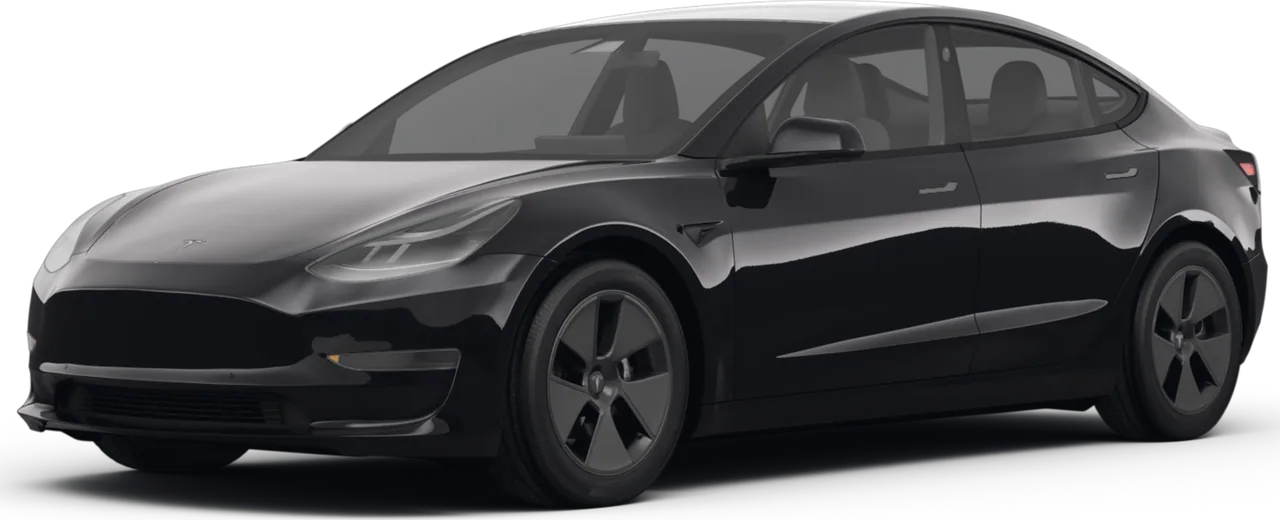
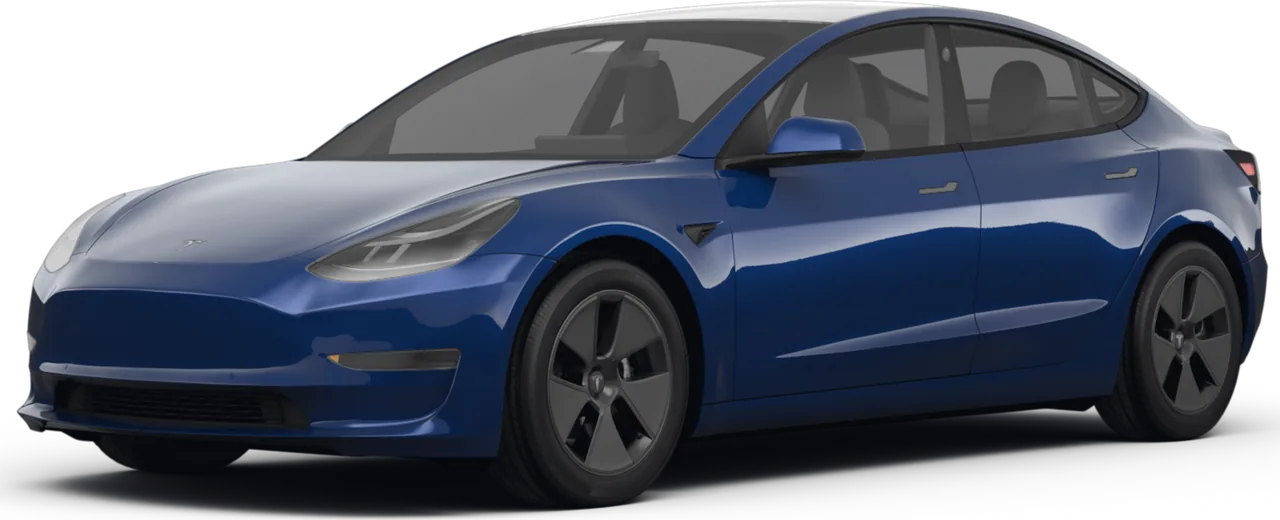
2023 Tesla Model 3 RWD
Electric Sedan · RWD
Based on battery health, build quality, owner data, EPA range, and market pricing
Below average for 2023 EV Sedans (class avg 69)
Personalize this scoreIs a low score bad?
Last scanned 24 days ago
The 2023 Tesla Model 3 RWD is rated at 272 miles of EPA range and 250 kW fast charging, and 10 recall campaigns affect this make/year — verify every one is closed on the exact VIN.
Score read
A 68/100 makes this worth comparing, not chasing. Do not let the composite hide this split: battery-health score is 81/100, while range and efficiency score is 54/100. Reddit threads cluster around owner satisfaction and range — verify both against the service records. Documented completion matters more than the recall count itself.
Price context
Used examples are running around $29,246. Treat that as a budgeting floor, not a final price; pull a current KBB Fair Purchase or Edmunds True Market Value for this exact trim before negotiating.
Who this is for
✓ Good for
- ⏱ Daily commuter ≤50 mi/day, predictable charging
✗ Avoid if you are a
- $ Bargain hunter Best TCO, reliability + low depreciation
Gotchas
- Serviceable Recall paperwork has to match the exact VIN.
Mitigation Use NHTSA and the automaker lookup, then require repair records instead of a verbal promise.
- Built in Range is the easy place to overbuy this trim (54/100).
Mitigation Check your commute, winter margin, and fast-charge plan before you assume the EPA number fits your use.
Pre-purchase inspection
- 1 Run the exact VIN through NHTSA and the automaker recall lookup before discussing price.
- 2 Compare the dashboard range estimate with the EPA 272-mile rating after a full charge.
- 3 Confirm how much of the 8-year/100,000-mile battery warranty remains and whether it transfers.
- 4 If road trips matter, run a short DC fast-charge session and watch whether speed tapers normally.
- 5 Map your normal highway route and winter margin against the EPA range before you treat it as a road-trip car.
VIN status first This model has 10 NHTSA recall records. The exact VIN lookup decides whether the car in front of you is clear.
Complaint context This scan found 399 NHTSA complaint records (4.2 per 10K VINs, low for any vehicle class). Read the themes below before treating the raw count as the verdict.
Price anchor Current market range is $24,200-$29,498. Use that range to compare listings for the same trim, mileage, and condition.
Pricing & Market Value
Score Breakdown
What matters most to you?
Drag the sliders to prioritize what you care about. Your TrimIndex Score recalculates instantly.
Vehicle Specifications
EVs at your price point that match or beat this trim
Price-gated peer set: vehicles within $21.5K–$32.2K market value (±20% of $26.8K). 5 outscore · 1 score within ±2. Mixed across makes — no "spend more, score better" comps.
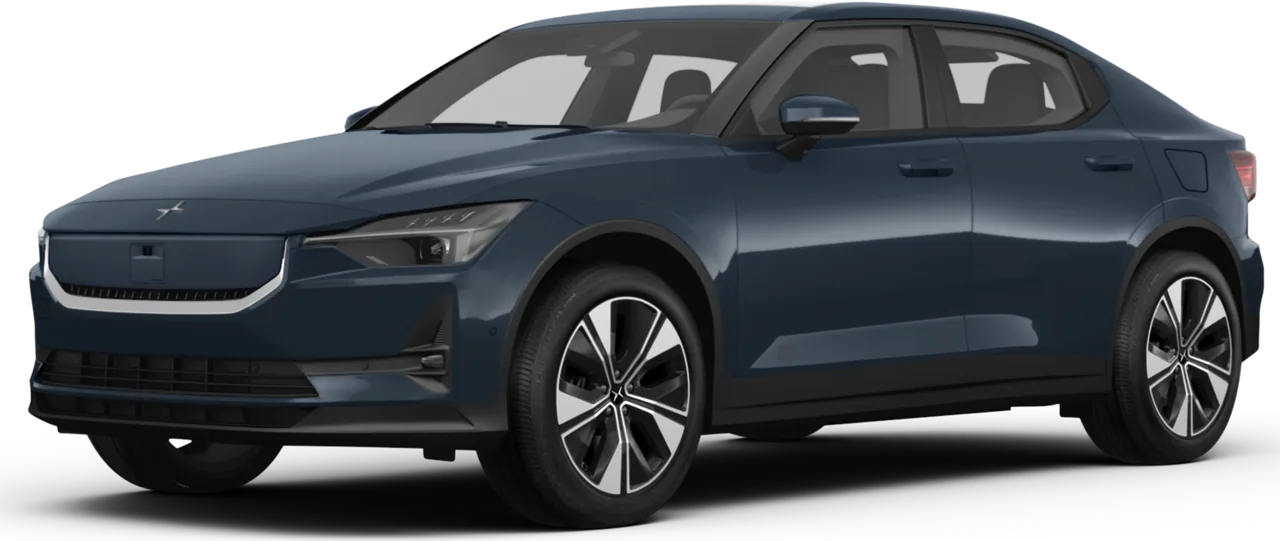
2
- ✓ Better infotainment UX
- ✓ Notably better build quality
- ✓ Better bang-for-buck
Model 3
- ✓ Better infotainment UX
- ✓ +86 mi more range
- ✓ Notably better build quality
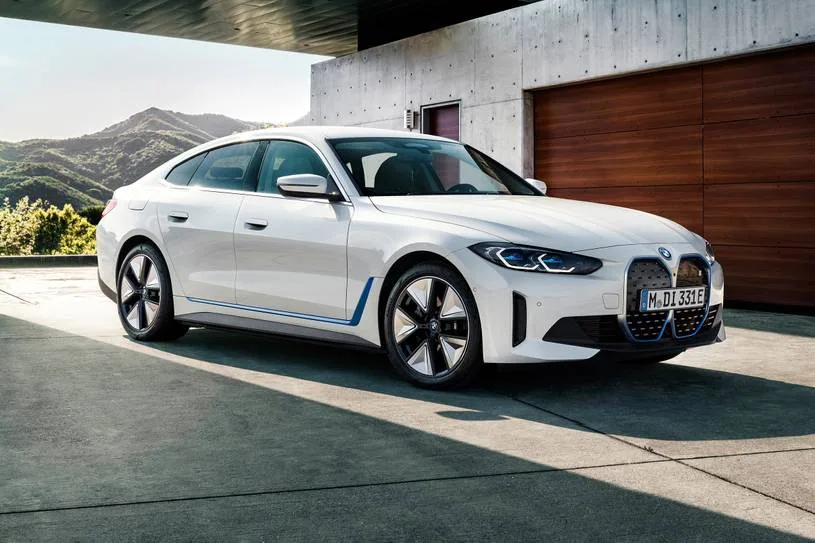
i4
- ✓ Better infotainment UX
- ✓ Better bang-for-buck
- ✓ +29 mi more range
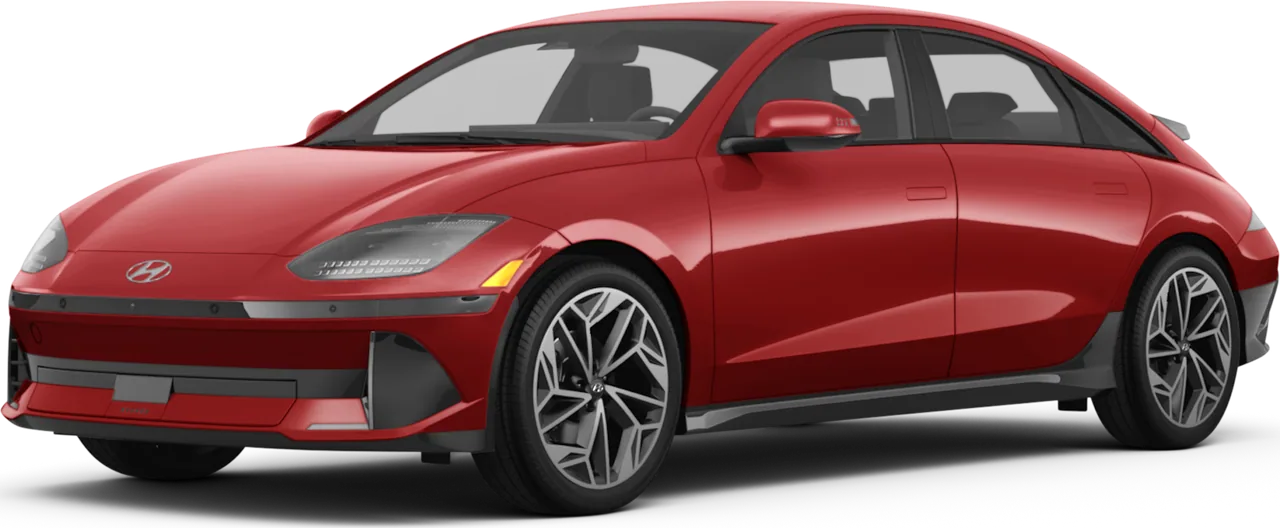
Ioniq 6
- ✓ Better bang-for-buck
- ✓ +89 mi more range
- ✓ Better infotainment UX
2
- ✓ Better infotainment UX
- ✓ Notably better build quality
- ✓ Better bang-for-buck
Model 3
- ✓ Better bang-for-buck
- ✓ +43 mi more range
- ✓ Better infotainment UX
The federal $4,000 used-EV credit ended Sept 30, 2025.
But 10 states still run their own used-EV rebate programs — some up to $5,000. Pick your state to see what's available for this trim.
Source & disclaimer
Dealers make ~$8,463 on the average car loan.
After the price is set, the finance manager runs four plays to rebuild margin. Every buyer without a pre-approval is a target. Here's exactly what they run — and what stops each one.
78% of dealer loans carry a hidden +1.13% markup above what the lender actually charges. You never see it — it's buried in the contract. · CFPB
Dealer must match or beat your lender — they can't add margin invisibly. The markup play is dead on arrival.
Once you answer, they stretch the term to hit your number. Median result: $4K less off the price, 12 more months on the loan. · Industry avg
Financing is done. Only the sale price is on the table — and the dealer knows it.
Back-office F&I profit averages $1,975/vehicle, up 8.5% YoY. These products exist — but dealer markup is 4–10x what you'd pay elsewhere. · Dealership Guy
Dealer GAP runs $500–1K. Your insurer sells the same coverage for $100–250 over 5 years. Now you know.
"Your loan fell through — come re-sign." This pulls your APR up +5% on average. It's legal. It works because you've already driven the car home. · Ctr for Responsible Lending
A lender commitment letter means the deal is final. "Pending dealer approval" doesn't apply. You can't be yo-yo'd.
That's 21 months of your car payment — handed to the dealer's finance department for nothing.
Takes 2 minutes. No obligation to use it — but you'll walk in with all the leverage.
Pre-approval is a soft credit inquiry — no score impact. FICO treats all auto-loan hard pulls within 14 days as one, so you can still shop rates at the dealer.
NHTSA Recalls (10)
Tesla, Inc. (Tesla) is recalling certain 2023 Model 3 and Model Y vehicles operating software prior to 2023.38.4. The printed circuit board for the electronic power steering assist may experience an overstress condition, causing a loss of power steering assist when the vehicle reaches a stop and then accelerates again.
A loss of power steering assist can require greater steering effort, especially at low speeds, increasing the risk of a crash.
Check VIN status at NHTSA.govTesla, Inc. (Tesla) is recalling certain 2024 Cybertruck, 2017-2025 Model 3, and 2020-2025 Model Y vehicles. The tire pressure monitoring system (TPMS) warning light may not remain illuminated between drive cycles, failing to warn the driver of low tire pressure. As such, these vehicles fail to comply with the requirements of Federal Motor Vehicle Safety Standard number 138, "Tire Pressure Monitoring Systems."
Driving with improperly inflated tires increases the risk of a crash.
Check VIN status at NHTSA.govTesla, Inc. (Tesla) is recalling certain 2021-2024 Model 3, Model S, Model X, and 2020-2024 Model Y vehicles. The hood latch assembly may fail to detect an unlatched hood condition after the hood has been opened.
An unlatched hood can fully open, obstructing the driver's view and increasing the risk of a crash.
Check VIN status at NHTSA.govTesla, Inc. (Tesla) is recalling certain 2012-2024 Model S, 2015-2024 Model X, 2017-2023 Model 3, and 2020-2023 Model Y vehicles. In the event of an unbelted driver, the seat belt warning light and audible chime may not activate as intended. As such, these vehicles fail to comply with the requirements of Federal Motor Vehicle Safety Standard number 208, "Occupant Crash Protection."
A seat belt warning system that fails to alert occupants of an unbelted seat belt can increase the risk of injury during a crash.
Check VIN status at NHTSA.govTesla, Inc. (Tesla) is recalling certain 2012-2023 Model S, 2016-2024 Model X, 2017-2023 Model 3, 2019-2024 Model Y, and 2024 Cybertruck vehicles. An incorrect font size is displayed on the instrument panel for the Brake, Park, and Antilock Brake System (ABS) warning lights. As such, these vehicles fail to comply with the requirements of Federal Motor Vehicle Safety Standard number 105, "Hydraulic and Electric Brake Systems" and 135, "Light Vehicle Brake Systems."
Warning lights with a smaller font size can make critical safety information on the instrument panel difficult to read, increasing the risk of a crash.
Check VIN status at NHTSA.govTesla, Inc. (Tesla) is recalling 2012-2023 Model S, 2016-2023 Model X, 2017-2023 Model 3, and 2020-2023 Model Y vehicles equipped with all versions of Autosteer leading up to the version(s) that contains the recall remedy. In certain circumstances when Autosteer is engaged, the prominence and scope of the feature's controls may not be sufficient to prevent driver misuse of the SAE Level 2 advanced driver-assistance feature.
In certain circumstances when Autosteer is engaged, and the driver does not maintain responsibility for vehicle operation and is unprepared to intervene as necessary or fails to recognize when Autosteer is canceled or not engaged, there may be an increased risk of a crash.
Check VIN status at NHTSA.govTesla, Inc. (Tesla) is recalling certain 2023 Model 3 and Model Y vehicles. The pyrotechnic battery disconnect may be defective.
A defective battery disconnect may not isolate the vehicle's high voltage battery after a crash or fault detection, increasing the risk of electrical shock and injury.
Check VIN status at NHTSA.govTesla, Inc. (Tesla) is recalling certain 2016-2023 Model S, Model X, 2017-2023 Model 3, and 2020-2023 Model Y vehicles equipped with Full Self-Driving Beta (FSD Beta) software or pending installation. The FSD Beta system may allow the vehicle to act unsafe around intersections, such as traveling straight through an intersection while in a turn-only lane, entering a stop sign-controlled intersection without coming to a complete stop, or proceeding into an intersection during a steady yellow traffic signal without due caution. In addition, the system may respond insufficiently to changes in posted speed limits or not adequately account for the driver's adjustment of the vehicle's speed to exceed posted speed limits.
FSD Beta software that allows a vehicle to exceed speed limits or travel through intersections in an unlawful or unpredictable manner increases the risk of a crash.
Check VIN status at NHTSA.govTesla, Inc. (Tesla) is recalling certain 2023 Model 3 and 2020-2023 Model Y vehicles. One or both taillights may intermittently fail to illuminate.
A taillight that fails to illuminate may reduce the visibility of the vehicle, increasing the risk of a crash.
Check VIN status at NHTSA.govTesla, Inc. (Tesla) is recalling certain 2020-2021, 2023 Model 3 vehicles. The left and/or right side curtain air bag may have been improperly secured to the roof rail, which could result in a twisted air bag. As such, these vehicles fail to comply with the requirements of Federal Motor Vehicle Safety Standard numbers 214, "Side Impact Protection" and 226, "Ejection Mitigation."
A twisted side curtain air bag may improperly deploy, increasing the risk of injury or occupant ejection during a crash.
Check VIN status at NHTSA.govNHTSA Complaints (399 total · 4.2 per 10K US vehicles · low for any vehicle class)
During Autopilot, the vehicle failed to recognize the curve (or did not input enough turning to steering) and accelerated at the curve thinking it is a straight to almost have me crash into a guard rail. No symptoms. No side damage or collisions with others.
During Autopilot, the vehicle failed to recognize the curve (or did not input enough turning to steering) and accelerated at the curve thinking it is a straight to almost have me crash into a guard rail. No symptoms. No side damage or collisions with others.
While driving at highway speed under normal operating conditions with the accelerator engaged and no braking input, the vehicle suddenly experienced a sustained 6-minute-12-second ADAS/EDR degradation cascade. This included OVERHEAT_PROTECT_FANONLY activation, repeated AEB_CAN_STATE_UNAVAILABLE toggling, FAULT 14.0 brake-signal mismatch, impossible negative brake pressures, and 27+ ABS/EBD/ESP fault-lamp cycles. No warning lamps, messages, or alerts appeared prior to the cascade. The degradation resulted in loss of braking assist and stability control functions, causing two collision events (right-side T-bone impact followed by curb strike) despite no driver error or input. This failure mode matches the exact ADAS/EDR degradation pattern under active NHTSA Engineering Analysis EA26002. Full technical details, timestamps, fault logs, sampling gaps, and EDR data are provided in the attached narrative PDF and supporting CSV files.
While driving at highway speed under normal operating conditions with the accelerator engaged and no braking input, the vehicle suddenly experienced a sustained 6-minute-12-second ADAS/EDR degradation cascade. This included OVERHEAT_PROTECT_FANONLY activation, repeated AEB_CAN_STATE_UNAVAILABLE toggling, FAULT 14.0 brake-signal mismatch, impossible negative brake pressures, and 27+ ABS/EBD/ESP fault-lamp cycles. No warning lamps, messages, or alerts appeared prior to the cascade. The degradation resulted in loss of braking assist and stability control functions, causing two collision events (right-side T-bone impact followed by curb strike) despite no driver error or input. This failure mode matches the exact ADAS/EDR degradation pattern under active NHTSA Engineering Analysis EA26002. Full technical details, timestamps, fault logs, sampling gaps, and EDR data are provided in the attached narrative PDF and supporting CSV files.
I was horrified to read of the deaths of three beautiful California girls in a Tesla Cyber Truck, that was involved in a crash, was on fire, and the electrical system malfunctioned resulting in them not being able to get out of the car. Tragically, they burned to death.(Recall too [XXX] ' incident as well as other incidents). I went to search the Internet for Model 3 (2023) to see if there were manual overrides in the event of crash/fire/electrical malfunction (even if related to dead battery) and found a You tube video (NOT information provided by Tesla mind you) that showed that on the front seats, there should be a lever not far from the door handle that you can pull to activate a manual release of the door. In the video, they said 'models' are different as to the rear seats but there 'should be' a lever. I could not find any manual override for the back seat passengers. So, I drove to the Tesla Dealer/Service department to have them show me how to activate the manual override for back seat passengers. The technician admitted that in many Teslas, including mine, THERE WAS NO SUCH CAPABILITY!! He admitted Tesla was acutely aware, they do not prioritize safety and that the back seat passengers would be stuck. He agreed that it will take a major class actions and major fines, and/or jury verdicts for them to do anything about it. Appalling and not acceptable. I would request that NHTSA mandate that all Teslas (probably models before 2025) lacking the device necessary to allow passengers to escape death due to failed electrical system be recalled to modify the car at Tesla's expense to comply with the reasonable expectations of consumers. This is a major design defect, unreasonably dangerous and presents a very real threat to the consumers who have no knowledge of the defect, much less where to look for the override (if it exists) because that information is not provided when you purchase the car. This is no different than the Ford Pinto situation. INFORMATION REDACTED PURSUANT TO THE FREEDOM OF INFORMATION ACT (
I was horrified to read of the deaths of three beautiful California girls in a Tesla Cyber Truck, that was involved in a crash, was on fire, and the electrical system malfunctioned resulting in them not being able to get out of the car. Tragically, they burned to death.(Recall too [XXX] ' incident as well as other incidents). I went to search the Internet for Model 3 (2023) to see if there were manual overrides in the event of crash/fire/electrical malfunction (even if related to dead battery) and found a You tube video (NOT information provided by Tesla mind you) that showed that on the front seats, there should be a lever not far from the door handle that you can pull to activate a manual release of the door. In the video, they said 'models' are different as to the rear seats but there 'should be' a lever. I could not find any manual override for the back seat passengers. So, I drove to the Tesla Dealer/Service department to have them show me how to activate the manual override for back seat passengers. The technician admitted that in many Teslas, including mine, THERE WAS NO SUCH CAPABILITY!! He admitted Tesla was acutely aware, they do not prioritize safety and that the back seat passengers would be stuck. He agreed that it will take a major class actions and major fines, and/or jury verdicts for them to do anything about it. Appalling and not acceptable. I would request that NHTSA mandate that all Teslas (probably models before 2025) lacking the device necessary to allow passengers to escape death due to failed electrical system be recalled to modify the car at Tesla's expense to comply with the reasonable expectations of consumers. This is a major design defect, unreasonably dangerous and presents a very real threat to the consumers who have no knowledge of the defect, much less where to look for the override (if it exists) because that information is not provided when you purchase the car. This is no different than the Ford Pinto situation. INFORMATION REDACTED PURSUANT TO THE FREEDOM OF INFORMATION ACT (
Intersection collision with airbag deploy. Vehicle was totaled. Vehicle remained locked. Even after the collision when the doors were closed the vehicle remained locked. Unable to open rear doors from the inside.
Intersection collision with airbag deploy. Vehicle was totaled. Vehicle remained locked. Even after the collision when the doors were closed the vehicle remained locked. Unable to open rear doors from the inside.
The system failed to detect the driver having a seizure and had no way for the passenger to break the vehicle. People in the vehicle and Others were put at the risk of a seizing person accelerating in a car that could not be prevented by the car or by the passenger. No dealer/service center has confirmed the issues. The vehicle is currently being inspected by police. No known warning signs/messages before the incident.
The system failed to detect the driver having a seizure and had no way for the passenger to break the vehicle. People in the vehicle and Others were put at the risk of a seizing person accelerating in a car that could not be prevented by the car or by the passenger. No dealer/service center has confirmed the issues. The vehicle is currently being inspected by police. No known warning signs/messages before the incident.
Full self drive FSD took car in opposite road direction, sudden lane changes, almost crash in upcoming traffic. Sudden stops in middle in road. FSD autopilot very dangerous driving that could cost crash. I can’t trust FSD
Full self drive FSD took car in opposite road direction, sudden lane changes, almost crash in upcoming traffic. Sudden stops in middle in road. FSD autopilot very dangerous driving that could cost crash. I can’t trust FSD
While the car was on the full self-driving it hit a metal block on the road. After the accident there was leakage behind the left front wheel of blue liquid and was suspected to be battery coolant. The car was not drivable due to safety concern. The car functions were degraded and air conditioning was not working. Sensors were on and off. The self-driving could not identify block and did not slow down. The self-driving system has major defect which is not safe to use at all.
While the car was on the full self-driving it hit a metal block on the road. After the accident there was leakage behind the left front wheel of blue liquid and was suspected to be battery coolant. The car was not drivable due to safety concern. The car functions were degraded and air conditioning was not working. Sensors were on and off. The self-driving could not identify block and did not slow down. The self-driving system has major defect which is not safe to use at all.
When using FSD beta, vehicle would fail to stop for red lights. Vehicle also attempted to merge me both into a tractor trailer traveling the opposite direction and a jersey barrier. This is a very dangerous and unsafe system that will lead to many fatalities
When using FSD beta, vehicle would fail to stop for red lights. Vehicle also attempted to merge me both into a tractor trailer traveling the opposite direction and a jersey barrier. This is a very dangerous and unsafe system that will lead to many fatalities
I am writing to express my deep concern regarding the recent rear drive unit internal part failure in my new Tesla Model 3. The incident has left me fearful that this issue may occur again, and I am genuinely worried for my safety. I implore you and all the employees at Tesla to be honest and transparent about this defect or failure. The gravity of the situation became apparent when I realized how fortunate I was that the car did not come to a halt on the train tracks. The potential consequences could have been catastrophic, not only for myself but also for the passengers on the train. It is alarming to think that such a dangerous situation could arise in a vehicle that is merely five months old. This level of negligence is unacceptable. The rear drive unit failed and the car stopped. I was instructed to reset. I did it twice but still not working. I am lucky it happened on a not busy street and was able to steer the car to the side of the road before it became disabled.
I am writing to express my deep concern regarding the recent rear drive unit internal part failure in my new Tesla Model 3. The incident has left me fearful that this issue may occur again, and I am genuinely worried for my safety. I implore you and all the employees at Tesla to be honest and transparent about this defect or failure. The gravity of the situation became apparent when I realized how fortunate I was that the car did not come to a halt on the train tracks. The potential consequences could have been catastrophic, not only for myself but also for the passengers on the train. It is alarming to think that such a dangerous situation could arise in a vehicle that is merely five months old. This level of negligence is unacceptable. The rear drive unit failed and the car stopped. I was instructed to reset. I did it twice but still not working. I am lucky it happened on a not busy street and was able to steer the car to the side of the road before it became disabled.
When I was trying to park my Tesla Model 3 car it suddenly accelerated and hit a parked car in front of me. I took the car to the repair shop and told them the situation. My reason for the accident didn’t make sense to them so I stated that I may have pressed accelerator instead of brakes but I know that I didn’t press the accelerator. My car has been at the repair shop since 10/14/2023. So, far no one from the Tesla Motors, Inc. came to investigate the claim. Even if they repair the car, I don’t feel comfortable driving the car due to the fact that unintended acceleration may repeat itself.
When I was trying to park my Tesla Model 3 car it suddenly accelerated and hit a parked car in front of me. I took the car to the repair shop and told them the situation. My reason for the accident didn’t make sense to them so I stated that I may have pressed accelerator instead of brakes but I know that I didn’t press the accelerator. My car has been at the repair shop since 10/14/2023. So, far no one from the Tesla Motors, Inc. came to investigate the claim. Even if they repair the car, I don’t feel comfortable driving the car due to the fact that unintended acceleration may repeat itself.
I was pulling into a park spot, coming to a stop and the car within seconds accelerated into a building. There was no warning at all. Also, after the collision a warning popped on the screen saying that the emergency break was disabled. This was the first time seeing this alert, and I did not disable anything. I picked up the car on 11/28.
I was pulling into a park spot, coming to a stop and the car within seconds accelerated into a building. There was no warning at all. Also, after the collision a warning popped on the screen saying that the emergency break was disabled. This was the first time seeing this alert, and I did not disable anything. I picked up the car on 11/28.
There is no manual door release for rear doors in the Tesla model 3 RWD. This can pose a safety issue if the car has no power and passengers need to evacuate the vehicle.
There is no manual door release for rear doors in the Tesla model 3 RWD. This can pose a safety issue if the car has no power and passengers need to evacuate the vehicle.
There's a problem with the airbags, and the steering wheel is hard to turn.
There's a problem with the airbags, and the steering wheel is hard to turn.
Regen braking sporadically not working when going down mountain or steep roads. Sometimes they work and sometimes they won’t. This is after extensive driving on warm days while battery is between 70-80%. Support could not help me and they don’t have any technicians available. I’ve sent them videos and time stamps and they are ignoring the issue and unable to help due to lack of knowledgable representatives This is a serious safety concern
Regen braking sporadically not working when going down mountain or steep roads. Sometimes they work and sometimes they won’t. This is after extensive driving on warm days while battery is between 70-80%. Support could not help me and they don’t have any technicians available. I’ve sent them videos and time stamps and they are ignoring the issue and unable to help due to lack of knowledgable representatives This is a serious safety concern
During a major car accident the airbags for my Tesla, Model 3, 2023 did not deploy airbags although other impacted cars had full airbags deployed. This posed a risk to my safety as a driver due to not having the proper equipment deployed during a major accident. This was noticed by the emergency personnel on the scene who stated that based on my impact the airbags should have been activated from my collision. According to the safety records associated with my car to date there are no safety reports regarding the airbags for my car. There was no warning of my airbags not being able to be fully functioning at the time of impact. This incident happened on November 1st and is in the process of being investigated by the Harris County sheriff's department.
During a major car accident the airbags for my Tesla, Model 3, 2023 did not deploy airbags although other impacted cars had full airbags deployed. This posed a risk to my safety as a driver due to not having the proper equipment deployed during a major accident. This was noticed by the emergency personnel on the scene who stated that based on my impact the airbags should have been activated from my collision. According to the safety records associated with my car to date there are no safety reports regarding the airbags for my car. There was no warning of my airbags not being able to be fully functioning at the time of impact. This incident happened on November 1st and is in the process of being investigated by the Harris County sheriff's department.
The vehicle’s brakes did not work, automatic emergency brakes and collision warning both did not work. I pressed on the brake for about 5 seconds but the brakes did not work, resulting in a collision with the car in front. Everything is available for inspection if needed. Both my safety and the driver of the vehicle in front of me was at risk. The problem has not been confirmed yet. The vehicle is currently at a shop, waiting inspection. There were no warning lamps, messages, or symptoms.
The vehicle’s brakes did not work, automatic emergency brakes and collision warning both did not work. I pressed on the brake for about 5 seconds but the brakes did not work, resulting in a collision with the car in front. Everything is available for inspection if needed. Both my safety and the driver of the vehicle in front of me was at risk. The problem has not been confirmed yet. The vehicle is currently at a shop, waiting inspection. There were no warning lamps, messages, or symptoms.
While driving, the side mirrors closed and the doors locked by themselves. Then, the front trunk opened, the rear trunk opened, and when I opened the door, the headlights turned on and the front trunk opened again. When I opened the door another time, the side mirrors didn’t unfold, and the headlights started blinking. At high speeds (over 50 mph), I hear a ticking or metal-clanking sound, which is really scary. The car seems to be acting on its own, following some strange “manual” or behavior pattern. I feel unsafe driving it.
While driving, the side mirrors closed and the doors locked by themselves. Then, the front trunk opened, the rear trunk opened, and when I opened the door, the headlights turned on and the front trunk opened again. When I opened the door another time, the side mirrors didn’t unfold, and the headlights started blinking. At high speeds (over 50 mph), I hear a ticking or metal-clanking sound, which is really scary. The car seems to be acting on its own, following some strange “manual” or behavior pattern. I feel unsafe driving it.
In a wreck the car does not have emergency door handles for the back doors if the power shuts off. This is a MAJOR safety issue.
In a wreck the car does not have emergency door handles for the back doors if the power shuts off. This is a MAJOR safety issue.
The contact owned a 2023 Tesla Model 3. The contact stated that while driving at an undisclosed speed on the third floor of a parking garage, the vehicle suddenly accelerated to full speed unintendedly, and the steering wheel and the brake pedal were inoperable, causing the contact to lose control of the vehicle. The vehicle crashed into a wall and crashed into the vehicle in front, and the vehicle stopped. No further information was available. No warning lights were illuminated. The front driver's side air bag deployed. The vehicle was towed to a tow lot and was deemed a total loss by the insurance company. A police report was filed. There was no injury sustained. The manufacturer was not notified of the failure. The failure mileage was 66,000.
The contact owned a 2023 Tesla Model 3. The contact stated that while driving at an undisclosed speed on the third floor of a parking garage, the vehicle suddenly accelerated to full speed unintendedly, and the steering wheel and the brake pedal were inoperable, causing the contact to lose control of the vehicle. The vehicle crashed into a wall and crashed into the vehicle in front, and the vehicle stopped. No further information was available. No warning lights were illuminated. The front driver's side air bag deployed. The vehicle was towed to a tow lot and was deemed a total loss by the insurance company. A police report was filed. There was no injury sustained. The manufacturer was not notified of the failure. The failure mileage was 66,000.
Due to the manual locks being looked at as a safety issue, I went and looked at the REAR door manual release for our Model 3. We also have a 2023 Model Y and I know they have a rear door release, as stupid as the location is, it is there. Well to my surprise, there is NO MANUAL REAR DOOR RELEASE in the model 3!!! How is this even safe? You're supposed to crawl through the front seats and go out the front door? Or even worse, fold the seats down and exit through the trunk? What happens if you're stuck in the back, can't get your seatbelt off? What if you are incapacitated?? What if you get rear ended and then pushed into the car in front of you and it makes it so the front doors are unable to be opened? (this happens quite often) What if the car rolls over, is upside down and you can't get to the front? There are a million situations that make a rear manual door release necessary. How does this even pass safety inspection??? How do you (as a department) even allow this to be acceptable. How are children supposed to do this? This has to be one of the most ridiculous things I've ever heard of and here I am, driving my kids every day around in it. They should be required to either retrofit it with a release that's accessible or replace the rear doors with an accessible release. I'm just in awe as to the failures here.
Due to the manual locks being looked at as a safety issue, I went and looked at the REAR door manual release for our Model 3. We also have a 2023 Model Y and I know they have a rear door release, as stupid as the location is, it is there. Well to my surprise, there is NO MANUAL REAR DOOR RELEASE in the model 3!!! How is this even safe? You're supposed to crawl through the front seats and go out the front door? Or even worse, fold the seats down and exit through the trunk? What happens if you're stuck in the back, can't get your seatbelt off? What if you are incapacitated?? What if you get rear ended and then pushed into the car in front of you and it makes it so the front doors are unable to be opened? (this happens quite often) What if the car rolls over, is upside down and you can't get to the front? There are a million situations that make a rear manual door release necessary. How does this even pass safety inspection??? How do you (as a department) even allow this to be acceptable. How are children supposed to do this? This has to be one of the most ridiculous things I've ever heard of and here I am, driving my kids every day around in it. They should be required to either retrofit it with a release that's accessible or replace the rear doors with an accessible release. I'm just in awe as to the failures here.
On [XXX], my 2023 Tesla Model 3 (VIN: [XXX] ) suddenly accelerated on its own and the brakes failed to respond despite repeated pressing. To avoid hitting other vehicles, I turned into a property driveway and struck a tree. The airbags deployed. This was a case of sudden unintended acceleration combined with complete brake failure, creating a serious safety hazard. Forward Collision Warning also did not prevent the impact. A police report was filed by the Dekalb County Police Department, GA, USA (Report #[XXX], Case #[XXX]), which specifically documented brake failure as the cause of the accident. The report also notes that the driver was injured by the airbag and that the vehicle had to be towed from the scene. A copy of the police report can be provided upon request. INFORMATION REDACTED PURSUANT TO THE FREEDOM OF INFORMATION ACT (FOIA), 5 U.S.C. 552(B)(6)
On [XXX], my 2023 Tesla Model 3 (VIN: [XXX] ) suddenly accelerated on its own and the brakes failed to respond despite repeated pressing. To avoid hitting other vehicles, I turned into a property driveway and struck a tree. The airbags deployed. This was a case of sudden unintended acceleration combined with complete brake failure, creating a serious safety hazard. Forward Collision Warning also did not prevent the impact. A police report was filed by the Dekalb County Police Department, GA, USA (Report #[XXX], Case #[XXX]), which specifically documented brake failure as the cause of the accident. The report also notes that the driver was injured by the airbag and that the vehicle had to be towed from the scene. A copy of the police report can be provided upon request. INFORMATION REDACTED PURSUANT TO THE FREEDOM OF INFORMATION ACT (FOIA), 5 U.S.C. 552(B)(6)
The contact owns a 2023 Tesla Model 3. The contact stated that while driving 70 MPH, the vehicle jerked hard with several alerts for the "Traction Control, ABS, Lane Departure feature displayed. Additionally, the Stability Control System was disabled, and the message “Brake Hold Unavailable” was displayed. The contact stated that the “Automatic Emergency Braking Unavailable" and an orange triangle with an exclamation light were illuminated. The vehicle was not diagnosed or repaired. The manufacturer was not notified of the failure. The failure mileage was 48,380.
The contact owns a 2023 Tesla Model 3. The contact stated that while driving 70 MPH, the vehicle jerked hard with several alerts for the "Traction Control, ABS, Lane Departure feature displayed. Additionally, the Stability Control System was disabled, and the message “Brake Hold Unavailable” was displayed. The contact stated that the “Automatic Emergency Braking Unavailable" and an orange triangle with an exclamation light were illuminated. The vehicle was not diagnosed or repaired. The manufacturer was not notified of the failure. The failure mileage was 48,380.
Three times while driving at low speed and attempting to reduce speed—even while pressing the brake pedal—my 2023 Tesla Model 3 unexpectedly accelerated. During the first incident, the Dynamics screen did not allow me to change the Deceleration Mode. After rebooting the touchscreen, the options reappeared briefly, but later that same day they became unavailable again. Incident Times: 2nd incident: September 3, 2025, at approximately 4:15 PM EST 3rd incident: September 4, 2025, at approximately 4:50 PM EST
Three times while driving at low speed and attempting to reduce speed—even while pressing the brake pedal—my 2023 Tesla Model 3 unexpectedly accelerated. During the first incident, the Dynamics screen did not allow me to change the Deceleration Mode. After rebooting the touchscreen, the options reappeared briefly, but later that same day they became unavailable again. Incident Times: 2nd incident: September 3, 2025, at approximately 4:15 PM EST 3rd incident: September 4, 2025, at approximately 4:50 PM EST
Vehicle Information: 2023 Tesla Model 3 VIN: [XXX] Incident Date: [XXX] Location: [XXX] Summary of the Problem: On [XXX], while Autopilot was active, my 2023 Tesla Model 3 suddenly accelerated without driver input. I was pressing the brake pedal, but the vehicle surged forward uncontrollably, struck a fence and a tree, and caused major property damage. Both I and my wife (passenger) required urgent care treatment after the crash. Details / Safety Defect Evidence: •Tesla’s own raw logs show the accelerator spiked to 100% immediately before impact. •Brake pressure was recorded prior to impact, proving the brake pedal was applied. •Despite this, Tesla’s official Vehicle Data Report falsely states “manual brake not applied.” •Autopilot did not disengage when the brake was pressed, contrary to Tesla’s design claims. •The vehicle logged a “Near-Deploy Collision” at ~27 mph, yet the airbags did not deploy. Why This Is a Safety Defect: This incident reflects multiple critical failures: 1.Sudden unintended acceleration. 2.Failure of brake-override safety design. 3.Airbag non-deployment in a crash severe enough to trigger “Near-Deploy.” 4.Inaccurate Tesla reporting that conceals braking input. This defect created an extremely dangerous situation that could easily have resulted in fatalities. I am requesting NHTSA investigate Tesla vehicles for unintended acceleration, brake override failure, and airbag non-deployment. INFORMATION REDACTED PURSUANT TO THE FREEDOM OF INFORMATION ACT (FOIA), 5 U.S.C. 552(B)(6)
Vehicle Information: 2023 Tesla Model 3 VIN: [XXX] Incident Date: [XXX] Location: [XXX] Summary of the Problem: On [XXX], while Autopilot was active, my 2023 Tesla Model 3 suddenly accelerated without driver input. I was pressing the brake pedal, but the vehicle surged forward uncontrollably, struck a fence and a tree, and caused major property damage. Both I and my wife (passenger) required urgent care treatment after the crash. Details / Safety Defect Evidence: •Tesla’s own raw logs show the accelerator spiked to 100% immediately before impact. •Brake pressure was recorded prior to impact, proving the brake pedal was applied. •Despite this, Tesla’s official Vehicle Data Report falsely states “manual brake not applied.” •Autopilot did not disengage when the brake was pressed, contrary to Tesla’s design claims. •The vehicle logged a “Near-Deploy Collision” at ~27 mph, yet the airbags did not deploy. Why This Is a Safety Defect: This incident reflects multiple critical failures: 1.Sudden unintended acceleration. 2.Failure of brake-override safety design. 3.Airbag non-deployment in a crash severe enough to trigger “Near-Deploy.” 4.Inaccurate Tesla reporting that conceals braking input. This defect created an extremely dangerous situation that could easily have resulted in fatalities. I am requesting NHTSA investigate Tesla vehicles for unintended acceleration, brake override failure, and airbag non-deployment. INFORMATION REDACTED PURSUANT TO THE FREEDOM OF INFORMATION ACT (FOIA), 5 U.S.C. 552(B)(6)
While driving to work on a local road, I approached a red light where there were no vehicles immediately ahead. However, my vehicle unexpectedly steered off the road in front of a construction sign, entering a ditch. Despite my attempts to regain control of the steering and braking systems, I was unsuccessful. The vehicle subsequently stopped automatically on an incline. Fortunately, I avoided a collision with a gas station and intersecting roadway, but sustained damage to my car’s front bumper. Law enforcement and a towing service were contacted to remove the vehicle. I tried calling the dealership almost half day without an answer, then I went to the dealership where they told me that the hardware is fine but they can’t do anything about the possible software issues which leaves me in a situation where I’m nervous to drive the car. I reached out to the company about the accident and didn’t hear back yet from them. I request a thorough investigation into this incident to determine the cause of the unexpected, highly dangerous, autopilot behavior. I am disturbed mentally and emotionally due to the accident. I also require confirmation of the vehicle's roadworthiness and assurance that it is safe to operate before resuming driving.
While driving to work on a local road, I approached a red light where there were no vehicles immediately ahead. However, my vehicle unexpectedly steered off the road in front of a construction sign, entering a ditch. Despite my attempts to regain control of the steering and braking systems, I was unsuccessful. The vehicle subsequently stopped automatically on an incline. Fortunately, I avoided a collision with a gas station and intersecting roadway, but sustained damage to my car’s front bumper. Law enforcement and a towing service were contacted to remove the vehicle. I tried calling the dealership almost half day without an answer, then I went to the dealership where they told me that the hardware is fine but they can’t do anything about the possible software issues which leaves me in a situation where I’m nervous to drive the car. I reached out to the company about the accident and didn’t hear back yet from them. I request a thorough investigation into this incident to determine the cause of the unexpected, highly dangerous, autopilot behavior. I am disturbed mentally and emotionally due to the accident. I also require confirmation of the vehicle's roadworthiness and assurance that it is safe to operate before resuming driving.
My Tesla Model 3 disengaged cruise control while going 68 mph and braked hard for no apparent reason. I was driving northbound on I-405 at 3:45 a.m. going to LAX airport in the number 3 or 4 of six or seven lanes. Cruise control had been activated for at least 10 minutes before the incident at a speed of 68 mph. There was no traffic within half a mile before or after me due to the time of day. Neither my left or right foot were near either the brake or acceleration pedal, nor were they in motion. Both hands were on the steering wheel and no control was being activated. The only noticeable environmental condition is that the road surface had just changed from a dark gray asphalt to a bright white new concrete roadway. No emergency braking alert was seen or heard, so I do not think it was a false collision detection, and there was no car within a half mile. However, I do believe the severity of braking could have caused an accident if there had been someone behind me. Tesla Model 3 Software Version was v12 (2025.20.6 046c4575d120).
My Tesla Model 3 disengaged cruise control while going 68 mph and braked hard for no apparent reason. I was driving northbound on I-405 at 3:45 a.m. going to LAX airport in the number 3 or 4 of six or seven lanes. Cruise control had been activated for at least 10 minutes before the incident at a speed of 68 mph. There was no traffic within half a mile before or after me due to the time of day. Neither my left or right foot were near either the brake or acceleration pedal, nor were they in motion. Both hands were on the steering wheel and no control was being activated. The only noticeable environmental condition is that the road surface had just changed from a dark gray asphalt to a bright white new concrete roadway. No emergency braking alert was seen or heard, so I do not think it was a false collision detection, and there was no car within a half mile. However, I do believe the severity of braking could have caused an accident if there had been someone behind me. Tesla Model 3 Software Version was v12 (2025.20.6 046c4575d120).
The contact rented a 2023 Tesla Model 3. The contact stated that while driving at 55 MPH in the rain, a vehicle in front of him abruptly slowed down. The contact depressed the brake pedal, but the vehicle jerked to the side. The contact stated that the emergency braking system unexpectedly activated ("slams on") while he was driving due to the Automatic Emergency Braking (AEB) system falsely detecting a potential collision. There were large rocks in the roadway, and there was no traction, causing him to crash into an embankment. The driver's side airbag did not deploy. The other airbags in the vehicle had deployed. The contact sustained a fractured rib, and medical attention was provided at the hospital. The vehicle was towed to a towing company. There were no reported fires. A police report was filed. The local dealer was not contacted. The vehicle was not diagnosed or repaired. The vehicle was taken to an independent mechanic, where an unknown diagnosis was completed. The vehicle was not repaired. The manufacturer was contacted, but no assistance was provided. The failure mileage was unknown.
The contact rented a 2023 Tesla Model 3. The contact stated that while driving at 55 MPH in the rain, a vehicle in front of him abruptly slowed down. The contact depressed the brake pedal, but the vehicle jerked to the side. The contact stated that the emergency braking system unexpectedly activated ("slams on") while he was driving due to the Automatic Emergency Braking (AEB) system falsely detecting a potential collision. There were large rocks in the roadway, and there was no traction, causing him to crash into an embankment. The driver's side airbag did not deploy. The other airbags in the vehicle had deployed. The contact sustained a fractured rib, and medical attention was provided at the hospital. The vehicle was towed to a towing company. There were no reported fires. A police report was filed. The local dealer was not contacted. The vehicle was not diagnosed or repaired. The vehicle was taken to an independent mechanic, where an unknown diagnosis was completed. The vehicle was not repaired. The manufacturer was contacted, but no assistance was provided. The failure mileage was unknown.
Car is disengaging Full Self Driving because of steering becoming difficult at slow speeds in a turn. FSD disengages and the car drive straight instead of staying in the turn, crash could be likely.
Car is disengaging Full Self Driving because of steering becoming difficult at slow speeds in a turn. FSD disengages and the car drive straight instead of staying in the turn, crash could be likely.
I was traveling at highway speeds on a highway with no vehicles or other obstacles in front of me. I had adaptive cruise control on. Then, the emergency brakes deployed for no reason (so called “phantom braking”), decelerating the car quickly. I turned off adaptive cruise control as fast as I could and nothing bad happened. But the situation was dangerous, as if a car was close behind me it could have rear ended my vehicle.
I was traveling at highway speeds on a highway with no vehicles or other obstacles in front of me. I had adaptive cruise control on. Then, the emergency brakes deployed for no reason (so called “phantom braking”), decelerating the car quickly. I turned off adaptive cruise control as fast as I could and nothing bad happened. But the situation was dangerous, as if a car was close behind me it could have rear ended my vehicle.
Incident Summary: On [XXX], I was in an accident and dropped my Tesla Model 3 at Tesla’s North Phoenix Collision Center in Nov 2024. I received the car back in Dec/Jan. Immediately, I noticed dangerous swaying, bouncing, and veering when hitting dips—especially on the freeway. The car was unstable and unsafe to drive at high speeds. In Feb/Mar, Tanner (assistant manager at the collision center) drove the vehicle with me in the passenger seat. After hitting a dip on the freeway, he panicked, exited, and agreed something was wrong. I was later told they did a wheel alignment, but the issue remained. This was the second time they returned the vehicle in an unsafe condition. I nearly crashed due to how unstable it felt. In May 2025, I brought the car back again. Tanner suspected the steering column but said no diagnosis was done. He gave me a loaner vehicle, which had a flat tire. I had to drive my own unsafe car for nearly a month while waiting for another loaner and parts—no resolution during that time. On 6/13/2025, I contacted the Tesla Glendale Service Center. The advisor expressed frustration, saying this collision center often offloads unresolved issues. I also contacted Tesla Support (877-798-3752), who advised me to file this NHTSA complaint. As of June 2025, the issue is still unresolved. My car continues to sway and veer dangerously on the freeway, and Tesla North Phoenix Collision has failed to properly diagnose or fix it despite multiple returns. This vehicle is unsafe to drive, and I’ve been given excuses for over 7 months. INFORMATION REDACTED PURSUANT TO THE FREEDOM OF INFORMATION ACT (FOIA), 5 U.S.C. 552(B)(6)
Incident Summary: On [XXX], I was in an accident and dropped my Tesla Model 3 at Tesla’s North Phoenix Collision Center in Nov 2024. I received the car back in Dec/Jan. Immediately, I noticed dangerous swaying, bouncing, and veering when hitting dips—especially on the freeway. The car was unstable and unsafe to drive at high speeds. In Feb/Mar, Tanner (assistant manager at the collision center) drove the vehicle with me in the passenger seat. After hitting a dip on the freeway, he panicked, exited, and agreed something was wrong. I was later told they did a wheel alignment, but the issue remained. This was the second time they returned the vehicle in an unsafe condition. I nearly crashed due to how unstable it felt. In May 2025, I brought the car back again. Tanner suspected the steering column but said no diagnosis was done. He gave me a loaner vehicle, which had a flat tire. I had to drive my own unsafe car for nearly a month while waiting for another loaner and parts—no resolution during that time. On 6/13/2025, I contacted the Tesla Glendale Service Center. The advisor expressed frustration, saying this collision center often offloads unresolved issues. I also contacted Tesla Support (877-798-3752), who advised me to file this NHTSA complaint. As of June 2025, the issue is still unresolved. My car continues to sway and veer dangerously on the freeway, and Tesla North Phoenix Collision has failed to properly diagnose or fix it despite multiple returns. This vehicle is unsafe to drive, and I’ve been given excuses for over 7 months. INFORMATION REDACTED PURSUANT TO THE FREEDOM OF INFORMATION ACT (FOIA), 5 U.S.C. 552(B)(6)
Front driver seatbelt will not latch or lock. Car less than 3 years old.
Front driver seatbelt will not latch or lock. Car less than 3 years old.
The volume control buttons and vehicle setting buttons on my car’s steering wheel are made of metal. In high atmospheric temperatures the interior of the car heats up. The buttons also heat up and can cause burns if touching the button for an extended (more than 30 seconds) amount of time. This is very distracting while driving while also causing a mild burn.
The volume control buttons and vehicle setting buttons on my car’s steering wheel are made of metal. In high atmospheric temperatures the interior of the car heats up. The buttons also heat up and can cause burns if touching the button for an extended (more than 30 seconds) amount of time. This is very distracting while driving while also causing a mild burn.
RCM2_a636 Front passenger safety restraint system fault (service is required) This causes an issue where the airbags won’t deploy due to it not thinking there is someone sitting there or not
RCM2_a636 Front passenger safety restraint system fault (service is required) This causes an issue where the airbags won’t deploy due to it not thinking there is someone sitting there or not
What component or system failed or malfunctioned, and is it available for inspection upon request? Steering Wheel. How was your safety or the safety of others put at risk? Single vehicle accident. Driver suffered injury. No other person or vehicle was involved. Has the problem been reproduced or confirmed by a dealer or independent service center? Don't Know. Has the vehicle or component been inspected by the manufacturer, police, insurance representatives or others? In progress. Were there any warning lamps, messages or other symptoms of the problem prior to the failure, and when did they first appear? No indications were visible.
What component or system failed or malfunctioned, and is it available for inspection upon request? Steering Wheel. How was your safety or the safety of others put at risk? Single vehicle accident. Driver suffered injury. No other person or vehicle was involved. Has the problem been reproduced or confirmed by a dealer or independent service center? Don't Know. Has the vehicle or component been inspected by the manufacturer, police, insurance representatives or others? In progress. Were there any warning lamps, messages or other symptoms of the problem prior to the failure, and when did they first appear? No indications were visible.
My dad was driving to work in the morning in the Tesla in the left lane of the freeway. Then the car started swerving on its own. He tried to regain control with the steering wheel but he couldn’t control it. The car wouldn’t turn when using the steering wheel and he was not using autopilot or lane assistance. He said it felt like the steering wheel and the car were not talking to each other. And the brakes weren’t stopping the car at all and because he couldn’t control the car it turned left into the divider and hit the divider and the car turn again to the right and automatically stopped in the middle of the second lane. The airbags deployed for the driver side. Thankfully there weren’t any other cars on the road at the time so there aren’t any injuries. But this crash could’ve caused serious injuries to him or other people. There were no warning signs, alerts, or noises before this happened. He has filed a claim with the insurance company. And a crash report was filed by the police.
My dad was driving to work in the morning in the Tesla in the left lane of the freeway. Then the car started swerving on its own. He tried to regain control with the steering wheel but he couldn’t control it. The car wouldn’t turn when using the steering wheel and he was not using autopilot or lane assistance. He said it felt like the steering wheel and the car were not talking to each other. And the brakes weren’t stopping the car at all and because he couldn’t control the car it turned left into the divider and hit the divider and the car turn again to the right and automatically stopped in the middle of the second lane. The airbags deployed for the driver side. Thankfully there weren’t any other cars on the road at the time so there aren’t any injuries. But this crash could’ve caused serious injuries to him or other people. There were no warning signs, alerts, or noises before this happened. He has filed a claim with the insurance company. And a crash report was filed by the police.
Seatbelt of drivers side won’t latch into compartment, putting myself and others at risk
Seatbelt of drivers side won’t latch into compartment, putting myself and others at risk
FRONT LEFTSAFTEY RESTRAINT SYSTEM FAULT/SERVICE IS REQUIRED TESLA WANT TO CHARGE $351 TO START FOR THE SERVICE
FRONT LEFTSAFTEY RESTRAINT SYSTEM FAULT/SERVICE IS REQUIRED TESLA WANT TO CHARGE $351 TO START FOR THE SERVICE
I was involved in an accident due to what I believe was a malfunction in my Tesla’s steering system. While driving, the car unexpectedly turned the wheel to the left on its own and collided with a parked car. Despite my efforts to regain control by turning the wheel to the right and applying the brakes, the vehicle did not respond, and I was unable to prevent the crash. Given the lack of control and failure of the braking system, I strongly believe there was a serious issue with the car that led to the accident.
I was involved in an accident due to what I believe was a malfunction in my Tesla’s steering system. While driving, the car unexpectedly turned the wheel to the left on its own and collided with a parked car. Despite my efforts to regain control by turning the wheel to the right and applying the brakes, the vehicle did not respond, and I was unable to prevent the crash. Given the lack of control and failure of the braking system, I strongly believe there was a serious issue with the car that led to the accident.
UNKNOWN Moving collision resulted in insurance company describing damage as a total loss. It was inspected by an auto collision expert; his description, photos and estimate were forwarded to a claims specialist at the insurance company. The side of my head hit the window on the driver's side, but no airbags inflated. I feel this was a risk to my overall safety. There were no warning messages.
UNKNOWN Moving collision resulted in insurance company describing damage as a total loss. It was inspected by an auto collision expert; his description, photos and estimate were forwarded to a claims specialist at the insurance company. The side of my head hit the window on the driver's side, but no airbags inflated. I feel this was a risk to my overall safety. There were no warning messages.
The full self driving is very dangerous. I had several events that put me in danger. Like, going to the wrong lane. Going to the wrong way. Changing lanes that almost hit a car good thing I took over right away. It made the other car upset and honk at me.
The full self driving is very dangerous. I had several events that put me in danger. Like, going to the wrong lane. Going to the wrong way. Changing lanes that almost hit a car good thing I took over right away. It made the other car upset and honk at me.
during a hydroplaning incident on a ramp, the tesla refused to budge or give any steer. Major issue was no air bags deployed during collision.
during a hydroplaning incident on a ramp, the tesla refused to budge or give any steer. Major issue was no air bags deployed during collision.
What component or system failed or malfunctioned, and is it available for inspection upon request? The steering system appears to have malfunctioned, causing the vehicle to consistently pull to the right, even after multiple alignments with perfect specifications. This issue is ongoing, and the vehicle is available for inspection upon request. How was your safety or the safety of others put at risk? The pulling to the right affects the vehicle's handling and requires constant manual correction by holding the steering wheel tilted to the left. This compromises my ability to control the car safely, particularly during acceleration or regenerative braking when the issue becomes more pronounced. I am concerned that this could lead to an accident or further mechanical failure. Has the problem been reproduced or confirmed by a dealer or independent service center? Yes, the issue has been demonstrated and reproduced during test drives with Tesla service technicians. Despite this, I was told the behavior is "normal" or attributed to road crown, which does not align with my driving experience. Multiple alignments have not resolved the issue. Has the vehicle or component been inspected by the manufacturer, police, insurance representatives, or others? The vehicle has been inspected multiple times by Tesla service centers. Technicians have confirmed the pulling during test drives, but no definitive resolution or explanation has been provided. Were there any warning lamps, messages, or other symptoms of the problem prior to the failure, and when did they first appear? No warning lamps or error messages have appeared. The problem began in September 2024 after I returned from a 4-month military deployment. During this time, the car was parked in my garage and not driven. The issue was first noticed immediately upon resuming use of the vehicle, which had approximately 12,000 miles on the odometer at the time.
What component or system failed or malfunctioned, and is it available for inspection upon request? The steering system appears to have malfunctioned, causing the vehicle to consistently pull to the right, even after multiple alignments with perfect specifications. This issue is ongoing, and the vehicle is available for inspection upon request. How was your safety or the safety of others put at risk? The pulling to the right affects the vehicle's handling and requires constant manual correction by holding the steering wheel tilted to the left. This compromises my ability to control the car safely, particularly during acceleration or regenerative braking when the issue becomes more pronounced. I am concerned that this could lead to an accident or further mechanical failure. Has the problem been reproduced or confirmed by a dealer or independent service center? Yes, the issue has been demonstrated and reproduced during test drives with Tesla service technicians. Despite this, I was told the behavior is "normal" or attributed to road crown, which does not align with my driving experience. Multiple alignments have not resolved the issue. Has the vehicle or component been inspected by the manufacturer, police, insurance representatives, or others? The vehicle has been inspected multiple times by Tesla service centers. Technicians have confirmed the pulling during test drives, but no definitive resolution or explanation has been provided. Were there any warning lamps, messages, or other symptoms of the problem prior to the failure, and when did they first appear? No warning lamps or error messages have appeared. The problem began in September 2024 after I returned from a 4-month military deployment. During this time, the car was parked in my garage and not driven. The issue was first noticed immediately upon resuming use of the vehicle, which had approximately 12,000 miles on the odometer at the time.
The contact owns a 2023 Tesla Model 3. The contact stated that while releasing the accelerator pedal, the vehicle accelerated independently. The contact stated that the vehicle stopped accelerating after 3-seconds. The vehicle was taken to the dealer to be diagnosed, and it was determined that the tires needed to be replaced. The vehicle was not repaired. The manufacturer was not notified of the failure. The failure mileage was 48,426.
The contact owns a 2023 Tesla Model 3. The contact stated that while releasing the accelerator pedal, the vehicle accelerated independently. The contact stated that the vehicle stopped accelerating after 3-seconds. The vehicle was taken to the dealer to be diagnosed, and it was determined that the tires needed to be replaced. The vehicle was not repaired. The manufacturer was not notified of the failure. The failure mileage was 48,426.
While my car was in full self-driving mode, it attempted to make a lane change to the right which almost caused a crash into another vehicle. I had to manually take control of the car. On November 18, 2024, I reported this to the Tesla Service Center in Arlington, VA. Without even inspecting the car, Tesla concluded there was no safety concern and therefore, they declined my request to expeditiously inspect and repair the car. This vehicle has had several problems related to the autopilot system and other systems, and Tesla agreed in August 2024 to take back the vehicle after I filed a lawsuit under my state's lemon laws. I still have the vehicle as I'm still waiting for Tesla to provide instructions on how/when/where to return the car. I am documenting this incident to showcase all steps I took to remedy the defective product Tesla sold me in case the defect results in injury or damage. In the meantime, I have contacted me attorney and requested they send a demand letter to have Tesla make the repairs ASAP since there are clear and present dangers not yet resolved.
While my car was in full self-driving mode, it attempted to make a lane change to the right which almost caused a crash into another vehicle. I had to manually take control of the car. On November 18, 2024, I reported this to the Tesla Service Center in Arlington, VA. Without even inspecting the car, Tesla concluded there was no safety concern and therefore, they declined my request to expeditiously inspect and repair the car. This vehicle has had several problems related to the autopilot system and other systems, and Tesla agreed in August 2024 to take back the vehicle after I filed a lawsuit under my state's lemon laws. I still have the vehicle as I'm still waiting for Tesla to provide instructions on how/when/where to return the car. I am documenting this incident to showcase all steps I took to remedy the defective product Tesla sold me in case the defect results in injury or damage. In the meantime, I have contacted me attorney and requested they send a demand letter to have Tesla make the repairs ASAP since there are clear and present dangers not yet resolved.
After a collision the screen flashed "Air bags deployed". The car then turned on the hazards, called 911 then vented the windows. The issue is the air bags did not deploy at all. I suffered a concussion and whiplash due to the accident. No warning lamps or messages ever appeared before while driving the vehicle.
After a collision the screen flashed "Air bags deployed". The car then turned on the hazards, called 911 then vented the windows. The issue is the air bags did not deploy at all. I suffered a concussion and whiplash due to the accident. No warning lamps or messages ever appeared before while driving the vehicle.
Here’s a template for writing a formal complaint to SaferCar.gov about your Tesla issue: Subject: Vehicle Safety Complaint - Tesla 2023 To Whom It May Concern, I am writing to report a safety issue with my Model 3 manufactured in 2023. This issue has significantly affected the vehicle’s functionality and poses a potential safety risk. Details of the Issue: •VIN (Vehicle Identification Number) [XXX] •Date of Incident: [XXX] •Description of the Problem:: “While driving, the vehicle suddenly was out of control and was under control owned all airbags and airbag scratch my hand seatbelt was not function •Location of Incident: Everet, PA •Outcome: my car being towed, emergency took me to hospital Attempts to Resolve: I have contacted Tesla customer service about this issue, but the problem remains unresolved. Safety Concerns: This issue is not only inconvenient but also endangers my safety and the safety of others on the road. I am deeply concerned about the potential for this defect to cause accidents or injuries. I request that the National Highway Traffic Safety Administration (NHTSA) investigate this issue and take appropriate action to make sure the safety of Tesla vehicles. Contact Information: •Name: [XXX] •Address: [XXX] •Email: [XXX] •Phone [XXX] Thank you for your attention to this matter. I hope to see this issue resolved promptly to prevent further incidents. Sincerely, [XXX] INFORMATION REDACTED PURSUANT TO THE FREEDOM OF INFORMATION ACT (FOIA), 5 U.S.C. 552(B)(6)
Here’s a template for writing a formal complaint to SaferCar.gov about your Tesla issue: Subject: Vehicle Safety Complaint - Tesla 2023 To Whom It May Concern, I am writing to report a safety issue with my Model 3 manufactured in 2023. This issue has significantly affected the vehicle’s functionality and poses a potential safety risk. Details of the Issue: •VIN (Vehicle Identification Number) [XXX] •Date of Incident: [XXX] •Description of the Problem:: “While driving, the vehicle suddenly was out of control and was under control owned all airbags and airbag scratch my hand seatbelt was not function •Location of Incident: Everet, PA •Outcome: my car being towed, emergency took me to hospital Attempts to Resolve: I have contacted Tesla customer service about this issue, but the problem remains unresolved. Safety Concerns: This issue is not only inconvenient but also endangers my safety and the safety of others on the road. I am deeply concerned about the potential for this defect to cause accidents or injuries. I request that the National Highway Traffic Safety Administration (NHTSA) investigate this issue and take appropriate action to make sure the safety of Tesla vehicles. Contact Information: •Name: [XXX] •Address: [XXX] •Email: [XXX] •Phone [XXX] Thank you for your attention to this matter. I hope to see this issue resolved promptly to prevent further incidents. Sincerely, [XXX] INFORMATION REDACTED PURSUANT TO THE FREEDOM OF INFORMATION ACT (FOIA), 5 U.S.C. 552(B)(6)
Brake Feature Malfunction Vehicle Details: •Model: Tesla Model 3 •Year: 2023 (approximately 1 year old) •Mileage at Incident: ~11,000 miles Incident Description: On 10/29, while manually driving my Tesla Model 3 on a public roadway, I experienced a critical braking failure. As I approached a vehicle in front of me that was decelerating, I initiated regenerative braking, then immediately applied the brake pedal forcefully. Despite pressing the brake pedal hard multiple times, the vehicle did not decelerate as expected and ultimately collided with the vehicle ahead. Throughout this incident, no collision warning, automatic braking, or other safety features activated, despite having all safety features enabled. This failure significantly impacted my confidence in the vehicle’s braking and safety systems. After the accident, I reviewed the Tesla incident report, which shows I attempted to brake but that acceleration was not reduced until the collision occurred. Despite the report documenting my attempts to brake, the system did not function properly, suggesting a potential mechanical or software defect in the braking and/or safety alert systems. Aftermath: •My vehicle sustained considerable damage. •I now feel unsafe driving the vehicle, particularly on highways, as I am concerned the brake failure could recur. Request for Investigation: Given the severity of this issue, I am seeking an investigation to determine: 1.Whether there is a defect in Tesla Model 3 braking systems that could result in brake failure under normal driving conditions. 2.If there is an issue with the vehicle’s safety features failing to activate appropriately. This incident has raised significant concerns regarding my safety and that of other drivers, especially given the car’s relatively new condition and low mileage. I would appreciate a prompt investigation into these safety concerns.
Brake Feature Malfunction Vehicle Details: •Model: Tesla Model 3 •Year: 2023 (approximately 1 year old) •Mileage at Incident: ~11,000 miles Incident Description: On 10/29, while manually driving my Tesla Model 3 on a public roadway, I experienced a critical braking failure. As I approached a vehicle in front of me that was decelerating, I initiated regenerative braking, then immediately applied the brake pedal forcefully. Despite pressing the brake pedal hard multiple times, the vehicle did not decelerate as expected and ultimately collided with the vehicle ahead. Throughout this incident, no collision warning, automatic braking, or other safety features activated, despite having all safety features enabled. This failure significantly impacted my confidence in the vehicle’s braking and safety systems. After the accident, I reviewed the Tesla incident report, which shows I attempted to brake but that acceleration was not reduced until the collision occurred. Despite the report documenting my attempts to brake, the system did not function properly, suggesting a potential mechanical or software defect in the braking and/or safety alert systems. Aftermath: •My vehicle sustained considerable damage. •I now feel unsafe driving the vehicle, particularly on highways, as I am concerned the brake failure could recur. Request for Investigation: Given the severity of this issue, I am seeking an investigation to determine: 1.Whether there is a defect in Tesla Model 3 braking systems that could result in brake failure under normal driving conditions. 2.If there is an issue with the vehicle’s safety features failing to activate appropriately. This incident has raised significant concerns regarding my safety and that of other drivers, especially given the car’s relatively new condition and low mileage. I would appreciate a prompt investigation into these safety concerns.
STEERING WHEEL LOCKED UP WHILE DRIVING, CAUSING A COLLISION IN THE HIGHWAY
STEERING WHEEL LOCKED UP WHILE DRIVING, CAUSING A COLLISION IN THE HIGHWAY
The contact owns a 2023 Tesla Model 3. The contact stated that while entering a parking lot, the brake pedal failed to respond, the driver was unable to control the steering wheel and crashed into a Ford vehicle and a tree. The air bags deployed, and the vehicle stopped shortly after. The forward collision emergency braking system failed to engage. There were no warning lights illuminated. The vehicle was towed to a tow lot. A police report was filed. There was no reported fire. The contact sustained injuries to the neck and shoulder and had bruises. Medical attention was provided. The local dealer was not contacted. The vehicle was not diagnosed or repaired. The manufacturer was contacted, but no assistance was provided. The failure mileage was approximately 12,166.
The contact owns a 2023 Tesla Model 3. The contact stated that while entering a parking lot, the brake pedal failed to respond, the driver was unable to control the steering wheel and crashed into a Ford vehicle and a tree. The air bags deployed, and the vehicle stopped shortly after. The forward collision emergency braking system failed to engage. There were no warning lights illuminated. The vehicle was towed to a tow lot. A police report was filed. There was no reported fire. The contact sustained injuries to the neck and shoulder and had bruises. Medical attention was provided. The local dealer was not contacted. The vehicle was not diagnosed or repaired. The manufacturer was contacted, but no assistance was provided. The failure mileage was approximately 12,166.
This is a duplicate of the letter I sent to Tesla on June 25, 2024. “For the past two weeks I have traveled to New Jersey and back to North Carolina. I’m writing to you because of my experience with TESLAS FSD. On one occasion I was traveling on [XXX] (NJ) heading to [XXX] -with my navigation and FSD engaged, I approached north and south exit ramps, my Tesla could not make a decision - I had to bring my car to a full stop before the apex of the exit. Cars wizzing by me on both sides. On [XXX] heading home on [XXX] somewhere in Virginia- with NO ONE around me doing about 65 mph, my car almost came to an abrupt stop ON THE HIGHWAY - once again, FSD FULLY ENGAGED - MY FOOT OFF THE BRAKE AND MY HANDS LIGHTLY ON THE STEERING WHEEL. WHY? I have NO CLUE - fortunately it reversed itself back into normal. Of course, both of the above incidents frightened me. I’m writing to you because I want a record of these events. I know my software is up to date and I’m not quite sure what to do about this. PLEASE ADVISE: Thank You [XXX] The above was sent to Tesla Inc 7101 Glenwood Ave Raleigh, NC 27612 0n June 25 and July 9, 2024 NO RESPONSE- INFORMATION REDACTED PURSUANT TO THE FREEDOM OF INFORMATION ACT (FOIA), 5 U.S.C. 552(B)(6)
This is a duplicate of the letter I sent to Tesla on June 25, 2024. “For the past two weeks I have traveled to New Jersey and back to North Carolina. I’m writing to you because of my experience with TESLAS FSD. On one occasion I was traveling on [XXX] (NJ) heading to [XXX] -with my navigation and FSD engaged, I approached north and south exit ramps, my Tesla could not make a decision - I had to bring my car to a full stop before the apex of the exit. Cars wizzing by me on both sides. On [XXX] heading home on [XXX] somewhere in Virginia- with NO ONE around me doing about 65 mph, my car almost came to an abrupt stop ON THE HIGHWAY - once again, FSD FULLY ENGAGED - MY FOOT OFF THE BRAKE AND MY HANDS LIGHTLY ON THE STEERING WHEEL. WHY? I have NO CLUE - fortunately it reversed itself back into normal. Of course, both of the above incidents frightened me. I’m writing to you because I want a record of these events. I know my software is up to date and I’m not quite sure what to do about this. PLEASE ADVISE: Thank You [XXX] The above was sent to Tesla Inc 7101 Glenwood Ave Raleigh, NC 27612 0n June 25 and July 9, 2024 NO RESPONSE- INFORMATION REDACTED PURSUANT TO THE FREEDOM OF INFORMATION ACT (FOIA), 5 U.S.C. 552(B)(6)
Showing top 50 of 399 complaints (sorted by severity, most recent first). Full records available via NHTSA ODI search.
What Owners Are Saying
"I am now one of you. My entire experience shared. Speed: I ordered on 9/11/24 half expecting a couple months out wait time, only to be notified the next day I had a vin assigned. Literal 1 day turnaround, what the hell. Human help: Tesla advisors were helpful every time I was able to reach someone through the well known 818 customer service number, they answered my questions, and of course my main concern was on build quality, and of the horror stories of delivery day experiences I’ve read all across Reddit. I was assured that the m3p 2024 I wanted was a flagship and get the most attention in terms of quality control. Actual delivery day: flawless experience, I was in queue so the line was long and took some time, but by the time I saw the condition of my vehicle, I knew the wait was worth it. Impeccably solid. I came prepared with a flashlight and a checklist ready to reject the vehicle as soon as anything irked me. I found nothing. I was nitpicking hard and still couldn’t find anything to be unhappy about. She’s beautiful. Thank you Tesla. Thank you Tesla of Riverside. You guys did an amazing job. Enjoyment: I was waiting for the right time to pull the trigger and my cars broke down suddenly and I took it as a sign from God to enjoy life for once and I decided to get a Tesla Model 3 Performance at that. I couldn’t be happier now, the smile on my face upon stepping on the pedal for the first time was unforgettable. I am now one of you."
"A definitive Tesla Model 3 review after two years of ownership and a cross-country road trip ​ Tesla Model 3 LR AWD and Cross Country Road Trip \(2800+ miles, 12 states, 30 Superchargers\) After completing a cross-country road trip in my two-year old Tesla Model 3, I fell in love with it all over again and knew I had to write a post about it. In my opinion, Tesla hasn’t just revolutionized the electrical vehicle (EV) industry, it has reinvented the car, as I will show you in this (highly biased) post. Whether you’re in the market for a Tesla, are an existing owner or are simply curious about EVs, I hope you’ll get some value from this post. *You’ll see why comparing a Tesla to most cars today is like comparing a smartphone to a flip phone — it’s really that big of a difference.* If you don’t know much about how EVs work, I highly recommend watching this popular 10-minute YouTube video titled How does an Electric Car work? — it’s a bit technical but overall worth a one-time watch to understand why EVs are the future. It’s no surprise the EV market is expected to reach over $800 billion by 2027! In this post, we’ll take a tour of the following aspects of a Tesla Model 3: 1. App 2. Exterior 3. Interior 4. Driving 5. Charging 6. Safety 7. Maintenance 8. Community 9. Cost 10. Improvements Here we go. # 1. App Before describing the car itself, I want to begin with one of the most convenient aspects of owning a Tesla: the Tesla mobile app. This serves as your primary car key and provides many remote control features. The mobile app automatically unlocks and locks the Tesla 3 doors using bluetooth — this short-distance, keyless access is extremely convenient because it’s hands-free (e.g. phone in pocket) and eliminates having to carry a physical car key. Tesla does provide key FOBs but in the two years of owning my car, I’ve only used them for valet parking or as a backup in my wallet, in case my phone dies. Tesla Mobile App The Tesla mobile app complements the interior touchscreen by giving you many controls outside the car. The long list of remote control features include lock/unlock doors/trunks, turning on the climate, control charging, valet mode, honk/flash to locate the car, set speed limit…and more. You can even use the Summon feature to slowly drive the car in reverse or forward — think remote control toy cars — this can come in handy for water puddles or tight garages. Other neat features include the abili"
"400+ mile range Tesla model 3 highland Recently drove a round trip to LAX totaling roughly over 200 miles and then proceeded to drive Regularly for work/pleasure for another 200. This was my total real world range. I did stay between 65-70 whenever was on the highway. Not sure if anyone cares lol but this LR RWD model is so efficient and underrated"
"This is such an excellent example of the power of the OTA updates design in Tesla. Any other manufacturer would be physically pulling in their entire fleet. It's interesting to me how a number of news outlets were jumping on the "let's beat up Tesla" bandwagon a week ago. Some of them were crowing about the problem and I bet they won't be anywhere near as loud telling people it was fixed easily and remotely. Clicks are a cruel mistress and bad news sells."
"Software Update Glitch Advice Since the most recent update, my Tesla Model 3 has stopped working entirely. These issues started immediately after the most recent software update where I think the software may have improperly updated. As soon as I try to start the car up, numerous alerts simultaneously sound and any attempts to drive the car are dangerous as the car’s brakes cease to function properly. I tried a soft reset and hard reset but that didn’t fix anything. My other attempts at fixing the car consisted of switching between driving modes (hold, creep, roll) and keeping the car powered off for a longer time in hopes the software would repair itself. Usually, I drive on the “hold” driving mode and the car does “hold” after coming to a stop; in this instance, as soon as I started the car and switched into reverse, the car immediately started moving even without touching any pedal. When I had backed up into my incline drive way, unless I was holding my brakes down, the car would immediately roll down the driveway. When I tried to engage my parking brake, a new alert sounded saying I couldn’t engage my parking brake. Does anyone know of any ways to fix this? I’ve tried scheduling an appointment and calling the center, but the “advice” they’ve given so far is lackluster and generic. Is there another way to reboot the car or the software?"
"This one is new and I have no clue where it’s coming from. I’ve tried with the seats down and have tried rocking all the seats back and forth and taping the C pillar trim etc to try and reproduce it while parked and everything seems silent. This one is non existent sometimes and horrible other times. Tesla also broke my headrest clip while making another repair so I’ve been waiting 3 weeks for a new headrest on the performance seats while the headrest is practically falling out haha. Anyways should I pile these all into one service request or should I just try and get the ones which are easiest to reproduce fixed first. I just want a car that doesn’t sound like it’s falling apart. I don’t mind some creaking and rattles when going over really rough roads or bumps but on good roads some of these are simply unacceptable! Reactions: JaegerTech Sep 4, 20211,8201,363Toronto, Ontario, Canada"
"**Steeringwheel creak**: the lower half of the wheel flexes causing the cheap hollow plastic "V" to creak. _still not fixed_ **Rearview Camera cover rattle**: it rattled against the glass at the mildest of vibration. _fixed on last visit_ **C-Pillar rattle:** _fixed myself - shoved strips of foam rubber between the headliner and metal to prevent rattle._ Dec 3, 2018210116NorCal, Bay Area No, quaity won't improve over time. Guess how I know? The 2024 MYP is no better! You people wishing things get better or suggesting to others it will are just blowing smoke. Jul 2, 20192,0732,783So-cal > CAAD said: > > Lamest quality of all - 2024 M3P. > > My 2018 "first edition" M3P had better quality than this. > > No, quaity won't improve over time. Guess how I know? The 2024 MYP is no better! > > You people wishing things get better or suggesting to others it will are just blowing smoke. > > I want to get rid of both cars if it wasn't for electric and FSD. > > Silicon spray all rubber to quiet the bag of bolts. > > > Click to expand..."
"Tesla assigned my Model 3 to some random person in Europe Maybe you’ve heard of me. I’m the guy who managed to reverse-engineer the Tesla Key Cards that are used on the Model 3 and Model Y. But that’s not what this post is about. This is the story about how Tesla accidentally assigned my vehicle to some random person “in Europe”, giving them the ability to remotely control various aspects of my vehicle—even the garage door to my home—without my knowledge or consent. It started a few days ago, when my partner told me that the garage door was open and I walked out to investigate. This seemed strange: I didn’t remember opening the garage door. “Maybe I’m just being forgetful?”, I thought to myself. A little later in the day, my partner told me that our Tesla Model 3 had been acting strangely. When walking up to the car, she would notice the trunk and frunk open, and the AC blowing at full blast. After closing both, she said they opened again a short while later. At this point I was a little more concerned, but I was quite busy with work and didn’t have time to investigate. When I did finally get around to looking into it, the vehicle was already taken by another family member to run an errand. Concerned that my account might have been hacked, I logged into my Tesla account on the website to see what might be going on. Nothing. My car was gone. Now very concerned, I checked the Tesla app on my phone. For a moment I saw a brief flash of the picture of my car, which was immediately replaced with options to look into new vehicles to purchase. My car was gone. I then checked the Tesla app on my partner’s phone. Again: My car was gone. My mind raced. Had my account been hacked? That seemed implausible. My passwords are high-entropy and unique per account. Had the guys at Costco changing my tires somehow figured out a way to override my account? That seemed implausible too, but…maybe? Was my vehicle being stolen right now? Clearly, someone else knew where the car was, maybe they were just waiting for it to be left in a public parking lot before making their move? I texted the family member to check if the vehicle was still where she parked it and that all the doors, trunk, and frunk were still locked. I then urgently searched for Tesla’s customer service phone number, which is surprisingly difficult to find on their website when stressed out about your vehicle no longer being under your control. Google came to the rescue: 1 (888) 518-3752 I luckily got a human on the line relatively quickly. I explained the situation, told her my account info. She then asked for the last six digits of the VIN. After nervously scraping around the filing cabinet, I found a document with the VIN and gave her the digits. She then asked me to read it back to her. Her responses after this point started to sound puzzled. She asked for the full VIN. Then after a few moments of typing, she said she"
Showing 8 of 60 owner excerpts (sorted by sentiment strength)