Hyundai Ioniq 6 vs. Kia EV6: Streamliner Efficiency vs. Fastback Hatch Versatility
Updated
Platform Twin Verdict
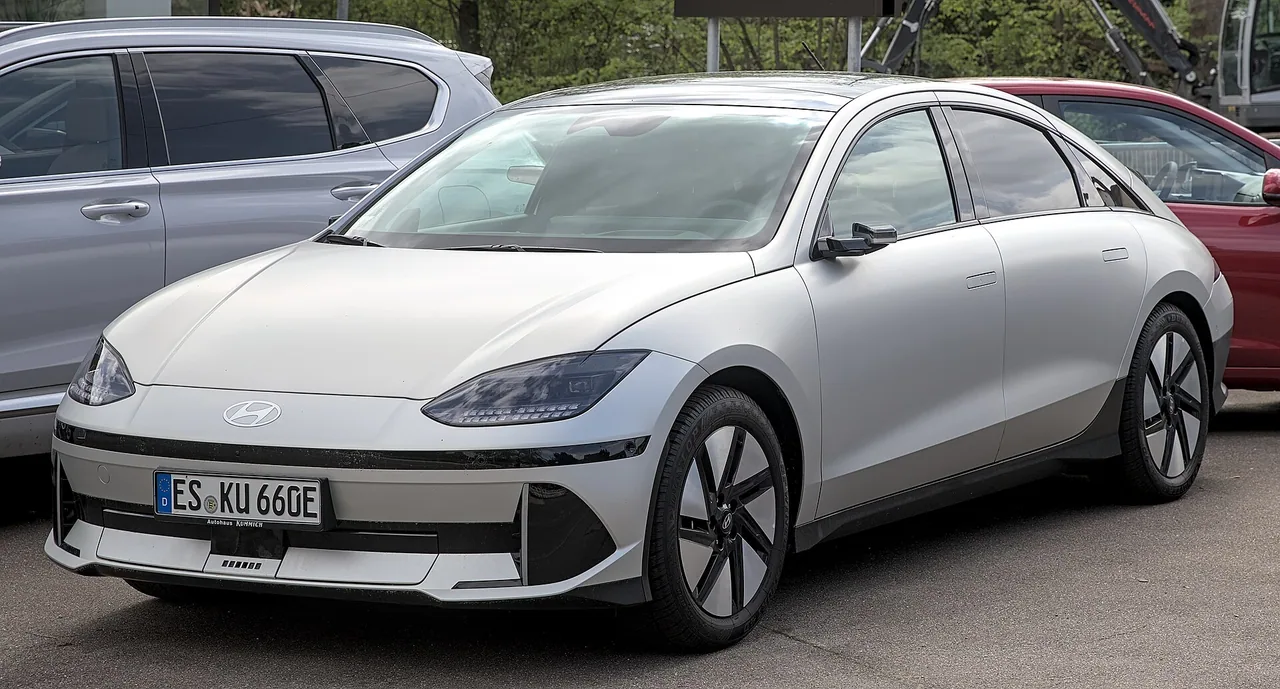
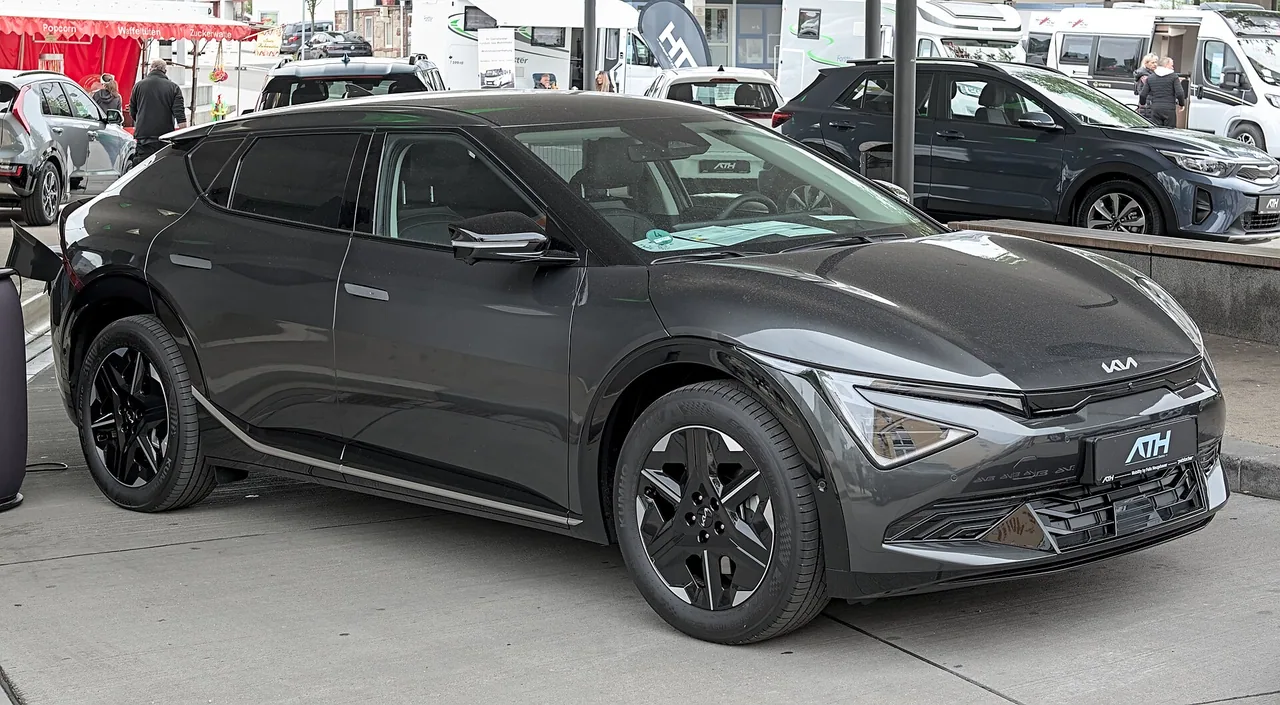
Shoppers torn between Hyundai Motor Group's two sleekest E-GMP models face a clear engineering fork. The Hyundai Ioniq 6 leverages a 116.1-inch wheelbase and slippery teardrop body to achieve 23.6 kWh/100 mi efficiency and 361 miles EPA without an Avoid year—while the shorter-wheelbase Kia EV6 delivers true hatchback cargo versatility, firmer athletic tuning, up to 601 hp, and 2025 native NACS hardware.
Hyundai Ioniq 6
Kia EV6
Latest Data Refresh Check · Nov 25, 2026
Reviewed data refresh (2026-11-25) updated records for Ioniq 6 (2023: new NHTSA complaints) and EV6 (2026, 2025, 2024, 2023: new NHTSA complaints); tables and dates below reflect the refreshed snapshot.
Live Market & Badge-Tax Readout
What you pay for the badge: new MSRP vs. used market
Depreciation shrinks the badge gap: EV6 started ~$7,600 higher on MSRP, while the same-source used midpoint gap narrows to $4,800.
Ioniq 6 ($7,600 lower avg MSRP)
TrimIndex never blends KBB, J.D. Power, and dealer asking figures into one range.
Where dealer asking prices are shown above or in the timeline below, figures summarize active US used dealer listings (asking prices, not final sale prices; excluded from Value-to-Score).
Day-to-Day Ownership Split
Where Ioniq 6 and EV6 actually diverge
Sharing a platform does not mean identical ownership. Here are the concrete calibration, cabin, software, charging, and dealer differences buyers feel every day.
Efficiency & Interstate Range
High-mileage highway drivers save real charging time and utility dollars in an 18-inch Ioniq 6.
Hatch Utility vs. Sedan Trunk
EV6 works smoothly as a household's sole do-everything vehicle; Ioniq 6 behaves like a strict touring sedan.
Chassis Poise & Top Power
Enthusiasts who prioritize cornering sharpness or serious horsepower belong in the EV6.
2025 Hardware Modernization
For 2025 model years, EV6 holds a clear one-year hardware lead over the carry-over sedan.
Reliability Track Record & Avoid Years
Bypass 2022 EV6 builds; 2023–2024 Ioniq 6 and 2024–2025 EV6 offer comparable NHTSA risk once ICCU updates are closed.
Refreshed EPA, charging & safety specs side by side
Pulled directly from TrimIndex’s EPA Fuel Economy, NHTSA NCAP, and charging-access database (NHTSA records through Nov 22, 2026).
| Specification | Hyundai Ioniq 6 | Kia EV6 |
|---|---|---|
| EPA range (all trims) EPA Fuel Economy Guide | 240–361 mi | 206–319 mi |
| Efficiency (lower is better) EPA Fuel Economy Guide | 23.6–28.0 kWh/100 mi | 28.0–42.4 kWh/100 mi |
| Usable battery capacity | 53.0–77.4 kWh | 58.0–84.0 kWh |
| Peak DC fast charging | 235 kW | 180–240 kW |
| Rated horsepower | 149–320 hp | 167–601 hp |
| Drivetrains offered | AWD, RWD | AWD, RWD |
| Seating capacity | 5 seats | 5 seats |
| Fast-charging port & Supercharger | CCS1 (Combined Charging System) · With an adapter, since Mar 25, 2025 | CCS1 (Combined Charging System) · With an adapter |
| NHTSA 5-Star overall rating NHTSA NCAP crash tests | 5 of 5 stars | 5 of 5 stars |
Why cross-shoppers compare these two—and where daily ergonomics split
Drivers who find the upright Hyundai Ioniq 5 too boxy or SUV-like naturally gravitate toward the Ioniq 6 and Kia EV6. Both sit lower to the asphalt, cut a far sportier profile, and avoid the tall crossover stance of typical electric SUVs. Yet the packaging engineering underneath takes opposite philosophies: Kia cropped the wheelbase to 114.2 inches and kept a five-door hatchback tail, whereas Hyundai stretched the wheelbase to 116.1 inches to sculpt an extended fastback roofline into a classic four-door sedan.
That extra 1.9 inches of wheelbase gives Ioniq 6 back-seat passengers slightly more knee room, though neither car coddles tall rear riders under their sloping rear glass. Where the cabin split bites hardest is cockpit switchgear: EV6 wraps the driver in a dark, tilted center console with Kia's switchable HVAC/media touch bar, while Ioniq 6 uses a floating bridge console housing all four power-window switches plus twin ambient lighting strips across smooth door panels.
- Ioniq 6 SE Long Range RWD on 18-inch wheels hits 361 miles EPA (2023–2024) and 342 miles (2025)—dropping sharply on 20-inch SEL/Limited rims.
- EV6 Long Range RWD achieves 310 miles (2022–2024) and 319 miles (2025–2026) while keeping 240 kW peak charging (Standard Range trims cap at 180 kW).
- Neither sibling offers a rear windshield wiper, though Ioniq 6's steeper rear window sheds highway rain slightly better at speed.
The 2025 hardware fork: EV6 goes Georgia + NACS while Ioniq 6 stays CCS1
Compare 2023 and 2024 model years and these siblings run neck-and-neck on charging hardware—both use CCS1 inlets, share 77.4 kWh Long Range packs, and unlocked Tesla Supercharger access with an adapter in March–April 2025. Step into 2025 listings and the gap widens immediately.
Kia refreshed the 2025 EV6 with a larger 84.0 kWh usable pack, redesigned headlights, updated ccNC software with wireless phone projection, West Point, Georgia assembly, and a native NACS port relocated onto the driver-side rear fender. Because Hyundai kept the 2025 Ioniq 6 on Korean assembly, 77.4 kWh batteries, and a CCS1 port on the passenger-side rear fender, buyers seeking built-in Supercharger convenience on a one-year-old car will find EV6 markedly ahead.
See how 2023–2025 EV6 Long Range and GT trims price against original MSRP—and why skipping the 2022 Avoid year protects resale and reliability.
Read the Kia EV6 depreciation guide →Why Hyundai 24V-868 and Kia 24V-867 mirror each other—with subtle differences
Although Hyundai and Kia operate separate U.S. recall teams, federal defect reports show the exact same failure mechanism hitting both cars: transient high voltage and thermal cycling damage the ICCU, opening its fuse and cutting off 12-volt battery replenishment. Hyundai Motor America addresses 28,960 MY2023–2025 Ioniq 6 sedans under NHTSA 24V-868 (campaign 272), while Kia America covers 62,872 MY2022–2024 EV6 builds under 24V-867 (campaign SC327).
Because Kia's 2022 EV6 reached U.S. roads a full year before the Ioniq 6, early EV6 builds bore the brunt of NHTSA's PE23012 investigation and initial parts shortages—pushing 2022 EV6 into Avoid territory. By contrast, Ioniq 6 entered production later with fewer cumulative recall campaigns per owner complaint, yet its 2023–2025 power-loss complaint share (37%–47%) proves the hardware risk is shared equally.
Model-year timeline: Ioniq 6 vs. EV6
Refreshed automatically from TrimIndex’s database on each reviewed run so you can spot overlapping model years, Avoid flags, and pricing shifts.
| Year | Ioniq 6 Score & Standing | Ioniq 6 Price | EV6 Score & Standing | EV6 Price |
|---|---|---|---|---|
| 2026 | Not sold | Not produced No US model year | $32,953–$40,533 Dealer asking · Nov 2026 | |
| 2025 | $26,312–$31,990 Dealer asking · Nov 2026 | $24,360–$32,186 Dealer asking · Nov 2026 | ||
| 2024 | $18,985–$31,379 J.D. Power · Nov 2026 | $20,182–$38,671 J.D. Power · Nov 2026 | ||
| 2023 | $17,463–$29,840 J.D. Power · Nov 2026 | $17,511–$33,172 J.D. Power · Nov 2026 | ||
| 2022 | Not sold | Not produced No US model year | $15,324–$26,298 J.D. Power · Nov 2026 |
Which platform twin should you buy?
Choose the Hyundai Ioniq 6 if…
- You rack up long highway miles and want 342–361 miles EPA with ultra-low 23.6 kWh/100 mi consumption.
- You want steep off-lease sedan depreciation on a 2023–2024 model without any Avoid-flagged model years.
- You prefer a calmer, quieter highway cruiser over stiff sport-hatch suspension.
- You rarely haul tall cargo and are happy with standard four-door trunk space.
Choose the Kia EV6 if…
- You need a wide folding-seat hatch that handles luggage, bikes, or pets with zero trunk-lid compromises.
- You enjoy sharper steering, firmer cornering composure, or want the 576–601 hp EV6 GT.
- You are buying a 2025 model and want the larger 84.0 kWh pack, wireless CarPlay, and built-in NACS port.
- You prefer traditional door-mounted window controls over Hyundai's center-console switches.
Used-Market Sweet Spot
Comparing 2023–2024 used inventory, a 2024 Hyundai Ioniq 6 SE Long Range RWD (18-inch wheels) is the unbeatable highway range specialist, while a 2024 Kia EV6 Wind or GT-Line Long Range is the smarter single-car utility pick (skipping the 2022 EV6 Avoid year). Among 2025 models, the refreshed EV6 Long Range pulls ahead thanks to its 84 kWh battery and native NACS port.
Ioniq 6 & EV6 platform questions
Which has longer real-world highway range: Hyundai Ioniq 6 or Kia EV6?
An 18-inch-wheel Hyundai Ioniq 6 SE Long Range RWD wins decisively, rated up to 361 miles EPA (23.6 kWh/100 mi) versus 310–319 miles on Long Range RWD Kia EV6 trims. However, choosing a 20-inch-wheel Ioniq 6 SEL or Limited wipes out much of that gap, placing real-world range right alongside an EV6.
How much more cargo can the Kia EV6 hold than the Hyundai Ioniq 6?
The difference comes down to opening geometry as much as cubic feet. The Kia EV6's five-door liftback opens wide above a flat folding floor, swallowing bulky luggage or bicycles easily, whereas the Ioniq 6's narrow 11.2-cubic-foot sedan trunk lid restricts tall objects even when the rear seats fold down.
Do the Hyundai Ioniq 6 and Kia EV6 charge at the same DC fast-charge speed?
Yes on Long Range models: both use 800-volt E-GMP hardware peaking at 235–240 kW for roughly 18–20 minute 10%–80% stops at 350 kW stations. Note that Standard Range EV6 trims cap at 180 kW, and the 2025 EV6 adds a built-in NACS port whereas the 2025 Ioniq 6 still uses CCS1.
Is the Hyundai Ioniq 6 more reliable than the Kia EV6?
Avoid the 2022 Kia EV6 (flagged Avoid with 282 complaints and 4 recalls). Comparing 2023–2025 builds side by side, both models share the same ICCU electrical power-loss weakness (making up 37%–48% of annual complaints across both badges), so individual VIN recall closure under 24V-868 or 24V-867 matters far more than brand.
How do AWD power and handling compare between the Ioniq 6 and EV6?
Standard dual-motor AWD trims on both siblings make 320 hp, though Kia tunes the shorter-wheelbase EV6 with firmer suspension and quicker steering for a more athletic feel. Kia also offers the track-tuned EV6 GT (576–601 hp), whereas Hyundai caps the U.S. Ioniq 6 lineup at 320 hp.