Hyundai Ioniq 5 vs. Ioniq 6: Same Hyundai 800V Bones, Physics-Driven Range Split
Updated
Platform Twin Verdict
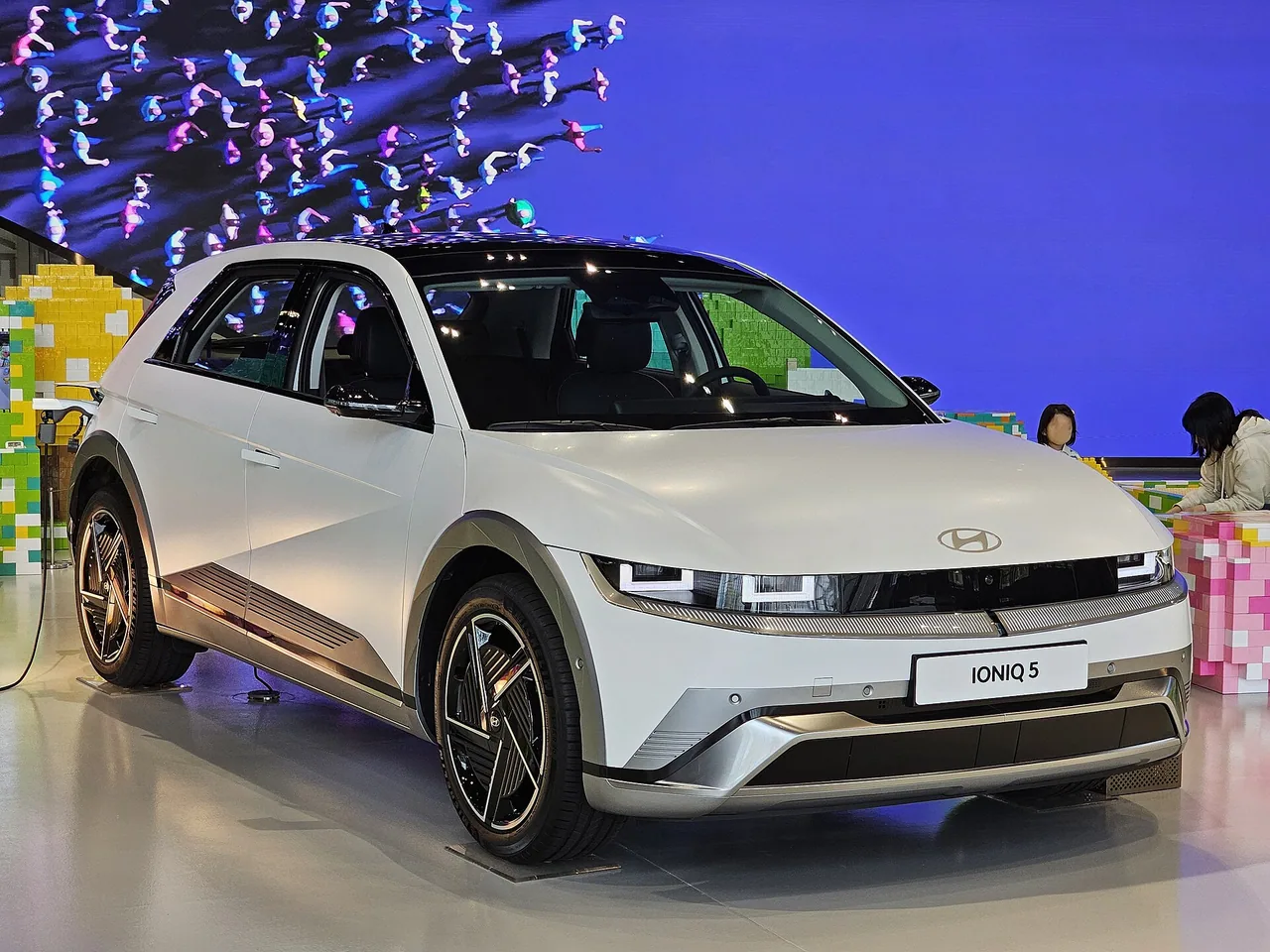
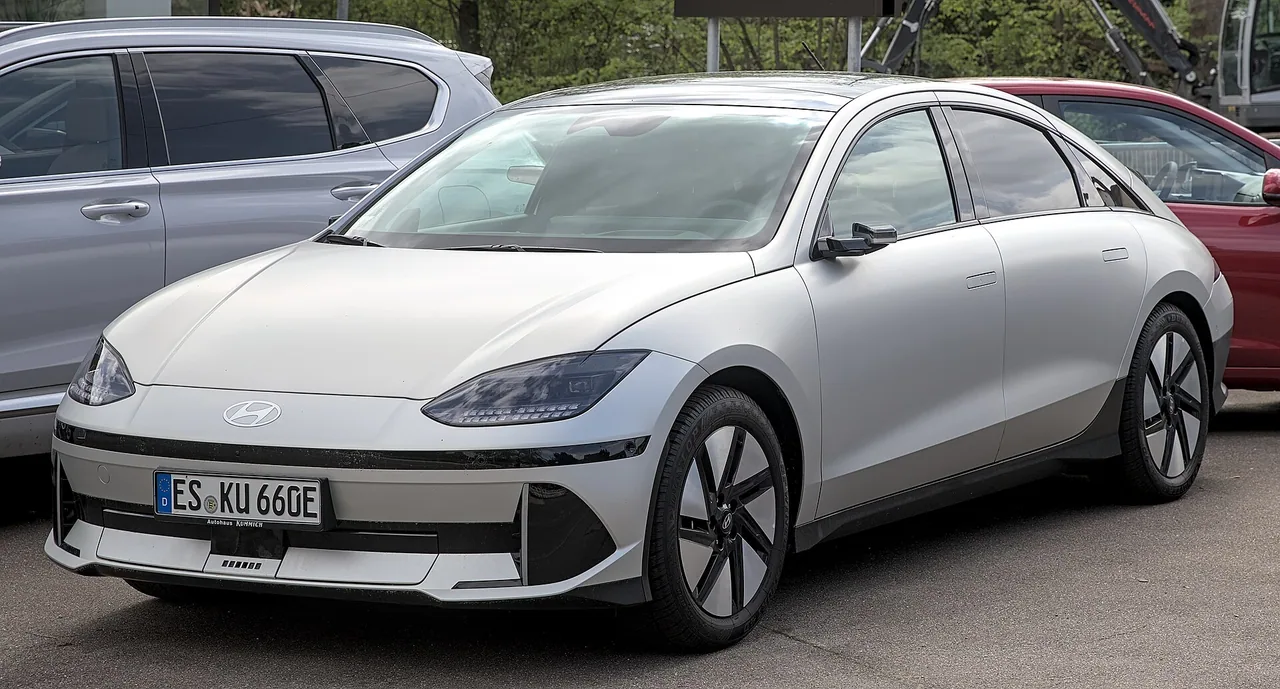
Parked side by side in the same Hyundai showroom, the Ioniq 5 and Ioniq 6 demonstrate how aerodynamics reshape identical 800-volt E-GMP guts. The sleek Asan-built Ioniq 6 stretches the 77.4 kWh pack to 361 miles EPA and 23.6 kWh/100 mi efficiency, but sacrifices rear headroom, trunk opening width, and 2025 native NACS hardware—giving the boxier Ioniq 5 decisive everyday practicality.
Hyundai Ioniq 5
Hyundai Ioniq 6
Latest Data Refresh Check · Nov 25, 2026
Reviewed data refresh (2026-11-25) updated records for Ioniq 5 (2026, 2025, 2024, 2023: new NHTSA complaints, catalog snapshot refresh) and Ioniq 6 (2023: new NHTSA complaints); tables and dates below reflect the refreshed snapshot.
Live Market & Badge-Tax Readout
What you pay for the badge: new MSRP vs. used market
Depreciation shrinks the badge gap: Ioniq 5 started ~$7,300 higher on MSRP, while the same-source used midpoint gap narrows to $1,900.
Ioniq 6 ($7,300 lower avg MSRP)
TrimIndex never blends KBB, J.D. Power, and dealer asking figures into one range.
Where dealer asking prices are shown above or in the timeline below, figures summarize active US used dealer listings (asking prices, not final sale prices; excluded from Value-to-Score).
Day-to-Day Ownership Split
Where Ioniq 5 and Ioniq 6 actually diverge
Sharing a platform does not mean identical ownership. Here are the concrete calibration, cabin, software, charging, and dealer differences buyers feel every day.
Aerodynamics, Efficiency & Range
Highway commuters chasing lowest electricity cost per mile and fewest charging stops win decisively with the Ioniq 6 SE.
Cargo Access & Back-Seat Headroom
Even though Ioniq 6 rear legroom feels generous, its tight headroom and narrow trunk mouth limit family versatility.
2025 Refresh Gap (NACS & Battery)
Cross-shopping 2025 models strongly favors Ioniq 5 for built-in NACS convenience and newer cabin electronics.
Wheel-Size Range Cliff
Never assume every used Ioniq 6 goes 361 miles; verify 18-inch SE Long Range versus 20-inch SEL/Limited before paying up.
Entry Battery & Performance Ceiling
Ioniq 5 covers both stronger base acceleration and far higher top-end performance.
Refreshed EPA, charging & safety specs side by side
Pulled directly from TrimIndex’s EPA Fuel Economy, NHTSA NCAP, and charging-access database (NHTSA records through Nov 22, 2026).
| Specification | Hyundai Ioniq 5 | Hyundai Ioniq 6 |
|---|---|---|
| EPA range (all trims) EPA Fuel Economy Guide | 168–318 mi | 240–361 mi |
| Efficiency (lower is better) EPA Fuel Economy Guide | 29.0–47.5 kWh/100 mi | 23.6–28.0 kWh/100 mi |
| Usable battery capacity | 58.0–84.0 kWh | 53.0–77.4 kWh |
| Peak DC fast charging | 235 kW | 235 kW |
| Rated horsepower | 168–641 hp | 149–320 hp |
| Drivetrains offered | AWD, RWD | AWD, RWD |
| Seating capacity | Not on file | 5 seats |
| Fast-charging port & Supercharger | CCS1 (Combined Charging System) · With an adapter, since Mar 25, 2025 | CCS1 (Combined Charging System) · With an adapter, since Mar 25, 2025 |
| NHTSA 5-Star overall rating NHTSA NCAP crash tests | 5 of 5 stars | 5 of 5 stars |
How 0.21 Cd aerodynamics deliver 58 extra miles—until 20-inch wheels spoil it
No pair in the EV market illustrates aerodynamic drag better than a 2024 Ioniq 5 Long Range RWD (303 miles EPA) versus a 2024 Ioniq 6 SE Long Range RWD (361 miles EPA). Both bolt the exact same 77.4 kWh battery pack beneath the floor and spin the same 225-hp rear motor. Yet the streamliner's tapered boat-tail silhouette, flush underbody pans, and active front air flaps drop energy consumption down to 23.6 kWh/100 miles—unlocking 58 bonus miles on every full charge and faster miles-added-per-minute at DC fast chargers.
Used buyers must watch one giant trim trap on the Ioniq 6: Hyundai locked the 361-mile rating (342 miles for 2025) exclusively to the cloth-seat SE Long Range RWD riding on 18-inch wheels. Step up to a leatherette SEL or loaded Limited on heavy 20-inch wheels and aerodynamic drag spikes, erasing roughly 50+ miles of rated range and closing almost the entire real-world road-trip gap to an Ioniq 5.
- Ioniq 6 SE Long Range RWD (18-inch wheels): maximum efficiency hero at 23.6 kWh/100 mi and up to 361 miles EPA.
- Ioniq 6 Standard Range SE (53.0 kWh, 149 hp): modest 240-mile EPA range; easily confused in dealer listings with the 77.4 kWh Long Range SE.
- Hyundai moved the Ioniq 6's window switches onto the center console to slim the door cards for extra hip room—try it on a test drive before assuming you will adapt.
Living with a low sedan trunk versus an upright crossover liftback
Even though the Ioniq 6 stretches longer bumper-to-bumper than the Ioniq 5, its wheelbase is two inches shorter (116.1 vs. 118.1 inches) and its roofline begins plunging right above the rear headrests. Rear legroom feels generous thanks to the flat E-GMP floor, yet six-foot adults sit with their hair grazing the rear glass and angled knees due to the underfloor battery height.
Out back, the contrast is stark. The Ioniq 6 uses a traditional hinged trunk lid opening onto a shallow 11.2-cubic-foot bay (though 60/40 rear seatbacks fold for skis or lumber). By comparison, the Ioniq 5's squared-off rear hatch turns weekend hardware-store runs, airport luggage stacks, and pet crates into effortless loading—which explains why the crossover outsells its sleeker showroom sibling by more than three to one in the U.S.
See how deeply depreciated electric sedans like the Hyundai Ioniq 6 stack up on energy, maintenance, and depreciation costs against mid-budget gas sedans.
Read our Used EV vs. Used Gas Sedan guide →Asan vs. Ulsan/Georgia assembly and what NHTSA records show
Hyundai splits manufacturing cleanly: every U.S. Ioniq 6 comes from Hyundai's Asan sedan plant in South Korea, while Ioniq 5 production moved from Ulsan, South Korea into Hyundai's new Bryan County, Georgia Metaplant for mainstream 2025–2026 trims. Because Ioniq 6 skipped the 2025 battery and NACS refresh in the U.S. catalog, off-lease 2023–2024 Ioniq 6 values have depreciated sharply—offering nearly half off original MSRP on KBB Fair Purchase for buyers comfortable using a NACS adapter at Tesla stations.
Neither sibling carries an Avoid year on TrimIndex, yet their NHTSA complaint profiles mirror each other closely. Because both models run Hyundai campaign 272 (24V-868) through the exact same dealer service lanes, parts availability and software revisions track together—making VIN-specific recall completion and test-drive AC charging verification mandatory whichever body style you pick.
Model-year timeline: Ioniq 5 vs. Ioniq 6
Refreshed automatically from TrimIndex’s database on each reviewed run so you can spot overlapping model years, Avoid flags, and pricing shifts.
| Year | Ioniq 5 Score & Standing | Ioniq 5 Price | Ioniq 6 Score & Standing | Ioniq 6 Price |
|---|---|---|---|---|
| 2026 | $29,896–$40,882 Dealer asking · Nov 2026 | Not sold | Not produced No US model year | |
| 2025 | $24,799–$34,680 Dealer asking · Nov 2026 | $26,312–$31,990 Dealer asking · Nov 2026 | ||
| 2024 | $19,494–$39,919 J.D. Power · Nov 2026 | $18,985–$31,379 J.D. Power · Nov 2026 | ||
| 2023 | $25,856–$29,294 Dealer asking · Nov 2026 | $17,463–$29,840 J.D. Power · Nov 2026 | ||
| 2022 | $16,790–$24,901 J.D. Power · Nov 2026 | Not sold | Not produced No US model year |
Which platform twin should you buy?
Choose the Hyundai Ioniq 5 if…
- You haul bulky cargo, dogs, or family members who need real rear headroom and a wide liftback hatch.
- You are buying a 2025+ model and want built-in NACS Supercharger access, an 84 kWh battery, and a rear windshield wiper.
- You want an upright crossover driving position with traditional door-mounted window switches.
- You crave serious enthusiast performance via the 641-hp Ioniq 5 N.
Choose the Hyundai Ioniq 6 if…
- Long highway commutes or infrequent home charging make 342–361 miles EPA and 23.6 kWh/100 mi efficiency your #1 priority.
- You prefer low-slung sedan handling, slippery wind-cheating highway silence, and steep off-lease sedan depreciation.
- You rarely carry tall adults in the back seat and can live comfortably with an 11.2-cubic-foot trunk.
- You plan to target the 18-inch-wheel SE Long Range RWD to capture the full aerodynamic range bonus.
Used-Market Sweet Spot
For maximum miles per dollar under a strict budget, a 2023–2024 Hyundai Ioniq 6 SE Long Range RWD (18-inch wheels, 361 miles EPA, verified 24V-868 closure) is one of the highest-range depreciated EVs on the market. For all-around household utility—or anyone shopping 2025 builds—the refreshed 2025 Ioniq 5 Long Range easily justifies the SUV silhouette with native NACS, an 84 kWh pack, and a rear wiper.
Ioniq 5 & Ioniq 6 platform questions
Do the Hyundai Ioniq 5 and Ioniq 6 use the exact same battery?
For 2023–2024 Long Range models, yes: both use Hyundai's 77.4 kWh usable liquid-cooled NMC pack and 235 kW 800-volt charging hardware. For 2025, Hyundai upgraded the Ioniq 5 to 63.0 kWh and 84.0 kWh packs, while the 2025 U.S. Ioniq 6 stayed on 53.0 kWh and 77.4 kWh batteries.
Why does the Ioniq 6 get up to 58 more miles of range than a 2024 Ioniq 5?
Pure aerodynamics. The Ioniq 6's teardrop streamliner body achieves roughly 0.21 Cd drag versus the boxy Ioniq 5's taller frontal area, cutting highway consumption down to 23.6 kWh/100 miles on 18-inch wheels. Be aware that stepping up to 20-inch wheels on Ioniq 6 SEL or Limited trims erases most of that range lead.
Does the 2025 Hyundai Ioniq 6 have a built-in Tesla NACS port like the 2025 Ioniq 5?
No. While mainstream 2025 Hyundai Ioniq 5 models received a native NACS port at Hyundai's Georgia plant, 2023–2025 Ioniq 6 sedans built in Asan, South Korea kept CCS1 ports. All 2023–2025 Ioniq 6 builds gained Tesla Supercharger network access in March 2025 via an approved NACS-to-CCS1 adapter.
Is the back seat cramped in the Hyundai Ioniq 6 compared with the Ioniq 5?
Legroom is generous in both cars, but headroom differs dramatically. The Ioniq 6's sloping fastback roof leaves minimal clearance for passengers around six feet tall, whereas the Ioniq 5's tall, flat roofline and two-inch longer wheelbase keep tall rear riders comfortable on multi-hour trips.
Does the Ioniq 6 have fewer ICCU problems than the Ioniq 5?
Both models experience the exact same underlying ICCU failure mode and are recalled together under NHTSA 24V-868. While the Ioniq 6 has far fewer raw complaints (133 vs. 1,377) due to smaller sales volume, drive-power and charging-unit failures still represent 37%–47% of annual Ioniq 6 filings—requiring the same strict VIN recall check.