Hyundai Ioniq 5 vs. Kia EV6: Same 800V E-GMP Skateboard, Different Cabins & Chassis
Updated
Platform Twin Verdict
Both crossovers bolt onto Hyundai Motor Group's 800-volt E-GMP skateboard with identical battery tiers, rear-biased dual-motor hardware, and rapid DC charging. Shoppers should choose the Ioniq 5 for its 3.9-inch longer wheelbase, upright cargo bay, softer ride, and 2025 rear wiper addition—or pick the Kia EV6 for tighter body control and sharper steering, while steering clear of 2022 EV6 builds flagged Avoid.
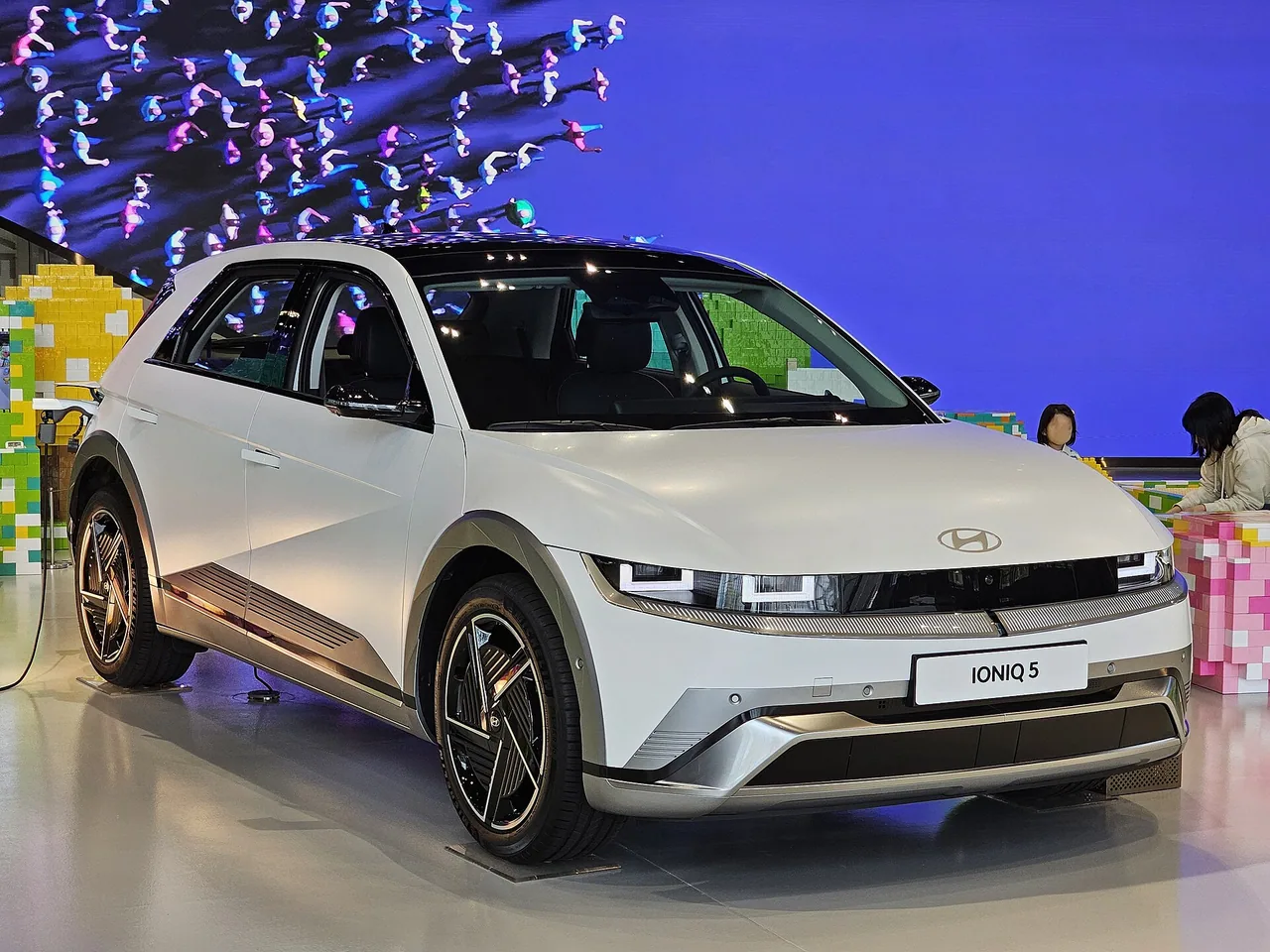
Hyundai Ioniq 5
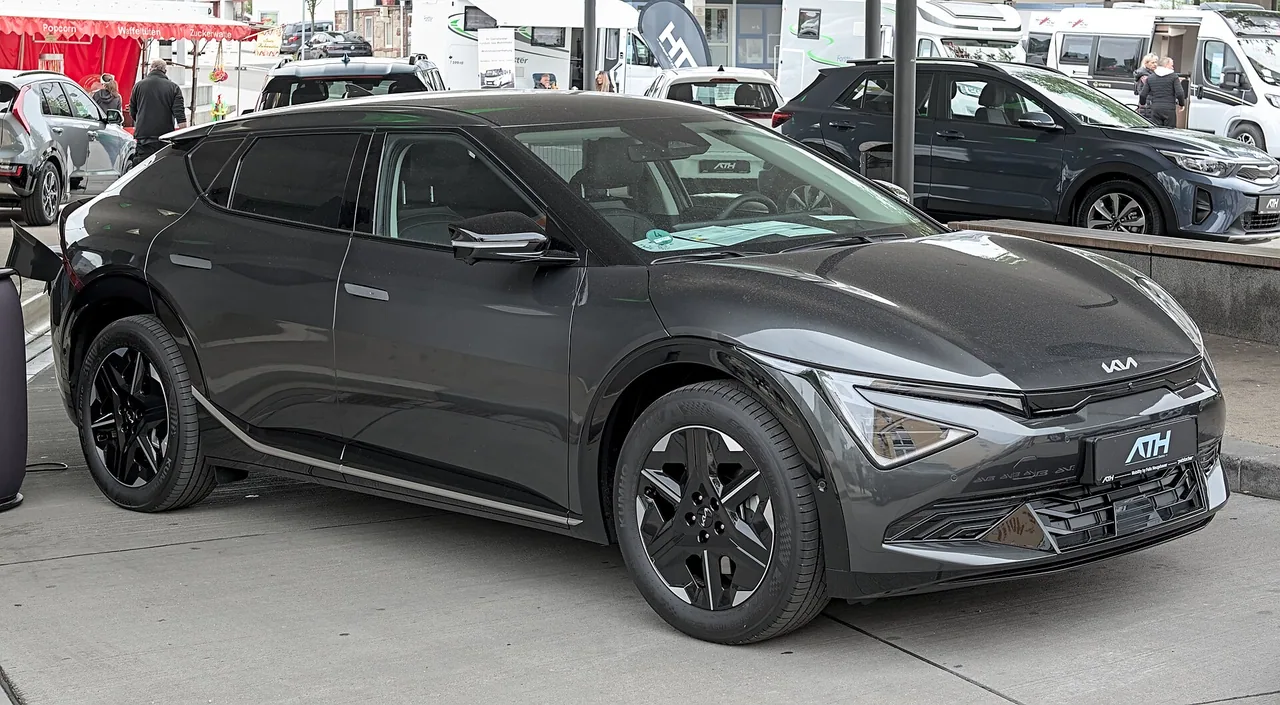
Kia EV6
Latest Data Refresh Check · Nov 25, 2026
Reviewed data refresh (2026-11-25) updated records for Ioniq 5 (2026, 2025, 2024, 2023: new NHTSA complaints, catalog snapshot refresh) and EV6 (2026, 2025, 2024, 2023: new NHTSA complaints); tables and dates below reflect the refreshed snapshot.
Live Market & Badge-Tax Readout
What you pay for the badge: new MSRP vs. used market
Current market snapshot: Ioniq 5 ($6,700 less on KBB used midpoint).
TrimIndex never blends KBB, J.D. Power, and dealer asking figures into one range.
Where dealer asking prices are shown above or in the timeline below, figures summarize active US used dealer listings (asking prices, not final sale prices; excluded from Value-to-Score).
Day-to-Day Ownership Split
Where Ioniq 5 and EV6 actually diverge
Sharing a platform does not mean identical ownership. Here are the concrete calibration, cabin, software, charging, and dealer differences buyers feel every day.
Wheelbase & Interior Packaging
Families hauling strollers, dogs, or tall adults gain far more usable space inside the upright Ioniq 5.
Ride Tuning & Steering Feel
Drivers who enjoy cornering feedback prefer the EV6; commuters seeking isolation prefer the Ioniq 5.
Cabin Controls & Rear Visibility
Snow-belt buyers and ergonomics purists will find the 2025+ Ioniq 5 notably less frustrating in bad weather.
US Factory Rollout & NACS Timing
Both hit native NACS in 2025, with EV6's port placement reducing cable reach headaches at older V3 Tesla stalls.
Avoid-Year Standing & Complaint Mix
Avoid early 2022 EV6 listings unless priced steeply below cleaner 2023–2024 builds with verified recall repairs.
Refreshed EPA, charging & safety specs side by side
Pulled directly from TrimIndex’s EPA Fuel Economy, NHTSA NCAP, and charging-access database (NHTSA records through Nov 22, 2026).
| Specification | Hyundai Ioniq 5 | Kia EV6 |
|---|---|---|
| EPA range (all trims) EPA Fuel Economy Guide | 168–318 mi | 206–319 mi |
| Efficiency (lower is better) EPA Fuel Economy Guide | 29.0–47.5 kWh/100 mi | 28.0–42.4 kWh/100 mi |
| Usable battery capacity | 58.0–84.0 kWh | 58.0–84.0 kWh |
| Peak DC fast charging | 235 kW | 180–240 kW |
| Rated horsepower | 168–641 hp | 167–601 hp |
| Drivetrains offered | AWD, RWD | AWD, RWD |
| Seating capacity | Not on file | 5 seats |
| Fast-charging port & Supercharger | CCS1 (Combined Charging System) · With an adapter, since Mar 25, 2025 | CCS1 (Combined Charging System) · With an adapter |
| NHTSA 5-Star overall rating NHTSA NCAP crash tests | 5 of 5 stars | 5 of 5 stars |
Why 3.9 inches of wheelbase completely changes how these twins live
On paper, the Hyundai Ioniq 5 and Kia EV6 appear separated mostly by retro-pixel versus wedge styling. Pull them alongside one another in a parking lot and the engineering split is structural: Hyundai stretched the E-GMP floorpan to 118.1 inches—longer than a three-row Palisade—while Kia locked the EV6 at 114.2 inches to sharpen yaw response and keep a lower silhouette.
That extra wheelbase sits entirely inside the passenger cell. Rear passengers in an Ioniq 5 get generous knee clearance and a flat floor unobstructed by a full-length console tunnel, while the squared-off tailgate accepts bulky upright boxes that hit the EV6's steeply sloped rear glass. Kia counters with slightly lower aerodynamic drag, yielding a 28.0 kWh/100 mi best EPA rating (and 319-mile 2025 peak) versus Ioniq 5's 29.0 kWh/100 mi best and 318-mile peak.
- Ioniq 5 seats upright with easier child-seat installation and deeper footwells for rear passengers.
- EV6 places the driver lower behind a curved panoramic screen with less body roll on highway ramps.
- Both models pair 19-inch aero wheels on Long Range trims for best range; 20- and 21-inch performance wheels trim EPA figures significantly.
The 2025 inflection point: Georgia assembly, 84 kWh packs, and native NACS
Shoppers comparing 2022–2024 off-lease crossovers against lightly used 2025 examples are looking at a substantive hardware step. Both nameplates graduated from 77.4 kWh to 84.0 kWh usable Long Range batteries (and 58.0 to 63.0 kWh on Standard Range), shifted mainstream US assembly from South Korea to Georgia factories, adopted Hyundai Motor Group's faster ccNC infotainment with wireless smartphone projection, and installed factory NACS ports.
One practical charging caveat applies to Supercharger road trips on both 2022–2026 models: Tesla V3 Superchargers output roughly 400 volts, forcing E-GMP's rear inverter boost circuit to cap sustained charging around 97–135 kW depending on model year. Native 800-volt stations (350 kW CCS or newer V4 cabinets) remain dramatically faster than V3 Tesla pedestals for both cars.
TrimIndex's model-year depreciation studies map exact KBB and dealer asking drops across 2022–2025 trims so you can weigh a discounted 2024 CCS1 car against a refreshed 2025 NACS build.
Read the Hyundai Ioniq 5 depreciation breakdown →Second-owner warranty transfer and dealer-service differences
Both Hyundai and Kia market a headline 10-year/100,000-mile warranty to first buyers, which confuses many used EV shoppers. On non-certified private-party or independent-lot purchases, the general powertrain warranty steps down to 5 years/60,000 miles for subsequent owners. Crucially, federally mandated high-voltage EV battery coverage (at least 8 years/100,000 miles against severe capacity loss or failure) follows the VIN to second owners on both badges—check the model-year booklet for specific EV-system clauses.
Where ownership diverges after the sale is dealership preparation and parts routing. Both brands share core E-GMP diagnostic tools, yet high-voltage certified bays vary wildly by metro area. Before signing for either car, verify how many EV-certified technicians work at your nearest Hyundai or Kia store and confirm loaner-car availability during recall or electrical work.
Model-year timeline: Ioniq 5 vs. EV6
Refreshed automatically from TrimIndex’s database on each reviewed run so you can spot overlapping model years, Avoid flags, and pricing shifts.
| Year | Ioniq 5 Score & Standing | Ioniq 5 Price | EV6 Score & Standing | EV6 Price |
|---|---|---|---|---|
| 2026 | $29,896–$40,882 Dealer asking · Nov 2026 | $32,953–$40,533 Dealer asking · Nov 2026 | ||
| 2025 | $24,799–$34,680 Dealer asking · Nov 2026 | $24,360–$32,186 Dealer asking · Nov 2026 | ||
| 2024 | $19,494–$39,919 J.D. Power · Nov 2026 | $20,182–$38,671 J.D. Power · Nov 2026 | ||
| 2023 | $25,856–$29,294 Dealer asking · Nov 2026 | $17,511–$33,172 J.D. Power · Nov 2026 | ||
| 2022 | $16,790–$24,901 J.D. Power · Nov 2026 | $15,324–$26,298 J.D. Power · Nov 2026 |
Which platform twin should you buy?
Choose the Hyundai Ioniq 5 if…
- You regularly seat tall adults in back or load bulky cargo that needs an upright square tailgate.
- You live in a snowy or rainy climate and want the 2025+ Ioniq 5's rear windshield wiper and physical seat-heater switches.
- You favor a supple, cushioned ride over firm sport-hatch handling.
- You want the hardcore 641-hp Ioniq 5 N track setup with simulated shifts and upgraded cooling.
Choose the Kia EV6 if…
- You prefer lower seating, firmer suspension damping, and sharper steering response on winding roads.
- You want a slightly sleeker aero profile that nudges efficiency to 28.0 kWh/100 mi and 319 miles EPA on 2025 RWD Long Range.
- You want the 2025+ driver-side rear NACS charge port layout for easier cord alignment at Tesla Superchargers.
- You are eyeing a steep off-lease discount on a 2023–2024 Long Range or GT trim while skipping the 2022 Avoid year.
Used-Market Sweet Spot
Skip 2022 EV6 builds (flagged Avoid) and Standard Range 58 kWh trims unless your driving is strictly local. For budget shoppers, a 2024 Long Range Ioniq 5 or EV6 with documented 24V-868/24V-867 completion balances lower complaint counts with sharp depreciation; buyers with more headroom should target a lightly used 2025 Long Range for the 84 kWh pack, native NACS port, and updated ccNC cabin tech.
Ioniq 5 & EV6 platform questions
Are the Hyundai Ioniq 5 and Kia EV6 mechanically the same car?
They share Hyundai Motor Group's 800-volt E-GMP architecture, 58–84 kWh battery tiers, rear-biased permanent-magnet motors, 235–240 kW DC charging electronics, and ICCU hardware. However, they are not identical stampings: the Ioniq 5 uses a 3.9-inch longer wheelbase (118.1 vs. 114.2 inches), softer suspension tuning, and a taller boxy cabin.
Does the Hyundai Ioniq 5 or Kia EV6 charge faster on road trips?
Long Range versions of both models deliver virtually identical 10%–80% DC fast-charging times of roughly 18–20 minutes on 350 kW 800-volt chargers (235–240 kW peak). Note that Standard Range EV6 trims cap at 180 kW, and both models charge noticeably slower on older 400-volt V3 Tesla Superchargers than on true 800-volt stations.
Is the Hyundai Ioniq 5 or Kia EV6 more reliable regarding ICCU issues?
Neither twin escapes the E-GMP ICCU risk—electrical power-loss complaints lead NHTSA filings on both models across 2022–2025. The Kia EV6 carries an Avoid Year flag on 2022 (282 complaints), whereas the Ioniq 5 has no Avoid year but logs 1,377 total complaints across larger fleet volume. On either car, confirming 24V-868 or 24V-867 recall completion by VIN matters far more than badge.
Which has better everyday cargo room and bad-weather visibility?
The Hyundai Ioniq 5 wins practical utility thanks to its upright tailgate, wider rear door openings, and flatter roofline that handles tall luggage or dog crates. Additionally, Hyundai added a rear windshield wiper starting with the 2025 Ioniq 5 refresh, whereas Kia still sells the 2025–2026 EV6 without a rear wiper.
Which model years of the Ioniq 5 and EV6 have built-in Tesla NACS ports?
Mainstream 2025–2026 Hyundai Ioniq 5 models (excluding the 2025 Ioniq 5 N, which switched for 2026) and 2025–2026 Kia EV6 models include factory NACS ports. Earlier 2022–2024 CCS1 builds of both models gained Tesla Supercharger network access in spring 2025 using an approved NACS-to-CCS1 DC adapter.