Hyundai Ioniq 9 vs. Kia EV9: Stretched 3-Row E-GMP Hardware, Split Cabins & Early Defects
Updated
Platform Twin Verdict
Hyundai's 2026 Ioniq 9 and Kia's EV9 stretch E-GMP into full-size three-row family haulers assembled in Georgia, yet diverge sharply on battery floor, cabin layout, and market maturity. Ioniq 9 standardizes a 110.3 kWh pack (311–335 miles EPA) and native NACS from launch, while EV9 counters with boxier third-row headroom and two extra years of depreciated 2024–2025 used inventory—though both 2026 models already log sudden drive-power loss complaints.
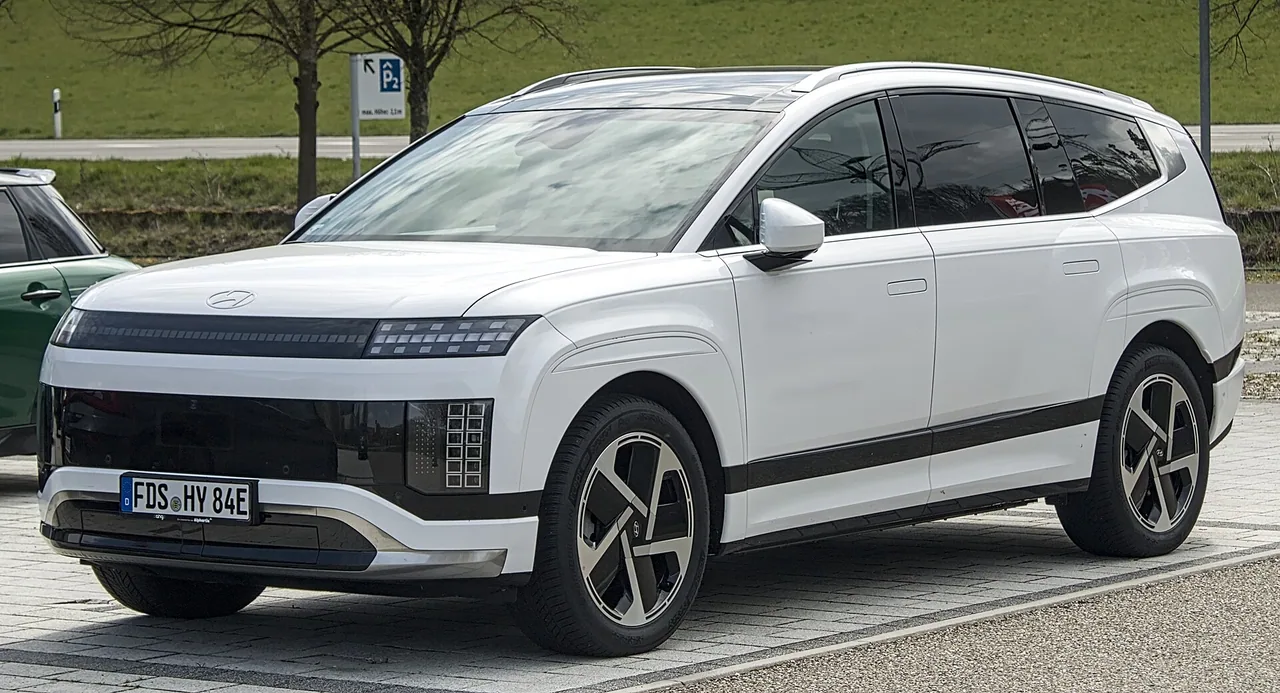
Hyundai Ioniq 9
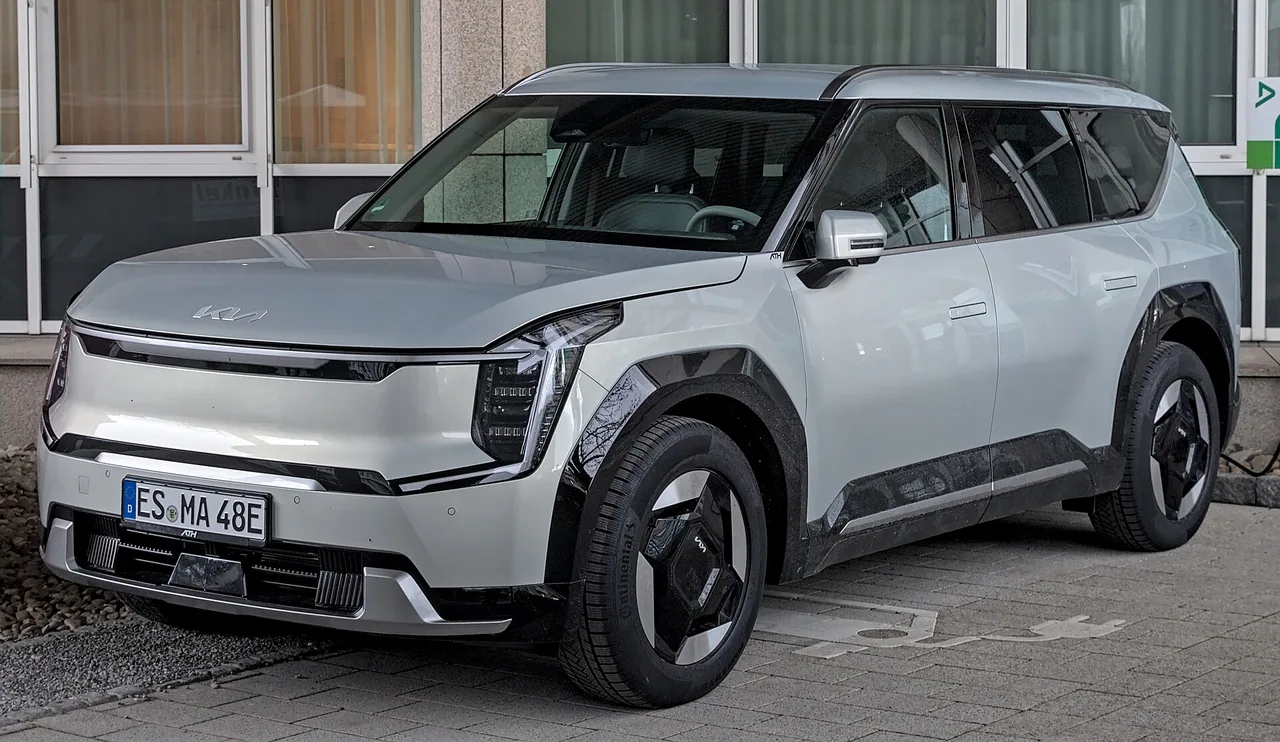
Kia EV9
Latest Data Refresh Check · Nov 25, 2026
Reviewed data refresh (2026-11-25) updated records for Ioniq 9 (2026: new NHTSA complaints) and EV9 (2026, 2024: new NHTSA complaints); tables and dates below reflect the refreshed snapshot.
Biggest Daily Ownership Split · Standard Battery Floor & EPA Range
Road-tripping families gain 30–55 real highway miles per charge in the Ioniq 9 without decoding battery trim tiers.
Live Market & Badge-Tax Readout
What you pay for the badge: new MSRP vs. used market
Current market snapshot: Ioniq 9: $43,566–$59,990 (Used dealer asking prices) vs. EV9: $32,300–$44,200 (KBB).
Ioniq 9 ($5,445 lower avg MSRP)
TrimIndex never blends KBB, J.D. Power, and dealer asking figures into one range.
Where dealer asking prices are shown above or in the timeline below, figures summarize active US used dealer listings (asking prices, not final sale prices; excluded from Value-to-Score).
Day-to-Day Ownership Split
Where Ioniq 9 and EV9 actually diverge
Sharing a platform does not mean identical ownership. Here are the concrete calibration, cabin, software, charging, and dealer differences buyers feel every day.
Standard Battery Floor & EPA Range
Road-tripping families gain 30–55 real highway miles per charge in the Ioniq 9 without decoding battery trim tiers.
Roofline, 3rd-Row Space & Styling
Tall teenagers sitting in row three appreciate EV9's flat roof; highway commuters favor Ioniq 9's slippery aero shape.
Cabin Switchgear & Center Console
Ioniq 9 learns directly from early EV9 ergonomic gripes with easier-to-reach HVAC controls and clever sliding storage.
Used-Market Maturity & Depreciation
Value hunters wanting three-row electric space right now find far wider selection and deeper discounts on a 2024–2025 EV9.
Powertrain Ceiling & Towing Prep
EV9 spans a broader performance ladder from conservative family hauler to rapid straight-line flagship.
Refreshed EPA, charging & safety specs side by side
Pulled directly from TrimIndex’s EPA Fuel Economy, NHTSA NCAP, and charging-access database (NHTSA records through Nov 22, 2026).
| Specification | Hyundai Ioniq 9 | Kia EV9 |
|---|---|---|
| EPA range (all trims) EPA Fuel Economy Guide | 311–335 mi | 230–305 mi |
| Efficiency (lower is better) EPA Fuel Economy Guide | 37.0–40.0 kWh/100 mi | 38.0–43.0 kWh/100 mi |
| Usable battery capacity | 110.3 kWh | 76.1–99.8 kWh |
| Peak DC fast charging | 230 kW | 230–235 kW |
| Rated horsepower | 215–303 hp | 201–501 hp |
| Drivetrains offered | AWD, RWD | AWD, RWD |
| Seating capacity | Not on file | 7 seats |
| Fast-charging port & Supercharger | NACS (SAE J3400) · Yes, with its built-in NACS port | CCS1 (Combined Charging System) · With an adapter |
| NHTSA 5-Star overall rating NHTSA NCAP crash tests | 5 of 5 stars | 5 of 5 stars |
How Hyundai's extra 10.5 kWh and curved tail solve three-row EV range anxiety
Three-row electric SUVs fight brutal highway physics: broad frontal areas, three rows of HVAC demand, and curb weights topping 5,600 pounds routinely push consumption around 38–43 kWh/100 miles. Kia launched the EV9 with two battery choices—76.1 kWh (230 miles EPA) and 99.8 kWh (270–305 miles EPA)—leaving AWD families hovering around 220–240 real interstate miles at 75 mph in cool weather.
Hyundai had two extra years to watch EV9 owner feedback before launching the 2026 Ioniq 9 from its Bryan County, Georgia Metaplant. Engineers skipped a small battery altogether, packed 110.3 kWh of dense NMC cells inside a 1.2-inch longer 123.2-inch wheelbase, and tapered the roofline and rear quarters to drop drag noticeably. The payoff shows right on the EPA window label: 311 to 335 miles across the scored lineup, turning winter family road trips into realistic two-and-a-half-hour highway legs.
- Ioniq 9 efficiency registers 37.0–40.0 kWh/100 mi versus 38.0–43.0 kWh/100 mi on Kia EV9.
- Despite holding 10.5 more usable kilowatt-hours than a Long Range EV9, Ioniq 9's 230 kW curve finishes a 10%–80% DC charge in roughly 24 minutes.
- Watch out for 2024–2025 EV9 Light Standard Range (76.1 kWh / 230 mi) listings on used lots—they often photograph identically to 99.8 kWh Long Range trims.
Cabin ergonomics and software: where two years of development time show
Both SUVs share Hyundai Motor Group's modern ccNC connected-car infotainment backbone with wireless Apple CarPlay, Android Auto, over-the-air module updates, and digital phone keys. Yet sitting in both cockpits reveals a deliberate UX correction by Hyundai. Kia's EV9 wedged a narrow 5-inch HVAC touch strip between the instrument gauge cluster and central map screen—visually clean in studio photos, awkward in motion because the right spoke of the steering wheel obscures fan and temperature icons.
Hyundai moved climate controls beneath the main widescreen using dedicated physical rocker switches and capacitive shortcuts, freed up floor space with the bi-directional Universal Island 2.0 console that slides backward for second-row access, and added standard active road-noise cancellation. Kia fights back with straightforward boxy visibility, generous rear door cutouts, and a slightly taller square roof over the third-row bench.
TrimIndex's cross-model ICCU and NHTSA power-loss tracker flags early electrical drive-power filings across Hyundai and Kia's E-GMP lineup—including 2026 Ioniq 9 and EV9 records.
Review the Hyundai, Kia & Genesis ICCU Tracker →Two Georgia factories and the 2026 NACS port alignment
Both siblings symbolize Hyundai Motor Group's massive U.S. manufacturing shift. Initial 2024 Kia EV9 SUVs arrived by ship from Kia's Gwangmyeong plant in South Korea with CCS1 ports; Kia moved U.S. EV9 assembly to West Point, Georgia starting in mid-2024 and adopted a native NACS Supercharger port for the 2026 model year (2024–2025 EV9 owners gained Supercharger access with an adapter on April 24, 2025). Hyundai built the 2026 Ioniq 9 in Bryan County, Georgia with native NACS from the very first U.S. vehicle off the line.
Keep the same 800-volt Supercharger physics in mind on both SUVs: older 400-volt V3 Tesla cabinets run through the onboard voltage booster at slower peak rates than native 800-volt 350 kW CCS or V4 cabinets—meaning having a NACS-to-CCS1 adapter in the sub-trunk remains valuable even on a 2026 native-NACS model.
Model-year timeline: Ioniq 9 vs. EV9
Refreshed automatically from TrimIndex’s database on each reviewed run so you can spot overlapping model years, Avoid flags, and pricing shifts.
| Year | Ioniq 9 Score & Standing | Ioniq 9 Price | EV9 Score & Standing | EV9 Price |
|---|---|---|---|---|
| 2026 | $43,566–$59,990 Dealer asking · Nov 2026 | $36,248–$58,719 Dealer asking · Nov 2026 | ||
| 2025 | Not sold | Not produced No US model year | $38,538–$48,290 Dealer asking · Nov 2026 | |
| 2024 | Not sold | Not produced No US model year | $32,300–$44,200 KBB · Nov 2026 |
Which platform twin should you buy?
Choose the Hyundai Ioniq 9 if…
- You want 311–335 miles EPA standard across every trim with zero risk of buying a smaller 76.1 kWh battery.
- You prefer physical climate controls, a sliding second-row-accessible console, and a quieter aerodynamic highway cruiser.
- You want native NACS charging and Georgia Metaplant production from day one.
- You are leasing or buying new/nearly new and value Hyundai's lessons learned from two years of EV9 field data.
Choose the Kia EV9 if…
- You want substantial depreciation savings right now on a 2024 or 2025 used three-row electric SUV.
- Adults regularly occupy your third row and need EV9's upright boxy ceiling clearance.
- You want high-output performance trims reaching up to 501 hp.
- You prefer a traditional rugged SUV look over Ioniq 9's curved aero profile.
Used-Market Sweet Spot
Budget-minded families get the strongest value today from a depreciated 2024 Kia EV9 Long Range (99.8 kWh) once its display recalls are verified closed and a 70 mph road test confirms smooth wheel balance. Buyers willing to spend closer to new-vehicle pricing for extra highway range, native NACS, and cleaner climate ergonomics will find the 2026 Hyundai Ioniq 9 worth the wait—while keeping a watchful eye on early 2026 electrical power-loss campaigns.
Ioniq 9 & EV9 platform questions
How much more range does the Hyundai Ioniq 9 get than the Kia EV9?
Every scored 2026 Hyundai Ioniq 9 installs a 110.3 kWh battery good for 311–335 miles EPA, whereas the Kia EV9 uses a 76.1 kWh pack (230 miles) on entry Light trims and a 99.8 kWh pack (270–305 miles) on Long Range and AWD models. Trim for trim, the Ioniq 9 adds roughly 30 to 55 miles of rated highway range.
Which has a roomier third row: Hyundai Ioniq 9 or Kia EV9?
Both fit adults comfortably compared with cramped midsize crossovers, yet they split subtle dimensions: Ioniq 9 rides on a 1.2-inch longer wheelbase (123.2 vs. 122.0 inches) for slightly better legroom and second-row console flexibility, while Kia EV9's flat boxy roofline provides more upright headroom over row three.
Are the 2026 Hyundai Ioniq 9 and Kia EV9 seeing loss-of-drive-power complaints?
Yes. Even though neither three-row SUV was part of the earlier 2022–2024 E-GMP recall 24V-868/24V-867, NHTSA filings show 'Sudden loss of drive power' as the top complaint theme on both 2026 models: 17 of 41 complaints on 2026 Ioniq 9 (41%) and 6 of 29 on 2026 Kia EV9 (21%). Check open dealer electrical bulletins before taking delivery.
Are the Hyundai Ioniq 9 and Kia EV9 built in the United States?
Yes. Every 2026 Hyundai Ioniq 9 for North America is built at Hyundai Motor Group Metaplant America in Bryan County, Georgia. Kia imported early 2024 EV9 models from Gwangmyeong, South Korea before transitioning 2025–2026 U.S. EV9 assembly to Kia's plant in West Point, Georgia.
Which Kia EV9 model years have a native Tesla NACS port like the Ioniq 9?
Kia added a factory NACS port starting with the 2026 EV9, matching the 2026 Hyundai Ioniq 9. Earlier 2024 and 2025 Kia EV9 models use CCS1 inlets and gained Tesla Supercharger network access in April 2025 via an approved NACS-to-CCS1 DC adapter.