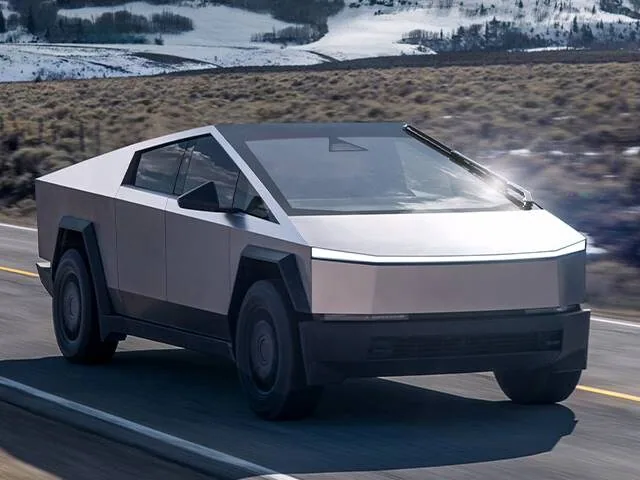
2025 Tesla Cybertruck Long Range
Electric Pickup Truck · RWD
Based on battery health, build quality, owner data, EPA range, and market pricing
Above average for 2025 EV Trucks (class avg 70 · top 27%)
Personalize this scoreIs a low score bad?
Last scanned 22 days ago
The 2025 Tesla Cybertruck Long Range is rated at 335 miles of EPA range and 250 kW fast charging, and a mid-pack composite means the records-and-test-drive call matters more than the headline.
Score read
A 72/100 makes this worth pursuing if the price is sane. Software and driver-assist score is the cleaner read at 100/100; owner feedback score needs more diligence at 48/100. Reddit threads cluster around software tech and build quality — verify both against the service records. A clean VIN lookup matters more than the headline count.
Price context
Used examples are running around $71,985. Treat that as a budgeting floor, not a final price; pull a current KBB Fair Purchase or Edmunds True Market Value for this exact trim before negotiating.
Who this is for
✓ Good for
- ⏱ Daily commuter ≤50 mi/day, predictable charging
- ↦ Road tripper Long trips, needs DC fast network
- ★ Weekend driver Performance, fun, low mileage
✗ Avoid if you are a
- $ Bargain hunter Best TCO, reliability + low depreciation
Gotchas
- Serviceable Recall paperwork has to match the exact VIN.
Mitigation Use NHTSA and the automaker lookup, then require repair records instead of a verbal promise.
- Verify Owner feedback is the part to read carefully (48/100).
Mitigation Read the complaint themes and ask whether this VIN has already had those issues repaired.
Pre-purchase inspection
- 1 Run the exact VIN through NHTSA and the automaker recall lookup before discussing price.
- 2 Compare the dashboard range estimate with the EPA 335-mile rating after a full charge.
- 3 Confirm how much of the 8-year/150,000-mile battery warranty remains and whether it transfers.
- 4 If road trips matter, run a short DC fast-charge session and watch whether speed tapers normally.
- 5 Read the complaint themes, not just the count, and ask the seller whether those issues have shown up on this VIN.
VIN status first This model has 3 NHTSA recall records. The exact VIN lookup decides whether the car in front of you is clear.
Complaint context This scan found 14 NHTSA complaint records (4 per 10K VINs, low for any vehicle class). Read the themes below before treating the raw count as the verdict.
Price anchor Current market range is $71,985-$71,985. Use that range to compare listings for the same trim, mileage, and condition.
Pricing & Market Value
Score Breakdown
What matters most to you?
Drag the sliders to prioritize what you care about. Your TrimIndex Score recalculates instantly.
Vehicle Specifications
EVs at your price point that match or beat this trim
Price-gated peer set: vehicles within $57.6K–$86.4K market value (±20% of $72.0K). 2 outscore · 4 score within ±2. Mixed across makes — no "spend more, score better" comps.
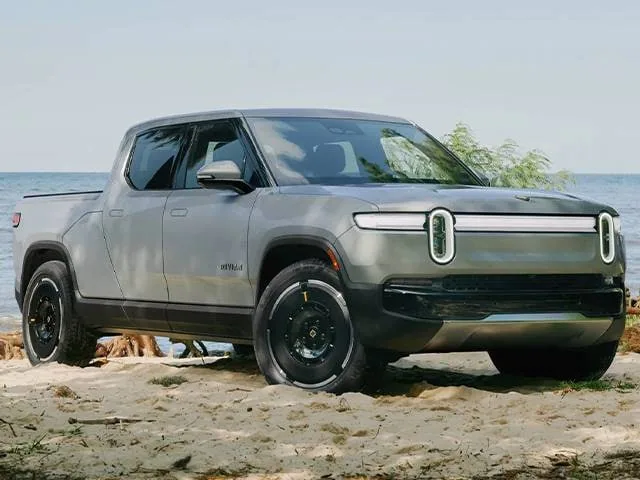
R1T
- ✓ Better bang-for-buck
- ✓ Happier owners overall
Cybertruck
- ✓ Better bang-for-buck
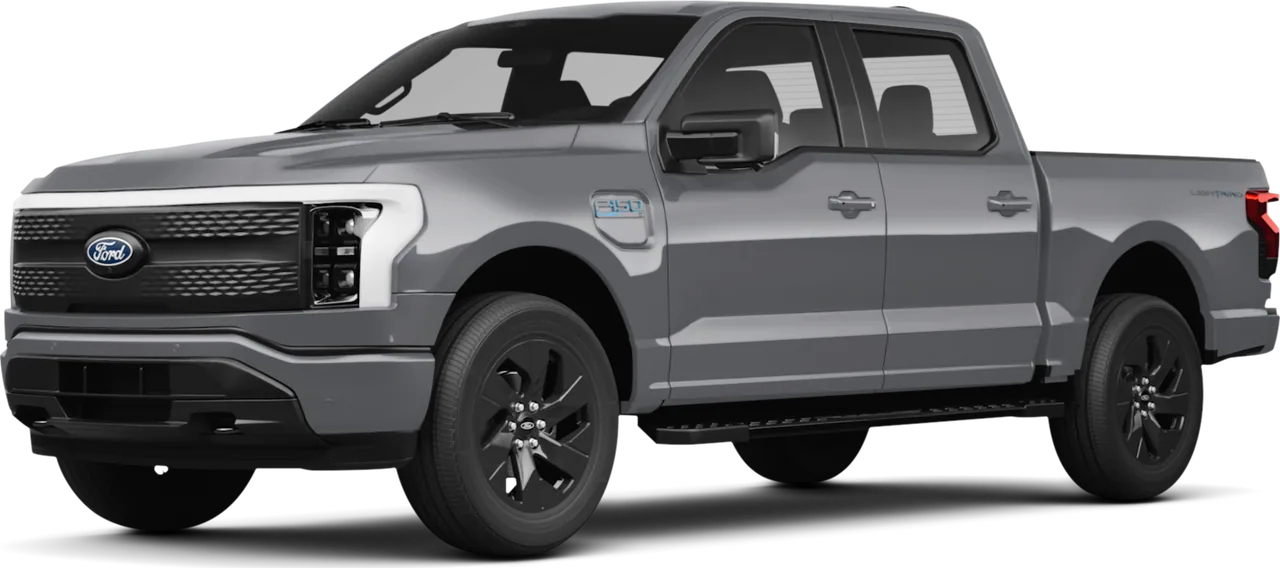
F-150 Lightning
- ✓ Better bang-for-buck
- ✓ Happier owners overall
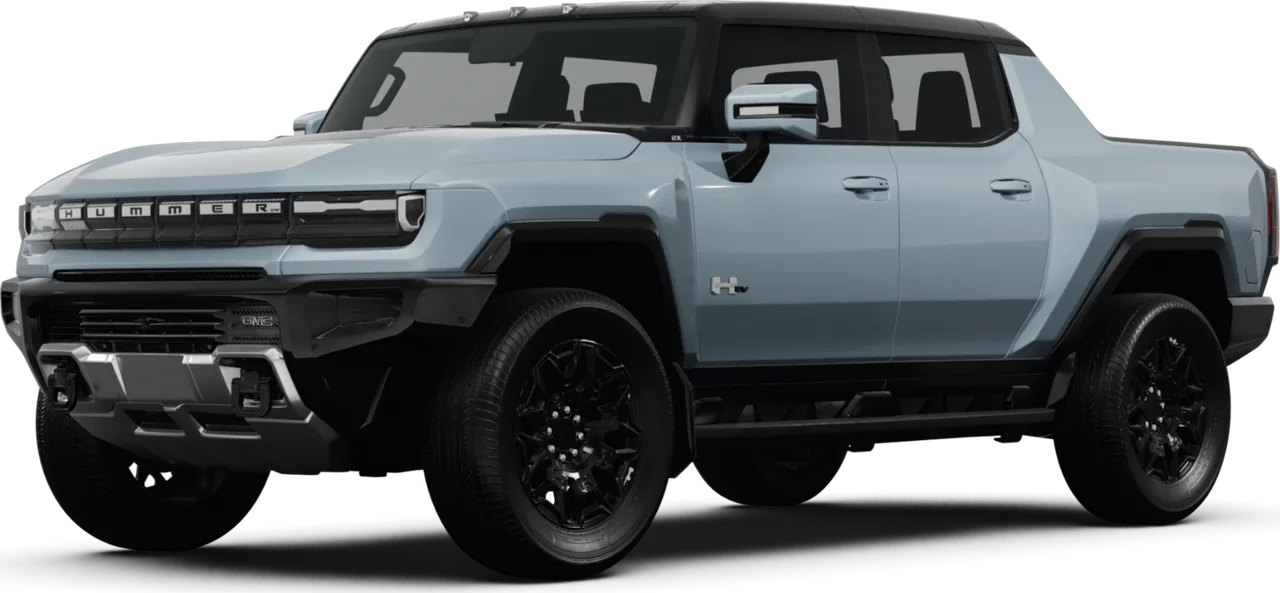
Hummer EV
- ✓ Better bang-for-buck
- ✓ Better owner satisfaction
R1T
- ✓ Better bang-for-buck
- ✓ Happier owners overall
Cybertruck
- ✓ Better bang-for-buck
The federal $4,000 used-EV credit ended Sept 30, 2025.
But 10 states still run their own used-EV rebate programs — some up to $5,000. Pick your state to see what's available for this trim.
Source & disclaimer
Dealers make ~$16,681 on the average car loan.
After the price is set, the finance manager runs four plays to rebuild margin. Every buyer without a pre-approval is a target. Here's exactly what they run — and what stops each one.
78% of dealer loans carry a hidden +1.13% markup above what the lender actually charges. You never see it — it's buried in the contract. · CFPB
Dealer must match or beat your lender — they can't add margin invisibly. The markup play is dead on arrival.
Once you answer, they stretch the term to hit your number. Median result: $4K less off the price, 12 more months on the loan. · Industry avg
Financing is done. Only the sale price is on the table — and the dealer knows it.
Back-office F&I profit averages $1,975/vehicle, up 8.5% YoY. These products exist — but dealer markup is 4–10x what you'd pay elsewhere. · Dealership Guy
Dealer GAP runs $500–1K. Your insurer sells the same coverage for $100–250 over 5 years. Now you know.
"Your loan fell through — come re-sign." This pulls your APR up +5% on average. It's legal. It works because you've already driven the car home. · Ctr for Responsible Lending
A lender commitment letter means the deal is final. "Pending dealer approval" doesn't apply. You can't be yo-yo'd.
That's 16 months of your car payment — handed to the dealer's finance department for nothing.
Takes 2 minutes. No obligation to use it — but you'll walk in with all the leverage.
Pre-approval is a soft credit inquiry — no score impact. FICO treats all auto-loan hard pulls within 14 days as one, so you can still shop rates at the dealer.
NHTSA Recalls (3)
Tesla, Inc. (Tesla) is recalling certain 2024-2026 Cybertruck vehicles equipped with 18-inch steel wheels. The brake rotor stud holes may crack and allow the stud to separate from the wheel hub.
Wheel stud separation can cause a loss of vehicle control, increasing the risk of a crash.
Check VIN status at NHTSA.govTesla, Inc. (Tesla) is recalling certain 2024-2026 Cybertruck vehicles operating software prior to 2025.38.3. The vehicle controller software may cause the front parking lights to be too bright and exceed the maximum light output, adversely affecting the vision of other drivers. As such, these vehicles fail to comply with the requirements of Federal Motor Vehicle Safety Standard (FMVSS) number 108, "Lamps, Reflective Devices, and Associated Equipment."
Parking lights that are too bright can reduce visibility of oncoming drivers, increasing the risk of a crash.
Check VIN status at NHTSA.govTesla, Inc. (Tesla) is recalling certain 2024-2025 Cybertruck vehicles. The light bar can delaminate and detach from the vehicle.
A detached light bar can become a road hazard, increasing the risk of a crash.
Check VIN status at NHTSA.govNHTSA Complaints (14 total · 4 per 10K US vehicles · low for any vehicle class)
The Power Conversion System (PCS) in the Tesla Cybertruck is experiencing a high rate of hardware-level failure (specifically the PCS2 module) that poses three distinct safety risks beyond the loss of AC charging. Loss of Steer-by-Wire Integrity: The Cybertruck utilizes a full steer-by-wire system and a 48V low-voltage architecture. The PCS is responsible for managing the 48V bus and charging the LV battery. A hardware failure in the PCS (common alerts: PCS2_a094, PCS2_a137) threatens the stability of the 48V system. Any sudden collapse of the 48V bus while in motion could result in a total loss of steering control and vehicle maneuverability, creating an immediate risk of a high-speed collision. Loss of Propulsion and Stranding: PCS failure frequently leads to "limp mode" or a "no-start" condition where the vehicle cannot engage Drive or Reverse. Experiencing a loss of propulsion while in active traffic or being stranded on a highway shoulder without the ability to move the vehicle creates a severe life-safety hazard for occupants and other motorists. Failure of Visibility Systems: Critical safety components, including the primary windshield wiper and exterior lighting, are powered via the 48V system managed by the PCS. Hardware instability has led to reports of these systems failing during inclement weather, severely compromising driver visibility. Tesla has implemented software bypasses (OTA updates) to allow DC Supercharging when the AC hardware fails, but this is a "band-aid" that does not address the underlying hardware defect—likely MOSFET degradation. With replacement parts on backorder for 8+ weeks, owners are forced to operate vehicles with compromised electrical architectures. I am reporting this as a systemic hardware defect that requires an official safety recall.
The Power Conversion System (PCS) in the Tesla Cybertruck is experiencing a high rate of hardware-level failure (specifically the PCS2 module) that poses three distinct safety risks beyond the loss of AC charging. Loss of Steer-by-Wire Integrity: The Cybertruck utilizes a full steer-by-wire system and a 48V low-voltage architecture. The PCS is responsible for managing the 48V bus and charging the LV battery. A hardware failure in the PCS (common alerts: PCS2_a094, PCS2_a137) threatens the stability of the 48V system. Any sudden collapse of the 48V bus while in motion could result in a total loss of steering control and vehicle maneuverability, creating an immediate risk of a high-speed collision. Loss of Propulsion and Stranding: PCS failure frequently leads to "limp mode" or a "no-start" condition where the vehicle cannot engage Drive or Reverse. Experiencing a loss of propulsion while in active traffic or being stranded on a highway shoulder without the ability to move the vehicle creates a severe life-safety hazard for occupants and other motorists. Failure of Visibility Systems: Critical safety components, including the primary windshield wiper and exterior lighting, are powered via the 48V system managed by the PCS. Hardware instability has led to reports of these systems failing during inclement weather, severely compromising driver visibility. Tesla has implemented software bypasses (OTA updates) to allow DC Supercharging when the AC hardware fails, but this is a "band-aid" that does not address the underlying hardware defect—likely MOSFET degradation. With replacement parts on backorder for 8+ weeks, owners are forced to operate vehicles with compromised electrical architectures. I am reporting this as a systemic hardware defect that requires an official safety recall.
Tesla sold me a 2025 Cybertruck RWD without disclosing that no compatible bed cover exists at all for this model. We test-drove the vehicle at Tesla Clermont and took delivery at Tesla Tallahassee. At neither location were we told that the RWD trim cannot use the powered hard tonneau cover OR the soft tonneau cover. After delivery, Tesla confirmed in writing that the only cover associated with this model is out of stock with no ETA, and they “cannot speculate on availability.” No third-party manufacturer offers a compatible cover. This means the vehicle’s truck bed cannot be covered or secured in any manner. As a result, we experienced two serious safety incidents. Both times, the vehicle was operating in SFD (self-drive) mode at speeds below the posted speed limit, with items properly tied down using rope. Even under safe, controlled conditions, items flew out of the truck bed twice, nearly causing a collision behind us. Vehicles had to brake and swerve to avoid debris. These incidents created a direct hazard to us and the surrounding traffic. The Cybertruck RWD cannot safely retain cargo under normal driving conditions without a cover, and no cover exists or can be purchased. Tesla buried a clause in a 45-page contract saying they may “remove parts from commerce,” but this does NOT excuse failing to disclose that no safe cargo-retention solution exists for the RWD configuration. A pickup truck that cannot keep cargo from ejecting onto the roadway presents a serious safety defect. I am reporting this because the inability to secure a load is a safety hazard for both occupants and other drivers, and Tesla has no remedy available. Thank you
Tesla sold me a 2025 Cybertruck RWD without disclosing that no compatible bed cover exists at all for this model. We test-drove the vehicle at Tesla Clermont and took delivery at Tesla Tallahassee. At neither location were we told that the RWD trim cannot use the powered hard tonneau cover OR the soft tonneau cover. After delivery, Tesla confirmed in writing that the only cover associated with this model is out of stock with no ETA, and they “cannot speculate on availability.” No third-party manufacturer offers a compatible cover. This means the vehicle’s truck bed cannot be covered or secured in any manner. As a result, we experienced two serious safety incidents. Both times, the vehicle was operating in SFD (self-drive) mode at speeds below the posted speed limit, with items properly tied down using rope. Even under safe, controlled conditions, items flew out of the truck bed twice, nearly causing a collision behind us. Vehicles had to brake and swerve to avoid debris. These incidents created a direct hazard to us and the surrounding traffic. The Cybertruck RWD cannot safely retain cargo under normal driving conditions without a cover, and no cover exists or can be purchased. Tesla buried a clause in a 45-page contract saying they may “remove parts from commerce,” but this does NOT excuse failing to disclose that no safe cargo-retention solution exists for the RWD configuration. A pickup truck that cannot keep cargo from ejecting onto the roadway presents a serious safety defect. I am reporting this because the inability to secure a load is a safety hazard for both occupants and other drivers, and Tesla has no remedy available. Thank you
I’ve had a model 3,model y and now a cybertruck, can’t speak on the rest of the fleet but didn’t had this problem with those cars or any my other cars in the pass, but the passenger side seat belt keeps locking up, if you have to reach down to get an item or reach back it locks up, even if you go a few inches over it locks up which which needs constant taking the seat belt off and resetting it which become a safety issues while driving for the passenger, I took it to the dealership and they said it’s normal, I feel like the seat belt is short which makes it lock up as it should or other defect, I tasted on another cybertruck and didn’t had that problem, tesla customer service didn’t wanted to help me and push me away, I google the problem and there a forum and people having the same problem
I’ve had a model 3,model y and now a cybertruck, can’t speak on the rest of the fleet but didn’t had this problem with those cars or any my other cars in the pass, but the passenger side seat belt keeps locking up, if you have to reach down to get an item or reach back it locks up, even if you go a few inches over it locks up which which needs constant taking the seat belt off and resetting it which become a safety issues while driving for the passenger, I took it to the dealership and they said it’s normal, I feel like the seat belt is short which makes it lock up as it should or other defect, I tasted on another cybertruck and didn’t had that problem, tesla customer service didn’t wanted to help me and push me away, I google the problem and there a forum and people having the same problem
HTSA Safety Complaint Description The 2025 Tesla Cybertruck exhibits a persistent and recurring air suspension system defect that impairs safe vehicle operation. From the moment of delivery, the air suspension failed to raise or lower properly, displaying a fault message indicating potential restoration on the next drive. This did not occur. The issue included repeated overheating warnings, multiple system failure alerts, excessive compressor noise/knocking, steam and water discharge from the undercarriage, and the vehicle remaining stuck in a lowered ride height, causing scraping damage to underbody trim and mud flaps. The vehicle underwent a major warranty repair where the air suspension compressor was replaced due to a stuck exhaust valve and damaged air line, followed by recalibration. Despite this, suspension overheating warnings and intermittent system failure notifications continued to appear. On December 23, 2025, while driving at moderate speed in clear conditions, the vehicle suddenly and uncorrectably migrated off the roadway. Adaptive steering correction, braking intervention, and lane assist failed to engage. At the time of the incident, the display actively showed service notifications indicating suspension system failure and overheating. The vehicle veered into a ditch, resulting in a significant drop and requiring specialized heavy-duty extraction. This defect has impaired the vehicle’s handling, stability, and safety from delivery onward, with no resolution after attempted repair. The recurring nature and active failure alerts during the loss-of-control event suggest a serious safety risk.
HTSA Safety Complaint Description The 2025 Tesla Cybertruck exhibits a persistent and recurring air suspension system defect that impairs safe vehicle operation. From the moment of delivery, the air suspension failed to raise or lower properly, displaying a fault message indicating potential restoration on the next drive. This did not occur. The issue included repeated overheating warnings, multiple system failure alerts, excessive compressor noise/knocking, steam and water discharge from the undercarriage, and the vehicle remaining stuck in a lowered ride height, causing scraping damage to underbody trim and mud flaps. The vehicle underwent a major warranty repair where the air suspension compressor was replaced due to a stuck exhaust valve and damaged air line, followed by recalibration. Despite this, suspension overheating warnings and intermittent system failure notifications continued to appear. On December 23, 2025, while driving at moderate speed in clear conditions, the vehicle suddenly and uncorrectably migrated off the roadway. Adaptive steering correction, braking intervention, and lane assist failed to engage. At the time of the incident, the display actively showed service notifications indicating suspension system failure and overheating. The vehicle veered into a ditch, resulting in a significant drop and requiring specialized heavy-duty extraction. This defect has impaired the vehicle’s handling, stability, and safety from delivery onward, with no resolution after attempted repair. The recurring nature and active failure alerts during the loss-of-control event suggest a serious safety risk.
Brand-new 2025 Cybertruck developed moisture inside sealed HV battery pack with no submersion, off-roading, or flooding. Service photos show only trace condensation and crystallized residue—no mud, corrosion, or contaminants. Tesla denying warranty and quoting $37k replacement. Suspected manufacturing defect in pack lid gasket (known issue in early VINs). Safety risk if unaddressed.
Brand-new 2025 Cybertruck developed moisture inside sealed HV battery pack with no submersion, off-roading, or flooding. Service photos show only trace condensation and crystallized residue—no mud, corrosion, or contaminants. Tesla denying warranty and quoting $37k replacement. Suspected manufacturing defect in pack lid gasket (known issue in early VINs). Safety risk if unaddressed.
The contact owns a 2025 Tesla Cybertruck. The contact stated that while the vehicle was parked, the contact exited the vehicle and the front driver-side door independently closed and slammed his right hand in the door, injuring three of his fingers. The contact sought medical attention and was informed that he had sustained internal bleeding and was prescribed anti-inflammatory medicine and instructed the contact to try not to move his fingers in order to avoid disturbing the healing process. The contact stated he also sustained emotional distress and described the incident as traumatic. The vehicle was taken back to the residence and was not diagnosed. A dealer was not contacted, and the vehicle was not repaired. The manufacturer was notified of the failure, and the contact stated that the manufacturer said they would send an email after the call; however, the manufacturer did not send an email and refused to provide a manufacturer case number. The failure mileage was approximately 7,857.
The contact owns a 2025 Tesla Cybertruck. The contact stated that while the vehicle was parked, the contact exited the vehicle and the front driver-side door independently closed and slammed his right hand in the door, injuring three of his fingers. The contact sought medical attention and was informed that he had sustained internal bleeding and was prescribed anti-inflammatory medicine and instructed the contact to try not to move his fingers in order to avoid disturbing the healing process. The contact stated he also sustained emotional distress and described the incident as traumatic. The vehicle was taken back to the residence and was not diagnosed. A dealer was not contacted, and the vehicle was not repaired. The manufacturer was notified of the failure, and the contact stated that the manufacturer said they would send an email after the call; however, the manufacturer did not send an email and refused to provide a manufacturer case number. The failure mileage was approximately 7,857.
Since purchasing my Cybertruck with Full Self-Driving in July 2025, I have experienced a repeated safety issue whenever Autopilot/FSD is engaged on highways. The vehicle will consistently pull toward the left side of the lane, positioning itself directly on the left lane line. This feels extremely unsafe, especially when another vehicle is traveling in the lane beside me. This behavior happens at highway speeds and creates a significant safety concern because it reduces the buffer between my vehicle and adjacent traffic. The issue has occurred repeatedly over several months in different locations and conditions. I have brought the vehicle to Tesla service multiple times, and the issue has not been resolved. Tesla acknowledged the concern happened to multiple vehicles in the past two months, but was unable to fix it. They are now performing another inspection for my vehicle, and starting a buyback request that is under review. There are no warning messages before or during the behavior. This appears to be a malfunction with the vehicle’s lane-keeping or Autopilot/FSD behavior that puts my safety and the safety of others at risk.
Since purchasing my Cybertruck with Full Self-Driving in July 2025, I have experienced a repeated safety issue whenever Autopilot/FSD is engaged on highways. The vehicle will consistently pull toward the left side of the lane, positioning itself directly on the left lane line. This feels extremely unsafe, especially when another vehicle is traveling in the lane beside me. This behavior happens at highway speeds and creates a significant safety concern because it reduces the buffer between my vehicle and adjacent traffic. The issue has occurred repeatedly over several months in different locations and conditions. I have brought the vehicle to Tesla service multiple times, and the issue has not been resolved. Tesla acknowledged the concern happened to multiple vehicles in the past two months, but was unable to fix it. They are now performing another inspection for my vehicle, and starting a buyback request that is under review. There are no warning messages before or during the behavior. This appears to be a malfunction with the vehicle’s lane-keeping or Autopilot/FSD behavior that puts my safety and the safety of others at risk.
When on full self driving on the freeway if the road starts curving the car does not stay in the lane and start hitting the bump on the road or in situation getting to close to another car or the center diver
When on full self driving on the freeway if the road starts curving the car does not stay in the lane and start hitting the bump on the road or in situation getting to close to another car or the center diver
Driving the cybertruck on a road going straight no set destination on the cars navigation with autopilot on so it should have continued straight for the most part…. but the car decided to make an abrupt illegal right turn from a straight only lane after passing the appropriate right merge lane. After which the car swerved illegally into 2 oncoming traffic lanes before briefly missing an oncoming car then me driver manually pulled back into the correct lane. By the way my 12 pound dog which sits in the passenger seat was swung so hard hard by the abrupt turn that she literally ended up in the driver foot well by my ankles. This has never ever happened from my regular driving! I’m not so upset about my dog so much as I am trying to convey the amount of abrupt rough turn the car did. Very last minute and doing anything but let the car do the turn may have resulted in me crashing into oncoming traffic had there been any. A terrible illegal scary occurrence by Tesla autopilot. I was left very stunned. Please contact me for additional information I did record the dashcam footage and would like to share that.
Driving the cybertruck on a road going straight no set destination on the cars navigation with autopilot on so it should have continued straight for the most part…. but the car decided to make an abrupt illegal right turn from a straight only lane after passing the appropriate right merge lane. After which the car swerved illegally into 2 oncoming traffic lanes before briefly missing an oncoming car then me driver manually pulled back into the correct lane. By the way my 12 pound dog which sits in the passenger seat was swung so hard hard by the abrupt turn that she literally ended up in the driver foot well by my ankles. This has never ever happened from my regular driving! I’m not so upset about my dog so much as I am trying to convey the amount of abrupt rough turn the car did. Very last minute and doing anything but let the car do the turn may have resulted in me crashing into oncoming traffic had there been any. A terrible illegal scary occurrence by Tesla autopilot. I was left very stunned. Please contact me for additional information I did record the dashcam footage and would like to share that.
Front body panel of hood came unglued
Front body panel of hood came unglued
One to two times per month upon starting my Cybertruck I receive multiple notifications for systems not working including "Driver Assistance - Automatic Emergency Braking is unavailable" and "Steering & Braking - Adaptive ride control degraded/Ride comfort may be reduced." These alerts cause the disablement of the regenerative braking, auto-hold (braking), emergency braking, adaptive ride control, traction control, and the self drive features. While the vehicle is still drivable, my ability to control the vehicle is greatly diminished, as is the safety of the vehicle without any of the accident avoidance and stability systems working. After driving in this condition, if I park the vehicle, exit it, and let it sit for at least 10 minutes, all systems are normal upon reentry. On 1/5 I experienced this issue and opened a service request for warranty work and Tesla demanded that I agree to a $200 charge before they would even look at it and said if they were unable to see the issue then it would not be considered as warranty. Since I cannot reproduce this issue on demand I cancelled the service request as I do not want to pay them $200 to say they couldn't reproduce the issue. Internet searches have revealed that this is a common issue among Cybertrucks and despite multiple software updates since owning my vehicle, it has not gotten any better.
One to two times per month upon starting my Cybertruck I receive multiple notifications for systems not working including "Driver Assistance - Automatic Emergency Braking is unavailable" and "Steering & Braking - Adaptive ride control degraded/Ride comfort may be reduced." These alerts cause the disablement of the regenerative braking, auto-hold (braking), emergency braking, adaptive ride control, traction control, and the self drive features. While the vehicle is still drivable, my ability to control the vehicle is greatly diminished, as is the safety of the vehicle without any of the accident avoidance and stability systems working. After driving in this condition, if I park the vehicle, exit it, and let it sit for at least 10 minutes, all systems are normal upon reentry. On 1/5 I experienced this issue and opened a service request for warranty work and Tesla demanded that I agree to a $200 charge before they would even look at it and said if they were unable to see the issue then it would not be considered as warranty. Since I cannot reproduce this issue on demand I cancelled the service request as I do not want to pay them $200 to say they couldn't reproduce the issue. Internet searches have revealed that this is a common issue among Cybertrucks and despite multiple software updates since owning my vehicle, it has not gotten any better.
windshield crack spontaneously while using defrost function TESLA refused cover it with warranty
windshield crack spontaneously while using defrost function TESLA refused cover it with warranty
The contact owns a 2025 Tesla Cybertruck. The contact stated that while driving at various speeds, the rear middle row seat felt loose and failed to remain in place as intended. The vehicle was taken to a local dealer, where it was diagnosed with a loose rear middle row seat. The vehicle was repaired; however, the failure reoccurred. The manufacturer was made aware of the failure. The failure mileage was approximately 978.
The contact owns a 2025 Tesla Cybertruck. The contact stated that while driving at various speeds, the rear middle row seat felt loose and failed to remain in place as intended. The vehicle was taken to a local dealer, where it was diagnosed with a loose rear middle row seat. The vehicle was repaired; however, the failure reoccurred. The manufacturer was made aware of the failure. The failure mileage was approximately 978.
There is a defect in the stainless-steel exterior trim panel called the “cant rail,” which detached from the vehicle while driving, posing a safety risk as road debris and hazard to other motorists. There was a recall issued for this exact same thing for previous models earlier this year but it still happened with the new 2025 model. This August 2025 model was not included as a recalled vehicle.
There is a defect in the stainless-steel exterior trim panel called the “cant rail,” which detached from the vehicle while driving, posing a safety risk as road debris and hazard to other motorists. There was a recall issued for this exact same thing for previous models earlier this year but it still happened with the new 2025 model. This August 2025 model was not included as a recalled vehicle.
What Owners Are Saying
"Tesla Cybertruck on FSD 12.5.5 drives us 99% of the time on a 1126 miles (1812 km) road trip! In this 3 minutes video, we can see how our Tesla FSD Cybertruck takes us on a 1126 miles (1812 km) road-trip from San Francisco, California to Bend, Oregon and back. An action packed video, with California and Oregon experiences, with music by the Stray Cats. This was on Tesla supervised Full Self-Driving (FSD) v12.5.5 on a 2024 Foundation series AWD Cybertruck with HW4. Watch in 4k This round-trip took about 20 hours over multiple days, here are some highlights, sped up 8x with some music by the Stray Cats - 00:01 Our Cybertruck, took us on a road trip from California to Oregon and back, over 1000 miles (1609 km). 00:07 Tesla, full self-driving (FSD) v12.5.5 drove us using an end-to-end AI model, both on the highway and city streets. 00:15 We did not, touch the steering wheel, brakes, or accelerator pedals 99% of the time. 00:33 On YouTube, use "cc" to turn on captions, then use "Settings" ⛭ to set the title captions to French 🇫🇷, Portuguese 🇧🇷, Chinese 🇨🇳, or Hebrew 🇮🇱. 00:29 Candlestick, this location was home for the San Francisco 49ers for many years, now replaced by the new stadium in Santa Clara (American Football 🏈). 00:41 San Francisco, downtown with the iconic Salesforce Tower and pyramid buildings in the horizon. 00:56 The Bay Bridge, connects the cities of San Francisco and Oakland, over the San Francisco Bay 🇺🇸. 01:09 Berkeley, home of the California Golden Bears 🐻, University of Berkeley. 01:20 Autopark, is a f"
"First NameCaydenJoinedDec 31, 2024Threads0Messages166Reaction score280LocationOregonVehicles #### TarheelCT JoinedFeb 20, 2026Threads3Messages110Reaction score153Location🇺🇸Vehicles 18's should ride better. I'd imagine there will be wheel covers coming out for this version. #### hemiarch"
"If Tesla vehicles can have severe, safety-critical computer failures without notifying the driver — what does that say about the safety architecture of the car? In a vehicle where software controls essential safety systems, alerts and diagnostics are not optional — they are fundamental. If the system knew of a critical fault and failed to inform me, that is a safety failure. If the system did not know, then blaming the user after a software update exposes an even deeper issue. What makes this situation worse is Tesla’s complete refusal to take responsibility. Despite the fact that the failure occurred immediately after a Tesla-initiated software update, the company is placing the full financial burden on the customer, without transparency, logs, or proof shared with me. As cars become more dependent on software, manufacturers must be held to higher standards of accountability. When a software update precedes a safety failure, dismissing the connection without clear evidence — and charging the customer thousands — is unacceptable. Tesla markets itself as a leader in safety and technology. Experiences like this undermine that promise. I hope this post encourages other Tesla owners to ask questions, document issues, and demand clearer answers when safety systems fail — especially when those failures follow official software updates."
"Cybertruck Sales Are Plummeting, Tesla Is No Longer Dominant But Elon Doesn't Care: "The Future Is Robots" Tesla's Cybertruck is experiencing a dramatic sales collapse just 14 months after deliveries began, with the futuristic pickup accumulating unsold inventory at company stores while customer interest evaporates amid quality concerns, price fatigue, and Elon Musk's increasingly polarizing public persona. Meanwhile, Tesla's overall automotive dominance has crumbled as competitors flood the electric vehicle market, yet Musk appears unconcerned, repeatedly declaring that "the future is robots" and devoting attention to humanoid robotics projects while the company's core car business deteriorates. # Cybertruck's Spectacular Stumble Tesla began Cybertruck deliveries in November 2024 after years of delays from the vehicle's bombastic 2019 unveiling. Initial deliveries went to employees and reservation holders willing to pay Foundation Series premiums exceeding $100,000 for early access to the angular stainless steel pickup that Musk promised would revolutionize the truck market. However, by January 2026, unsold Cybertrucks began appearing in significant numbers at Tesla delivery centers across the United States. Drone footage and social media posts documented dozens of Cybertrucks sitting unused at facilities in California, Texas, and Florida, suggesting demand collapsed far faster than Tesla anticipated. Industry analysts estimate that Tesla produced approximately 35,000 Cybertrucks in 2025 but sold only 28,000 to 30,000, leaving substantial inventory unsold as production"
"A Tesla on Autopilot Tried to Drive Straight Off a Houston Overpass. Now There's a $1 Million Lawsuit Naming Elon Musk. On the 69 Eastex Freeway in Houston there is a Y-shaped split. One path curves right. The other ends at a concrete barrier above a long drop to the highway below. In August 2025, a Cybertruck running on autopilot chose the barrier. Justine Saint Amour bought her Cybertruck from a Florida dealer in February 2025 with the Full Self-Driving package included. On 18 August 2025, she was driving northbound on the Eastex Freeway with autopilot engaged when the vehicle approached the Y-junction near the Houston Metro 256 Eastex Park and Ride interchange. The road curves right. The Cybertruck went straight. Saint Amour disengaged autopilot when she realised the truck was not going to make the turn. It was too late. The Cybertruck hit the concrete barrier head-on. The dashcam captured the whole sequence. Saint Amour was left with two herniated discs in her lower back, a herniated disc in her neck, sprained tendons in her wrist, and neuropathy causing numbness and weakness in her right hand. She is now suing Tesla in Harris County District Court for more than $1 million. Her attorney, Bob Hilliard, was direct in his public statements. > The lawsuit accuses Tesla of negligence and gross negligence, misrepresenting the capabilities of its autopilot system, failing to include LiDAR or adequate backup braking systems, and providing insufficient warnings to drivers. It also names Elon Musk personally, alleging he overrode Tesla engineers' recommendations to include"
"The Tesla Cybertruck Might Be the Vehicle That Benefits Most From PPF Between the flat surfaces, sharp edges, and daily use, it does not take long for scuffs, rock chips, and grime to start showing up. That is one reason a lot of Cybertruck owners are adding paint protection film (PPF) to the high-impact areas. We put together a guide on where PPF makes the biggest difference on a Cybertruck and what areas most owners protect first. # Areas of the Cybertruck to Protect with PPF Every Cybertruck owner uses their vehicle differently, so coverage should match how you drive. That said, these are the areas most Cybertruck owners in North Carolina tend to protect first. * **Full front:** Front bumper, hood, fenders, and mirrors. * **Rocker panels and lower doors:** A common impact zone for gravel and road spray. * **Rear loading areas:** Great for owners who load gear, tools, or cargo often. * **High-touch points:** Edges and areas prone to scuffs from regular use. * **Full body coverage:** Ideal if you want consistent protection across every panel. # Why the Cybertruck Is a Candidate for PPF Cybertruck panels are large and highly exposed. That means more surface area taking hits from rocks, sand, and debris. The shape also has crisp edges and corners that tend"
Showing 6 of 8 owner excerpts (sorted by sentiment strength)