Genesis GV60 vs. Hyundai Ioniq 5: Luxury Compact vs. Stretched E-GMP Utility
Updated
Platform Twin Verdict
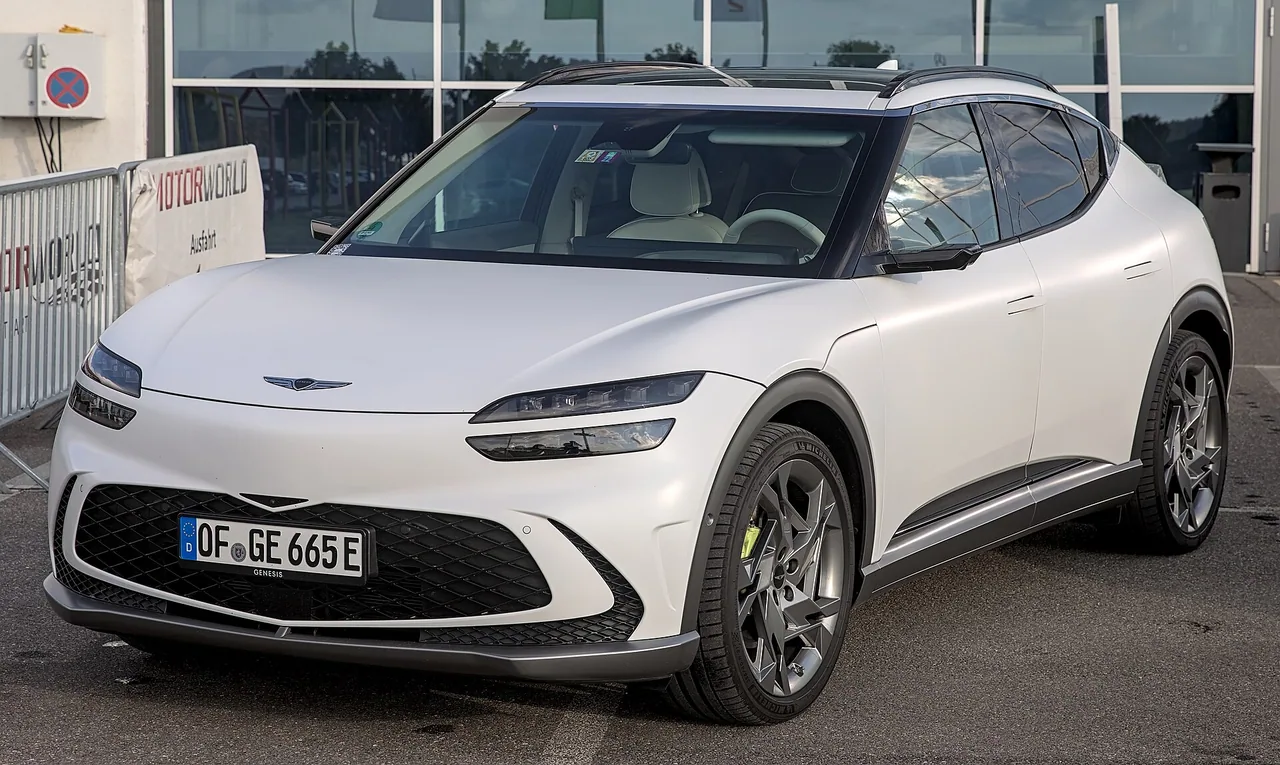
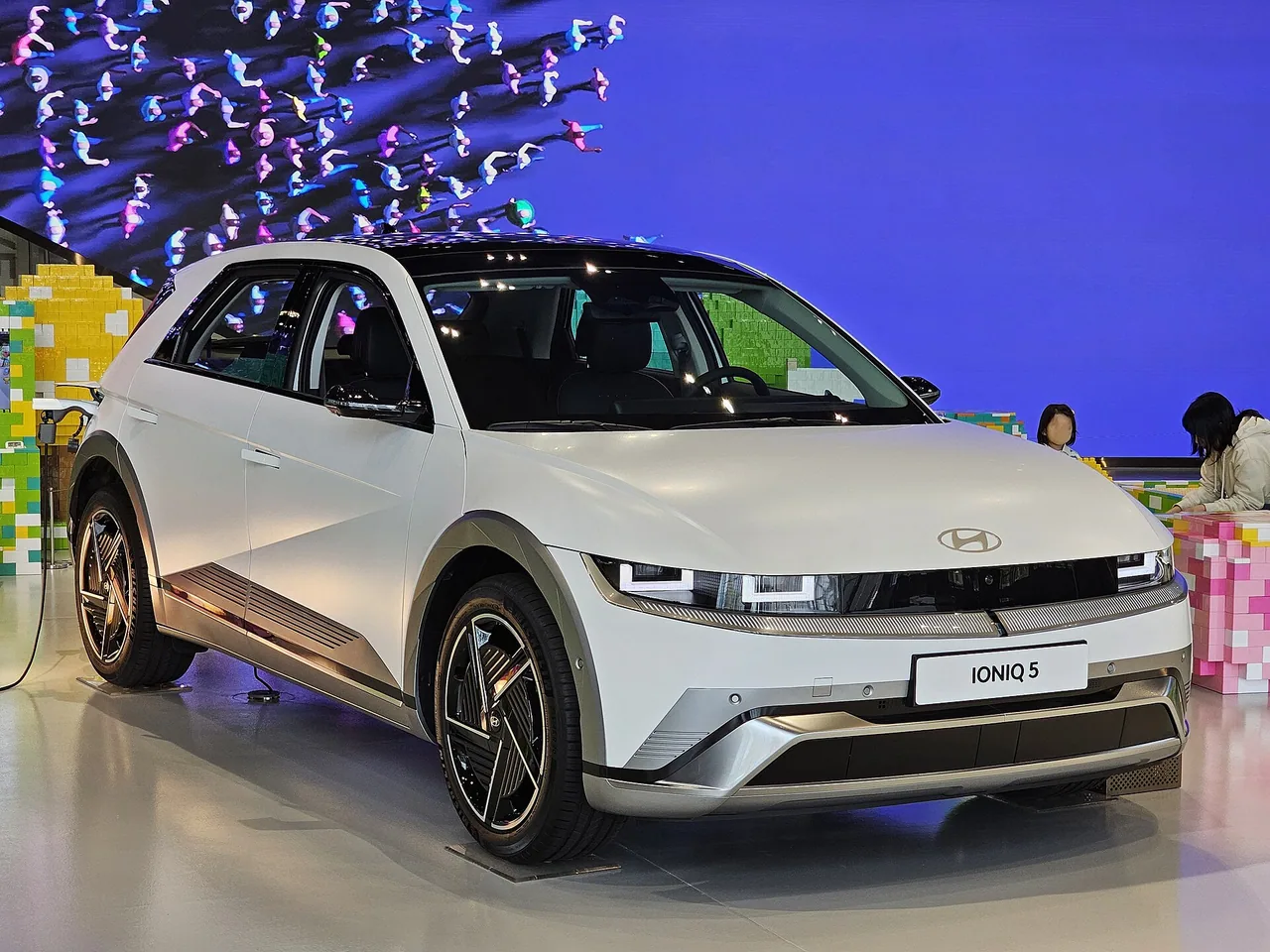
Genesis GV60 and Hyundai Ioniq 5 are built under the same Hyundai Motor America roof on 800-volt E-GMP hardware, even sharing NHTSA ICCU recall 24V-868. Steep depreciation brings used 2024 GV60 luxury cabins close to upper-trim Ioniq 5 pricing, yet the mainstream 2025 Ioniq 5 actually beat the luxury GV60 to an 84 kWh pack, native NACS port, and rear wiper—while offering 3.9 inches more wheelbase.
Genesis GV60
Hyundai Ioniq 5
Latest Data Refresh Check · Nov 25, 2026
Reviewed data refresh (2026-11-25) updated records for GV60 (2024: new NHTSA complaints) and Ioniq 5 (2026, 2025, 2024, 2023: new NHTSA complaints, catalog snapshot refresh); tables and dates below reflect the refreshed snapshot.
Live Market & Badge-Tax Readout
What you pay for the badge: new MSRP vs. used market
Price gap stays clear on the used market: Ioniq 5 ($15,000 less on KBB used midpoint).
Ioniq 5 ($11,650 lower avg MSRP)
TrimIndex never blends KBB, J.D. Power, and dealer asking figures into one range.
Where dealer asking prices are shown above or in the timeline below, figures summarize active US used dealer listings (asking prices, not final sale prices; excluded from Value-to-Score).
Day-to-Day Ownership Split
Where GV60 and Ioniq 5 actually diverge
Sharing a platform does not mean identical ownership. Here are the concrete calibration, cabin, software, charging, and dealer differences buyers feel every day.
Cabin Volume & Family Hauling
Households prioritizing kid space or cargo boxes need the Ioniq 5; empty nesters and couples fit comfortably in the GV60.
2025 Tech & Hardware Timing Inversion
Unusually for corporate siblings, a lightly used 2025 mainstream Hyundai carries newer charging hardware than a 2025 luxury Genesis.
Interior Materials & Sensory Polish
On a 2024-vs-2024 comparison, GV60 delivers a distinctly upscale cabin feel for surprisingly close used dollars.
Avoid Year & Recall Density
Skip 2023 GV60 completely; compare a 2024 GV60 (16 complaints) directly against a 2024 or 2025 Ioniq 5.
Peak Performance Ceiling
GV60 Performance blends luxury grand touring with quick sprints; Ioniq 5 N stands in a dedicated enthusiast league.
Refreshed EPA, charging & safety specs side by side
Pulled directly from TrimIndex’s EPA Fuel Economy, NHTSA NCAP, and charging-access database (NHTSA records through Nov 22, 2026).
| Specification | Genesis GV60 | Hyundai Ioniq 5 |
|---|---|---|
| EPA range (all trims) EPA Fuel Economy Guide | 235–306 mi | 168–318 mi |
| Efficiency (lower is better) EPA Fuel Economy Guide | 30.0–37.0 kWh/100 mi | 29.0–47.5 kWh/100 mi |
| Usable battery capacity | 77.4–84.0 kWh | 58.0–84.0 kWh |
| Peak DC fast charging | 240 kW | 235 kW |
| Rated horsepower | 225–429 hp | 168–641 hp |
| Drivetrains offered | AWD, RWD | AWD, RWD |
| Seating capacity | 5 seats | Not on file |
| Fast-charging port & Supercharger | CCS1 (Combined Charging System) | CCS1 (Combined Charging System) · With an adapter, since Mar 25, 2025 |
| NHTSA 5-Star overall rating NHTSA NCAP crash tests | 5 of 5 stars | 5 of 5 stars |
The rare 2025 quirk: why Hyundai's mainstream model beat Genesis to NACS
Normally luxury sub-brands debut a parent automaker's latest hardware first. On E-GMP, factory scheduling inverted that hierarchy for 2025. Because Hyundai timed the Ioniq 5's mid-cycle overhaul to open its massive Bryan County, Georgia Metaplant, mainstream 2025 Ioniq 5 buyers immediately received the 84.0 kWh battery (lifting range to 318 miles EPA), factory-installed NACS port, wireless CarPlay/Android Auto on ccNC software, and a rear windshield wiper.
Meanwhile, Ulsan-built 2025 Genesis GV60 models continued for one more year on the 77.4 kWh pack and CCS1 port (requiring an external adapter for Tesla Superchargers), waiting until the 2026 model year to adopt 84.0 kWh cells, up to 306 miles of range, and standard native NACS. That staggered schedule splits used strategy cleanly: 2024 is the sweet spot for GV60 luxury arbitrage, while 2025 tilts heavily toward Ioniq 5.
Inside Hyundai Motor America's unified 24V-868 recall across both badges
Unlike Kia—which files separate NHTSA recall campaigns under Kia America—Hyundai and Genesis share a single U.S. regulatory umbrella. That means NHTSA campaign 24V-868 covers both the 2022–2024 Ioniq 5 (Hyundai campaign 272, covering 101,194 cars) and the 2023–2025 GV60 (Genesis campaign 025G, covering 8,161 cars) under one federal defect report.
Technical service bulletins still list distinct replacement ICCU assemblies by model and year—36400-1XAA0QQH for Ioniq 5 versus 36400-1XCA0QQH (2023) and 36400-1XCA1QQH (2024–2025) for GV60—meaning parts backorder times can differ between the two models even though the underlying MOSFET stress failure and diagnostic code P1A9096 are identical.
TrimIndex's cross-model ICCU tracker breaks down 24V-868 remedy completion rates, P1A9096 fault diagnostics, and year-by-year filings for both Ioniq 5 and GV60.
Open the Hyundai, Kia & Genesis ICCU Tracker →Luxury weight versus upright boxiness: real-world efficiency and ergonomics
Despite having a sleeker fastback silhouette than the boxy Ioniq 5, the GV60 is slightly thirstier trim for trim: EPA consumption spans 30.0–37.0 kWh/100 mi on GV60 versus 29.0 kWh/100 mi at the efficient end of the Ioniq 5 lineup (with the track-focused Ioniq 5 N pushing the upper bound to 47.5 kWh/100 mi). Extra acoustic glass, heavier electric motors on AWD luxury trims, and wider 20- to 21-inch tires explain the efficiency gap.
Sit in both cars back to back and ergonomics quickly decide the winner. Tall drivers who appreciate an airy greenhouse, easy entry height, and big square cargo volume gravitate immediately to the Ioniq 5 Limited. Shoppers stepping down from an Audi Q5, Porsche Macan, or BMW X3 who care more about hushed highway refinement, real leather stitching, and tactile metal switchgear than raw rear cargo inches will find the GV60 feels far more special—especially after steep luxury depreciation.
Model-year timeline: GV60 vs. Ioniq 5
Refreshed automatically from TrimIndex’s database on each reviewed run so you can spot overlapping model years, Avoid flags, and pricing shifts.
| Year | GV60 Score & Standing | GV60 Price | Ioniq 5 Score & Standing | Ioniq 5 Price |
|---|---|---|---|---|
| 2026 | $43,824–$54,256 Dealer asking · Nov 2026 | $29,896–$40,882 Dealer asking · Nov 2026 | ||
| 2025 | $34,500–$48,962 Dealer asking · Nov 2026 | $24,799–$34,680 Dealer asking · Nov 2026 | ||
| 2024 | $28,500–$40,700 KBB · Nov 2026 | $19,494–$39,919 J.D. Power · Nov 2026 | ||
| 2023 | $33,100–$36,600 KBB · Nov 2026 | $25,856–$29,294 Dealer asking · Nov 2026 | ||
| 2022 | Not sold | Not produced No US model year | $16,790–$24,901 J.D. Power · Nov 2026 |
Which platform twin should you buy?
Choose the Genesis GV60 if…
- You want Audi/Porsche-caliber cabin quietness, Nappa leather, and Bang & Olufsen audio at depreciated luxury-EV savings.
- You rarely pack the cargo area to the roof and prefer a compact 177.8-inch exterior that slips easily into urban parking.
- You want 483-hp Boost Mode acceleration and adaptive Road Preview suspension in a plush daily package.
- You are comparing 2024 models where GV60 depreciation closes much of the sticker premium over an Ioniq 5 Limited.
Choose the Hyundai Ioniq 5 if…
- You need real family legroom, wide rear doors for child seats, and square hatchback cargo utility.
- You are shopping 2025 model years and want built-in NACS Supercharger access, an 84 kWh pack, and a rear windshield wiper right away.
- You live outside major luxury dealer metros and want Hyundai's wider nationwide dealership network.
- You want maximum highway range (up to 318 miles EPA) or the 641-hp Ioniq 5 N enthusiast variant.
Used-Market Sweet Spot
Comparing 2024 builds, a verified 2024 Genesis GV60 Standard RWD or Advanced AWD is a standout luxury upgrade over a top-trim 2024 Ioniq 5 Limited if you can live with a tighter trunk—just skip the 2023 GV60 Avoid year. Stepping into 2025 models flips the advantage back to Hyundai's refreshed Ioniq 5 Long Range thanks to its one-year head start on 84 kWh cells, rear wiper, and built-in NACS.
GV60 & Ioniq 5 platform questions
Is the Genesis GV60 just a luxury Hyundai Ioniq 5?
They share the 800-volt E-GMP skateboard, battery cell architecture, and recall 24V-868 ICCU electronics, but their dimensions differ noticeably. The GV60 actually borrows the shorter 114.2-inch wheelbase from the Kia EV6—3.9 inches shorter than the Ioniq 5's 118.1-inch chassis—while adding heavier acoustic insulation, luxury leather, Crystal Sphere shift controls, and optional preview dampers.
Why does the 2025 Ioniq 5 have a Tesla NACS port while the 2025 GV60 does not?
Hyundai launched the refreshed 2025 Ioniq 5 alongside its new Bryan County, Georgia factory with native NACS and an 84.0 kWh pack. Ulsan-built Genesis GV60 models waited one model year until 2026 to adopt the 84.0 kWh battery and standard native NACS port; 2023–2025 GV60 models charge on Tesla Superchargers with an external NACS-to-CCS1 adapter.
How much smaller is the Genesis GV60 inside compared with the Hyundai Ioniq 5?
The gap is immediately noticeable in the second row and cargo bay. Because the Ioniq 5 stretches 3.9 inches longer between the wheels and keeps a tall squared-off roof, it offers significantly better rear legroom and upright trunk height for strollers, bicycles, or luggage compared with the shorter, fastback-tailed GV60.
Do the Genesis GV60 and Hyundai Ioniq 5 share the same ICCU recall?
Yes. Both models fall under NHTSA recall 24V-868—administered as Hyundai campaign 272 for 2022–2024 Ioniq 5s and Genesis campaign 025G for 2023–2025 GV60s. Dealers scan for DTC P1A9096, update ICCU software, and replace the ICCU module and fuse free of charge if faulted.
Does the Genesis GV60 give used buyers a better warranty than a used Ioniq 5?
For non-certified second owners, core EV coverage is closely aligned: federal 8-year/100,000-mile high-voltage battery coverage transfers with the VIN on both brands, while the headline 10-year/100,000-mile powertrain warranty drops to 5 years/60,000 miles unless bought as manufacturer Certified Pre-Owned. Note that Genesis complimentary Service Valet generally does not transfer outside OEM CPO programs.