Hyundai Kona Electric vs. Kia Niro EV: Shared 400V Multi-Energy Hardware, Split Space & Cell History
Updated
Platform Twin Verdict
Unlike their 800-volt E-GMP siblings, the Hyundai Kona Electric and Kia Niro EV share Hyundai Motor Group's 400-volt front-wheel-drive K2 and K3 multi-energy platforms with roughly 75–102 kW fast charging. Kia Niro EV gives families a longer wheelbase, roomier back seat, and zero 2020 LG battery-fire recall baggage—while Kona Electric trims urban parking length, offers a cheaper 48.6 kWh base tier from 2024, and reaches 261 miles EPA.
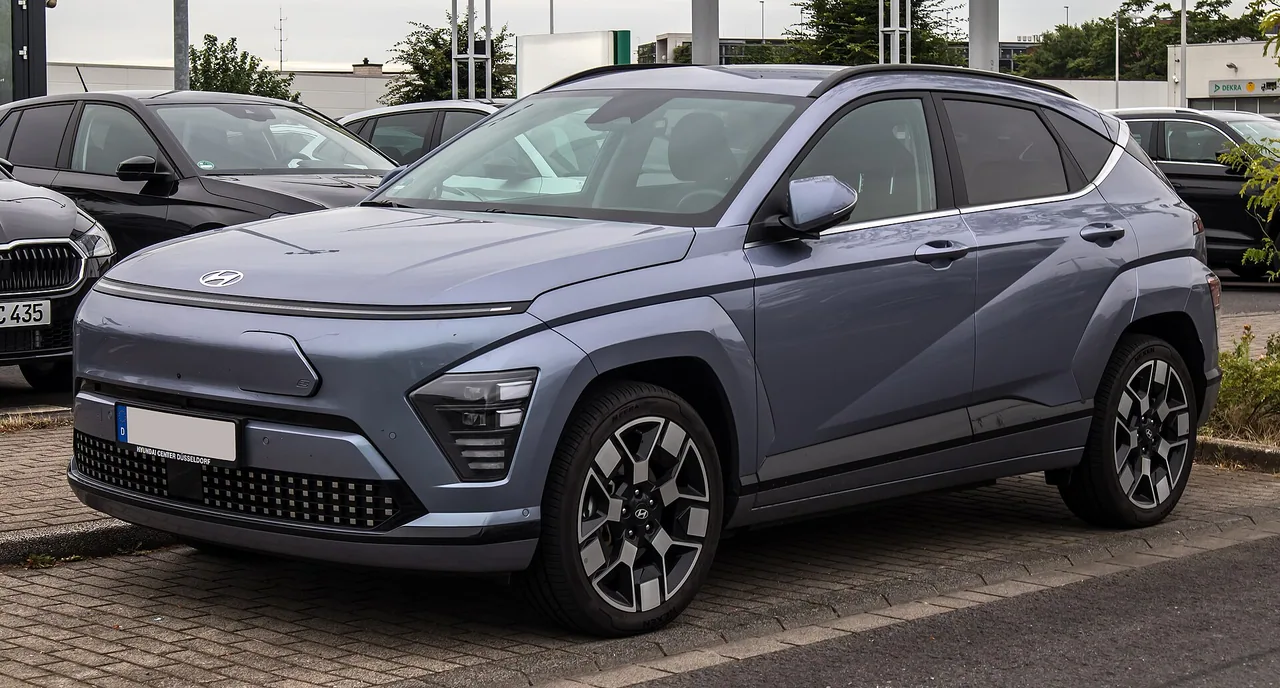
Hyundai Kona Electric
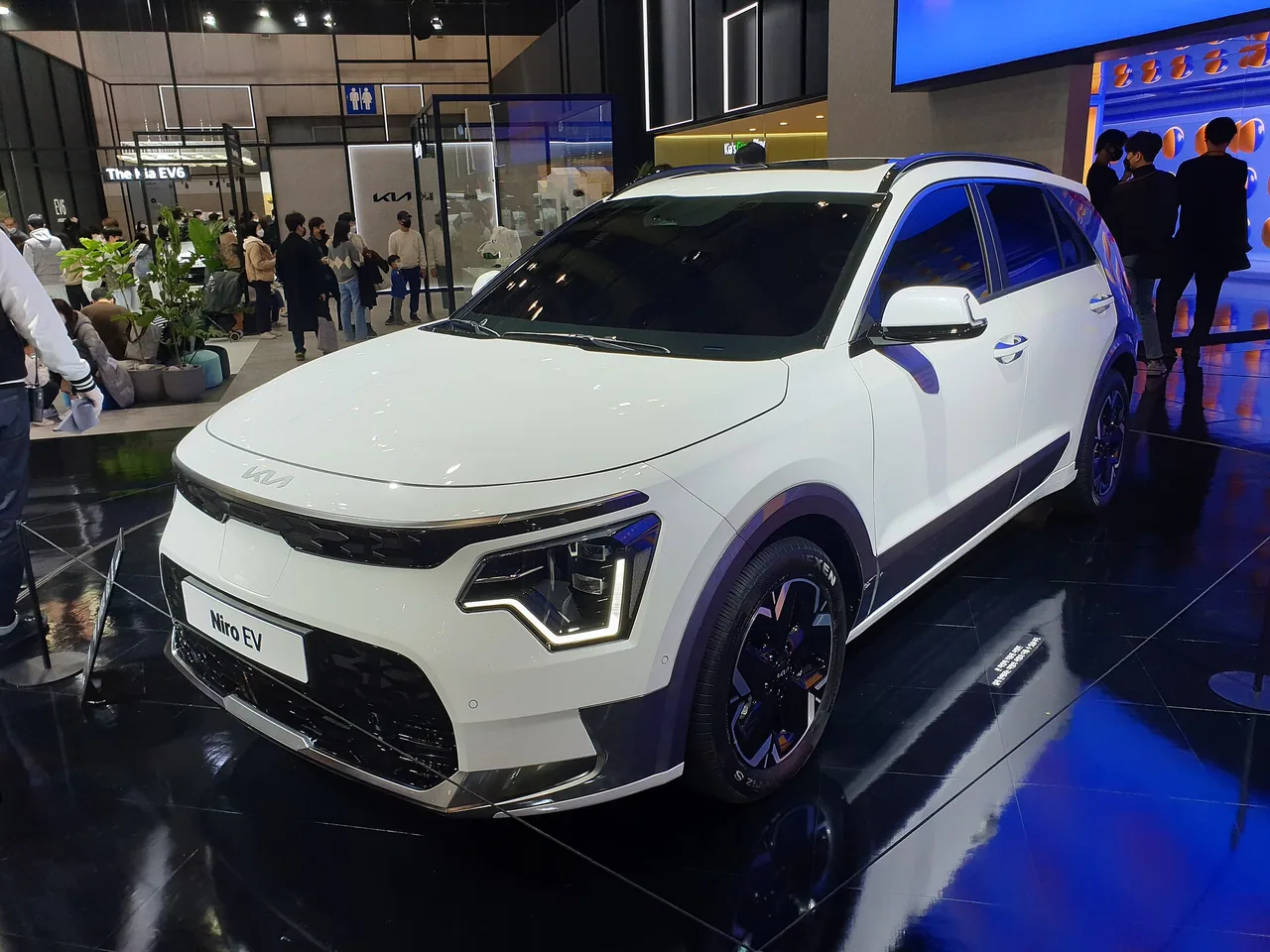
Kia Niro EV
Latest Data Refresh Check · Nov 25, 2026
Reviewed data refresh (2026-11-25) updated records for Kona Electric (2022, 2021, 2020) and Niro EV (2025, 2022, 2021, 2020); tables and dates below reflect the refreshed snapshot.
Live Market & Badge-Tax Readout
What you pay for the badge: new MSRP vs. used market
Current market snapshot: Virtual tie on KBB used midpoint.
TrimIndex never blends KBB, J.D. Power, and dealer asking figures into one range.
Where dealer asking prices are shown above or in the timeline below, figures summarize active US used dealer listings (asking prices, not final sale prices; excluded from Value-to-Score).
Day-to-Day Ownership Split
Where Kona Electric and Niro EV actually diverge
Sharing a platform does not mean identical ownership. Here are the concrete calibration, cabin, software, charging, and dealer differences buyers feel every day.
Back-Seat Legroom & Cargo Shape
For 2020–2023 used years, Niro EV is dramatically roomier; on 2024–2025 builds, Kona closes much of the gap while staying shorter to park.
Redesign Timing & Battery Tiers
Niro EV gives buyers a redesigned 2023 interior one year sooner without any low-range 48.6 kWh trap trims to decode.
2020 Cell-Supplier Fire Recall Split
Shopping 2020 models tilts heavily toward Niro EV unless a Kona VIN documents a fresh replacement traction pack.
EPA Range & Efficiency
Both deliver virtually identical real-world commuting range within ~8–19 miles, provided you pick Kona's Long Range pack.
Model-Year Longevity & Safety Rating
Niro EV offers newer 2026 availability and documented 5-star NHTSA crash ratings.
Refreshed EPA, charging & safety specs side by side
Pulled directly from TrimIndex’s EPA Fuel Economy, NHTSA NCAP, and charging-access database (NHTSA records through Nov 22, 2026).
| Specification | Hyundai Kona Electric | Kia Niro EV |
|---|---|---|
| EPA range (all trims) EPA Fuel Economy Guide | 200–261 mi | 239–253 mi |
| Efficiency (lower is better) EPA Fuel Economy Guide | 27.0–29.1 kWh/100 mi | 29.0–30.0 kWh/100 mi |
| Usable battery capacity | 48.6–64.8 kWh | 62.0–64.8 kWh |
| Peak DC fast charging | 75–102 kW | 85–100 kW |
| Rated horsepower | 133–201 hp | 201 hp |
| Drivetrains offered | FWD | FWD |
| Seating capacity | 5 seats | 5 seats |
| Fast-charging port & Supercharger | CCS1 (Combined Charging System) · With an adapter, since Mar 25, 2025 | CCS1 (Combined Charging System) · With an adapter |
| NHTSA 5-Star overall rating NHTSA NCAP crash tests | Not rated | 5 of 5 stars |
What living with a 400V multi-energy platform means versus E-GMP
Shoppers browsing Hyundai and Kia EVs often assume every model charges in 18 minutes like an Ioniq 5 or EV6. The Kona Electric and Niro EV sit on completely different engineering roots: Hyundai Motor Group's front-wheel-drive K2 (first generation) and K3 (second generation) unibody chassis originally designed to house gas engines, hybrids, and battery packs on the same assembly lines.
That multi-energy heritage brings clear everyday strengths alongside one firm road-trip limit. Both crossovers feel completely familiar to gas-car converts—with physical buttons, easy step-in height, low insurance costs, and zero E-GMP ICCU 800-volt complexity. The compromise is DC fast-charging speed: 400-volt architecture caps real highway charging around 75–102 kW, turning 10%–80% stops into 40- to 45-minute breaks. As daily commuters charged at home, they excel; as frequent 500-mile interstate cruisers, E-GMP siblings leave them behind.
- Gen-1 (2020–2022 Niro / 2020–2023 Kona) made a punchy 291 lb-ft of front-wheel torque that easily spun OEM eco tires in rain; Gen-2 K3 trims dialed torque back to 188 lb-ft for smoother traction and longer tire life.
- Neither twin has an ICCU recall like E-GMP models, eliminating that specific 800V failure vector—though 12V drain and inverter coolant maintenance still warrant checks.
- Front-grille charging doors can freeze shut in wet snowstorms; check for a heated charge-port door option on cold-climate trims.
The 2020 battery-supplier split and the blue inverter-coolant quirk
Two mechanical footnotes separate smart buyers from surprised owners on early Kona Electric and Niro EV builds. First, while 2020 Kona Electric and 2020 Niro EV shared nearly identical 64 kWh nominal specs, Hyundai sourced LG Chem cells for early Konas while Kia sourced SK Innovation cells for the Niro EV. That single procurement choice kept the Niro EV completely out of Hyundai's high-profile LG battery fire recalls (2 advisory recalls on 2020 Kona, where 11 of 31 NHTSA filings complained about prolonged repair delays)—though a 2020 Kona that DID receive a brand-new factory replacement battery under recall can actually offer a remarkably fresh pack today.
Second, both first-generation models share Hyundai Motor Group's notorious low-conductivity blue inverter coolant (BSC-2). Over time, silica crystallization inside the loop can clog passages and trigger persistent 'Refill Inverter Coolant' dashboard alerts—showing up directly in NHTSA data as the #1 complaint theme on both the 2021 Kona Electric (6 of 28 complaints) and 2020 Kia Niro EV (7 of 26 complaints). Verify dealer coolant-flush TSB completion on any 2020–2022 candidate.
TrimIndex tracks every EV model year carrying a federal park-outside or charging-limit safety advisory—including the 2020 Hyundai Kona Electric.
Open the Fleet Park-Outside Recall Tracker →Understanding Hyundai and Kia's second-owner warranty transfer rule
Because Kona Electric and Niro EV trade heavily as budget-friendly second-owner commuters, understanding Hyundai Motor Group's warranty transfer fine print prevents expensive misconceptions. Both Hyundai and Kia advertise a 10-year/100,000-mile powertrain warranty—but for non-Certified Pre-Owned second owners, that general powertrain warranty steps down to 5 years/60,000 miles from the original in-service date.
High-voltage battery protection follows a different legal rule. Federal regulations mandate at least 8 years or 100,000 miles of high-voltage battery coverage (and longer in certain California-emissions states), which transfers with the VIN to subsequent owners on active automakers provided the car does not carry a salvage title. Always confirm the exact model-year EV-system transfer terms in the OEM warranty booklet—or buy manufacturer CPO if you want full 10-year non-battery powertrain coverage restored.
Model-year timeline: Kona Electric vs. Niro EV
Refreshed automatically from TrimIndex’s database on each reviewed run so you can spot overlapping model years, Avoid flags, and pricing shifts.
| Year | Kona Electric Score & Standing | Kona Electric Price | Niro EV Score & Standing | Niro EV Price |
|---|---|---|---|---|
| 2026 | Not sold | Not produced No US model year | $29,290–$33,223 Dealer asking · Nov 2026 | |
| 2025 | $23,397–$29,031 Dealer asking · Nov 2026 | $22,956–$25,127 Dealer asking · Nov 2026 | ||
| 2024 | $20,800–$21,200 KBB · Nov 2026 | $20,700 KBB · Nov 2026 | ||
| 2023 | $17,350 KBB · Nov 2026 | $19,050 KBB · Nov 2026 | ||
| 2022 | $17,350 KBB · Nov 2026 | $12,975–$16,944 J.D. Power · Nov 2026 | ||
| 2021 | $14,950 KBB · Nov 2026 | $15,300 KBB · Nov 2026 | ||
| 2020 | $14,150 KBB · Nov 2026 | $14,300 KBB · Nov 2026 |
Which platform twin should you buy?
Choose the Hyundai Kona Electric if…
- You want the shortest footprint for tight urban parking (especially 2020–2023 Gen 1) or the sharper 2024–2025 redesign styling.
- You want maximum commuting efficiency (27.0 kWh/100 mi) and up to 261 miles EPA on a 2024–2025 Long Range trim.
- You only drive locally and can save money upfront with a 2024–2025 48.6 kWh Standard Range (200 miles EPA).
- You find a 2020 Kona whose VIN documents a brand-new factory recall-replaced traction battery.
Choose the Kia Niro EV if…
- You regularly carry rear-seat passengers or bulky groceries and need Niro's extra 2.4 to 3.9 inches of wheelbase.
- You are shopping 2020–2023 years and want zero LG battery-fire recall history plus a redesigned K3 interior starting in 2023.
- You want guaranteed 201-hp / 62–64.8 kWh Long Range hardware on every single trim without battery-tier guesswork.
- You prefer a documented 5-star NHTSA crash rating and cleaner late-cycle 2024–2025 complaint counts (6 and 3 filings).
Used-Market Sweet Spot
Among budget Gen-1 years (2020–2022), a 2021 Kia Niro EV (only 3 NHTSA complaints, zero LG fire recalls, roomier back seat) edges out the tighter Gen-1 Kona. Among redesigned Gen-2 K3 builds, a 2024 Kia Niro EV (6 complaints, 253 miles) or 2024–2025 Hyundai Kona Electric Long Range (261 miles, verify display recall closed) delivers low-stress home-charged commuting for years.
Kona Electric & Niro EV platform questions
Do the Hyundai Kona Electric and Kia Niro EV share the same platform?
Yes. Both ride on Hyundai Motor Group's 400-volt front-wheel-drive K2 (first generation) and K3 (second generation) multi-energy architectures rather than the 800-volt E-GMP skateboard. They share 64–64.8 kWh battery sizing, 201-hp front motors, ~75–102 kW DC charging speeds, and front-nose CCS1 ports, though Niro EV uses a longer wheelbase in both generations.
Was the Kia Niro EV included in the 2020 Hyundai Kona Electric battery fire recall?
No. Early 2020 Hyundai Kona Electric builds used LG Chem cells affected by internal separator defects that triggered park-outside and pack-replacement recalls (2 advisory recalls on 2020 Kona). Kia sourced SK Innovation cells for the 2020–2022 Niro EV, resulting in zero park-outside advisory recalls across Niro EV's entire U.S. run.
How fast do the Kona Electric and Niro EV charge on a road trip?
Both use 400-volt packs peaking between 75 and 102 kW—taking roughly 40 to 45 minutes to go from 10% to 80% on a DC fast charger. They are roughly half as fast at highway stations as an 800-volt Ioniq 5 or EV6, making them best suited to overnight home Level 2 charging and occasional regional trips.
Does the 10-year warranty transfer on a used Kona Electric or Niro EV?
Hyundai and Kia's general 10-year/100,000-mile powertrain warranty drops to 5 years/60,000 miles for non-CPO second owners. However, federal law requires at least 8 years/100,000 miles of high-voltage EV battery coverage to transfer with the VIN to subsequent owners—confirm exact model-year EV-system terms in the warranty booklet or choose manufacturer CPO for full 10-year powertrain reinstatement.
Which has more interior space: Hyundai Kona Electric or Kia Niro EV?
Kia Niro EV wins cabin space in both generations. Its first generation (2020–2022) rode on a 106.3-inch wheelbase versus Gen-1 Kona's cramped 102.4 inches. Even after Hyundai stretched the redesigned 2024 Kona Electric to 104.7 inches, the redesigned 2023+ Niro EV maintains a 107.1-inch wheelbase with noticeably deeper rear legroom.